
Krakatoa 1883: The Human Drama Behind the Volcanic Spectacle


Welcome to Volcano Explorers!
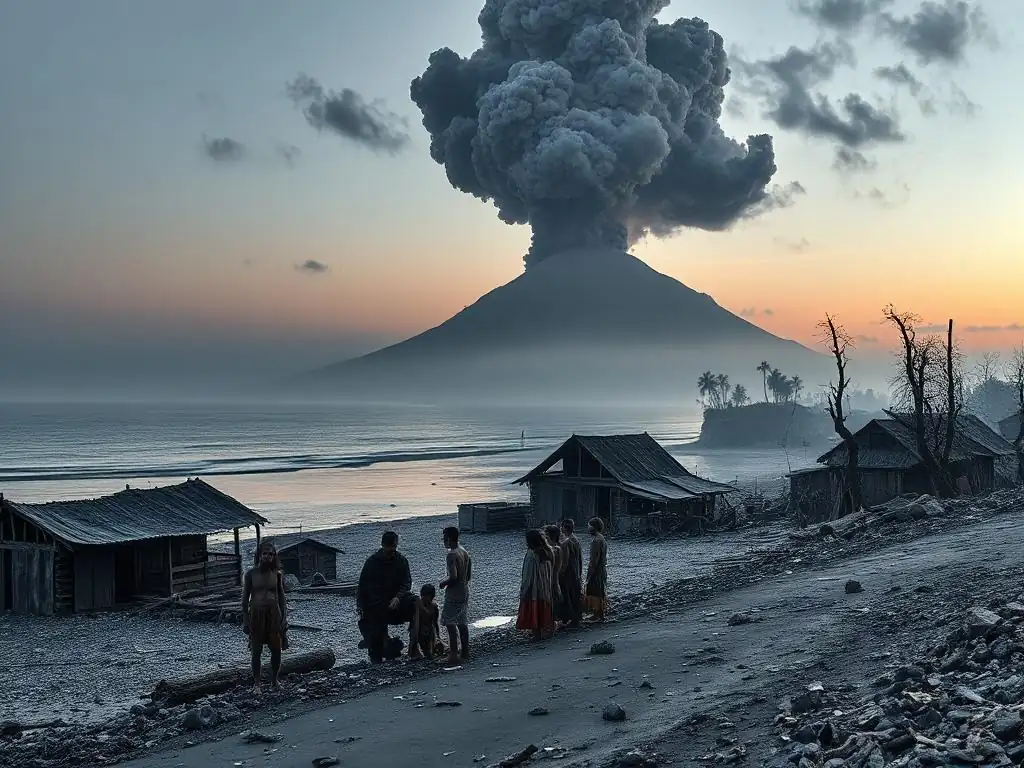
Prepare to be captivated by the raw power and profound impact of Earth's fiery giants. What if you could witness the day a volcano reshaped the world? In our latest exploration, we journey back to 1883 to uncover the human drama behind one of history's most devastating events: the Krakatoa eruption. Discover how this cataclysmic event unfolded and the indelible mark it left on countless lives. Are you ready to delve into the heart of the inferno and uncover the stories of survival and resilience? Read on to learn more about the Krakatoa eruption's human impact.
- The Great Tangshan Earthquake of 1976: A Chronicle of Human Suffering and Resilience
- The Tangshan Earthquake: Understanding the Catastrophe
- The Immediate Impact: A City Annihilated and Lives Shattered
- The Aftermath: Enduring Hardship and Reconstruction
- The Earthquake's Reach: Political and Social Ramifications
- Lessons Learned: Improving Earthquake Preparedness in China
- The Legacy of Tangshan: Remembrance and Reconciliation
-
Frequently Asked Questions
- What were the immediate consequences of the Krakatoa eruption on the local population?
- How did the Krakatoa eruption impact global weather patterns in the years following?
- What role did communication (or lack thereof) play in the human impact of the Krakatoa eruption?
- How did the Krakatoa eruption influence scientific understanding of volcanoes and their effects?
- Beyond the immediate devastation, what were some long-term social and economic impacts of the Krakatoa eruption?
- Final Reflection: Echoes of Krakatoa's Resilience
- Relive History: Discover More Stories of Survival!
The Great Tangshan Earthquake of 1976: A Chronicle of Human Suffering and Resilience
The Tangshan Earthquake: Understanding the Catastrophe
The Geological Context of the Tangshan Region
The city of Tangshan, located in the Hebei province of China, sits within a seismically active zone. This region is influenced by the complex interplay of several major fault systems, primarily the Tanlu Fault Zone, one of eastern China's most significant geological features. This fault zone is a massive strike-slip fault that extends for thousands of kilometers and is a direct result of the tectonic interactions between the Pacific Plate and the Eurasian Plate.
The ongoing movement and pressure buildup along these fault lines make the area inherently prone to earthquakes. Historically, this region has experienced numerous seismic events, highlighting the persistent geological instability beneath the surface and underscoring the vulnerability of densely populated areas like Tangshan to such natural disasters.
Furthermore, the specific geological structure of the Tangshan basin, characterized by relatively shallow crustal faults, contributed to the earthquake's devastating impact. Earthquakes in this type of geological setting often release their energy closer to the surface, resulting in stronger ground motion and more widespread destruction compared to deeper earthquakes. Prior to 1976, while seismic activity was recognized in the broader region, Tangshan itself was not considered to be at the highest risk level in national seismic assessments, which unfortunately led to a lower state of preparedness than might have been warranted given the underlying geological realities.
Foreshocks and Omens: The Unheeded Warnings Before the Earthquake
In the months and even days leading up to the catastrophic earthquake, there were observable anomalies and potential foreshocks that, in hindsight, could be interpreted as warnings. Reports of unusual animal behavior, such as snakes leaving their hibernation early and livestock acting erratically, circulated in the local communities. While these phenomena are not always reliable predictors, they are often associated with pre-seismic stress buildup. Additionally, in the days immediately preceding the main shock, a series of minor tremors were recorded by rudimentary seismic monitoring equipment in the region.
However, these potential precursors were largely unheeded or misinterpreted due to a combination of factors. China at the time was undergoing significant political upheaval, and scientific resources dedicated to earthquake prediction were limited and often hampered by ideological constraints.
Furthermore, the prevailing scientific understanding of earthquake prediction was still in its nascent stages globally, and there was no established, reliable system to effectively interpret these subtle signs and translate them into actionable warnings for the population. This lack of effective communication and preparedness, coupled with the imperfect science of earthquake prediction at the time, contributed to the tragic lack of warning for the residents of Tangshan.
The Immediate Impact: A City Annihilated and Lives Shattered
Eyewitness Accounts: Personal Stories from the Ruins of Tangshan
The night of July 28, 1976, at 3:42 AM, remains etched in the memories of survivors as a moment of unimaginable terror and devastation. Eyewitness accounts paint a harrowing picture of the earthquake's sudden and violent onset. One survivor, a factory worker named Wang Li, recalled being jolted awake by an intense shaking that felt like the "sky was falling."
He described the deafening roar as buildings crumbled around him, plunging the city into darkness amidst a cloud of dust and debris. Families were ripped apart in their sleep, homes collapsed in seconds, and the screams of the injured and trapped filled the air, creating a scene of utter chaos and despair.
Another survivor, a young woman named Zhang Mei, recounted the desperate struggle to escape her collapsing apartment building with her family. She vividly remembered the feeling of the ground rolling beneath her feet, making it nearly impossible to stand. The air was thick with the smell of dust and gas leaks, and the overwhelming sense of disorientation and fear as she and her neighbors tried to navigate through the rubble-strewn streets in search of safety. These personal stories, repeated countless times across Tangshan, underscore the sheer brutality of the earthquake and the profound human impact of this catastrophic event.
The Scale of Destruction: Tangshan's Infrastructure and Population Decimated
The Tangshan earthquake, measuring 7.8 on the Richter scale (later revised to 7.5-7.6), unleashed a level of destruction that was almost incomprehensible. The city of Tangshan, a major industrial center with a population of approximately one million people, was virtually leveled. Official estimates later indicated that over 85% of the buildings in the urban area collapsed or were severely damaged, including homes, factories, hospitals, and schools. Critical infrastructure, such as water pipelines, electricity grids, and communication networks, was completely shattered, leaving the city isolated and without essential services in the immediate aftermath.
The human cost of the disaster was staggering. While the official death toll released by the Chinese government was initially reported as 242,000, and later revised to approximately 255,000, many international sources and researchers estimate the actual number of fatalities to be significantly higher, potentially exceeding 650,000 or even 700,000. Hundreds of thousands more were injured, many critically, and left without shelter, food, or medical care. The Tangshan earthquake remains one of the deadliest earthquakes of the 20th century and stands as a stark reminder of the destructive power of nature and its devastating impact on human populations.
Initial Response and Rescue Efforts: A Race Against Time in the Aftermath
In the immediate aftermath of the Tangshan earthquake, the initial response was characterized by chaos and overwhelming challenges. With communication lines severed and infrastructure destroyed, Tangshan was effectively cut off from the outside world. Local survivors, stunned and grieving, were the first responders, desperately digging through rubble with their bare hands to rescue family members, neighbors, and strangers trapped beneath the debris. The lack of heavy machinery and organized rescue teams in the crucial early hours meant that countless lives were tragically lost that could have potentially been saved with a more rapid and coordinated response.
As news of the disaster slowly filtered out, the Chinese government mobilized the People's Liberation Army (PLA) and dispatched medical teams and relief supplies to the affected region. However, the scale of the devastation and the logistical difficulties of reaching Tangshan, compounded by damaged roads and railways, hampered rescue efforts.
The initial days were a desperate race against time, with rescue workers and volunteers facing immense challenges in navigating the ruins, providing medical aid to the injured, and searching for survivors amidst the collapsed buildings. The heroic efforts of both organized rescue teams and ordinary citizens demonstrated remarkable resilience and compassion in the face of unimaginable tragedy, but the sheer magnitude of the disaster overwhelmed the initial response capacity.
The Aftermath: Enduring Hardship and Reconstruction
Immediate Consequences: Disease, Famine, and the Struggle for Survival
The immediate aftermath of the Tangshan earthquake plunged the survivors into a brutal struggle for survival. With homes destroyed and infrastructure obliterated, basic necessities like shelter, food, and clean water became critically scarce. The breakdown of sanitation systems and the presence of decomposing bodies in the rubble created a breeding ground for disease. Outbreaks of dysentery, typhoid fever, and other waterborne illnesses became rampant, further exacerbating the suffering of the already weakened population. Food supplies were quickly depleted, and the disruption of transportation networks made it difficult to bring in adequate relief aid in the crucial early weeks.
The injured, numbering in the hundreds of thousands, overwhelmed the severely damaged medical facilities. Hospitals that had not collapsed were often operating with limited supplies and staff, struggling to cope with the massive influx of patients. Amputations were often performed without proper anesthesia, and infections were widespread. For the survivors, the days and weeks following the earthquake were a relentless ordeal of physical hardship, emotional trauma, and the constant threat of disease and starvation, compounding the immense loss and grief they were already enduring.
The Tangshan earthquake had profound and long-lasting social and economic repercussions for the city and the surrounding region. Economically, Tangshan, a major industrial hub known for its coal mines and steel production, suffered a devastating blow. Factories were destroyed, mines were flooded, and production ground to a halt. The economic recovery was a slow and arduous process, requiring massive investment in rebuilding infrastructure and restarting industries. The earthquake exposed vulnerabilities in China's economic planning and highlighted the need for more resilient infrastructure and disaster preparedness measures in industrial centers.
Socially, the earthquake left deep scars on the community. The loss of life, the widespread trauma, and the displacement of hundreds of thousands of people created long-term social challenges. Families were fractured, communities were disrupted, and the psychological impact of the disaster lingered for years, even generations.
The rebuilding process was not just about physical reconstruction; it was also about rebuilding social fabric, addressing psychological trauma, and fostering a sense of community and resilience in the face of profound collective loss. The Tangshan earthquake became a defining event in the city's history, shaping its identity and influencing its development trajectory for decades to come.
Rebuilding Lives: Resilience and Determination in the Face of Unimaginable Loss
Despite the unimaginable devastation and loss, the people of Tangshan demonstrated remarkable resilience and determination in rebuilding their lives and their city. The recovery process was a monumental undertaking, requiring years of sustained effort and significant national resources. The Chinese government launched a massive reconstruction program, mobilizing resources from across the country to rebuild Tangshan. New housing was constructed, infrastructure was rebuilt, and industries were gradually revived. The reconstruction effort became a symbol of national unity and the collective will to overcome adversity.
Beyond the physical rebuilding, the people of Tangshan displayed incredible fortitude and community spirit. Survivors supported each other, sharing resources, offering emotional support, and working together to rebuild their homes and their lives. The experience of shared trauma fostered a strong sense of solidarity and collective identity. The story of Tangshan's recovery is not just a tale of physical reconstruction; it is a testament to the enduring strength of the human spirit, the capacity for resilience in the face of unimaginable loss, and the power of community in overcoming adversity.
The Delayed Announcement: Political Considerations and Information Control
The official announcement of the Tangshan earthquake by the Chinese government was notably delayed, reflecting the political climate and information control policies prevalent during that era. In the immediate aftermath, there was a deliberate effort to control information flow and downplay the scale of the disaster in official media reports.
This delay and the initial underreporting of casualties were partly attributed to political considerations, including the sensitive political atmosphere following the death of Premier Zhou Enlai earlier in the year and the ongoing power struggle within the Communist Party. There was a reluctance to project an image of national vulnerability or to admit the extent of the government's unpreparedness for such a catastrophe.
The delayed announcement and the limited initial information access contributed to confusion and hampered the timely flow of aid and assistance from both domestic and international sources. While the government eventually mobilized significant resources for relief and reconstruction, the initial information blackout underscored the constraints on information dissemination and the political sensitivities surrounding natural disasters in China at that time. This aspect of the Tangshan earthquake response highlights the complex interplay between disaster management, political considerations, and information control in authoritarian regimes.
International Aid and Assistance: A Global Response to the Tangshan Disaster
Despite the initial reluctance to openly acknowledge the full extent of the disaster, the Tangshan earthquake eventually elicited a significant outpouring of international sympathy and offers of aid. Governments and international organizations around the world expressed condolences and offered assistance in the form of financial aid, medical supplies, and technical expertise in earthquake relief and reconstruction. Countries such as Japan, the United States, and numerous European nations offered support, reflecting a global sense of solidarity in the face of such a devastating human tragedy.
While the Chinese government initially declined some offers of direct on-the-ground assistance, citing a policy of self-reliance, they did accept some forms of international aid, particularly medical supplies and financial contributions. The international response to the Tangshan earthquake, even with its limitations, marked a significant moment in China's engagement with the international community in disaster relief efforts. It also highlighted the growing recognition of earthquakes as global humanitarian crises requiring international cooperation and assistance, transcending political boundaries.
Communication Breakdown: The Challenges of Coordinating Relief Efforts
The Tangshan earthquake exposed significant challenges in communication and coordination during large-scale disaster relief efforts. The destruction of communication infrastructure within Tangshan itself, coupled with the initial delays in information dissemination from the central government, created a chaotic and fragmented response environment. Relief efforts were hampered by a lack of clear communication channels, difficulties in assessing the needs on the ground, and challenges in coordinating the distribution of aid and the deployment of rescue teams.
The sheer scale of the disaster overwhelmed existing communication systems and highlighted the need for more robust and redundant communication networks in disaster-prone regions. The experience of Tangshan underscored the critical importance of effective communication and coordination in ensuring timely and efficient disaster response. Lessons learned from the communication breakdowns during the Tangshan earthquake contributed to subsequent improvements in China's disaster management systems, including investments in enhanced communication infrastructure and more streamlined coordination mechanisms for emergency response.
Lessons Learned: Improving Earthquake Preparedness in China
Understanding Seismic Hazards: Applying Tangshan's Lessons to Future Preparedness
The Tangshan earthquake served as a stark and devastating lesson in the importance of understanding seismic hazards and improving earthquake preparedness. The disaster prompted a significant reassessment of seismic risk assessments in China and led to a greater emphasis on scientific research and monitoring of earthquake-prone regions. Seismological studies were intensified to better understand the geological fault lines, seismic activity patterns, and potential earthquake risks in various parts of the country, including areas previously considered to be of lower risk.
The Tangshan experience underscored the need for more comprehensive and accurate seismic hazard mapping, improved earthquake prediction capabilities, and a more proactive approach to disaster preparedness planning. Scientists and policymakers recognized the limitations of relying solely on historical earthquake data and the importance of incorporating geological studies, precursory phenomena monitoring, and probabilistic risk assessments to better anticipate and prepare for future seismic events. The lessons from Tangshan significantly shaped China's approach to earthquake science and disaster risk reduction in the decades that followed.
Building Codes and Infrastructure: Strengthening Defenses Against Earthquakes
In the wake of the Tangshan earthquake, China undertook a major overhaul of its building codes and infrastructure standards to enhance earthquake resistance. The disaster exposed the vulnerability of existing building construction practices, particularly in urban areas, and highlighted the urgent need for stricter regulations and improved construction techniques. New building codes were developed and implemented, emphasizing earthquake-resistant design principles, stronger building materials, and improved construction quality control.
Significant investments were made in retrofitting existing buildings, particularly critical infrastructure like hospitals and schools, to improve their seismic resilience. New infrastructure projects, such as bridges, dams, and transportation networks, were designed and constructed with enhanced earthquake-resistant features. The focus shifted towards building more resilient cities and communities that could better withstand the impact of future earthquakes. The changes in building codes and infrastructure development after Tangshan represented a significant step forward in strengthening China's defenses against seismic hazards and reducing the vulnerability of its built environment.
Community Education and Evacuation Planning: Protecting Lives in Seismic Zones
Beyond structural improvements, the Tangshan earthquake highlighted the critical role of community education and effective evacuation planning in protecting lives during seismic events. The lack of public awareness about earthquake risks and appropriate safety measures contributed to the high casualty toll in Tangshan. In response, the Chinese government launched nationwide public education campaigns to raise awareness about earthquake hazards, promote earthquake safety knowledge, and teach people how to protect themselves during an earthquake.
Community-based disaster preparedness programs were implemented, including earthquake drills, evacuation exercises, and the establishment of community emergency response teams. Evacuation plans were developed and disseminated to residents in earthquake-prone areas, outlining safe evacuation routes, designated assembly points, and emergency procedures. The emphasis shifted towards empowering communities to be better prepared for earthquakes, fostering a culture of disaster preparedness, and enhancing the capacity of individuals and communities to respond effectively and protect themselves during seismic events.
The Legacy of Tangshan: Remembrance and Reconciliation
Memorials and Remembrance: Honoring the Victims of the Earthquake
The legacy of the Tangshan earthquake is deeply embedded in the city's collective memory, marked by memorials and commemorations dedicated to honoring the victims of the tragedy. The Tangshan Earthquake Memorial Park, built on the earthquake ruins, serves as a central place of remembrance, featuring monuments, museums, and preserved remnants of the destroyed city. The park is a somber and poignant reminder of the devastation and loss, but also a testament to the resilience and rebirth of Tangshan.
Annual memorial ceremonies are held on July 28th each year, marking the anniversary of the earthquake, to pay tribute to the victims and to reflect on the lessons learned from the disaster. These memorials and commemorations serve as important spaces for collective mourning, remembrance, and healing. They ensure that the memory of the Tangshan earthquake and its victims is not forgotten, and they reinforce the importance of disaster preparedness and the value of human life.
Cultural Impact: The Earthquake in Literature, Film, and Collective Memory
The Tangshan earthquake has had a significant and lasting cultural impact in China, shaping literature, film, and collective memory. Numerous literary works, including novels, poems, and memoirs, have been written about the earthquake, exploring themes of loss, trauma, resilience, and the human spirit in the face of adversity. Films and documentaries have depicted the events of the earthquake, bringing the story of Tangshan to a wider audience and ensuring that the tragedy remains part of the national consciousness.
The earthquake has become a recurring motif in Chinese culture, representing both the destructive power of nature and the capacity for human resilience and national unity. It serves as a powerful reminder of the importance of disaster preparedness, community solidarity, and the enduring strength of the human spirit in overcoming even the most devastating challenges. The cultural representations of the Tangshan earthquake contribute to its lasting legacy and its continued relevance in contemporary Chinese society.
The Enduring Human Story: A Testament to the Strength of the Human Spirit
The story of the Tangshan earthquake is ultimately an enduring human story, a testament to both the fragility of human life in the face of natural disasters and the extraordinary strength of the human spirit in overcoming adversity. The tragedy of Tangshan serves as a stark reminder of the destructive power of earthquakes and the immense human suffering they can inflict. Yet, it is also a story of resilience, of community solidarity, and of the unwavering determination of the people of Tangshan to rebuild their lives and their city from the ashes.
The enduring legacy of Tangshan is not just about the physical reconstruction of a city; it is about the indomitable spirit of its people, their capacity for compassion and mutual support, and their unwavering hope for the future in the face of unimaginable loss. The story of Tangshan stands as a powerful symbol of human resilience, a reminder that even in the aftermath of the most devastating disasters, the human spirit can endure, rebuild, and ultimately triumph over adversity.
Frequently Asked Questions
What were the immediate consequences of the Krakatoa eruption on the local population?
The immediate consequences were devastating. Pyroclastic flows and tsunamis caused widespread destruction and loss of life across coastal regions of Java and Sumatra, with tens of thousands perishing.
How did the Krakatoa eruption impact global weather patterns in the years following?
The massive amount of ash and sulfur dioxide injected into the stratosphere caused a temporary cooling effect worldwide. This led to vibrant sunsets and unusual weather phenomena for several years.
What role did communication (or lack thereof) play in the human impact of the Krakatoa eruption?
Limited communication technology meant warnings were slow to spread. This lack of timely information contributed to the high death toll, as many coastal communities were unprepared for the tsunamis.
How did the Krakatoa eruption influence scientific understanding of volcanoes and their effects?
The eruption spurred significant advancements in volcanology. Scientists studied the event to better understand tsunami generation, atmospheric effects, and the dynamics of volcanic explosions.
The eruption displaced communities, disrupting livelihoods and economies. It also led to long-term changes in the landscape and altered ecosystems, affecting fishing and agriculture.
Final Reflection: Echoes of Krakatoa's Resilience
The story of Krakatoa's eruption in 1883 is more than just a tale of geological fury; it's a testament to the enduring spirit of humanity in the face of unimaginable devastation. The echoes of that volcanic spectacle still resonate today, reminding us of the raw power of nature and the profound impact such events have on human lives and communities. Understanding the human drama behind Krakatoa is crucial, especially as we grapple with the increasing frequency and intensity of natural disasters in our modern world.
The eruption of Krakatoa serves as a stark reminder of our vulnerability, but also of our capacity for resilience, adaptation, and rebuilding. The stories of survival, loss, and community that emerged from the ashes of Krakatoa continue to inspire me, highlighting the importance of preparedness, empathy, and collective action in the face of adversity. The sea was fanned to white flame. It roared as if the millions of demons of the pit were let loose.
- W. Graham Greene, capturing the sheer terror and scale of the event. This quote, and countless others from survivors, underscore the lasting psychological and social impact of such a catastrophic event.
Let the lessons of Krakatoa's eruption not be confined to history books. Consider the resilience of those who rebuilt their lives amidst the devastation. How can we, in our own lives and communities, foster that same spirit of preparedness, empathy, and unwavering hope? Let us learn from the past to build a more resilient future, one where the human spirit triumphs even in the face of nature's most formidable challenges.
Relive History: Discover More Stories of Survival!
Thank you for joining us on a journey into the human drama of the 1883 Krakatoa eruption. We hope you've gained a new appreciation for the incredible resilience and courage shown in the face of such unimaginable devastation. Let's continue exploring these fascinating stories together!
Share this article with your friends and family to spread awareness of the human impact of natural disasters and inspire conversations about resilience. Explore our website, VolcanoExplorers.org, to discover other captivating accounts of historical volcanic eruptions, including lesser-known stories of survival and loss. You might even uncover a hidden connection to the Earth's dramatic past by researching your own family history—were your ancestors affected by significant geological events?
What other historical volcanic events intrigue you, and whose stories do you believe deserve to be shared? We'd love to hear your thoughts in the comments below!