
The Hidden Beauty of Taal Volcano: Photographing a Lake within a Volcano, Philippines

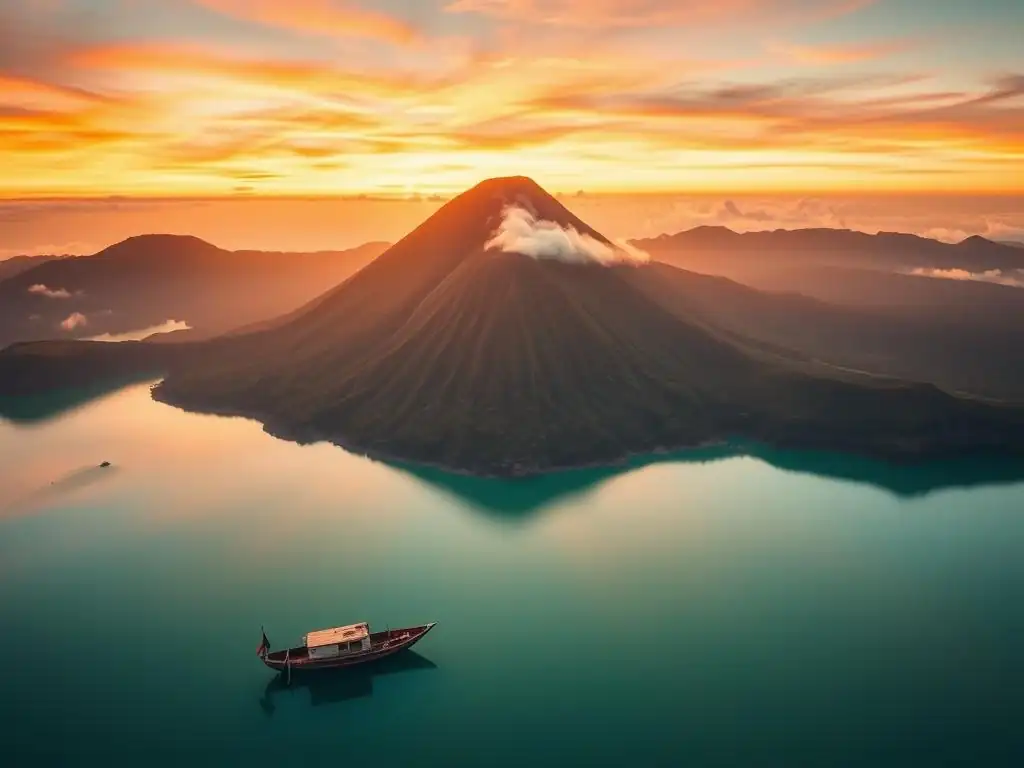
Welcome to Volcano Explorers, where the earth breathes fire and beauty collides! Ever wondered what secrets lie hidden within a volcano's heart? Prepare to be captivated as we journey into the caldera of Taal Volcano. This isn't just about landscapes; it's about capturing a soul. Are you ready to uncover the hidden beauty of photographing Taal Volcano, a pearl cradled in volcanic fury? Let's begin.
- Photographing Taal Volcano: A Volcanic Landscape in the Philippines
- Taal Volcano: A Photographer's Paradise
- Why Taal Volcano is a Prime Destination for Landscape Photography
- Planning Your Taal Volcano Photography Trip
- Photography Techniques for Taal Volcano
- Safety Considerations for Taal Volcano Photography
- Showcasing Taal Volcano's Unique Features
- Post-Processing Tips for Taal Volcano Photos
- Sharing Your Taal Volcano Photography
- Preserving Taal Volcano: Responsible Tourism
- Appreciating Taal Volcano: Science and History
- Essence of Taal: Capturing Volcanic Beauty
-
Frequently Asked Questions
- What makes Taal Volcano a unique photographic subject?
- What are some essential safety precautions to consider when photographing Taal Volcano?
- What are some recommended locations for capturing the best photographs of Taal Volcano?
- What photographic equipment is ideal for capturing the beauty of Taal Volcano?
- How can I capture the cultural significance of Taal Volcano through my photographs?
- Final Reflection: Capturing Ephemeral Beauty
- Capture the Majesty: Start Your Taal Volcano Photography Adventure!
Photographing Taal Volcano: A Volcanic Landscape in the Philippines
Taal Volcano: A Photographer's Paradise
Taal Volcano, nestled within the province of Batangas in the Philippines, presents a breathtaking panorama that captivates photographers from around the globe. This complex volcano is not just a geological wonder; it's a living canvas sculpted by nature’s powerful forces. The unique setting of a volcano island within a lake, which itself is within a larger caldera, offers an unparalleled visual experience. From the sweeping views from the Tagaytay Ridge to the intimate details found on Volcano Island itself, Taal provides a diverse range of photographic opportunities, making it a true paradise for landscape photography enthusiasts.
The allure of Taal Volcano extends beyond its stunning scenery. Its dynamic nature, constantly changing light, and the presence of local communities living in harmony with this natural giant, add layers of depth and narrative to every photograph.
Whether you are drawn to capturing the grandeur of the landscape, the subtle nuances of light playing on the water, or the everyday life of the people who call this volcanic region home, Taal Volcano promises a rich and rewarding photographic journey. It is a destination where natural beauty and cultural vibrancy converge, offering endless inspiration for photographers seeking to capture the essence of the Philippines.
Why Taal Volcano is a Prime Destination for Landscape Photography
The Unique Geology: An Island Volcano in a Lake
Taal Volcano’s geological uniqueness is arguably its most compelling feature for photographers. It is classified as a complex volcano system, featuring a caldera filled by Taal Lake. Within this lake rises Volcano Island, which itself contains a crater lake, sometimes referred to as Yellow Lake or the Main Crater Lake. This “lake within a volcano within a lake” configuration is a rare geological phenomenon, making Taal visually distinct from most other volcanoes worldwide. The contrasting elements of water, volcanic cones, and lush greenery create a naturally layered composition that is inherently photogenic.
The geological history of Taal further enhances its photographic appeal. Formed by massive eruptions over millennia, the landscape tells a story of dramatic geological events. The caldera rim, particularly the Tagaytay Ridge, provides elevated vantage points that showcase the entire volcanic complex in its grandeur. From these viewpoints, photographers can capture the scale of the caldera, the serenity of Taal Lake contrasting with the ruggedness of Volcano Island, and the intricate details of the volcanic cones. This unique geology provides a multitude of perspectives and compositions, ensuring that each visit to Taal offers new photographic discoveries.
Capturing Dramatic Landscapes: From Tagaytay Ridge and Volcano Island
Photographing Taal Volcano’s dramatic landscapes offers two primary vantage points, each providing a distinct visual experience. Tagaytay Ridge, situated on the northern rim of the Taal caldera, is renowned for its panoramic views. From here, photographers can capture the classic postcard-perfect vista of Volcano Island rising majestically from Taal Lake.
The elevated perspective allows for wide-angle shots that encompass the entire volcanic landscape, often including the surrounding towns and the distant mountains of Luzon. The ridge offers numerous spots along its length, each providing slightly different angles and perspectives, making it ideal for capturing sunrise and sunset shots where the golden light bathes the entire caldera in a warm glow.
Volcano Island itself offers a completely different, more intimate photographic experience. Exploring the island puts photographers directly within the volcanic landscape. Here, the focus shifts from grand panoramas to capturing the details of the volcanic terrain, the textures of lava flows, and the steam vents that evidence the volcano's ongoing activity.
Hiking trails lead to the crater rim, offering closer views of the Main Crater Lake and the surrounding volcanic cones. Photographing from Volcano Island allows for a more immersive perspective, capturing the raw, untamed beauty of a volcanic environment and the subtle details that might be missed from afar. Both Tagaytay Ridge and Volcano Island provide complementary perspectives, allowing photographers to comprehensively capture the diverse beauty of Taal Volcano.
Planning Your Taal Volcano Photography Trip
Best Time to Visit: Dry Season Photography
For photographers planning a trip to capture the beauty of Taal Volcano, timing is crucial, and the dry season in the Philippines, from November to May, is generally considered the best time to visit. During these months, the weather is typically drier and sunnier, offering clearer skies and better visibility for landscape photography.
The reduced rainfall minimizes the chances of cloudy or overcast days, which can obscure the volcano and diminish the vibrancy of the colors in the landscape. Clear skies are essential for capturing the dramatic interplay of light and shadow across the volcanic terrain, particularly during the golden hours of sunrise and sunset.
The dry season also coincides with calmer lake conditions on Taal Lake. This is beneficial for boat trips to Volcano Island, ensuring smoother and safer navigation. Calm waters also enhance the reflective qualities of the lake, creating stunning opportunities to photograph the reflections of Volcano Island and the sky.
While the dry season is the peak tourist season, planning your visit during the shoulder months of November or May can sometimes offer a balance of good weather with fewer crowds. Visiting during the dry season maximizes the chances of capturing the best light and clearest views of Taal Volcano, essential elements for stunning photographs.
Getting to Taal: Travel and Boat Options
Reaching Taal Volcano for a photography expedition involves a combination of land and water travel. The most common jump-off point is Tagaytay City, easily accessible from Manila by bus or private car, a journey of approximately 2 to 3 hours depending on traffic. From Tagaytay, photographers can enjoy the iconic views of Taal Volcano from the ridge and plan their descent to the lake shore.
Several towns around Taal Lake, such as Talisay and San Nicolas in Batangas province, serve as entry points for boat trips to Volcano Island. These towns are reachable from Tagaytay by jeepney, bus, or private vehicle.
Boat trips to Volcano Island are typically arranged from these lakeside towns. Motorized outrigger boats, locally known as 'bangkas,' are the primary mode of transport across Taal Lake. These boats can be hired for round trips to Volcano Island, and the journey itself offers photographic opportunities, capturing the volcano from the water level and the surrounding lake environment.
It is advisable to negotiate boat fares beforehand and ensure that the boat operators are licensed and prioritize safety. For photographers, it's wise to choose a boat that can accommodate camera gear comfortably and provide stable platforms for shooting from the water. The boat journey to Volcano Island is an integral part of the Taal Volcano photography experience, offering unique perspectives and the anticipation of exploring the volcanic island itself.
Recommended Photography Gear: Wide-Angle and Telephoto Lenses
Equipping yourself with the right photography gear is essential to effectively capture the diverse beauty of Taal Volcano. For landscape photography at Taal, a combination of wide-angle and telephoto lenses is highly recommended. A wide-angle lens, typically in the range of 16-35mm (full-frame equivalent), is crucial for capturing the expansive panoramic views from Tagaytay Ridge. It allows photographers to encompass the entire caldera, Taal Lake, and Volcano Island within a single frame, emphasizing the grandeur of the volcanic landscape. Wide-angle lenses are also useful for capturing foreground elements and creating a sense of depth in landscape shots.
A telephoto lens, ranging from 70-200mm or longer, is equally important for isolating specific features and details of Taal Volcano. From Tagaytay Ridge, a telephoto lens can bring distant volcanic cones and crater details closer, compressing perspective and highlighting the textures and forms of the volcanic terrain. On Volcano Island itself, a telephoto lens is invaluable for capturing details of steam vents, lava formations, and potentially wildlife, if present.
Beyond lenses, a sturdy tripod is essential for sharp landscape shots, especially during sunrise, sunset, and in lower light conditions. Filters, such as polarizing filters to reduce glare and enhance colors, and neutral density (ND) filters for long exposure photography, can also be beneficial for capturing the full potential of Taal Volcano's beauty.
Photography Techniques for Taal Volcano
Composition: Leading Lines and Framing
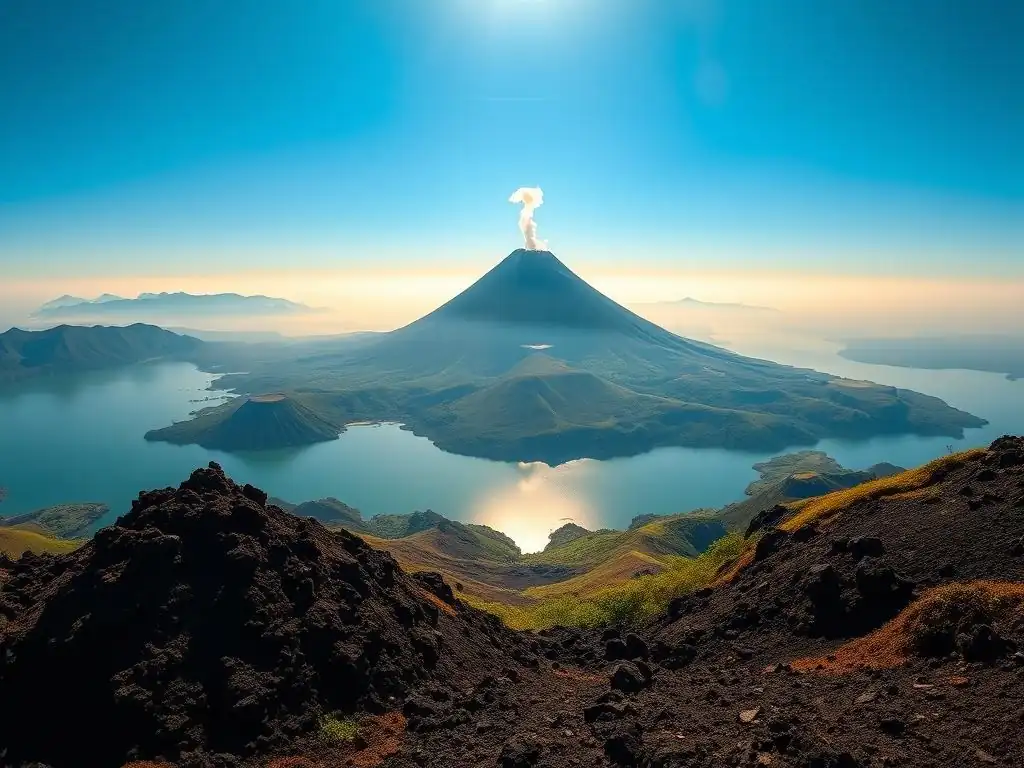
Mastering composition is key to creating compelling photographs of Taal Volcano. Given the naturally dramatic landscape, employing techniques like leading lines and framing can significantly enhance the visual impact. Leading lines, such as the curves of the Tagaytay Ridge road or the paths on Volcano Island, can guide the viewer's eye into the frame, drawing attention towards Taal Volcano as the main subject.
These lines create a sense of depth and perspective, making the landscape feel more immersive. Utilizing natural leading lines present in the environment adds dynamism to the composition and helps to organize the visual elements within the frame.
Framing is another powerful compositional tool to employ at Taal Volcano. Using elements in the foreground to frame the volcano can create a sense of depth and context. For example, framing Taal Volcano with trees along the Tagaytay Ridge or with volcanic rocks on Volcano Island adds layers to the image and draws the viewer's focus to the central subject.
Framing can also help to isolate the volcano from distracting elements and create a more visually cohesive image. Experimenting with different foreground elements and framing techniques can lead to unique and captivating compositions that showcase the beauty of photographing Taal Volcano.
Mastering Light: Golden Hour and Blue Hour Photography
Light is paramount in photography, and understanding how to utilize the golden hour and blue hour is crucial for capturing the most evocative images of Taal Volcano. The golden hour, the period shortly after sunrise and before sunset, is characterized by warm, soft light that casts long shadows and enhances colors. During the golden hour at Taal Volcano, the landscape transforms as the warm light illuminates the volcanic cones and caldera rim, creating a rich and inviting atmosphere.
The low angle of the sun emphasizes textures and details, adding depth and dimension to the photographs. Shooting during the golden hour is ideal for capturing the classic, warm-toned landscape images of Taal.
The blue hour, occurring just before sunrise and after sunset, offers a different, equally captivating light. Characterized by cool, soft, and diffused light, the blue hour creates a serene and ethereal mood. During the blue hour at Taal Volcano, the sky takes on deep blue and purple hues, contrasting beautifully with the landscape.
This time is perfect for capturing long exposure shots of Taal Lake, as the calm waters reflect the subtle colors of the sky, creating mirror-like surfaces. The blue hour also lends itself well to capturing the silhouettes of the volcanic cones against the colorful sky. Mastering both golden hour and blue hour photography allows photographers to capture the diverse moods and atmospheres of Taal Volcano, enhancing the beauty of their photographs.
Documenting Local Life: The People of Taal
Beyond the stunning landscapes, photographing Taal Volcano also offers opportunities to document the local life and communities that coexist with this natural wonder. The towns surrounding Taal Lake and the inhabitants of Volcano Island have a deep connection to the volcano, their lives intertwined with its presence.
Capturing portraits of local fishermen on Taal Lake, farmers tending to their lands on the slopes of the caldera, or villagers going about their daily routines on Volcano Island adds a human element to the photographic narrative of Taal. These images can provide context and tell a story about the relationship between people and the volcanic environment.
When documenting local life, it is crucial to approach photography with respect and sensitivity. Always seek permission before photographing individuals, and be mindful of cultural norms and customs. Engaging with the local community, learning about their traditions and livelihoods related to Taal Volcano, can enrich the photographic experience and lead to more meaningful and authentic images. Photographing local markets, boats, and everyday scenes around Taal adds a layer of cultural richness to a volcano photography portfolio, showcasing not just the landscape but also the vibrant human element of the region.
Safety Considerations for Taal Volcano Photography
Understanding Volcanic Hazards
Safety is paramount when photographing Taal Volcano, especially considering its active nature and potential volcanic hazards. Taal Volcano is classified as a complex volcano with a history of explosive eruptions. Understanding the potential hazards is crucial for planning a safe photography trip. These hazards include steam explosions, ashfall, volcanic gases, and potentially larger eruptive events. While large-scale eruptions are less frequent, smaller steam-driven or phreatic eruptions can occur with little warning, posing risks, particularly on Volcano Island and near the Main Crater Lake.
Photographers should stay informed about the current volcanic alert level issued by PHIVOLCS (Philippine Institute of Volcanology and Seismology). PHIVOLCS provides real-time updates and advisories on Taal Volcano's activity. It is essential to heed any warnings or restrictions issued by local authorities and avoid venturing into areas that are designated as danger zones. Understanding the potential hazards, staying informed about the volcano's status, and respecting safety guidelines are vital for a safe and responsible photography experience at Taal Volcano.
Essential Safety Gear: Masks and Sturdy Shoes
Equipping oneself with essential safety gear is a practical step to mitigate potential risks when photographing Taal Volcano. Given the possibility of steam vents, ashfall, and volcanic gases, wearing a face mask, ideally an N95 or equivalent, is highly recommended, especially when on Volcano Island or near active areas. Volcanic ash can be irritating to the respiratory system, and volcanic gases, though usually in low concentrations, can also pose health risks. A mask provides a basic level of protection against these hazards.
Sturdy, closed-toe shoes are another essential piece of safety gear. The terrain on Volcano Island can be uneven, rocky, and potentially slippery, especially near steam vents or after rain. Sturdy shoes provide ankle support and protect feet from sharp rocks and hot surfaces. Long pants and long-sleeved shirts are also advisable to protect skin from sun exposure and potential minor abrasions. Carrying a first-aid kit with basic supplies is also a prudent precaution. While photographing Taal Volcano, being prepared with appropriate safety gear enhances personal safety and allows for a more comfortable and confident exploration of the volcanic environment.
Respecting Local Guidelines
Respecting local guidelines and regulations is a fundamental aspect of responsible photography at Taal Volcano. Local authorities and park management often have specific rules and guidelines in place to ensure visitor safety and minimize environmental impact. These guidelines may include designated trails, restricted areas, and regulations regarding access to certain parts of Volcano Island or the Main Crater Lake. It is crucial to be aware of and adhere to these guidelines.
Following the instructions of local guides and boat operators is also essential. They possess local knowledge of the area, including potential hazards and safe routes. Respecting their expertise and guidance contributes to a safer and more enjoyable experience. Furthermore, being mindful of local customs and traditions is important when interacting with communities around Taal Volcano. Responsible photography at Taal involves not only capturing its beauty but also respecting the environment, local regulations, and the communities that call this volcanic region home.
Showcasing Taal Volcano's Unique Features
Photographing the Crater Lake: Reflections and Colors
Taal Volcano’s Main Crater Lake, often referred to as Yellow Lake or simply Crater Lake, is a captivating feature that offers unique photographic opportunities. The lake's surface, often still and reflective, provides stunning opportunities to capture reflections of the surrounding volcanic cones and the sky. On calm days, the lake acts as a natural mirror, doubling the visual impact of the landscape and creating symmetrical compositions. Photographing these reflections, particularly during the golden hour or blue hour, can result in ethereal and dreamlike images.
The colors of the Crater Lake itself are also noteworthy. Depending on the mineral content and light conditions, the lake can exhibit varying hues, from deep blues and greens to yellowish or even reddish tones. These color variations add visual interest and can be emphasized in photographs.
Capturing the interplay of light on the lake's surface, the subtle shifts in color, and the reflections of the surrounding volcanic landscape are all key elements in effectively photographing the beauty of Taal Volcano's Crater Lake. Experimenting with different angles and times of day can reveal the diverse visual character of this unique volcanic lake.
Capturing Volcanic Cones and Landscapes
The volcanic cones and broader landscapes of Taal Volcano offer a diverse range of photographic subjects beyond the Crater Lake. Volcano Island itself is composed of several distinct volcanic cones, each with its own shape and texture. Photographing these cones from different angles, highlighting their geological forms and the surrounding volcanic terrain, can create visually striking images. Using telephoto lenses to isolate individual cones or wide-angle lenses to capture them within the larger landscape provides varied perspectives.
The overall volcanic landscape of Taal, including the caldera rim, Taal Lake, and Volcano Island, presents opportunities for grand panoramic shots. Capturing the scale and vastness of the caldera from vantage points on Tagaytay Ridge, or exploring the rugged terrain of Volcano Island to find unique perspectives, allows photographers to showcase the dramatic geological features of Taal. Paying attention to textures, patterns, and the interplay of light and shadow across the volcanic landscape enhances the visual impact of these photographs, highlighting the raw beauty of photographing Taal Volcano’s natural environment.
Documenting Volcanic Activity: Steam Vents
While always maintaining a safe distance, documenting volcanic activity, such as steam vents, can add a dynamic and intriguing element to Taal Volcano photography. Steam vents, also known as fumaroles, are visible manifestations of the volcano's ongoing geothermal activity. These vents release steam and gases from beneath the surface, creating plumes that rise into the air. Photographing these steam vents can capture the volcano's living, breathing nature and provide visual evidence of its dynamic processes.
Capturing steam vents effectively often involves using telephoto lenses to bring these features closer and isolate them against the surrounding landscape. Photographing steam vents during cooler times of the day, such as early morning, can make the steam plumes more visible against the background. However, it is crucial to maintain a safe distance from steam vents as they can release hot gases and steam.
Always prioritize safety and observe steam vents from designated viewing areas or at a safe distance. Documenting these features adds a scientific and educational dimension to Taal Volcano photography, showcasing the active geological processes at play.
Post-Processing Tips for Taal Volcano Photos
Optimizing Images for Web and Print
Post-processing plays a crucial role in enhancing and optimizing Taal Volcano photographs for both web display and print. For web use, images need to be optimized for file size to ensure fast loading times on websites and social media platforms. This typically involves resizing images to appropriate dimensions, such as 1920 pixels on the longest side, and compressing them using software like Adobe Photoshop or online image optimizers. Maintaining a balance between image quality and file size is key for web optimization.
For print, the focus shifts to maximizing image quality and detail. Images intended for print should be processed at their full resolution to retain all the captured detail. Sharpening is often applied to enhance details for print, but it should be done judiciously to avoid over-sharpening. Color management is also important for print, ensuring accurate color reproduction. Calibrating your monitor and using color profiles can help achieve consistent colors from screen to print. Optimizing images differently for web and print ensures they look their best in their intended medium.
Enhancing Colors and Details
Post-processing offers tools to enhance the colors and details in Taal Volcano photographs, bringing out the best in the captured scenes. Adjusting white balance is often the first step to ensure accurate colors. Fine-tuning exposure and contrast can improve the overall tonal range of the image, bringing out details in both highlights and shadows. Color saturation and vibrance adjustments can be used to enhance the natural colors of the landscape, making the greens of the vegetation and the blues of the lake more vivid, but it's important to avoid over-saturation, which can make images look unnatural.
Sharpening is a key step to enhance details and clarity in landscape photographs. Applying sharpening selectively, focusing on areas with texture like volcanic rocks and vegetation, can improve image sharpness without introducing unwanted artifacts. Noise reduction may also be necessary, especially for images shot at higher ISO settings or in low light. Using post-processing techniques judiciously can subtly enhance colors and details, bringing out the inherent beauty of photographing Taal Volcano without making the images appear overly manipulated.
Participating in Photography Communities
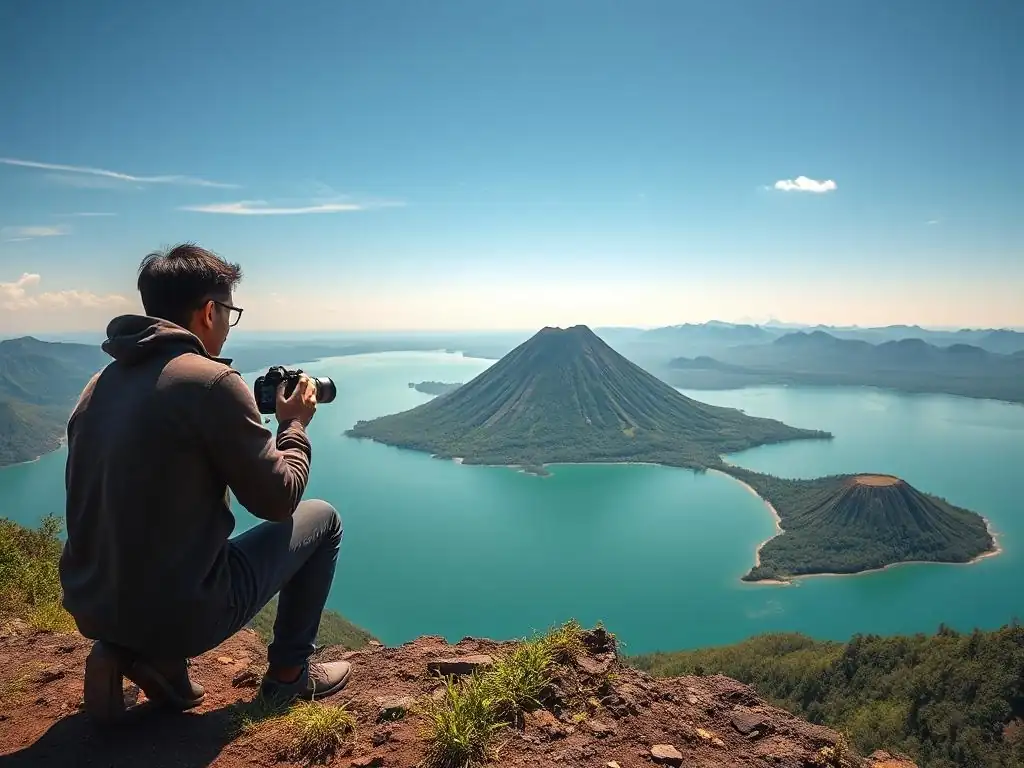
Sharing Taal Volcano photography within photography communities offers valuable opportunities for feedback, learning, and inspiration. Online platforms like Flickr, 500px, and photography forums are excellent venues to showcase your work and connect with other photographers. Sharing images in these communities allows for constructive criticism, helping photographers to identify areas for improvement in their technique and composition. Engaging with other photographers, asking questions, and participating in discussions can accelerate learning and broaden photographic perspectives.
Photography communities also serve as sources of inspiration. Viewing the work of other photographers who have photographed Taal Volcano or similar landscapes can spark new ideas and approaches to composition and subject matter. Participating in themed photography challenges or groups focused on landscape or volcano photography can provide motivation and encourage creative exploration. Sharing your work and actively engaging in photography communities is a valuable way to grow as a photographer and expand your appreciation for the art of photography.
Social media platforms like Instagram, Facebook, and Twitter provide powerful tools for showcasing Taal Volcano photography to a wider audience. These platforms are visually driven and offer opportunities to reach a diverse audience, including potential clients, collaborators, and fellow photography enthusiasts. Curating a visually appealing feed with a consistent style and theme can attract followers and build an online presence as a volcano photographer. Using relevant hashtags, such as #TaalVolcano, #VolcanoPhotography, #PhilippinesPhotography, and #LandscapePhotography, increases the discoverability of your images.
Engaging with followers, responding to comments, and participating in relevant conversations on social media helps to build connections and community around your photography. Social media can also be used to share behind-the-scenes stories, travel tips, and information about Taal Volcano, adding context and narrative to your images. Showcasing your work on social media is an effective way to share the beauty of Taal Volcano with the world, gain recognition for your photography, and potentially open up new opportunities.
Preserving Taal Volcano: Responsible Tourism
Minimizing Environmental Impact
Responsible tourism is crucial for preserving the natural beauty of Taal Volcano for future generations. Minimizing environmental impact should be a priority for photographers and all visitors. This includes practicing Leave No Trace principles: packing out all trash, staying on marked trails to avoid erosion and damage to vegetation, and avoiding disturbance to wildlife. On Volcano Island, being mindful of the fragile volcanic environment is particularly important.
Respecting the natural environment also means avoiding the use of drones in sensitive areas, as they can disturb wildlife and other visitors. Choosing eco-friendly boat operators and accommodations that prioritize sustainability contributes to responsible tourism practices. Supporting local businesses that are committed to environmental conservation helps to ensure that tourism benefits the local community while minimizing negative impacts on the environment. By being mindful of our actions and adopting responsible tourism practices, we can help preserve the unique and beautiful ecosystem of Taal Volcano.
Supporting Local Communities
Supporting local communities is an integral part of responsible tourism at Taal Volcano. Tourism can be a significant source of income for communities around Taal Lake and on Volcano Island. Choosing locally owned businesses, such as boat operators, guides, restaurants, and accommodations, ensures that tourism revenue directly benefits the local economy. Purchasing local handicrafts and products supports local artisans and preserves cultural traditions.
Engaging respectfully with local communities, learning about their culture and way of life, and being mindful of their customs enhances the travel experience and fosters positive interactions. Avoiding activities that exploit or disrespect local culture is essential. By being conscious consumers and engaging respectfully with local communities, photographers and tourists can contribute to sustainable tourism that benefits both visitors and the people who call Taal Volcano home. Supporting local communities ensures that tourism is a positive force for the region, helping to preserve both its natural and cultural heritage.
Appreciating Taal Volcano: Science and History
Learning About Taal's Eruptive History
Appreciating Taal Volcano fully involves understanding its fascinating eruptive history. Taal is one of the Philippines' most active volcanoes, with a history of numerous eruptions, some of which have been highly explosive. Learning about past eruptions, their impacts, and the geological history of Taal provides a deeper context for understanding the landscape and its dynamic nature. Resources like PHIVOLCS and academic publications offer detailed information about Taal's eruptive history.
Understanding the types of eruptions Taal has experienced, from phreatic explosions to Strombolian and Vulcanian eruptions, provides insight into the volcanic processes shaping the landscape. Learning about significant historical eruptions, such as the devastating 1911 eruption that drastically altered Volcano Island, highlights the volcano's power and potential hazards. This knowledge enhances the appreciation for the forces that have created the unique beauty of Taal Volcano and underscores the importance of respecting its active nature. A deeper understanding of Taal's eruptive history enriches the photographic experience, adding layers of scientific and historical context to every image captured.
Understanding Geological Processes
Delving into the geological processes that have shaped Taal Volcano enhances the appreciation of its unique landscape. Understanding concepts like caldera formation, volcanic cones, and hydrothermal activity provides a scientific framework for interpreting the visual features of Taal. Learning about plate tectonics and the processes that drive volcanism in the Philippines places Taal within a larger geological context. Resources from geological surveys and educational websites can provide accessible explanations of these processes.
Understanding how Taal's caldera formed through massive volcanic eruptions, how subsequent eruptions built Volcano Island and its cones, and how geothermal activity creates steam vents and alters the Crater Lake's chemistry deepens the appreciation for the volcano’s complexity. Recognizing the geological forces at work behind the stunning scenery transforms the photographic experience from simply capturing beautiful landscapes to documenting a dynamic geological phenomenon. Understanding the science behind Taal Volcano enriches the photographer's perspective and adds intellectual depth to the artistic endeavor.
Essence of Taal: Capturing Volcanic Beauty
Photographing Taal Volcano is more than just capturing scenic landscapes; it's about encapsulating the essence of a dynamic and beautiful natural wonder. It's about capturing the interplay of fire and water, the drama of volcanic landscapes, and the serenity of Taal Lake. It’s about documenting the unique geology, the vibrant colors, and the subtle details that make Taal Volcano a photographer's paradise. The essence of Taal lies in its contrasts – the ruggedness of the volcanic terrain juxtaposed with the calmness of the lake, the power of geological forces balanced with the peacefulness of the surrounding environment.
Ultimately, photographing Taal Volcano is about capturing a moment in time within a constantly evolving landscape. It’s about preserving the beauty of this volcanic wonder through the lens, sharing it with the world, and fostering an appreciation for both its aesthetic appeal and its scientific significance. By understanding its geology, respecting its power, and capturing its beauty through thoughtful photography, we can truly grasp and convey the essence of Taal Volcano, a jewel in the crown of Philippine natural wonders.
Frequently Asked Questions
What makes Taal Volcano a unique photographic subject?
Taal Volcano's uniqueness stems from its complex volcanic system, featuring a lake within a volcano island, located within a larger lake. This creates a visually stunning and rare geological formation, highly desirable for photography.
What are some essential safety precautions to consider when photographing Taal Volcano?
Prioritize safety by checking volcanic activity reports before visiting and following local authority guidelines. Be aware of potential hazards like ashfall and volcanic gases, and bring appropriate protective gear.
What are some recommended locations for capturing the best photographs of Taal Volcano?
Popular viewpoints include Tagaytay Ridge, offering panoramic views, and boat trips to Volcano Island itself (when permitted), providing closer perspectives of the crater lake. Always respect restricted areas and prioritize safety.
What photographic equipment is ideal for capturing the beauty of Taal Volcano?
A wide-angle lens is excellent for capturing the vast landscape, while a telephoto lens can zoom in on details like the crater. Consider a dust-proof camera bag and filters to protect your equipment from ash.
How can I capture the cultural significance of Taal Volcano through my photographs?
Consider documenting the local communities' relationship with the volcano, showcasing their traditions and livelihoods. Capture the impact of the volcano on their lives, both positive and negative, to tell a complete story.
Final Reflection: Capturing Ephemeral Beauty
The journey of documenting Taal Volcano's hidden beauty, as explored throughout this article, underscores the enduring power of photography to reveal the extraordinary within the seemingly ordinary. The images presented are not just snapshots; they are testaments to the resilience of nature and the captivating allure of a landscape forged in fire and water, a landscape that continues to inspire awe and wonder.
The act of photographing Taal Volcano, of seeking out its beauty amidst the potential for destruction, has profoundly influenced my perspective on the ephemeral nature of beauty itself. It's a constant reminder that even in the face of adversity, breathtaking moments exist, waiting to be captured and shared. The best and most beautiful things in the world cannot be seen or even touched - they must be felt with the heart.
- Helen Keller. This quote resonates deeply when considering the emotional connection one forms with a landscape like Taal, a connection that transcends mere visual appreciation.
Now, I invite you, the reader, to reflect on the beauty that surrounds you, often hidden in plain sight. Seek out the extraordinary in your own environment, whether it's a local park, a bustling city street, or even the faces of those you encounter daily. Embrace the challenge of capturing these moments, not just with a camera, but with your heart, and share your unique perspective with the world. Let the spirit of Taal Volcano inspire you to find and celebrate the beauty that endures, even in the most unexpected places.
Capture the Majesty: Start Your Taal Volcano Photography Adventure!
Thank you for exploring the stunning beauty of Taal Volcano with us! Now that you've discovered its photographic potential, it's time to turn inspiration into action. Let's make your next adventure unforgettable:
- Plan Your Trip: Book your Taal Volcano photography tour with Volcano Explorers and experience the wonder firsthand!:
- Share Your Images: Post your favorite volcano photos on Instagram using #VolcanoExplorers and tag @VolcanoExplorersOrg to inspire others!
- Join Our Community: Share your tips for capturing breathtaking shots in challenging volcanic landscapes on our online forum!
What unique perspective of Taal Volcano are you most eager to capture on your next adventure?