
Semeru's Tengger Caldera Views: Panoramic Volcanic Landscapes of East Java

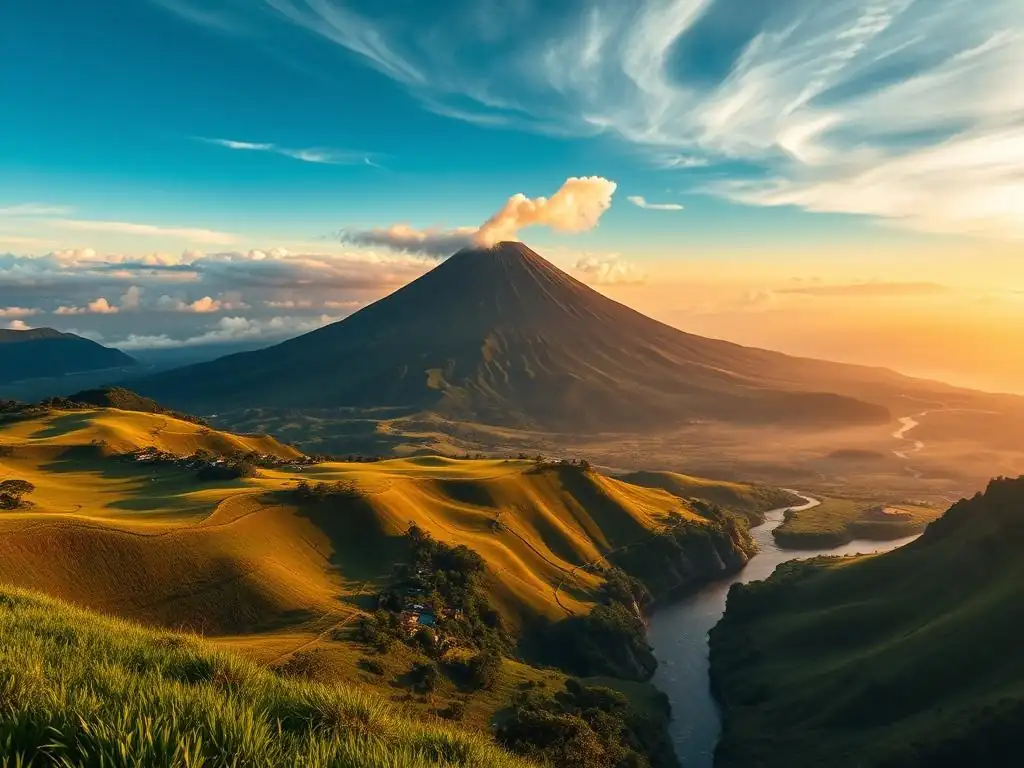
Welcome to Volcano Explorers!
Dare to glimpse into the heart of the Earth? Prepare to be mesmerized by the raw power and breathtaking beauty of volcanoes. This isn't just about fiery mountains; it's about understanding the forces that shape our planet. Are you ready to witness nature's artistry at its most dramatic? Then join us as we unveil the stunning Tengger Caldera panoramic views, a spectacle that will forever change your perception of volcanic landscapes. What secrets does this East Java wonder hold? Explore now and discover the answers...
- Discovering the Majestic Tengger Caldera: A Photographer's Paradise
- The Allure of Semeru and its Breathtaking Caldera Views
- Capturing the Tengger Caldera Panoramic Views: Photography Hotspots
- Beyond the Summit: Exploring the Tengger Caldera's Diverse Landscapes
- Planning Your Trip to Experience Tengger Caldera's Panoramic Views
- Photography Tips for Capturing the Best Tengger Caldera Panoramic Views
- Safety Precautions When Exploring the Tengger Caldera
-
Frequently Asked Questions
- What makes the Tengger Caldera famous, particularly concerning Semeru?
- Where is the Tengger Caldera located, and why is it significant to VolcanoExplorers.org?
- What kind of volcanic activity can one expect to see in the Tengger Caldera?
- What safety precautions should visitors take when exploring the Tengger Caldera?
- How does VolcanoExplorers.org showcase the cultural significance of the Tengger Caldera?
- Final Reflection: Embracing the Majesty of Tengger
- Unleash Your Inner Explorer: Capture the Majesty of Tengger!
Discovering the Majestic Tengger Caldera: A Photographer's Paradise
East Java, Indonesia, is a land of dramatic volcanic landscapes, and at its heart lies the Tengger Caldera, a geological marvel that offers some of the most breathtaking panoramic views imaginable. For photographers seeking to capture the raw power and serene beauty of nature, this caldera presents an unparalleled canvas.
Imagine standing on the rim of an ancient volcanic crater, your gaze sweeping across a vast expanse of volcanic sand, punctuated by the iconic cone of Mount Bromo and the towering presence of Mount Semeru in the distance. The Tengger Caldera is not just a destination; it's an immersive experience, a place where the earth's fiery origins are laid bare, offering endless opportunities to capture stunning Tengger Caldera panoramic views.
The allure of the Tengger Caldera extends beyond its geological significance; it's a place where natural beauty and cultural heritage intertwine. The area is home to the Tenggerese people, who maintain a unique Hindu culture, adding a layer of human history to the already dramatic landscape.
The presence of ancient temples nestled within this volcanic terrain further enhances the photographic possibilities, creating compelling juxtapositions of nature and culture. Whether you are a seasoned professional or an enthusiastic amateur, the Tengger Caldera promises a photographic journey filled with unforgettable vistas and the chance to capture truly remarkable Tengger Caldera panoramic views.
The Allure of Semeru and its Breathtaking Caldera Views
Mount Semeru, also known as Mahameru, the "Great Mountain," is the highest volcano in Java and a dominant force shaping the Tengger Caldera's visual appeal. Its imposing silhouette, often shrouded in plumes of volcanic gas, provides a dramatic backdrop to the already stunning caldera landscape. The allure of Semeru is undeniable; it's an active volcano, a constant reminder of the powerful geological forces at play, and its presence elevates the experience of witnessing Tengger Caldera panoramic views to something truly extraordinary.
The Tengger Caldera itself is a vast depression, formed by a series of volcanic eruptions and collapses over millennia. Within this caldera, several younger volcanic cones have emerged, most notably Mount Bromo, Mount Batok, and Mount Kursi, creating a complex and visually rich terrain.
The interplay between these volcanic features, with Semeru looming in the background, is what makes the Tengger Caldera panoramic views so captivating. The scale of the landscape is immense, and from various vantage points around the caldera rim, photographers can capture sweeping vistas that encompass the entire volcanic theater, with Semeru acting as the majestic centerpiece of these breathtaking Tengger Caldera panoramic views.
Semeru Volcano: A Dominant Feature of the East Java Landscape
Semeru stands as a majestic stratovolcano, soaring to an elevation of 3,676 meters (12,060 feet) above sea level, making it the highest point in Java. Its near-constant activity, characterized by Strombolian eruptions and frequent ash plumes, adds a dynamic element to the landscape.
According to the Volcanological Survey of Indonesia (PVMBG), Semeru typically experiences small eruptions multiple times a day, often sending ash clouds hundreds of meters into the air. This consistent activity means that photographers capturing Tengger Caldera panoramic views often have the opportunity to include Semeru's eruptive displays in their compositions, adding a powerful symbol of volcanic energy to their images.
Beyond its eruptive activity, Semeru's sheer size dominates the horizon, influencing weather patterns and creating dramatic lighting conditions within the Tengger Caldera. The mountain's presence can lead to orographic clouds forming around its peak, particularly during the wetter months, creating ethereal and mystical scenes. Conversely, during drier periods, the clear air allows for unobstructed views of Semeru's perfectly conical shape against the blue sky. The interplay of light and shadow across Semeru’s slopes, combined with the vastness of the Tengger Caldera below, contributes significantly to the unforgettable Tengger Caldera panoramic views that attract photographers from around the globe.
Unveiling the Beauty of the Tengger Caldera: A Geological Marvel
The Tengger Caldera is not merely a scenic location; it's a geological marvel, a testament to the Earth's powerful formative processes. This massive caldera, approximately 10 kilometers (6 miles) in diameter, was formed in a series of cataclysmic eruptions, the last of which occurred tens of thousands of years ago. These eruptions emptied vast magma chambers beneath the surface, leading to the collapse of the overlying land and the creation of the caldera depression. The sheer scale of this geological event is hard to fathom, but the resulting landscape is a stunning visual representation of volcanic forces at work.
Within the Tengger Caldera, the landscape is further sculpted by younger volcanic cones that have risen from the caldera floor. Mount Bromo, perhaps the most famous, is an active cinder cone that regularly emits sulfurous fumes. Mount Batok, in contrast, is an inactive cone with a beautifully symmetrical shape, covered in lush vegetation.
These contrasting volcanic forms, set within the vast expanse of the caldera floor, create a unique and visually arresting environment. The geological diversity within the Tengger Caldera is a key element of its beauty, offering photographers a range of textures, shapes, and perspectives to capture in their Tengger Caldera panoramic views.
Capturing the Tengger Caldera Panoramic Views: Photography Hotspots
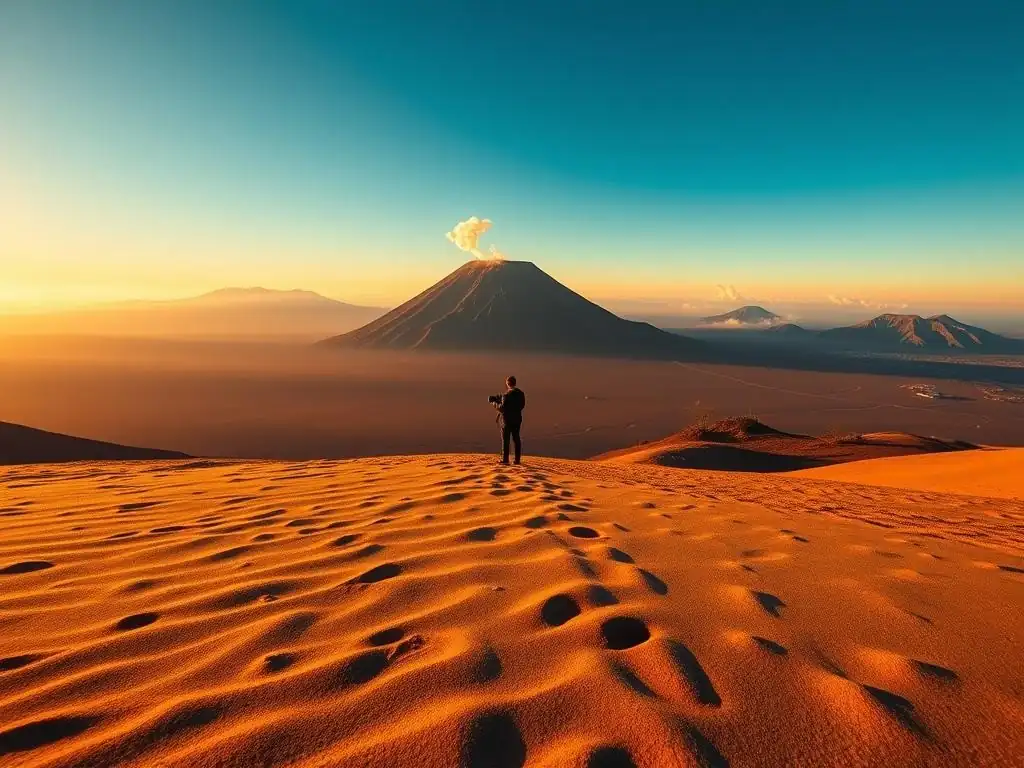
The Tengger Caldera offers numerous vantage points for capturing its stunning panoramic views, each providing a slightly different perspective and photographic opportunity. From the caldera rim, various hills and viewpoints offer elevated positions to survey the entire volcanic landscape. These hotspots are strategically located to maximize the visual impact of the sunrise, the caldera floor, and the imposing presence of Mount Semeru. Understanding the unique characteristics of each location is crucial for photographers aiming to capture the best Tengger Caldera panoramic views.
These photography hotspots are not only about the vista; they also offer diverse foreground elements that can enhance compositions. From the rugged terrain of the caldera rim to the subtle textures of the volcanic sand sea below, photographers can find compelling foregrounds to lead the eye into the panoramic scene. The interplay of light and shadow across these foreground elements, especially during the golden hours of sunrise and sunset, adds depth and dimension to Tengger Caldera panoramic views, transforming them into truly captivating images.
Sunrise Spectacles: Prime Locations for Dawn Photography in the Tengger Caldera
Sunrise in the Tengger Caldera is a truly magical experience, painting the volcanic landscape in hues of gold, orange, and pink. To witness this spectacle and capture breathtaking sunrise Tengger Caldera panoramic views, several locations stand out as prime spots. Penanjakan Hill, also known as Viewpoint 1, is perhaps the most famous and popular sunrise viewpoint.
Located on the caldera rim, it offers a classic panoramic vista encompassing Mount Bromo, Mount Batok, the Sea of Sand, and Mount Semeru in the distance. While Penanjakan can be crowded, especially during peak season, its easily accessible location and iconic view make it a must-visit for sunrise photography.
For a slightly less crowded but equally stunning sunrise experience, consider King Kong Hill. Situated a bit further along the caldera rim from Penanjakan, King Kong Hill provides a similar panoramic perspective but often with fewer tourists. The slightly different angle from King Kong Hill can also offer unique compositions of the Tengger Caldera panoramic views, particularly with Mount Batok more prominently featured in the foreground.
Another excellent option is Love Hill, also known as Bukit Cinta. This viewpoint is located closer to the village of Cemoro Lawang and offers a slightly different angle on the caldera, providing a more intimate view of Mount Bromo and the surrounding landscape during sunrise. Each of these locations provides a unique vantage point to capture the awe-inspiring sunrise and the resulting Tengger Caldera panoramic views.
Milky Way Magic: Astrophotography Opportunities Above Mount Bromo and the Tengger Caldera
The Tengger Caldera, with its high altitude and minimal light pollution, presents exceptional opportunities for astrophotography, particularly capturing the Milky Way arcing across the volcanic landscape. The clear, dry air at this elevation significantly reduces atmospheric distortion, allowing for crisp and detailed images of the night sky. Mount Bromo and the surrounding volcanic cones provide dramatic foreground elements for astrophotography compositions, creating striking juxtapositions of earthly and celestial wonders in Tengger Caldera panoramic views.
Locations like Penanjakan Hill and King Kong Hill, which are popular for sunrise, also transform into excellent astrophotography spots after dark. From these elevated viewpoints, photographers can capture wide-angle shots of the Milky Way stretching above the entire Tengger Caldera. The silhouette of Mount Bromo against the starry sky is a classic astrophotography image from this region.
Furthermore, the vast expanse of the Sea of Sand within the caldera can reflect starlight on moonless nights, adding another layer of visual interest to astrophotography compositions. To maximize the Milky Way visibility, photographers should plan their astrophotography sessions during new moon phases and check for clear weather forecasts to ensure optimal conditions for capturing the Milky Way magic above the Tengger Caldera panoramic views.
Mentigen Hill: A Detailed Photographic Guide
Mentigen Hill offers a unique and often overlooked perspective of the Tengger Caldera, providing a more intimate and less crowded alternative to the more popular viewpoints. Located closer to Cemoro Lawang village, Mentigen Hill is easily accessible by a short walk and offers a slightly lower vantage point, resulting in a different framing of the Tengger Caldera panoramic views. From Mentigen Hill, Mount Bromo appears more dominant in the foreground, and the overall composition feels more focused on the immediate volcanic features within the caldera.
The beauty of Mentigen Hill lies in its accessibility and the unique photographic opportunities it presents. It is particularly well-suited for capturing sunrise and golden hour light bathing Mount Bromo and the Sea of Sand. The lower elevation allows for more detailed foreground elements, such as the vegetation on the hill itself or the village of Cemoro Lawang nestled below.
Mentigen Hill is also an excellent location for capturing panoramic shots using a longer focal length lens, allowing photographers to isolate specific areas of interest within the Tengger Caldera panoramic views, such as the Bromo crater or the textures of the Sea of Sand. For photographers seeking a quieter and more nuanced perspective of the Tengger Caldera, Mentigen Hill is a highly recommended spot.
King Kong Hill: Capturing the Essence of the Caldera
King Kong Hill has emerged as a favored viewpoint for photographers seeking to capture the essence of the Tengger Caldera panoramic views. While sharing similarities with Penanjakan Hill in terms of the overall vista, King Kong Hill offers a slightly different angle and a generally less crowded experience. Reaching King Kong Hill typically involves a slightly longer and more challenging trek compared to Penanjakan, which often deters some of the casual tourist crowds, making it a more appealing option for dedicated photographers.
From King Kong Hill, the Tengger Caldera panoramic views unfold in a truly breathtaking manner. Mount Bromo, Mount Batok, the Sea of Sand, and Mount Semeru are all prominently visible, creating a classic and iconic composition. The slightly higher elevation and angle from King Kong Hill can offer a more expansive sense of the caldera's vastness, emphasizing the scale of the volcanic landscape.
King Kong Hill is particularly renowned for its sunrise views, with the golden light illuminating Mount Bromo and casting long shadows across the Sea of Sand. The rugged terrain around King Kong Hill also provides interesting foreground elements, such as volcanic rocks and sparse vegetation, adding texture and depth to Tengger Caldera panoramic views captured from this vantage point.
Beyond the Summit: Exploring the Tengger Caldera's Diverse Landscapes
While panoramic views from the caldera rim are undoubtedly a highlight, the Tengger Caldera's beauty extends far beyond these elevated perspectives. Descending into the caldera reveals a diverse range of volcanic landscapes, each offering unique photographic opportunities. From the surreal Sea of Sand to the active Bromo crater and the culturally significant Luhur Poten Temple, exploring the caldera floor provides a richer and more immersive experience of this volcanic wonderland. These locations within the caldera offer different photographic subjects and perspectives, complementing the broader Tengger Caldera panoramic views captured from above.
Exploring the caldera floor allows photographers to engage with the volcanic landscape on a more intimate level. Walking across the Sea of Sand provides a sense of scale and isolation, while approaching the Bromo crater offers a visceral encounter with active volcanism. The Luhur Poten Temple, nestled at the foot of Mount Bromo, adds a layer of cultural and historical depth to the volcanic scenery. These diverse landscapes within the Tengger Caldera offer a wealth of photographic subjects that go beyond the classic panoramic vistas, providing a more complete and nuanced understanding of this remarkable volcanic region.
The Sea of Sand (Pasir Berbisik): A Unique Volcanic Landscape
The Sea of Sand, locally known as Pasir Berbisik (Whispering Sands), is a vast expanse of volcanic sand that stretches across a significant portion of the Tengger Caldera floor. This surreal landscape, resembling a desert within a volcanic crater, is a unique geological feature and a fascinating subject for photography. The fine volcanic sand, accumulated over centuries of volcanic activity, creates undulating dunes and subtle textures that shift with the changing light, offering endless photographic possibilities.
Walking across the Sea of Sand provides a sense of isolation and vastness, with the surrounding caldera walls and volcanic cones framing the horizon. The textures of the sand, particularly when illuminated by the low-angle light of sunrise or sunset, become incredibly detailed and visually captivating. Photographers can experiment with wide-angle lenses to capture the scale of the Sea of Sand or use telephoto lenses to isolate patterns and textures within the dunes.
The Sea of Sand also presents opportunities for creative compositions, such as capturing footprints in the sand or incorporating silhouettes against the vast expanse. This unique volcanic landscape adds a distinctive dimension to the Tengger Caldera panoramic views and provides a contrasting perspective to the elevated vistas from the caldera rim.
The Bromo Crater: Witnessing Active Volcanic Activity Up Close
Mount Bromo's crater is the heart of the Tengger Caldera's active volcanism, offering a thrilling and visceral experience for visitors and photographers alike. Reaching the crater rim involves a trek across the Sea of Sand and climbing a series of stairs leading up the volcano's slope. Upon reaching the rim, the sight and sound of the active crater are truly awe-inspiring. Sulfurous fumes billow from the crater, and the rumbling sounds of volcanic activity can be heard and felt, providing a powerful reminder of the Earth's inner forces.
Photographing the Bromo crater requires careful consideration of safety due to the volcanic gases and the exposed location. However, the visual rewards are immense. The vibrant yellow sulfur deposits around the crater rim, the plumes of smoke and steam, and the dramatic inner walls of the crater create a dynamic and otherworldly scene.
Photographers can capture close-up details of the crater's textures and colors or use wider angles to incorporate the surrounding caldera landscape and the line of visitors observing the volcanic activity. Witnessing and photographing the Bromo crater up close adds a unique and unforgettable element to the Tengger Caldera panoramic views and provides a tangible connection to the volcanic forces that shaped this region.
The Luhur Poten Temple: Cultural Significance Within the Caldera
Nestled at the foot of Mount Bromo, within the Sea of Sand, lies the Luhur Poten Temple, a significant Hindu temple for the Tenggerese people. This temple adds a layer of cultural and spiritual depth to the volcanic landscape, creating a compelling juxtaposition of natural wonder and human devotion. The Luhur Poten Temple is particularly active during the Yadnya Kasada festival, an annual Hindu ceremony where offerings are thrown into the Bromo crater. However, even outside of the festival, the temple provides a beautiful and culturally rich element within the Tengger Caldera panoramic views.
The temple's architecture, with its tiered roofs and intricate carvings, stands in stark contrast to the surrounding volcanic terrain. Photographers can capture the temple against the backdrop of Mount Bromo, creating images that blend cultural heritage with natural beauty.
The temple is especially photogenic during sunrise and sunset, when the golden light illuminates its structures and casts long shadows across the Sea of Sand. Exploring the Luhur Poten Temple provides not only photographic opportunities but also a chance to appreciate the cultural significance of the Tengger Caldera for the local Tenggerese community, enriching the overall experience of witnessing Tengger Caldera panoramic views.
Planning Your Trip to Experience Tengger Caldera's Panoramic Views
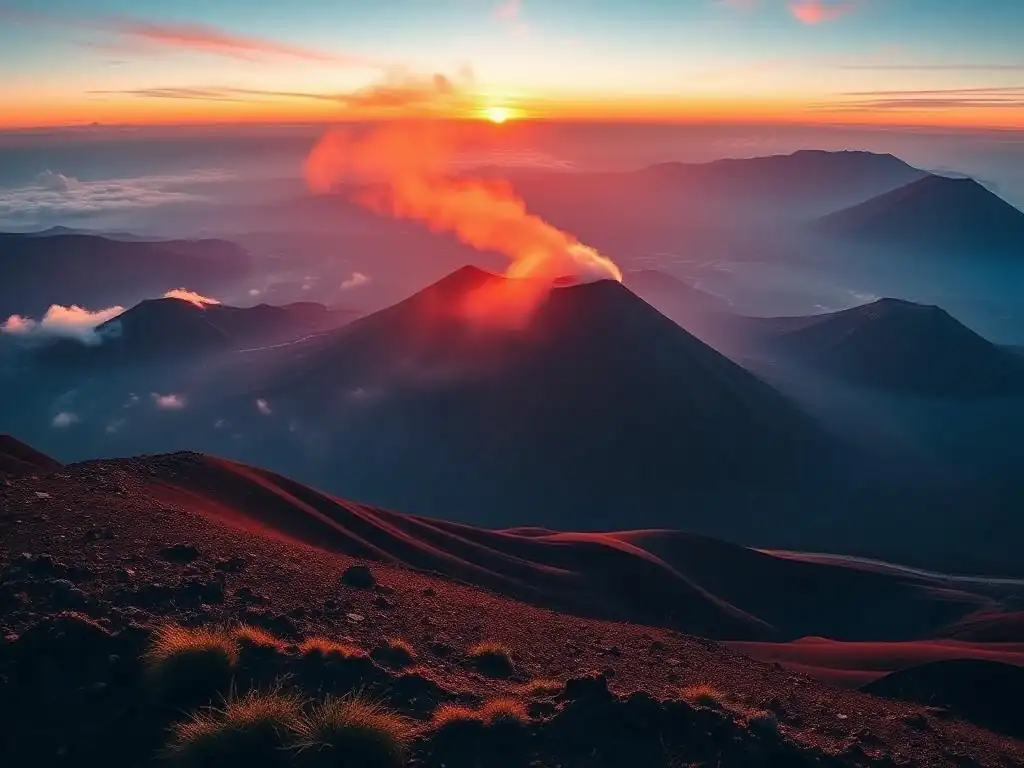
Planning a trip to experience the Tengger Caldera panoramic views requires considering several factors to ensure an optimal and enjoyable visit. The best time to visit, transportation options, and accommodation choices all play crucial roles in the overall experience. Careful planning will maximize photographic opportunities and ensure a smooth and comfortable journey to this remarkable volcanic destination.
Understanding the logistical aspects of visiting the Tengger Caldera is essential for photographers aiming to capture the best possible Tengger Caldera panoramic views. From choosing the right season to arranging transportation and selecting suitable accommodation, each element contributes to the overall success of a photography trip to this stunning location.
Best Time to Visit the Tengger Caldera for Optimal Photography
The best time to visit the Tengger Caldera for optimal photography, especially for capturing Tengger Caldera panoramic views, is during the dry season, which typically runs from May to September. During these months, rainfall is minimal, skies are generally clear, and visibility is at its best. This period offers the highest chance of witnessing stunning sunrises and sunsets, and it's also ideal for astrophotography due to reduced cloud cover. The dry season also coincides with cooler temperatures, making hiking and exploring the caldera more comfortable.
The shoulder months of April and October can also be good options, offering a balance between drier weather and fewer crowds compared to the peak dry season. However, there is a slightly higher chance of rain during these months. The wet season, from November to March, is generally less favorable for photography due to frequent rainfall, cloudy skies, and reduced visibility.
While dramatic cloudscapes can sometimes occur during the wet season, the overall chances of capturing clear and unobstructed Tengger Caldera panoramic views are significantly lower. Therefore, planning a trip during the dry season or shoulder months is highly recommended for photographers seeking the best conditions for capturing the beauty of the Tengger Caldera.
Getting to the Tengger Caldera: Transportation Options and Accessibility
Reaching the Tengger Caldera involves a multi-stage journey, typically starting from Malang or Surabaya, the major cities in East Java. The most common gateway to the Tengger Caldera is the village of Cemoro Lawang, located on the caldera rim. From Malang or Surabaya, visitors can hire a private car or join a tour group for transportation to Cemoro Lawang. The journey by car takes approximately 3-4 hours from Malang and 4-5 hours from Surabaya, depending on traffic conditions.
Another option, particularly for budget travelers, is to take a public bus from Malang or Surabaya to Probolinggo, the nearest major town to the Tengger Caldera. From Probolinggo, local minibuses, known as bemo, or shared jeeps are available to transport visitors to Cemoro Lawang. The public transportation route is more time-consuming and can be less comfortable, but it is a significantly cheaper alternative.
Once in Cemoro Lawang, most viewpoints within the caldera, such as Penanjakan Hill and King Kong Hill, are accessible by jeep or by trekking. Jeep tours are readily available in Cemoro Lawang and are a popular way to explore the caldera, especially for sunrise excursions to capture Tengger Caldera panoramic views.
Accommodation Options Near the Tengger Caldera: Where to Stay
Accommodation options near the Tengger Caldera are primarily concentrated in the village of Cemoro Lawang, located on the caldera rim, and in the town of Probolinggo, at a lower elevation. Cemoro Lawang offers the most convenient access to the caldera viewpoints, making it the preferred choice for photographers aiming to capture sunrise Tengger Caldera panoramic views. Accommodation in Cemoro Lawang ranges from basic guesthouses and homestays to more comfortable hotels. Options like Bromo Permai I, Cemara Indah Hotel, and Cafe Lava Hostel are popular choices, offering varying levels of comfort and price.
Staying in Cemoro Lawang allows for easy access to sunrise viewpoints and minimizes travel time for early morning photography sessions. However, accommodation in Cemoro Lawang can be more expensive and basic compared to options in Probolinggo. Probolinggo, located about an hour's drive from Cemoro Lawang, offers a wider range of hotels and guesthouses at generally lower prices.
Staying in Probolinggo requires an early morning commute to reach the caldera viewpoints for sunrise, typically involving a jeep transfer to Cemoro Lawang. Choosing between Cemoro Lawang and Probolinggo depends on budget, desired comfort level, and the priority of easy access to sunrise photography locations for capturing Tengger Caldera panoramic views.
Photography Tips for Capturing the Best Tengger Caldera Panoramic Views
Capturing the best Tengger Caldera panoramic views requires not only being in the right place at the right time but also employing effective photography techniques and using appropriate equipment. Volcanic landscapes present unique challenges and opportunities, and understanding how to optimize your photography gear and skills is essential for capturing truly stunning images. From choosing the right lenses to mastering composition and dealing with challenging weather conditions, these photography tips will help you elevate your Tengger Caldera panoramic view photography.
Effective photography in the Tengger Caldera involves a combination of technical skills, creative vision, and adaptability to the unique environment. By mastering essential equipment, composition techniques, and strategies for dealing with weather challenges, photographers can maximize their chances of capturing exceptional Tengger Caldera panoramic views.
Essential Equipment for Volcano Photography
Essential equipment for volcano photography, particularly for capturing Tengger Caldera panoramic views, includes a range of lenses, a sturdy tripod, and appropriate camera accessories. A wide-angle lens, such as a 16-35mm or similar, is crucial for capturing the expansive panoramic vistas of the caldera landscape.
This lens will allow you to encompass the vastness of the Sea of Sand, the volcanic cones, and the distant Mount Semeru in a single frame. A telephoto lens, such as a 70-200mm or longer, is also valuable for isolating specific features within the landscape, such as the Bromo crater or details on Mount Semeru, and for compressing perspective in panoramic compositions.
A mid-range zoom lens, like a 24-70mm, provides versatility for general landscape photography and capturing closer details. A sturdy tripod is essential for sharp images, especially during sunrise and sunset when light levels are low, and for long exposures in astrophotography. Filters, such as a polarizing filter to reduce glare and enhance colors and neutral density (ND) filters for long exposures, can also be beneficial. Protecting your equipment from volcanic dust is crucial.
Bring lens cleaning cloths and consider using protective camera bags and rain covers. Having spare batteries and memory cards is also essential, as charging opportunities may be limited in remote areas of the caldera. With the right equipment, photographers can be well-prepared to capture the best Tengger Caldera panoramic views.
Mastering Composition in Volcanic Landscapes
Mastering composition is paramount for capturing compelling Tengger Caldera panoramic views. Volcanic landscapes offer a wealth of visual elements, and effective composition techniques can help organize these elements into impactful images. Leading lines, such as the edges of the caldera rim or paths through the Sea of Sand, can guide the viewer's eye into the panoramic scene and create a sense of depth. Rule of thirds is a classic compositional guideline that can be effectively applied to volcanic landscapes, placing key elements like Mount Bromo or Mount Semeru off-center to create a more balanced and dynamic composition.
Foreground interest is crucial in panoramic photography. Incorporate elements in the foreground, such as volcanic rocks, vegetation, or even human figures, to add depth and scale to the scene. Layering different elements, such as the Sea of Sand in the foreground, Mount Bromo in the mid-ground, and Mount Semeru in the background, can create a sense of depth and visual richness in Tengger Caldera panoramic views.
Pay attention to lines and shapes within the volcanic landscape. The conical shapes of the volcanoes, the curves of the caldera rim, and the patterns in the Sea of Sand can all be used to create strong visual compositions. Experiment with different perspectives and viewpoints to find the most compelling way to arrange the elements within the frame and capture truly captivating Tengger Caldera panoramic views.
Dealing with Challenging Weather Conditions in the Caldera
Dealing with challenging weather conditions is an integral part of volcano photography, especially in the Tengger Caldera. Weather in mountainous volcanic regions can be unpredictable and change rapidly. Fog and mist are common, particularly in the early morning and late afternoon, and while they can create atmospheric and ethereal scenes, they can also obscure panoramic views. Rain is possible, especially during the wet season, and can make hiking trails slippery and uncomfortable. Strong winds can be encountered at higher elevations, making it challenging to keep equipment stable, particularly tripods.
To prepare for challenging weather, dress in layers to adapt to temperature changes. Bring waterproof and windproof outerwear to protect yourself from rain and wind. Use protective gear for your camera equipment, such as rain covers and lens hoods, to shield them from moisture and dust. Check the weather forecast before heading out and be prepared for changes.
Be flexible with your photography plans and be ready to adapt to the prevailing conditions. Sometimes, even challenging weather can create unique and dramatic photographic opportunities. For example, fog rolling across the caldera or dramatic cloud formations around Mount Semeru can add a sense of drama and mystery to Tengger Caldera panoramic views. Embrace the changing weather and be prepared to capture the beauty in all conditions.
Safety Precautions When Exploring the Tengger Caldera
Exploring the Tengger Caldera is an adventurous experience, but it's essential to prioritize safety due to the volcanic environment and high altitude. Understanding potential volcanic hazards, taking precautions against altitude sickness, and being mindful of hiking safety are crucial aspects of responsible exploration. By taking appropriate safety measures, visitors can enjoy the beauty of the Tengger Caldera panoramic views while minimizing risks.
Safety in the Tengger Caldera requires awareness, preparation, and adherence to safety guidelines. Understanding the potential hazards and taking preventative measures is essential for a safe and enjoyable experience in this remarkable volcanic landscape.
Understanding Volcanic Hazards and Mitigation Strategies
Understanding volcanic hazards is paramount when exploring the Tengger Caldera, especially given the active nature of Mount Bromo and Mount Semeru. Volcanic ash is a common hazard, particularly during eruptions. Ash can irritate the eyes and respiratory system and can also make surfaces slippery.
Wearing a dust mask or respirator and eye protection is advisable, especially when Bromo is actively emitting ash. Volcanic gases, such as sulfur dioxide, are also released from Bromo's crater and can be harmful in high concentrations. Avoid lingering too close to the crater rim and be aware of wind direction to minimize exposure to volcanic gases.
Phreatic eruptions, steam-driven explosions, can occur suddenly and without warning at Bromo. Heed any warnings or advisories from local authorities and park rangers regarding volcanic activity. Lava flows are not a primary hazard at Bromo or within the Tengger Caldera itself, but lahars (volcanic mudflows) can occur during heavy rainfall, especially on the slopes of Semeru.
Be aware of potential lahar paths, particularly in river valleys and drainage channels. Earthquakes can also be associated with volcanic activity, although they are typically minor in the Tengger Caldera region. Staying informed about volcanic activity levels, heeding local warnings, and taking appropriate precautions are essential mitigation strategies for exploring the Tengger Caldera safely and enjoying its panoramic views.
Staying Safe at High Altitude: Acclimatization and Prevention
Staying safe at high altitude is crucial when visiting the Tengger Caldera, as the elevation ranges from around 2,100 meters (6,900 feet) at Cemoro Lawang to over 2,700 meters (8,900 feet) at Penanjakan Hill. Altitude sickness, also known as acute mountain sickness (AMS), can occur at these elevations, especially for visitors who are not acclimatized. Symptoms of AMS can include headache, nausea, dizziness, fatigue, and shortness of breath.
To prevent altitude sickness, acclimatize gradually by spending a night at a lower elevation before ascending to Cemoro Lawang. Ascend slowly and avoid strenuous activity on your first day at high altitude.
Stay hydrated by drinking plenty of water. Avoid alcohol and caffeine, as they can dehydrate you and worsen altitude sickness symptoms. Eat light meals and avoid heavy, greasy foods. If you start to experience symptoms of altitude sickness, descend to a lower elevation immediately.
Mild symptoms may improve with rest and hydration, but severe symptoms require prompt descent and medical attention. Consult your doctor before traveling to high altitude if you have any pre-existing medical conditions. Being aware of the risks of altitude sickness and taking preventative measures will help ensure a safe and enjoyable experience of the Tengger Caldera panoramic views.
Important Considerations for Hiking and Trekking in the Caldera
Important considerations for hiking and trekking in the Tengger Caldera include physical fitness, appropriate gear, and awareness of trail conditions. While hiking to viewpoints like Penanjakan Hill or King Kong Hill is not technically challenging, it does involve some uphill walking at altitude. Assess your physical fitness and choose trails that are appropriate for your abilities. Wear sturdy hiking shoes with good ankle support, as the terrain can be uneven and rocky. Dress in layers to adjust to changing temperatures and weather conditions. Bring sunscreen, a hat, and sunglasses to protect yourself from the sun, especially at high altitude.
Carry plenty of water to stay hydrated, especially during longer treks. Bring snacks for energy. Inform someone of your hiking plans and expected return time, especially if hiking alone. Stick to marked trails and avoid venturing off-path, as it can be easy to get disoriented in the volcanic landscape.
Be aware of trail conditions, which can be dusty, sandy, or slippery in places. Start hikes early in the morning to avoid the midday heat and to maximize your chances of clear weather for Tengger Caldera panoramic views. Be respectful of the environment and avoid littering. By being prepared and mindful of these considerations, you can enjoy safe and rewarding hiking and trekking experiences within the Tengger Caldera.
Frequently Asked Questions
What makes the Tengger Caldera famous, particularly concerning Semeru?
The Tengger Caldera is renowned for its panoramic volcanic landscapes, offering breathtaking views of Mount Semeru, an active volcano within the caldera. The unique scenery attracts photographers and nature enthusiasts.
Where is the Tengger Caldera located, and why is it significant to VolcanoExplorers.org?
The Tengger Caldera is located in East Java, Indonesia. It's significant because VolcanoExplorers.org highlights its beauty and provides information about its volcanic activity, including the impact of Semeru's eruptions.
What kind of volcanic activity can one expect to see in the Tengger Caldera?
The Tengger Caldera features diverse volcanic activity, including the active cone of Mount Semeru and other smaller volcanic features. This includes potential eruptions, ash plumes, and lava flows.
What safety precautions should visitors take when exploring the Tengger Caldera?
Visitors should follow local guidance, stay updated on volcanic activity reports, and be aware of potential hazards like ashfall. Evacuation routes and emergency plans should be understood.
How does VolcanoExplorers.org showcase the cultural significance of the Tengger Caldera?
VolcanoExplorers.org may explore the cultural significance by highlighting local beliefs and traditions related to the volcanoes. This could include rituals, myths, and historical connections to the volcanic landscape.
Final Reflection: Embracing the Majesty of Tengger
The breathtaking panoramic views of the Tengger Caldera, as explored in this article, are more than just stunning landscapes; they are a powerful reminder of the raw, untamed beauty and geological forces that shape our world. In an age increasingly dominated by the digital and the artificial, the enduring allure of Semeru's volcanic vistas offers a vital connection to the earth's primal energy and the humbling scale of nature's artistry.
The Tengger Caldera's impact extends far beyond its visual splendor. It serves as a living testament to the resilience of nature and the cultural significance of the Tenggerese people who call this extraordinary place home. Their traditions and way of life are inextricably linked to this volcanic landscape, a poignant reminder of the symbiotic relationship between humanity and the environment. Look deep into nature, and then you will understand everything better.
- Albert Einstein. This quote encapsulates the profound wisdom that can be gleaned from observing and respecting the natural world, a lesson vividly illustrated by the Tengger Caldera.
As you reflect on the panoramic views of the Tengger Caldera, consider how you can cultivate a deeper appreciation for the natural wonders that surround you. Let the awe-inspiring beauty of Semeru's volcanic landscapes inspire you to seek out your own moments of connection with the earth, to embrace the power and fragility of our planet, and to become a steward of its preservation for generations to come.
Unleash Your Inner Explorer: Capture the Majesty of Tengger!
Thank you for exploring the breathtaking beauty of Semeru's Tengger Caldera! We hope you've been inspired by the panoramic volcanic landscapes of East Java. Now, it's time to turn that inspiration into action.
Here are a few ways you can further explore the wonders of Tengger:
- Plan your unforgettable adventure! Research necessary permits, consider the best trekking seasons, and find experienced local guides to create the perfect Tengger Volcano experience.
- Dive deeper! Explore interactive 3D models of the Tengger Caldera to uncover the volcano's hidden depths.
- Share the wonder! Post your favorite volcano photo to Instagram, tag us at @VolcanoExplorers, and use the hashtag #VolcanoViews to connect with fellow enthusiasts.
What are you waiting for? Start planning your volcanic adventure today!