
Iceland's Molten Rivers: A Photographer's Journey Through Volcanic Landscapes

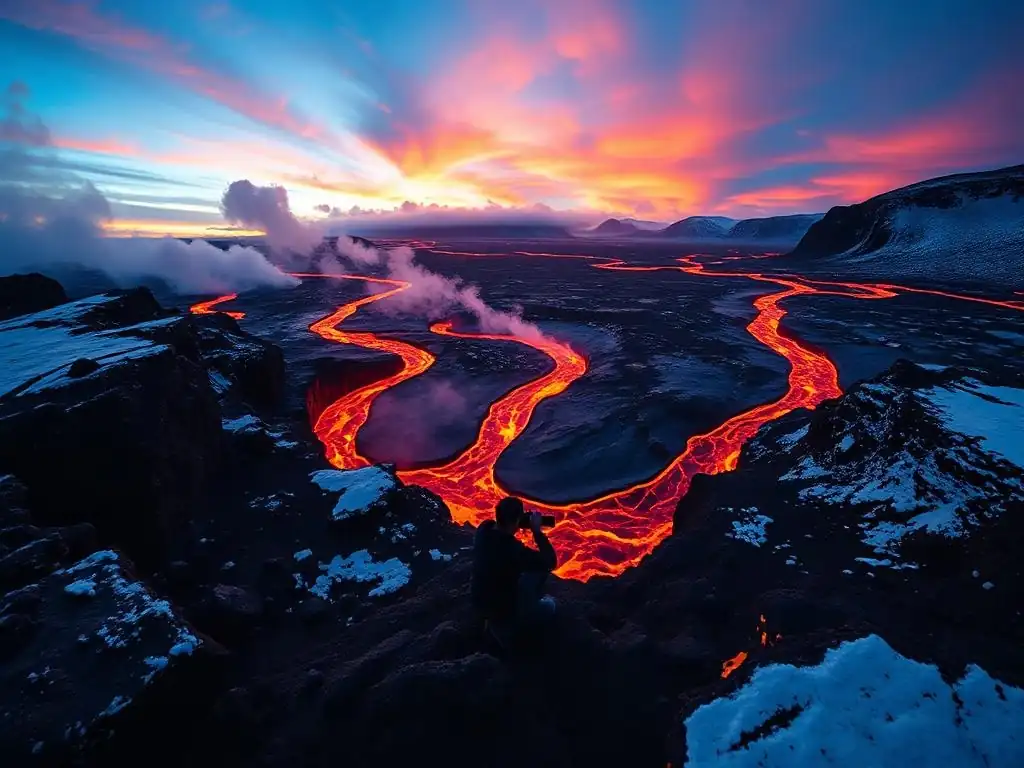
Welcome to Volcano Explorers, where the Earth's raw power meets human curiosity. Ever wondered how to capture the fiery heart of a volcano with your lens? This journey begins now. Dive into our guide, " Iceland's Molten Rivers: A Photographer's Journey Through Volcanic Landscapes", and discover essential Iceland volcanic photography tips that will transform your perspective and your portfolio. But that's just the beginning... what secrets do Iceland's volcanic landscapes hold, and how can you unlock their photographic potential?
- Introduction: Capturing the Raw Beauty of Iceland's Volcanoes
- Planning Your Iceland Volcanic Photography Trip: Essential Preparations
- Iceland Volcanic Photography Tips: Capturing the Perfect Shot
- Composition Techniques for Iceland's Volcanic Landscapes
- Post-Processing Iceland Volcanic Photos: Enhancing the Raw Beauty
- Safety Considerations for Iceland Volcanic Photography
- Ethical Volcanic Photography: Respecting the Environment
- Case Study: Photographing the Fagradalsfjall Eruption
- Conclusion: Inspiring Others Through Iceland Volcanic Photography
-
Frequently Asked Questions
- What makes Iceland a unique destination for volcanic photography?
- What are some essential gear considerations for photographing volcanoes in Iceland?
- How can I safely approach and photograph active volcanic sites?
- What are some compositional techniques to capture the grandeur of Icelandic volcanic landscapes?
- What are some ethical considerations when photographing volcanic landscapes in Iceland?
- Final Reflection: Embracing Iceland's Fiery Heart
- Unveil Your Inner Explorer: Ignite Your Passion for Volcanoes!
Introduction: Capturing the Raw Beauty of Iceland's Volcanoes
IcelandAurora.com: Your Gateway to Icelandic Photography
While VolcanoExplorers.org is your portal to the global world of volcanoes, consider IcelandAurora.com as a fantastic example of a platform dedicated to showcasing the breathtaking beauty of Iceland, often intertwined with its volcanic nature. Websites like IcelandAurora.com frequently feature stunning imagery of Icelandic landscapes, including the mesmerizing dance of the Aurora Borealis over volcanic terrains and lava fields. They serve as an inspiration hub for photographers and travelers alike, highlighting the unique photographic opportunities Iceland offers.
These platforms often act as a starting point for planning a photographic journey to Iceland. They provide insights into the best seasons to visit, key locations for capturing iconic Icelandic scenes, and sometimes even offer photography tours and workshops led by local experts. By exploring resources like IcelandAurora.com, aspiring volcano photographers can gather initial inspiration and begin to understand the visual potential that awaits them in Iceland's volcanic regions.
The Allure of Iceland's Volcanic Landscapes for Photographers
Iceland, the land of fire and ice, holds an undeniable magnetic pull for photographers, especially those drawn to the raw power and dramatic beauty of volcanoes. The island's volcanic landscapes are unlike anywhere else on Earth, presenting a surreal and otherworldly canvas. Imagine capturing the vibrant orange glow of molten lava rivers snaking through stark black basalt fields, or the ethereal steam rising from geothermal areas against a backdrop of snow-capped mountains. This dramatic juxtaposition of elements is what makes Iceland a dream destination for volcano photography.
The geological activity is constantly reshaping the Icelandic landscape, offering photographers ever-changing subjects. Eruptions, though unpredictable, create entirely new landforms, lava flows solidify into unique textures, and the interplay of volcanic ash and ice forms striking patterns.
Furthermore, the long hours of daylight in summer and the extended darkness in winter, coupled with the potential for the Northern Lights, create diverse lighting conditions that photographers can leverage to capture the volcanic landscapes in dramatically different moods. For photographers seeking to document the dynamic forces of nature, Iceland's volcanic landscapes are an unparalleled source of inspiration and photographic opportunity, providing ample scope for Iceland volcanic photography.
Planning Your Iceland Volcanic Photography Trip: Essential Preparations
Researching Active Volcanoes in Iceland: Safety First
Before embarking on an Iceland volcanic photography adventure, thorough research is paramount, with safety taking absolute precedence. Iceland is volcanically active, and while eruptions are often predictable to some extent, conditions can change rapidly. Websites like the Icelandic Meteorological Office (Vedur.is) provide real-time updates on seismic activity, volcanic alerts, and gas pollution forecasts. Consulting these official sources is crucial for understanding the current volcanic landscape and potential hazards.
Furthermore, understanding the accessibility of volcanic areas is essential. Some eruption sites might be easily accessible via marked trails, while others may require challenging hikes or even be restricted due to safety concerns. Local guides and tour operators often possess up-to-date knowledge regarding access and safety conditions.
For instance, during the Fagradalsfjall eruption in 2021, access was initially controlled, with designated viewing areas established to ensure public safety. Researching past eruptions and their impact on access and safety protocols can offer valuable insights for planning your own Iceland volcanic photography trip. Remember, capturing stunning images is secondary to ensuring your well-being in these dynamic environments.
Essential Photography Gear for Iceland's Extreme Conditions
Iceland's volcanic landscapes demand specific photography equipment to capture their grandeur effectively and withstand the challenging environmental conditions. A robust DSLR or mirrorless camera with weather sealing is highly recommended to protect against dust, rain, and volcanic ash. Lenses covering a wide range of focal lengths are crucial; a wide-angle lens (16-35mm) is essential for capturing expansive landscapes and lava flows, while a telephoto lens (70-200mm or longer) allows you to isolate details and compress perspectives of distant volcanic features.
Consider investing in sturdy tripods, as wind is often a factor in Iceland, especially in exposed volcanic areas. Filters are also indispensable for Iceland volcanic photography. Neutral density (ND) filters are vital for long exposure photography of lava flows and waterfalls, allowing you to create silky smooth effects. Polarizing filters help reduce glare and enhance colors, particularly in skies and water. Don't forget ample memory cards and batteries, as cold temperatures can drain battery life quickly. Having backups of everything is a wise precaution when venturing into remote volcanic regions.
Clothing and Equipment for Iceland's Weather: Staying Safe and Comfortable
Iceland's weather is notoriously unpredictable and can change dramatically within hours, especially in volcanic highlands. Therefore, dressing in layers is crucial for staying comfortable and safe while engaged in Iceland volcanic photography. Start with a moisture-wicking base layer to keep sweat away from your skin. Add insulating mid-layers like fleece or down for warmth, and top it off with a waterproof and windproof outer shell jacket and pants.
Sturdy, waterproof hiking boots with good ankle support are essential for navigating uneven volcanic terrain. Gloves are indispensable, even in summer, as wind chill can be significant. A warm hat and neck gaiter are also recommended for protecting yourself from the elements. Consider bringing hand and foot warmers for extra warmth in colder months. Sunglasses are important for bright days, and sunscreen is necessary even on cloudy days due to UV reflection from snow and ice. Prioritizing appropriate clothing and gear ensures you can focus on capturing incredible Iceland volcanic photography without being hampered by discomfort or exposure.
Iceland Volcanic Photography Tips: Capturing the Perfect Shot
Finding the Best Locations for Lava Flow Photography
Locating prime spots for lava flow photography in Iceland requires a combination of research and adaptability. Active volcanic eruptions are dynamic events, and lava flow paths can change. Consulting real-time volcanic activity maps and local guides is essential for identifying current lava flow locations. Websites like Vedur.is and local news sources often provide updates on eruption sites and accessibility.
Once near an active volcanic area, look for vantage points that offer unobstructed views of the lava flows. Elevated positions can provide a broader perspective, showcasing the scale and patterns of the molten rivers. However, always prioritize safety and maintain a safe distance from the lava.
Areas where lava flows meet contrasting landscapes, such as moss-covered fields or glacial ice, can create particularly striking compositions. During the Fagradalsfjall eruption, the valley setting provided numerous viewpoints along the surrounding ridges, allowing photographers to capture lava flowing into the valley from various angles. Scouting locations during daylight hours can help you plan your shots for the golden hour or blue hour, when the light is most dramatic for Iceland volcanic photography.
Mastering Long Exposure Photography for Molten Rivers
Long exposure photography is a powerful technique for capturing the fluidity and movement of molten lava rivers in Iceland. By using slow shutter speeds, typically ranging from a few seconds to several minutes, you can blur the motion of the lava, creating a silky smooth, ethereal effect. This technique contrasts beautifully with the sharp, static elements of the surrounding volcanic landscape, emphasizing the dynamic nature of the lava.
To achieve long exposures, you'll need a sturdy tripod to keep your camera perfectly still and neutral density (ND) filters to reduce the amount of light entering the lens. Start with a moderate ND filter (e.g., ND64 or ND1000) and adjust based on the ambient light and desired effect. Experiment with different shutter speeds to find the sweet spot where the lava motion is blurred to your liking while retaining some texture.
Shoot in RAW format to maximize post-processing flexibility. Focus carefully, ideally using manual focus and focus peaking if your camera has it, to ensure sharpness in the static parts of your composition while the lava flows are beautifully blurred in your Iceland volcanic photography.
Capturing the Northern Lights Over Volcanic Landscapes
Combining the ethereal dance of the Northern Lights with the fiery glow of volcanic landscapes creates truly magical and unforgettable images. Iceland, being located at high latitudes and possessing active volcanoes, offers unique opportunities for this type of Iceland volcanic photography. The winter months, with long hours of darkness and frequent aurora activity, are ideal for capturing this phenomenon.
To photograph the Northern Lights over volcanoes, you need clear skies, minimal light pollution, and a strong aurora forecast. Apps and websites specializing in aurora forecasts can help you predict aurora activity. Use a wide-angle lens with a fast aperture (f/2.8 or wider) to capture as much light as possible.
Set your ISO to a relatively high value (e.g., ISO 1600-6400) and use a shutter speed of a few seconds to tens of seconds, depending on the aurora's brightness and movement. Focus on infinity manually. Experiment with compositions that incorporate both the volcanic landscape and the aurora borealis, creating a harmonious blend of earthly and celestial wonders.
Using Filters for Dramatic Volcanic Photography
Filters are essential tools for enhancing the drama and impact of your Iceland volcanic photography. Polarizing filters are invaluable for reducing glare from wet surfaces, such as lava rocks after rain, and for enhancing the saturation of skies and foliage, making volcanic colors pop. Graduated neutral density (GND) filters are useful for balancing the exposure between bright skies and darker foregrounds, especially during sunrise and sunset, ensuring detail is retained in both areas.
Neutral density (ND) filters, as discussed earlier, are crucial for long exposure photography of lava flows and waterfalls. They allow you to use slow shutter speeds even in bright daylight, creating motion blur effects. Consider investing in a filter system that allows you to easily swap and combine different filters. Experiment with different filter combinations to achieve various effects and enhance the mood and atmosphere of your volcanic images. When using filters, always check for vignetting, especially with wide-angle lenses, and adjust your composition accordingly to maximize the dramatic potential of your Iceland volcanic photography.
Composition Techniques for Iceland's Volcanic Landscapes
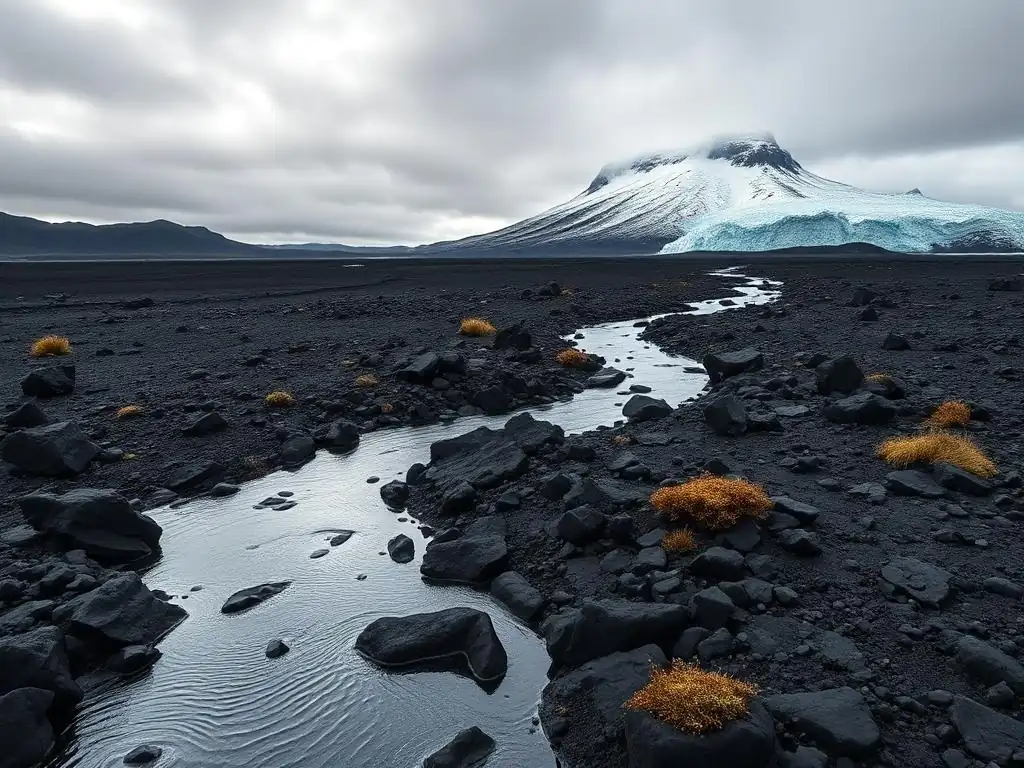
Leading Lines: Guiding the Viewer Through Volcanic Scenes
Leading lines are powerful compositional tools that draw the viewer's eye into your Iceland volcanic landscape photographs. In volcanic terrains, natural leading lines can be found in lava flows, cracks in the earth, winding roads, or even footprints in volcanic ash. These lines act as visual pathways, guiding the viewer through the scene and towards a point of interest, such as a volcanic cone, a geothermal area, or a dramatic sky.
When composing your shots, actively seek out leading lines and position them strategically within your frame. Experiment with different angles and perspectives to maximize their impact. For example, a winding lava flow captured from a low angle can create a strong leading line that leads the viewer's eye deep into the volcanic landscape. Using leading lines effectively adds depth, dimension, and visual interest to your Iceland volcanic photography, making your images more engaging and impactful.
Rule of Thirds: Balancing the Power of Volcanoes
The rule of thirds is a classic compositional guideline that divides your frame into nine equal rectangles by two horizontal and two vertical lines. Placing key elements of your composition along these lines or at their intersections creates a more balanced and visually appealing image. When photographing volcanoes, the rule of thirds can be particularly effective in balancing the dominant presence of the volcanic feature with the surrounding landscape.
For example, you might position the horizon line along the lower horizontal third to emphasize a dramatic volcanic sky, or place a prominent volcanic cone at one of the intersections of the grid lines. The rule of thirds helps avoid placing the subject directly in the center of the frame, which can sometimes feel static and less dynamic. While it's a guideline and not a strict rule, consciously considering the rule of thirds can significantly improve the composition and visual balance of your Iceland volcanic photography, creating more harmonious and engaging images.
Incorporating Scale: Showing the Immensity of Iceland's Landscape
Volcanic landscapes in Iceland are often vast and awe-inspiring, and conveying this sense of scale is crucial in your photographs. One effective way to achieve this is by incorporating elements of scale into your compositions. This can be done by including familiar objects, such as human figures, vehicles, or buildings, within the frame to provide a sense of proportion against the immense volcanic features.
For instance, photographing a lone hiker against a massive lava field or a small car parked at the foot of a towering volcano emphasizes the sheer scale of the landscape. Alternatively, you can use natural elements like trees or rocks to create a sense of scale. Wide-angle lenses are particularly useful for capturing expansive scenes and incorporating elements of scale effectively. By consciously thinking about scale, you can transform your Iceland volcanic photography from simply documenting landscapes to conveying the truly epic and humbling nature of Iceland's volcanic wonders.
Post-Processing Iceland Volcanic Photos: Enhancing the Raw Beauty
Correcting Exposure and White Balance in Volcanic Photography
Post-processing plays a vital role in enhancing the raw beauty of your Iceland volcanic photos. The first crucial steps are correcting exposure and white balance. Volcanic landscapes often present challenging lighting conditions, with high contrast between bright skies and dark lava fields. Carefully adjust the exposure to ensure details are preserved in both highlights and shadows. Shooting in RAW format provides greater latitude for exposure adjustments in post-processing.
White balance is equally important for accurately representing the colors of the volcanic scene. Often, automatic white balance can be fooled by the strong colors of lava or geothermal areas. Adjusting the white balance to a more neutral setting or using a custom white balance based on a gray card can ensure accurate color rendition.
Slightly warming the white balance can sometimes enhance the fiery tones of lava, while a cooler white balance might emphasize the starkness of volcanic ice and snow. Precise exposure and white balance corrections form the foundation for further enhancing your Iceland volcanic photography in post-processing.
Enhancing Colors and Details in Lava Flows
Lava flows are a key subject in Iceland volcanic photography, and post-processing can significantly enhance their visual impact. While accuracy is important, subtly boosting the colors of lava can emphasize its fiery nature and create more visually striking images. Adjusting the saturation and vibrance sliders carefully can bring out the rich oranges, reds, and yellows in lava flows without making them appear artificial.
Sharpening is another crucial step for enhancing details in lava textures. Apply selective sharpening to the lava flows to bring out the intricate patterns and textures of solidified lava. Be mindful not to over-sharpen, which can introduce unwanted artifacts. Local adjustments, such as using adjustment brushes in software like Adobe Lightroom or Photoshop, allow you to selectively enhance colors and details specifically in the lava areas, creating a more refined and impactful final image of your Iceland volcanic photography.
Removing Noise and Artifacts from High ISO Volcanic Images
Photographing volcanoes, especially during the night or in low light conditions like capturing the Northern Lights over volcanic landscapes, often requires using high ISO settings. High ISO can introduce noise into your images, which can detract from their quality. Noise reduction is therefore an essential step in post-processing Iceland volcanic photos taken at high ISO.
Noise reduction software, such as those built into Lightroom, Photoshop, or dedicated noise reduction plugins like Topaz DeNoise AI, can effectively minimize noise while preserving detail. Experiment with different noise reduction settings to find a balance between noise removal and detail retention. Be particularly careful when applying noise reduction to areas with fine details, such as lava textures or volcanic rock formations, to avoid softening them excessively. Effective noise reduction ensures that your high ISO Iceland volcanic images remain sharp, clean, and visually appealing.
Safety Considerations for Iceland Volcanic Photography
Understanding Volcanic Hazards: Lava Flows, Gases, and Ash
Safety should always be the top priority when engaging in Iceland volcanic photography. Understanding the potential hazards associated with volcanoes is crucial for minimizing risks. Lava flows are an obvious hazard, but they can also be deceptively fast-moving and extremely hot. Maintaining a safe distance from active lava flows is paramount to avoid burns and heatstroke.
Volcanic gases, such as sulfur dioxide and carbon dioxide, can be invisible but toxic and pose respiratory risks. Wind direction plays a critical role in gas dispersal, and photographers should be aware of wind conditions and avoid areas downwind of volcanic vents where gas concentrations may be high. Volcanic ash, while less immediate a threat than lava or gases, can be abrasive and cause respiratory irritation, eye damage, and damage to camera equipment.
In areas with ashfall, protecting your equipment and wearing respiratory protection may be necessary. Being informed about these volcanic hazards and taking appropriate precautions is essential for safe Iceland volcanic photography.
Maintaining a Safe Distance from Active Volcanoes
Maintaining a safe distance from active volcanoes is non-negotiable for Iceland volcanic photography. "Safe distance" is not a fixed number and depends on the specific volcano, eruption style, and environmental conditions. Official guidelines and recommendations from local authorities, such as the Icelandic Meteorological Office and park rangers, should be strictly adhered to. During eruptions, exclusion zones are often established, and these must be respected.
Even outside of official exclusion zones, exercise caution and common sense. Avoid approaching lava flows too closely, as the ground can be unstable, and sudden changes in lava flow direction are possible. Be mindful of gas vents and steam plumes and maintain a safe distance upwind. If photographing from elevated viewpoints, ensure the terrain is stable and there are no risks of rockfalls or landslides. Prioritizing a safe distance allows you to capture stunning Iceland volcanic photography while minimizing your exposure to volcanic hazards.
Staying Informed About Volcanic Activity Updates
Staying continuously informed about volcanic activity updates is crucial throughout your Iceland volcanic photography trip. Volcanic conditions can change rapidly, and real-time information is essential for making informed decisions about safety and location choices. Regularly check websites like the Icelandic Meteorological Office (Vedur.is) for the latest volcanic alerts, seismic activity reports, gas pollution forecasts, and access restrictions.
Local news sources and social media channels of relevant authorities can also provide timely updates. If participating in guided tours, listen attentively to your guides' instructions and safety briefings, as they will have the most up-to-date local knowledge. Be prepared to adjust your plans and locations based on changing volcanic conditions. Having access to reliable communication, such as a satellite phone or a local SIM card with data, can be invaluable for receiving updates in remote volcanic areas. Proactive information gathering and adaptability are key components of safe and responsible Iceland volcanic photography.
Ethical Volcanic Photography: Respecting the Environment
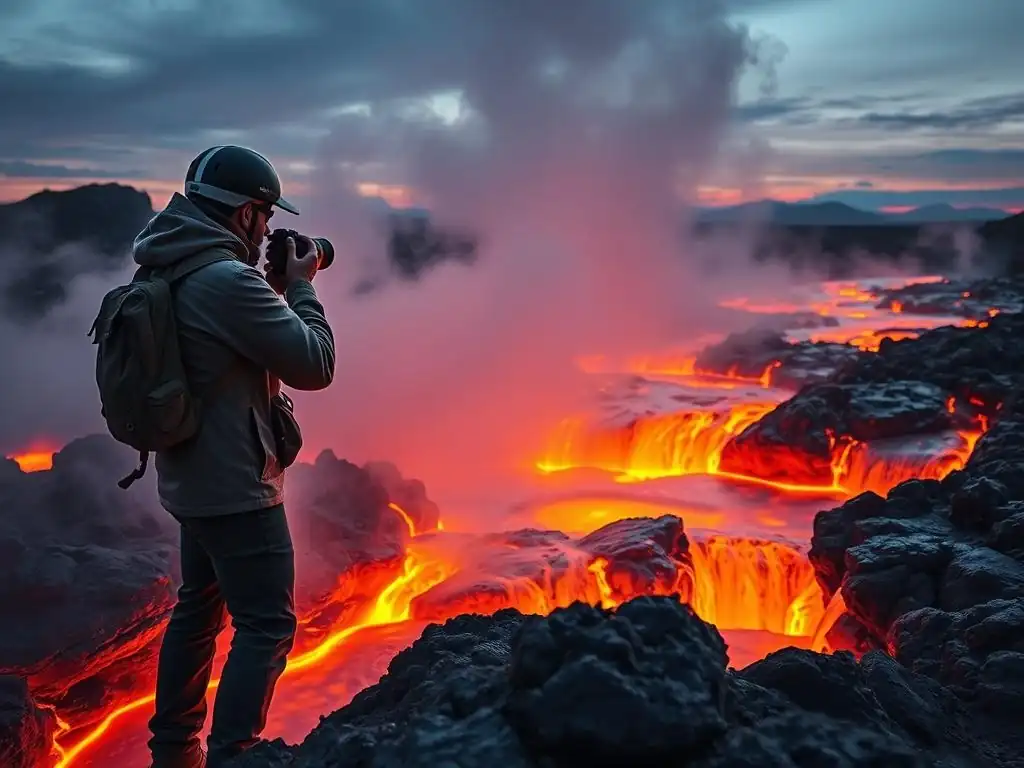
Minimizing Your Impact on Iceland's Fragile Ecosystem
Ethical considerations are paramount when photographing Iceland's volcanic landscapes. These environments are often fragile ecosystems, and photographers have a responsibility to minimize their impact. Stick to marked trails and designated viewing areas whenever possible to avoid trampling delicate vegetation, disturbing wildlife, or causing erosion. Volcanic moss, for example, is extremely slow-growing and easily damaged.
Avoid moving or altering natural features, such as rocks or plants, for compositional purposes. Be mindful of noise pollution, especially in areas with wildlife. Refrain from approaching or disturbing nesting birds or other animals. Consider the cumulative impact of tourism on volcanic areas and strive to be a responsible and low-impact visitor. Ethical Iceland volcanic photography involves capturing the beauty of these landscapes while actively protecting their delicate ecosystems for future generations.
Leaving No Trace: Protecting Volcanic Landscapes
The "Leave No Trace" principle is fundamental to ethical Iceland volcanic photography. Pack out everything you pack in, including trash, food wrappers, and any other waste. Do not leave any trace of your presence behind. Avoid building cairns or stacking rocks, as this can disrupt the natural environment and mislead other visitors.
If using drones for aerial photography, be aware of regulations and restrictions, and ensure you fly responsibly and without disturbing wildlife or other visitors. Respect private property and obtain permission before accessing land that is not publicly accessible. Consider using biodegradable products whenever possible and minimize your consumption of single-use plastics. By adhering to Leave No Trace principles, you contribute to the long-term preservation of Iceland's stunning volcanic landscapes and ensure their continued beauty for all to enjoy.
Respecting Local Communities and Regulations
Ethical Iceland volcanic photography also involves respecting local communities and regulations. Icelandic communities living near volcanic areas have a unique connection to these landscapes, and their perspectives and needs should be considered. Be respectful of local customs and traditions. Support local businesses and services whenever possible, contributing to the local economy.
Adhere to all local regulations and guidelines related to access, parking, and photography in volcanic areas. Some areas may have specific rules regarding drone use or commercial photography. Obtain necessary permits if required for commercial photography activities. Be mindful of noise levels and avoid disrupting the peace and tranquility of local communities. Respectful interaction with local communities and adherence to regulations are integral to responsible and ethical Iceland volcanic photography.
Case Study: Photographing the Fagradalsfjall Eruption
Documenting the Eruption: A Photographer's Perspective
The Fagradalsfjall eruption, which began in March 2021 and continued for several months, provided an extraordinary opportunity for Iceland volcanic photography. For photographers who witnessed it, documenting this eruption was a unique and compelling experience. The eruption site was relatively accessible, allowing photographers to capture a wide range of perspectives, from wide-angle landscape shots of the lava flows to close-up details of erupting vents and lava textures.
The eruption's dynamic nature, with varying lava flow rates and eruptive activity, presented constantly changing photographic opportunities. Photographers had to adapt to shifting light conditions, weather changes, and evolving lava flow paths. The Fagradalsfjall eruption served as a real-world case study in the challenges and rewards of documenting volcanic activity, highlighting the need for preparedness, adaptability, and a strong understanding of volcanic processes.
Overcoming Challenges: Weather, Access, and Safety
Photographing the Fagradalsfjall eruption, like any volcanic photography endeavor in Iceland, presented numerous challenges. Iceland's unpredictable weather was a constant factor, with photographers often facing strong winds, rain, and rapidly changing visibility. Access to the eruption site was initially controlled, requiring permits and adherence to designated viewing areas to ensure safety.
Maintaining personal safety was paramount, as volcanic gases and unstable terrain posed potential risks. Photographers had to be mindful of wind direction to avoid gas plumes and stay within safe distances from lava flows. Equipment protection from volcanic ash and dust was also crucial. Overcoming these challenges required careful planning, appropriate gear, and a commitment to safety protocols. The Fagradalsfjall eruption experience underscored the importance of resilience and adaptability in Iceland volcanic photography.
The photographs captured during the Fagradalsfjall eruption played a significant role in sharing the story of this natural spectacle with the world. Images published in news outlets, social media, and photography platforms conveyed the raw power and beauty of the eruption to a global audience. Volcanic photography has the unique ability to document geological events, educate the public about volcanic processes, and inspire awe and wonder for the natural world.
The Fagradalsfjall eruption photographs served as a powerful reminder of Earth's dynamic forces and the captivating beauty that can emerge from geological activity. By sharing their images, photographers contributed to a broader understanding of volcanoes and their impact on our planet. This case study exemplifies the power of Iceland volcanic photography to not only document events but also to educate, inspire, and connect people with the natural world.
Conclusion: Inspiring Others Through Iceland Volcanic Photography
The Importance of Documenting Volcanic Activity
Documenting volcanic activity through photography is of immense importance for various reasons. Firstly, it provides a visual record of geological events, capturing the dynamic processes that shape our planet. These visual records can be invaluable for scientific research, helping volcanologists study eruption patterns, lava flow dynamics, and the evolution of volcanic landscapes over time.
Secondly, volcanic photography plays a crucial role in educating the public about volcanoes and their associated hazards. Powerful images can convey the scale and impact of volcanic eruptions in a way that words alone cannot, raising awareness and promoting preparedness in volcanic regions. Furthermore, volcanic photography can inspire awe and wonder for the natural world, fostering a greater appreciation for Earth's geological forces and the beauty that can arise from seemingly destructive events. Documenting volcanic activity through photography is therefore a valuable endeavor with scientific, educational, and inspirational significance.
Encouraging Responsible Volcanic Exploration
Iceland volcanic photography, while incredibly rewarding, comes with responsibilities. Encouraging responsible volcanic exploration is crucial to ensure the safety of photographers, the preservation of fragile volcanic environments, and the respect for local communities. Responsible exploration involves thorough planning, prioritizing safety, adhering to ethical guidelines, and minimizing environmental impact.
Photographers should educate themselves about volcanic hazards, stay informed about volcanic activity updates, and maintain safe distances from active volcanoes. They should practice Leave No Trace principles, respect local regulations, and support local communities. By promoting responsible volcanic exploration, we can ensure that Iceland's volcanic landscapes remain accessible and beautiful for future generations of photographers and explorers to appreciate and document.
Further Resources for Iceland Volcanic Photography
For those inspired to embark on their own Iceland volcanic photography journey, numerous resources are available to enhance their knowledge and skills. Websites like VolcanoExplorers.org and Vedur.is provide valuable information about volcanoes and volcanic activity in Iceland. Photography websites and blogs offer tips and tutorials on landscape photography techniques, including long exposure, composition, and post-processing, relevant to Iceland volcanic photography.
Books and e-books dedicated to landscape photography and Iceland photography can provide in-depth guidance and inspiration. Consider joining online photography communities and forums to connect with other photographers, share experiences, and learn from each other. Local photography tours and workshops in Iceland, often led by experienced guides and photographers, can offer hands-on learning opportunities and insider knowledge of the best locations and techniques for capturing stunning Iceland volcanic photography. Continuously seeking out and utilizing these resources will contribute to your growth as a volcanic photographer and enhance your ability to capture the awe-inspiring beauty of Iceland's molten rivers.
Frequently Asked Questions
What makes Iceland a unique destination for volcanic photography?
Iceland's unique geological setting, situated on the Mid-Atlantic Ridge, results in frequent volcanic activity and diverse landscapes. This includes lava fields, glaciers, and geothermal areas, offering unparalleled photographic opportunities.
What are some essential gear considerations for photographing volcanoes in Iceland?
Besides a high-quality camera and lenses, you'll need sturdy hiking boots, weatherproof clothing to combat the unpredictable Icelandic weather, and filters to manage bright light and harsh conditions.
How can I safely approach and photograph active volcanic sites?
Always prioritize safety by staying informed about volcanic activity levels through official sources. Maintain a safe distance from active lava flows and vents, and be aware of potential hazards like toxic gases.
What are some compositional techniques to capture the grandeur of Icelandic volcanic landscapes?
Use wide-angle lenses to capture the vastness of the landscape and incorporate leading lines to draw the viewer's eye. Look for opportunities to use natural framing with rocks or ice to add depth to your images.
What are some ethical considerations when photographing volcanic landscapes in Iceland?
Respect the environment by staying on marked trails and avoiding disturbing fragile ecosystems. Be mindful of the impact of your presence on the local communities and avoid actions that could endanger others.
Final Reflection: Embracing Iceland's Fiery Heart
The journey through Iceland's volcanic landscapes, as captured through the lens, is more than just documenting geological wonders; it's about understanding the raw, untamed power of our planet. The enduring allure of Iceland's volcanoes lies in their ability to remind us of the Earth's dynamic nature and our own fleeting existence within it. These landscapes, constantly reshaped by fire and ice, offer a profound lesson in resilience and adaptation, mirroring the challenges and triumphs of human experience.
The impact of Iceland's volcanic beauty extends far beyond the realm of photography. It serves as a powerful reminder of the delicate balance between creation and destruction, a theme that resonates deeply in our current climate crisis. We are all travelers in the wilderness of this world, and the best we can find in our travels is an honest heart and a determined mind.
This quote, while not specifically about volcanoes, perfectly encapsulates the spirit of exploration and the unwavering pursuit of beauty that drives photographers and nature enthusiasts alike to seek out these extraordinary landscapes.
As you reflect on the images and insights shared, consider how you can incorporate the lessons of Iceland's volcanic landscapes into your own life. Let the fiery spirit of these molten rivers inspire you to embrace change, to find beauty in the unexpected, and to approach the world with a renewed sense of wonder. Seek out your own "volcanic landscapes," those challenging yet transformative experiences that shape who you are and leave an indelible mark on your soul.
Unveil Your Inner Explorer: Ignite Your Passion for Volcanoes!
Thank you for embarking on this visual journey through Iceland's volcanic landscapes with us! We hope you've been inspired by the power and beauty of these molten rivers. Now, it's time to translate that inspiration into action.
- Embrace the Adventure: Plan Your Own Photographic Expedition.: Research potential volcano photography tours, learn about safety precautions, and start saving for your dream trip. Imagine capturing the raw energy of Iceland firsthand!
- Share the Awe: Spread the inspiration by sharing this article with fellow photography enthusiasts and volcano lovers. Let's ignite their curiosity!
- Explore the Depths: Delve deeper into the science behind volcanic activity. Research specific Icelandic volcanoes and understand the geological processes that shape these breathtaking landscapes.
What steps will you take this week to bring your own volcanic photography dreams closer to reality?