
The Power of Networks: Sharing Data and Expertise Among Volcano Observatories Worldwide


Welcome to Volcano Explorers!
Ever wondered how scientists piece together the puzzle of impending volcanic eruptions? This is the question that will be answered here. Dive into the heart of volcanic science and discover the crucial role of international cooperation. Our lead article, "The Power of Networks: Sharing Data and Expertise Among Volcano Observatories Worldwide," unveils the groundbreaking Global Volcano Observatory Collaboration, a vital initiative revolutionizing volcano monitoring and prediction. Are you ready to explore the cutting-edge techniques and shared knowledge that are helping to keep communities safe?
- Introduction: Why Global Volcano Observatory Collaboration is Crucial
- The Need for Shared Data and Expertise in Volcano Monitoring
- Building a Global Network of Volcano Observatories
- Case Studies: Successful Examples of Global Volcano Observatory Collaboration
- The Role of Technology in Enhancing Global Collaboration
- Challenges and Opportunities in Global Volcano Observatory Collaboration
- The Impact of Global Collaboration on Volcano Hazard Assessment
- The Future of Global Volcano Monitoring: A Collaborative Approach
- Conclusion: The Strength of Unity in Volcano Science
-
Frequently Asked Questions
- How does a Global Volcano Observatory Collaboration enhance volcano monitoring capabilities?
- Why is data sharing crucial in volcano monitoring?
- What kind of expertise is typically shared within a Global Volcano Observatory Collaboration?
- How does Global Volcano Observatory Collaboration benefit communities living near active volcanoes?
- How does VolcanoExplorers.org support the ideals of a Global Volcano Observatory Collaboration?
- Final Reflection: Embracing Global Volcanic Wisdom
- Uncover the Secrets: Become a Volcano Explorer!
Introduction: Why Global Volcano Observatory Collaboration is Crucial
Understanding the Importance of International Cooperation in Volcanology
Volcanoes are dynamic and often transboundary natural phenomena, indifferent to geopolitical borders. The plumes from erupting volcanoes can disrupt international air travel, as witnessed with the 2010 Eyjafjallajökull eruption in Iceland, and volcanic ash can travel thousands of kilometers, impacting agriculture and human health far beyond the immediate vicinity of the volcano. Furthermore, the expertise and resources required to effectively monitor and study these complex systems are not evenly distributed across the globe.
Some nations with numerous active volcanoes may lack the advanced technology or specialized personnel, while others with significant resources may have fewer volcanic threats within their own territories. International cooperation in volcanology becomes not just beneficial, but absolutely essential for global safety and scientific advancement.
The inherent nature of volcanic research necessitates a global perspective. Volcanic processes, from magma generation to eruption dynamics, operate on scales that often exceed the capacity of individual observatories to fully investigate in isolation. Comparing data from volcanoes with different geological settings and eruption styles allows for the development of more robust and universally applicable models of volcanic behavior.
By sharing knowledge and resources, volcanologists worldwide can collectively build a more comprehensive understanding of these powerful forces of nature, leading to improved hazard assessments and risk mitigation strategies for communities living near active volcanoes globally. This collaborative spirit fosters innovation and accelerates the pace of discovery in volcanology, ultimately benefiting everyone exposed to volcanic hazards.
Global Volcano Monitoring Efforts
Worldwide, volcano monitoring is primarily conducted by a network of volcano observatories, often governmental agencies or university-affiliated research institutions. These observatories employ a range of techniques, including seismometers to detect ground vibrations caused by magma movement, GPS and InSAR (Interferometric Synthetic Aperture Radar) to measure ground deformation, gas sensors to analyze volcanic emissions, and thermal cameras to detect changes in surface temperature.
Data collected from these diverse instruments provide crucial insights into the internal processes of volcanoes and potential eruption precursors. Organizations like the Smithsonian Institution's Global Volcanism Program (GVP) play a vital role in cataloging and disseminating information about volcanic activity worldwide, drawing on reports from observatories around the globe to provide a comprehensive picture of global volcanism.
Several international initiatives further enhance global volcano monitoring efforts. The World Organization of Volcano Observatories (WOVO), under the umbrella of the International Association of Volcanology and Chemistry of the Earth's Interior (IAVCEI), serves as a crucial platform for communication and collaboration among volcano observatories. WOVO facilitates the sharing of best practices, technical expertise, and data protocols, promoting a more unified and effective global approach to volcano monitoring.
Regional collaborations also exist, such as those in the Caribbean and Central America, where shared volcanic arcs and transboundary hazards necessitate close cooperation between neighboring countries. These combined efforts, from local observatory monitoring to global coordination, form the backbone of our planet's volcanic hazard early warning system.
Resource Limitations of Individual Observatories
Operating a modern volcano observatory is a resource-intensive undertaking. The cost of purchasing, deploying, and maintaining sophisticated monitoring equipment, such as broadband seismometers, high-precision GPS stations, and advanced gas analyzers, can be substantial. Furthermore, the analysis of the vast datasets generated by these instruments requires specialized software, high-performance computing infrastructure, and a team of highly trained scientists and technicians.
Many volcano observatories, particularly those located in developing countries or regions with limited governmental funding for scientific research, face significant budgetary constraints. This can restrict their ability to deploy comprehensive monitoring networks, access cutting-edge technology, or retain highly specialized personnel, hindering their capacity to effectively assess and mitigate volcanic risks.
Beyond financial limitations, individual observatories may also face constraints in terms of specialized expertise. Volcanology is a multidisciplinary field, requiring expertise in seismology, geodesy, geochemistry, remote sensing, and numerical modeling, among other disciplines.
A single observatory may not have in-house specialists in all these areas, particularly for less common but critical skills, such as interpreting specific types of volcanic signals or developing advanced eruption forecasting models. Sharing expertise across observatories, through collaborative research projects, workshops, and personnel exchanges, becomes crucial to bridge these gaps and ensure that all observatories have access to the diverse skill sets needed for comprehensive volcano monitoring and hazard assessment.
Benefits of Collaborative Volcanic Research
Collaborative volcanic research offers a multitude of benefits, amplifying the effectiveness of individual observatory efforts and accelerating scientific progress. Pooling resources, both financial and technical, allows for more ambitious and comprehensive research projects that would be beyond the reach of any single observatory. For instance, large-scale geophysical experiments requiring dense instrument deployments or extensive geochemical sampling campaigns become feasible through international collaborations. This collective approach enables scientists to tackle complex research questions that require data from multiple volcanoes or regions, leading to more robust and generalizable scientific findings.
Furthermore, collaboration fosters the exchange of diverse perspectives and expertise. Volcanologists from different countries often bring unique methodological approaches, analytical techniques, and regional knowledge to research projects. This cross-fertilization of ideas stimulates innovation and can lead to breakthroughs in understanding volcanic processes.
For example, comparing monitoring data and eruption histories from volcanoes in different tectonic settings can reveal fundamental controls on volcanic behavior that might not be apparent when studying volcanoes in isolation. Collaborative research also builds capacity, particularly for observatories in developing countries, by providing opportunities for training, mentorship, and access to advanced technologies and methodologies through partnerships with more established institutions.
Building a Global Network of Volcano Observatories
Key Organizations Facilitating International Collaboration
Several key organizations play pivotal roles in facilitating international collaboration among volcano observatories. As mentioned earlier, the World Organization of Volcano Observatories (WOVO) is central, acting as a global network for communication, data sharing, and best practice exchange. WOVO organizes workshops, conferences, and training programs, fostering a sense of community and shared purpose among volcano monitoring professionals worldwide. The International Association of Volcanology and Chemistry of the Earth's Interior (IAVCEI) also contributes significantly, through its scientific commissions, publications, and sponsorship of international conferences, promoting research and collaboration in volcanology.
UNESCO (United Nations Educational, Scientific and Cultural Organization), through its International Geoscience Programme (IGCP) and other initiatives, supports international research projects on natural hazards, including volcanic risks. UNESCO also works to promote disaster risk reduction and resilience building in volcanic areas, often in collaboration with volcano observatories and national governments.
National geological surveys of countries with significant volcanic hazards, such as the United States Geological Survey (USGS), the Italian National Institute of Geophysics and Volcanology (INGV), and the Japanese Meteorological Agency (JMA), often engage in international collaborations, sharing their expertise and resources with observatories in other countries. These organizations, through their diverse activities, collectively build and strengthen the global network of volcano observatories.
Data Sharing Protocols for Volcano Monitoring
Effective data sharing is paramount for successful global volcano observatory collaboration. Establishing standardized data formats and protocols is crucial to ensure that data collected by different observatories can be easily exchanged, integrated, and analyzed. Organizations like WOVO have been instrumental in promoting the adoption of common data formats and metadata standards for volcanological data, including seismic waveforms, GPS time series, and geochemical analyses.
The development of online data repositories and platforms facilitates the sharing of data in a timely and accessible manner. For example, the Incorporated Research Institutions for Seismology (IRIS) Data Management Center provides access to seismic data from observatories worldwide, which is invaluable for studying volcanic earthquakes and other seismic signals.
However, challenges remain in achieving truly seamless and open data sharing. Data access policies vary across observatories and countries, with some data being freely available while others are restricted due to national security concerns, proprietary interests, or simply a lack of resources to curate and disseminate data effectively. Promoting open data policies and investing in data infrastructure are essential steps to maximize the benefits of global volcano observatory collaboration. Furthermore, establishing clear protocols for data attribution and intellectual property rights is important to encourage data sharing and ensure that data providers receive appropriate recognition for their contributions.
Case Studies: Successful Examples of Global Volcano Observatory Collaboration
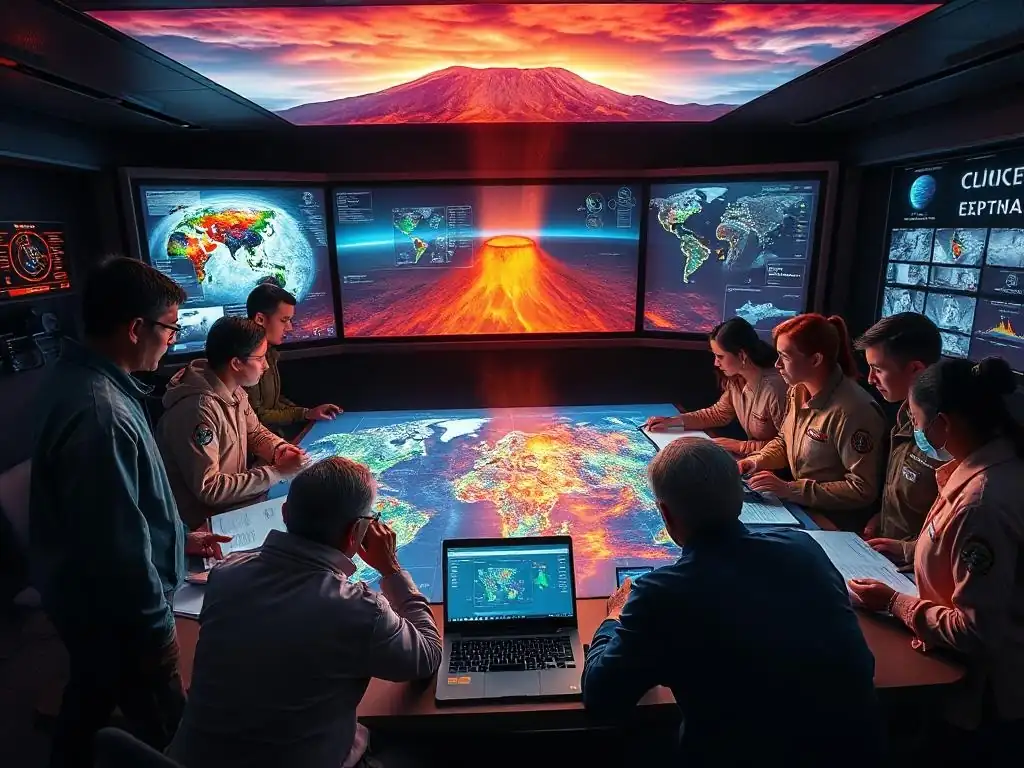
Data Sharing During the 2010 Eyjafjallajökull Eruption
The 2010 eruption of Eyjafjallajökull volcano in Iceland provides a compelling example of the critical role of data sharing in mitigating the impacts of volcanic eruptions. The eruption produced a massive ash cloud that disrupted air traffic across Europe for several days, causing significant economic losses and travel chaos.
During the crisis, the Icelandic Meteorological Office (IMO), responsible for monitoring Eyjafjallajökull, relied heavily on data and expertise shared by volcano observatories and meteorological agencies from across Europe and beyond. Data from weather radars, satellite observations, and ground-based monitoring networks in multiple countries were integrated to track the ash cloud's dispersal and forecast its trajectory.
This collaborative data sharing enabled aviation authorities to make informed decisions about airspace closures and reopenings, minimizing the disruption to air travel while ensuring safety. Volcanic ash advisory centers (VAACs) in London, Toulouse, and other locations played a crucial role in processing and disseminating information about the ash cloud, drawing on data from multiple sources. The Eyjafjallajökull eruption highlighted the interconnectedness of global infrastructure and the necessity of international cooperation in responding to transboundary volcanic hazards. It demonstrated the power of shared data to improve situational awareness and inform effective decision-making during volcanic crises.
Collaborative Research on Subduction Zone Volcanoes
Subduction zones, where one tectonic plate slides beneath another, are home to some of the world's most active and hazardous volcanoes. These volcanoes often exhibit complex eruptive behavior and pose significant risks to densely populated coastal regions. Understanding the magmatic processes, tectonic controls, and eruption dynamics of subduction zone volcanoes requires a multidisciplinary and collaborative approach. Numerous international research projects have focused on subduction zone volcanoes, bringing together scientists from multiple countries and disciplines to tackle these complex challenges.
For instance, collaborative research projects in the Pacific Ring of Fire, involving observatories from Japan, the United States, New Zealand, and various South American countries, have investigated the processes controlling magma generation and ascent beneath island arcs and continental margins. These projects often involve joint field campaigns, data sharing agreements, and co-authored publications, fostering a deeper understanding of subduction zone volcanism.
The Deep Carbon Observatory (DCO), a global research program, has also facilitated collaborative research on volcanic gas emissions from subduction zone volcanoes, contributing to a better understanding of the role of volcanoes in the global carbon cycle and climate. These examples showcase how collaborative research is essential for advancing our knowledge of complex volcanic systems and improving hazard assessments in tectonically active regions.
The Role of Technology in Enhancing Global Collaboration
Remote Sensing and Satellite Data for Volcano Monitoring
Remote sensing technologies, particularly satellite-based instruments, have revolutionized global volcano monitoring and significantly enhanced international collaboration. Satellites provide a synoptic and continuous view of volcanic regions, including remote and inaccessible areas where ground-based monitoring is challenging or impossible. Satellite sensors can detect a range of volcanic phenomena, including thermal anomalies indicating increased volcanic activity, sulfur dioxide (SO2) and ash plumes from eruptions, and ground deformation using InSAR. Data from satellites like Landsat, Sentinel, and Terra are freely available and accessible to volcano observatories worldwide, regardless of their location or resources.
This accessibility of satellite data democratizes volcano monitoring capabilities and empowers observatories in developing countries to augment their ground-based networks with valuable remote sensing information. International collaborations often leverage satellite data to monitor volcanoes in regions with limited ground infrastructure, or to study large-scale volcanic events that require a regional or global perspective.
For example, during the 2018 Kilauea eruption in Hawaii, satellite data played a crucial role in tracking lava flows, mapping volcanic deformation, and assessing the extent of the volcanic impact. The use of satellite data fosters a more inclusive and geographically comprehensive approach to global volcano monitoring.
Standardized Software and Platforms for Data Analysis
The development and adoption of standardized software and platforms for volcanological data analysis are crucial for enhancing global collaboration and data interoperability. Sharing data is only effective if observatories can readily process and analyze data collected by others using compatible tools and techniques. Several initiatives are underway to promote the use of open-source software and standardized data analysis workflows in volcanology. For example, the SeisComP3 software package, widely used for seismic data acquisition and processing, is an open-source platform that facilitates data sharing and collaborative analysis among seismological observatories, including volcano observatories.
Online platforms for data visualization and analysis also enhance collaboration. Web-based tools that allow volcanologists to access, display, and analyze data from multiple sources in a common environment streamline collaborative research and hazard assessment efforts. Cloud-based computing platforms offer scalable resources for processing large datasets and running complex numerical models, further facilitating collaborative research projects that require significant computational power. Promoting the development and adoption of standardized software and platforms is essential to break down technical barriers to data sharing and collaboration, enabling a more integrated and efficient global volcano monitoring system.
Challenges and Opportunities in Global Volcano Observatory Collaboration
Addressing Data Accessibility and Standardization
Despite the progress made in data sharing, challenges related to data accessibility and standardization persist in global volcano observatory collaboration. As mentioned earlier, varying data access policies and restrictions can hinder the free flow of information. Advocating for more open data policies within national governments and research institutions is crucial. This requires building trust and demonstrating the benefits of data sharing for both national and global volcanic hazard mitigation. Developing clear guidelines for data attribution and intellectual property rights can help address concerns about data ownership and encourage data providers to share their data more openly.
Further efforts are needed to improve data standardization. While progress has been made in adopting common data formats, inconsistencies and variations still exist in metadata standards, data quality control procedures, and data processing workflows. Developing more comprehensive and universally accepted standards, and providing training and resources to support their implementation, is essential. This includes promoting the use of controlled vocabularies, standardized units of measurement, and robust quality control protocols to ensure data comparability and interoperability across observatories.
Securing Funding for International Collaborative Projects
Securing funding for international collaborative projects in volcanology can be challenging. Funding agencies often prioritize nationally focused research, and international collaborations may be seen as more complex and logistically demanding to manage. Developing compelling proposals that clearly articulate the scientific value and societal benefits of international collaboration is crucial to attract funding. Highlighting the unique insights and capabilities that can be gained through collaborative research, and demonstrating the cost-effectiveness of pooling resources, can strengthen funding applications.
Exploring diverse funding sources is also important. In addition to traditional governmental funding agencies, philanthropic foundations, international organizations like UNESCO, and private sector partnerships can provide valuable support for international collaborative projects. Building strong networks and partnerships with researchers and institutions in different countries can enhance the competitiveness of funding proposals and increase the likelihood of securing resources for collaborative initiatives. Advocating for increased funding for international science collaboration at national and international levels is essential to sustain and expand global volcano monitoring efforts.
Future Directions: Enhancing Global Volcano Monitoring Capabilities
The future of global volcano monitoring lies in further enhancing international collaboration and leveraging technological advancements. Developing a more integrated and interoperable global volcano monitoring network is a key goal. This involves establishing real-time data sharing platforms that seamlessly connect observatories worldwide, enabling rapid detection and characterization of volcanic unrest and eruptions. Investing in advanced monitoring technologies, such as dense sensor networks, autonomous monitoring systems, and improved satellite capabilities, is crucial to enhance the spatial and temporal resolution of volcanic observations.
Artificial intelligence (AI) and machine learning (ML) offer promising tools for analyzing the vast datasets generated by volcano monitoring networks and improving eruption forecasting capabilities. Developing AI/ML algorithms for automated detection of volcanic signals, pattern recognition, and eruption prediction can enhance the efficiency and effectiveness of volcano monitoring. Future collaborations should focus on developing and sharing these advanced analytical tools and integrating them into operational volcano monitoring systems. Continued investment in international partnerships, technological innovation, and capacity building is essential to build a more resilient and globally coordinated volcano monitoring system for the future.
The Impact of Global Collaboration on Volcano Hazard Assessment
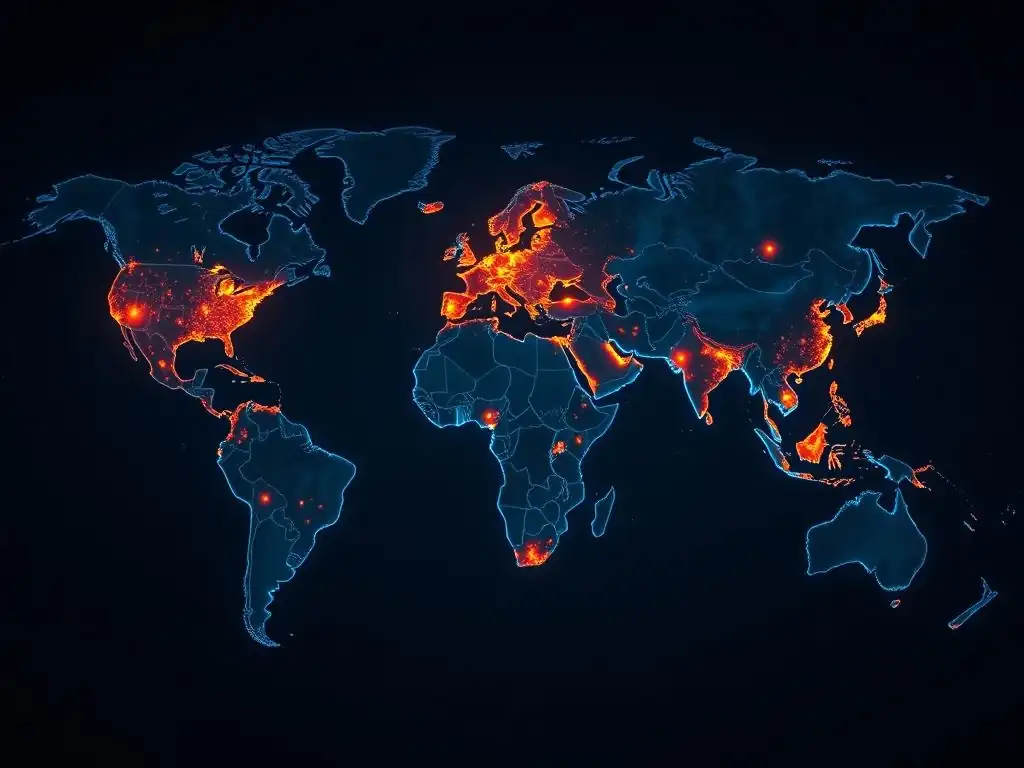
Global collaboration directly enhances the accuracy and reliability of volcanic eruption forecasting. By sharing data, models, and expertise, volcanologists can develop a more comprehensive understanding of pre-eruption signals and improve their ability to anticipate volcanic activity. Comparing monitoring data and eruption histories from volcanoes worldwide allows for the identification of common patterns and precursors that may not be evident when studying volcanoes in isolation. For example, collaborative studies have identified subtle ground deformation patterns or changes in gas emissions that can precede eruptions, leading to improved early warning capabilities.
Sharing eruption forecasting models and techniques across observatories facilitates the refinement and validation of these models. Comparing the performance of different forecasting approaches on diverse datasets from various volcanoes helps identify the strengths and limitations of each method and promotes the development of more robust and universally applicable forecasting tools. Collaborative workshops and training programs provide opportunities for volcanologists to learn from each other's experiences and adopt best practices in eruption forecasting. Ultimately, shared knowledge leads to more accurate and timely eruption forecasts, enabling more effective hazard mitigation and risk reduction strategies for communities at risk.
Enhancing Early Warning Systems for Volcanic Events
Global collaboration is fundamental to enhancing early warning systems for volcanic events. Effective early warning systems rely on timely detection of volcanic unrest, accurate assessment of eruption probability and potential impacts, and rapid dissemination of warnings to at-risk communities. International data sharing facilitates faster detection of volcanic unrest, particularly for volcanoes that are monitored by multiple observatories or through global satellite networks. Collaborative research improves our understanding of eruption processes, leading to more accurate assessments of eruption scenarios and potential hazards.
Sharing best practices in early warning communication and community engagement is crucial for ensuring that warnings are effectively received and acted upon by at-risk populations. Collaborative projects can develop and disseminate standardized warning protocols and communication materials that are culturally appropriate and tailored to the specific needs of different communities. International partnerships can also support capacity building in developing countries to strengthen their national early warning systems and improve community preparedness for volcanic hazards. A globally coordinated and collaborative approach to early warning is essential to minimize the impacts of volcanic eruptions worldwide.
The Future of Global Volcano Monitoring: A Collaborative Approach
Continued Investment in International Partnerships
The future success of global volcano monitoring and hazard mitigation hinges on continued and increased investment in international partnerships. Sustaining existing collaborations and expanding the global network of volcano observatories requires long-term commitment and resources. Governments, funding agencies, and international organizations must recognize the critical importance of global collaboration in addressing volcanic risks and prioritize funding for international research projects, data sharing initiatives, and capacity building programs. Investing in infrastructure to support data sharing and communication, such as online platforms and standardized software, is also essential.
Building stronger partnerships with observatories in developing countries is particularly important. Providing technical assistance, training, and resources to these observatories can enhance their monitoring capabilities and contribute to a more geographically comprehensive global network. Fostering a culture of collaboration and trust among volcano monitoring professionals worldwide is crucial to ensure the long-term sustainability of international partnerships. Recognizing and celebrating the successes of collaborative projects and highlighting the benefits of global cooperation can further strengthen the commitment to international partnerships in volcanology.
Empowering Local Communities Through Global Knowledge Sharing
Global knowledge sharing empowers local communities living near volcanoes to become more resilient to volcanic hazards. Access to information about volcanic risks, monitoring data, and eruption forecasts enables communities to make informed decisions about preparedness and mitigation measures. International collaborations can facilitate the translation of scientific knowledge into accessible and actionable information for local communities. Developing educational materials, public awareness campaigns, and community-based monitoring programs can empower communities to understand and manage volcanic risks.
Sharing best practices in community engagement and disaster risk reduction across different volcanic regions is valuable. Learning from the experiences of communities that have successfully coped with volcanic eruptions can inform strategies for building resilience in other volcanic areas. International partnerships can support community-led initiatives for hazard mapping, evacuation planning, and emergency preparedness. Empowering local communities through global knowledge sharing is essential to build a more volcanically resilient world, where communities are better equipped to live safely and sustainably in volcanic landscapes.
Conclusion: The Strength of Unity in Volcano Science
Global Collaboration: A Path to Safer Communities
Global collaboration in volcano science is not merely a matter of scientific expediency; it is a fundamental pathway to creating safer communities around the world. By uniting expertise, sharing data, and pooling resources, volcano observatories worldwide are collectively strengthening our ability to understand, monitor, and predict volcanic eruptions.
This collaborative effort translates directly into improved volcanic hazard assessments, more accurate eruption forecasts, and enhanced early warning systems. Safer communities are the ultimate outcome of this global unity, as improved monitoring and prediction capabilities allow for more effective risk mitigation strategies, reducing the devastating impacts of volcanic eruptions on human lives and livelihoods.
The strength of global collaboration lies in its ability to transcend geographical and political boundaries, fostering a shared sense of responsibility for mitigating volcanic risks worldwide. It recognizes that volcanic hazards are a global challenge that requires a global response. By working together, volcanologists from different nations are building a more robust and resilient global volcano monitoring system, contributing to a safer and more secure future for communities living in volcanic regions. This unity in purpose and action is the cornerstone of progress in volcano science and the foundation for building volcanically safer communities globally.
Supporting Global Efforts in Volcano Monitoring and Prediction
Sustaining and strengthening global efforts in volcano monitoring and prediction requires ongoing support from governments, funding agencies, research institutions, and the international community as a whole. Continued investment in international partnerships, data sharing infrastructure, and technological innovation is crucial. Advocating for increased funding for volcanology research and monitoring, both nationally and internationally, is essential to maintain and expand global monitoring capabilities. Promoting open data policies and fostering a culture of collaboration within the volcanological community will further enhance the effectiveness of global efforts.
Supporting the World Organization of Volcano Observatories (WOVO) and other international organizations that facilitate collaboration is vital. Encouraging participation in international workshops, training programs, and collaborative research projects strengthens the global network of volcano observatories and promotes the exchange of knowledge and expertise. Ultimately, supporting global efforts in volcano monitoring and prediction is an investment in global safety and resilience, contributing to a world where communities are better protected from the devastating impacts of volcanic eruptions.
Frequently Asked Questions
How does a Global Volcano Observatory Collaboration enhance volcano monitoring capabilities?
A Global Volcano Observatory Collaboration allows for the sharing of data and expertise across borders. This enables a more comprehensive understanding of volcanic activity worldwide.
Why is data sharing crucial in volcano monitoring?
Data sharing provides a broader perspective on volcanic behavior. It allows scientists to identify patterns and trends that might be missed by a single observatory focusing on a specific region.
Expertise shared includes monitoring techniques, eruption forecasting methods, and risk assessment strategies. This collaboration also facilitates the exchange of best practices in crisis management.
How does Global Volcano Observatory Collaboration benefit communities living near active volcanoes?
Collaboration leads to improved early warning systems and more accurate eruption forecasts. This allows for better preparedness and reduces the risk to vulnerable populations.
How does VolcanoExplorers.org support the ideals of a Global Volcano Observatory Collaboration?
VolcanoExplorers.org disseminates information about volcanic activity and promotes understanding of volcanic hazards. The site also highlights the importance of international collaboration in volcanology.
Final Reflection: Embracing Global Volcanic Wisdom
The insights shared throughout this article underscore the critical importance of Global Volcano Observatory Collaboration in mitigating volcanic risk worldwide. The interconnectedness fostered through data sharing and expertise exchange isn't just a theoretical ideal; it's a vital lifeline for communities living in the shadow of these powerful forces of nature, and its relevance is amplified in our increasingly interconnected world.
This collaborative spirit has profoundly shaped, and continues to shape, our understanding of volcanic processes and our ability to predict and respond to eruptions. Witnessing the tangible benefits of shared knowledge, from improved monitoring techniques to more effective hazard assessments, reinforces the necessity of breaking down silos and embracing a global perspective. Alone we can do so little; together we can do so much.
- Helen Keller. This quote perfectly encapsulates the power of collective action in the face of global challenges, and the threat of volcanic eruptions is no exception.
As you reflect on the power of networks and the potential of global collaboration, consider how you can contribute to a more interconnected and resilient world. Whether it's through supporting scientific research, advocating for open data policies, or simply sharing information with your community, your actions can play a vital role in building a future where communities are better prepared for the challenges posed by volcanoes and other natural hazards. Let us all strive to foster a culture of collaboration, ensuring that the wisdom gained from one observatory benefits all.
Uncover the Secrets: Become a Volcano Explorer!
Thank you for exploring the world of collaborative volcanology with us! You've learned how crucial data sharing is for predicting eruptions and safeguarding communities. Ready to contribute to this global effort?
Here's how you can join the Volcano Explorers community:
- Become a Citizen Scientist: Report unusual volcanic activity you witness, whether near home or while traveling, through our observation portal. Every report helps create a more complete picture of volcanic activity worldwide.
- Explore our interactive volcano map and learn more about volcanic observatories around the globe. Discover the unique challenges they face and the innovative solutions they develop.
- Share this article to spread awareness about the importance of international collaboration in volcanic monitoring.
What will you do today to support volcanic research and protect our planet? Share your ideas in the comments below!