
Forecasting Fury: The Science of Combining Data to Predict Volcanic Eruptions

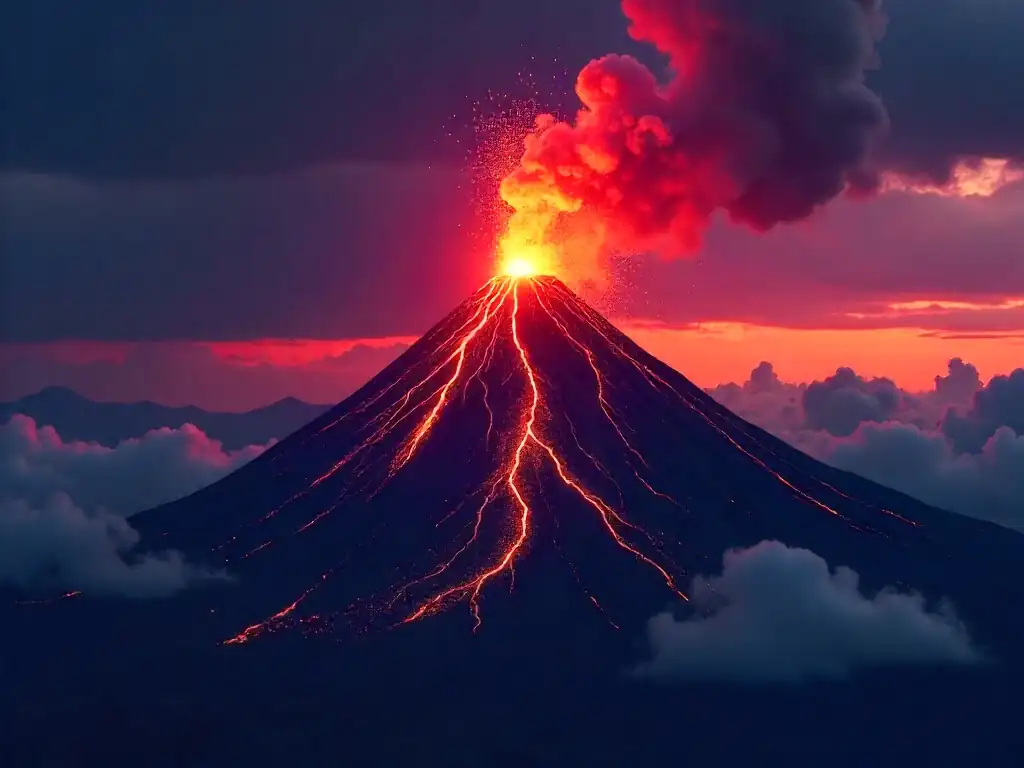
Welcome to Volcano Explorers, where the Earth's fiery secrets are revealed. Ever wondered if we can truly foresee a volcano's wrath? Our exploration into predicting volcanic eruptions accurately unveils the cutting-edge science behind combining data, offering a glimpse into the complex dance between observation and prediction. Are we on the verge of mastering the art of forecasting fury? Dive in and discover how volcanologists are racing against time to unlock the volcano's hidden language.
- Integrating Multiple Datasets for Enhanced Eruption Forecasting
-
Frequently Asked Questions
- How close are scientists to predicting volcanic eruptions accurately?
- What are the key data points volcanologists monitor to predict eruptions?
- What role does historical data play in predicting volcanic eruptions?
- How can the public access real-time updates on volcanic activity and forecasts?
- What are some of the biggest challenges in predicting volcanic eruptions accurately?
- Final Reflection: Harnessing Data to Calm the Earth's Fury
- Unleash Your Inner Vulcanologist!
Integrating Multiple Datasets for Enhanced Eruption Forecasting
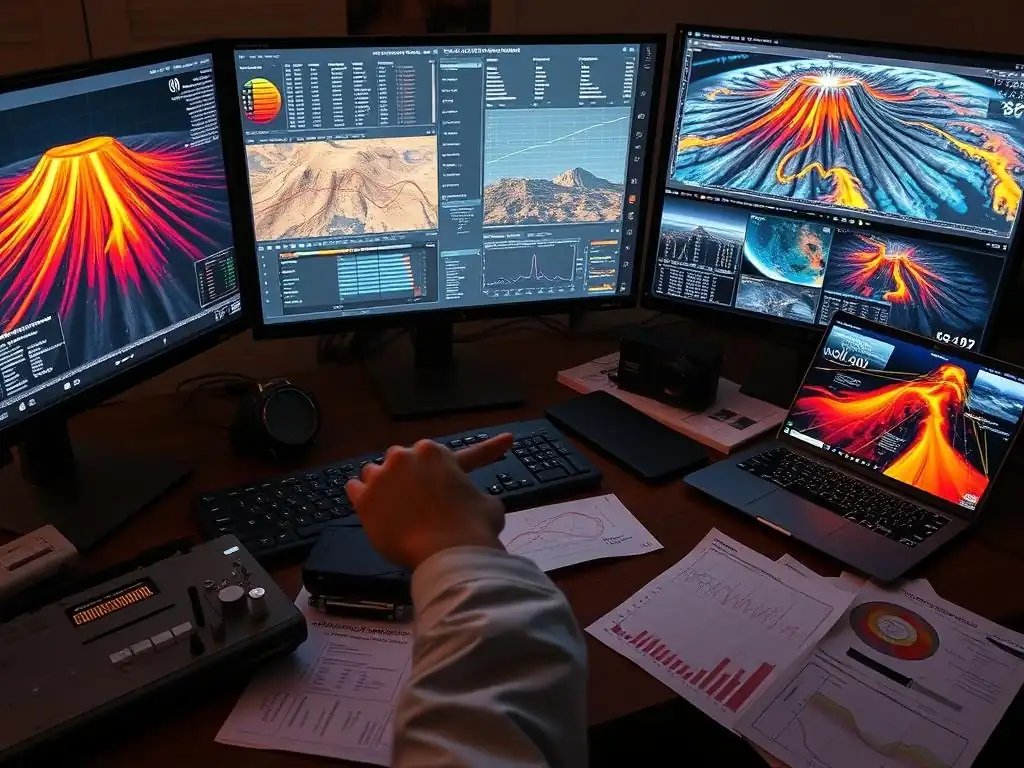
Synergistic Benefits of Data Fusion in Volcano Prediction
Volcanic eruptions are complex phenomena driven by a multitude of interacting physical and chemical processes occurring beneath the Earth's surface. Predicting these events accurately requires a holistic approach, moving beyond reliance on single monitoring techniques. The power of data fusion, or combining information from various monitoring systems, lies in its ability to reveal patterns and subtle changes that might be missed when analyzing datasets in isolation. This synergistic approach allows volcanologists to build a more complete and nuanced understanding of a volcano's state, significantly enhancing the reliability of eruption forecasts.
Imagine trying to assemble a jigsaw puzzle with only a few pieces. You might get a general idea of the image, but crucial details will remain hidden. Similarly, relying on only seismic data, for instance, might indicate increased activity, but without considering ground deformation or gas emissions, the full picture of magma movement and pressure build-up remains incomplete. Data fusion is like adding more pieces to the puzzle, allowing for a clearer, more detailed, and ultimately more accurate representation of the volcanic system, leading to more informed and effective eruption predictions.
Combining Geophysical and Geochemical Data for Comprehensive Assessment
The most effective volcanic eruption prediction strategies integrate both geophysical and geochemical data. Geophysical methods, such as seismology and ground deformation monitoring, provide insights into the physical processes occurring within the volcano, like magma movement, pressure changes, and structural adjustments. Geochemical monitoring, on the other hand, focuses on analyzing the composition and flux of volcanic gases, which reflect changes in magma composition and degassing processes. Combining these data streams offers a comprehensive assessment of a volcano's internal state.
For example, an increase in seismicity coupled with ground inflation suggests magma accumulation in a shallow reservoir. However, if this is further corroborated by an increase in the ratio of carbon dioxide to sulfur dioxide in volcanic gas emissions, it strengthens the interpretation that magma is rising and degassing, significantly increasing the likelihood of an impending eruption. This multi-faceted approach, combining the 'body language' of the volcano (geophysics) with its 'breath' (geochemistry), provides a far more robust basis for eruption forecasting than either method alone.
Examples of Data Integration Leading to Successful Eruption Forecasts
Several historical eruptions demonstrate the effectiveness of integrated data analysis in forecasting volcanic events. One notable example is the 1991 eruption of Mount Pinatubo in the Philippines. Prior to the climactic eruption, scientists observed a suite of precursory signals, including increased seismicity, ground deformation, and changes in sulfur dioxide emissions. Crucially, it was the combination of these datasets, rather than any single indicator in isolation, that allowed volcanologists to accurately forecast the magnitude and timing of the eruption, leading to timely evacuations and significantly reducing casualties.
Another compelling case is the ongoing monitoring of volcanoes in Iceland. The Icelandic Meteorological Office routinely integrates seismic, GPS, gas, and hydrological data to assess volcanic unrest. During periods of heightened activity at volcanoes like Katla or Bardarbunga, the simultaneous analysis of these diverse datasets allows for a more nuanced understanding of subsurface processes, enabling authorities to issue appropriate warnings and manage potential hazards. These examples highlight that the power of predicting volcanic eruptions accurately is significantly amplified by embracing a holistic, data-integrated approach to volcano monitoring.
Frequently Asked Questions
How close are scientists to predicting volcanic eruptions accurately?
While perfect prediction is still elusive, scientists are making significant strides. They use a combination of monitoring techniques and historical data to improve eruption forecasting.
What are the key data points volcanologists monitor to predict eruptions?
Volcanologists monitor various indicators, including ground deformation, gas emissions, and seismic activity. These changes can signal that magma is moving beneath the surface.
What role does historical data play in predicting volcanic eruptions?
Past eruption patterns provide crucial insights. By analyzing previous events, scientists can identify potential precursors to future eruptions.
How can the public access real-time updates on volcanic activity and forecasts?
Websites like VolcanoExplorers.org provide real-time monitoring data. Local authorities also issue warnings and evacuation orders based on scientific assessments.
What are some of the biggest challenges in predicting volcanic eruptions accurately?
Volcanoes are complex systems, and each is unique in its behavior. Also, limited data and unpredictable geological processes make accurate prediction difficult.
Final Reflection: Harnessing Data to Calm the Earth's Fury
The ability to anticipate volcanic eruptions, as explored throughout this article, is no longer a distant dream but a tangible goal within reach. The convergence of diverse datasets and sophisticated analytical techniques is revolutionizing our understanding of these geological behemoths, transforming reactive responses into proactive mitigation strategies that can save lives and protect communities.
This ongoing scientific endeavor deeply impacts our relationship with the natural world. It reminds us that even in the face of seemingly uncontrollable forces, human ingenuity and collaborative effort can pave the way for a safer future. The only way to do great work is to love what you do.
- Steve Jobs. This quote resonates profoundly with the dedication of volcanologists worldwide, driven by a passion to unravel the Earth's secrets and safeguard humanity from its potential wrath.
Now, consider your own role in this narrative. While you may not be a volcanologist, the principles of data-driven decision-making and proactive problem-solving are universally applicable. How can you leverage the power of information and collaboration to address challenges in your own life, your community, or even on a global scale? Embrace the spirit of inquiry, the pursuit of knowledge, and the unwavering belief that even the most formidable challenges can be overcome with dedication and innovation. Let the lessons learned from predicting volcanic eruptions inspire you to forecast and shape a brighter future.
Unleash Your Inner Vulcanologist!
Thank you for exploring the fascinating science behind predicting volcanic eruptions. We hope you've gained a deeper appreciation for the power of data analysis and the dedication of scientists working to keep communities safe. Now, it's your turn to engage further with the incredible world of volcanoes!
Here are a few ways you can expand your volcano knowledge:
- Dive deeper into volcanic forecasting by exploring real-time data from a volcano near you! Use online resources like the USGS Volcano Hazards Program to track seismic activity, gas emissions, and ground deformation.
- Share this article with a friend or family member interested in Earth science and spark a conversation about the challenges and importance of predicting natural disasters.
- Create a short presentation or social media post explaining a key aspect of volcanic forecasting you learned from this article and share it with your network. Help demystify the science for others!
What specific type of volcanic data interests you most, and how could you use it to improve eruption forecasting? Share your thoughts in the comments below!