
Volcanic Air and Aviation Safety: Lessons from Past Eruptions


Welcome to Volcano Explorers, where the earth breathes fire and the landscape tells tales of unimaginable power! Ever wondered how something born of destruction can also create breathtaking beauty? Our latest exploration dives into the heart of a critical concern: volcanic ash aviation safety tips. Discover the hidden dangers lurking in seemingly innocuous clouds and unlock the secrets to navigating a world where the skies themselves can become a threat. Are you ready to learn how past eruptions are shaping the future of flight?
- Introduction: The Threat of Volcanic Ash to Air Travel
- Understanding the Composition and Behavior of Volcanic Ash Clouds
- Historical Case Studies: Aviation Incidents Involving Volcanic Ash
- Volcanic Ash Aviation Safety Tips: Minimizing Risks
- The Role of International Collaboration in Volcanic Ash Monitoring and Mitigation
- Future Challenges and Research Directions for Aviation Safety in Volcanic Regions
- Conclusion: Ensuring Safer Skies in Volcanically Active Areas
-
Frequently Asked Questions
- What is volcanic ash and why is it dangerous to aircraft?
- How do volcanic eruptions affect air travel routes?
- What are some aviation safety tips to follow during volcanic activity?
- What role do volcanologists play in aviation safety?
- What are some examples of past eruptions that have significantly impacted air travel?
- Final Reflection: Navigating the Invisible Threat
- Shield the Skies: Advocate for Safer Air Travel
Introduction: The Threat of Volcanic Ash to Air Travel
Volcanic eruptions are among the most spectacular and powerful natural events on Earth. Beyond the immediate dangers of lava flows and pyroclastic surges, volcanic ash poses a significant, yet often invisible, threat to modern aviation. This seemingly innocuous dust, ejected high into the atmosphere during explosive eruptions, can travel thousands of kilometers downwind, crossing international borders and airline routes.
While beautiful from afar, volcanic ash clouds present a serious hazard to aircraft, capable of causing engine failure, reduced visibility, and damage to critical aircraft systems. Understanding the risks and implementing effective safety measures is paramount to ensuring the safety of air travel in volcanically active regions and beyond.
VolcanoExplorers.org: Understanding Volcanic Hazards to Aviation
At VolcanoExplorers.org, we are dedicated to exploring the multifaceted impacts of volcanic activity, extending beyond the immediate geological effects to include atmospheric and environmental consequences. Volcanic ash, a key focus of our research and educational outreach, is not merely a nuisance. It's a complex mixture of pulverized rock, mineral fragments, and volcanic glass shards, often microscopic in size.
These particles, when ingested by jet engines, can melt and resolidify, coating turbine blades and disrupting airflow, potentially leading to engine stall or complete failure. Furthermore, the abrasive nature of volcanic ash can scratch cockpit windows, damage airframes, and contaminate aircraft systems, adding to the complexity of managing this hazard.
Understanding the science behind volcanic ash hazards is crucial for developing effective mitigation strategies. VolcanoExplorers.org aims to provide in-depth information about the formation, composition, and dispersal of volcanic ash clouds. We delve into the atmospheric processes that govern ash cloud movement, the technologies used for detection and monitoring, and the historical lessons learned from past encounters between aircraft and volcanic ash. By making this knowledge accessible, we contribute to a more informed public and a safer aviation environment, particularly for those living and traveling in regions prone to volcanic activity.
Why Volcanic Ash Poses a Significant Risk to Aircraft
The risks associated with volcanic ash encounters are multifaceted and stem from the unique properties of the ash itself and the operational vulnerabilities of jet aircraft. Modern jet engines, while incredibly powerful and reliable, are designed to ingest clean air. Volcanic ash, composed of hard, abrasive particles, is far from clean.
As ash enters the engine, the intense heat of the combustion chamber (reaching temperatures over 1400°C or 2552°F) can cause the silicate components of the ash to melt. This molten material then resolidifies on cooler engine parts, such as turbine blades and nozzles, forming a glassy coating. This process, known as 'glassification', disrupts the airflow within the engine, reduces its efficiency, and can ultimately lead to compressor stall or engine failure.
Beyond engine damage, volcanic ash poses several other threats to aircraft. The abrasive nature of the ash can scratch and pit cockpit windscreens, severely reducing visibility, especially during critical phases of flight like takeoff and landing. Ash can also contaminate aircraft systems, including pitot tubes and static ports, leading to unreliable airspeed and altitude readings.
Furthermore, the weight of accumulated ash can add stress to the airframe, and the fine particles can penetrate seals and filters, causing damage to avionics and other sensitive equipment. These combined effects highlight why volcanic ash is considered a significant and potentially catastrophic hazard to aviation, necessitating robust volcanic ash aviation safety tips and procedures.
Understanding the Composition and Behavior of Volcanic Ash Clouds
The Microscopic Nature of Volcanic Ash and its Abrasive Properties
Volcanic ash, despite its name, is not the product of combustion like ash from burning wood. Instead, it is formed during explosive volcanic eruptions when magma, fragmented by rapidly expanding gases, is ejected into the atmosphere.
This fragmented material consists of tiny particles of volcanic glass, mineral crystals, and rock fragments, ranging in size from millimeters down to micrometers – some particles are finer than human hair. The microscopic nature of volcanic ash is a key factor in its hazard to aviation because these small particles can easily penetrate aircraft systems and remain suspended in the atmosphere for extended periods, drifting over vast distances.
The abrasive properties of volcanic ash are another critical concern. Volcanic glass, a major component of ash, is essentially solidified molten rock and possesses a hardness comparable to window glass. When these abrasive particles impact aircraft surfaces at high speeds, they can cause significant erosion and damage. Windshields can become scratched and opaque, reducing pilot visibility.
Leading edges of wings and control surfaces can be eroded, affecting aerodynamic performance. Even the paint on the aircraft can be sandblasted away, revealing the underlying metal. The combination of its microscopic size and abrasive nature makes volcanic ash a particularly insidious threat to aircraft integrity and operation.
How Volcanic Ash Clouds Disperse and Drift: Factors Influencing Trajectory
The dispersal and trajectory of volcanic ash clouds are governed by a complex interplay of atmospheric conditions and eruption dynamics. Immediately after an explosive eruption, the initial plume of ash and gas rises buoyantly into the atmosphere due to its heat and momentum. The height the plume reaches depends on the eruption intensity and atmospheric stability.
Stronger eruptions can inject ash into the stratosphere, where it can persist for weeks or even months. Once aloft, the ash cloud is then advected by prevailing winds. Wind direction and speed at different altitudes are crucial factors in determining the path and rate of ash cloud dispersal.
Atmospheric conditions also play a significant role in the evolution of ash clouds. Wind shear, variations in wind speed and direction with altitude, can cause the cloud to spread and become more diffuse. Turbulence can mix the ash cloud vertically and horizontally, affecting its concentration and extent.
Rainfall can wash ash out of the atmosphere, but it can also create 'wet ash', which is heavier and can pose additional icing risks to aircraft. Furthermore, gravitational settling causes larger ash particles to fall out of the cloud relatively quickly, while finer particles can remain suspended for much longer, leading to a gradual thinning and spreading of the ash cloud as it drifts downwind. Predicting the precise trajectory and concentration of volcanic ash clouds is a challenging task, requiring sophisticated atmospheric models and real-time monitoring data.
Detecting and Monitoring Volcanic Ash: Current Technologies and Limitations
Effective detection and monitoring of volcanic ash clouds are crucial for mitigating aviation risks. A multi-faceted approach is employed, utilizing ground-based, airborne, and space-based technologies. Ground-based monitoring relies heavily on seismometers and deformation sensors to detect volcanic unrest and predict potential eruptions. Volcanic observatories also utilize visual observations, gas measurements, and thermal imaging to assess eruptive activity and ash plume characteristics. However, ground-based observations are limited by visibility and the range of detection, especially for distant or high-altitude ash clouds.
Space-based monitoring, using satellites equipped with infrared and visible sensors, provides a broader view of ash cloud dispersal and extent. Satellites can detect ash clouds day and night, regardless of weather conditions, and provide valuable information on cloud height, thickness, and movement. However, satellite-based detection can be hampered by cloud cover and the difficulty in distinguishing volcanic ash from meteorological clouds. Airborne measurements, using specialized aircraft equipped with ash detection instruments, offer the most direct and detailed information about ash cloud properties.
These aircraft can fly into ash clouds to sample and analyze ash concentration, particle size distribution, and chemical composition. Despite advancements in detection technologies, limitations remain in accurately forecasting ash cloud trajectories and concentrations, particularly in rapidly evolving volcanic eruptions. Continuous research and development are essential to improve our ability to detect and monitor volcanic ash and enhance volcanic ash aviation safety tips and strategies.
Historical Case Studies: Aviation Incidents Involving Volcanic Ash
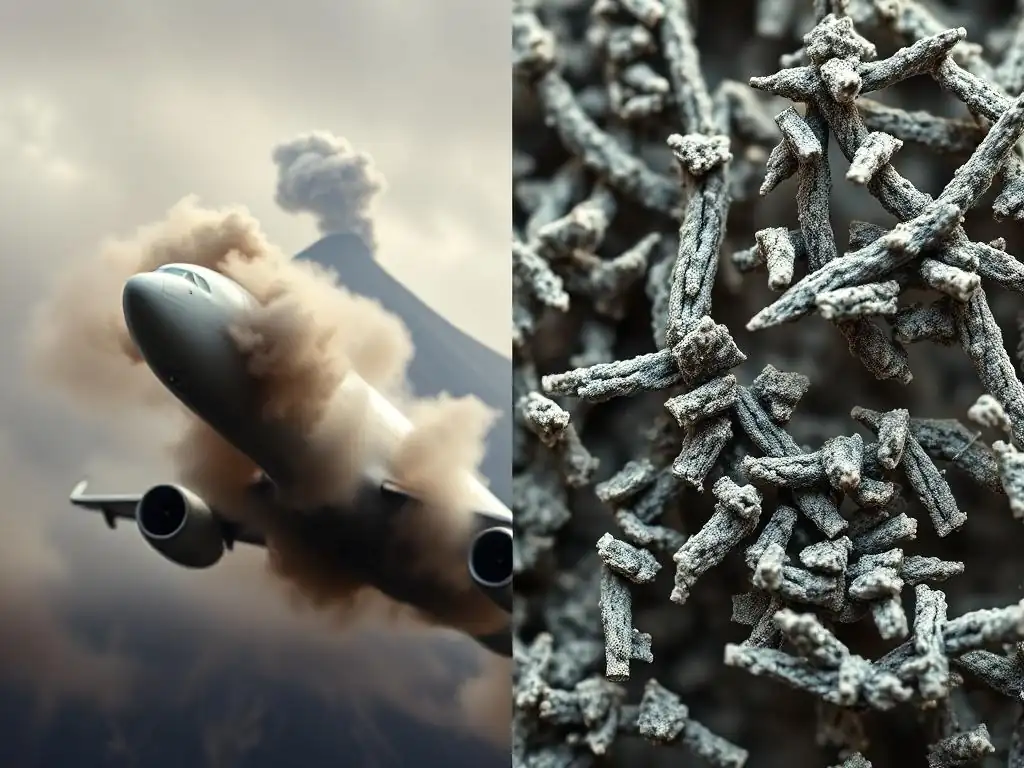
The Eruption of Mount St. Helens (1980): Improvements in Volcanic Ash Detection
The catastrophic eruption of Mount St. Helens in Washington State, USA, on May 18, 1980, served as an early, stark reminder of the threat volcanic ash poses to aviation, although fortunately, no major commercial aviation incidents occurred directly due to this eruption. The eruption injected a massive plume of ash high into the atmosphere, disrupting air traffic across the Pacific Northwest and beyond. While the aviation community was aware of volcanic hazards, the scale and reach of the Mount St. Helens ash cloud highlighted the need for improved detection and forecasting capabilities.
The 1980 eruption spurred significant advancements in volcanic ash detection and monitoring. Geophysical monitoring networks around volcanoes were enhanced, and research into remote sensing techniques for ash cloud detection using satellites and radar was accelerated. The eruption underscored the importance of rapid communication and coordination between volcanologists, meteorologists, and aviation authorities to disseminate timely warnings and airspace closures. Lessons learned from Mount St. Helens contributed directly to the development of more robust volcanic ash aviation safety protocols and paved the way for the establishment of dedicated volcanic ash advisory centers.
The Galunggung Eruption (1982): Development of Volcanic Ash Advisory Centers
The 1982 eruption of Mount Galunggung in Indonesia proved to be a pivotal event in the history of volcanic ash and aviation safety. British Airways Flight 9, a Boeing 747 flying from Kuala Lumpur to Perth, encountered the Galunggung ash cloud at night over the Indian Ocean. All four engines of the aircraft failed due to ash ingestion, causing a terrifying descent of over 25,000 feet. Miraculously, the crew managed to restart three of the four engines and safely landed in Jakarta. Just weeks later, a Singapore Airlines 747 also suffered engine damage from the same ash cloud.
These near-disasters served as a critical wake-up call for the global aviation industry. The Galunggung incidents directly led to the establishment of the Volcanic Ash Advisory Centers (VAACs). These centers, designated by the International Civil Aviation Organization (ICAO), are responsible for monitoring volcanic eruptions worldwide and providing forecasts of volcanic ash cloud trajectories and concentrations to air traffic control and airlines. The VAAC system represents a significant international collaboration aimed at enhancing volcanic ash aviation safety by providing timely and accurate information to mitigate risks.
The Eyjafjallajökull Eruption (2010): A Wake-Up Call for Global Aviation
The 2010 eruption of Eyjafjallajökull volcano in Iceland caused unprecedented disruption to air travel across Europe and beyond. While relatively small in volcanic explosivity compared to other eruptions, the Eyjafjallajökull eruption produced a fine-grained ash cloud that drifted over densely populated and heavily trafficked airspace. European airspace was largely closed for several days, affecting millions of passengers and causing significant economic repercussions. This eruption highlighted the vulnerability of modern air travel to even moderate volcanic ash events and exposed gaps in existing volcanic ash aviation safety procedures.
The Economic Impact of the Eyjafjallajökull Ash Cloud
The economic impact of the Eyjafjallajökull ash cloud was substantial and far-reaching. Airlines faced massive losses due to flight cancellations, refunds, and passenger care costs. Airports were forced to close, losing revenue from landing fees and concessions. Businesses across Europe experienced disruptions to supply chains and lost productivity due to travel restrictions.
The International Air Transport Association (IATA) estimated the airline industry alone lost approximately \$1.7 billion USD in revenue. Beyond the direct aviation sector, the broader European economy suffered significant indirect losses, impacting tourism, trade, and various industries reliant on air travel. The Eyjafjallajökull eruption served as a stark reminder of the interconnectedness of global systems and the cascading economic consequences of volcanic ash disruptions.
Changes in Aviation Policy Following the 2010 Eruption
The Eyjafjallajökull eruption prompted significant changes in aviation policy and regulations regarding volcanic ash. Prior to 2010, a zero-tolerance policy prevailed in many regions, meaning any presence of volcanic ash in airspace led to closures. Following the eruption, a revised approach was adopted, moving towards a more risk-based system.
This involved establishing zones of varying ash concentration, allowing aircraft equipped and authorized to fly in areas with low ash concentrations. "Time Limited Operations" were introduced, permitting flights in designated airspace for limited durations, based on real-time ash monitoring and dispersion forecasts. These changes aimed to balance safety with minimizing disruption to air travel and represented a significant evolution in volcanic ash aviation safety management.
Volcanic Ash Aviation Safety Tips: Minimizing Risks
Pre-Flight Planning: Checking Volcanic Activity Reports and NOTAMs
Proactive pre-flight planning is the first line of defense in mitigating volcanic ash risks. Pilots and flight dispatchers must diligently check for volcanic activity reports and Notices to Airmen (NOTAMs) before each flight, especially when operating in or near volcanically active regions. Volcanic Activity Reports, issued by volcanic observatories and disseminated through aviation channels, provide information on current eruptions, ash plume heights, and forecasts of ash cloud movement. NOTAMs are critical alerts issued by aviation authorities to inform pilots of temporary airspace restrictions, including volcanic ash closures.
Utilizing resources like the Volcanic Ash Advisory Centers' websites and aviation weather services is paramount. These platforms provide up-to-date information on volcanic ash advisories, including graphical depictions of ash cloud forecasts and affected airspace. Flight planning should incorporate routes that avoid predicted ash cloud areas, even if it means taking a less direct path. Contingency plans should be in place, including alternate airports and diversion procedures, in case of unexpected volcanic activity or ash cloud encounters en route. Thorough pre-flight checks are essential volcanic ash aviation safety tips, ensuring pilots are well-informed and prepared to navigate potential volcanic hazards.
In-Flight Procedures: Recognizing and Responding to Volcanic Ash Encounters
Despite meticulous pre-flight planning, unexpected encounters with volcanic ash clouds can occur. Pilots must be vigilant and trained to recognize the signs of volcanic ash and respond swiftly and effectively to minimize risks. In-flight procedures are crucial volcanic ash aviation safety tips, focusing on avoidance and mitigation.
Identifying Visual and Instrument Indicators of Volcanic Ash
Recognizing volcanic ash in flight relies on a combination of visual and instrument cues. Visually, volcanic ash clouds may appear as diffuse layers, often brownish or grayish in color, and can resemble haze or smog. A distinctive odor, often described as sulfurous or like burnt matches, may be noticeable in the cockpit. Engine instruments can provide early warnings. Engine temperature (EGT) may rise, and engine pressure ratio (EPR) may fluctuate or decrease.
Turbine gas temperature (TGT) and fuel flow may also exhibit abnormal readings. Airspeed indications may become unreliable due to pitot tube blockage by ash. Additionally, static discharge on the windscreen, similar to St. Elmo's fire, can occur as the aircraft flies through ash. Any combination of these visual or instrument indicators should be treated as a potential volcanic ash encounter, prompting immediate action.
Emergency Procedures: Shutting Down Engines and Maintaining Altitude
In the event of a confirmed volcanic ash encounter, immediate emergency procedures are paramount. The primary goal is to exit the ash cloud as quickly and efficiently as possible. Pilots should initiate a 180-degree turn to reverse course and fly out of the ash cloud, using weather radar if available to identify and avoid areas of higher ash concentration.
If engine malfunctions occur, such as compressor stall or engine failure, follow established emergency procedures, which may include reducing engine power or, in extreme cases, shutting down affected engines. Maintaining altitude or even climbing, if possible and terrain permits, is generally recommended to increase clearance from the ash cloud and improve glide range in case of multiple engine failures.
Continuous communication with air traffic control is essential to report the ash encounter and request assistance. Adhering to these emergency procedures is critical for volcanic ash aviation safety and maximizing the chances of a safe outcome.
Post-Flight Inspection and Maintenance: Assessing Damage from Volcanic Ash
Even after a successful flight through or near volcanic ash, thorough post-flight inspection and maintenance are essential. Volcanic ash, while potentially invisible during flight, can cause subtle but cumulative damage to aircraft components. A detailed visual inspection should be conducted, focusing on engine inlets, fan blades, compressor blades, turbine blades (if accessible), and exhaust nozzles for signs of ash accumulation or erosion. Windshields and leading edges of wings and control surfaces should be examined for scratches, pitting, or abrasion.
Aircraft systems, including pitot tubes, static ports, and air filters, should be checked for ash contamination. Engine boroscope inspections may be necessary to assess internal engine damage. Any detected ash accumulation should be carefully removed following manufacturer-recommended procedures. Prompt and thorough post-flight inspection and maintenance are crucial for identifying and addressing any volcanic ash-related damage, ensuring continued aircraft airworthiness and preventing potential long-term problems. This proactive approach is a vital component of comprehensive volcanic ash aviation safety protocols.
The Role of International Collaboration in Volcanic Ash Monitoring and Mitigation
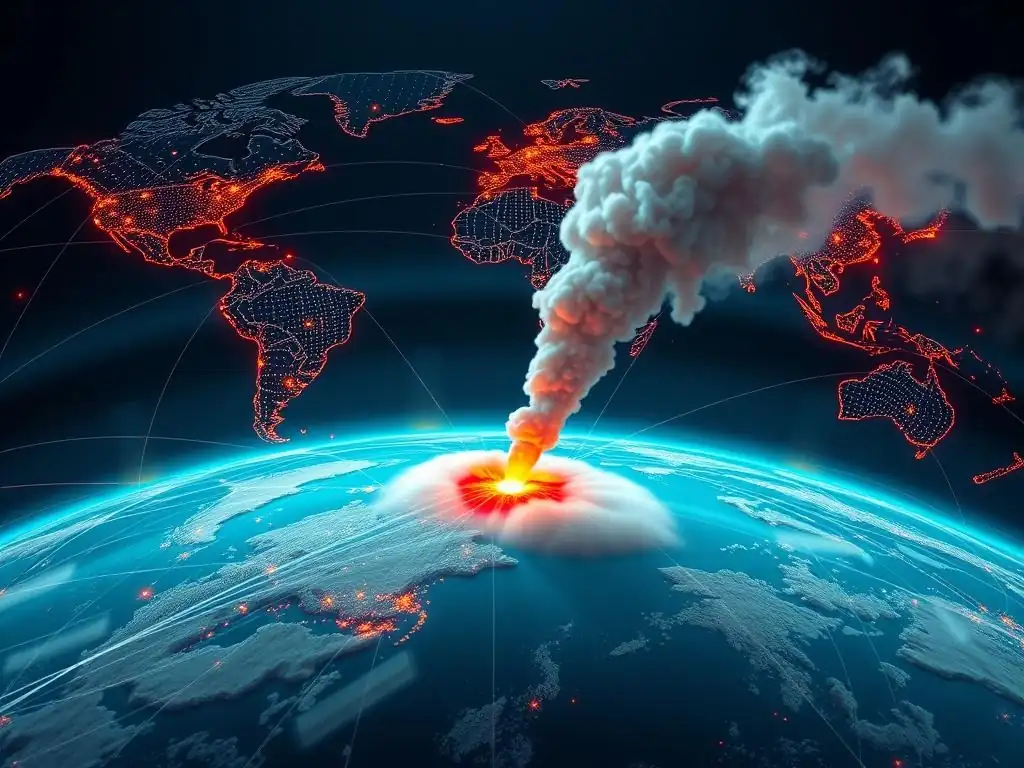
The International Airways Volcano Watch (IAVW) Program
International collaboration is fundamental to effective volcanic ash monitoring and mitigation in aviation. The International Airways Volcano Watch (IAVW) program, coordinated by the International Civil Aviation Organization (ICAO), is the cornerstone of this global effort. The IAVW framework brings together volcanic observatories, meteorological agencies, air navigation service providers, airlines, and aircraft manufacturers worldwide to share information, coordinate responses, and enhance volcanic ash aviation safety globally.
The IAVW program designates nine Volcanic Ash Advisory Centers (VAACs) strategically located around the world to monitor volcanoes and provide ash cloud forecasts for their respective regions. These VAACs utilize satellite data, ground-based observations, and atmospheric dispersion models to track ash clouds and issue advisories to air traffic control and airlines. Standardized procedures and communication protocols within the IAVW framework ensure consistent and reliable information is disseminated globally, enabling coordinated decision-making and mitigating the impact of volcanic ash on international air travel. The IAVW exemplifies the power of international cooperation in addressing a transboundary hazard.
The Importance of Real-Time Volcanic Ash Dispersion Models
Real-time volcanic ash dispersion models are indispensable tools for forecasting ash cloud trajectories and concentrations, which are critical for aviation safety. These sophisticated computer models integrate meteorological data, such as wind fields, temperature profiles, and atmospheric stability, with volcanic eruption parameters, such as eruption height, ash emission rate, and particle size distribution. By simulating the atmospheric transport and diffusion of volcanic ash, these models provide valuable forecasts of ash cloud movement and evolution.
VAACs rely heavily on these dispersion models to generate volcanic ash advisories. The models help predict which airspace will be affected by ash, the expected concentration levels, and the duration of the hazard. These forecasts enable air traffic control to reroute flights, close airspace if necessary, and provide airlines with the information needed to make informed operational decisions. Continuous improvement of volcanic ash dispersion models, through ongoing research and validation against real-world observations, is essential for enhancing the accuracy and reliability of ash cloud forecasts and improving volcanic ash aviation safety.
Effective communication and seamless coordination between volcanic observatories and aviation authorities are paramount for timely and effective volcanic ash hazard mitigation. Volcanic observatories are the primary source of information on volcanic activity, providing crucial data on eruptions, ash plume characteristics, and potential hazards. Aviation authorities, including air traffic control and regulatory agencies, are responsible for managing airspace and ensuring aviation safety. A clear and efficient communication pathway between these entities is essential for rapid information exchange and coordinated decision-making.
Real-time communication protocols, utilizing standardized formats and channels, are crucial for disseminating volcanic activity reports and ash advisories to aviation stakeholders. Joint exercises and training programs, involving volcanologists, meteorologists, air traffic controllers, and pilots, can enhance understanding and improve coordination during volcanic crises. Establishing clear roles and responsibilities, and fostering a culture of collaboration and information sharing, are key to strengthening the interface between volcano monitoring and aviation operations, ultimately enhancing volcanic ash aviation safety and minimizing disruptions to air travel.
Future Challenges and Research Directions for Aviation Safety in Volcanic Regions
Developing More Robust Ash Detection and Avoidance Technologies
Despite advancements in volcanic ash detection, challenges remain in achieving reliable and real-time ash detection capabilities onboard aircraft. Current technologies, such as satellite-based monitoring and ground-based radar, provide valuable information but have limitations in detecting low concentrations of ash or rapidly changing ash cloud conditions. Research and development efforts are focused on developing more robust and sensitive ash detection technologies that can be integrated into aircraft systems.
Lidar (Light Detection and Ranging) systems, which use laser pulses to detect airborne particles, show promise for real-time ash detection from aircraft. Improved satellite sensors with enhanced spectral resolution and spatial coverage are also being explored to better discriminate volcanic ash from meteorological clouds. Furthermore, research into advanced weather radar technologies and algorithms to identify and track volcanic ash clouds is ongoing. The goal is to equip aircraft with the capability to detect and avoid volcanic ash autonomously, enhancing volcanic ash aviation safety and reducing reliance on external information sources.
Understanding the Long-Term Effects of Volcanic Ash on Aircraft Engines
While immediate engine failures due to volcanic ash ingestion are a primary concern, the long-term effects of ash exposure on aircraft engines are also an area of ongoing research. Repeated exposure to even low concentrations of volcanic ash can lead to cumulative engine damage, such as erosion of compressor and turbine blades, increased engine wear and tear, and reduced engine performance over time. Understanding these long-term effects is crucial for developing appropriate maintenance schedules and engine design improvements to mitigate volcanic ash risks.
Research is focused on analyzing engine components from aircraft that have encountered volcanic ash to assess the extent and nature of long-term damage. Engine manufacturers are conducting tests to evaluate the durability of engine materials and coatings under simulated volcanic ash ingestion conditions. Developing predictive models to estimate the long-term impact of ash exposure on engine life and performance is also a priority. This research will inform maintenance procedures and potentially lead to the development of more ash-resistant engine designs, further enhancing volcanic ash aviation safety.
Enhancing Pilot Training for Volcanic Ash Encounters
Effective pilot training is paramount for ensuring appropriate responses to volcanic ash encounters. While flight simulators can replicate engine malfunctions, realistically simulating the visual and sensory cues associated with volcanic ash encounters remains a challenge. Enhanced pilot training programs are needed to improve pilot awareness of volcanic ash hazards, recognition of ash cloud indicators, and proficiency in executing emergency procedures.
Training should incorporate realistic scenarios simulating volcanic ash encounters, including visual cues, instrument indications, and potential engine malfunctions. Flight simulator training can be enhanced to better replicate the effects of ash ingestion on engine performance and aircraft handling. Emphasis should be placed on decision-making skills, crew resource management, and communication with air traffic control during volcanic ash emergencies. Continuous recurrent training, incorporating lessons learned from past volcanic ash incidents and evolving best practices, is essential to maintain pilot proficiency and enhance volcanic ash aviation safety.
Conclusion: Ensuring Safer Skies in Volcanically Active Areas
The Ongoing Need for Vigilance and Innovation in Volcanic Hazard Mitigation for Aviation
Volcanic ash remains a persistent and evolving threat to aviation safety, particularly in volcanically active regions around the globe. While significant progress has been made in volcanic ash monitoring, forecasting, and aviation procedures, the dynamic nature of volcanic eruptions and the increasing volume of air traffic necessitate ongoing vigilance and innovation. The lessons learned from past eruptions, from Mount St. Helens to Eyjafjallajökull, underscore the importance of continuous improvement in volcanic hazard mitigation for aviation.
Continued investment in research and development of advanced ash detection technologies, more accurate dispersion models, and enhanced pilot training programs is crucial. International collaboration through the IAVW program and ongoing communication between volcanologists, meteorologists, and aviation authorities are essential for a coordinated global response to volcanic ash hazards. By maintaining vigilance, fostering innovation, and working collaboratively, the aviation community can continue to enhance volcanic ash aviation safety and ensure safer skies in volcanically active areas for years to come.
Frequently Asked Questions
What is volcanic ash and why is it dangerous to aircraft?
Volcanic ash consists of tiny particles of pulverized rock and glass ejected during volcanic eruptions. It's dangerous because these particles can damage jet engines, abrade aircraft surfaces, and impair visibility.
How do volcanic eruptions affect air travel routes?
Eruptions can lead to widespread airspace closures as ash clouds drift with the wind. Aviation authorities monitor ash clouds and reroute flights to avoid contaminated zones, impacting flight schedules and routes.
What are some aviation safety tips to follow during volcanic activity?
Pilots should avoid flying through ash clouds at all costs. They should also be aware of volcanic ash advisories and reroute flights as needed. Ground crews should inspect aircraft for ash contamination after flights.
What role do volcanologists play in aviation safety?
Volcanologists monitor volcanoes for signs of increased activity and provide real-time data to aviation authorities. This information helps inform decisions about airspace closures and flight rerouting.
What are some examples of past eruptions that have significantly impacted air travel?
The 2010 Eyjafjallajökull eruption in Iceland caused widespread flight cancellations across Europe. The 1982 eruption of Galunggung in Indonesia led to engine failures on several commercial aircraft.
The lessons gleaned from past volcanic eruptions, as detailed in this article, are not mere historical anecdotes; they are critical survival guides in an era where air travel is ubiquitous and volcanic activity remains unpredictable. The potential for catastrophic encounters between aircraft and volcanic ash clouds is a constant, albeit often unseen, threat, demanding unwavering vigilance and continuous refinement of safety protocols.
The impact of volcanic eruptions on aviation extends far beyond immediate flight disruptions. It shapes policy, drives technological innovation in ash detection and avoidance, and underscores the vital importance of international collaboration. The ongoing research and development in this field are a testament to our commitment to safeguarding human lives and ensuring the continued reliability of air travel. The only way to do great work is to love what you do.
- Steve Jobs. This quote reminds us that dedication and passion are essential when addressing complex challenges like volcanic ash aviation safety.
Now, consider the implications of this knowledge in your own life. While you may not be a pilot or an air traffic controller, understanding the risks and the precautions taken to mitigate them empowers you as a traveler. Let this article serve as a reminder to appreciate the complex systems that keep us safe in the skies and to advocate for continued investment in research and technology that protects us from the invisible threat of volcanic ash. Be informed, be vigilant, and be a champion for aviation safety.
Shield the Skies: Advocate for Safer Air Travel
Thanks for exploring the critical relationship between volcanic ash and aviation safety. We hope you gained a deeper understanding of the challenges and ongoing efforts to protect our skies. Now, let's turn knowledge into action!
Here's how you can contribute to a safer flying future:
- Become a voice for change: Contact your local aviation authority and urge them to increase funding for volcanic ash detection and mitigation technologies.
- Share this article with friends, family, and fellow travelers to raise awareness about the dangers of volcanic ash.
- Explore the Volcano Explorers archives to discover more fascinating insights into past eruptions and their impact on our world.
What steps will you take today to help ensure safer air travel in volcanically active regions?