
Beyond the Emergency Shelter: LongTerm Housing Solutions in Volcanic Zones

Welcome to Volcano Explorers!
Prepare to question everything you thought you knew about living near fiery giants. Can we truly co-exist with volcanoes in the long term? This isn't just about emergency shelters; it's about reimagining communities. Dive into our exploration of longterm housing solutions in volcanic zones and discover the innovative strategies being developed to build resilient lives in the shadow of these powerful forces. The secrets to safe and sustainable living await... are you ready to uncover them?
- Introduction: The Challenge of Sustainable Housing Near Volcanoes
- Understanding the Risks: Volcanic Hazards and Housing Vulnerability
- Case Studies: Successful Long-Term Housing Initiatives in Volcanic Regions
- Key Strategies for Long-Term Housing Solutions in Volcanic Zones
- Overcoming Challenges: Addressing Obstacles to Sustainable Housing
- Conclusion: Building Resilient Communities Through Long-Term Housing
-
Frequently Asked Questions
- How does living long-term in a volcanic zone differ from temporary emergency shelter needs?
- What are some key considerations when designing long-term housing in volcanic zones?
- What sustainable materials are suitable for building durable long-term housing near volcanoes?
- How can communities be empowered to participate in the development of long-term housing solutions?
- What role does technology play in ensuring the safety and sustainability of long-term housing in volcanic areas?
- Final Reflection: Building Resilience, One Home at a Time
- Empower Communities: Build Back Better!
Introduction: The Challenge of Sustainable Housing Near Volcanoes
Volcanoes, with their awe-inspiring power and potential for devastation, shape landscapes and communities in profound ways. For populations living in proximity to these geological forces, the threat of eruptions is a constant reality, demanding adaptive strategies across all facets of life, particularly in housing. While emergency shelters provide crucial immediate refuge during volcanic events, the focus must extend beyond these temporary measures to address the critical need for longterm housing volcanic zones.
Sustainable housing solutions are not merely about rebuilding structures; they are about fostering resilient communities capable of withstanding recurrent volcanic hazards and ensuring the well-being and prosperity of residents in the long run. This article explores the multifaceted challenges and innovative approaches to achieving durable and safe housing in volcanically active regions.
Understanding the Risks: Volcanic Hazards and Housing Vulnerability
Living near volcanoes presents a unique set of risks that directly impact housing infrastructure. Understanding these hazards and the vulnerabilities of existing housing stock is paramount for developing effective long-term solutions. Volcanic eruptions are not singular events; they encompass a range of phenomena, each posing distinct threats to residential areas.
Assessing Volcanic Hazards and Their Impact on Residential Areas
Volcanic hazards are diverse and can have devastating consequences for housing. Ashfall, for instance, while seemingly less dramatic than lava flows, can cause significant structural damage. Heavy ash accumulation on roofs can lead to collapse, particularly in regions where building codes do not account for such loads. In 1985, the eruption of Nevado del Ruiz in Colombia, though primarily known for its devastating lahars, also caused widespread roof collapses in towns closer to the volcano due to ash accumulation. Beyond structural damage, ash infiltration can contaminate water supplies and disrupt essential services, rendering homes uninhabitable even if structurally sound.
Lava flows, pyroclastic flows, and lahars represent more immediate and destructive threats. Lava flows can directly engulf and incinerate homes in their path, leaving nothing but solidified rock. Pyroclastic flows, fast-moving currents of hot gas and volcanic debris, can obliterate entire settlements in minutes, as tragically demonstrated in the destruction of Pompeii and Herculaneum by the eruption of Mount Vesuvius in 79 AD.
Lahars, volcanic mudflows, can travel far distances from the volcano, inundating valleys and burying homes under meters of mud and debris. The 1998 lahars from Casita Volcano in Nicaragua, triggered by Hurricane Mitch, tragically destroyed numerous communities and highlighted the devastating impact of secondary volcanic hazards on housing and infrastructure. Volcanic gases, although often less immediately destructive to buildings themselves, can create corrosive environments that degrade building materials over time and pose serious health risks to residents, making homes unsafe for habitation in the long term.
Vulnerability Factors in Existing Housing Stock
The vulnerability of housing in volcanic zones is not solely determined by the intensity of volcanic hazards but also by the characteristics of the housing stock itself. Many communities in volcanically active regions, particularly in developing countries, rely on informal or low-cost housing constructed with materials and techniques that offer minimal resistance to volcanic impacts. Houses built with lightweight roofing materials like corrugated iron are highly susceptible to collapse under ash loads. Unreinforced masonry or timber-frame structures offer little protection against ground shaking from volcanic earthquakes or the dynamic pressure of pyroclastic flows.
Furthermore, the location of housing significantly influences its vulnerability. Settlements built in valleys or on floodplains are at greater risk from lahars and lava flows. Proximity to volcanic vents increases exposure to ballistic projectiles and pyroclastic flows.
Inadequate urban planning and uncontrolled development can exacerbate these vulnerabilities by placing housing in high-risk zones without appropriate mitigation measures. Socioeconomic factors also play a crucial role; lower-income communities often have limited resources to invest in safer housing or to relocate from high-risk areas, compounding their vulnerability to volcanic hazards and making longterm housing solutions in volcanic zones even more critical for equitable resilience.
Case Studies: Successful Long-Term Housing Initiatives in Volcanic Regions
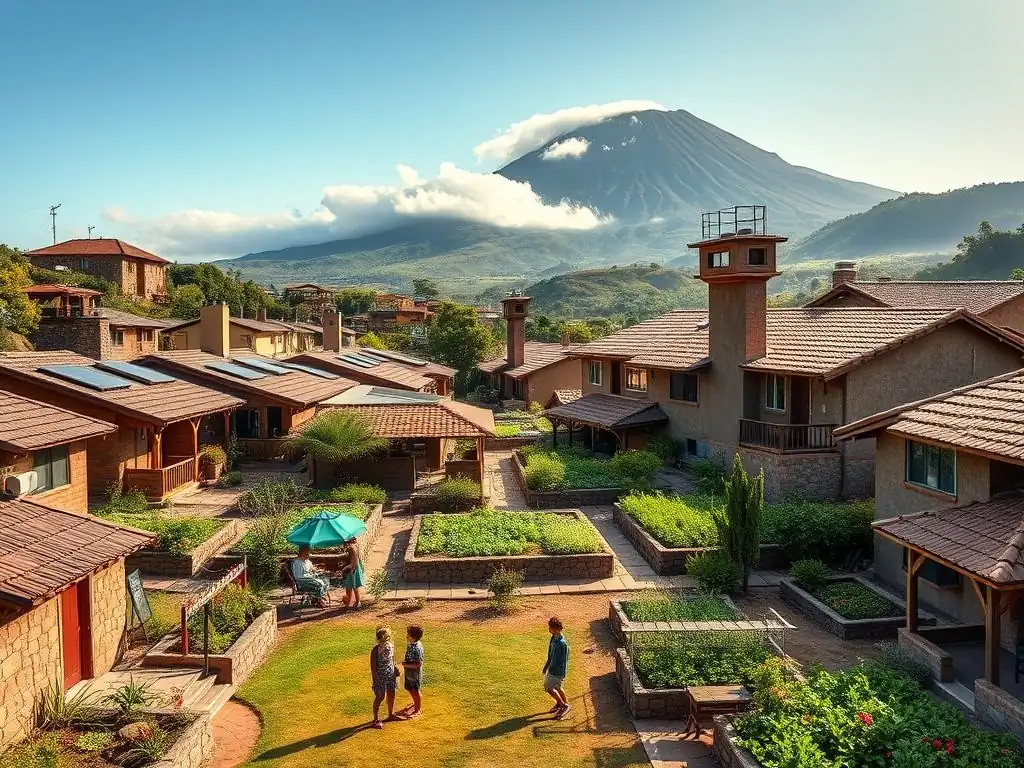
Despite the significant challenges, there are examples of communities and regions that have successfully implemented long-term housing initiatives in volcanic areas, demonstrating pathways to resilience and sustainable living. These case studies offer valuable lessons and models for other volcanic zones facing similar housing challenges.
Case Study 1: Nicolosi, Italy - Integrating Volcanic Risk into Housing Design
Nicolosi, a town situated on the slopes of Mount Etna in Sicily, Italy, provides a compelling case study of integrating volcanic risk into housing design. Living under the constant shadow of Europe's largest active volcano, Nicolosi has developed building practices and urban planning strategies that prioritize resilience to lava flows and ashfall.
Local building codes mandate the use of robust construction materials like reinforced concrete and lava stone, which is readily available and naturally resistant to heat and impact. Roof designs are often pitched steeply to minimize ash accumulation, and drainage systems are engineered to manage heavy rainfall and potential lahar events.
Furthermore, Nicolosi's urban planning incorporates natural lava flow diversion channels and buffer zones around residential areas. While not foolproof against massive eruptions, these measures significantly reduce the vulnerability of homes to typical Etna eruptions. Newer housing developments in Nicolosi often feature elevated foundations and reinforced basements to provide additional protection. This proactive approach, combining robust construction with thoughtful land-use planning, illustrates how longterm housing volcanic zones can be achieved through careful integration of risk considerations into every stage of housing development, allowing communities to coexist with an active volcano.
Case Study 2: Heimaey, Iceland - Relocation and Sustainable Community Development
The island of Heimaey in Iceland, part of the Vestmannaeyjar archipelago, faced a dramatic volcanic crisis in 1973 when a new volcanic fissure, Eldfell, opened up on the edge of the town. The eruption buried a significant portion of the town under lava and ash, prompting a large-scale evacuation. However, rather than abandoning the island, the community demonstrated remarkable resilience and embarked on a long-term recovery and rebuilding effort, which serves as a powerful example of relocation and sustainable community development in a volcanic context.
While some homes were irrevocably lost, a significant portion of the town was saved by heroic efforts to cool and divert lava flows using seawater. Following the eruption, Heimaey implemented a comprehensive reconstruction plan that not only rebuilt damaged housing but also improved the overall infrastructure and resilience of the community. New housing was constructed using modern building techniques and materials designed to withstand harsh Icelandic weather and potential future volcanic impacts.
The relocation of some parts of the town to safer areas, coupled with the creation of a new harbor protected by the lava flows, transformed Heimaey into a more resilient and economically viable community. This case demonstrates that even in the face of catastrophic volcanic events, relocation and well-planned sustainable development can create even stronger longterm housing volcanic zones.
Case Study 3: Paluweh Island, Indonesia - Retrofitting Existing Homes for Volcanic Resilience
Paluweh Island, Indonesia, located near the active Mount Rokatenda volcano, presents a different scenario where complete relocation is not feasible or desirable. In this context, retrofitting existing homes to enhance their resilience to volcanic hazards becomes a crucial strategy for longterm housing volcanic zones. The communities on Paluweh Island have lived with volcanic activity for generations, and their traditional housing, while adapted to the tropical climate, often lacks the robustness needed to withstand significant ashfall or volcanic earthquakes.
Recognizing this vulnerability, several initiatives have focused on retrofitting existing homes using locally available materials and techniques. These efforts include strengthening roofs with additional supports to resist ash loads, reinforcing walls with bamboo or timber bracing, and improving drainage around houses to mitigate lahar risks.
Community-based workshops and training programs empower residents to implement these retrofitting measures themselves, fostering local ownership and sustainability. While retrofitting may not offer the same level of protection as newly built resilient housing, it provides a practical and cost-effective approach to significantly reduce vulnerability and improve the safety of existing homes in volcanic zones, particularly where resources for complete rebuilding are limited.
Key Strategies for Long-Term Housing Solutions in Volcanic Zones
Building on the lessons learned from case studies and best practices, several key strategies emerge as essential for developing effective long-term housing solutions in volcanic zones. These strategies encompass material selection, planning approaches, community involvement, and financial mechanisms.
Durable Construction Materials and Techniques for Volcanic Environments
The selection of durable construction materials and appropriate building techniques is fundamental to creating resilient housing in volcanic environments. Materials should be chosen not only for their structural strength but also for their resistance to specific volcanic hazards. Reinforced concrete and steel offer excellent resistance to ash loads, seismic shaking, and even moderate lava flows. Lava stone, locally sourced in many volcanic regions, is a naturally robust and heat-resistant material suitable for walls and foundations. For roofing, heavier materials like concrete tiles or metal sheeting with steep pitches are preferable to lightweight corrugated iron.
Construction techniques should prioritize structural integrity and hazard mitigation. Elevated foundations can protect against lahars and floodwaters. Streamlined building shapes can reduce the impact of pyroclastic flows and strong winds. Strong connections between walls, roofs, and foundations are crucial to withstand seismic forces and ash loads. In areas prone to ashfall, designing buildings with minimal horizontal surfaces and incorporating effective drainage systems can significantly reduce ash accumulation and prevent roof collapse. Utilizing fire-resistant materials and incorporating firebreaks in building design can also enhance resilience to volcanic fires triggered by lava flows or pyroclastic flows.
Land-Use Planning and Risk Mitigation Strategies
Effective land-use planning is paramount for minimizing housing vulnerability in volcanic zones. This involves identifying high-risk areas based on hazard assessments and implementing zoning regulations to restrict or guide development. Buffer zones around volcanic vents and along potential lahar pathways should be maintained as open spaces or used for less vulnerable land uses like agriculture or parks. Strategic placement of critical infrastructure, such as evacuation routes, emergency shelters, and essential services, should be carefully considered in relation to volcanic hazards.
Risk mitigation strategies should be integrated into land-use planning. This includes constructing engineered defenses like lava diversion barriers, lahar channels, and ashfall retention basins where feasible and cost-effective. Early warning systems and evacuation plans are crucial components of risk mitigation, requiring clear communication channels and community preparedness. Land-use planning should also consider long-term volcanic activity scenarios and adapt development strategies accordingly, acknowledging that volcanic landscapes are dynamic and hazards can evolve over time.
Community Engagement and Participatory Planning
Successful long-term housing solutions in volcanic zones are not imposed from above but are developed in close collaboration with the affected communities. Community engagement and participatory planning are essential for ensuring that housing solutions are culturally appropriate, socially acceptable, and truly meet the needs of residents. Participatory approaches involve actively involving community members in hazard assessments, housing design, and implementation processes. Local knowledge and traditional building practices can offer valuable insights and should be integrated with modern engineering principles.
Community-based workshops and training programs can empower residents to participate in the construction and maintenance of their homes, fostering a sense of ownership and responsibility. Transparent communication and information sharing are crucial for building trust and ensuring that communities understand the risks and the rationale behind housing solutions. Participatory planning processes should also address social equity and ensure that the needs of vulnerable groups, such as women, children, the elderly, and people with disabilities, are adequately considered in housing design and relocation plans.
Financial Mechanisms and Funding Opportunities
Securing adequate and sustainable financing is a significant challenge for implementing long-term housing solutions in volcanic zones. Traditional funding mechanisms, such as government budgets and international aid, may be insufficient to address the scale of housing needs in frequently affected areas. Innovative financial mechanisms are needed to mobilize resources and ensure the long-term sustainability of housing initiatives.
Micro-finance schemes and housing cooperatives can empower communities to access affordable housing loans and build their own homes incrementally. Disaster risk financing instruments, such as catastrophe bonds and insurance schemes, can provide financial protection against volcanic events and facilitate rapid recovery and rebuilding. Public-private partnerships can leverage the expertise and resources of both the public and private sectors to develop and implement large-scale housing projects.
Exploring carbon financing opportunities, linked to sustainable construction practices and reforestation efforts in volcanic landscapes, can also generate additional revenue streams for housing initiatives. Diversifying funding sources and combining different financial mechanisms is crucial for ensuring the long-term financial viability of longterm housing volcanic zones.
Overcoming Challenges: Addressing Obstacles to Sustainable Housing

Despite the availability of effective strategies and successful case studies, implementing sustainable housing solutions in volcanic zones often faces significant obstacles. These challenges can be broadly categorized into issues related to land tenure, economic sustainability, and environmental considerations.
Land Tenure and Property Rights Issues
Land tenure and property rights are often complex and contentious issues in volcanic regions, particularly in areas with informal settlements or customary land ownership systems. Reconstruction or relocation efforts can be hampered by unclear land ownership, overlapping claims, or lack of formal land titles. Disputes over land can delay housing projects and create social tensions within communities. In some cases, relocation efforts may displace communities from their ancestral lands or traditional livelihoods, leading to resistance and social disruption.
Addressing land tenure issues requires clear legal frameworks, transparent land administration systems, and fair compensation mechanisms for land acquisition or relocation. Land regularization programs can formalize land rights and provide security of tenure for residents. Participatory land-use planning processes should involve local communities in decisions about land allocation and relocation, respecting customary land rights and cultural connections to land. Mediation and conflict resolution mechanisms may be needed to resolve land disputes and ensure equitable access to housing and land resources.
Economic Sustainability and Livelihood Development
Long-term housing solutions must be economically sustainable and integrated with livelihood development opportunities. Simply providing housing without addressing economic needs can lead to unsustainable outcomes and increased vulnerability. Communities in volcanic zones often rely on agriculture, tourism, or resource extraction, all of which can be disrupted by volcanic activity. Housing projects should be linked to economic diversification and livelihood enhancement initiatives.
This can include vocational training programs in construction skills, promoting sustainable agriculture practices, developing eco-tourism opportunities related to volcanoes, or supporting the development of small businesses and local industries. Housing projects can also create employment opportunities during construction and ongoing maintenance phases. Ensuring access to markets, financial services, and infrastructure is crucial for supporting economic sustainability in longterm housing volcanic zones. A holistic approach that integrates housing, livelihoods, and economic development is essential for building resilient and prosperous communities.
Environmental Considerations and Sustainable Practices
Sustainable housing in volcanic zones must also consider environmental impacts and promote sustainable practices. Construction activities can have environmental consequences, such as deforestation, soil erosion, and waste generation. Relocation efforts can put pressure on new areas and lead to environmental degradation if not carefully planned. Sustainable construction practices should prioritize the use of local and renewable materials, minimize waste generation, and incorporate energy-efficient designs.
Building codes and regulations should promote environmentally friendly building practices and incentivize green building technologies. Reforestation and watershed management programs can help mitigate erosion risks and enhance the environmental resilience of volcanic landscapes. Waste management systems should be implemented to handle construction debris and household waste effectively. Promoting community awareness about environmental sustainability and encouraging responsible resource management are crucial for ensuring the long-term environmental viability of longterm housing volcanic zones.
Conclusion: Building Resilient Communities Through Long-Term Housing
Moving beyond the immediate response of emergency shelters, the development of longterm housing volcanic zones is paramount for building resilient communities capable of thriving in the face of recurrent volcanic hazards. By understanding the specific risks, learning from successful case studies, implementing key strategies, and overcoming persistent challenges, we can create housing solutions that are not only safe and durable but also contribute to the social, economic, and environmental sustainability of volcanic regions.
Investing in long-term housing is an investment in the future resilience and well-being of communities living with volcanoes, ensuring they can coexist with these powerful forces of nature and build prosperous and secure lives for generations to come.
Frequently Asked Questions
How does living long-term in a volcanic zone differ from temporary emergency shelter needs?
Long-term housing requires sustainable infrastructure and community development, unlike temporary shelters focused on immediate survival. It necessitates permanent structures capable of withstanding volcanic hazards.
What are some key considerations when designing long-term housing in volcanic zones?
Designs must prioritize volcanic hazard mitigation, including robust construction against ashfall and lahar flows. Evacuation routes and community resilience are also crucial factors.
What sustainable materials are suitable for building durable long-term housing near volcanoes?
Materials like reinforced concrete and volcanic ash-based concrete offer durability. Locally sourced materials can reduce costs and environmental impact while ensuring resilience.
How can communities be empowered to participate in the development of long-term housing solutions?
Community involvement is essential through participatory planning and skill-building workshops. This ensures housing meets local needs and fosters community ownership of the solutions.
What role does technology play in ensuring the safety and sustainability of long-term housing in volcanic areas?
Technology allows for early warning systems and real-time monitoring of volcanic activity. Innovations in building materials and construction techniques also enhance safety and sustainability.
Final Reflection: Building Resilience, One Home at a Time
The urgency of providing immediate shelter after a volcanic eruption is undeniable, but true recovery lies in establishing sustainable, long-term housing solutions. This article has explored the complexities of achieving this in volcanic zones, highlighting the need for innovative approaches that prioritize safety, affordability, and community integration. The challenges are significant, yet the potential for creating resilient and thriving communities is even greater.
The impact of volcanic disasters extends far beyond the immediate aftermath, leaving lasting scars on the social and economic fabric of affected regions. Witnessing the displacement and hardship underscores the critical importance of proactive planning and community-led initiatives. The best time to plant a tree was 20 years ago. The second best time is now.
This ancient proverb resonates deeply, reminding us that the time to invest in long-term housing solutions is not after the eruption, but in preparation for it.
As we conclude this exploration, let us carry forward the lessons learned. Consider how you can contribute, whether through supporting organizations dedicated to disaster relief and sustainable development, advocating for policies that prioritize long-term housing in vulnerable regions, or simply raising awareness within your own community. The future of these volcanic zones, and the well-being of their inhabitants, depends on our collective commitment to building resilience, one home, and one community, at a time.
Empower Communities: Build Back Better!
Thank you for exploring innovative solutions for long-term housing in volcanic zones. You've gained valuable insights into creating sustainable and resilient communities in the face of natural disasters. Now, let's put that knowledge into action!
Here's how you can make a difference:
- Advocate for safer construction practices in your community. This is the most impactful step you can take, regardless of your proximity to a volcano. Promoting volcano-resistant building techniques benefits everyone.
- Learn more about the geological risks specific to your region. Understanding these risks is crucial for effective disaster mitigation.
- Share this article with friends, family, and policymakers to raise awareness and inspire collective action.
What sustainable building material are you most interested in, and how could it be effectively implemented in your community?