
Prayers to the Peak: Contemporary Volcano Worship in Modern Times

Welcome to Volcano Explorers!
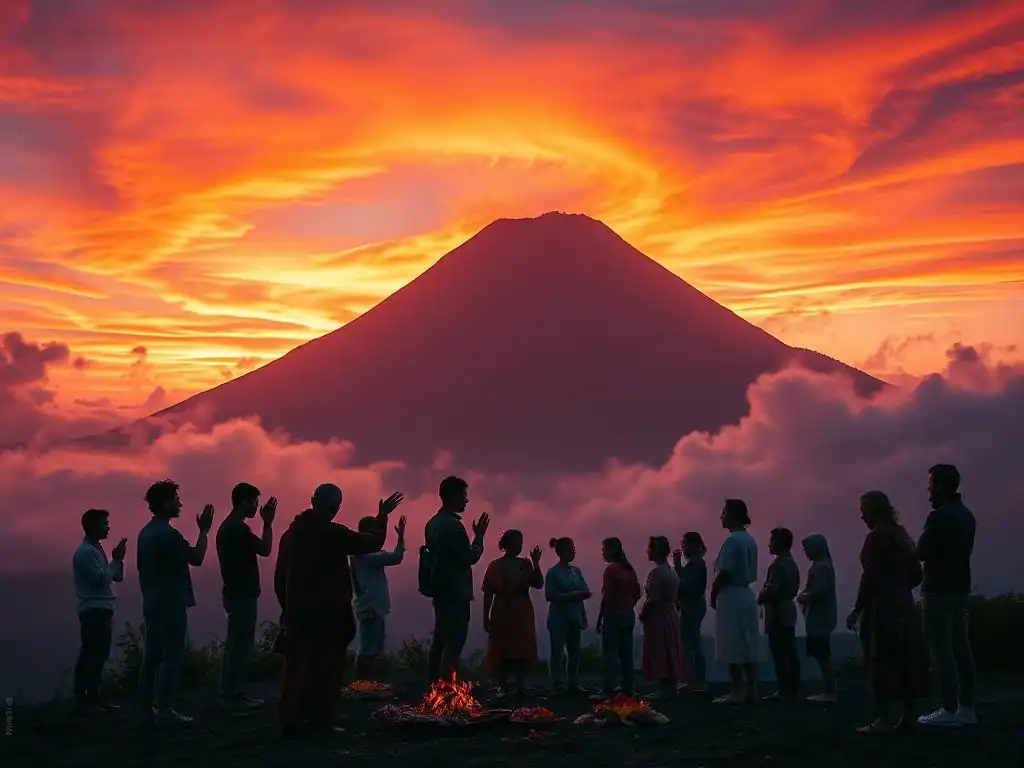
Dare to peer into the fiery heart of the Earth? Uncover the secrets of these majestic giants and the cultures that have long revered them. Prepare to be captivated as we explore a world where science meets spirituality. Today, we delve into a fascinating aspect of this connection: Modern Volcano Worship Practices. Discover how ancient traditions endure, and how modern communities continue to offer prayers to the peak, seeking solace, protection, and understanding from these powerful forces of nature. What rituals still exist? And what drives this enduring devotion? Journey with us and unlock the mysteries that lie within.
- Understanding Modern Volcano Worship Practices
- Volcanoes as Deities: Reverence and Respect in the 21st Century
- Modern Expressions of Volcano Veneration
- Case Studies: Examples of Modern Volcano Worship
- The Intersection of Science and Spirituality in Volcano Worship
- The Future of Volcano Worship
- Frequently Asked Questions
- Final Reflection: Echoes of Fire, Whispers of Faith
- Rediscover Your Connection to the Earth's Power!
Understanding Modern Volcano Worship Practices
The Enduring Allure of Volcanoes: A Spiritual Perspective
Volcanoes have captivated humanity since the dawn of time, not merely as geological phenomena, but as potent symbols imbued with spiritual significance. Their dramatic eruptions, capable of both creation and destruction, inspire awe and a profound sense of the Earth's raw power. This inherent duality—fertility and devastation—positions volcanoes as liminal spaces, thresholds between worlds, and thus, naturally sacred in many cultures.
The visual spectacle of molten rock surging from the Earth's depths, coupled with the rumbling sounds and seismic activity, evokes a sense of primordial energy, connecting humans to the planet's fiery core and the forces that shape existence itself. For many, this connection transcends mere geological understanding, tapping into a deeper, almost visceral, spiritual resonance.
The spiritual allure of volcanoes is further enhanced by their role in mythology and folklore across the globe. From the Greco-Roman myths of Vulcan and Hephaestus, the gods of fire and forge dwelling beneath mountains, to Polynesian legends of Pele, the volatile goddess of volcanoes, these narratives paint volcanoes as abodes of powerful deities. These myths are not simply stories; they are frameworks through which cultures have historically understood and interacted with volcanic landscapes.
This ingrained cultural narrative, passed down through generations, continues to influence contemporary perceptions, shaping how people view and engage with volcanoes on a spiritual level even today. The sheer scale and unpredictable nature of volcanic events reinforce this spiritual dimension, making volcanoes enduring symbols of both fear and reverence.
Defining Contemporary Volcano Worship: Beyond Ancient Rituals
Contemporary volcano worship practices are not simply a continuation of ancient rituals frozen in time. Instead, they represent a dynamic evolution and adaptation of traditional beliefs in the context of the modern world. While drawing heavily from ancestral roots, modern practices often incorporate elements of syncretism, blending indigenous traditions with contemporary spiritual understandings and even scientific awareness. This evolution is partly driven by globalization, which has facilitated the exchange of ideas and spiritual practices across cultures, and by the ongoing engagement with volcanic landscapes in the 21st century.
Furthermore, contemporary volcano worship often exists alongside, and sometimes even intertwined with, modern life. Individuals practicing volcano veneration today might be scientists, artists, or everyday citizens who find spiritual meaning in these geological wonders. This means that modern practices can range from formalized religious ceremonies conducted by established communities to personal, individualized expressions of reverence.
The accessibility of information through the internet also plays a role, allowing individuals to learn about and connect with volcano-related spiritual traditions from around the world, potentially leading to new interpretations and forms of modern volcano worship practices. The key element is the continued recognition of volcanoes as more than just geological formations; they are living entities deserving of respect, awe, and often, worship in a modern context.
Volcanoes as Deities: Reverence and Respect in the 21st Century
Active Volcanoes as Living Gods: Case Studies of Modern Belief
Across the globe, active volcanoes are not just geological features; they are revered as living deities or embodiments of divine power in the 21st century. Mount Etna in Sicily, for instance, is locally known as "Mongibello" and has been seen as a sacred entity for millennia. While formally integrated into Catholic traditions with Saint Agatha as a protector against its eruptions, older pagan beliefs persist in the local consciousness.
Stories and legends of Etna as a dwelling place of mythical beings and a source of powerful, sometimes unpredictable, energy are still told and believed. Villagers living on its slopes often express a deep respect bordering on reverence for the volcano, acknowledging its life-giving soil and its potential for destruction.
Similarly, in Hawaii, Kilauea, before its recent pause in activity, was widely considered the earthly manifestation of Pele, the Hawaiian volcano goddess. Even in modern Hawaii, with its diverse and globalized population, Pele remains a powerful cultural and spiritual figure. Offerings to Pele, such as gin, ohelo berries, and leis, are still left at the volcano's edge as a sign of respect and to seek her favor or appease her volatile nature.
This practice is not limited to native Hawaiians; many residents and even tourists participate, demonstrating the enduring power of Pele's spiritual presence. These examples showcase how, in different parts of the world, active volcanoes continue to be perceived as more than just mountains; they are living gods, demanding respect and inspiring devotion in contemporary society.
The Role of Volcanic Activity in Shaping Spiritual Practices
Volcanic activity is not merely the backdrop for volcano worship; it is a central force that actively shapes and reshapes spiritual practices associated with these sacred sites. Eruptions, lava flows, ashfalls, and even fumarolic activity are interpreted through a spiritual lens, often seen as expressions of the deity's will, mood, or communication.
For example, increased volcanic activity might be interpreted as a sign of divine displeasure, prompting increased offerings, prayers, or rituals aimed at appeasement. Conversely, periods of dormancy or less intense activity might be seen as blessings or periods of divine rest, influencing the cycle of rituals and observances.
The specific nature of volcanic activity also plays a crucial role. Explosive eruptions can be perceived as displays of divine wrath or power, while effusive eruptions, creating new land, might be interpreted as acts of creation and fertility. The unpredictability of volcanic events further reinforces their divine status, as these natural forces seem to operate outside human control, mirroring the perceived autonomy of deities.
Even minor volcanic phenomena, like steam vents or hot springs, can be imbued with spiritual significance, becoming focal points for rituals or considered pathways to the underworld or the divine realm. Therefore, volcanic activity is not just a geological process, but a dynamic element that continually informs and revitalizes the spiritual practices of modern volcano worship.
Modern Expressions of Volcano Veneration
Rituals and Offerings: Contemporary Practices at Volcanic Sites
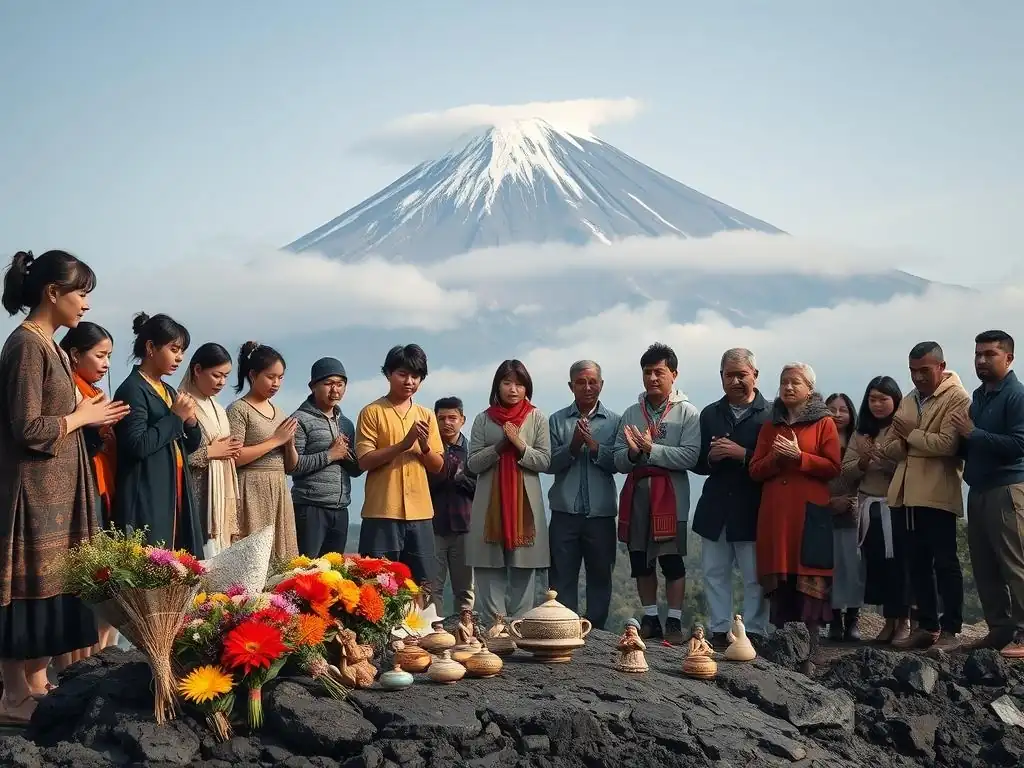
Contemporary rituals and offerings at volcanic sites are a fascinating blend of ancient traditions and modern adaptations, reflecting the enduring human need to connect with the power and mystery of volcanoes. While specific practices vary greatly depending on the volcano and the cultural context, common threads emerge.
Offerings remain a central element, ranging from traditional items like food, flowers, and precious objects to more modern offerings like alcohol, tobacco, or even symbolic items representing contemporary life. These offerings are typically left at specific locations deemed sacred, such as craters, vents, or lava fields, as acts of respect, supplication, or gratitude to the volcano deity or spirit.
Ritualistic dances and chants, often rooted in indigenous traditions, are also still performed at some volcanic sites. In Hawaii, for example, hula performances dedicated to Pele are not uncommon, particularly during periods of volcanic activity or at significant cultural events. These dances serve as both offerings and prayers, embodying the stories and emotions associated with the volcano goddess.
Moreover, modern rituals can also incorporate elements of environmentalism and conservation, with participants engaging in clean-up activities around volcanic sites as a form of respect for the sacred land and a plea for its continued health and vitality. This demonstrates how contemporary volcano worship is not static, but actively evolving to address present-day concerns and express reverence in relevant ways.
Prayer and Pilgrimage: Journeys to Volcanic Peaks for Spiritual Connection
Prayer and pilgrimage to volcanic peaks remain powerful expressions of modern volcano veneration, driven by a desire for direct spiritual connection and a sense of awe in the face of nature's grandeur. For many, ascending a volcano is not just a physical challenge but a spiritual journey, a pilgrimage to a sacred space where the veil between the earthly and divine realms feels thin.
Prayers offered at volcanic summits are often imbued with a heightened sense of potency, believed to be closer to the heavens or the earth's core, and therefore more readily heard by deities or spirits residing within the volcano.
Modern pilgrimages to volcanoes can take various forms, from organized religious processions to individual spiritual quests. In Japan, for instance, Mount Ontake, a sacred volcano, draws numerous pilgrims annually, particularly during its open climbing season. Pilgrims often wear traditional white clothing, chant sutras, and perform purification rituals as they ascend, seeking spiritual purification and connection with the mountain's sacred essence.
Similarly, individuals may undertake personal pilgrimages to volcanoes like Mount Shasta in California, considered a spiritual power vortex by many New Age practitioners, seeking enlightenment, healing, or a deeper understanding of themselves and the universe. These journeys, whether communal or solitary, underscore the enduring human need to seek spiritual connection in the dramatic and awe-inspiring presence of volcanic peaks.
Art, Music, and Storytelling: Celebrating Volcanoes in Modern Culture
Art, music, and storytelling serve as vital modern expressions of volcano veneration, extending beyond ritualistic practices to permeate broader cultural landscapes. Volcanoes, with their dramatic beauty and potent symbolism, inspire artists, musicians, and writers to create works that celebrate their power, mystery, and spiritual significance. Contemporary art, ranging from paintings and sculptures to digital media and performance art, often depicts volcanoes not just as geological features, but as living entities, deities, or symbols of transformative power. These artistic representations contribute to the ongoing cultural narrative surrounding volcanoes, reinforcing their spiritual and symbolic importance.
Music, too, plays a significant role. From traditional chants and songs performed in communities living near volcanoes to contemporary musical compositions inspired by volcanic eruptions or mythology, music evokes the emotional and spiritual dimensions of volcano veneration. For instance, some modern musical genres incorporate sounds of volcanic activity, such as rumbles and explosions, to create immersive and evocative experiences.
Storytelling, in both oral and written forms, continues to transmit volcano-related myths, legends, and personal experiences, keeping the spiritual significance of volcanoes alive for new generations. These creative expressions ensure that volcano veneration remains a vibrant and evolving aspect of modern culture, reaching beyond religious circles to touch broader audiences and foster appreciation for these awe-inspiring natural wonders.
Case Studies: Examples of Modern Volcano Worship
Mount Etna: A Living Legend and Object of Devotion
Mount Etna, Europe's largest active volcano, stands as a compelling case study of modern volcano worship, where ancient beliefs intertwine with contemporary expressions of devotion. For centuries, Etna has been viewed not merely as a mountain but as a living entity with a powerful spirit. While officially integrated into the Catholic traditions of Sicily, with Saint Agatha, Catania's patron saint, invoked as a protector against eruptions, pre-Christian pagan beliefs persist.
Local folklore speaks of Etna as the forge of Vulcan, the Roman god of fire, and home to mythical creatures. These ancient narratives continue to shape the local perception of Etna as a place of immense power and mystery.
Modern devotion to Etna manifests in various ways. While formal pagan rituals are not widely practiced publicly, a deep sense of respect and even reverence is palpable among the communities living on its slopes. Farmers often attribute the fertile volcanic soil to Etna's benevolence, while also acknowledging its destructive potential.
During eruptions, prayers are offered to Saint Agatha, but also, implicitly or explicitly, to Etna itself, seeking to appease its fiery temper. The annual feast of Saint Agatha in Catania, a major religious event, implicitly acknowledges Etna's presence as a powerful force in the region's life and identity. This blend of Catholic and pre-Christian sentiments, combined with a profound respect for Etna's power, exemplifies the complex and layered nature of modern volcano worship in this region.
Kilauea: Honoring Pele in Modern Hawaii
Kilauea, on the Big Island of Hawaii, provides a vibrant example of ongoing volcano worship deeply rooted in indigenous Hawaiian traditions, centered around the goddess Pele. Even in modern Hawaii, a state with a diverse population and a strong Western influence, Pele remains a central figure in Hawaiian spirituality and cultural identity.
Before its recent pause in activity, Kilauea, particularly its Puʻuʻōʻō vent, was considered the earthly embodiment of Pele, and its volcanic activity was interpreted as her actions and expressions. This belief system is not simply a relic of the past; it is a living tradition actively practiced and adapted in the 21st century.
Modern expressions of devotion to Pele are diverse and widespread. Offerings, known as hoʻokupu, continue to be left at Kilauea's caldera and former eruption sites. These offerings traditionally include gin, ʻōhelo berries (sacred to Pele), and leis made of lehua blossoms, but can also include more contemporary items reflecting personal intentions or gratitude.
Hula performances dedicated to Pele are frequently performed, both as formal religious ceremonies and as cultural expressions. Respect for the land, aina, is intrinsically linked to honoring Pele, with a strong emphasis on environmental stewardship and responsible interaction with volcanic landscapes. Even with the influence of tourism and globalization, the reverence for Pele and the practice of volcano worship remain a vital and dynamic part of Hawaiian culture, demonstrating the resilience and adaptability of indigenous spiritual traditions in the modern world.
Mount Aso: Ancient Traditions in a Modern Context
Mount Aso, located in Kumamoto Prefecture, Japan, offers a compelling example of how ancient Shinto traditions of volcano worship persist and adapt in a highly modern society. Aso is not just one volcano, but a caldera containing several active cones, and has been considered a sacred site for millennia. Within the caldera lies the Aso Shrine, one of Japan's oldest and most important Shinto shrines, dedicated to the kami (deities or spirits) of Mount Aso. This shrine, repeatedly rebuilt after volcanic eruptions and other disasters, stands as a testament to the enduring spiritual significance of the volcano.
Modern worship at Mount Aso is primarily centered around Shinto practices at the Aso Shrine and other smaller shrines within the caldera. Priests conduct regular ceremonies to appease the volcanic kami and ensure the safety and prosperity of the local communities. Festivals, such as the Aso Fire Festival, feature dramatic displays of fire and light, symbolically representing the volcano's power and also serving as prayers for protection.
While Japan is a highly technologically advanced society, traditional beliefs about the sacred nature of Mount Aso remain deeply ingrained in the local culture. Farmers, for example, still pray to the Aso kami for good harvests, recognizing the volcano's influence on their livelihoods. This demonstrates how ancient traditions of volcano worship can coexist and thrive within a modern, technologically advanced context, highlighting the enduring power of cultural heritage and spiritual connection to place.
The Intersection of Science and Spirituality in Volcano Worship
Acknowledging the Scientific Reality of Volcanoes While Maintaining Spiritual Belief
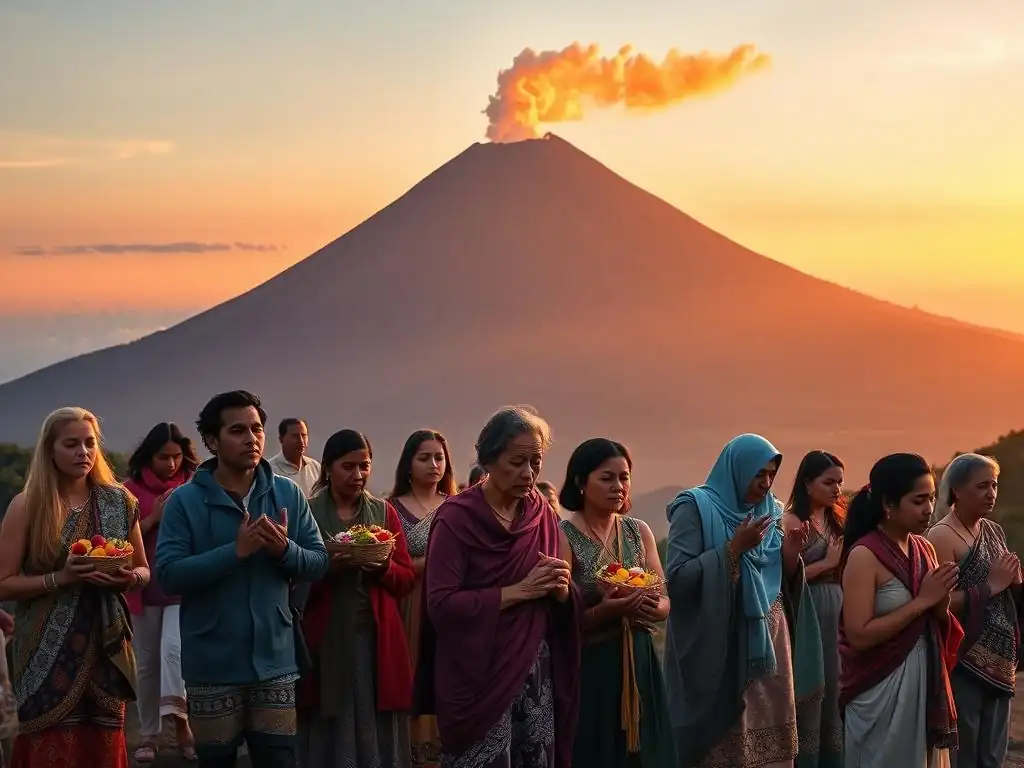
One of the fascinating aspects of modern volcano worship is its ability to coexist with and even integrate scientific understanding of volcanic phenomena. For many contemporary practitioners, acknowledging the scientific reality of plate tectonics, magma formation, and eruption dynamics does not negate their spiritual beliefs about volcanoes. Instead, science and spirituality are often seen as complementary ways of understanding these complex natural wonders. Scientific knowledge provides a rational framework for explaining how volcanoes work, while spiritual beliefs address the why – the deeper meaning, purpose, and inherent sacredness attributed to these geological forces.
This integration can manifest in various ways. For instance, some individuals might interpret volcanic eruptions not as random geological events, but as expressions of a deity's will operating through natural laws that science describes. Others may view scientific understanding as enhancing their appreciation for the intricate beauty and power of volcanoes, deepening their spiritual connection.
Educational initiatives at volcanic sites, which combine scientific information with cultural and spiritual perspectives, are becoming increasingly common, fostering a more holistic understanding. This demonstrates a nuanced approach to volcano worship in the modern era, where faith and reason are not necessarily in conflict, but can enrich and inform each other.
The Role of Volcanologists in Understanding and Respecting Local Traditions
Volcanologists, as scientists dedicated to studying volcanoes, have an increasingly important role to play not only in hazard assessment and mitigation but also in understanding and respecting local traditions of volcano worship. As they work in volcanic regions around the world, volcanologists often encounter communities with deep-rooted spiritual connections to the volcanoes they study. Recognizing and respecting these cultural perspectives is crucial for building trust and fostering effective communication between scientists and local populations. Ignoring or dismissing local beliefs can lead to misunderstandings, mistrust, and even hinder efforts to implement safety measures or conduct research.
Conversely, engaging with local communities and learning about their traditions can enrich the volcanologist's understanding of the human-volcano relationship. Collaboration between volcanologists and cultural experts, such as anthropologists and local historians, can provide valuable insights into the long-term history of human interaction with volcanoes, including traditional knowledge about volcanic hazards and warning signs. Furthermore, respecting local spiritual practices can involve incorporating cultural sensitivities into research protocols and hazard communication strategies.
For example, in some cultures, certain volcanic areas may be considered sacred and off-limits, requiring volcanologists to seek permission or adapt their research methods accordingly. This respectful and collaborative approach not only benefits local communities but also enhances the effectiveness and ethical dimensions of volcanological research and practice.
Balancing Safety Concerns with Religious Practices near Active Volcanoes
Balancing safety concerns with religious practices near active volcanoes presents a complex and often delicate challenge for both authorities and communities engaged in volcano worship. Active volcanoes pose inherent hazards, and ensuring public safety is paramount, particularly during periods of heightened volcanic activity. However, for communities who consider volcanoes sacred and integral to their spiritual lives, restricting access or disrupting traditional practices can be deeply problematic and culturally insensitive. Finding a balance that respects both safety and religious freedom requires careful communication, collaboration, and culturally informed approaches.
Effective hazard communication is crucial. Authorities need to convey scientific information about volcanic risks in a clear, accessible, and culturally appropriate manner, taking into account local beliefs and communication styles. Engaging community leaders and religious figures in the communication process can build trust and ensure that safety messages are effectively disseminated and understood.
In some cases, it may be possible to adapt religious practices to mitigate risks. For example, rituals might be modified to take place at safer distances from active vents or during periods of lower volcanic activity. Collaboration between authorities, volcanologists, and religious communities is essential to develop mutually acceptable strategies that prioritize safety while respecting and preserving cultural heritage and religious freedom in volcanic regions.
The Future of Volcano Worship
Adapting Ancient Traditions to Modern Life
The future of volcano worship lies in its capacity to adapt ancient traditions to the realities of modern life. As societies evolve, spiritual practices must also evolve to remain relevant and meaningful to contemporary practitioners.
This adaptation can involve reinterpreting traditional myths and rituals in light of modern values and understandings, incorporating new technologies into religious practices, and finding ways to express devotion in a world increasingly shaped by globalization and secularization. The core spiritual essence of volcano worship – the reverence for volcanic power and the recognition of volcanoes as sacred entities – can be preserved while adapting its outward forms to suit modern contexts.
For example, online platforms and social media can be used to connect practitioners of volcano worship across geographical distances, share information, and even conduct virtual rituals or prayers. Modern artistic expressions, such as digital art, film, and contemporary music, can further revitalize and disseminate volcano-related spiritual narratives to wider audiences. Environmental concerns are also likely to play an increasingly important role in the future of volcano worship.
A focus on environmental stewardship, conservation of volcanic landscapes, and sustainable practices can become integral aspects of modern volcano veneration, reflecting contemporary values and concerns. This ongoing process of adaptation ensures that volcano worship remains a living and evolving spiritual tradition, capable of resonating with future generations.
Tourism and globalization exert a complex and multifaceted impact on volcano-related spirituality, presenting both opportunities and challenges for the future of these traditions. On one hand, tourism can raise awareness about volcano worship and generate economic benefits for local communities, potentially supporting the preservation of cultural heritage. Volcanic sites that are also pilgrimage destinations can attract both religious pilgrims and secular tourists, creating a diverse visitor base and fostering cross-cultural exchange. Globalization can also facilitate the sharing of information and ideas about volcano worship across cultures, potentially enriching and diversifying spiritual practices.
However, tourism and globalization also pose significant challenges. Increased tourist traffic to sacred volcanic sites can lead to environmental degradation, disrespect for local customs, and the commodification of religious practices. The commercialization of volcano worship for tourist consumption can dilute its spiritual authenticity and transform sacred rituals into performative spectacles.
Globalization can also introduce external cultural influences that may undermine traditional beliefs and practices. Therefore, managing tourism sustainably and ethically, respecting local cultural sensitivities, and protecting the spiritual integrity of volcano worship are crucial for mitigating the negative impacts of tourism and globalization and ensuring the long-term viability of these traditions.
Preserving Cultural Heritage and Protecting Sacred Volcanic Sites
Preserving the cultural heritage associated with volcano worship and protecting sacred volcanic sites is of paramount importance for ensuring the future of these traditions and safeguarding valuable aspects of human history and spirituality. This preservation effort requires a multi-faceted approach involving local communities, governments, religious organizations, and international bodies. Documenting and archiving traditional knowledge, myths, rituals, and languages related to volcano worship is essential for preserving this intangible cultural heritage for future generations. Protecting sacred volcanic sites involves establishing legal frameworks for their conservation, managing tourism sustainably, and mitigating environmental threats, such as pollution and development.
Community involvement is crucial for effective preservation and protection. Empowering local communities to manage and safeguard their own cultural heritage ensures that preservation efforts are culturally appropriate and sustainable. Collaboration between indigenous communities, researchers, conservationists, and policymakers is essential for developing holistic and effective strategies.
Raising public awareness about the cultural and spiritual significance of volcanoes and the importance of preserving these sacred sites is also vital for garnering broader support for conservation efforts. By working collaboratively and respecting cultural diversity, we can ensure that the rich heritage of volcano worship and the sacredness of volcanic landscapes are preserved for generations to come.
Frequently Asked Questions
What is "Modern Volcano Worship"?
Modern volcano worship refers to the contemporary practices where individuals or groups hold spiritual beliefs or rituals centered around volcanoes. These practices can range from traditional religious beliefs to more modern, eco-spiritual interpretations.
Why do people engage in volcano worship today?
Reasons vary, but often stem from a sense of awe and respect for the volcano's power. Others might connect with ancestral beliefs or see volcanoes as a source of spiritual energy or connection to nature.
Where are modern volcano worship practices most common?
While found globally, these practices are often concentrated in regions with active or historically significant volcanoes, such as Hawaii, Indonesia, and parts of Japan. These areas often have deep cultural ties to the volcanic landscape.
How has the internet influenced modern volcano worship?
The internet has facilitated the sharing of information and beliefs, connecting individuals and groups interested in volcano spirituality across geographical boundaries. It allows for the creation of online communities and the spread of new interpretations.
Are modern volcano worship practices considered dangerous?
Most modern practices are peaceful and respectful, focusing on reverence and connection. However, safety concerns arise if individuals attempt dangerous rituals near active volcanic areas or disregard official warnings.
Final Reflection: Echoes of Fire, Whispers of Faith
The enduring power of nature, particularly in its most volatile form, continues to resonate deeply within the human spirit, shaping contemporary beliefs and practices in ways that might surprise us. From the ancient reverence for volcanic deities to the modern-day rituals explored in this article, the primal connection between humanity and the earth's fiery heart remains a potent force. This examination of modern volcano worship practices reveals not just a historical curiosity, but a vibrant and evolving spiritual landscape.
The persistence of these practices underscores the profound impact of natural phenomena on our collective consciousness. Witnessing the raw power of a volcano, its capacity for both creation and destruction, evokes a sense of awe and humility that transcends cultural boundaries. This connection is deeply personal, reminding us of our place within a larger, more powerful system. We are all children of the volcano,
as a modern worshipper eloquently stated, "born from its ashes, nourished by its bounty, and forever bound to its fiery breath."
As we conclude this exploration of modern volcano worship practices, let us consider the deeper meaning behind these rituals. How can we, in our own lives, cultivate a similar sense of reverence and respect for the natural world? Let the fiery spirit of the volcano inspire you to embrace the power of transformation, to find strength in the face of adversity, and to remember that even in destruction, there is the potential for renewal and rebirth.
Okay, here's a Call to Action (CTA) draft based on the article title "Prayers to the Peak: Contemporary Volcano Worship in Modern Times" and the website "Volcano Explorers":
Rediscover Your Connection to the Earth's Power!
Thank you for exploring the fascinating world of contemporary volcano worship! We hope you've gained a deeper appreciation for the enduring power and spiritual significance these natural wonders hold for people around the globe. Ready to engage with this awe-inspiring phenomenon?
Here's how you can take the next step:
- Consider a silent reflection on the forces of nature that shape our world. Dedicate a few moments to contemplate the creative and destructive power of volcanoes, wherever you are.
- Share this article with someone who appreciates cultural anthropology or has an interest in unique belief systems. Spark a conversation and expand the circle of understanding!
- Dig deeper: Research a volcano near you or one that resonates with you, learning about its geological history and any cultural significance it holds for local communities.
What insights did reflecting on nature reveal to you today? We'd love to hear your thoughts in the comments!