
The Sound of Silence: Is a Quiet Caldera a Safe Caldera?

Welcome to Volcano Explorers!
Ever wondered if silence is truly golden, especially when it comes to a quiet caldera? Perhaps not. Beneath the seemingly serene surface, a sleeping giant may be stirring. Dive into our latest exploration of volcano types and features and discover crucial safety tips that could save your life. What are the hidden dangers lurking beneath these deceptively peaceful landscapes, and how can you stay safe? Find out now...
- Yellowstone's Silence: Is a Quiet Caldera a Safe Caldera?
- Introduction: Understanding Caldera Activity and Safety
- What is a Caldera and How Does it Form?
- The "Quiet" Caldera: Defining Periods of Dormancy
- Monitoring Caldera Activity: Key Indicators of Potential Eruptions
- Dangers of a "Quiet" Caldera: Hidden Risks and Potential Hazards
- Quiet Caldera Safety Tips: A Practical Guide for Residents and Visitors
- Case Studies: Examining Past Caldera Eruptions and Their Impact
- Living Near a Caldera: Balancing Risk and Resilience
- Conclusion: The Importance of Vigilance and Respect for Calderas
-
Frequently Asked Questions
- What exactly is a caldera, and how does it differ from a typical volcano?
- Why is the silence or lack of activity in a caldera sometimes misleading regarding safety?
- What are some key safety tips for visiting or living near a caldera, even a seemingly "quiet" one?
- How do volcanologists monitor calderas, and what kind of data helps them assess the risk of future eruptions?
- What are some specific signs that a "quiet" caldera might be becoming more active and potentially dangerous?
- Final Reflection: The Whispers of Potential
- Ignite Your Curiosity: Dare to Explore the Depths of Volcanic Silence!
Yellowstone's Silence: Is a Quiet Caldera a Safe Caldera?
Introduction: Understanding Caldera Activity and Safety
Exploring the Allure and Risks of Calderas
Calderas, vast volcanic craters often formed by cataclysmic eruptions, possess a unique and sometimes deceptive allure. Their expansive landscapes, often cradling serene lakes or geothermal features, draw visitors with the promise of breathtaking scenery and a connection to powerful natural forces. Places like Yellowstone National Park, with its geysers, hot springs, and abundant wildlife thriving within a caldera, exemplify this attraction. The very scale of a caldera speaks to events of unimaginable magnitude, sparking curiosity and a desire to witness the remnants of such power.
However, this beauty masks an inherent risk. Calderas are not extinct volcanoes; they are often dormant, capable of reawakening with potentially devastating consequences. Understanding the duality of their appeal and danger is the first step towards appreciating the importance of caldera safety, especially concerning seemingly "quiet" systems.
The Question of Caldera Safety: A Complex Assessment
The perception of safety in a caldera environment is often tied to its apparent inactivity. A "quiet" caldera, characterized by the absence of recent large eruptions or dramatic surface manifestations, might seem benign. However, this tranquility can be misleading. Volcanic systems, particularly calderas, operate on geological timescales, and periods of quiet can be long interludes between significant events.
Assessing the safety of a caldera is therefore a complex undertaking that goes far beyond observing surface calm. It requires a deep understanding of volcanic processes, continuous monitoring of subtle changes, and a recognition that beneath the surface, immense forces may still be at play. The question isn't simply whether a caldera is currently erupting, but rather, what are the signs indicating its long-term state and potential for future activity, even when it appears quiet? This is particularly relevant when considering quiet caldera safety tips.
What is a Caldera and How Does it Form?
Caldera Formation: From Volcanic Eruption to Collapsed Landscape
A caldera is a large, basin-shaped volcanic depression, significantly larger than a typical volcanic crater. Unlike craters that form at the summit of volcanoes due to explosions, calderas are primarily formed by the emptying of a magma chamber beneath the surface during a massive volcanic eruption. Imagine a vast reservoir of molten rock deep underground. When immense pressure builds up, it can lead to an eruption of colossal scale, ejecting enormous volumes of magma and volcanic material onto the surface.
As this magma chamber is emptied, the overlying ground, no longer supported, collapses inward along ring faults. This collapse creates the characteristic large, bowl-like depression that defines a caldera. The scale of these depressions can be immense, ranging from several kilometers to tens of kilometers in diameter.
Types of Calderas: Identifying Key Characteristics
While all calderas share the fundamental formation mechanism of magma chamber emptying and collapse, they can be further categorized based on their specific characteristics and geological context. One common distinction is between resurgent calderas and non-resurgent calderas. Resurgent calderas, like Yellowstone, exhibit a central uplift within the caldera floor after the initial collapse.
This uplift, often dome-shaped, is caused by the slow re-accumulation of magma at depth, pushing the caldera floor upwards. Non-resurgent calderas, on the other hand, lack this central uplift and typically form simpler, basin-shaped depressions. Another classification considers the type of volcanic activity associated with caldera formation.
Some calderas are formed by explosive eruptions of rhyolitic magma, rich in silica and gas, leading to violent and widespread ashflows, like the Valles Caldera in New Mexico. Others, particularly on shield volcanoes like those in Hawaii, can form through the gradual drainage of magma from the summit region, resulting in less explosive but still significant collapses. Understanding these different types helps in assessing the specific hazards and quiet caldera safety tips relevant to each.
The "Quiet" Caldera: Defining Periods of Dormancy
Understanding Dormancy in Volcanic Systems
Volcanic dormancy is a period of apparent inactivity in a volcano's life cycle, following a period of eruption or unrest. In the context of calderas, dormancy can be significantly longer than in smaller, more frequently active volcanoes. Dormancy does not imply extinction; it simply means that the volcano is not currently erupting or showing immediate signs of eruption. During dormancy, surface activity might be minimal, limited to geothermal features like hot springs and fumaroles, which are common in many calderas.
However, beneath the seemingly calm surface, the volcanic system can still be dynamic. Magma may be slowly accumulating in the magma chamber, pressure may be building, and gases may be degassing from depth. Dormancy is therefore a relative term, representing a lull in activity rather than a cessation of volcanic processes.
Is a Dormant Caldera Truly Inactive? The Geological Perspective
From a geological perspective, a dormant caldera is far from inactive. While surface manifestations of activity may be subdued, the underlying volcanic system remains potentially active. Geological studies of calderas like Long Valley in California reveal evidence of ongoing magmatic processes even during periods of apparent quiet.
For example, ground deformation monitoring in Long Valley has shown periods of uplift and subsidence, indicating magma movement at depth, despite the absence of eruptions for centuries. Similarly, analysis of gas emissions from dormant calderas can reveal ongoing degassing of magmatic gases, further suggesting a persistent, albeit subdued, volcanic system. Therefore, a "quiet" or dormant caldera should not be interpreted as an inactive or safe caldera.
It is crucial to recognize that dormancy is a phase in a caldera's long-term cycle, and the potential for future eruptions, even after centuries of quiet, remains a reality. This understanding is fundamental to establishing effective quiet caldera safety tips.
Monitoring Caldera Activity: Key Indicators of Potential Eruptions
Seismic Activity: Earthquake Patterns as Warning Signs
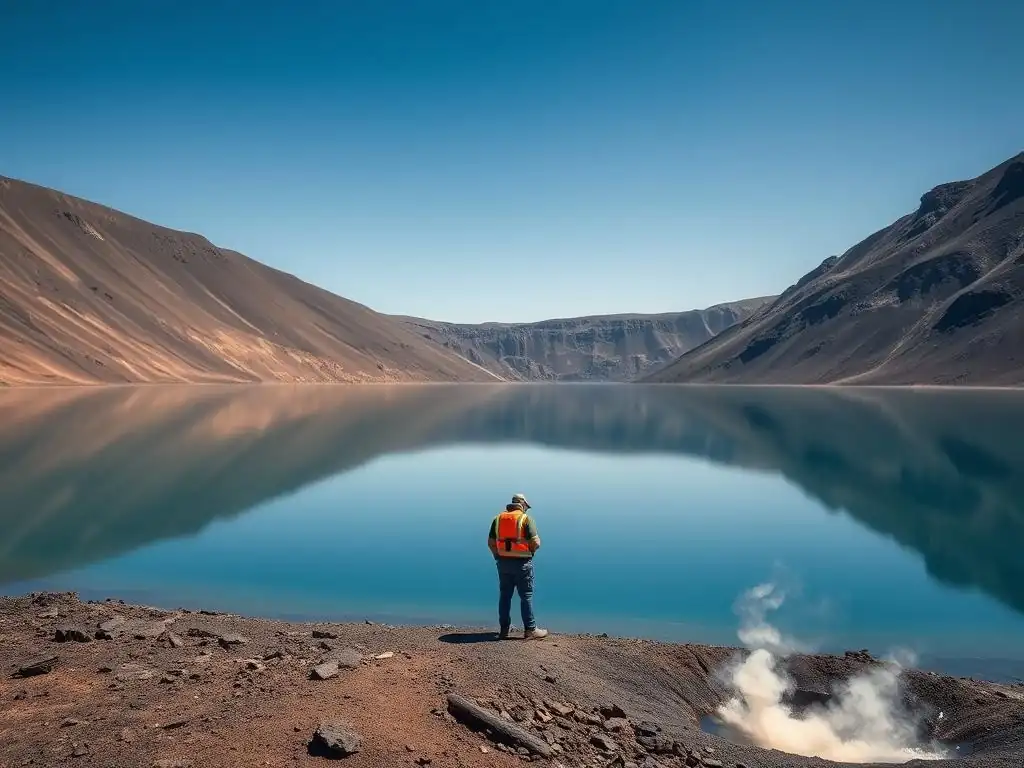
Seismic activity, or earthquakes, is a crucial indicator of volcanic unrest in calderas. Magma movement, changes in pressure within the volcanic system, and faulting associated with ground deformation can all generate earthquakes. Volcanologists closely monitor the frequency, magnitude, and location of earthquakes within and around calderas. An increase in earthquake frequency, especially swarms of earthquakes, can signal magma rising towards the surface or increasing stress in the crust.
For instance, before the 1980 eruption of Mount St. Helens (though not a caldera eruption, the principle is similar), there was a significant increase in seismic activity. While not all earthquake swarms lead to eruptions, they are often precursors to volcanic activity and trigger increased vigilance and monitoring efforts. Real-time seismic networks in caldera regions like Yellowstone and Long Valley provide continuous data that are analyzed to detect subtle changes in earthquake patterns that could indicate potential unrest.
Ground Deformation: Measuring Changes in Caldera Shape
Ground deformation, the swelling or shrinking of the Earth's surface, is another vital sign of caldera activity. Changes in ground elevation can be caused by the inflation of a magma chamber as magma accumulates or by deflation as magma is withdrawn during an eruption. Precise measurements of ground deformation are obtained using various techniques, including GPS (Global Positioning System) and InSAR (Interferometric Synthetic Aperture Radar).
InSAR, in particular, uses satellite radar images to detect millimeter-scale changes in ground elevation over large areas, making it ideal for monitoring caldera-wide deformation. For example, Yellowstone caldera has shown periods of both uplift and subsidence over decades, reflecting the complex dynamics of its underlying magma system. Rapid or accelerating uplift can be a significant warning sign of potential eruption, as it may indicate a build-up of pressure in the magma chamber.
Gas Emissions: Analyzing Volcanic Gases for Increased Activity
Volcanic gases, released from magma beneath the surface, provide valuable insights into the state of a caldera. The composition and flux (rate of release) of gases like sulfur dioxide (SO2), carbon dioxide (CO2), and hydrogen sulfide (H2S) are continuously monitored. An increase in the emission rate of certain gases, particularly SO2, can indicate magma rising closer to the surface or an increase in magma degassing.
Changes in the ratios of different gases can also be indicative of changes in magma composition or conditions within the volcanic system. For example, increased CO2 emissions from a caldera might suggest a deeper source of magma recharge. Specialized instruments, including spectrometers and gas sensors deployed at fumaroles and vents within calderas, are used to measure gas concentrations and fluxes.
Thermal Anomalies: Detecting Changes in Heat Flow
Calderas are often characterized by elevated heat flow due to the presence of magma at shallow depths. Monitoring thermal anomalies, or changes in heat output, can provide another indicator of volcanic activity. Increased heat flow can be associated with magma intrusion, hydrothermal activity, or changes in the degassing regime. Thermal monitoring is conducted using various methods, including satellite thermal infrared imagery and ground-based temperature sensors.
Satellite data can detect broad-scale changes in surface temperature, while ground sensors provide more localized and detailed measurements. For instance, an increase in the temperature of hot springs or fumaroles within a caldera could signal increased volcanic unrest. However, thermal anomalies can also be influenced by hydrothermal system dynamics and are not always directly indicative of magmatic activity, requiring careful interpretation in conjunction with other monitoring data.
Phreatic Eruptions: Sudden Steam Explosions
Even in a "quiet" caldera, phreatic eruptions pose a significant and often underestimated hazard. These eruptions are driven by the superheating of groundwater by hot rock or magma, leading to violent steam explosions. Unlike magmatic eruptions that involve the ejection of molten rock, phreatic eruptions primarily eject steam, water, rock fragments, and ash. They can occur suddenly and with little warning, even when a caldera shows no other signs of unrest.
The hydrothermal systems common in calderas create ideal conditions for phreatic eruptions. For example, in 2017, Mount Ontake in Japan, a volcano considered relatively quiet, experienced a phreatic eruption that tragically resulted in fatalities. While typically smaller than magmatic eruptions, phreatic explosions can still be dangerous due to the suddenness of the event, the ejection of hot debris, and the potential for associated mudflows.
Lahars and Mudflows: The Threat of Volcanic Debris Flows
Lahars, or volcanic mudflows, are a serious hazard associated with calderas, even during periods of apparent quiet. Lahars are mixtures of volcanic ash, rock debris, and water that flow rapidly down volcanic slopes, often following river valleys. They can be triggered by various events, including heavy rainfall eroding loose volcanic deposits, melting snow and ice during periods of increased geothermal activity, or even phreatic eruptions that mobilize water and ash.
Lahars are incredibly destructive due to their density, speed, and ability to transport large boulders and debris. Even if a caldera is not actively erupting magma, the presence of loose volcanic material from past eruptions, combined with water sources, creates the potential for lahar generation. Areas downstream of calderas, along river valleys, are particularly vulnerable to lahar hazards.
Gas Accumulation: The Risk of Suffocation and Acid Rain
The persistent degassing of volcanic gases, even in a "quiet" caldera, can create hidden hazards. Carbon dioxide (CO2), a colorless and odorless gas, is often released from calderas. In areas where CO2 accumulates in low-lying depressions or poorly ventilated spaces, it can displace oxygen, leading to asphyxiation. This risk is particularly relevant in areas with geothermal features or near fumaroles within calderas.
For example, at Lake Nyos in Cameroon, a massive release of CO2 from the lake bottom in 1986 suffocated thousands of people and animals. While such large-scale CO2 releases are rare, localized accumulation of CO2 in calderas remains a potential hazard. Additionally, volcanic gases like sulfur dioxide (SO2) can react with atmospheric moisture to form acid rain, which can damage vegetation, infrastructure, and water quality in areas surrounding a caldera.
Long-Term Hazards: Impacts on Water Resources and Air Quality
Beyond immediate eruptive events, "quiet" calderas can pose long-term hazards related to water resources and air quality. Hydrothermal systems within calderas can alter water chemistry, potentially contaminating groundwater and surface water with dissolved minerals and heavy metals. While some geothermal waters are beneficial, high concentrations of certain elements like arsenic or mercury can pose health risks if water sources are not properly managed.
Furthermore, continuous degassing of volcanic gases, even at low levels, can contribute to air pollution over time. SO2 emissions, even if below acute hazard levels, can contribute to respiratory problems and exacerbate existing air quality issues in downwind areas. These long-term impacts require ongoing monitoring and management strategies to mitigate potential environmental and health risks associated with living near a caldera, even during periods of quiet.
Quiet Caldera Safety Tips: A Practical Guide for Residents and Visitors
Before You Visit: Researching Caldera Activity and History
Before visiting a caldera, especially one known to be potentially active, thorough research is crucial for quiet caldera safety. Check the website of the local volcano observatory or geological survey for the most up-to-date information on the caldera's current alert level and recent activity. For example, the USGS Volcano Hazards Program provides information for US volcanoes like Yellowstone and Long Valley. Learn about the caldera's eruption history, including the types of past eruptions and any known hazards.
Understand the potential risks specific to the caldera you are visiting, such as phreatic eruptions, gas hazards, or lahar pathways. Familiarize yourself with evacuation routes and emergency procedures in case of volcanic unrest. This pre-trip research is essential for making informed decisions and ensuring a safe visit.
During Your Visit: Observing Warning Signs and Following Guidelines
While exploring a caldera, be observant and aware of potential warning signs of volcanic unrest. Pay attention to unusual smells, such as sulfurous odors, which could indicate increased gas emissions. Look for changes in steam vent activity, such as increased steam output or new vents appearing. Be aware of any ground deformation, such as new cracks or bulges in the ground.
Heed any warnings or advisories issued by park rangers or local authorities. Stay on marked trails and avoid venturing into restricted areas, particularly near geothermal features or areas known for gas hazards. If you experience any unusual sensations, such as dizziness or breathing difficulties, which could be signs of gas exposure, leave the area immediately and seek fresh air. Following these guidelines during your visit is paramount for quiet caldera safety.
Emergency Preparedness: Evacuation Plans and Communication Strategies
For residents living near a caldera, and even for frequent visitors, emergency preparedness is vital. Develop a family evacuation plan that includes designated meeting points and evacuation routes. Know the locations of official evacuation shelters and how to reach them. Assemble an emergency kit that includes essential supplies such as water, food, first-aid, a flashlight, a radio, and dust masks to protect against volcanic ash.
Establish communication strategies with family members, including out-of-area contacts in case local communication networks are disrupted. Stay informed about volcanic activity through official channels, such as volcano observatory websites and emergency alert systems. Participate in community drills and preparedness programs to practice evacuation procedures and enhance community resilience. These preparedness measures are crucial for ensuring quiet caldera safety in the long term.
Understanding Volcanic Alert Levels: A Guide to Response
Volcano observatories use volcanic alert levels to communicate the status of volcanic activity and the associated risks to the public. Familiarize yourself with the alert level system used for the caldera you are interested in. For example, the USGS uses a color-coded system (Green, Yellow, Orange, Red) and a terminology system (Normal, Advisory, Watch, Warning). Understand what each alert level means in terms of potential volcanic hazards and recommended actions.
For instance, an elevated alert level (Orange or Red) typically indicates increased volcanic unrest or an imminent or ongoing eruption, requiring evacuation or heightened preparedness. Pay close attention to official announcements and follow the guidance provided by authorities based on the current volcanic alert level. Understanding and responding appropriately to volcanic alert levels is a key component of quiet caldera safety.
Case Studies: Examining Past Caldera Eruptions and Their Impact
Campi Flegrei: Uplift and the Potential for Future Eruptions
Campi Flegrei, located near Naples, Italy, is a densely populated caldera that has experienced periods of significant unrest in recent decades. While it hasn't had a major eruption since 1538, Campi Flegrei has been undergoing a period of uplift, or ground inflation, since the 1950s, with notable episodes of rapid uplift in the 1980s and ongoing uplift in recent years.
This uplift is attributed to magma or magmatic fluids moving beneath the surface, causing the ground to swell. The unrest at Campi Flegrei highlights the challenges of assessing the hazard of a "quiet" caldera.
Despite the lack of recent eruptions, the ongoing uplift and associated seismic activity indicate that the volcanic system is active and capable of future eruptions. Scientists closely monitor Campi Flegrei, studying the uplift patterns, gas emissions, and seismic activity to better understand the potential for future eruptive scenarios and inform risk mitigation strategies for the densely populated surrounding area.
La Garita Caldera: Understanding the Scale of Supervolcanic Eruptions
La Garita Caldera in Colorado, USA, is the site of the largest known volcanic eruption on Earth in the last 27 million years. Around 27.8 million years ago, La Garita erupted with a Volcanic Explosivity Index (VEI) of 8, ejecting an estimated 5,000 cubic kilometers of volcanic material.
This eruption, known as the Fish Canyon Tuff eruption, dwarfed even the largest historical eruptions and had global environmental consequences. La Garita serves as a stark reminder of the immense scale of supervolcanic eruptions that calderas are capable of producing.
While super-eruptions are extremely rare events, occurring on timescales of tens of thousands to hundreds of thousands of years, studying past super-eruptions like La Garita helps scientists understand the processes that drive these colossal events and assess the potential, albeit very low probability, for future super-eruptions from other large caldera systems like Yellowstone. It underscores that even seemingly "quiet" calderas with a history of super-eruptions warrant continuous monitoring and research to understand their long-term potential.
Living Near a Caldera: Balancing Risk and Resilience
Community Preparedness: Local Initiatives for Caldera Safety
Communities living near calderas play a crucial role in enhancing quiet caldera safety. Local initiatives focused on volcanic hazard preparedness are essential. This includes developing community-based evacuation plans, establishing early warning systems, and conducting regular drills and exercises to practice emergency procedures.
Community education programs can raise awareness about volcanic hazards and promote preparedness at the individual and household levels. Volcano emergency response teams, composed of local volunteers trained in first aid, search and rescue, and communication, can provide vital support during volcanic crises. Strong partnerships between local governments, volcano observatories, and community organizations are key to building resilient communities that can effectively mitigate the risks associated with living near a caldera.
Education and Awareness: Spreading Knowledge about Volcanic Hazards
Education and public awareness are fundamental to promoting quiet caldera safety. Accessible and accurate information about volcanic hazards, caldera formation, monitoring efforts, and safety guidelines needs to be widely disseminated to residents and visitors. Educational programs in schools and community centers can teach people about the science of volcanology and the specific risks associated with local calderas.
Public outreach campaigns, using websites, brochures, public meetings, and social media, can effectively communicate important safety messages and updates on volcanic activity. Clear and consistent communication from volcano observatories and emergency management agencies is crucial for building public trust and ensuring that people have the knowledge they need to make informed decisions and take appropriate actions in the face of volcanic hazards.
Long-Term Planning: Sustainable Development in Caldera Regions
Long-term planning is essential for sustainable development in caldera regions, balancing the economic and social needs of communities with the inherent volcanic risks. Land-use planning should consider volcanic hazard zones, restricting development in areas most vulnerable to lahars, pyroclastic flows, or gas hazards. Infrastructure development, such as roads, bridges, and critical facilities, should be designed to withstand potential volcanic impacts or located in safer areas.
Building codes can be adapted to incorporate volcanic hazard considerations, such as ash-resistant roof designs. Economic diversification can reduce reliance on industries that are particularly vulnerable to volcanic disruptions, such as tourism in some caldera regions. Sustainable development strategies should integrate volcanic risk management into all aspects of community planning, ensuring long-term resilience and safety in caldera environments.
Conclusion: The Importance of Vigilance and Respect for Calderas
Reaffirming the Complexity of Caldera Safety Assessment
Assessing the safety of a caldera, especially a "quiet" one, is a complex and ongoing scientific endeavor. The apparent tranquility of a caldera surface can be deceptive, masking potentially dynamic processes beneath. There is no simple answer to the question of whether a quiet caldera is a safe caldera.
Safety is not a static state but rather a dynamic assessment based on continuous monitoring, scientific understanding, and preparedness measures. The long timescales of caldera activity, the potential for sudden phreatic eruptions, and the subtle indicators of unrest all contribute to the complexity of caldera hazard assessment. Therefore, vigilance and a nuanced understanding of caldera dynamics are essential for effective risk management.
Emphasizing the Need for Continuous Monitoring and Research
Continuous monitoring of calderas is paramount for detecting subtle changes that may precede volcanic unrest. Seismic networks, ground deformation measurements, gas emission analysis, and thermal monitoring provide crucial data for tracking caldera activity and assessing potential hazards. Ongoing scientific research is essential to improve our understanding of caldera processes, eruption mechanisms, and long-term behavior. This research includes geological studies of past eruptions, geophysical investigations of magma systems, and modeling of volcanic processes. Investing in sustained monitoring infrastructure and scientific research is critical for enhancing quiet caldera safety and mitigating the risks associated with living near these powerful volcanic systems.
Encouraging Responsible Exploration and Respect for Volcanic Environments
Calderas are remarkable natural wonders that offer unique opportunities for exploration and scientific study. However, responsible exploration and respect for volcanic environments are essential. Visitors and residents should be aware of the potential hazards, follow safety guidelines, and heed warnings from authorities. Promoting a culture of volcanic awareness and preparedness is crucial for ensuring the safety of people living and visiting caldera regions. Respect for the power and unpredictability of these volcanic systems, combined with vigilance and informed decision-making, is the best approach to coexisting with calderas and appreciating their beauty and scientific significance while prioritizing quiet caldera safety.
Frequently Asked Questions
What exactly is a caldera, and how does it differ from a typical volcano?
A caldera is a large, volcanic depression formed by the collapse of a volcano's summit after a major eruption. Unlike a typical cone-shaped volcano, calderas are often much wider and less steep.
Why is the silence or lack of activity in a caldera sometimes misleading regarding safety?
A quiet caldera doesn't necessarily mean it's inactive. Magma can still be present underneath the surface, leading to potential future eruptions, even after long periods of dormancy. Ground deformation and gas emissions can also indicate activity.
What are some key safety tips for visiting or living near a caldera, even a seemingly "quiet" one?
Stay informed about official volcanic alerts and advisories from local authorities. Understand evacuation routes and have an emergency plan in place. Be aware of potential hazards like gas emissions and hydrothermal activity.
How do volcanologists monitor calderas, and what kind of data helps them assess the risk of future eruptions?
Volcanologists use various techniques, including seismic monitoring, gas measurements, and ground deformation studies. Analyzing this data helps them understand magma movement and assess the potential for eruption.
What are some specific signs that a "quiet" caldera might be becoming more active and potentially dangerous?
Increased seismic activity, changes in gas emissions (especially sulfur dioxide), and unusual ground swelling or deformation are all warning signs. Any of these changes could indicate renewed magma activity and an increased risk.
Final Reflection: The Whispers of Potential
The exploration of quiet calderas and their perceived safety, as we've discussed, is not merely an academic exercise; it's a matter of understanding the deceptive nature of dormancy. While outward tranquility might lull us into a false sense of security, the earth beneath remains a dynamic, potentially volatile force. The lessons learned here are directly applicable to how we assess risk in all areas of our lives, reminding us that surface appearances can be profoundly misleading.
The enduring fascination with these geological giants stems from their inherent power and the humbling realization of our own vulnerability. This exploration has reinforced my belief that proactive vigilance, informed by scientific understanding, is the only true safeguard against the unpredictable forces of nature. The greatest deception men suffer is from their own opinions.
- Leonardo da Vinci. This quote encapsulates the danger of assuming safety based solely on the absence of immediate threat.
Now, consider this: How can you apply the principles of informed vigilance, proactive planning, and critical assessment to your own life? What "quiet calderas" might exist in your personal or professional landscape, lulling you into a false sense of security? Take the time to reflect on these questions, and commit to fostering a mindset of preparedness, ensuring that you are not caught off guard by the whispers of potential danger.
Ignite Your Curiosity: Dare to Explore the Depths of Volcanic Silence!
Thank you for delving into the fascinating world of caldera activity! We hope this article shed light on the nuances of interpreting "silence" in these geological giants and its potential implications. Now, let's translate that newfound knowledge into action.
Here are a few ways you can continue your exploration:
- Become a Citizen Scientist: Start tracking local seismic activity using readily available apps and share your observations with volcano monitoring agencies. Contribute directly to a better understanding of our planet!
- Delve Deeper: Explore our archives for more articles on specific calderas around the globe, uncovering their unique histories and current statuses.
- Share the Spark: Discuss the implications of a "silent caldera" with friends and family, sparking conversations about responsible risk assessment and geological awareness.
What's one surprising thing you learned about caldera monitoring that you'll share with others today?