
Memory for Molten Moments: Choosing the Right Memory Cards for Volcano Photos

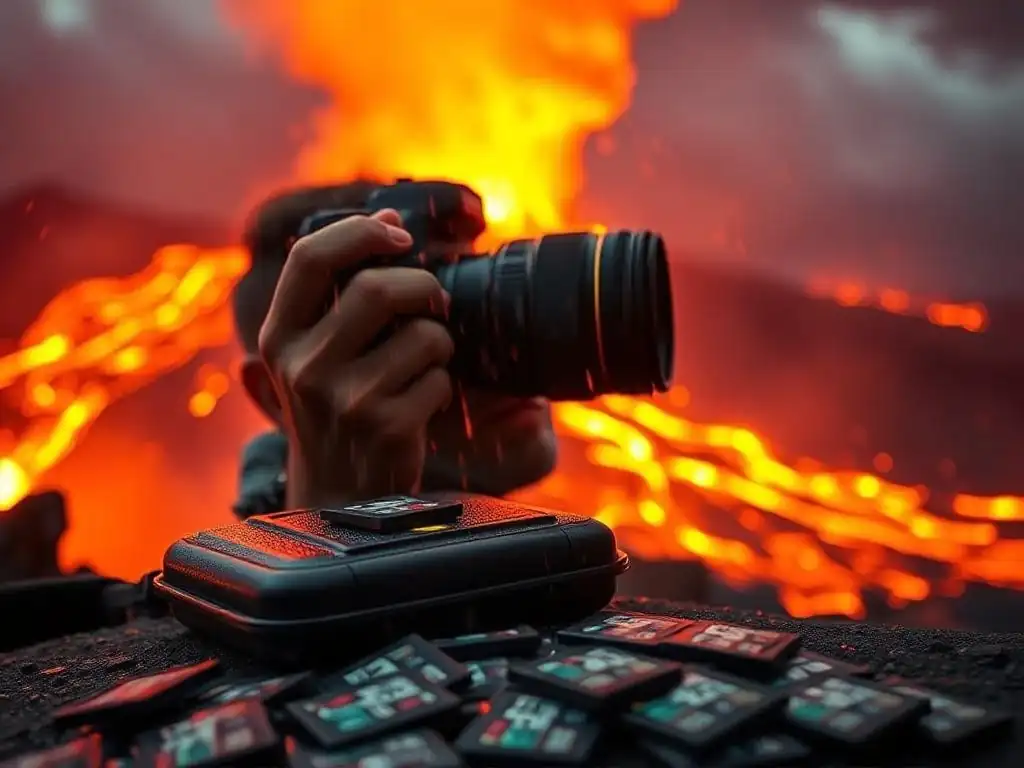
Welcome to Volcano Explorers, where the earth breathes fire! Ever wondered how to capture the raw power and breathtaking beauty of a volcano in all its glory? Choosing the best memory cards for photography is crucial to preserving those molten moments. Dive in and discover the secrets to ensuring your volcano photos are as stunning as the real thing. What hidden dangers are lurking in your current setup? Let's find out!
- Memory for Molten Moments: Choosing the Right Memory Cards for Volcano Photography
- Introduction: Capturing Volcanic Majesty - Why Memory Cards Matter
- Understanding Memory Card Basics for Volcano Photography
- Key Considerations When Selecting Memory Cards for Volcano Photography
- Recommended Memory Card Specifications for Volcano Photography
- Specific Memory Card Recommendations for Different Volcano Photography Scenarios
- Tips for Managing Memory Cards During Volcano Photography Trips
- Conclusion: Ensuring Your Volcanic Memories Are Safe and Sound
-
Frequently Asked Questions
- What type of memory card is generally recommended for photographing volcanoes?
- What is the minimum write speed I should look for in a memory card for volcano photography?
- Why is storage capacity important when photographing volcanoes?
- How do I protect my memory cards from the harsh environment around volcanoes?
- Besides speed and storage, what other features should I consider when choosing a memory cards?
- Final Reflection: Capturing Ephemeral Beauty
- Unleash Your Inner Volcano Photographer!
Memory for Molten Moments: Choosing the Right Memory Cards for Volcano Photography
Introduction: Capturing Volcanic Majesty - Why Memory Cards Matter
Volcano photography is an exhilarating pursuit, demanding not only courage and skill but also the right equipment to capture the raw power and beauty of volcanic landscapes and eruptions. Among the essential gear, memory cards often get overlooked, yet they are the unsung heroes that store your precious visual memories.
Imagine trekking to the rim of an active volcano, framing the perfect shot of molten lava flowing down its slopes, and then realizing your memory card is too slow or lacks the capacity to record the moment. This introduction underscores why selecting the best memory cards for photography, specifically for volcano environments, is paramount to ensuring you preserve every breathtaking instant.
The extreme conditions and dynamic nature of volcanic environments present unique challenges for photographers. From capturing fast-moving pyroclastic flows to recording extended sequences of lava rivers, the demands on your camera and, crucially, your memory cards are significant. The right memory card can be the difference between capturing a stunning burst of an eruption in high-resolution or missing the moment entirely due to buffer limitations or slow write speeds.
Similarly, for videographers documenting the slow but relentless creep of lava, a high-capacity, reliable card is essential to avoid interruptions and ensure continuous recording. Therefore, understanding the nuances of memory card specifications is not just about technicalities; it's about safeguarding your creative vision in one of the most awe-inspiring yet demanding photographic arenas on Earth.
The Unique Demands of Volcano Photography
Volcano photography pushes the limits of both photographer and equipment. Unlike studio or landscape photography in controlled environments, photographing volcanoes often involves unpredictable action, extreme temperatures, and remote locations. Consider the challenge of capturing a volcanic eruption: it’s a fleeting event, demanding rapid burst shooting to capture the sequence of explosions and ash plumes.
This requires memory cards with exceptionally fast write speeds to keep up with the camera's sensor and processing capabilities. Furthermore, many photographers also choose to record video, especially 4K or even 8K, to truly immerse viewers in the volcanic spectacle. High-resolution video, particularly at high frame rates, demands substantial storage capacity and sustained write speeds to prevent dropped frames and recording interruptions.
Beyond speed and capacity, the environmental conditions surrounding volcanoes pose additional challenges. Volcanic regions can experience extreme temperature fluctuations, from scorching heat near lava flows to freezing conditions at higher altitudes, especially at night. Dust, ash, and volcanic gases can also infiltrate equipment, potentially damaging sensitive electronics, including memory cards.
Therefore, memory cards used for volcano photography need to be robust, reliable, and capable of withstanding these harsh conditions. The best memory cards for photography in these environments are not just about speed and capacity; they are about durability and resilience, ensuring your data remains safe even when the environment is volatile.
Why Choosing the Right Memory Card is Crucial
Choosing the right memory card for volcano photography transcends mere convenience; it is a critical factor in the success of your photographic mission. A mismatched or inadequate memory card can lead to a cascade of problems, from missed shots and corrupted files to equipment malfunctions and lost opportunities.
Imagine setting up a time-lapse sequence to capture the subtle changes in a volcanic landscape over several hours, only to have your recording interrupted due to a full or faulty memory card. Or picture yourself in the midst of a spectacular eruption, pressing the shutter button for a burst of images, only to find your camera buffer full and unable to capture the peak moment because your card's write speed is too slow.
Investing in high-quality, appropriate memory cards is an investment in your photographic results and peace of mind. The cost of a top-tier memory card, while perhaps seemingly significant upfront, is minimal compared to the value of the irreplaceable images and videos you capture. Consider the time, effort, and often considerable expense involved in traveling to volcanic regions.
The cost of flights, accommodation, specialized gear, and permits far outweighs the price difference between a standard memory card and a professional-grade one. By choosing the best memory cards for photography tailored to the demanding conditions of volcano environments, you are ensuring that your equipment is up to the task, your data is secure, and your creative vision can be fully realized, allowing you to focus on capturing those molten moments without technical anxieties.
Understanding Memory Card Basics for Volcano Photography
Navigating the world of memory cards can initially seem complex, with a plethora of acronyms and specifications. However, understanding the fundamental aspects is crucial for making informed decisions, especially for specialized photography like capturing volcanoes. The core elements to consider are the physical type of card, its storage capacity, and its speed ratings. These factors directly impact how well a memory card performs in demanding situations, influencing everything from burst shooting speed and video recording capabilities to the efficiency of post-processing workflows.
For volcano photographers, a solid grasp of these basics translates into choosing memory cards that not only store a large volume of high-resolution images and videos but also operate reliably and swiftly in challenging environments. This knowledge empowers you to select cards that match your camera's capabilities and the specific demands of volcano photography, ensuring you are technically prepared to capture the dynamic and often unpredictable nature of volcanic activity. By demystifying the technical jargon, you can confidently choose the best memory cards for photography that will serve as dependable partners on your volcanic expeditions.
SD Card Types: SD, SDHC, SDXC, and SDUC - What's the Difference?
SD cards, or Secure Digital cards, are the most prevalent type of memory card used in digital cameras today, including those favored by volcano photographers. Over time, SD card technology has evolved, leading to different capacity standards: SD, SDHC, SDXC, and SDUC. The original SD standard, while still technically available, is largely obsolete due to its limited capacity, topping out at just 2GB.
SDHC (Secure Digital High Capacity) cards expanded this range to between 2GB and 32GB, becoming the standard for many years. SDXC (Secure Digital eXtended Capacity) cards further increased the storage potential, ranging from 32GB up to 2TB. The latest standard, SDUC (Secure Digital Ultra Capacity), pushes the boundaries even further, offering capacities beyond 2TB, theoretically up to 128TB, though currently, cards of this extreme capacity are not yet widely available in the consumer market.
The primary difference between these types lies in their storage capacity and the file system they use. SD cards typically use FAT16, SDHC cards use FAT32, and SDXC and SDUC cards use exFAT. This file system difference is important because it can affect compatibility with older devices.
While most modern cameras are compatible with SDXC cards, older cameras might only support SDHC or even just SD. For volcano photography, where high-resolution images and 4K or 8K video are common, SDXC cards are generally the minimum recommended due to their larger capacity. While SDUC offers even greater future potential, SDXC currently provides the sweet spot of high capacity and broad camera compatibility, making them the most practical choice for capturing extensive volcanic expeditions.
Memory Card Speed Classes: Understanding Write Speed for Burst Shooting and Video
Memory card speed is a critical specification, especially for action-packed photography like capturing volcanic eruptions. Speed classes primarily refer to the write speed of a memory card, which dictates how quickly data can be written onto the card. This is particularly important for burst shooting (continuous shooting mode) and video recording. The original Speed Class system is indicated by a number inside a 'C' symbol (e.g., Class 2, Class 4, Class 6, Class 10).
These classes guarantee a minimum sustained write speed in megabytes per second (MB/s). For instance, a Class 10 card guarantees a minimum write speed of 10MB/s. While this system is still present on many cards, it is less relevant for modern high-performance cameras and demanding applications like 4K and 8K video.
For volcano photography, particularly when capturing fast-moving events or shooting in burst mode to capture the dynamism of an eruption, higher speed classes are essential. A slow write speed can lead to your camera's buffer filling up quickly, causing it to slow down or stop shooting altogether while it waits to write data to the card. This can result in missed shots and frustration, especially during fleeting moments of volcanic activity.
While Class 10 might suffice for basic photography, it is generally insufficient for high-resolution burst shooting or high-bitrate video recording. Modern speed standards like UHS Speed Classes and Video Speed Classes offer more relevant and higher speed ratings for demanding photography and videography scenarios, making the older Speed Class ratings less of a primary consideration for professional volcano photographers.
UHS Speed Classes: U1, U3 - Ensuring Smooth 4K Video Recording
The UHS (Ultra High Speed) Speed Class system was introduced to address the increasing demands of high-resolution video and rapid burst shooting, going beyond the limitations of the original Speed Class ratings. UHS Speed Classes are indicated by a number inside a 'U' symbol (U1 or U3). U1 guarantees a minimum sustained write speed of 10MB/s, similar to Class 10, while U3 guarantees a minimum sustained write speed of 30MB/s. The key advantage of UHS cards lies in their potential for much higher speeds than the basic Speed Classes, although the U1 and U3 ratings themselves only guarantee minimums.
For volcano photography, especially if you plan to record 4K video, a U3-rated card is generally recommended as a minimum. 4K video, particularly at higher frame rates and bitrates, demands significantly faster sustained write speeds than standard HD video. U3 ensures that the memory card can keep up with the data stream from the camera, minimizing the risk of dropped frames or recording interruptions.
While U1 cards might be sufficient for basic 1080p HD video or still photography, they are likely to be inadequate for smooth, high-quality 4K video recording and demanding burst shooting scenarios often encountered in volcano photography. For capturing the dynamic beauty of volcanic eruptions in high-resolution video, opting for U3 or higher is a wise choice.
Video Speed Classes: V30, V60, V90 - Meeting the Demands of High-Resolution Video
Video Speed Classes represent the most recent and most relevant speed rating system specifically designed for high-resolution video recording, including 4K, 8K, and beyond. Video Speed Classes are denoted by a 'V' symbol followed by a number (e.g., V30, V60, V90). These classes, like UHS Speed Classes, guarantee a minimum sustained write speed in MB/s, but at higher levels. V30 guarantees 30MB/s, V60 guarantees 60MB/s, and V90 guarantees 90MB/s minimum sustained write speed. There is also a V10 class, guaranteeing 10MB/s, but for high-end video work, V30 and above are the crucial classes to consider.
For volcano photography that involves serious video work, particularly recording in 4K or 8K at high frame rates or bitrates, Video Speed Class ratings are paramount. V30 is often considered the minimum for reliable 4K video recording in many cameras. However, for higher bitrates, higher frame rates, or 8K recording, V60 or V90 cards are frequently required to ensure smooth, uninterrupted recording.
For instance, recording 4K video at 120fps or 8K video often necessitates V60 or V90 cards to handle the massive data throughput. When photographing volcanoes, where capturing the dynamic movement of lava flows or the explosive power of eruptions in high-quality video is often a primary goal, investing in V60 or V90 rated cards is a strategic decision to guarantee optimal video performance and capture every detail of these spectacular natural phenomena.
Key Considerations When Selecting Memory Cards for Volcano Photography
Choosing the best memory cards for photography, especially for the challenging environment of volcano photography, requires careful consideration of several key factors beyond just speed and capacity. Durability, reliability, and the practicalities of data transfer and workflow are equally important to ensure a successful and stress-free photographic expedition. These considerations extend beyond the technical specifications and delve into the real-world demands of shooting in extreme and often unpredictable volcanic landscapes.
For volcano photographers, the ideal memory card is not just fast and spacious, but also robust enough to withstand harsh conditions, reliable enough to protect valuable data, and efficient enough to streamline the workflow from capture to post-processing. By thoughtfully evaluating these key considerations – capacity, write speed, read speed, durability, and reliability – photographers can select memory cards that are truly optimized for the unique demands of volcano photography, maximizing their chances of capturing stunning and unforgettable images and videos.
Capacity: How Much Storage Do You Need?
Memory card capacity is a fundamental consideration, directly impacting how many photos and videos you can store during a volcano photography trip. The required capacity depends heavily on your shooting style, the resolution and format of your images (RAW vs. JPEG), the video resolution and frame rate you plan to record, and the duration of your photographic expeditions.
For photographers shooting primarily in JPEG format, a 64GB card might seem sufficient for a day trip. However, for those shooting in RAW format to maximize image quality and dynamic range – a common practice in demanding photography like volcano photography – file sizes are significantly larger, quickly filling up smaller capacity cards.
For video, especially 4K or 8K, storage needs escalate dramatically. A single hour of 4K video at a moderate bitrate can easily consume 100GB or more. When planning for extended volcano photography trips, especially multi-day expeditions to remote volcanic regions, it is prudent to overestimate your storage needs.
Running out of memory card space in the field can lead to missed opportunities and the inconvenience of having to delete images or videos to free up space, which is a risky practice. For serious volcano photography, particularly if combining stills and video, carrying multiple high-capacity cards, such as 128GB, 256GB, or even larger, is a wise strategy. This provides ample space for extensive shooting sessions and minimizes the risk of running out of storage at critical moments, ensuring you capture every molten moment.
Write Speed: Capturing Action Shots of Eruptions and Lava Flows
Write speed is paramount when photographing dynamic events like volcanic eruptions and flowing lava. It dictates how quickly your camera can save data to the memory card, directly affecting burst shooting performance and video recording capabilities. For capturing the rapid sequence of an eruption, photographers often rely on burst mode to capture multiple frames per second, increasing the chances of getting the perfect shot at the peak of the eruption.
However, if the memory card's write speed is too slow, the camera's buffer will fill up quickly, causing the shooting speed to slow down or stop entirely until the buffer clears. This can result in missing crucial moments of action.
For video, especially high-resolution video like 4K or 8K, sustained write speed is equally critical. Cameras record a continuous stream of data when shooting video, and the memory card must be able to keep up with this data stream. Insufficient write speed can lead to dropped frames, recording interruptions, or even video corruption.
When photographing volcanoes, where capturing the movement of lava flows or the explosive force of eruptions is often a primary goal, choosing memory cards with high write speeds, indicated by UHS Speed Class (U3) or Video Speed Class (V30, V60, V90) ratings, is essential. For burst shooting, look for cards with write speeds of at least 90MB/s or higher. For 4K video, V30 is a minimum, while V60 or V90 is recommended for higher bitrates and frame rates, ensuring you can capture the action without limitations.
Read Speed: Quickly Transferring Images and Videos After a Shoot
While write speed is crucial for capturing images and videos, read speed is equally important for post-shoot workflow efficiency. Read speed determines how quickly you can transfer your photos and videos from the memory card to your computer for editing, backup, and sharing.
After a long day of volcano photography, often involving hundreds or even thousands of images and hours of video footage, transferring data from memory cards can become a time-consuming bottleneck if the read speed is slow. Faster read speeds significantly reduce transfer times, streamlining your workflow and allowing you to process your images and videos more quickly.
For volcano photographers who frequently work with large volumes of high-resolution images and 4K or 8K video, investing in memory cards with high read speeds, often advertised as "transfer speeds" up to a certain MB/s, is a worthwhile investment in productivity. While write speed is critical during shooting, read speed becomes paramount during post-production. Cards with read speeds of 170MB/s or faster can significantly cut down on transfer times compared to slower cards, especially when using a fast card reader.
This efficiency is particularly valuable when working under tight deadlines or when needing to quickly review and back up footage while still in the field. While read speed doesn't directly impact image capture, it is a key factor in optimizing your overall workflow and minimizing the time spent waiting for file transfers.
Durability: Withstanding Extreme Temperatures and Harsh Conditions
Volcano photography often takes place in some of the most extreme and challenging environments on Earth. Volcanic regions can experience scorching temperatures near lava flows, freezing temperatures at higher altitudes, and exposure to volcanic ash, dust, and gases. Standard consumer-grade memory cards may not be designed to withstand these harsh conditions reliably. Extreme temperatures can affect the performance and longevity of memory cards, potentially leading to data corruption or failure. Volcanic ash and dust can infiltrate card slots and damage contacts, while humidity and moisture, common in some volcanic areas, can also pose risks.
Therefore, durability is a crucial consideration when selecting memory cards for volcano photography. Look for memory cards that are specifically advertised as being rugged, durable, or designed for extreme conditions. Many professional-grade memory cards are built to be temperature-proof, waterproof, shockproof, and X-ray proof. Temperature resistance is particularly important for volcano environments, ensuring the card can operate reliably in both extreme heat and cold.
Waterproof and dustproof ratings provide protection against moisture and particulate matter. Shockproof construction safeguards against physical impacts, which can be relevant when trekking in rugged terrain. Investing in durable memory cards provides peace of mind, knowing that your data is better protected against the elements and physical stresses encountered in volcano photography, minimizing the risk of data loss due to environmental factors.
Reliability: Minimizing the Risk of Data Loss
Reliability is arguably the most critical factor when choosing memory cards for any type of photography, but it is especially paramount in demanding fields like volcano photography. Data loss due to memory card failure can be catastrophic, potentially erasing irreplaceable images and videos captured during a once-in-a-lifetime volcanic event.
Memory card reliability encompasses several aspects, including the quality of the NAND flash memory used, the controller technology, and the overall build quality and testing procedures employed by the manufacturer. Reputable brands known for producing high-quality memory cards often invest heavily in rigorous testing and quality control to ensure their cards are reliable and minimize the risk of data corruption or failure.
While no memory card is completely immune to failure, choosing cards from well-established and trusted brands significantly reduces the likelihood of encountering problems. Reading reviews and researching brands known for their reliability in professional photography and videography is a prudent step. Consider factors like warranty periods and customer support offered by the manufacturer, as these can be indicators of the manufacturer's confidence in their product's reliability.
For critical volcano photography expeditions, it is also advisable to use multiple memory cards rather than relying on a single card with very high capacity. This strategy minimizes the risk of losing all your data if a single card fails. Regularly backing up your images and videos in the field, whenever possible, is another crucial practice to safeguard against data loss, regardless of memory card reliability.
Recommended Memory Card Specifications for Volcano Photography
Based on the unique demands of volcano photography, certain memory card specifications become highly recommended to ensure optimal performance, reliability, and data security. These recommendations are tailored to address the challenges posed by fast-action shooting, high-resolution video recording, and the harsh environmental conditions often encountered near volcanoes. While specific needs may vary depending on individual shooting styles and equipment, these guidelines provide a solid foundation for selecting appropriate memory cards for capturing volcanic majesty.
These recommendations are not rigid rules but rather a starting point for making informed decisions. Factors such as budget, specific camera capabilities, and the primary focus of your volcano photography (stills vs. video) will influence the final choice. However, adhering to these minimum recommendations will significantly improve your chances of capturing stunning and reliable results in the challenging and awe-inspiring world of volcano photography.
Minimum Capacity Recommendations for Different Shooting Styles
The minimum recommended memory card capacity for volcano photography varies depending on your shooting style and the duration of your expeditions. For photographers primarily shooting stills in JPEG format and undertaking short day trips, a 64GB card might suffice as a starting point. However, for serious volcano photography, especially shooting in RAW format to maximize image quality and dynamic range, or for longer trips, 128GB should be considered the absolute minimum. For those who plan to capture both high-resolution stills (RAW+JPEG) and 4K video, or for multi-day expeditions, 256GB or even 512GB cards are highly recommended.
Videographers focusing heavily on 4K or 8K video recording will require even larger capacities. Recording 4K video, even at moderate bitrates, quickly consumes storage space. For extended video sessions, especially when documenting lava flows or volcanic activity over time, 512GB or 1TB cards are often necessary.
It is always prudent to overestimate your storage needs, especially when traveling to remote volcanic locations where access to additional memory cards or data offloading facilities may be limited. Carrying multiple cards of moderate to high capacity (e.g., several 128GB or 256GB cards) offers greater flexibility and redundancy compared to relying on a single, very large capacity card. This strategy also helps in organizing footage and managing data more effectively during and after the shoot.
Minimum Write Speed Recommendations for Burst Photography and Video
For volcano photography, minimum write speed recommendations are dictated by the demands of burst shooting and high-resolution video recording. For capturing fast-action events like volcanic eruptions in burst mode, a minimum sustained write speed of 90MB/s (V90 or UHS-II U3) is highly recommended. Cards with lower write speeds may cause the camera buffer to fill up quickly, leading to a slowdown or interruption in burst shooting, potentially missing crucial moments.
For 4K video recording, a Video Speed Class V30 card (minimum 30MB/s sustained write speed) is generally considered the absolute minimum for reliable recording in many cameras. However, for higher bitrates, higher frame rates (e.g., 4K 60fps or 120fps), or 8K video recording, V60 or V90 cards are strongly recommended to ensure smooth, uninterrupted recording and prevent dropped frames.
For professional-level volcano videography, particularly when aiming for broadcast quality or cinematic results, V90 cards offer the highest level of assurance for handling demanding video formats and bitrates. While V30 cards might be adequate for basic 4K video, investing in V60 or V90 cards provides future-proofing and ensures compatibility with a wider range of video recording settings and camera capabilities.
When selecting memory cards, always prioritize sustained write speed ratings (Video Speed Class or UHS Speed Class) over peak or burst speed ratings, as sustained speed is the more critical factor for continuous shooting and video recording. For optimal performance in demanding volcano photography scenarios, aim for memory cards with a Video Speed Class of V60 or V90 and a UHS Speed Class of U3 or higher, especially if your camera supports UHS-II for even faster speeds.
Identifying Memory Cards with Robust Temperature Resistance
When selecting memory cards for volcano photography, prioritizing temperature resistance is crucial due to the extreme temperature variations often encountered in volcanic environments. Reputable memory card manufacturers often specify the operating temperature range for their cards in the product specifications. Look for cards that are rated to operate reliably in a wide temperature range, ideally from at least -25°C to 85°C (-13°F to 185°F) or wider. Many professional-grade memory cards are specifically designed and tested to withstand extreme temperatures, ensuring data integrity and reliable performance even in harsh thermal conditions.
Manufacturers may use terms like "temperature-proof," "extreme temperature resistance," or "rugged" to describe cards with enhanced temperature durability. Review product descriptions and technical specifications carefully to confirm temperature ratings. Some manufacturers even provide detailed testing data on temperature resistance.
While most memory cards will function within a reasonable temperature range, cards specifically designed for extreme conditions offer a greater margin of safety and reliability in the demanding environments of volcano photography. Investing in temperature-resistant memory cards minimizes the risk of card malfunction or data corruption due to temperature extremes, providing peace of mind when shooting in volcanic regions known for their thermal challenges.
Specific Memory Card Recommendations
While specific memory card recommendations can become quickly outdated due to the rapidly evolving technology market, some brands and series consistently receive high praise from professional photographers and videographers for their performance, reliability, and durability, making them excellent choices for volcano photography. Brands like SanDisk (Extreme PRO series), Sony (SF-G Tough series), and ProGrade Digital (Cobalt and Gold series) are widely recognized for producing high-quality memory cards suitable for demanding applications.
For high-speed burst shooting and 4K/8K video, the SanDisk Extreme PRO UHS-II V90, Sony SF-G Tough UHS-II V90, and ProGrade Digital Cobalt UHS-II V90 series are excellent choices. These cards offer exceptional write speeds (typically around 90MB/s sustained or higher), fast read speeds for efficient data transfer, and robust durability features, including temperature resistance, water resistance, and shock resistance. For photographers prioritizing value without compromising significantly on performance, the SanDisk Extreme PRO UHS-I V30, Sony SF-M series UHS-II V60, and ProGrade Digital Gold UHS-II V60 series offer a good balance of speed, capacity, and reliability at a slightly more accessible price point.
Always check the specific specifications of each card model to ensure it meets your camera's requirements and your shooting needs. Reading recent reviews and comparisons from reputable photography and technology websites can also provide valuable insights into the current best-performing and most reliable memory cards available.
Specific Memory Card Recommendations for Different Volcano Photography Scenarios
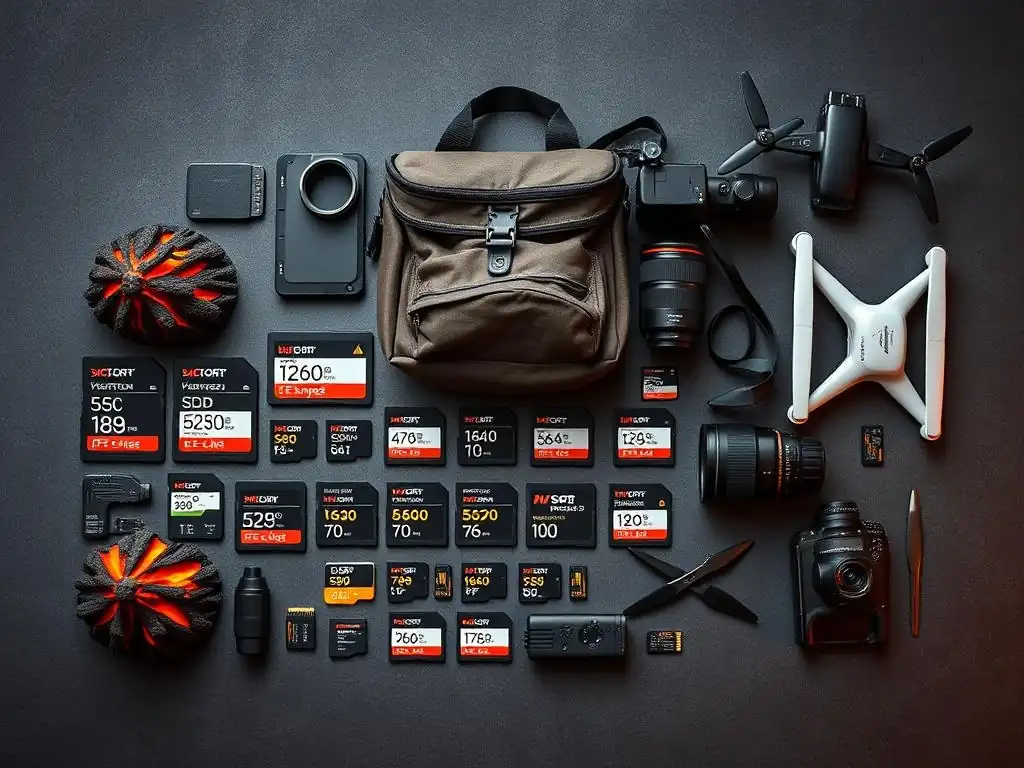
Different volcano photography scenarios place varying demands on memory cards. Capturing a fleeting volcanic eruption requires different card characteristics compared to recording a time-lapse of a slowly changing lava landscape. Tailoring your memory card selection to the specific type of volcano photography you plan to undertake ensures you have the optimal equipment for each situation.
By understanding the specific demands of each scenario – eruptions, lava flows, time-lapses, and night photography – and matching them with appropriate memory card specifications, volcano photographers can maximize their chances of capturing stunning and technically sound images and videos in each unique situation.
Capturing Eruptions: Memory Cards for High-Speed Burst Photography
Capturing volcanic eruptions demands memory cards optimized for high-speed burst photography. Eruptions are dynamic and fleeting events, often lasting only seconds or minutes, requiring photographers to capture a rapid sequence of images to freeze the action at its peak. For this scenario, write speed is the most critical factor. Choose memory cards with a Video Speed Class of V90 or a UHS Speed Class of U3 (UHS-II preferred for maximum speed) and a minimum sustained write speed of at least 90MB/s or higher. This ensures your camera's buffer can clear quickly, allowing for extended bursts without slowdown.
Capacity is also important for eruption photography. While the eruption itself might be brief, you may want to capture multiple bursts or shoot continuously for an extended period to ensure you don't miss any critical moments. A capacity of 128GB or 256GB is recommended, even for relatively short shooting sessions, to provide ample space for burst sequences and potential backup shots.
Reliability and durability are also crucial, as eruptions can be unpredictable and expose equipment to ash, dust, and temperature fluctuations. Opt for rugged, professional-grade cards known for their reliability in challenging conditions. Fast read speeds are less critical during the shooting process itself but will be beneficial when quickly reviewing and transferring images after the eruption.
Recording Lava Flows: Memory Cards for Extended 4K/8K Video Recording
Recording lava flows often involves extended video sessions, sometimes lasting hours, to capture the slow but relentless movement of molten rock. For this scenario, capacity and sustained write speed for video recording are paramount. Choose high-capacity memory cards, such as 256GB, 512GB, or even 1TB, to accommodate long recording times, especially if shooting in 4K or 8K resolution.
For 4K video, a Video Speed Class of V30 is a minimum, but V60 or V90 is recommended for higher bitrates or frame rates, and essential for 8K recording. Ensure the card's sustained write speed is sufficient to handle your chosen video resolution, frame rate, and bitrate without dropped frames or recording interruptions.
Reliability is also critical for extended recording sessions. Choose cards from reputable brands known for their stable performance and data integrity. Temperature resistance is important, as lava flows can generate significant heat. Look for cards rated to operate reliably in high temperatures. Read speed is less critical during recording but will be important for efficiently transferring large video files after the shoot. For lava flow videography, prioritize high capacity, sustained write speed for video, and reliability, ensuring you can record continuously for extended periods without running out of space or experiencing recording failures.
Time-Lapse Photography of Volcanoes: Choosing a Reliable and High-Capacity Card
Time-lapse photography of volcanoes, capturing the subtle changes in landscapes over hours, days, or even weeks, demands memory cards with exceptional reliability and high capacity. Reliability is paramount because time-lapse sequences often run unattended for extended periods, and any card failure could result in losing hours or days of captured data. Choose memory cards from highly reputable brands known for their consistent performance and low failure rates.
Capacity is also crucial, as time-lapse sequences can generate a large number of images, especially when shooting at high resolution. Cards with 128GB, 256GB, or even larger capacities are recommended, depending on the duration of your time-lapse and the interval between shots.
Write speed is less critical for time-lapse photography compared to burst shooting or video, as the camera typically takes single shots at relatively long intervals. However, a decent write speed (U1 or U3) is still beneficial for quickly saving each image and minimizing any potential delays between shots.
Durability, particularly temperature resistance and weather resistance, is important if the time-lapse setup will be exposed to the elements for extended periods. For volcano time-lapse photography, prioritize reliability and high capacity above all else, ensuring your memory card can consistently and reliably capture images over long durations without data loss or failure.
Night Photography of Volcanoes: Ensuring Sufficient Storage and Speed
Night photography of volcanoes, often aimed at capturing lava glows, star trails with volcanic landscapes, or nighttime eruptions, generally requires sufficient storage and reliable performance, but not necessarily the absolute fastest write speeds. Capacity is important, as you may be shooting for extended periods at night, capturing numerous long-exposure images. A 128GB or 256GB card should be sufficient for most night photography sessions, but higher capacities might be needed for multi-night shoots or if combining night stills with video.
Write speed is less critical than for burst shooting, as night photography typically involves single, long-exposure shots rather than rapid bursts. However, a decent write speed (U1 or U3) is still beneficial for quickly saving each long-exposure image, especially if shooting in RAW format.
Reliability is paramount for night photography, as you may be shooting in remote locations and rely heavily on capturing every frame during limited nighttime hours. Choose cards from reputable brands known for their consistent performance. Temperature resistance can be important if shooting at high altitudes or in cold volcanic regions at night.
Read speed is less critical during the shooting process itself but will be beneficial for efficiently transferring images the next day. For night photography of volcanoes, prioritize reliability and sufficient capacity, ensuring your memory cards can reliably store your long-exposure images throughout the night, allowing you to focus on capturing the ethereal beauty of volcanoes under the stars.
Tips for Managing Memory Cards During Volcano Photography Trips
Effective memory card management is crucial for a successful volcano photography trip. Proper organization, handling, and backup strategies can prevent data loss, streamline your workflow, and ensure you don't run out of storage space at critical moments. These practical tips are designed to help volcano photographers manage their memory cards efficiently in the field, maximizing data security and minimizing potential disruptions to their photographic endeavors.
Implementing these memory card management tips will contribute significantly to a smoother, more organized, and ultimately more successful volcano photography experience, allowing you to concentrate on capturing the awe-inspiring spectacle of volcanic activity without technical distractions or data anxieties.
Formatting Memory Cards Before Each Shoot
Formatting memory cards inside your camera before each shoot is a highly recommended practice for volcano photography. Formatting erases all data on the card and prepares it for optimal performance with your specific camera. This helps to prevent file system errors, data corruption, and potential compatibility issues that can arise from using cards across different cameras or after prolonged use without formatting. While simply deleting images might seem sufficient, formatting ensures a clean and optimized card for each shooting session.
Before formatting, always ensure you have backed up all important images and videos from the card. Formatting is a destructive process and will permanently erase all data. In your camera's menu, locate the formatting option (usually found in the setup or memory card settings).
Choose the full format option rather than a quick format if available, as full formatting performs a more thorough check of the card and ensures optimal performance. Formatting before each shoot, especially for critical volcano photography sessions, is a simple yet effective habit that can significantly enhance memory card reliability and prevent potential data-related problems in the field.
Regularly Backing Up Your Photos and Videos
Regularly backing up your photos and videos during volcano photography trips is an absolutely essential practice to safeguard your valuable data against unexpected memory card failures, loss, or damage. Ideally, aim to back up your data at least once a day, or even more frequently if shooting extensively or capturing particularly important footage.
The most robust backup strategy is the "3-2-1 rule": have at least three copies of your data, on two different types of media, with one copy stored offsite. In the context of volcano photography trips, this could translate to: 1) the original memory card, 2) a portable hard drive or SSD, and 3) cloud backup if internet access is available.
Portable hard drives or SSDs are ideal for on-location backups. Choose rugged, travel-friendly drives designed to withstand bumps and environmental conditions. Carry multiple drives if possible for redundancy. If you have internet access at your accommodation, consider utilizing cloud backup services to upload your most critical images and videos to offsite servers.
This provides an extra layer of protection against physical loss or damage to your equipment and local backups. Develop a consistent backup routine and adhere to it rigorously throughout your volcano photography trip. Verify your backups to ensure data integrity. Regular backups are your insurance policy against data loss and are a non-negotiable aspect of responsible volcano photography workflow.
Protecting Memory Cards from Extreme Conditions
Protecting memory cards from the extreme conditions often encountered in volcano photography is crucial for maintaining their reliability and longevity. Extreme temperatures, humidity, dust, and physical shocks can all negatively impact memory card performance and data integrity. Invest in durable memory card cases that provide physical protection and are often water-resistant or waterproof and dustproof. Keep memory cards in these cases when not in use, especially during transport and when exposed to harsh environments.
Avoid leaving memory cards in direct sunlight or in hot vehicles for extended periods, as extreme heat can damage them. Similarly, protect cards from excessive moisture and humidity. When changing memory cards in dusty or ash-laden environments, try to do so in a sheltered location or use a camera bag or changing bag to minimize exposure to particulate matter.
Handle memory cards with care, avoiding bending or dropping them. When traveling by air, store memory cards in your carry-on luggage rather than checked baggage to minimize the risk of loss or damage. By taking proactive steps to protect your memory cards from extreme conditions, you can significantly extend their lifespan and minimize the risk of environmentally related failures during your volcano photography expeditions.
Organizing Memory Cards for Easy Access
Organizing memory cards effectively is essential for a streamlined and efficient workflow during volcano photography trips. Develop a system for distinguishing between used and unused cards and for quickly accessing the card you need. Use memory card cases that have individual slots for each card and consider labeling slots or cases to categorize cards (e.g., "Day 1," "Video," "Backup").
Keep unused, formatted cards in one designated location and used cards in another. Immediately after using a card, place it in the "used" section of your card case to avoid accidentally reusing an un-backed-up card or reformatting a card containing valuable images.
Consider using different colored memory card cases or labels to further differentiate card types or shooting days. Keep your memory card case readily accessible in your camera bag or vest pocket, ensuring you can quickly swap cards when needed. When working in the field, avoid scattering memory cards loosely in pockets or bags, as this increases the risk of loss or damage.
Establish a consistent routine for handling and organizing memory cards, and stick to it throughout your volcano photography trip. A well-organized memory card system minimizes confusion, prevents accidental data loss, and streamlines your workflow, allowing you to focus on capturing those crucial volcanic moments without fumbling for the right card.
Conclusion: Ensuring Your Volcanic Memories Are Safe and Sound
In the realm of volcano photography, where every click of the shutter is a pursuit of fleeting moments amidst raw natural power, the choice of memory card transcends mere technical specification; it becomes an integral part of the photographic narrative. The right memory card is not just a storage device; it is a guardian of your visual memories, a silent partner ensuring that the fiery drama and subtle beauty of volcanic landscapes are captured and preserved with fidelity and reliability.
Investing in quality memory cards, tailored to the unique demands of volcano environments, is an investment in the integrity of your photographic vision and the longevity of your captured moments.
As you venture into the dramatic landscapes of volcanoes, remember that the best memory cards for photography are those that seamlessly integrate into your workflow, providing the speed, capacity, durability, and reliability needed to meet the challenges of this extraordinary photographic pursuit. By understanding the nuances of memory card technology and making informed choices, you empower yourself to capture the molten moments with confidence, knowing that your volcanic memories are safe, sound, and ready to be shared with the world.
The Importance of Investing in Quality Memory Cards for Volcano Photography
Investing in quality memory cards for volcano photography is not an area to cut corners. While the initial cost of high-performance, reliable memory cards might seem higher than budget options, the long-term value and peace of mind they provide are immeasurable, especially when considering the potential cost of data loss or missed photographic opportunities.
The price difference between a standard card and a professional-grade card is minimal compared to the investment in camera equipment, travel expenses, and the often irreplaceable nature of volcanic events. A memory card failure at a critical moment can erase hours of effort, travel, and the chance to capture a once-in-a-lifetime spectacle.
Quality memory cards from reputable brands are built to higher standards, undergo rigorous testing, and offer enhanced durability and reliability features, such as temperature resistance, water resistance, and shock resistance. These features are particularly crucial in the harsh and unpredictable environments of volcano photography.
Furthermore, high-quality cards offer faster write and read speeds, which are essential for capturing fast-action eruptions, recording high-resolution video, and streamlining post-processing workflows. Considering the demanding conditions and the value of the images and videos captured, investing in quality memory cards is a strategic decision that safeguards your photographic investment and ensures your volcanic memories are preserved reliably and efficiently.
Final Thoughts on Choosing the Best Memory Card for Your Needs
Choosing the "best" memory card for volcano photography is not a one-size-fits-all decision. The ideal card depends on your specific camera, shooting style, budget, and the types of volcano photography you plan to pursue. However, by understanding the key factors – capacity, write speed, read speed, durability, and reliability – and considering the specific demands of volcano environments, you can make informed choices that align with your individual needs.
Prioritize reliability and sufficient capacity, ensuring you have ample storage and minimizing the risk of data loss. Select write speeds that match your shooting style, whether it's burst photography of eruptions or high-resolution video recording of lava flows.
Don't underestimate the importance of durability, especially temperature resistance, given the extreme conditions often encountered in volcanic regions. Read reviews, research brands, and consider investing in professional-grade cards from reputable manufacturers known for their quality and performance. Remember that memory cards are a critical link in your photographic chain, and choosing the right ones is as important as selecting the right lens or camera body. By carefully considering your needs and making informed decisions, you can equip yourself with memory cards that will reliably capture your volcanic adventures, ensuring your molten moments are preserved for years to come.
Frequently Asked Questions
What type of memory card is generally recommended for photographing volcanoes?
Generally, SD cards are recommended due to their high storage capacity and relatively fast read/write speeds. However, the specific type (e.g., SDHC, SDXC) and speed class will depend on your camera.
What is the minimum write speed I should look for in a memory card for volcano photography?
A minimum write speed of at least 90 MB/s is advisable. This ensures you can capture bursts of photos without slowing down your camera, especially when photographing dynamic volcanic activity.
Why is storage capacity important when photographing volcanoes?
Volcano photography often involves capturing many photos and videos, especially during eruptions. A card with a larger storage capacity means you won't have to swap cards frequently, reducing the risk of losing or damaging them.
How do I protect my memory cards from the harsh environment around volcanoes?
Consider using ruggedized memory cards that are waterproof, shockproof, and temperature-resistant. Protecting your cards from dust and extreme temperatures is crucial for data integrity.
Besides speed and storage, what other features should I consider when choosing a memory cards?
Reliability and brand reputation are important factors. Read reviews and compare brands to ensure you're investing in a durable and dependable memory card that will protect your valuable volcano photos.
Final Reflection: Capturing Ephemeral Beauty
The pursuit of capturing volcanic eruptions, as we've explored, demands more than just skill and courage; it requires the right tools, especially when it comes to memory. The reliability of our memory cards directly impacts our ability to preserve these fleeting moments of raw power and beauty. Understanding the nuances of speed, capacity, and durability is not merely a technical exercise, but a crucial step in ensuring that these extraordinary events are not lost to corrupted data or full cards.
The impact of photography, and specifically capturing extreme events like volcanic eruptions, extends far beyond personal gratification. These images serve as vital documentation of our planet's dynamic processes, influencing scientific understanding and shaping public perception of natural phenomena. Photography takes an instant out of time, altering life by holding it still.
- Dorothea Lange. This quote resonates deeply when considering the ephemeral nature of volcanic activity; each photograph is a testament to a moment that will never be replicated, a frozen fragment of a world in constant flux.
Now, consider the implications of this knowledge for your own creative pursuits. Whether you're chasing volcanic eruptions or simply documenting the beauty of your everyday life, choose your memory cards wisely. Invest in the tools that will allow you to capture and preserve your memories with confidence, knowing that you're not just taking pictures, but safeguarding moments in time. Let the lessons learned here empower you to document the world around you with intention and precision, ensuring that your visual stories endure for generations to come.
Unleash Your Inner Volcano Photographer!
Thank you for learning about the crucial role memory cards play in capturing breathtaking volcanic moments. We hope this article has equipped you to select the perfect cards for your next adventure. Now, it's time to put your new knowledge to the test!
Here are a few next steps:
- Check out our comprehensive Gear Guide for Volcano Explorers! It will help you find the ideal memory card for your camera and photography style.
- Share your experiences—both successes and challenges—in the comments below. Let's learn from each other!
- Explore our other articles on Volcano Explorers for expert advice on camera settings and safe volcano photography practices.
What stunning volcanic image will you capture first with your improved memory card setup? Share your vision in the comments!