
Civilizations on the Brink: How Volcanic Climate Shifts Shaped Human History

Welcome to Volcano Explorers!
Ever wondered how a silent giant beneath your feet could rewrite the course of history? Delve into the dramatic story of how volcanic climate impacts on civilizations have shaped our world. Uncover the hidden connections between explosive eruptions and the rise and fall of empires. Are you ready to explore the Earth's fiery past and its enduring influence on our present?
- Introduction: Volcanoes, Climate, and the Fate of Civilizations
- Understanding Volcanic Climate Impacts on Civilizations
-
Case Studies: Civilizations Affected by Volcanic Climate Shifts
- The Minoan Civilization and the Thera Eruption: A Climate Catastrophe?
- The Late Antique Little Ice Age (LALIA): A Volcanic Trigger?
- Tambora's Shadow: The "Year Without a Summer" and its Global Consequences
- The Eldgjá Eruption and its Potential Link to the Collapse of the Viking Greenland Settlements
- Volcanic Climate Impacts on Agriculture and Food Security
- Predicting and Preparing for Future Volcanic Climate Events
- Conclusion: Learning from the Past to Protect the Future from Volcanic Climate Impacts
-
Frequently Asked Questions
- How do volcanic eruptions cause climate shifts?
- What are some examples of civilizations that were significantly impacted by volcanic climate shifts?
- How long do volcanic climate impacts typically last?
- What methods do scientists use to study the impact of volcanoes on past climates and civilizations?
- What are the potential future implications of volcanic climate impacts on modern civilizations?
- Final Reflection: Echoes of Fire, Shaping Our Future
- Unearth Your Own Volcanic Story!
Introduction: Volcanoes, Climate, and the Fate of Civilizations
Volcanoes, often perceived as agents of destruction, wield a far more subtle yet equally potent power: the ability to reshape global climate. Throughout history, colossal volcanic eruptions have not only devastated local landscapes but have also triggered significant shifts in Earth's climate system. These volcanic climate impacts on civilizations have been profound, sometimes catastrophic, influencing the course of human history in ways we are only beginning to fully understand.
From the decline of ancient societies to widespread famines and social upheavals, the fingerprints of volcanic eruptions are etched into the annals of civilization, serving as stark reminders of nature's capacity to alter human destinies. This article explores the intricate relationship between volcanic activity and climate change, delving into specific historical events and their far-reaching consequences on human societies.
Understanding Volcanic Climate Impacts on Civilizations
The Science Behind Volcanic Aerosols and Global Cooling
The key to understanding volcanic climate impacts on civilizations lies in the science of volcanic aerosols. When a volcano erupts explosively, it injects vast quantities of gases, particularly sulfur dioxide (SO2), high into the stratosphere. Unlike water vapor and other greenhouse gases that trap heat, sulfur dioxide undergoes a series of chemical reactions in the stratosphere to form sulfate aerosols.
These sulfate aerosols are tiny particles that reflect incoming sunlight back into space, reducing the amount of solar radiation reaching the Earth's surface. This process leads to a phenomenon known as volcanic cooling, where global average temperatures can decrease noticeably for months or even years following a major eruption. The magnitude and duration of the cooling depend on the size and sulfur content of the eruption, as well as atmospheric conditions.
The impact of these volcanic aerosols extends beyond simple temperature reduction. The altered radiative balance can disrupt atmospheric circulation patterns, leading to changes in precipitation, monsoon systems, and jet streams. These disruptions can have cascading effects on regional climates, causing droughts in some areas and floods in others.
For instance, studies have shown that large volcanic eruptions can weaken the Indian monsoon, leading to reduced rainfall in South Asia, a region heavily reliant on monsoon rains for agriculture. Furthermore, volcanic aerosols can also influence ozone chemistry in the stratosphere, potentially leading to ozone depletion, which in turn affects ultraviolet radiation levels at the surface. Understanding these complex atmospheric processes is crucial for deciphering the intricate ways in which volcanic eruptions exert their influence on global climate and, consequently, on human societies.
How Volcanic Eruptions Trigger Climate Change
Volcanic eruptions trigger climate change through a relatively rapid and impactful mechanism. The process begins with the explosive eruption itself, which propels ash, gas, and aerosols into the atmosphere. While volcanic ash can have some immediate local and regional effects, it is the sulfur dioxide gas that plays the dominant role in long-term climate alteration.
Within weeks to months after a major eruption, the sulfur dioxide converts to sulfate aerosols, forming a global veil in the stratosphere. This veil acts like a planetary sunscreen, reflecting solar radiation and initiating a global cooling effect. The duration of this cooling is determined by the lifespan of the aerosols in the stratosphere, which is typically about one to two years.
The climate change induced by volcanic eruptions is not limited to just cooling. It can also lead to significant changes in precipitation patterns and atmospheric circulation. For example, large eruptions are associated with a weakening of the African and Asian monsoons, potentially causing droughts in these regions. Furthermore, the cooling effect is not uniform across the globe; some regions may experience more pronounced temperature drops than others.
Polar regions, for instance, can experience amplified cooling due to feedback mechanisms involving sea ice and snow cover. The El Niño-Southern Oscillation (ENSO), a major climate pattern, can also be influenced by volcanic eruptions, although the exact nature of this interaction is still an area of ongoing research. Therefore, volcanic eruptions are not merely isolated geological events; they are powerful drivers of relatively short-term but significant climate change with global reach.
Identifying Volcanic Signals in Climate Records
Scientists employ a variety of sophisticated techniques to identify volcanic signals in climate records, allowing them to reconstruct past volcanic climate impacts on civilizations. One of the most crucial tools is the analysis of ice cores. Ice cores, drilled from glaciers and ice sheets in Greenland and Antarctica, contain layers of ice that represent annual snowfall, trapping atmospheric particles from centuries and millennia past.
Volcanic eruptions leave a distinct fingerprint in ice cores in the form of sulfate spikes. By analyzing the concentration of sulfate and other volcanic markers in ice layers, scientists can pinpoint the timing and magnitude of past eruptions. Furthermore, the chemical composition of volcanic ash found in ice cores can sometimes be used to identify the source volcano.
Beyond ice cores, tree rings provide another valuable archive of past climate. Tree growth is sensitive to temperature and precipitation, and the width of tree rings reflects these environmental conditions. Volcanic cooling events can often be detected as periods of reduced tree growth, manifested as narrower tree rings. Similarly, lake sediments and marine sediments can preserve records of past environmental changes, including volcanic signals.
These sediments can contain volcanic ash layers, as well as proxies for temperature and precipitation. Historical documents, such as chronicles, diaries, and agricultural records, can also provide qualitative evidence of volcanic climate impacts on civilizations, documenting unusual weather events, crop failures, and social disruptions that may be linked to volcanic eruptions. By combining evidence from these diverse archives, researchers are building a more comprehensive picture of the role of volcanic eruptions in shaping past climates and human history.
Case Studies: Civilizations Affected by Volcanic Climate Shifts
The Minoan Civilization and the Thera Eruption: A Climate Catastrophe?
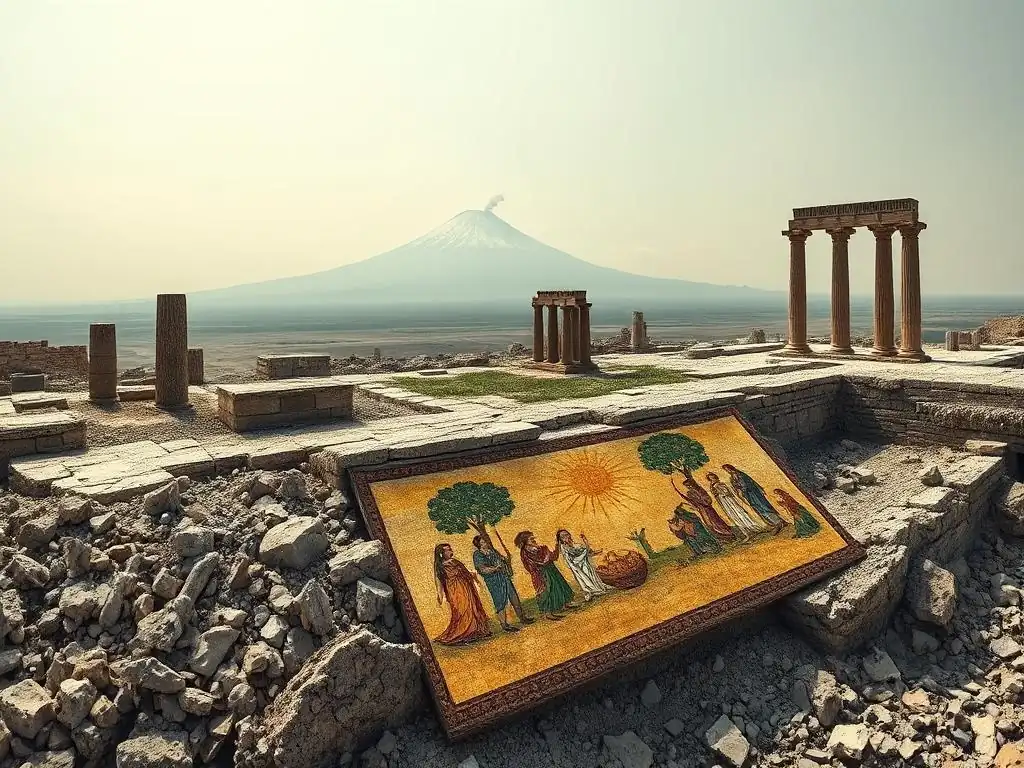
The Minoan civilization, a sophisticated Bronze Age society that flourished on the island of Crete and surrounding Aegean islands, met a dramatic end. One prominent theory links their decline to the cataclysmic eruption of the Thera volcano (modern Santorini), which occurred around 1600 BCE. This eruption was one of the largest volcanic events of the Holocene epoch, estimated to be several times larger than the Krakatoa eruption of 1883.
The Thera eruption unleashed enormous pyroclastic flows, massive tsunamis, and dispersed volcanic ash across the eastern Mediterranean. While the immediate local devastation was undoubtedly immense, the potential for broader volcanic climate impacts on civilizations, particularly the Minoan civilization, is a subject of ongoing debate and research.
The Thera Eruption and its Potential Impact on Minoan Society
The Thera eruption's potential impact on Minoan society is multifaceted, extending beyond the immediate destruction on Santorini itself. The massive tsunami generated by the eruption likely devastated coastal settlements across the Aegean Sea, including those on Crete, the heartland of the Minoan civilization. Volcanic ashfall, while less immediately destructive than pyroclastic flows or tsunamis, could have had significant long-term consequences.
Heavy ashfall can blanket agricultural lands, disrupting crop growth and leading to food shortages. Furthermore, the eruption injected a substantial amount of sulfur dioxide into the stratosphere, potentially triggering a period of volcanic cooling. Climate models suggest that the Thera eruption could have caused a noticeable, though perhaps relatively short-lived, cooling in the region.
This volcanic cooling, combined with ashfall and tsunami damage, could have significantly weakened Minoan society. Minoan agriculture, which formed the economic backbone of their civilization, would have been severely disrupted. Food shortages could have led to famine, disease, and social unrest. The eruption may have also damaged Minoan infrastructure and trade networks, further exacerbating the societal crisis. Some researchers propose that the Thera eruption and its associated climate and environmental impacts contributed to the eventual decline and collapse of the Minoan civilization, making them a case study in volcanic climate impacts on civilizations.
Debates Surrounding the Thera Eruption and Minoan Decline
Despite the compelling narrative linking the Thera eruption to the Minoan decline, significant debates and alternative interpretations persist within the scientific community. One key point of contention is the precise dating of the Thera eruption.
While radiocarbon dating and ice core records point to a date around 1600 BCE, archaeological evidence from the Minoan site of Knossos on Crete suggests a slightly later date, closer to 1450 BCE. This chronological discrepancy raises questions about the direct causal link between the eruption and the Minoan collapse, as it implies a potential time gap of decades or even a century between the events.
Furthermore, some scholars argue that the Minoan civilization was already in decline prior to the Thera eruption, possibly due to internal societal factors, overpopulation, or environmental degradation unrelated to volcanic activity. They point to evidence of Mycenaean Greek influence on Minoan Crete before the eruption, suggesting a possible shift in power dynamics. Additionally, the precise extent and duration of the volcanic climate impacts from the Thera eruption are still not fully understood.
While the eruption was undoubtedly massive, the magnitude and longevity of the resulting cooling and environmental changes remain subjects of ongoing research and modeling. Therefore, while the Thera eruption remains a significant event in Minoan history, its precise role in the civilization's decline continues to be debated, highlighting the complexities in attributing societal changes solely to volcanic climate impacts on civilizations.
The Late Antique Little Ice Age (LALIA): A Volcanic Trigger?
The Late Antique Little Ice Age (LALIA), a period of unusually cold climate in the mid-6th century CE, is increasingly recognized as a significant episode in human history, potentially triggered by volcanic climate impacts on civilizations. This period witnessed widespread cooling, crop failures, famines, and pandemics across Europe, the Middle East, and Asia.
While the term "Little Ice Age" is typically associated with later periods, the LALIA represents an earlier instance of sustained global cooling. Compelling evidence points to a series of large volcanic eruptions around 536, 540, and 547 CE as the primary drivers of this climate downturn, making it a key example of volcanic climate impacts on civilizations.
The 536 AD Event: A Year Without a Summer Driven by Volcanoes
The year 536 AD stands out as a particularly anomalous year in climate history, often referred to as "the year without a summer." Historical accounts from various parts of the world describe a persistent, dense fog or haze that dimmed the sun, leading to reduced sunlight and unusually cold temperatures. Byzantine historian Procopius wrote of the sun giving "forth its light without brightness, like the moon, during this whole year."
Similar descriptions exist in Syrian and Chinese chronicles. Tree ring analysis and ice core records corroborate these historical accounts, showing a sharp drop in temperatures around 536 AD, consistent with a major volcanic eruption. The most likely candidate for this eruption is a still-unidentified volcano, possibly located in Iceland or North America, which ejected a massive amount of sulfur dioxide into the stratosphere, initiating a period of volcanic cooling.
The 536 AD event marks the beginning of the LALIA, with subsequent volcanic eruptions in 540 and 547 CE reinforcing and prolonging the climate downturn. The combined effect of these eruptions created a sustained period of volcanic climate impacts on civilizations, lasting for several decades. This period of prolonged cooling and altered precipitation patterns had profound consequences for agriculture and human societies across the Northern Hemisphere.
Societal Impacts of the LALIA: Famine, Plague, and Political Instability
The societal impacts of the Late Antique Little Ice Age were far-reaching and devastating, illustrating the profound consequences of volcanic climate impacts on civilizations. The prolonged cooling and reduced sunlight led to widespread crop failures across Europe, the Middle East, and Asia. These agricultural crises triggered severe famines, resulting in mass starvation and population decline. Historical records document widespread famine in various regions during the LALIA, including Ireland, Scandinavia, and the Mediterranean. The reduced food availability weakened populations, making them more susceptible to disease.
Compounding the famine, the LALIA coincided with the Justinianic Plague, one of the deadliest pandemics in human history. The plague, which began in 541 CE, spread rapidly across the Byzantine Empire and beyond, decimating populations already weakened by famine and environmental stress. Some researchers suggest that the LALIA may have indirectly contributed to the spread and severity of the plague by altering environmental conditions and potentially affecting disease vectors.
The combined pressures of famine, plague, and climate instability likely contributed to political instability and societal upheaval in various regions. The collapse of the Ostrogothic Kingdom in Italy, the weakening of the Byzantine Empire, and migrations in Central Asia have all been linked, at least in part, to the societal stresses induced by the LALIA, showcasing the dramatic volcanic climate impacts on civilizations.
Tambora's Shadow: The "Year Without a Summer" and its Global Consequences
The eruption of Mount Tambora in Indonesia in April 1815 stands as one of the largest volcanic eruptions in recorded history. This colossal event unleashed a volcanic explosivity index (VEI) 7 eruption, injecting an estimated 50-60 megatons of sulfur dioxide into the stratosphere. The resulting volcanic climate impacts on civilizations were immediate and globally significant, most famously manifesting as the "Year Without a Summer" in 1816. Tambora's eruption serves as a stark reminder of the potential for even relatively recent volcanic events to profoundly alter global climate and human societies.
The 1815 Tambora Eruption: A Climate Shockwave
The 1815 Tambora eruption sent a climate shockwave around the world. The massive injection of sulfur dioxide into the stratosphere formed a global aerosol veil, reflecting sunlight and causing a significant drop in global average temperatures. While the immediate vicinity of Tambora experienced catastrophic devastation from pyroclastic flows and tsunamis, the far-reaching climate effects were felt globally.
The Northern Hemisphere, in particular, experienced unusually cold temperatures during the summer of 1816. New England in the United States, for example, suffered frost in every month of the year, leading to widespread crop failures and famine. Europe also experienced exceptionally cold and wet conditions, contributing to agricultural distress.
The "Year Without a Summer" was not just a regional anomaly; it was a global event driven by volcanic climate impacts on civilizations. Temperature records from around the world show a clear cooling signal in 1816, directly attributable to the Tambora eruption. This event demonstrated the interconnectedness of the global climate system and the capacity of a single volcanic eruption to trigger worldwide climate perturbations.
Famine and Disease in the Wake of Tambora's Eruption
The volcanic climate impacts on civilizations following the Tambora eruption were most acutely felt in the form of widespread famine and disease. The "Year Without a Summer" led to catastrophic crop failures across the Northern Hemisphere. In Europe, grain harvests were severely reduced, leading to soaring food prices and widespread famine. Ireland experienced a particularly devastating famine, with estimates suggesting that tens of thousands of people may have perished. Switzerland, France, and Germany also suffered significant food shortages and hardship. In North America, the New England region was particularly hard hit, with widespread crop failures and food scarcity.
The famine conditions weakened populations, making them more susceptible to disease. Outbreaks of typhus, dysentery, and cholera were reported in various parts of Europe and Asia in the years following the Tambora eruption. The combination of famine and disease exacerbated the human suffering caused by the volcanic climate impacts on civilizations, highlighting the cascading consequences of such events.
Social and Political Unrest Following Tambora's Climate Impact
Beyond famine and disease, the Tambora eruption and its associated climate impacts also contributed to social and political unrest. The widespread food shortages and economic hardship fueled social tensions and unrest in various regions. In Europe, food riots and protests erupted in response to soaring grain prices and famine conditions.
The economic downturn and social instability contributed to a period of political upheaval in some countries. The Tambora eruption serves as a historical example of how volcanic climate impacts on civilizations can not only cause environmental and humanitarian crises but also contribute to social and political instability, underscoring the complex interplay between natural disasters and human societies.
The Eldgjá Eruption and its Potential Link to the Collapse of the Viking Greenland Settlements
The Norse Greenland settlements, established by Vikings in the late 10th century CE, mysteriously disappeared by the 15th century. While the exact reasons for their abandonment remain debated, a growing body of evidence suggests that volcanic climate impacts on civilizations, specifically the massive Eldgjá eruption in Iceland around 939-940 CE, may have played a significant role in setting the stage for their eventual decline. The Eldgjá eruption, one of the largest basaltic fissure eruptions in the Holocene, released enormous quantities of sulfur dioxide, potentially triggering a period of volcanic cooling that could have exacerbated environmental stresses in Greenland.
Evidence Linking the Eldgjá Eruption to Environmental Stress in Greenland
Evidence linking the Eldgjá eruption to environmental stress in Greenland comes from multiple sources. Ice core records show a large sulfate spike around 940 CE, coinciding with the estimated date of the Eldgjá eruption. This sulfate spike suggests that the eruption injected a substantial amount of sulfur dioxide into the stratosphere, likely causing a period of volcanic cooling. Climate reconstructions based on ice cores and other proxies indicate that the period following the Eldgjá eruption was indeed characterized by cooler temperatures in the North Atlantic region, including Greenland.
Furthermore, archaeological evidence from Norse Greenland settlements suggests that the settlers faced increasing environmental challenges over time. Studies of pollen records and animal bones indicate that the climate in Greenland gradually cooled and became more variable during the Norse settlement period. This cooling trend would have shortened the growing season, reduced agricultural productivity, and made livestock herding more challenging. The Eldgjá eruption and its potential volcanic climate impacts on civilizations could have exacerbated these pre-existing environmental stresses, pushing the Norse Greenland settlements closer to the brink.
Impact of Climate Change on Norse Agriculture and Resource Availability
The volcanic climate impacts on civilizations, potentially triggered by the Eldgjá eruption, would have significantly affected Norse agriculture and resource availability in Greenland. Norse agriculture in Greenland was already marginal, relying primarily on livestock herding and some limited cultivation of hardy crops like barley. A period of volcanic cooling would have further shortened the growing season, reducing crop yields and pasture productivity. This would have made it more difficult for the Norse settlers to sustain their agricultural practices and feed their population.
In addition to agriculture, the Norse Greenland settlements also relied on hunting and trade for resources. Climate change could have affected the availability of these resources as well. Sea ice extent, which is influenced by temperature, can affect marine mammal populations and access to hunting grounds.
Changes in trade routes due to climate shifts or other factors could have also disrupted the Norse settlements' access to essential goods. The combined pressures of reduced agricultural productivity and potential resource scarcity, possibly exacerbated by volcanic climate impacts on civilizations from the Eldgjá eruption, may have contributed to the gradual decline and eventual abandonment of the Norse Greenland settlements.
Volcanic Climate Impacts on Agriculture and Food Security
How Volcanic Eruptions Affect Crop Yields
Volcanic eruptions exert a multifaceted negative impact on crop yields, primarily through the mechanism of volcanic climate impacts on civilizations. The most immediate and direct effect is the reduction in sunlight reaching the Earth's surface due to the stratospheric aerosol veil. This reduced solar radiation directly inhibits photosynthesis, the process by which plants convert sunlight into energy. With less sunlight available, plants grow slower and produce less biomass, leading to lower crop yields. The extent of yield reduction depends on the magnitude of the temperature drop and the duration of reduced sunlight.
Furthermore, volcanic eruptions cause a decrease in global average temperatures, which further stresses crops. Lower temperatures can shorten the growing season, increase the risk of frost damage, and slow down plant development. Many crops have specific temperature requirements for optimal growth, and deviations from these optima, particularly cooling, can significantly reduce yields. For example, grain crops like wheat and rice are highly sensitive to temperature changes during critical growth stages.
Volcanic cooling can disrupt these stages, leading to reduced grain filling and lower harvests. Additionally, changes in precipitation patterns associated with volcanic eruptions can also negatively impact agriculture. While some regions might experience increased rainfall, others may suffer from droughts, both of which can be detrimental to crop production.
Adapting Agricultural Practices to Volcanic Climate Variability
Throughout history, societies have developed various strategies to adapt agricultural practices to volcanic climate variability, demonstrating resilience to volcanic climate impacts on civilizations. One crucial adaptation has been crop diversification. By cultivating a variety of crops with different climate tolerances and growing seasons, farmers can reduce their vulnerability to climate shocks. If one crop fails due to volcanic cooling, others might still thrive, ensuring some level of food security. For example, during the "Year Without a Summer" following the Tambora eruption, regions with more diverse cropping systems fared better than those reliant on monocultures.
Another adaptation strategy is the development and adoption of cold-tolerant crop varieties. Over centuries, farmers have selectively bred crops that are better adapted to colder climates and shorter growing seasons. These varieties can be crucial in mitigating the negative impacts of volcanic cooling on agriculture. Furthermore, water management techniques, such as irrigation and drought-resistant farming practices, can help buffer against changes in precipitation patterns associated with volcanic eruptions.
In regions prone to volcanic ashfall, farmers have also developed techniques to remove ash from crops or plant crops that are more tolerant to ash cover. Historically, societies have also relied on food storage and trade networks to cope with food shortages caused by volcanic climate impacts on civilizations. Building up food reserves during good years and establishing reliable trade routes to access food from unaffected regions can enhance resilience to volcanic-induced famines.
Predicting and Preparing for Future Volcanic Climate Events
Monitoring Volcanic Activity and Assessing Climate Risk
Predicting and preparing for future volcanic climate events is crucial for mitigating volcanic climate impacts on civilizations. Effective monitoring of volcanic activity is the first line of defense. Volcanologists utilize a range of sophisticated instruments to monitor volcanoes, including seismometers to detect earthquakes, GPS stations to measure ground deformation, gas sensors to track changes in volcanic gas emissions, and satellite imagery to observe thermal anomalies and ash plumes.
By continuously monitoring these parameters, scientists can detect signs of unrest at volcanoes and assess the likelihood of an eruption. Early warning systems based on volcanic monitoring can provide timely alerts to populations at risk, allowing for evacuations and other preparedness measures.
However, predicting the precise timing and magnitude of volcanic eruptions remains a significant challenge. While monitoring can detect volcanic unrest, it cannot always predict when an eruption will occur or how large it will be. Furthermore, assessing the climate risk associated with a potential volcanic eruption requires understanding not only the volcano's eruptive history but also the current state of the climate system and the vulnerability of human societies.
Climate models play a crucial role in assessing volcanic climate risk. By simulating the atmospheric and climate response to volcanic eruptions of different magnitudes and locations, models can help estimate the potential climate impacts and identify regions that are most vulnerable to volcanic cooling and associated hazards.
Developing Resilience to Volcanic Climate Impacts
Developing resilience to volcanic climate impacts requires a multi-faceted approach encompassing technological, social, and policy measures. Improving agricultural resilience is paramount. This includes promoting crop diversification, developing and deploying climate-resilient crop varieties, enhancing water management practices, and improving soil health. Investing in food storage infrastructure and strengthening regional and global food trade networks can also enhance food security in the face of volcanic climate shocks. Furthermore, early warning systems for volcanic eruptions and climate impacts need to be strengthened and effectively communicated to vulnerable populations.
Building societal resilience also involves improving public health infrastructure to cope with potential disease outbreaks following volcanic eruptions and climate-induced famines. Investing in social safety nets and disaster relief mechanisms can help buffer the economic and social impacts of volcanic climate events. At the policy level, governments need to incorporate volcanic climate risk into national and regional climate adaptation strategies.
This includes developing contingency plans for volcanic eruptions, investing in volcanic monitoring and research, and promoting international cooperation on volcanic hazard assessment and mitigation. By proactively addressing volcanic climate risks, societies can enhance their resilience to these natural hazards and minimize the potential volcanic climate impacts on civilizations in the future.
Conclusion: Learning from the Past to Protect the Future from Volcanic Climate Impacts
The historical record clearly demonstrates that volcanic climate impacts on civilizations have been a recurring and significant force shaping human history. From the potential role of the Thera eruption in the Minoan decline to the devastating consequences of Tambora's "Year Without a Summer," volcanic eruptions have triggered climate shifts that have profoundly affected agriculture, food security, and societal stability.
The Late Antique Little Ice Age, likely driven by a series of volcanic eruptions, serves as a stark reminder of the potential for prolonged volcanic cooling to disrupt civilizations on a large scale. Even the mysterious disappearance of the Norse Greenland settlements may be linked, in part, to volcanic climate impacts.
By studying these past events, we gain valuable insights into the complex interplay between volcanic activity, climate change, and human societies. Understanding the science of volcanic aerosols, the mechanisms of volcanic climate forcing, and the historical impacts of volcanic eruptions is crucial for preparing for future events. In an era of increasing climate change concerns, recognizing the role of natural climate drivers like volcanoes becomes even more important.
While we cannot prevent volcanic eruptions, we can improve our ability to predict and prepare for their climate consequences. Investing in volcanic monitoring, climate modeling, and resilience-building measures is essential for protecting future generations from the potential volcanic climate impacts on civilizations. Learning from the past is key to building a more resilient future in the face of these natural hazards.
Frequently Asked Questions
How do volcanic eruptions cause climate shifts?
Volcanic eruptions release large amounts of sulfur dioxide into the stratosphere. This gas forms sulfate aerosols, which reflect sunlight back into space, leading to a temporary cooling effect on the Earth's climate.
What are some examples of civilizations that were significantly impacted by volcanic climate shifts?
Historical records suggest that the Late Antique Little Ice Age, potentially triggered by a massive volcanic eruption, may have contributed to the decline of the Roman Empire and other civilizations. The Tambora eruption of 1815 also caused widespread famine and societal unrest.
How long do volcanic climate impacts typically last?
The cooling effects from volcanic eruptions are generally short-lived, lasting from a few months to a few years. However, the long-term consequences on agriculture, resource availability, and societal stability can be more prolonged.
What methods do scientists use to study the impact of volcanoes on past climates and civilizations?
Scientists analyze ice core samples to determine the timing and magnitude of past volcanic eruptions. They also study historical records, tree rings, and sediment layers to understand the societal responses to these climate shifts.
What are the potential future implications of volcanic climate impacts on modern civilizations?
As global temperatures rise due to climate change, the impact of even a moderate volcanic eruption could be amplified, potentially leading to greater disruptions in agriculture, water resources, and global trade. Preparedness and mitigation strategies are crucial.
Final Reflection: Echoes of Fire, Shaping Our Future
The historical narratives explored throughout this article reveal a profound truth: volcanic climate impacts on civilizations are not relics of the past, but potent forces that continue to shape our present and will undoubtedly influence our future. From the fall of empires to the rise of new societies, the fingerprints of volcanic eruptions are etched deeply into the human story, serving as a stark reminder of our vulnerability to natural forces.
The lessons gleaned from these past upheavals resonate powerfully today, as we grapple with the accelerating effects of human-induced climate change. Understanding how ancient societies adapted (or failed to adapt) to abrupt climate shifts caused by volcanic eruptions offers invaluable insights into our own resilience and adaptability. History doesn't repeat itself, but it often rhymes.
- Mark Twain. This "rhyme" echoes in the challenges we face today, urging us to learn from the past and prepare for the uncertainties that lie ahead.
Let us not dismiss these volcanic echoes as mere historical footnotes. Instead, let us embrace them as vital lessons, prompting us to reflect on our relationship with the planet and to cultivate a deeper understanding of the delicate balance that sustains us. Consider how you can contribute to a more resilient future, one where we are better prepared to face the inevitable challenges, both natural and human-made, that lie on the horizon. The fate of civilizations, past and present, hinges on our ability to learn, adapt, and act.
Unearth Your Own Volcanic Story!
Thank you for exploring the fascinating connection between volcanic eruptions and the rise and fall of civilizations. We hope you've gained a new appreciation for the powerful role these natural events play in shaping our world. Now, let's put that knowledge into action!
Here's how you can further explore this dynamic relationship:
- Dive deeper into the research: Use online resources and archives to investigate specific volcanic events mentioned in the article and analyze their impact on historical timelines.
- Share this article with fellow history buffs or science enthusiasts – sparking curiosity is key to understanding!
- Volunteer your time at a local museum or historical society, helping to curate exhibits that showcase the impact of natural disasters on human history.
What hidden volcanic influence will you uncover next in our shared past? Share your insights in the comments below!