
Earthquakes and Volcanoes: The Tectonic Twins of Planetary Power

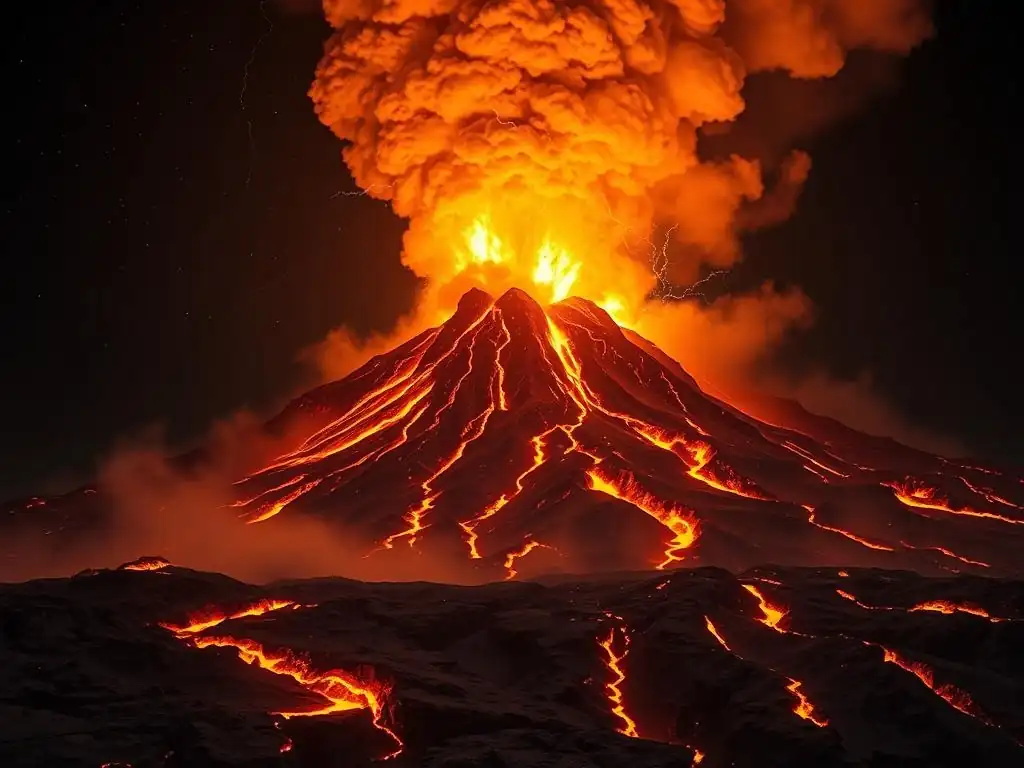
Welcome to Volcano Explorers!
Prepare to journey into the heart of planetary power. What if the rumbling beneath your feet was more than just a tremor? Dive into the fascinating, and often volatile, relationship between earthquakes and volcanoes, and discover how these tectonic twins shape our world. Are they always connected? And what secrets do their interactions reveal about the Earth's inner workings? Uncover the answers and prepare to be amazed...
- Introduction: Unveiling the Connection Between Earthquakes and Volcanoes
- Plate Tectonics: The Driving Force Behind Volcanic and Seismic Activity
- How Plate Movement Triggers Volcanic Eruptions
- The Interplay of Earthquakes and Volcanic Activity: A Closer Look
- Specific Examples of Earthquake-Volcano Relationships
- Seismic Monitoring and Volcanic Eruption Prediction
- Living Near Active Volcanoes: Understanding the Risks
- Conclusion: The Enduring Power of Tectonic Forces
- Frequently Asked Questions
- Final Reflection: Embracing the Earth's Dynamic Dance
- Dive Deeper: Ignite Your Inner Explorer!
Introduction: Unveiling the Connection Between Earthquakes and Volcanoes
USGS Volcano Hazards Program: Exploring the Earth's Dynamic Duo
The United States Geological Survey (USGS) Volcano Hazards Program stands as a leading authority in understanding and mitigating the risks associated with volcanoes and earthquakes. This program diligently monitors volcanic activity across the United States and globally, employing a network of sophisticated instruments to detect subtle changes in ground deformation, gas emissions, and seismic patterns.
Their research is crucial in not only predicting potential volcanic eruptions but also in deciphering the intricate relationship between earthquakes and volcanoes. By studying past events and continuously analyzing real-time data, the USGS provides invaluable information to communities living near active volcanic regions, enhancing preparedness and saving lives.
The USGS Volcano Hazards Program emphasizes the interconnected nature of these two powerful geological forces. They highlight how tectonic plate movements, the fundamental cause of both earthquakes and volcanoes, create zones of intense geological activity.
Through public outreach, scientific publications, and collaborations with international agencies, the program disseminates crucial knowledge about the relationship between earthquakes and volcanoes, fostering a deeper understanding of these dynamic Earth processes among scientists, policymakers, and the general public alike. Their work underscores the importance of a holistic approach to studying planetary power, recognizing that earthquakes and volcanoes are not isolated events but rather expressions of the same underlying tectonic forces.
Plate Tectonics: The Driving Force Behind Volcanic and Seismic Activity
Understanding Plate Boundaries: The Birthplace of Earthquakes and Volcanoes
Plate tectonics theory explains that the Earth's lithosphere is divided into several large and small plates that are constantly moving and interacting. These interactions predominantly occur at plate boundaries, which are the primary locations for both earthquake and volcanic activity. There are three main types of plate boundaries: convergent, divergent, and transform.
Convergent boundaries, where plates collide, are zones of intense compression and subduction, often leading to both powerful earthquakes and the formation of volcanic arcs, like the Andes Mountains. Divergent boundaries, where plates pull apart, create rifts and mid-ocean ridges, characterized by seafloor spreading, frequent but generally less intense earthquakes, and basaltic volcanism, such as in Iceland. Transform boundaries, where plates slide past each other horizontally, like the San Andreas Fault in California, are mainly associated with frequent earthquakes, although volcanic activity is less common here.
The specific type of plate boundary significantly influences the characteristics of both earthquakes and volcanoes in that region. For example, subduction zones, a type of convergent boundary, are notorious for generating the largest earthquakes on Earth, known as megathrust earthquakes, and also for producing explosive stratovolcanoes. Conversely, mid-ocean ridges, a type of divergent boundary, exhibit frequent, smaller magnitude earthquakes and effusive basaltic eruptions.
The consistent pattern of earthquakes and volcanoes clustering along these plate boundaries provides compelling evidence for the fundamental relationship between earthquakes and volcanoes as manifestations of plate tectonic processes. The distribution and type of these geological events are directly dictated by the nature of the plate boundary interactions.
The Role of Subduction Zones in Earthquake and Volcano Formation
Subduction zones are regions where one tectonic plate slides beneath another into the Earth's mantle. This process is a major driver of both earthquake and volcano formation, creating some of the most seismically and volcanically active regions on the planet. As the subducting plate descends, it encounters increasing pressure and temperature, causing water trapped in the minerals of the plate to be released.
This water lowers the melting point of the overlying mantle wedge, leading to the generation of magma. This magma, being less dense than the surrounding mantle, rises to the surface, resulting in volcanic eruptions and the formation of volcanic arcs, such as the Cascade Range in North America and the Japanese archipelago.
Simultaneously, the immense stresses built up as the plates converge at subduction zones are released in the form of earthquakes. These earthquakes can range from shallow events occurring along the plate interface to deeper earthquakes within the subducting slab as it bends and fractures under pressure. Megathrust earthquakes, the most powerful earthquakes on Earth, are specifically associated with subduction zones, occurring where the plates are locked together and then suddenly slip.
The presence of both deep-sea trenches and volcanic arcs are surface expressions of subduction zones, further highlighting the intrinsic relationship between earthquakes and volcanoes in these dynamic geological settings. The consistent co-occurrence of these phenomena in subduction zones underscores their shared origin in plate tectonic processes.
How Plate Movement Triggers Volcanic Eruptions
Magma Generation: The Fuel for Volcanic Activity Linked to Plate Tectonics
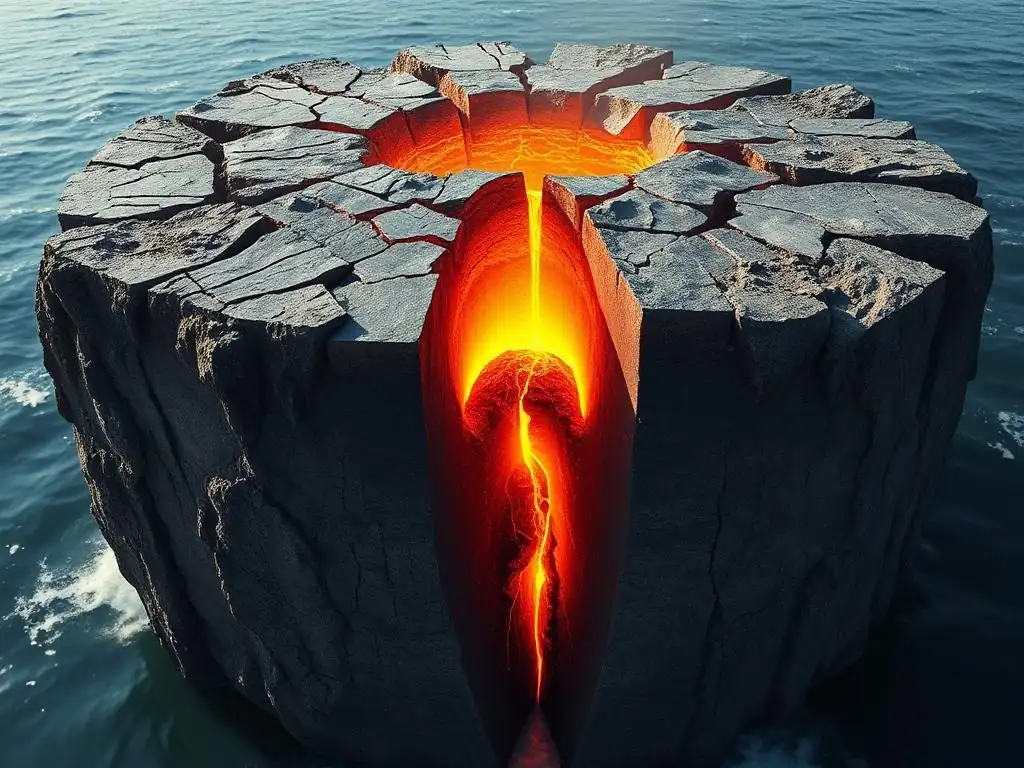
Plate tectonic movements are fundamentally responsible for the generation of magma, the molten rock beneath the Earth's surface that fuels volcanic eruptions. At divergent plate boundaries, the separation of plates reduces pressure on the underlying mantle. This pressure reduction, known as decompression melting, lowers the melting point of the mantle rocks, causing them to partially melt and form magma. This process is particularly prominent at mid-ocean ridges, where vast quantities of basaltic magma are generated, leading to seafloor spreading and underwater volcanic activity.
In contrast, at convergent plate boundaries, particularly subduction zones, magma generation is primarily driven by the introduction of water into the mantle. As the subducting plate descends, it releases water and other volatile compounds. These fluids migrate into the overlying mantle wedge, lowering the melting temperature of the mantle rocks.
This process of flux melting leads to the formation of magma with a more varied composition compared to that generated at divergent boundaries. Both decompression melting and flux melting, driven by plate tectonic movements, are crucial in understanding the fundamental relationship between earthquakes and volcanoes, as magma generation is the precursor to volcanic eruptions, and plate movements are also the primary cause of tectonic earthquakes.
The Connection Between Plate Tectonic Stress and Volcanic Eruptions
Plate tectonic stress, accumulated from the constant movement and interaction of plates, plays a critical role in triggering volcanic eruptions. The build-up of stress within the Earth's crust can fracture rocks, creating pathways for magma to ascend to the surface. In volcanic regions, especially those associated with subduction zones or rifts, tectonic stresses can act as a trigger for eruptions by overcoming the confining pressure on magma chambers. An increase in tectonic stress can cause the surrounding rocks to yield, allowing magma to move upwards more easily and potentially leading to an eruption.
Furthermore, tectonic earthquakes themselves can act as a direct trigger for volcanic eruptions in certain circumstances. The powerful ground shaking from a large earthquake can destabilize magma chambers, fracture surrounding rocks, and induce pressure changes within the volcanic system. This can lead to the rapid ascent of magma and initiate or intensify an eruption.
While not all earthquakes trigger volcanic eruptions, studies have shown a correlation between large earthquakes and increased volcanic activity in some regions. This highlights another facet of the relationship between earthquakes and volcanoes, demonstrating how tectonic forces not only generate magma but also influence the timing and occurrence of volcanic eruptions through stress accumulation and earthquake-induced disturbances.
The Interplay of Earthquakes and Volcanic Activity: A Closer Look
Seismic Activity as a Precursor to Volcanic Eruptions
Seismic activity is often a crucial precursor to volcanic eruptions, providing valuable warning signs that magma is moving beneath the surface and an eruption may be imminent. As magma ascends towards the surface, it exerts pressure on the surrounding rocks, causing them to fracture and deform. This process generates various types of earthquakes, including volcano-tectonic earthquakes and long-period earthquakes. An increase in the frequency, intensity, and type of seismic activity around a volcano is a strong indicator of unrest and a potential eruption.
Volcanologists closely monitor seismic data from networks of seismographs around volcanoes to detect changes in earthquake patterns. A significant increase in seismic activity, particularly shallow earthquakes near the summit of a volcano, often signals magma movement and an increased likelihood of an eruption within days, weeks, or even months. The analysis of seismic waveforms can also provide insights into the depth and movement of magma, further refining eruption forecasts.
Recognizing seismic activity as a vital precursor underscores the practical application of understanding the relationship between earthquakes and volcanoes for eruption forecasting and hazard mitigation. By carefully monitoring seismic patterns, scientists can provide timely warnings to communities at risk, allowing for evacuations and reducing potential loss of life and property.
Volcanic Earthquakes: Distinguishing Them from Tectonic Earthquakes
While both tectonic and volcanic earthquakes are expressions of Earth's dynamic processes, they exhibit distinct characteristics that allow seismologists to differentiate between them. Tectonic earthquakes are primarily caused by the sudden release of stress along faults due to plate tectonic movements. They typically occur over a broader geographical area, can be very powerful (reaching magnitudes of 9 or higher), and are characterized by sharp, distinct P-waves and S-waves.
Volcanic earthquakes, on the other hand, are directly related to volcanic activity. They are generally smaller in magnitude (usually below magnitude 5), occur in close proximity to volcanoes, and can be caused by various processes, including magma movement, fracturing of rocks due to magma pressure, and explosions of gas and steam. Volcanic earthquakes often exhibit different waveforms compared to tectonic earthquakes, sometimes characterized by emergent onsets and longer durations.
Distinguishing between these types of earthquakes is crucial for volcano monitoring and eruption forecasting. Analyzing the location, frequency, magnitude, and waveform characteristics of seismic events allows volcanologists to assess the state of a volcano and better understand the relationship between earthquakes and volcanoes in the context of volcanic unrest and potential eruptions.
The Impact of Magma Movement on Earthquake Patterns
Magma movement beneath the Earth's surface significantly influences earthquake patterns in volcanic regions. As magma ascends from depth towards the surface, it intrudes into surrounding rocks, causing stress changes and triggering a variety of seismic events. The migration of magma can lead to swarms of earthquakes, characterized by a cluster of seismic events occurring in a localized area over a relatively short period. These earthquake swarms are often a key indicator of volcanic unrest and can precede eruptions.
Furthermore, the depth and direction of magma movement can be inferred from the spatial and temporal distribution of earthquakes. By analyzing the locations and focal mechanisms of volcanic earthquakes, seismologists can track the path of magma ascent and identify areas of increased stress concentration.
Changes in earthquake depths, migrating earthquake epicenters, and variations in earthquake magnitudes can all provide valuable information about the dynamics of magma movement within the volcanic system. Understanding how magma movement shapes earthquake patterns is essential for monitoring volcanic activity and improving eruption forecasts, highlighting the intricate relationship between earthquakes and volcanoes at a more detailed level.
Specific Examples of Earthquake-Volcano Relationships
The 2010 Eyjafjallajökull Eruption and Associated Seismic Activity
The 2010 eruption of Eyjafjallajökull volcano in Iceland serves as a compelling example of the relationship between earthquakes and volcanoes. Prior to the eruption, Iceland experienced a period of increased seismic activity, starting in December 2009. This seismic unrest intensified in early March 2010, with thousands of earthquakes detected near Eyjafjallajökull. The earthquake activity served as a clear precursor to the eruption, indicating magma movement and increasing pressure within the volcanic system.
The eruption itself began on March 20, 2010, with an effusive phase at Fimmvörðuháls, followed by a more explosive phase from the summit crater of Eyjafjallajökull on April 14, 2010. Throughout the eruption, seismic activity continued, with volcanic tremors and earthquakes associated with magma ascent and explosive events. The Icelandic Meteorological Office, closely monitoring seismic data, played a crucial role in tracking the volcanic unrest and providing warnings about the impending eruption. The Eyjafjallajökull eruption vividly demonstrated how pre-eruptive seismic activity can be a reliable indicator of volcanic eruptions and the importance of seismic monitoring in volcanic hazard assessment.
The 1960 Valdivia Earthquake and Subsequent Volcanic Activity
The 1960 Valdivia earthquake in Chile, the largest earthquake ever recorded with a magnitude of 9.5, offers another significant example of the complex relationship between earthquakes and volcanoes. This megathrust earthquake, occurring along the subduction zone off the coast of Chile, had a profound impact on volcanic activity in the region. While it did not directly trigger a massive volcanic eruption immediately, it is believed to have influenced subsequent volcanic activity over a longer period.
Following the Valdivia earthquake, several volcanoes in the Chilean Andes showed signs of increased activity, including changes in gas emissions and minor eruptions. The immense stress changes caused by the earthquake likely affected magma reservoirs beneath these volcanoes, potentially triggering or accelerating magma ascent and eruption processes.
While establishing a direct causal link between a specific earthquake and a subsequent volcanic eruption is complex, the Valdivia earthquake and the observed changes in volcanic activity afterward suggest that large tectonic earthquakes can have a significant influence on volcanic systems, even over extended timescales. This event highlights the far-reaching effects of tectonic forces on volcanic processes.
The Ring of Fire: A Hotspot for Both Earthquakes and Volcanoes
The Ring of Fire, a major area in the basin of the Pacific Ocean, is a prime illustration of the global-scale relationship between earthquakes and volcanoes. This horseshoe-shaped region is characterized by a high concentration of both volcanic eruptions and earthquakes, resulting from the intense tectonic activity along convergent plate boundaries that encircle the Pacific Ocean. Approximately 90% of the world's earthquakes and over 75% of the world's active volcanoes are located within the Ring of Fire.
The Ring of Fire encompasses subduction zones along the western coasts of North and South America, as well as island arcs in the western Pacific, such as Japan, Indonesia, and the Philippines. These subduction zones are responsible for both the frequent, large earthquakes and the numerous explosive volcanoes found in this region.
The Pacific Plate, along with other plates, is subducting beneath surrounding plates, leading to magma generation, volcanic arc formation, and intense seismic activity. The consistent co-location of earthquakes and volcanoes around the Pacific Rim powerfully demonstrates the fundamental link between these two phenomena, driven by the underlying processes of plate tectonics at a global scale.
Seismic Monitoring and Volcanic Eruption Prediction
Using Seismographs to Detect Changes in Volcanic Activity
Seismographs are indispensable instruments in volcano monitoring, playing a crucial role in detecting subtle changes in volcanic activity that can precede eruptions. These sensitive devices record ground motion, allowing volcanologists to monitor earthquake activity around volcanoes with exceptional precision. By deploying networks of seismographs around active volcanoes, scientists can track the location, frequency, magnitude, and type of earthquakes occurring beneath and around the volcano.
Changes in seismic patterns, such as an increase in earthquake frequency, the appearance of new types of earthquakes like long-period events, or the migration of earthquake locations towards the surface, are all crucial indicators of volcanic unrest. Real-time seismic data is continuously analyzed by volcano observatories, providing early warnings of potential eruptions. The ability of seismographs to detect precursory seismic signals is fundamental to understanding the relationship between earthquakes and volcanoes in a practical sense, enabling timely warnings and mitigating volcanic hazards. The data gathered from seismographs forms the backbone of modern volcano monitoring and eruption forecasting efforts worldwide.
Early Warning Systems: Integrating Earthquake and Volcano Monitoring Data
Effective early warning systems for volcanic eruptions rely heavily on the integration of data from multiple monitoring techniques, with seismic monitoring playing a central role. While seismic activity is a primary precursor to many volcanic eruptions, combining seismic data with other monitoring parameters, such as ground deformation measurements (using GPS and InSAR), gas emission analyses, and thermal infrared imagery, enhances the accuracy and reliability of eruption forecasts. A comprehensive early warning system integrates data from these diverse sources to provide a more holistic picture of volcanic activity.
By analyzing the synergistic patterns across different datasets, volcanologists can improve their understanding of the ongoing volcanic processes and refine eruption probability assessments. For example, an increase in seismic activity coupled with ground deformation and changes in gas emissions provides stronger evidence of magma movement and an impending eruption than seismic data alone.
These integrated early warning systems are crucial for providing timely and accurate warnings to communities at risk, allowing for evacuations and other mitigation measures. The success of these systems underscores the importance of understanding the multifaceted relationship between earthquakes and volcanoes and leveraging this knowledge for hazard reduction.
The Challenges of Predicting Volcanic Eruptions Based on Seismic Data
While seismic monitoring is a powerful tool for volcano eruption prediction, it is important to acknowledge the inherent challenges and limitations. Predicting the precise timing, magnitude, and style of volcanic eruptions remains a complex scientific endeavor. Not all volcanic eruptions are preceded by clear seismic precursors, and the relationship between seismic activity and eruptive behavior can vary significantly from volcano to volcano. Furthermore, distinguishing between seismic signals related to magma movement and those caused by other factors, such as tectonic stresses or hydrothermal activity, can be challenging.
Interpreting seismic data requires sophisticated analysis techniques and a deep understanding of the specific volcanic system being monitored. The complexity of magma plumbing systems, the variability in magma properties, and the influence of external factors all contribute to the uncertainty in eruption forecasting. Despite these challenges, continuous advancements in seismic monitoring technology, data analysis methods, and our understanding of volcanic processes are constantly improving eruption prediction capabilities. Acknowledging the limitations while maximizing the use of seismic data and other monitoring techniques is crucial for effective volcanic hazard mitigation and for further elucidating the intricate relationship between earthquakes and volcanoes.
Living Near Active Volcanoes: Understanding the Risks
Earthquake Preparedness in Volcanic Regions
Living near active volcanoes inherently involves facing a dual threat: volcanic eruptions and earthquakes. Earthquake preparedness is therefore crucial in volcanic regions, as strong earthquakes can occur independently of volcanic activity or be triggered by volcanic processes. Basic earthquake preparedness measures include securing heavy objects in homes and workplaces, developing family emergency plans, and assembling earthquake preparedness kits containing essential supplies like water, food, first-aid, and communication devices.
In volcanic areas, it is especially important to be aware of earthquake risks, understand local earthquake early warning systems if available, and practice "drop, cover, and hold on" during an earthquake. Knowing evacuation routes and designated safe zones in case of both earthquakes and volcanic eruptions is also essential.
Community preparedness programs and educational initiatives play a vital role in raising awareness and promoting earthquake safety in volcanic regions. Recognizing the interconnected nature of earthquake and volcanic hazards emphasizes the need for comprehensive preparedness strategies that address both risks simultaneously, reinforcing the practical implications of the relationship between earthquakes and volcanoes for community safety.
Volcanic Hazards and Earthquake Risks: A Combined Threat
Volcanic hazards and earthquake risks often overlap and can compound each other, creating a complex and potentially devastating scenario for communities living near active volcanoes. Volcanic eruptions can trigger earthquakes, landslides, and lahars (volcanic mudflows), while strong earthquakes can damage infrastructure, disrupt communication lines, and hinder evacuation efforts during a volcanic crisis. The combined impact of these hazards can overwhelm emergency response capabilities and significantly increase the overall risk to life and property.
For example, a large earthquake could weaken buildings and infrastructure, making them more vulnerable to damage from subsequent volcanic ashfall or pyroclastic flows. Conversely, a volcanic eruption could trigger earthquakes that further destabilize slopes and increase the risk of landslides.
Understanding the potential for cascading hazards and the synergistic effects of volcanic and seismic events is critical for effective risk assessment and mitigation planning in volcanic regions. Emergency management agencies and communities need to prepare for the combined threat, developing integrated response plans that address both earthquake and volcanic hazards simultaneously, recognizing the intertwined relationship between earthquakes and volcanoes in shaping the overall hazard landscape.
FEMA Resources for Earthquake and Volcano Preparedness
The Federal Emergency Management Agency (FEMA) provides valuable resources and guidance for earthquake and volcano preparedness, assisting individuals, families, and communities in mitigating risks associated with these natural hazards. FEMA offers a wealth of information on its website, including preparedness checklists, emergency planning guides, and educational materials on earthquake and volcano safety. These resources cover a wide range of topics, from how to prepare your home for earthquakes to understanding volcanic hazards and developing family communication plans.
FEMA also supports state and local emergency management agencies through grants, training programs, and technical assistance, enhancing community resilience to both earthquake and volcanic events. Their Ready.gov website is a comprehensive source of preparedness information, offering step-by-step guidance on building emergency kits, creating family emergency plans, and staying informed about potential hazards.
Utilizing FEMA's resources is a crucial step for individuals and communities living in volcanic and earthquake-prone areas to enhance their preparedness and reduce their vulnerability to these powerful natural forces. These resources highlight the importance of proactive measures in managing the risks associated with the relationship between earthquakes and volcanoes.
Conclusion: The Enduring Power of Tectonic Forces
The Inseparable Link Between Earthquakes and Volcanoes
The evidence overwhelmingly demonstrates an inseparable link between earthquakes and volcanoes, both being expressions of the Earth's fundamental tectonic forces. Plate tectonics, the driving mechanism behind the movement of the Earth's lithospheric plates, is the root cause of both phenomena. Plate boundaries, where plates interact, are the primary zones of earthquake and volcanic activity globally. Convergent boundaries, divergent boundaries, and transform boundaries each exhibit characteristic patterns of earthquakes and volcanism, reflecting the specific tectonic processes at play.
The generation of magma, the fuel for volcanic eruptions, is directly linked to plate tectonic processes, occurring through decompression melting at divergent boundaries and flux melting at convergent boundaries. Similarly, the build-up and release of tectonic stress along plate boundaries are the primary causes of tectonic earthquakes.
While volcanic earthquakes are directly related to magma movement and volcanic activity, they are also ultimately driven by the broader tectonic setting. The consistent spatial and temporal association of earthquakes and volcanoes across the globe underscores their shared origin and the profound relationship between earthquakes and volcanoes as manifestations of the Earth's dynamic internal processes.
Further Exploration of Plate Tectonics and Volcanic Science on the USGS Website
For those seeking to deepen their understanding of plate tectonics, volcanic science, and the intricate relationship between earthquakes and volcanoes, the USGS website (www.usgs.gov) offers a wealth of resources and information. The USGS Volcano Hazards Program and Earthquake Hazards Program websites provide comprehensive data, research findings, educational materials, and real-time monitoring information. Visitors can explore interactive maps of earthquake and volcano locations, access publications on specific volcanic eruptions and earthquakes, and learn about the latest research in these fields.
The USGS website also offers educational resources suitable for a wide audience, from students to researchers and the general public. These resources include fact sheets, online tutorials, videos, and visualizations that explain complex geological processes in an accessible manner. By delving into the USGS website, individuals can gain a deeper appreciation for the power of tectonic forces shaping our planet and further explore the fascinating and critical connection between earthquakes and volcanoes, becoming more informed about the dynamic Earth we inhabit.
Frequently Asked Questions
The relationship stems from tectonic plate movement. Volcanoes often form at plate boundaries where earthquakes are also common due to stress build-up and release.
Do earthquakes always precede volcanic eruptions?
Not always, but increased earthquake activity near a volcano can be a warning sign of an impending eruption. However, volcanoes can erupt without significant preceding earthquakes.
Can a volcanic eruption trigger an earthquake?
Yes, the movement of magma beneath the surface during an eruption can induce seismic activity. This is particularly true for large eruptions.
What types of earthquakes are most commonly associated with volcanoes?
Volcanic earthquakes are often shallow and localized, characterized by distinct waveforms compared to tectonic earthquakes. They are often related to magma movement.
How do volcanologists use earthquake data to predict volcanic eruptions?
By monitoring the frequency, magnitude, and location of earthquakes near a volcano, volcanologists can gain insights into magma movement and assess the likelihood of an eruption.
Final Reflection: Embracing the Earth's Dynamic Dance
The intricate dance between earthquakes and volcanoes, as explored throughout this article, isn't just a geological phenomenon; it's a powerful reminder of the Earth's ceaseless dynamism and the interconnectedness of its systems. Understanding this relationship is crucial, not just for scientific advancement, but for mitigating risks and fostering a deeper respect for the planet we inhabit. The Earth's pulse, felt through tremors and eruptions, shapes landscapes and influences life in profound ways, demanding our attention and understanding.
This constant interplay of tectonic forces has indelibly shaped our world, influencing everything from the distribution of resources to the evolution of ecosystems. Witnessing the raw power of these events, even through scientific study, evokes a sense of awe and humility. It reminds us of our place within a much larger, more powerful system. The Earth does not belong to us: we belong to the Earth.
- Chief Seattle. This quote encapsulates the profound responsibility we have to understand and protect the planet that sustains us, especially in the face of its volatile nature.
As you reflect on the relationship between earthquakes and volcanoes, consider how this understanding can inform your own actions. How can you contribute to a more sustainable future, one that acknowledges and respects the Earth's power? Let this knowledge inspire you to become a more informed and responsible steward of our planet, embracing the dynamic dance of the Earth and working towards a future where humanity and nature can coexist in harmony.
Dive Deeper: Ignite Your Inner Explorer!
Thanks for joining us on this journey into the dynamic world of earthquakes and volcanoes. We hope you've gained a new appreciation for the raw power and intricate connections that shape our planet. Now, it's time to take that newfound knowledge and put it into action!
Here's how you can continue your exploration:
- Become a Citizen Scientist: Report your observations of volcanic activity or earthquake occurrences in your region using our official reporting form. Your contributions help us better understand and predict these events!:
- Research the earthquake and volcano history of your local area. You might be surprised by what you find lurking beneath the surface!
- Share this article with friends and family who are fascinated by Earth's forces. Let's spread awareness and understanding of these incredible natural phenomena.
What surprising connection between an earthquake and a volcano did you discover while reading? Share your insights in the comments below!