
The Impact of Erosion on Volcanic Craters: Shaping the Landscape

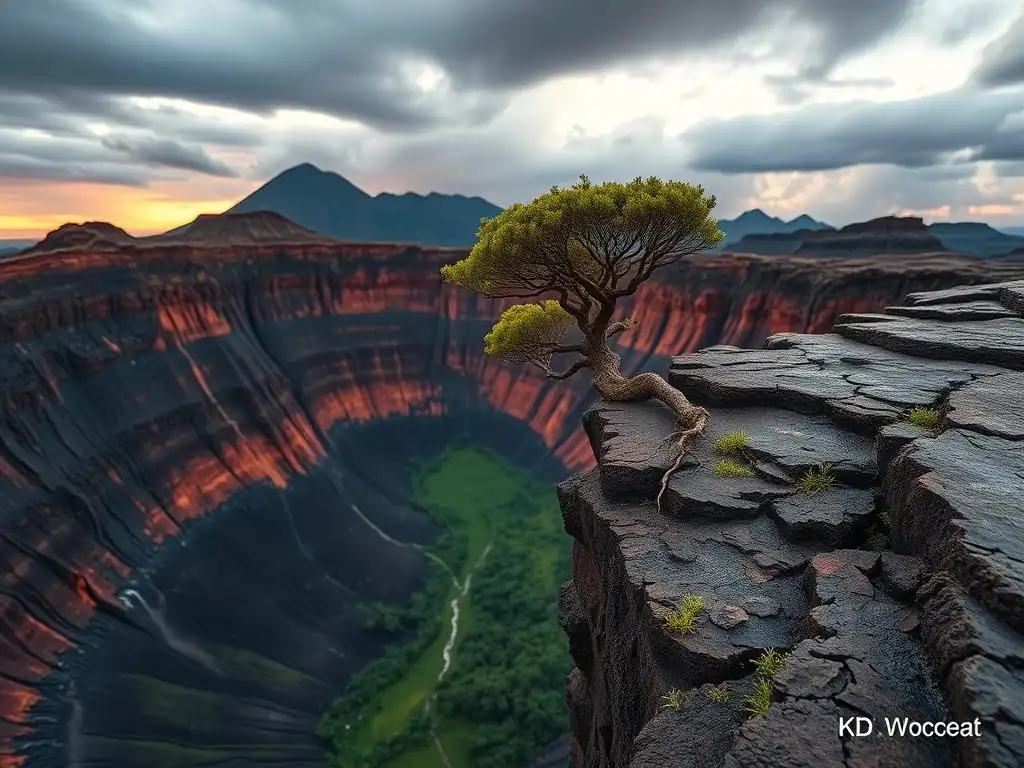
Welcome to Volcano Explorers, where the Earth's fiery heart meets scientific scrutiny. Ever wondered how time and the elements sculpt the raw power of a volcano? Dive in as we unravel the fascinating story of erosion effects on volcanic craters, revealing how wind, water, and ice tirelessly reshape these majestic, yet volatile, landscapes. What secrets do these weathered craters hold? Prepare to be amazed as we journey into the heart of volcanic geography and uncover the enduring impact of time itself.
- Introduction: Unveiling the Erosion Effects on Volcanic Craters
- Volcanic Crater Formation: A Foundation for Understanding Erosion
- Erosion's Sculpting Hand: How Erosion Changes Volcanic Craters
- Case Studies: Examples of Erosion Effects on Volcanic Craters Worldwide
- The Long-Term Effects of Erosion on Volcanic Landscapes
- Conclusion: Understanding and Appreciating Erosion's Role
-
Frequently Asked Questions
- What is the primary way erosion affects volcanic craters?
- How does rainfall contribute to the erosion of volcanic craters?
- Can wind erosion significantly impact volcanic craters?
- What role does vegetation play in preventing or slowing down crater erosion?
- How does the composition of the volcanic rock influence erosion rates?
- Final Reflection: The Sculpting Hand of Time
- Delve Deeper into Volcanic Crater Erosion: Explore Further!
Introduction: Unveiling the Erosion Effects on Volcanic Craters
Volcanic craters, magnificent depressions born from explosive eruptions or caldera collapses, are not static features on the Earth's surface. From the moment of their creation, these dramatic landforms are subjected to the relentless forces of erosion. Understanding the erosion effects on volcanic craters is crucial to deciphering the long-term evolution of volcanic landscapes and appreciating the dynamic interplay between volcanic activity and surface processes. This article delves into the various erosional forces that sculpt and reshape volcanic craters over time, illustrating how these processes contribute to the diverse and often breathtaking scenery we associate with volcanic regions.
The study of erosion effects on volcanic craters offers valuable insights into the geological history of volcanoes and the surrounding environments. By examining the current morphology of a crater, geologists can infer the types of erosion processes that have been most active and estimate the time scales over which these changes have occurred. This knowledge is not only academically significant but also has practical implications for hazard assessment, land management, and understanding the broader landscape evolution in volcanic areas. The interplay of volcanic construction and erosional destruction shapes the very fabric of our planet's most dynamic zones.
Volcanic Crater Formation: A Foundation for Understanding Erosion
The Explosive Birth of Craters: Initial Geological Processes
Volcanic craters are primarily formed through two main types of volcanic activity: explosive eruptions and caldera collapse. Explosive eruptions occur when the pressure from gases dissolved in magma overcomes the strength of the surrounding rock. This leads to a violent release of energy, ejecting molten rock, ash, and volcanic gases into the atmosphere.
The force of these explosions can excavate large volumes of material, creating bowl-shaped depressions at the vent of the volcano – these are craters. The size and shape of these craters are directly influenced by the intensity of the eruption, the type of magma, and the pre-existing geological structure of the volcano.
Caldera formation, while also often explosive, is a slightly different process. Calderas are much larger depressions than typical craters, often spanning several kilometers in diameter. They are formed when a large volume of magma is rapidly evacuated from a magma chamber beneath the volcano, usually during an extremely powerful eruption.
This removal of magma support causes the overlying volcanic edifice to collapse inwards, creating a vast, basin-like depression. While the initial formation mechanism differs, both craters and calderas represent newly formed surfaces exposed to immediate erosional forces. Understanding these initial formation processes is key to appreciating how subsequent erosion effects on volcanic craters will modify their landscapes.
Initial Crater Morphology: Factors Influencing Shape and Size
The initial morphology of a volcanic crater, its shape and size, is determined by a complex interplay of factors during its formation. The type of eruption, whether it is highly explosive or more effusive, plays a crucial role. For instance, Strombolian eruptions, characterized by moderate bursts of gas and lava, tend to create smaller, steeper-sided craters compared to Plinian eruptions, which are highly explosive and can produce much larger and wider craters.
The viscosity of the magma also influences crater shape. More viscous, silica-rich magmas are associated with more explosive eruptions, often leading to the formation of larger, deeper craters.
Furthermore, the pre-existing topography and geological structure of the volcanic region significantly impact the initial crater morphology. If an eruption occurs on a steep slope, the resulting crater might be asymmetrical, with one side potentially collapsing or being more prone to erosion from the outset. The type of rock comprising the volcano also matters.
Weaker, more easily fractured rocks will be more readily excavated during an eruption, potentially leading to larger craters compared to eruptions in areas with more resistant, consolidated rocks. This initial morphology provides the starting point for all subsequent erosion effects on volcanic craters, setting the stage for the long-term evolution of these volcanic features.
Erosion's Sculpting Hand: How Erosion Changes Volcanic Craters
Weathering Processes: Breaking Down Volcanic Rock
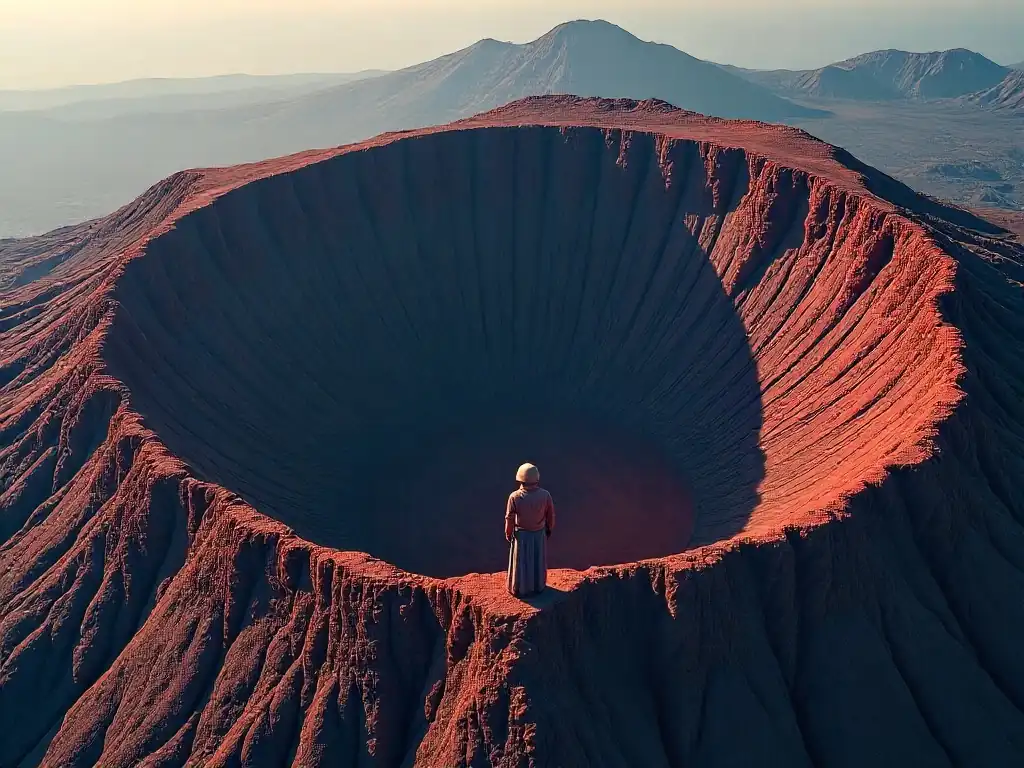
Weathering is the initial stage in the erosion effects on volcanic craters, involving the in-situ breakdown of volcanic rocks. This process is primarily driven by chemical and physical mechanisms. Chemical weathering involves the alteration of the mineral composition of rocks through reactions with water, air, and biological organisms.
For example, hydrolysis, the reaction of minerals with water, is particularly effective in breaking down volcanic rocks rich in silicate minerals. Oxidation, the reaction with oxygen, can weaken rocks containing iron, which is common in many volcanic rocks like basalt and andesite. Carbonation, the reaction with carbonic acid (formed from atmospheric carbon dioxide and water), dissolves certain minerals, especially in volcanic rocks containing calcium.
Physical weathering, on the other hand, involves the mechanical disintegration of rocks into smaller pieces without changing their chemical composition. Freeze-thaw weathering is a significant process, especially in colder climates or at higher elevations on volcanoes. Water seeps into cracks in the rock, and when it freezes, it expands, exerting pressure that can widen cracks and eventually break the rock apart.
Thermal stress weathering, caused by temperature fluctuations, also contributes. Volcanic rocks, particularly dark-colored ones, can heat up significantly during the day and cool down rapidly at night, leading to expansion and contraction that can create fractures and weaken the rock structure over time. Both chemical and physical weathering work synergistically to prepare volcanic rock for further erosion effects on volcanic craters by water, wind, and ice.
Water Erosion: The Dominant Force in Crater Degradation
Water erosion is often the most significant agent of change in shaping erosion effects on volcanic craters. Rainfall, snowmelt, and streamflow act to carve and transport volcanic material, significantly altering the initial crater morphology. Rainwater, even before it concentrates into streams, can cause surface erosion, washing away loose ash and fine-grained volcanic debris from crater rims and slopes. This is especially pronounced in areas with intense rainfall and sparsely vegetated volcanic landscapes, common in recently formed or active volcanic regions.
As water concentrates into channels and streams, its erosive power increases dramatically. Runoff flowing down the inner and outer slopes of a crater will incise gullies and valleys, creating a radial drainage pattern. Over time, these channels deepen and widen, effectively dissecting the crater rim and walls.
In areas with persistent rainfall or snowmelt, these fluvial processes can lead to significant crater degradation, reducing the steepness of crater walls, widening the crater opening, and transporting large volumes of volcanic sediment downstream. The intensity of water erosion is also influenced by factors like slope angle, vegetation cover, and the permeability of the volcanic rocks. Steeper slopes, less vegetation, and less permeable rocks will generally experience more rapid and pronounced water erosion, profoundly impacting the erosion effects on volcanic craters.
Wind Erosion: Transporting Volcanic Material
Wind erosion plays a notable role in the erosion effects on volcanic craters, especially in arid and semi-arid volcanic environments or areas with sparse vegetation. Wind can effectively transport fine-grained volcanic materials, such as ash and pumice, from crater rims, slopes, and surrounding plains. This process is particularly active during strong winds and in areas where the volcanic deposits are dry and unconsolidated. Deflation, the removal of fine particles by wind, can lower the surface elevation and create shallow depressions within and around craters.
Wind erosion also contributes to the abrasion of volcanic rocks. Wind-blown particles, especially sand and silt, act as abrasive agents, scouring and wearing down rock surfaces over time.
This process, known as corrasion, can smooth and polish rock surfaces, and in more extreme cases, can contribute to the formation of unique erosional features like yardangs and ventifacts in volcanic landscapes. While wind erosion may not be as visually dramatic as water erosion in shaping large-scale crater morphology, it is a persistent force that subtly but continuously modifies the surface texture and contributes to the overall erosion effects on volcanic craters, especially in drier climates.
Glacial Erosion: Reshaping Craters in Cold Climates
In volcanic regions located in high latitudes or at high altitudes, glacial erosion becomes a dominant force in shaping erosion effects on volcanic craters. Glaciers, massive bodies of ice, are incredibly powerful agents of erosion. As glaciers move, they erode the underlying bedrock through two main processes: abrasion and plucking.
Abrasion occurs when ice embedded with rock fragments scrapes and grinds against the bedrock, effectively smoothing and polishing the rock surface. Plucking involves the freezing of meltwater into cracks and fractures in the rock. As the glacier moves, it pulls away blocks of rock that are frozen to the ice, quarrying away large volumes of material.
Glacial erosion can dramatically reshape volcanic craters. Glaciers flowing into or out of craters can carve deep U-shaped valleys, transforming the initial bowl-shaped crater into a more elongated, trough-like feature. The erosive power of glaciers is particularly pronounced on crater walls, which can be steepened and deepened, creating cirques, bowl-shaped amphitheaters at the head of glacial valleys.
Glacial erosion also leaves behind distinctive landforms, such as moraines (accumulations of glacial debris), striated bedrock surfaces, and glacial valleys, which are characteristic features of glaciated volcanic landscapes. The erosion effects on volcanic craters in cold climates are thus heavily influenced by the powerful sculpting action of ice, resulting in dramatically different crater morphologies compared to those shaped primarily by water or wind.
Case Studies: Examples of Erosion Effects on Volcanic Craters Worldwide
Mount St. Helens: A Study in Water Erosion
Mount St. Helens, a volcano in Washington State, USA, provides a compelling case study of water erosion's impact on a volcanic crater, particularly following its catastrophic 1980 eruption. The eruption created a large, horseshoe-shaped crater open to the north. Immediately after the eruption, the newly formed crater and surrounding landscape were highly susceptible to water erosion due to the lack of vegetation and the abundance of loose volcanic ash and debris.
Rainfall and snowmelt quickly initiated intense water erosion. Rills and gullies rapidly formed on the crater walls and surrounding slopes, channeling runoff and transporting vast quantities of volcanic sediment. The North Fork Toutle River, draining the area north of the volcano, became heavily laden with sediment, dramatically altering its course and contributing to significant downstream sedimentation.
Studies conducted in the decades following the eruption have documented the remarkable rate of water erosion in the Mount St. Helens area, highlighting how even relatively short periods of time can result in substantial erosion effects on volcanic craters composed of unconsolidated volcanic materials. The ongoing erosion continues to reshape the crater and surrounding landscape, demonstrating the persistent power of water in modifying volcanic landforms.
Mount Ruapehu: The Impact of Glacial Activity on Crater Morphology
Mount Ruapehu, an active volcano in New Zealand's Tongariro National Park, exemplifies the significant impact of glacial activity on crater morphology. Ruapehu's summit area is capped by glaciers, and its crater, which frequently hosts a crater lake, is directly influenced by glacial processes. Over thousands of years, glacial erosion has played a crucial role in shaping the volcano's summit and crater region.
Glaciers have carved deep valleys and cirques into the flanks of Ruapehu, significantly modifying the original volcanic cone shape. The crater itself has been repeatedly sculpted by glacial ice, with evidence of glacial scouring and erosion visible on the crater walls. The presence of glaciers also influences the hydrological regime within and around the crater.
Meltwater from glaciers contributes to the crater lake volume and feeds streams that further erode the volcanic landscape. The interplay between volcanic activity, glacial ice, and water erosion creates a dynamic and complex environment where erosion effects on volcanic craters are profoundly shaped by the presence of ice. Mount Ruapehu serves as a clear example of how glacial erosion can be a dominant force in modifying volcanic crater morphology in cold, high-altitude volcanic settings.
Haleakalā: A Tale of Wind and Weathering
Haleakalā volcano on the island of Maui, Hawaii, offers a compelling example of how wind and weathering, in combination with water erosion, can shape volcanic craters over extended periods. Haleakalā's summit caldera, though technically a large erosional valley rather than a true caldera formed by collapse, is often referred to as a crater and showcases significant erosion effects on volcanic craters driven by these processes.
While rainfall is substantial in parts of Maui, Haleakalā's summit area also experiences strong trade winds and significant temperature variations, promoting both wind erosion and weathering. Wind erosion, particularly on the exposed caldera floor and rim, contributes to the transport of fine volcanic ash and pumice. Weathering processes, including chemical weathering due to moisture and temperature fluctuations, and physical weathering through freeze-thaw cycles at higher elevations, further break down the volcanic rocks.
The combined effects of wind and weathering, coupled with water erosion from infrequent but intense rainfall events, have sculpted the vast Haleakalā "crater" over hundreds of thousands of years, creating its expansive and distinctive landscape. Haleakalā illustrates the long-term cumulative impact of these erosional forces in shaping volcanic depressions.
The Long-Term Effects of Erosion on Volcanic Landscapes
Crater Lakes: Formation and Evolution
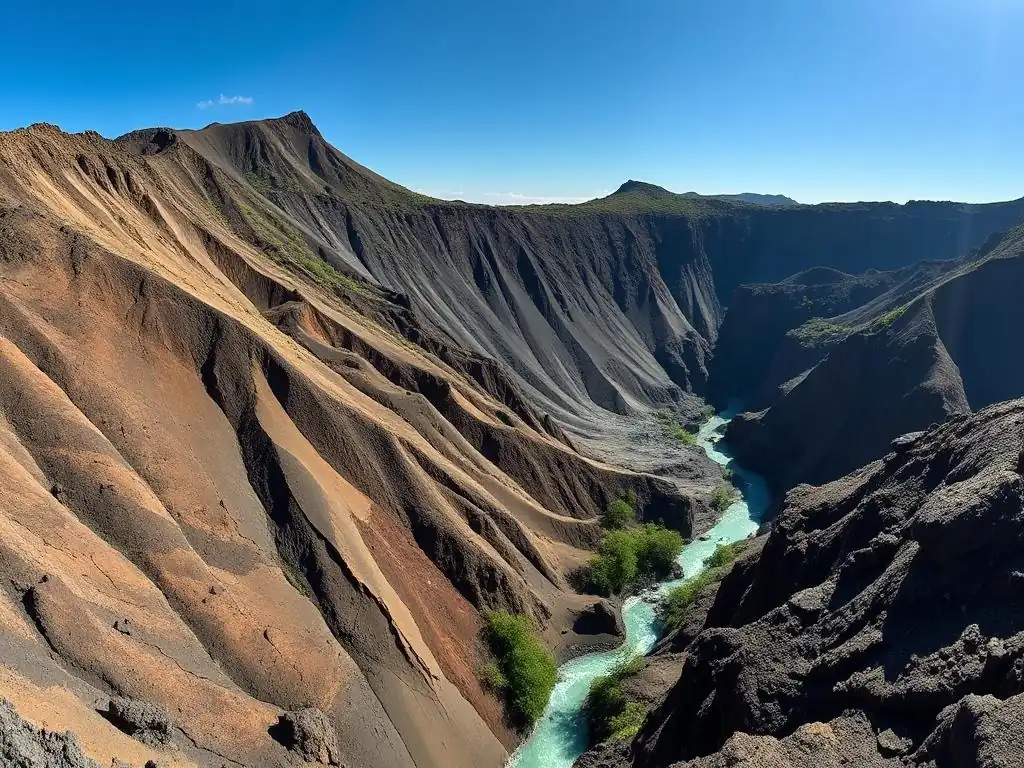
One of the most striking long-term erosion effects on volcanic craters is the formation of crater lakes. Volcanic craters, especially those formed by caldera collapse, often become natural basins where water can accumulate. Crater lakes can form due to several factors, including rainfall, snowmelt, and groundwater seepage. The impermeable nature of many volcanic rocks can further contribute to water retention within the crater depression. These lakes can range in size from small ponds to large, deep bodies of water, dramatically altering the landscape and creating unique ecosystems.
The evolution of crater lakes is intricately linked to ongoing erosion processes. Erosion of the crater rim and walls can influence the lake's water balance by altering drainage patterns and sediment input. Sedimentation from erosion gradually fills the lake basin over time, eventually leading to the lake's shallowing and potential disappearance.
However, volcanic activity can also rejuvenate crater lakes through new eruptions or hydrothermal activity. Crater lakes themselves can also contribute to erosion, particularly through wave action eroding the lake shores and outflow channels incising valleys leading away from the crater. The interplay between lake formation, erosion, and volcanic activity creates a dynamic and evolving landscape within and around volcanic craters.
Slope Stability and Landslide Hazards
The erosion effects on volcanic craters have significant implications for slope stability and landslide hazards in volcanic regions. Erosion, particularly water erosion, can steepen crater walls and slopes, making them more prone to landslides and rockfalls. Gully formation and the removal of vegetation cover by erosion further destabilize slopes. Volcanic rocks are often fractured and weakened by weathering, making them susceptible to failure under gravity.
Steep crater walls, especially those that have been undercut by erosion, can become highly unstable. Heavy rainfall or seismic activity can trigger landslides, which can be particularly dangerous in volcanic areas due to the potential for large volumes of debris and lahars (volcanic mudflows). Understanding the erosional processes that contribute to slope instability is crucial for hazard assessment and mitigation in volcanic regions. Monitoring erosion rates, identifying areas of high landslide risk, and implementing slope stabilization measures are important for protecting communities and infrastructure in areas surrounding volcanic craters.
Changes in Biodiversity and Ecosystems
The long-term erosion effects on volcanic craters also influence biodiversity and ecosystems in volcanic landscapes. Erosion shapes the topography, soil development, and hydrological patterns, which in turn affect the distribution and types of vegetation and animal life. Erosion can create diverse habitats, from steep, rocky slopes to gentler, sediment-filled valleys, supporting a range of plant and animal communities.
However, excessive erosion can also degrade ecosystems. Loss of topsoil due to erosion can reduce soil fertility and hinder plant growth. Sedimentation in streams and lakes can negatively impact aquatic life. Landslides triggered by erosion can destroy habitats and disrupt ecosystems. The balance between natural erosion processes and human-induced erosion is critical for maintaining healthy and diverse ecosystems in volcanic regions. Sustainable land management practices that minimize erosion are essential for preserving the ecological value of volcanic landscapes and mitigating the negative impacts of erosion effects on volcanic craters on biodiversity.
Conclusion: Understanding and Appreciating Erosion's Role
Erosion is an undeniable and powerful force shaping volcanic craters and the surrounding landscapes. From the initial weathering of volcanic rock to the dramatic carving action of water, wind, and ice, erosion effects on volcanic craters are multifaceted and profound. Understanding these processes is not just an academic exercise; it is crucial for comprehending the long-term evolution of volcanoes, assessing natural hazards, and managing volcanic landscapes sustainably.
By appreciating the role of erosion, we gain a deeper understanding of the dynamic nature of our planet. Volcanic craters are not static monuments of past eruptions but rather continuously evolving features sculpted by the relentless forces of nature.
The interplay between volcanic construction and erosional destruction creates the diverse and often breathtaking beauty of volcanic regions, reminding us of the Earth's powerful and ever-changing geological processes. Recognizing the erosion effects on volcanic craters allows us to see these landscapes not just as products of volcanic events, but as dynamic environments shaped by the ongoing dialogue between creation and decay.
Frequently Asked Questions
What is the primary way erosion affects volcanic craters?
Erosion primarily affects volcanic craters through the gradual wearing away of the crater's rim and walls by elements like wind, water, and ice. This alters the shape and size of the crater over time.
How does rainfall contribute to the erosion of volcanic craters?
Rainfall leads to erosion through surface runoff which carries away loose material. It also causes chemical weathering, weakening the rocks of the crater.
Can wind erosion significantly impact volcanic craters?
Yes, especially in arid or exposed environments. Wind can carry away fine particles of ash and rock, leading to abrasion and deflation, which slowly widen and deepen the crater.
What role does vegetation play in preventing or slowing down crater erosion?
Vegetation helps stabilize the soil and rock, reducing the impact of wind and water erosion. Plant roots bind the soil, making it more resistant to detachment and transport.
How does the composition of the volcanic rock influence erosion rates?
The rock's mineral composition and its porosity influence its resistance to weathering. Softer, more porous rocks erode faster than harder, less permeable rocks.
Final Reflection: The Sculpting Hand of Time
The relentless forces of erosion, as explored throughout this article, are not merely destructive; they are powerful sculptors of our planet's most dramatic features. The erosion effects on volcanic craters, far from being a static phenomenon, are an ongoing testament to the Earth's dynamic nature, continuously reshaping landscapes and influencing ecological systems in profound ways. Understanding these processes is crucial for predicting future changes and mitigating potential hazards in volcanic regions.
This constant transformation, driven by wind, water, and ice, underscores the ephemeral nature of even the most imposing geological structures. Witnessing the gradual wearing down of volcanic craters reminds us of the impermanence of all things, and the enduring power of natural forces. Time is a great teacher, but unfortunately it kills all its pupils.
- Hector Berlioz. This quote resonates deeply when considering the long-term impact of erosion, a slow but inevitable process that ultimately reshapes the very face of the Earth.
As we conclude this exploration of erosion's impact on volcanic craters, let us consider our own relationship with the natural world. What can we learn from the patient, persistent work of erosion? How can we apply this understanding to better manage our resources and protect vulnerable landscapes? Let us embrace a perspective that acknowledges the power of time and the interconnectedness of all things, striving to live in harmony with the ever-changing Earth.
Delve Deeper into Volcanic Crater Erosion: Explore Further!
We hope you've enjoyed exploring the fascinating world of volcanic crater erosion! Your newfound understanding of the powerful forces shaping our planet's landscapes is just the beginning. Ready to continue your exploration?
Here's how you can get involved:
- Explore Volcanic Landscapes Online: Use online geological maps and satellite imagery to analyze the erosional patterns of volcanic craters worldwide. Share your discoveries with the Volcano Explorers community!
- Join the discussion! Share your insights on volcanic crater formation in the comments section.
- Consider visiting a local eroded volcanic landscape – many are stunning tourist destinations. Take photos and share your experience!
What unique erosional features have you observed, and how do you predict future erosion will affect them? Share your thoughts below!