
Caldera Formation: A StepbyStep Look at Earth's Incredible Process

Welcome to Volcano Explorers!
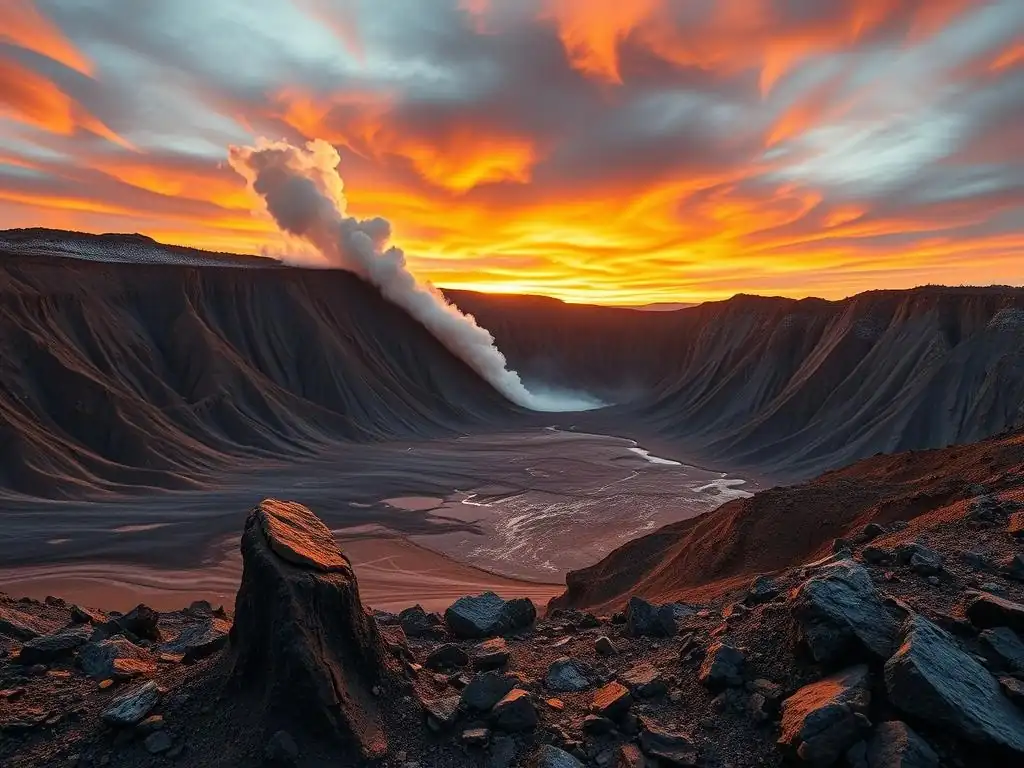
Prepare to be amazed. Ever wondered about those colossal, bowl-shaped depressions that scar the Earth's surface? We're diving deep into one of the most dramatic volcanic processes imaginable. Uncover the secrets of how calderas are formed and witness the immense power that shapes our planet in ways you never thought possible. Ready to explore the breathtaking devastation and scientific marvel behind these geological giants?
- Introduction to Caldera Formation: Unveiling Volcanic Giants
- Step 1: Magma Chamber Formation and Growth
- Step 2: The Pre-Eruptive Phase: Indicators of Imminent Caldera Collapse
- Step 3: The Cataclysmic Eruption: Triggering Caldera Collapse
- Step 4: Caldera Collapse: The Formation of a Massive Depression
- Step 5: Post-Collapse Activity: Resurgence and Hydrothermal Systems
- Step 6: Long-Term Evolution: The Future of Calderas
- Examples of Famous Calderas Around the World
- Caldera Formation: A Summary of the Process
- Further Exploration: Resources for Learning More About Calderas
- Frequently Asked Questions
- Final Reflection: Echoes of Volcanic Power
- Unearth Your Inner Volcanologist!
Introduction to Caldera Formation: Unveiling Volcanic Giants
What is a Caldera? Understanding the Basics of Caldera Volcanoes
A caldera is a large, basin-shaped volcanic depression formed by the collapse of land following a massive eruption. Unlike typical volcanic craters, which are relatively small and located at the summit of a volcano, calderas are vast features, often many kilometers in diameter. They represent some of the most dramatic and powerful expressions of volcanism on Earth, signifying eruptions of unimaginable scale. Understanding how calderas are formed is crucial to grasping the full spectrum of volcanic activity and the immense forces at play beneath our planet's surface.
The term "caldera" itself originates from the Spanish word for "cauldron," aptly describing the large, bowl-like shape of these volcanic features. Calderas are not simply large craters; their formation is tied to a distinct eruptive process involving the emptying of a magma chamber beneath the volcano. This emptying leads to a loss of support for the overlying ground, causing it to subside or collapse inward. The resulting depression is what we recognize as a caldera, a geological scar left behind by a colossal volcanic event.
Why Study Caldera Formation? Exploring the Significance of Calderas
Studying how calderas are formed and their subsequent evolution is vital for several reasons, ranging from understanding fundamental geological processes to mitigating volcanic hazards. Calderas are associated with the largest and most destructive volcanic eruptions in Earth's history. For instance, the eruption that formed the Yellowstone Caldera approximately 631,000 years ago ejected an estimated 1,000 cubic kilometers of material, dwarfing even the largest historical eruptions. Understanding the mechanisms behind caldera formation allows us to better assess the potential risks posed by these "supervolcanoes."
Furthermore, calderas are not just geological curiosities; they are dynamic systems that can exhibit activity for thousands, even millions, of years after their initial formation. Many calderas host active hydrothermal systems, geothermal areas, and are often the sites of subsequent, smaller eruptions. Studying caldera formation and post-collapse activity provides insights into the long-term behavior of large volcanic systems, helping scientists to better forecast future volcanic events and assess geothermal resources. The geological record preserved within and around calderas also offers invaluable information about Earth's past climate, tectonic processes, and the evolution of magmatic systems.
Step 1: Magma Chamber Formation and Growth
The Role of Magma Supply in Caldera Development
The journey to caldera formation begins deep within the Earth's crust or upper mantle, where magma, molten rock, starts to accumulate. A critical factor in how calderas are formed is the sustained supply of magma to a reservoir beneath the surface, known as a magma chamber. This chamber acts as a storage unit for the molten rock, allowing pressure to build up over time. The rate at which magma is supplied and the volume it accumulates are crucial in determining whether a volcanic system will eventually produce a caldera-forming eruption.
The composition of the magma also plays a significant role. Magmas rich in silica, like rhyolite, are generally more viscous and gas-rich than basaltic magmas. This higher viscosity traps gases, leading to increased pressure within the magma chamber. As magma continues to accumulate, the pressure exerted on the surrounding rocks increases. The growth of the magma chamber can cause the surrounding crust to deform and fracture, paving the way for magma ascent and, eventually, eruption. The sustained accumulation of large volumes of gas-rich, viscous magma is a prerequisite for the immense eruptions that create calderas.
Building Pressure: How Magma Accumulation Leads to Eruptions
As magma accumulates in the chamber, the pressure inside increases due to several factors. The weight of the overlying rocks exerts lithostatic pressure, while the exsolution of dissolved gases from the cooling magma adds magmatic pressure. Volatile components like water vapor, carbon dioxide, and sulfur dioxide, which are dissolved in the magma at depth, begin to separate out as pressure decreases during magma ascent and storage. This process of gas exsolution significantly increases the pressure within the magma chamber.
If the pressure inside the magma chamber exceeds the strength of the surrounding rocks, or if external triggers like tectonic earthquakes occur, the confining pressure can be overcome. This allows magma to fracture the overlying crust and begin its ascent towards the surface. The increasing pressure, coupled with the gas content and viscosity of the magma, dictates the style of eruption. For caldera formation, the pressure buildup needs to be immense, capable of driving a massive, highly explosive eruption.
Step 2: The Pre-Eruptive Phase: Indicators of Imminent Caldera Collapse
Ground Deformation: Monitoring Changes in Volcanic Terrain
Before a caldera-forming eruption, the ground surface around the volcano often undergoes significant deformation. This deformation is a crucial indicator of how calderas are formed and the increasing pressure within the underlying magma chamber. As magma accumulates and the chamber expands, the overlying ground surface can inflate or uplift. This uplift can be measured using various techniques, including GPS, satellite radar interferometry (InSAR), and tiltmeters.
For example, at the Yellowstone Caldera, scientists have observed periods of both uplift and subsidence. From 1923 to 1985, the caldera floor subsided by about 0.3 meters. However, from 1985 to 2015, parts of the caldera floor uplifted by as much as 10 centimeters per year in some areas, indicating magma movement beneath the surface. This ground deformation is a direct response to changes in pressure and magma volume within the volcanic system and is a critical parameter monitored by volcanologists to assess the potential for future eruptions.
Increased Gas Emissions: A Sign of Magmatic Activity
Another pre-eruptive sign is an increase in the rate and composition of volcanic gas emissions. As magma rises closer to the surface, the reduced pressure allows more dissolved gases to escape. Monitoring these gas emissions provides valuable insights into the state of the magma chamber and the potential for an eruption. Changes in the flux and composition of gases like sulfur dioxide (SO2), carbon dioxide (CO2), and water vapor (H2O) can indicate changes in magmatic activity.
For instance, an increase in SO2 emissions is often associated with magma ascent and degassing. The ratio of different gases can also provide information about the depth and temperature of the magma source. Volcano observatories around the world continuously monitor volcanic gas emissions using ground-based instruments and satellite-based sensors. Changes in gas emission patterns are carefully analyzed to assess the level of volcanic unrest and the potential for an eruption that could lead to caldera formation.
Seismic Activity: Earthquake Patterns Preceding Caldera-Forming Eruptions
Seismic activity is a common precursor to volcanic eruptions, including those that form calderas. As magma moves beneath the surface and pressure increases, it can cause fracturing and movement of the surrounding rocks, generating earthquakes. Changes in the frequency, intensity, and location of earthquakes are carefully monitored to assess volcanic unrest. Before caldera-forming eruptions, earthquake activity often intensifies and may exhibit specific patterns.
For example, swarms of earthquakes, which are sequences of many earthquakes occurring in a localized area over a short period, are frequently observed before volcanic eruptions. The depth of earthquakes can also provide information about the magma pathway and the depth of the magma chamber. In the lead-up to a caldera-forming eruption, seismic activity might migrate upwards as magma ascends towards the surface. Seismic monitoring is a crucial tool in volcano early warning systems, helping to detect and interpret the signals that precede these massive volcanic events and understand how calderas are formed.
Step 3: The Cataclysmic Eruption: Triggering Caldera Collapse
The Explosive Nature of Caldera-Forming Eruptions
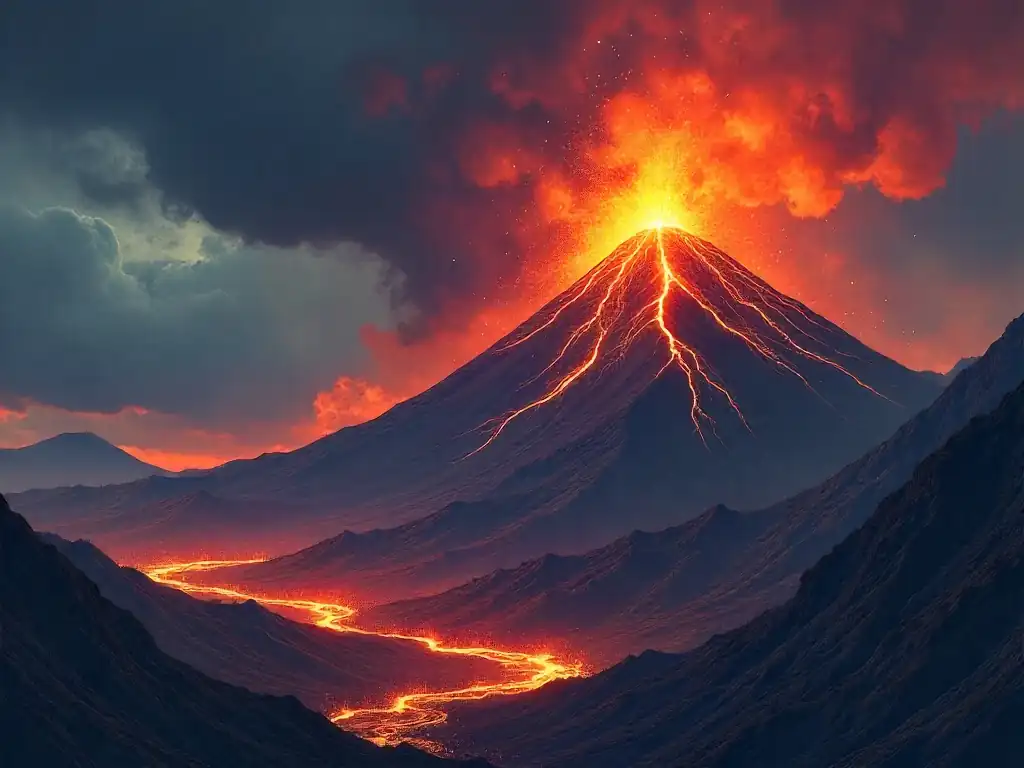
Caldera formation is invariably linked to extremely violent and explosive volcanic eruptions. These eruptions, often termed "super-eruptions," are significantly larger and more powerful than typical volcanic events. The explosivity is driven by the high gas content and viscosity of the magma involved, typically rhyolitic or dacitic in composition. As this gas-rich magma rises rapidly to the surface, the pressure drop causes rapid exsolution of gases, leading to a runaway expansion and fragmentation of the magma.
The Volcanic Explosivity Index (VEI) is used to quantify the size of volcanic eruptions. Caldera-forming eruptions typically rank at VEI 7 or 8, the highest levels on the scale. A VEI 8 eruption, like the one that formed the Yellowstone Caldera 631,000 years ago, can eject thousands of cubic kilometers of volcanic material into the atmosphere and surrounding landscape. The sheer volume and intensity of these eruptions are what ultimately lead to the emptying of the magma chamber and the subsequent caldera collapse.
Pyroclastic Flows: Understanding the Devastating Force of Volcanic Material
A defining characteristic of caldera-forming eruptions is the generation of massive pyroclastic flows. These are ground-hugging avalanches of hot gas, ash, pumice, and rock fragments that can travel at speeds exceeding hundreds of kilometers per hour and reach temperatures of hundreds of degrees Celsius. Pyroclastic flows are among the most destructive volcanic hazards, capable of incinerating everything in their path and reshaping landscapes within minutes.
The intense explosivity of caldera-forming eruptions propels vast quantities of volcanic material high into the atmosphere, but a significant portion also collapses downwards, forming these devastating flows. The volume of pyroclastic flows produced during caldera-forming eruptions can be enormous, burying vast areas under thick deposits of ash and pumice. For example, the Bishop Tuff, a pyroclastic flow deposit from the Long Valley Caldera eruption about 760,000 years ago, covers an area of over 2,200 square kilometers and has a volume of approximately 600 cubic kilometers. Understanding pyroclastic flow dynamics is crucial for assessing the hazards associated with caldera-forming volcanoes.
Ashfall and Tephra Deposition: The Widespread Impact of Caldera Eruptions
Beyond the immediate vicinity of the volcano, caldera-forming eruptions have a far-reaching impact due to widespread ashfall and tephra deposition. The enormous eruption plumes associated with these events can inject ash and volcanic gases high into the stratosphere, where they can be transported by winds across continents and even globally. Ashfall can disrupt air travel, damage infrastructure, contaminate water supplies, and impact agriculture over vast areas.
The thickness of ash deposits decreases with distance from the volcano, but even thin layers of ash can have significant consequences. Fine ash particles can irritate the respiratory system, cause eye and skin irritation, and disrupt electronic equipment. Heavy ashfall can collapse roofs, damage vegetation, and disrupt transportation networks.
The Tambora eruption in 1815, which created a caldera in Indonesia, resulted in a "year without a summer" globally due to the volcanic ash and aerosols injected into the atmosphere, causing widespread crop failures and famine. The global dispersal of ash and tephra highlights the immense scale and far-reaching consequences of caldera-forming eruptions.
Step 4: Caldera Collapse: The Formation of a Massive Depression
Emptying the Magma Chamber: The Mechanism Behind Caldera Subsidence
The crucial step in how calderas are formed is the actual collapse of the volcanic edifice. This collapse is directly caused by the rapid emptying of the underlying magma chamber during the massive eruption. As vast quantities of magma are erupted, the pressure support beneath the ground is drastically reduced. Imagine removing a significant amount of material from under a building; the structure would become unstable and could collapse. Similarly, the removal of magma from the chamber leads to the subsidence of the overlying crust.
The volume of collapse is roughly equivalent to the volume of magma erupted. For instance, if an eruption ejects 500 cubic kilometers of magma, the caldera that forms will represent a depression of a similar volume in the Earth's crust. The process of magma chamber emptying can be relatively rapid, occurring over hours, days, or weeks during the peak of the eruption. The speed and extent of magma withdrawal directly influence the style and geometry of the caldera collapse.
Ring Fault Formation: Creating the Distinct Caldera Rim
As the ground subsides during caldera collapse, it doesn't just sink uniformly; it typically collapses along pre-existing or newly formed fractures in the Earth's crust. These fractures, known as ring faults, encircle the area of collapse and define the distinct rim of the caldera. Ring faults act as zones of weakness along which the ground preferentially moves downwards. The formation of ring faults is a critical aspect of how calderas are formed and acquire their characteristic shape.
The geometry of ring faults can vary depending on the tectonic setting, the shape of the magma chamber, and the stress field in the surrounding crust. Ring faults can be near-vertical or inclined, and they can extend deep into the crust, sometimes reaching the magma chamber itself. Subsequent volcanic activity and hydrothermal circulation often occur along these ring faults, making them important structural features in caldera systems. The steep cliffs that often characterize caldera rims are a direct result of the displacement along these ring faults.
Types of Caldera Collapse: Piston vs. Piecemeal
There are generally two recognized end-member styles of caldera collapse: piston-style and piecemeal collapse. Piston-style collapse is characterized by the relatively rapid and coherent downward movement of a large, single block of the crust, akin to a piston moving down in a cylinder. This type of collapse often results in a relatively circular and steep-sided caldera. The Valles Caldera in New Mexico is often cited as an example of a piston-style caldera.
Piecemeal collapse, on the other hand, involves a more gradual and fragmented subsidence of the ground. Instead of a single large block, the caldera floor collapses in a series of smaller, interconnected blocks, resulting in a more irregular and less clearly defined caldera rim. The Long Valley Caldera in California is considered an example of piecemeal collapse. In reality, many calderas exhibit characteristics of both end-member styles, and the collapse process can be complex and influenced by various factors. Understanding these different modes of collapse provides further insight into how calderas are formed and their structural evolution.
Step 5: Post-Collapse Activity: Resurgence and Hydrothermal Systems
Resurgent Domes: Rebuilding within the Caldera
Caldera formation is not the end of the story; many calderas exhibit significant post-collapse activity. One of the most striking features of some calderas is resurgence, the uplift of the caldera floor, often forming a central resurgent dome. Resurgence is caused by the renewed inflation of the magma chamber beneath the caldera floor, often due to the influx of new magma or the readjustment of the crust after the collapse.
Resurgent domes can be substantial features, rising hundreds of meters or even over a kilometer above the caldera floor. The timescale of resurgence can vary, ranging from thousands to tens of thousands of years. Yellowstone Caldera is a classic example of a resurgent caldera, with two prominent resurgent domes, the Sour Creek Dome and the Mallard Lake Dome. The ongoing uplift and subsidence of these domes provide evidence of the dynamic magmatic system beneath Yellowstone and its potential for future activity.
Hydrothermal Activity: Hot Springs, Geysers, and Fumaroles in Calderas
Calderas are often characterized by intense hydrothermal activity, manifested as hot springs, geysers, fumaroles, and mud pots. This hydrothermal activity is driven by the heat remaining from the magma chamber beneath the caldera and the circulation of groundwater through the fractured rocks within the caldera. Water seeps down into the caldera, is heated by the hot rocks, and then rises back to the surface, often along ring faults and other fractures.
Yellowstone National Park, located within the Yellowstone Caldera, is world-renowned for its spectacular hydrothermal features, including Old Faithful geyser and the Grand Prismatic Spring. The hydrothermal systems in calderas play a crucial role in the chemical weathering of rocks, the transport of minerals, and the formation of unique ecosystems. They also represent a potential geothermal energy resource. The presence and intensity of hydrothermal activity are important indicators of the ongoing thermal state of a caldera and its potential for future volcanic or hydrothermal eruptions.
Caldera Lakes: The Formation of Crater Lakes in Caldera Depressions
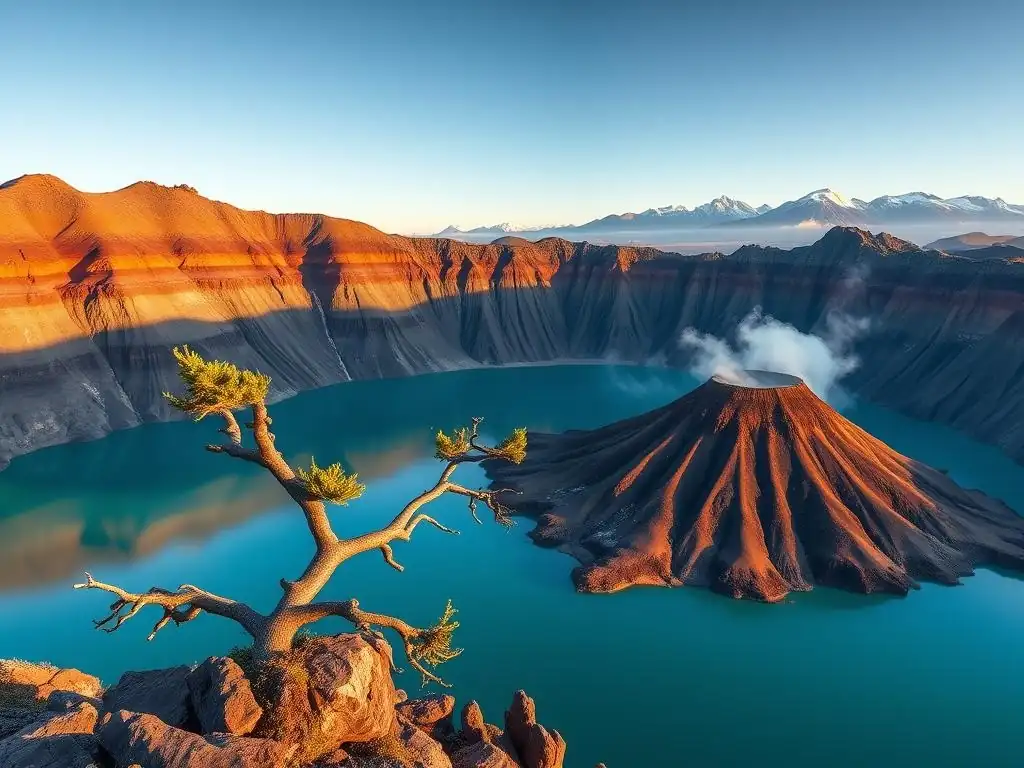
Many calderas eventually become basins that collect water, forming caldera lakes, also sometimes referred to as crater lakes when they occupy volcanic craters generally. These lakes can be formed by rainfall, snowmelt, or groundwater inflow filling the caldera depression. Caldera lakes can be remarkably deep and often exhibit unique chemical and biological characteristics.
Crater Lake in Oregon, USA, is a prime example of a caldera lake, occupying a caldera formed about 7,700 years ago. It is one of the deepest lakes in the world, reaching a depth of nearly 600 meters. The clarity and deep blue color of Crater Lake are due to its purity and depth. Caldera lakes can also be volcanically active, with ongoing hydrothermal input or even underwater volcanic vents. The study of caldera lakes provides insights into the post-collapse evolution of calderas and their interaction with the hydrological cycle.
Step 6: Long-Term Evolution: The Future of Calderas
Erosion and Weathering: Shaping the Caldera Landscape Over Time
Over geological timescales, erosion and weathering processes play a significant role in shaping the caldera landscape. Rain, wind, ice, and chemical weathering gradually wear down the caldera rim, modify the caldera floor, and transport sediment out of the caldera. Erosion can carve valleys and canyons into the caldera walls, and sediment deposition can fill in parts of the caldera floor.
The rate of erosion depends on factors such as climate, rock type, and topography. In humid climates, chemical weathering is more dominant, while in arid climates, mechanical weathering is more important. Glacial erosion can be particularly effective in shaping caldera landscapes in high-latitude or high-altitude regions. Over millions of years, erosion can significantly alter the original morphology of a caldera, making it less easily recognizable as a volcanic feature.
Future Eruptions: The Potential for Renewed Volcanic Activity
While caldera-forming eruptions are rare events, calderas are not necessarily extinct after their initial formation. Many calderas remain volcanically active and have the potential for future eruptions. These future eruptions are typically smaller in scale than the caldera-forming event but can still pose significant hazards. Subsequent eruptions within a caldera can occur along the ring faults, within the resurgent dome, or from new vents on the caldera floor.
The frequency of eruptions varies from caldera to caldera. Some calderas, like Yellowstone, have experienced multiple large eruptions over their history, while others have been relatively quiescent since their initial formation. Monitoring caldera systems for signs of unrest is crucial for assessing the potential for future eruptions and mitigating volcanic hazards. Understanding the long-term eruptive history of a caldera is essential for forecasting its future behavior.
Monitoring Calderas: Strategies for Predicting Future Eruptions
Given the potential for both large and smaller eruptions, monitoring active calderas is a critical undertaking for volcano observatories around the world. A comprehensive monitoring strategy involves a variety of techniques to detect changes in volcanic activity. These techniques include seismic monitoring to detect earthquakes, geodetic monitoring to measure ground deformation, gas monitoring to track changes in gas emissions, and thermal monitoring to detect changes in heat flow.
Data from these monitoring networks are continuously analyzed to assess the state of volcanic unrest and to detect any signs of an impending eruption. Early warning systems are developed based on monitoring data to provide timely alerts to communities at risk. Advances in monitoring technology and our understanding of how calderas are formed are continuously improving our ability to forecast volcanic activity and mitigate the hazards associated with these powerful volcanic systems.
Examples of Famous Calderas Around the World
Yellowstone Caldera: A Supervolcano in North America
The Yellowstone Caldera, located in Yellowstone National Park, USA, is one of the most famous and well-studied calderas in the world. It is a prime example of a resurgent caldera and is considered a supervolcano due to its history of exceptionally large eruptions. Yellowstone has experienced at least three caldera-forming eruptions in the past 2.1 million years, with the most recent one occurring approximately 631,000 years ago, forming the current caldera. This eruption, known as the Lava Creek eruption, ejected an estimated 1,000 cubic kilometers of volcanic material.
Yellowstone is actively monitored by the Yellowstone Volcano Observatory, which tracks seismic activity, ground deformation, hydrothermal activity, and gas emissions. The caldera exhibits ongoing hydrothermal activity, including geysers, hot springs, and fumaroles, and experiences periods of uplift and subsidence related to magma movement beneath the surface. While the probability of another caldera-forming eruption at Yellowstone in the near future is considered low, smaller eruptions and hydrothermal explosions are possible, and continued monitoring is essential.
Lake Toba Caldera: The Site of a Massive Ancient Eruption
Lake Toba Caldera in Sumatra, Indonesia, is the site of the largest known explosive eruption in Earth's recent geological history. Approximately 74,000 years ago, the Toba super-eruption ejected an estimated 2,800 cubic kilometers of volcanic material, dwarfing even the Yellowstone Lava Creek eruption. This eruption had significant global impacts, potentially contributing to a volcanic winter and influencing human evolution.
The eruption formed a massive caldera, now occupied by Lake Toba, the largest volcanic lake in the world. Within the caldera, resurgent activity has formed Samosir Island, a large island in the middle of the lake. The Toba caldera system remains volcanically active, with ongoing seismic and geothermal activity. Studying the Toba caldera provides valuable insights into the scale and impact of super-eruptions and how calderas are formed by these colossal events.
Santorini Caldera: A Volcanic Island in the Aegean Sea
The Santorini Caldera, in the Aegean Sea, Greece, is a picturesque example of a caldera formed by a series of explosive eruptions, including the Minoan eruption around 1600 BCE. This eruption, one of the largest in human history, devastated the Minoan civilization on Crete and may have contributed to the legend of Atlantis. The Minoan eruption ejected a significant volume of tephra and generated massive tsunamis that impacted the entire eastern Mediterranean region.
The Santorini caldera is now partially submerged by the sea, forming a stunning caldera rim island group. The caldera continues to exhibit volcanic activity, with recent eruptions in the 20th century forming new lava domes within the caldera. Santorini is a popular tourist destination, but also an active volcanic system that is closely monitored for future eruptions. Its beautiful yet potentially hazardous nature highlights the dual beauty and danger inherent in volcanic landscapes and how understanding caldera formation is crucial for risk assessment.
Caldera Formation: A Summary of the Process
The Key Stages of How Calderas Are Formed Revisited
To summarize how calderas are formed, the process involves several key stages:
- Magma Chamber Formation and Growth: Magma accumulates beneath the surface, building pressure.
- Pre-Eruptive Phase: Ground deformation, increased gas emissions, and seismic activity signal an impending eruption.
- Cataclysmic Eruption: A massive, explosive eruption empties the magma chamber through pyroclastic flows and ashfall.
- Caldera Collapse: The ground subsides into the emptied magma chamber along ring faults, forming a large depression.
- Post-Collapse Activity: Resurgence, hydrothermal systems, and caldera lake formation mark the caldera's evolution.
- Long-Term Evolution: Erosion, weathering, and potential future eruptions shape the caldera over geological time.
These stages illustrate the complex interplay of magmatic, tectonic, and surface processes that contribute to the formation and evolution of calderas, some of Earth's most dramatic and powerful volcanic features.
The Importance of Understanding Caldera Dynamics
Understanding caldera dynamics is crucial for several reasons. Firstly, it allows us to better assess the hazards associated with these supervolcanoes, which have the potential to cause global-scale disruptions. Secondly, studying calderas provides insights into the fundamental processes of magma generation, storage, and eruption. Thirdly, calderas often host valuable geothermal resources and unique ecosystems.
By studying how calderas are formed and behave, scientists can improve volcano monitoring techniques, develop better eruption forecasting models, and mitigate the risks posed by these powerful natural phenomena. Continued research into caldera systems is essential for protecting communities living near active calderas and for advancing our understanding of Earth's dynamic volcanic processes.
Further Exploration: Resources for Learning More About Calderas
For those interested in delving deeper into the fascinating world of caldera formation and supervolcanoes, numerous resources are available. University geology departments and geological surveys often offer publications, maps, and online materials related to volcanic areas and caldera studies. Books and documentaries about volcanoes, particularly supervolcanoes like Yellowstone and Toba, can provide engaging and accessible information. Scientific journals such as the Journal of Volcanology and Geothermal Research and Geology publish cutting-edge research on caldera volcanism.
Websites of volcano observatories, like the USGS Volcano Hazards Program and the Smithsonian Institution's Global Volcanism Program, offer real-time volcanic activity updates, educational resources, and data on calderas around the world. Exploring these resources will further enhance your understanding of how calderas are formed and the incredible forces that shape our planet.
Frequently Asked Questions
How are calderas formed?
Calderas are formed through large-scale volcanic eruptions that empty the magma chamber beneath a volcano. This causes the ground above to collapse, creating a large, bowl-shaped depression.
What is the key difference between a caldera and a volcanic crater?
A caldera is significantly larger than a typical volcanic crater. Craters are usually formed by individual eruptions, while calderas result from massive collapse events after a major eruption.
What geological processes typically precede the formation of a caldera?
The process usually begins with magma accumulation under the earth’s surface, leading to increased pressure and the eventual eruption of a massive amount of magma. This process can take a long time.
Are calderas always associated with explosive eruptions?
Yes, caldera formation is almost always associated with highly explosive eruptions. These eruptions eject massive volumes of ash and rock, which leads to the collapse of the volcano's summit.
What are some of the hazards associated with calderas?
Calderas can present numerous hazards, including future eruptions, earthquakes, and the potential for lahars (mudflows) and pyroclastic flows. They can also host hydrothermal systems and geothermal activity.
Final Reflection: Echoes of Volcanic Power
The journey through the formation of calderas, as we've explored, is more than just a geological lesson; it's a reminder of the Earth's raw, untamed power. Understanding how calderas are formed allows us to appreciate the delicate balance between creation and destruction that shapes our planet. These colossal features, born from unimaginable forces, stand as silent witnesses to Earth's dynamic history, and their potential impact remains a constant consideration in our modern world.
The sheer scale of caldera formation, and the potential for future events, profoundly influences our understanding of geological hazards and the need for proactive monitoring. Witnessing the aftermath of historical eruptions and contemplating the possibility of future caldera-forming events underscores the importance of scientific research and preparedness. The earth will not continue to offer its harvest, except with faithful stewardship. We cannot say we love the land and then take steps to destroy it for use by future generations.
- Wendell Berry. This quote reminds us that understanding and respecting Earth's processes, even the most destructive, is crucial for our own survival and the well-being of generations to come.
As you reflect on the immense forces that sculpt our world, consider the lessons learned from understanding caldera formation. How can this knowledge inform your own perspective on the power of nature and the importance of responsible stewardship? Let the awe-inspiring process of caldera formation inspire you to appreciate the delicate balance of our planet and to advocate for a future where scientific understanding guides our actions and protects us from the Earth's most formidable forces.
Unearth Your Inner Volcanologist!
Thanks for exploring the fascinating world of caldera formation with us! We hope you gained a deeper understanding of the immense power and beauty of these geological wonders. Ready to continue your adventure?
Here are a few ways to keep learning:
- Explore famous calderas using online maps and 3D models. Immerse yourself in the details of locations like Yellowstone or Santorini.
- Share your favorite caldera fact or newfound insight from this article with friends or on social media using #VolcanoExplorers. Let's spread the word!
- Research the diverse types of volcanic eruptions that create calderas – you might be surprised by the variety.
What was the most surprising thing you learned about caldera formation, and which caldera are you most excited to explore, even virtually? Share your thoughts in the comments below!