
Anatomy of a Shield Volcano: From Summit Caldera to Deep Magma Chamber


Welcome to Volcano Explorers!
Prepare to journey into the heart of a volcanic giant. Ever wondered what lies beneath the gentle slopes of a shield volcano? This isn't just about lava flows; it's a story etched in fire and rock, a tale of immense power simmering beneath the surface. Today, we unravel the secrets of shield volcano anatomy, exploring everything from its expansive summit caldera to the deep magma chamber that fuels its fiery existence. What forces shaped this unique volcanic form, and what can its structure tell us about the Earth's inner workings? Dive in, and let's uncover the answers together...
- Understanding Shield Volcano Anatomy: A Deep Dive
- The Summit Features of a Shield Volcano
- Shield Volcano Slopes and Flanks: Anatomy of Lava Flows
- The Magma Chamber: The Heart of a Shield Volcano
- Deep Anatomy: The Conduit System of a Shield Volcano
- Examples of Shield Volcano Anatomy Around the World
- The Importance of Understanding Shield Volcano Anatomy
-
Frequently Asked Questions
- What is the defining characteristic of a shield volcano?
- How does the magma chamber contribute to the anatomy of a shield volcano?
- What is a summit caldera, and how does it form on a shield volcano?
- What type of lava is typically associated with shield volcanoes, and why?
- Are shield volcanoes typically explosive, and what makes them different from stratovolcanoes?
- Final Reflection: Unveiling Earth's Gentle Giants
- Unearth Your Inner Volcanologist!
Understanding Shield Volcano Anatomy: A Deep Dive
Shield volcanoes, characterized by their broad, gently sloping profiles resembling a warrior's shield, are among Earth's most voluminous volcanic structures. Understanding the anatomy of a shield volcano is crucial for comprehending their formation, eruptive behavior, and the hazards they pose. Delving into the shield volcano anatomy explained unveils a complex system of interconnected features, from the summit caldera at its peak to the deep magma chamber nestled within the Earth's crust, and further down to the mantle source. This intricate structure dictates how these volcanoes grow, erupt, and interact with their surrounding environment.
To truly appreciate the dynamics of a shield volcano, we must move beyond simply observing their surface features. We need to explore their internal architecture, much like dissecting a living organism to understand its functions. This detailed examination, focusing on the shield volcano anatomy, involves investigating the pathways magma takes, the reservoirs where it accumulates, and the processes that drive eruptions. By understanding the shield volcano anatomy explained, we can gain invaluable insights into the planet's inner workings and improve our ability to forecast volcanic activity and mitigate potential risks in volcanically active regions.
Exploring the Internal Structure of Shield Volcanoes
The internal structure of a shield volcano is far from a simple, homogenous mass of rock. Instead, it's a layered and compartmentalized system built up over countless eruptions. At its core, a shield volcano is primarily composed of solidified basalt lava flows.
These flows, emanating from various vents and fissures, accumulate layer upon layer, creating the volcano's characteristic shield shape. Interspersed within these lava layers are often ash and cinder deposits, representing explosive phases or changes in eruptive style over the volcano's lifespan. The internal architecture also includes a complex network of magma conduits that act as pathways for molten rock to ascend from the depths.
Beneath the visible surface, the heart of the shield volcano lies in its magma chamber. This is not a hollow cavity, but rather a region of partially molten rock, often described as a crystal mush, residing within the Earth's crust. The magma chamber acts as a reservoir, accumulating magma from deeper sources before it is erupted.
Extending downwards from the magma chamber is the plumbing system, a network of dikes and sills that channel magma from the mantle plume or asthenosphere upwards to the surface. Understanding this internal structure is essential for comprehending the shield volcano anatomy explained and predicting its behavior.
The Summit Features of a Shield Volcano
The summit of a shield volcano is not typically a sharply pointed peak like stratovolcanoes. Instead, it often features a broad, relatively flat area, frequently marked by a caldera or a cluster of pit craters. These summit features are key indicators of the volcano's internal processes and eruptive history. The summit area is the primary zone where volcanic gases are released and where effusive eruptions, characterized by lava flows, often originate. Detailed study of the summit region provides valuable insights into the activity and evolution of the shield volcano.
The morphology of a shield volcano summit is dynamic and changes over time due to volcanic activity. Eruptions can modify the summit through caldera formation, collapse events, and the construction of new cones and vents. The presence of features like fumaroles, areas where volcanic gases are released, and hot springs, also indicate ongoing geothermal activity beneath the summit. Analyzing these summit features is crucial for understanding the shield volcano anatomy explained and for monitoring the volcano's state of unrest and potential for future eruptions.
Caldera Formation in Shield Volcanoes: A Detailed Look
Calderas are large, basin-shaped depressions that can form at the summit of shield volcanoes. Unlike stratovolcano calderas often formed by violent explosive eruptions, shield volcano calderas typically result from gradual subsidence following the emptying or partial emptying of the magma chamber beneath the summit. As magma is withdrawn during eruptions, the roof of the magma chamber can no longer be supported and collapses downwards, creating a caldera. This process can occur in stages, leading to nested calderas or complex caldera structures.
The formation of a caldera significantly alters the summit landscape of a shield volcano and is a major event in its life cycle. For example, Kilauea volcano in Hawaii has a prominent summit caldera, Halemaʻumaʻu, which has undergone numerous episodes of collapse and modification throughout history. The size of a caldera can vary greatly, from a few kilometers to tens of kilometers in diameter.
The presence and characteristics of a caldera are important aspects of the shield volcano anatomy explained, providing clues about the size and depth of the underlying magma chamber and the volume of magma erupted over time. Caldera formation is a testament to the immense scale of magmatic processes operating within shield volcanoes.
Lava Lakes and Summit Vents on Shield Volcanoes
Some shield volcanoes, particularly those characterized by persistent effusive activity, host lava lakes within their summit calderas or pit craters. Lava lakes are bodies of molten lava, often basaltic in composition, that are continuously or intermittently active. They represent direct surface expressions of the magma residing in the volcano's plumbing system, offering volcanologists a unique window into volcanic processes. Erta Ale volcano in Ethiopia is a prime example, hosting a long-lived lava lake within its summit caldera, providing invaluable opportunities for studying lava behavior and degassing.
Summit vents, the conduits through which lava and volcanic gases reach the surface, are also crucial features of shield volcano summits. These vents can range from small fissures to larger cones and craters. They are often concentrated within the caldera or along rift zones that radiate outwards from the summit.
Eruptions from summit vents can be effusive, producing lava flows that contribute to the volcano's growth, or weakly explosive, generating spatter and cinder cones. The distribution and activity of summit vents are key aspects of the shield volcano anatomy explained, influencing the direction and style of lava flows and the overall evolution of the volcano.
Shield Volcano Slopes and Flanks: Anatomy of Lava Flows
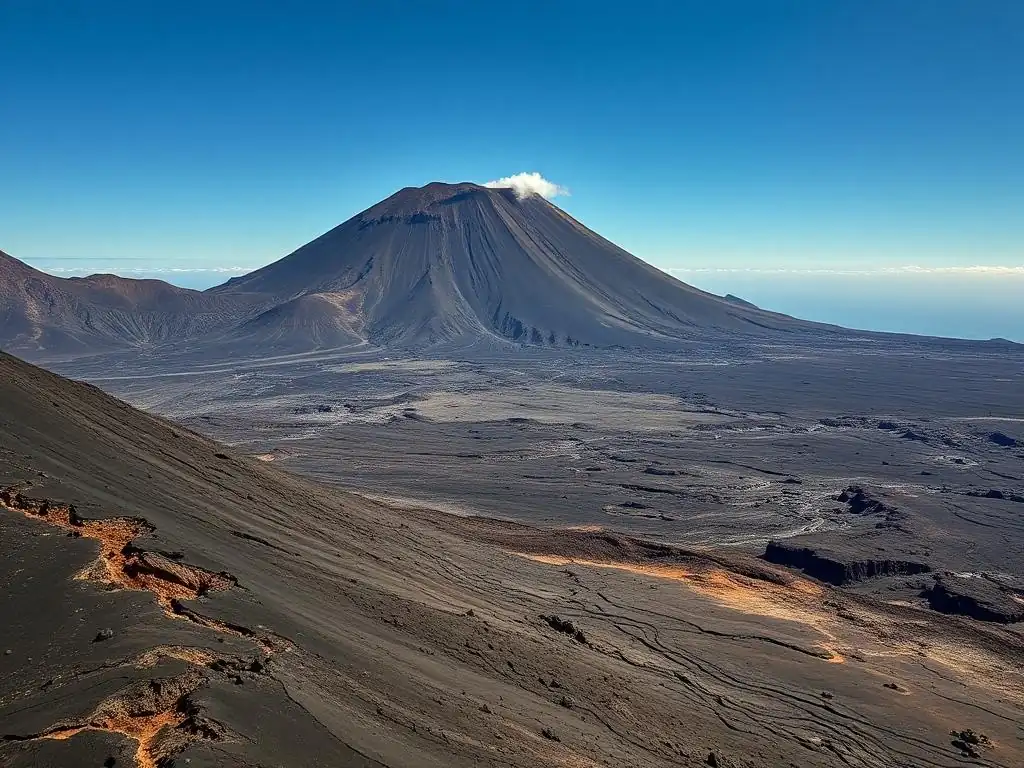
The gently sloping flanks of a shield volcano are primarily constructed by countless basalt lava flows. These flows, originating from summit vents and fissure eruptions along the flanks, solidify and accumulate to form the volcano's characteristic broad, shield-like shape. The angle of the slopes is typically low, ranging from 2 to 10 degrees, a direct consequence of the low viscosity and high effusion rates of basaltic lava. Understanding the anatomy of these lava flows and their distribution across the flanks is crucial for deciphering the growth history and eruptive patterns of a shield volcano.
The surface texture and morphology of shield volcano flanks are highly variable, reflecting the different types of lava flows and eruptive processes involved in their construction. Distinctive features include lava channels, levees, and pressure ridges, all formed during the flow and cooling of lava. The distribution of vents and fissures across the flanks also plays a significant role in shaping the volcano.
Fissure eruptions, in particular, can produce extensive lava flow fields that significantly expand the volcano's footprint. Analyzing the slopes and flanks of a shield volcano provides essential information for the shield volcano anatomy explained, revealing the history of lava emplacement and the overall volcanic edifice construction.
Pahoehoe and Aa Lava Flows: Shaping the Shield Volcano's Surface
Two primary types of basalt lava flows, pahoehoe and aa, are instrumental in shaping the surface of shield volcanoes. Pahoehoe lava is characterized by its smooth, ropy, or billowy surface texture. It is highly fluid and can flow over long distances, often forming lava tubes. Aa lava, in contrast, has a rough, jagged, and clinkery surface. It is more viscous than pahoehoe and typically flows more slowly, forming thicker, blocky flows. The transition between pahoehoe and aa can occur as lava cools and degasses during its flow.
The dominance of pahoehoe or aa flows in different areas of a shield volcano reflects variations in lava composition, effusion rate, slope, and cooling history. Pahoehoe flows, with their greater fluidity, tend to travel further and contribute to the gentler slopes of the volcano, while aa flows, being thicker and rougher, can create steeper sections and more rugged terrain.
The interplay of pahoehoe and aa flows, along with other volcanic deposits, creates the diverse and complex surface morphology observed on shield volcanoes. Understanding the characteristics and distribution of these flow types is fundamental to the shield volcano anatomy explained and to interpreting the volcanic landscape.
Understanding Fissure Eruptions on Shield Volcano Flanks
Fissure eruptions, where lava erupts from linear cracks or fissures in the ground, are a common and significant feature of shield volcano flanks. These eruptions are often associated with rift zones, areas of crustal extension and weakness that radiate outwards from the volcano's summit. Fissure eruptions can produce large volumes of lava, contributing significantly to the volcano's growth and expansion. They are typically effusive, generating extensive lava flow fields that can cover vast areas.
Fissure eruptions are particularly important in the development of shield volcanoes because they allow for widespread lava emplacement across the flanks, contributing to the volcano's broad, shield-like shape. These eruptions can occur along pre-existing fractures or create new fissures as magma pressure builds up within the volcano. The orientation and distribution of fissure eruptions are often controlled by the regional stress field and the volcano's internal structure. Studying fissure eruptions and their resulting lava flows is crucial for the shield volcano anatomy explained, as they are a key mechanism for volcano growth and landscape modification.
The Role of Lava Tubes in Shield Volcano Growth
Lava tubes are natural conduits formed within lava flows, typically pahoehoe flows, that allow molten lava to travel long distances efficiently with minimal heat loss. As the surface of a lava flow cools and crusts over, the molten lava beneath continues to flow, eventually draining out and leaving behind a hollow tube. These lava tubes act as insulated pipelines, enabling lava to flow further and faster than surface flows, extending the reach of eruptions and contributing to the overall volume and shape of the shield volcano.
Lava tubes play a significant role in the growth of shield volcanoes by transporting lava efficiently from vents to distal locations on the flanks. This efficient transport mechanism allows for the construction of broad, low-angle slopes characteristic of shield volcanoes. Lava tubes can be extensive, extending for kilometers and branching into complex networks.
Upon collapse, lava tubes can create surface features such as lava channels and skylights, providing access to the interior of the tubes. The presence and distribution of lava tubes are important aspects of the shield volcano anatomy explained, highlighting a key mechanism for lava transport and volcano construction.
The Magma Chamber: The Heart of a Shield Volcano
The magma chamber is the central reservoir of molten rock beneath a shield volcano. It is not a large, empty cavity, but rather a zone within the Earth's crust containing a complex mixture of molten rock, crystals, and dissolved gases. The magma chamber acts as a temporary storage space for magma ascending from deeper sources in the mantle before it is erupted at the surface. Understanding the characteristics of the magma chamber, including its location, size, shape, and magma composition, is crucial for comprehending the eruptive behavior of a shield volcano.
The magma chamber is a dynamic system where processes such as magma recharge, differentiation, and degassing occur. Magma from the mantle continuously replenishes the chamber, while processes like fractional crystallization and assimilation can alter the magma's composition over time. The pressure within the magma chamber builds up as magma accumulates and gases exsolve, eventually leading to eruptions. The size and depth of the magma chamber, along with the rate of magma supply, strongly influence the frequency and style of eruptions. Investigating the magma chamber is central to the shield volcano anatomy explained and for forecasting volcanic activity.
Locating the Magma Chamber Beneath a Shield Volcano
Determining the location and characteristics of a magma chamber beneath a shield volcano is a complex task, relying on various geophysical techniques. Seismic studies, particularly the analysis of earthquake waves, are widely used to image the subsurface structure and identify areas of reduced seismic velocity, which can indicate the presence of molten rock. Changes in ground deformation, measured using techniques like GPS and InSAR, can also reveal the inflation and deflation of the magma chamber as magma accumulates or is withdrawn.
Gravity surveys, which measure variations in the Earth's gravitational field, can detect density contrasts in the subsurface, helping to delineate the boundaries of the magma chamber. Electromagnetic methods, such as magnetotellurics, can probe the electrical conductivity of the Earth's crust, as molten rock is generally more conductive than solid rock. Combining data from multiple geophysical techniques provides a more comprehensive understanding of the magma chamber's location, depth, size, and shape, contributing significantly to the shield volcano anatomy explained and to monitoring volcanic unrest.
The Composition and Evolution of Magma in Shield Volcanoes
The magma in shield volcanoes is typically basaltic in composition, meaning it is relatively low in silica content and rich in iron and magnesium. This basaltic magma originates from partial melting of the Earth's mantle, often in association with mantle plumes or hotspots. However, the composition of magma in a shield volcano is not static; it evolves over time through processes such as fractional crystallization, magma mixing, and assimilation of crustal rocks.
Fractional crystallization involves the separation of minerals from the cooling magma, altering the composition of the remaining melt. Magma mixing occurs when magmas from different sources or with different compositions interact within the magma chamber. Assimilation involves the incorporation of surrounding crustal rocks into the magma. These processes can lead to variations in magma composition within the magma chamber and between different eruptions. Understanding the composition and evolution of magma is crucial for the shield volcano anatomy explained, as it directly influences the viscosity, gas content, and eruptive behavior of the volcano.
How Magma Supply Influences Shield Volcano Eruptions
The rate at which magma is supplied from the mantle to the magma chamber plays a fundamental role in controlling the eruptive behavior of shield volcanoes. High magma supply rates generally lead to more frequent and sustained eruptions, while lower supply rates can result in longer periods of quiescence between eruptions. Variations in magma supply can also influence the style of eruptions. Increased magma supply can lead to higher effusion rates and potentially more explosive activity, although shield volcano eruptions are predominantly effusive.
The balance between magma supply and magma output through eruptions determines the overall growth rate of the shield volcano. Periods of high magma supply can lead to rapid volcano growth, while periods of lower supply may result in slower growth or even periods of volcanic inactivity. Understanding the relationship between magma supply and eruption dynamics is essential for the shield volcano anatomy explained and for developing accurate models of volcano behavior and eruption forecasting. Monitoring changes in magma supply rates, often inferred from ground deformation and seismic activity, is a critical aspect of volcano monitoring.
Deep Anatomy: The Conduit System of a Shield Volcano
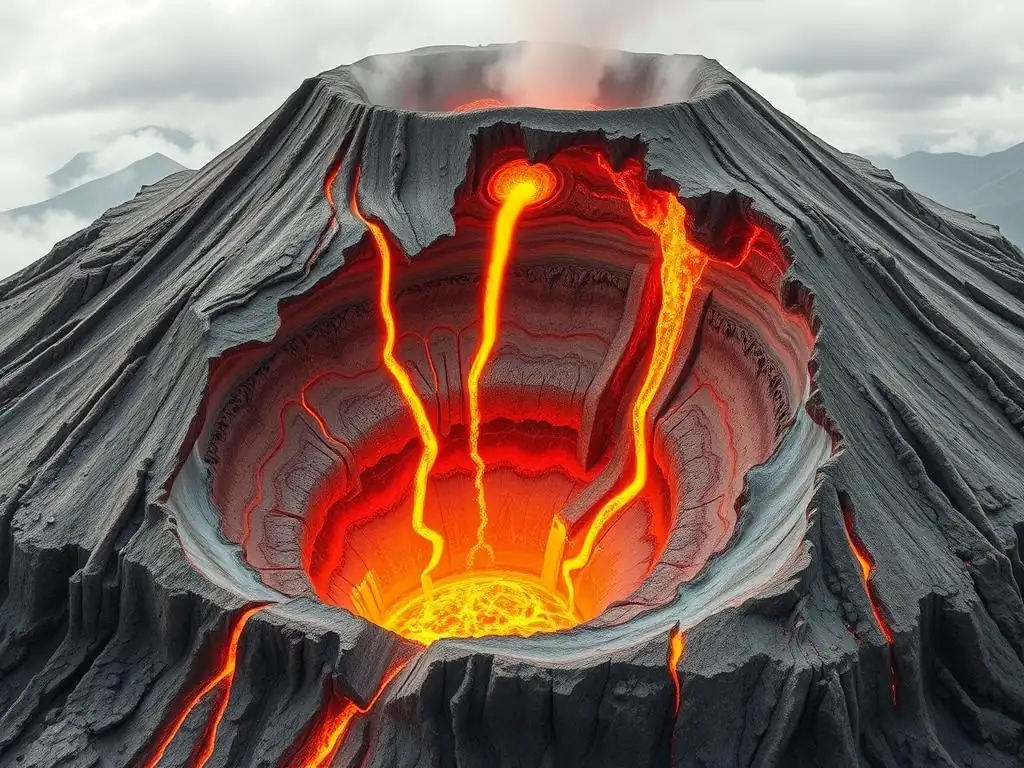
Beneath the magma chamber lies the deeper plumbing system of a shield volcano, the conduit system that channels magma from its source in the mantle upwards towards the surface. This system is typically composed of a network of dikes, vertical fractures filled with magma, and sills, horizontal intrusions of magma. These conduits act as pathways for magma ascent through the Earth's crust, connecting the deep mantle source to the shallow magma chamber and ultimately to the surface vents. Understanding the deep anatomy of this conduit system is crucial for a complete picture of the shield volcano anatomy explained.
The geometry and connectivity of the conduit system influence the pathways and rates of magma transport. Dikes, in particular, play a key role in magma ascent, propagating upwards through the crust under pressure. Sills can act as temporary storage areas or barriers to magma flow, influencing the magma's ascent path and potentially triggering eruptions. The deep anatomy of the conduit system is often inferred from geophysical studies, particularly seismic tomography, which can image the velocity structure of the Earth's crust and upper mantle, revealing zones of magma accumulation and pathways of magma ascent.
Exploring the Plumbing System Feeding Shield Volcanoes
The plumbing system of a shield volcano is a complex network of interconnected conduits that transport magma from the mantle to the surface. This system can extend deep into the Earth's lithosphere and asthenosphere, tapping into the magma source region. The architecture of the plumbing system is not static; it evolves over time due to tectonic stresses, magma pressure, and repeated magma intrusions. Understanding the three-dimensional structure of this plumbing system is a major challenge in volcanology, requiring the integration of various geophysical and geological data.
The plumbing system can be visualized as a tree-like structure, with a main trunk extending from the mantle source region upwards to the magma chamber, and branches radiating outwards towards the surface vents. Dikes and sills form the primary conduits within this system, facilitating magma transport and storage. The permeability and connectivity of the plumbing system influence the efficiency of magma transport and the overall eruptive behavior of the shield volcano. Detailed mapping of the plumbing system, a key aspect of the shield volcano anatomy explained, is essential for understanding magma dynamics and eruption processes.
Mantle Plumes and the Formation of Shield Volcano Hotspots
Many shield volcanoes, particularly those in oceanic settings like Hawaii and Iceland, are associated with mantle plumes. Mantle plumes are upwellings of hot, buoyant material from deep within the Earth's mantle. These plumes rise towards the surface, causing decompression melting of the mantle rock and generating large volumes of basaltic magma. When a mantle plume impinges on the base of the lithosphere, it can create a hotspot, a region of enhanced volcanism.
Shield volcanoes formed at hotspots are characterized by persistent and voluminous eruptions, building up massive volcanic edifices over millions of years. The Hawaiian Islands are a classic example of a hotspot volcanic chain, formed by the Pacific plate moving over a stationary mantle plume.
The anatomy of these hotspot shield volcanoes is directly linked to the dynamics of mantle plumes, with the plume providing a continuous source of magma to fuel volcanic activity. Understanding the role of mantle plumes in shield volcano formation is crucial for the shield volcano anatomy explained and for comprehending the long-term evolution of these volcanic systems.
Examples of Shield Volcano Anatomy Around the World
Shield volcanoes are found in various geological settings around the world, each exhibiting unique anatomical features and eruptive characteristics. Examples include the massive Hawaiian shield volcanoes, such as Mauna Loa and Kilauea, which are among the largest volcanoes on Earth. Iceland, situated on the Mid-Atlantic Ridge and influenced by a mantle plume, is another region with numerous shield volcanoes, including Skjaldbreiður.
Erta Ale in Ethiopia, located in the East African Rift Valley, stands out for its persistent lava lake within its summit caldera. Exploring the anatomy of these diverse shield volcanoes provides valuable insights into the variations and commonalities in their structure and behavior.
Studying specific examples of shield volcanoes allows for a deeper understanding of the shield volcano anatomy explained in real-world contexts. Each volcano offers a natural laboratory for investigating different aspects of volcanic processes, from magma generation and transport to eruption dynamics and landscape evolution. By examining the geological history, eruptive record, and geophysical characteristics of individual shield volcanoes, we can refine our understanding of the general principles governing their anatomy and behavior.
Mauna Loa: Anatomy of a Classic Hawaiian Shield Volcano
Mauna Loa, on the Big Island of Hawaii, is the largest active volcano on Earth and a prime example of a classic shield volcano. Its anatomy is characterized by a broad, gently sloping shield shape, built up by countless basalt lava flows over hundreds of thousands of years. Mauna Loa's summit features a large caldera, Mokuʻāweoweo, which has formed through multiple episodes of collapse and subsidence. Rift zones, extending radially outwards from the summit, are prominent features, acting as pathways for fissure eruptions along the volcano's flanks.
The internal structure of Mauna Loa, as revealed by geophysical studies, includes a complex magma chamber system located beneath the summit caldera, extending several kilometers into the crust. Magma is supplied to Mauna Loa from the Hawaiian hotspot, a mantle plume beneath the Pacific plate. Eruptions at Mauna Loa are typically effusive, producing voluminous pahoehoe and aa lava flows that travel long distances down the volcano's flanks. Mauna Loa's anatomy provides a benchmark for understanding the shield volcano anatomy explained and the processes that build these massive volcanic edifices.
Kilauea: Studying the Active Anatomy of a Shield Volcano
Kilauea, also on the Big Island of Hawaii, is one of the most active volcanoes in the world and offers an unparalleled opportunity to study the dynamic anatomy of a shield volcano. Kilauea's anatomy is continuously evolving due to its frequent eruptions and ongoing volcanic activity. Its summit features Halemaʻumaʻu crater, a pit crater within the larger Kilauea caldera, which has hosted a lava lake and experienced numerous collapses and explosive events. Kilauea's East Rift Zone is a highly active area, characterized by fissure eruptions, lava flows, and the formation of spatter and cinder cones.
The Puʻuʻōʻō eruption, which lasted from 1983 to 2018, provided an exceptional case study of long-lived flank eruptions on a shield volcano. Kilauea's anatomy, constantly monitored by volcanologists, reveals a complex plumbing system, including a shallow magma chamber beneath the summit and deeper pathways extending into the mantle. Studying Kilauea's active anatomy provides invaluable insights into the processes driving shield volcano eruptions and the shield volcano anatomy explained in real-time.
Erta Ale: Anatomy of an Active Ethiopian Shield Volcano
Erta Ale, located in the Afar region of Ethiopia, is a unique shield volcano renowned for its persistent lava lake within its summit caldera. Erta Ale's anatomy is characterized by a low, broad shield shape with a summit caldera containing multiple pit craters, one of which hosts the active lava lake. The volcano is situated in the East African Rift Valley, a tectonically active region where the Earth's crust is pulling apart. Erta Ale's persistent lava lake is a rare and fascinating feature, providing a continuous window into the volcano's magmatic system.
The magma feeding Erta Ale is derived from the underlying mantle, associated with the Afar hotspot and the rifting processes in the region. Eruptions at Erta Ale are typically effusive, with lava flows emanating from the summit caldera and fissure vents on the flanks. The lava lake itself is a dynamic feature, with fluctuating lava levels and episodic overflows. Erta Ale's anatomy, particularly its persistent lava lake, offers a distinctive example of shield volcano behavior and contributes to the shield volcano anatomy explained in diverse geological settings.
The Importance of Understanding Shield Volcano Anatomy
Understanding the anatomy of shield volcanoes is not just an academic exercise; it has significant practical implications, particularly for hazard assessment and eruption forecasting in volcanically active regions. By deciphering the internal structure, magma pathways, and eruption dynamics of shield volcanoes, we can improve our ability to predict future eruptions, assess potential hazards, and develop effective mitigation strategies. The shield volcano anatomy explained provides a critical foundation for managing volcanic risks and ensuring the safety of communities living near these powerful natural phenomena.
A thorough understanding of shield volcano anatomy is essential for interpreting monitoring data, such as seismic activity, ground deformation, and gas emissions, and for translating these signals into meaningful assessments of volcanic unrest. By recognizing the anatomical features associated with different stages of volcanic activity, we can better anticipate eruption onsets, durations, and styles. This knowledge is crucial for issuing timely warnings and implementing effective evacuation plans, ultimately reducing the potential impact of volcanic eruptions.
Predicting Eruptions by Studying Shield Volcano Internal Structures
The internal structures of shield volcanoes, particularly the magma chamber and conduit system, play a crucial role in controlling eruption dynamics and providing clues for eruption prediction. Changes in the state of the magma chamber, such as magma recharge, pressure buildup, and degassing, can trigger volcanic unrest and ultimately lead to eruptions. Monitoring these internal processes through geophysical and geochemical techniques allows volcanologists to detect pre-eruptive signals and assess the likelihood of an impending eruption.
For instance, inflation of the ground surface, detected by GPS and InSAR, can indicate magma accumulation in the magma chamber, suggesting an increased potential for eruption. Changes in seismic activity, such as increased earthquake frequency or the occurrence of specific earthquake types, can also signal magma movement and pressure changes within the volcano. By understanding the relationship between internal structures and eruptive behavior, the shield volcano anatomy explained provides a framework for developing more accurate eruption forecasting models and improving our ability to anticipate volcanic events.
Assessing Hazards Based on Shield Volcano Anatomical Features
The anatomical features of a shield volcano directly influence the types and distribution of volcanic hazards associated with its eruptions. The gently sloping flanks and effusive eruption style of shield volcanoes typically result in lava flow hazards being the primary concern. Understanding the pathways and flow characteristics of lava, often guided by the volcano's topography and internal structure, is crucial for assessing lava flow inundation risks. Rift zones, acting as preferential pathways for fissure eruptions, are areas of heightened hazard potential.
While shield volcano eruptions are generally less explosive than stratovolcano eruptions, they can still pose significant hazards. Explosive eruptions can occur, particularly when magma interacts with groundwater or surface water, generating ash plumes and pyroclastic surges. Caldera collapses can trigger landslides and generate tsunamis if they occur near coastal areas. By understanding the shield volcano anatomy explained and the associated hazards for specific anatomical features, we can develop more targeted hazard assessments and mitigation strategies for communities living in volcanic regions.
Monitoring Techniques for Assessing Shield Volcano Activity
Monitoring shield volcano activity relies on a suite of sophisticated techniques designed to detect changes in the volcano's internal state and surface behavior. Seismic monitoring, using networks of seismometers, tracks earthquake activity, providing information about magma movement and pressure changes. Ground deformation monitoring, using GPS and InSAR, measures subtle changes in the volcano's shape, indicating magma accumulation or withdrawal. Gas monitoring, using instruments to measure volcanic gas emissions, provides insights into magma degassing and composition changes.
Thermal monitoring, using satellite-based and ground-based thermal cameras, detects changes in surface temperature, revealing areas of active lava flows or increased geothermal activity. Geochemical monitoring, analyzing the composition of volcanic gases and lava samples, tracks changes in magma composition and source. Integrating data from these diverse monitoring techniques provides a comprehensive picture of shield volcano activity, allowing for early detection of volcanic unrest and improved assessment of eruption potential, leveraging the understanding of the shield volcano anatomy explained to interpret these signals effectively.
Frequently Asked Questions
What is the defining characteristic of a shield volcano?
The defining characteristic of a shield volcano is its broad, gently sloping shape resembling a warrior's shield. This shape is due to the low-viscosity lava that flows easily over long distances.
How does the magma chamber contribute to the anatomy of a shield volcano?
The magma chamber is a large reservoir of molten rock beneath the volcano. It supplies the lava for eruptions and its size and depth influence the eruption frequency and intensity of the volcano.
What is a summit caldera, and how does it form on a shield volcano?
A summit caldera is a large, bowl-shaped depression at the summit of the volcano. It usually forms through collapse of the roof of the magma chamber after a large eruption.
What type of lava is typically associated with shield volcanoes, and why?
Shield volcanoes are typically associated with basaltic lava, which is low in silica and therefore has low viscosity. This allows it to flow easily and create the shield-like shape.
Are shield volcanoes typically explosive, and what makes them different from stratovolcanoes?
No, shield volcanoes are generally not explosive. This is due to the low gas content and low viscosity of their lava, unlike stratovolcanoes which have steeper slopes and more explosive eruptions due to more viscous lavas and higher gas content.
Final Reflection: Unveiling Earth's Gentle Giants
The intricate details of a shield volcano, from its expansive caldera to its hidden magma chamber, reveal a story of slow, persistent power. Understanding the anatomy of these geological behemoths is not just an academic exercise; it's crucial for predicting volcanic activity and mitigating potential hazards in regions where they reside. The gentle slopes belie the immense forces at play beneath the surface, reminding us of the dynamic and ever-changing nature of our planet.
The study of shield volcanoes has profoundly shaped our understanding of volcanic processes, influencing everything from hazard assessment to geothermal energy exploration. Personally, I find the sheer scale of these formations, built over millennia by countless eruptions, deeply humbling. The mountains are calling and I must go.
- John Muir. This quote encapsulates the irresistible pull of these natural wonders, urging us to explore and understand the forces that shape our world.
Now, armed with a deeper understanding of the shield volcano's anatomy, consider the implications of this knowledge. How can we better prepare for future eruptions? How can we harness the energy they provide sustainably? Let the insights gained from this exploration fuel your curiosity and inspire you to become a steward of our planet, advocating for responsible exploration and a deeper appreciation for the Earth's powerful, yet often gentle, giants.
Unearth Your Inner Volcanologist!
Thanks for exploring the fascinating world of shield volcanoes! Now that you've learned about their structure, from summit caldera to magma chamber, let's put that knowledge to work. Ready to further ignite your passion for volcanology?
Here are a few ways to continue your exploration:
- Become a Volcano Mapper: Use topographic maps and satellite imagery to identify and sketch the outlines of shield volcanoes in a region that interests you. Share your findings with us!
- Delve deeper! Research a specific shield volcano mentioned in the article—such as Mauna Loa or Skjaldbreiður—and learn about its unique history and current activity.
- Spread the knowledge! Share this article with a friend or family member who might be fascinated by these majestic landforms.
Which fascinating feature of a shield volcano are you most eager to learn more about, and what's your next step in exploring volcanoes? Let us know in the comments!