
Mantle Plumes: The Enigmatic Engine Driving Volcanic Hotspots

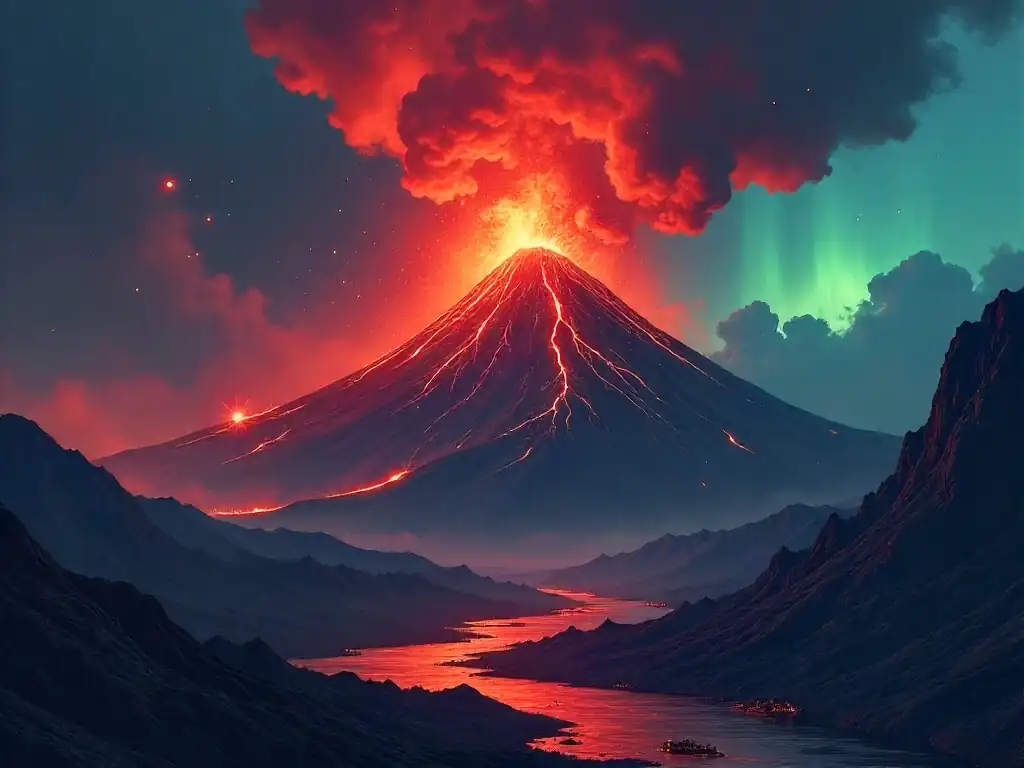
Welcome to Volcano Explorers, where the Earth breathes fire! Ever wondered what mysterious forces deep within our planet are responsible for some of the most dramatic volcanic displays? Prepare to journey beneath the surface as we unravel the secrets of mantle plumes and volcanic hotspots, the enigmatic engine driving volcanic activity in unexpected corners of the globe. Intrigued? Your fiery exploration begins now...
What are Mantle Plumes? A Deep Dive
Mantle plumes are upwellings of unusually hot rock from the Earth's mantle. Imagine a colossal chimney deep within the Earth, extending from as deep as the core-mantle boundary, approximately 2,900 kilometers (1,800 miles) beneath the surface, all the way up to the base of the lithosphere. These plumes are thought to be much hotter than the surrounding mantle, perhaps by several hundred degrees Celsius.
This temperature difference is crucial as it drives the plume's ascent through the denser mantle rock. The concept of mantle plumes was first proposed in 1971 by geophysicist Jason Morgan to explain volcanic hotspots, areas of volcanic activity that are not associated with plate boundaries, like those found at mid-ocean ridges or subduction zones.
The exact origin and nature of mantle plumes are still subjects of ongoing scientific debate and research. However, the prevailing theory suggests that they originate from the core-mantle boundary, a region where heat from the Earth's core is transferred to the mantle. This heat is believed to cause thermal instabilities, leading to the formation of buoyant plumes of hot material.
These plumes rise slowly through the mantle, driven by density differences, much like hot air rises in the atmosphere. As they ascend, they can interact with the overlying lithosphere, causing it to melt and leading to volcanic activity at the surface, far from tectonic plate boundaries.
Volcanic Hotspots: Surface Expressions of Mantle Activity
Volcanic hotspots are geographical areas on the Earth's surface characterized by persistent volcanic activity that is not directly related to the boundaries of tectonic plates. Unlike volcanoes at plate boundaries, which are formed by the movement and interaction of plates, hotspot volcanoes appear in the middle of plates. These hotspots are often marked by chains of volcanoes, with only one end of the chain currently active. A prime example of this is the Hawaiian Islands, a chain of volcanic islands stretching across the Pacific Ocean, with active volcanism concentrated at the southeastern end, around the Island of Hawai'i itself.
The location of volcanic hotspots appears to be relatively fixed over long periods, at least in relation to the mantle. As tectonic plates move over these stationary hotspots, a linear chain of volcanoes is formed. The volcanoes are progressively older and more eroded as you move away from the currently active hotspot.
This characteristic chain formation is a key piece of evidence supporting the mantle plume theory. Hotspots provide a window into the Earth's deep interior, offering valuable clues about the composition and dynamics of the mantle. They are sites of intense geological activity and have played a significant role in shaping the Earth's surface and influencing its geological history.
The Connection: How Mantle Plumes Fuel Volcanic Hotspots
The prevailing scientific understanding is that mantle plumes are the primary driving force behind volcanic hotspots. The connection is quite direct: mantle plumes are the conduit through which unusually hot material from the deep mantle rises to the surface, and volcanic hotspots are the surface manifestations of this upwelling. As a mantle plume impinges upon the base of the lithosphere, the reduced pressure at shallower depths causes the hot mantle rock to undergo decompression melting. This process generates magma, molten rock, which then ascends through the crust and erupts at the surface, creating volcanoes.
The volume of magma produced by a mantle plume can be substantial, leading to the construction of massive volcanic edifices like the Hawaiian Islands or the vast flood basalt provinces seen in regions like the Deccan Traps in India or the Siberian Traps in Russia, which are linked to major extinction events in Earth's history. The longevity of hotspot volcanism, often lasting for millions of years, is also attributed to the persistent nature of mantle plumes, continuously supplying heat and material from the deep mantle.
Therefore, when we observe a volcanic hotspot, we are essentially witnessing the surface expression of a deep-seated mantle plume at work, continuously reshaping the Earth's crust over geological timescales.
- What are Mantle Plumes? A Deep Dive
- Volcanic Hotspots: Surface Expressions of Mantle Activity
- The Connection: How Mantle Plumes Fuel Volcanic Hotspots
- What are mantle plumes, and how do they relate to volcanic hotspots?
- How are volcanic hotspots different from volcanoes found at plate boundaries?
- What evidence supports the existence of mantle plumes?
- Are mantle plumes stationary, or do they move over time?
- Why is understanding mantle plumes important for volcanologists?
Frequently Asked Questions
What are mantle plumes, and how do they relate to volcanic hotspots?
Mantle plumes are upwellings of hot rock from deep within the Earth's mantle. These plumes rise to the surface, melting the overlying crust and creating volcanic hotspots, which are areas of intense volcanic activity away from plate boundaries.
How are volcanic hotspots different from volcanoes found at plate boundaries?
Volcanoes at plate boundaries are caused by plate tectonic processes, such as subduction or seafloor spreading. Hotspot volcanoes, on the other hand, are formed by mantle plumes rising independently of plate movement, leading to volcanic activity in the middle of plates.
What evidence supports the existence of mantle plumes?
Geophysical data, such as seismic tomography, reveals areas of unusually hot and less dense rock deep within the mantle, which are interpreted as mantle plumes. Also, the linear chains of volcanic islands like Hawaii, where volcanoes become older as you move away from the active hotspot, support the plume theory.
Are mantle plumes stationary, or do they move over time?
While the Earth's tectonic plates move across the surface, mantle plumes are generally considered to be relatively stationary in the deep mantle. This creates the "hotspot track" of volcanoes as the plate moves over the plume.
Why is understanding mantle plumes important for volcanologists?
Understanding mantle plumes helps volcanologists to better predict and assess volcanic hazards, as well as gain insights into the Earth's internal structure and dynamics. This knowledge is crucial for mitigating risks in areas near volcanic hotspots.
Final Reflection: Unveiling Earth's Deep Secrets
The journey into the depths of Earth, exploring the enigmatic nature of mantle plumes and their connection to volcanic hotspots, reveals a dynamic and interconnected system that continues to shape our planet. Understanding these forces is not merely an academic exercise; it's crucial for predicting volcanic activity and mitigating its potential impact on communities worldwide. The ongoing research and debate surrounding mantle plumes highlight the complexity of our planet and the constant need for scientific inquiry.
The influence of mantle plumes extends far beyond the immediate vicinity of volcanic hotspots. They have played a pivotal role in shaping continents, influencing climate patterns, and even potentially contributing to mass extinction events. This exploration has deepened my appreciation for the immense power and intricate beauty of Earth's internal processes. The Earth is a very small stage in a vast cosmic arena.
- Carl Sagan. This quote reminds us that understanding our planet, even its deepest secrets, is essential for appreciating our place in the universe.
As we conclude this exploration of mantle plumes and volcanic hotspots, I invite you to reflect on the profound interconnectedness of our planet. Consider how these deep-seated forces shape the landscapes we inhabit and the lives we lead. Let us continue to support and encourage scientific inquiry, striving to unravel the remaining mysteries of our Earth and ensuring a safer and more sustainable future for all.
Unearth Your Inner Volcanologist!
Thanks for diving deep into the fascinating world of mantle plumes with us! We hope you've gained a new appreciation for the powerful forces shaping our planet. Ready to take your exploration further?
Here's how you can continue your volcanic adventure:
- Map your own superplume! Research a specific hotspot region (like Hawaii or Iceland) and create a digital map showcasing its geological features and volcanic history. Share it with us on social media using #VolcanoExplorers!
- Delve into the world of seismology and learn how scientists detect mantle plumes using seismic waves. Consider taking an online course or reading a book on the subject.
- Debate the connection between mantle plumes and supercontinents! Leave a comment below with your thoughts on whether these deep-seated structures play a role in continental breakup and reformation.
What hotspot destination is now at the top of your volcano-exploring bucket list?