
Submarine Hotspots: Volcanoes Hidden Beneath the Waves

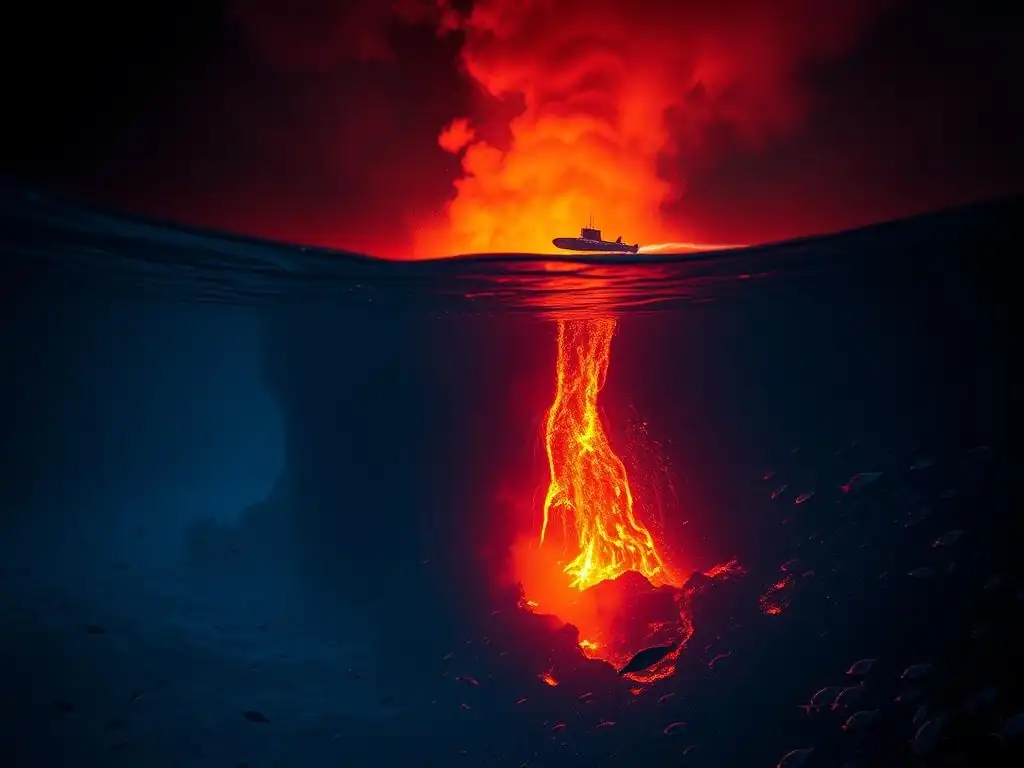
Welcome to Volcano Explorers, where the Earth's fiery secrets come to light. But what about the volcanoes we can't see? Prepare to plunge into the depths as we uncover the hidden world of underwater volcanoes and hotspots, a realm of simmering power and geological wonders lurking beneath the waves. Dare to explore the unseen forces shaping our planet – the journey starts here.
- Exploring Underwater Volcanoes and Hotspots: An Introduction
- The Formation of Submarine Volcanoes: A Deep Dive
- Types of Underwater Volcanic Eruptions: From Gentle Flows to Explosive Events
- Famous Underwater Volcanic Hotspots Around the World
- The Impact of Underwater Volcanoes on Marine Ecosystems
- Studying Underwater Volcanoes: Challenges and Technologies
- The Risks and Benefits of Underwater Volcanoes
- The Future of Submarine Volcano Research
- Conclusion: Appreciating the Hidden World of Underwater Volcanoes and Hotspots
- Frequently Asked Questions
- Final Reflection: Unveiling the Ocean's Fiery Heart
- Unveil the Mysteries Below!
Exploring Underwater Volcanoes and Hotspots: An Introduction
NOAA Ocean Exploration: Unveiling the Secrets of Submarine Volcanism
The National Oceanic and Atmospheric Administration (NOAA) Ocean Exploration program plays a crucial role in expanding our knowledge of the largely unexplored underwater volcanic world. Less than 25% of Earth’s seafloor has been mapped with modern sonar technology. NOAA expeditions, utilizing research vessels like the Okeanos Explorer, are instrumental in discovering and studying underwater volcanoes and hotspots through advanced technologies such as remotely operated vehicles (ROVs) and autonomous underwater vehicles (AUVs).
These missions not only map the bathymetry of these volcanic features but also collect crucial data on their geological composition, hydrothermal vent activity, and the unique ecosystems they host. For example, the NOAA's explorations in the Pacific Ring of Fire have revealed numerous previously unknown seamounts and hydrothermal vent fields, highlighting the vastness of the unexplored volcanic landscape beneath the ocean surface.
NOAA's work extends beyond basic discovery; it aims to understand the dynamic processes occurring at submarine volcanoes. This includes monitoring for potential hazards like submarine landslides and tsunami generation, as well as investigating the influence of these volcanoes on global ocean chemistry and marine biodiversity.
Through initiatives like the Ocean Exploration Cooperative Institute, NOAA collaborates with academic institutions and private partners to accelerate the pace of discovery and understanding. Data collected from these expeditions is publicly available, contributing significantly to the global scientific community's efforts to comprehend the Earth's volcanic activity in its entirety, both above and below the waves.
What are Underwater Volcanoes and Hotspots? Defining the Phenomenon
Underwater volcanoes are geological formations on the seabed where eruptions of magma occur. They are essentially fissures in the Earth’s crust that allow molten rock, ash, and gases to escape from magma chambers below the seafloor. These volcanic structures are far more numerous than their terrestrial counterparts, with estimates suggesting there are over a million submarine volcanoes taller than 1 kilometer above the seabed, and potentially millions more smaller ones. The vast majority are located along mid-ocean ridges, where tectonic plates are spreading apart, allowing magma to rise from the mantle.
Hotspots, on the other hand, are specific locations in the mantle where plumes of unusually hot material rise towards the surface. These mantle plumes are believed to be stationary relative to the moving tectonic plates above them. As a plate moves over a hotspot, a chain of volcanoes is formed, with the oldest volcanoes furthest from the hotspot and the youngest directly above it.
A classic example is the Hawaiian Islands, a volcanic chain created by the Pacific Plate moving over the Hawaiian hotspot. Underwater volcanoes associated with hotspots can be found in various oceanic basins, and they often exhibit distinct geochemical signatures compared to those at mid-ocean ridges, providing valuable insights into the Earth's deep mantle processes.
The Formation of Submarine Volcanoes: A Deep Dive
Mantle Plumes and the Genesis of Oceanic Volcanoes
Mantle plumes are the primary driving force behind hotspot volcanism, including the formation of many underwater volcanoes. These plumes are hypothesized to originate deep within the Earth's mantle, possibly at the core-mantle boundary, approximately 2,900 kilometers below the surface. The exact mechanism for their formation is still under investigation, but they are thought to be caused by thermal instabilities that lead to buoyant upwelling of hotter-than-average mantle material. These plumes rise through the mantle, partially melting as they reach shallower depths due to decompression.
When a mantle plume reaches the base of the lithosphere, the rigid outer layer of the Earth, it can melt through it, creating a pathway for magma to reach the surface. This process is responsible for the formation of volcanic hotspots, which are characterized by persistent volcanism over millions of years as tectonic plates drift over the plume.
The Hawaiian hotspot, for instance, is estimated to have been active for at least 80 million years, creating a chain of volcanoes stretching thousands of kilometers across the Pacific Ocean. The isotopic composition of lavas erupted at hotspot volcanoes often differs from those at mid-ocean ridges, providing clues about the distinct source regions and mantle dynamics associated with plume volcanism.
Tectonic Plate Movement and the Creation of Submerged Volcanic Chains
The movement of tectonic plates over stationary mantle plumes is the key to understanding the linear chains of underwater volcanoes observed in many ocean basins. As a plate slowly moves across the Earth's surface, a hotspot beneath it remains relatively fixed. Volcanoes form directly above the plume, erupting magma derived from the plume material.
As the plate continues to move, the volcano is carried away from the plume source, becoming inactive and eventually subsiding due to erosion and isostatic adjustment. Meanwhile, a new volcano starts to form directly above the hotspot, creating a sequence of volcanic islands and seamounts aligned in the direction of plate motion.
This process has resulted in some of the most extensive volcanic chains on Earth, such as the Hawaiian-Emperor seamount chain in the Pacific and the Louisville seamount chain in the South Pacific. The Hawaiian chain, for example, extends over 5,800 kilometers, with islands and seamounts progressively older towards the northwest, reflecting the direction of the Pacific Plate's movement over the Hawaiian hotspot.
By studying the ages and compositions of volcanoes along these chains, scientists can reconstruct plate tectonic history and gain insights into the dynamics of mantle plumes over geological timescales. The bend in the Hawaiian-Emperor chain, for instance, is believed to record a change in the direction of Pacific Plate motion around 47 million years ago.
Hydrothermal Vents: Oases of Life Around Deep-Sea Volcanoes
Hydrothermal vents are fascinating features commonly found in association with underwater volcanoes, particularly along mid-ocean ridges and at hotspot volcanoes. These vents are essentially fissures in the seafloor that release geothermally heated water. Seawater percolates down through cracks in the oceanic crust near volcanic activity, is heated by the underlying magma, and then rises back to the seafloor, carrying dissolved minerals from the crust. The temperature of vent fluids can range from relatively low temperatures to over 400 degrees Celsius (750 degrees Fahrenheit) in "black smoker" vents, which emit dark, plume-like clouds of sulfide minerals.
Hydrothermal vents are not only geological phenomena but also vibrant ecosystems. Despite the extreme conditions of high pressure, darkness, and toxic chemicals, these vents support unique communities of organisms that thrive on chemosynthesis rather than photosynthesis. Chemosynthetic bacteria and archaea form the base of these food webs, utilizing chemical energy from vent fluids, such as hydrogen sulfide, to produce organic matter.
These microorganisms support a diverse array of animals, including tube worms, clams, mussels, shrimp, and crabs, many of which are found nowhere else on Earth. Studies of hydrothermal vent ecosystems have revolutionized our understanding of life's adaptability and have even contributed to theories about the origin of life on Earth, suggesting that such environments may have been crucial in the early stages of life's development.
Types of Underwater Volcanic Eruptions: From Gentle Flows to Explosive Events
Effusive Eruptions: Lava Flows in the Deep Ocean
Effusive eruptions are a common type of volcanic activity at underwater volcanoes, characterized by the relatively gentle outpouring of lava onto the seafloor. Due to the immense pressure at depth and rapid cooling by the surrounding seawater, submarine effusive eruptions differ significantly from those on land. The high pressure prevents the dissolved gases in the magma from expanding as violently as they do in subaerial eruptions, leading to less explosive activity. Instead of violent explosions, lava flows smoothly across the seabed, often forming distinctive structures known as pillow lavas.
The rate of lava effusion can vary, but typically, underwater effusive eruptions produce slow-moving lava flows that can extend for considerable distances across the seafloor. These flows contribute to the construction of volcanic edifices, gradually building up seamounts and volcanic ridges over time. The chemical composition of the lava, typically basaltic in underwater settings, also plays a role in the flow characteristics. Scientists monitor underwater effusive eruptions using sonar, seismic sensors, and remotely operated vehicles to study lava flow rates, map the extent of new lava flows, and understand the dynamics of deep-sea volcanism.
Explosive Eruptions: Phreatomagmatic Activity and Seafloor Blasts
While effusive eruptions are more frequent, underwater volcanoes can also experience explosive eruptions, particularly in shallower waters or when magma interacts with seawater in specific ways. Explosive underwater eruptions are often phreatomagmatic, meaning they are driven by the interaction of magma with water. When hot magma comes into contact with seawater, it can cause rapid vaporization of the water, leading to violent explosions. The efficiency of this interaction and the explosivity of the eruption depend on factors such as the depth of the water, the magma composition, and the rate of magma supply.
In shallower submarine environments, explosive eruptions can be powerful enough to eject volcanic ash, pumice, and rock fragments into the water column, potentially reaching the surface and creating floating pumice rafts. These eruptions can also generate pressure waves that propagate through the water, and in extreme cases, may even trigger tsunamis.
While less frequent than effusive eruptions, explosive underwater eruptions play a significant role in shaping the seafloor and can have important implications for marine environments and human activities in coastal regions. Studying the deposits from past explosive underwater eruptions, such as hyaloclastites (fragmented volcanic glass), helps volcanologists to reconstruct the history of explosive activity and assess potential hazards.
Pillow Lavas: The Signature of Underwater Volcanic Activity
Pillow lavas are a characteristic feature of underwater volcanic eruptions and serve as a distinctive signature of submarine volcanism. When lava erupts underwater, the rapid cooling by the surrounding seawater causes the outer surface of the lava flow to solidify quickly, forming a glassy skin. As more lava continues to flow from beneath this solidified crust, it inflates the outer skin, forming pillow-shaped lobes. These pillow lavas typically range in size from a few centimeters to several meters in diameter and often stack upon each other, creating extensive pillow lava fields.
The shape and texture of pillow lavas provide valuable information about the eruption conditions and the properties of the lava. Their rounded, pillow-like morphology is a direct result of the rapid cooling and high pressure environment of submarine eruptions. The glassy outer crust of pillow lavas is composed of basaltic glass, also known as tachylite or sideromelane, which forms due to the quenching of the molten lava.
Pillow lavas are found throughout the world's oceans, along mid-ocean ridges, at seamounts, and in ancient volcanic sequences now exposed on land, providing geological evidence of past submarine volcanic activity. Geologists use the presence and characteristics of pillow lavas to interpret the volcanic history of different regions and understand the processes of seafloor spreading and oceanic crust formation.
Famous Underwater Volcanic Hotspots Around the World
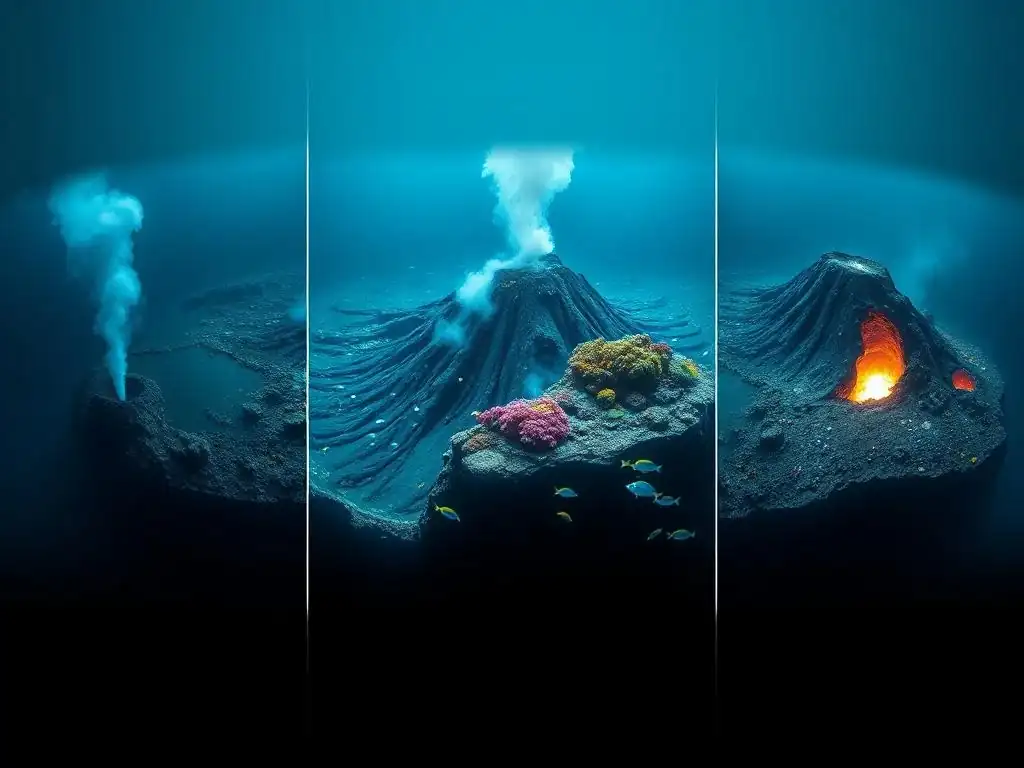
The Hawaiian-Emperor Seamount Chain: A Classic Example of Hotspot Volcanism
The Hawaiian-Emperor Seamount Chain is arguably the most iconic example of hotspot volcanism and a prime illustration of how underwater volcanoes are formed and evolve. This chain stretches over 5,800 kilometers across the Pacific Ocean, consisting of over 80 volcanoes, ranging from the active volcanoes of the Hawaiian Islands at the southeastern end to the submerged seamounts of the Emperor chain in the northwest. The formation of this chain is attributed to the Pacific Plate moving over the Hawaiian hotspot, a mantle plume that has been active for at least 80 million years.
The age of the volcanoes in the Hawaiian-Emperor chain progressively increases from southeast to northwest, reflecting the direction of the Pacific Plate's movement. Kilauea and Mauna Loa on the Big Island of Hawaii are currently active volcanoes directly above the hotspot. Moving northwest, the islands become older, smaller, and more eroded, eventually becoming submerged seamounts.
The Emperor seamounts, at the northwestern end of the chain, are the oldest and most subsided volcanoes, dating back to the Cretaceous period. The bend in the chain, between the Hawaiian and Emperor segments, is believed to mark a change in the Pacific Plate's direction of motion around 47 million years ago. The Hawaiian-Emperor Seamount Chain provides a remarkable natural laboratory for studying the life cycle of hotspot volcanoes and plate tectonic processes.
Iceland: A Volcanic Island Nation Shaped by a Mantle Plume
Iceland is a unique volcanic island nation whose very existence is profoundly shaped by both a mid-ocean ridge and a mantle plume. Located on the Mid-Atlantic Ridge, where the North American and Eurasian plates are diverging, Iceland experiences intense volcanic and geothermal activity. Furthermore, it is believed to be situated above the Iceland plume, a mantle plume that enhances the volcanism associated with the spreading ridge. This combination of factors makes Iceland one of the most volcanically active regions on Earth.
The Iceland plume is thought to be responsible for the island's unusually thick crust and its elevated topography compared to other sections of the Mid-Atlantic Ridge. Volcanic eruptions in Iceland are frequent and diverse, ranging from effusive basaltic lava flows to explosive eruptions producing ash clouds that can disrupt air travel. Notable volcanoes include Hekla, Katla, and Eyjafjallajökull, the latter's 2010 eruption causing widespread air traffic disruption across Europe.
Iceland's volcanic landscape also features extensive geothermal areas, hot springs, and geysers, which are harnessed for geothermal energy production, providing a significant portion of the country's electricity and heating needs. Iceland serves as a compelling example of the powerful interplay between plate tectonics and mantle plumes in shaping volcanic regions.
The Galapagos Islands: Darwin's Inspiration and a Volcanic Wonderland
The Galapagos Islands, a volcanic archipelago in the eastern Pacific Ocean, are renowned for their unique biodiversity and their role in Charles Darwin's theory of evolution. These islands are formed by hotspot volcanism, with the Nazca Plate moving over the Galapagos hotspot. The Galapagos hotspot is believed to be relatively young and shallow compared to other hotspots, resulting in a cluster of closely spaced volcanic islands. The volcanic activity in the Galapagos is ongoing, with eruptions occurring both on land and underwater.
The Galapagos Islands exhibit a diverse range of volcanic features, including shield volcanoes, cinder cones, and lava fields. Underwater volcanic activity is also prevalent, particularly around the western islands of Fernandina and Isabela, which are among the most volcanically active.
The underwater volcanoes in the Galapagos contribute to the unique marine ecosystems surrounding the islands, including hydrothermal vents and cold seeps that support specialized communities of marine life. The isolation and volcanic nature of the Galapagos Islands have fostered the evolution of unique species, such as the Galapagos giant tortoises, marine iguanas, and Darwin's finches, making them a living laboratory for evolutionary biology and a captivating destination for scientific research and ecotourism.
Axial Seamount: A Well-Studied Active Underwater Volcano
Axial Seamount, located approximately 480 kilometers off the coast of Oregon in the Pacific Ocean, is one of the most well-studied active underwater volcanoes in the world. It lies on the Juan de Fuca Ridge, a mid-ocean spreading center, and is characterized by frequent volcanic eruptions. Axial Seamount is particularly notable for its well-developed summit caldera, a large volcanic crater formed by past eruptions. The volcano is extensively monitored by the Ocean Observatories Initiative (OOI), providing real-time data on its volcanic activity, hydrothermal venting, and associated biological communities.
Axial Seamount has erupted multiple times in recent decades, with documented eruptions in 1998, 2011, and 2015. These eruptions have been monitored using seafloor instruments, including hydrophones, pressure sensors, and temperature probes, providing unprecedented insights into the dynamics of underwater volcanic eruptions.
The OOI cabled observatory at Axial Seamount allows for continuous, long-term monitoring, enabling scientists to study the pre-eruption signals, eruption processes, and post-eruption recovery of the hydrothermal vent ecosystems. Axial Seamount serves as a crucial natural laboratory for understanding underwater volcanism and its impacts on the ocean environment, and the data collected there is vital for improving our ability to predict and respond to future underwater volcanic events.
The Impact of Underwater Volcanoes on Marine Ecosystems
Creating New Habitats: Volcanic Islands and Seamounts as Biodiversity Hotspots
Underwater volcanoes, particularly seamounts and volcanic islands, play a significant role in shaping marine ecosystems and promoting biodiversity. As underwater volcanoes rise from the deep ocean floor, they create topographic features that disrupt ocean currents, leading to upwelling of nutrient-rich waters. This upwelling enhances primary productivity, supporting phytoplankton blooms and creating a foundation for complex food webs. Seamounts and volcanic islands act as oases in the vast, nutrient-poor open ocean, attracting a wide variety of marine life.
The hard substrates of seamounts and volcanic islands provide attachment sites for sessile organisms such as corals, sponges, and anemones, forming diverse benthic communities. These structures also offer refuge and feeding grounds for mobile species, including fish, marine mammals, and seabirds. Studies have shown that seamounts often host higher species richness and abundance compared to surrounding deep-sea plains, making them biodiversity hotspots. The unique geological and oceanographic conditions associated with underwater volcanoes contribute to the development of specialized ecosystems and the evolution of endemic species, highlighting their ecological importance in the marine realm.
Hydrothermal Vent Communities: Unique Life Forms Adapted to Extreme Environments
Hydrothermal vents, found near underwater volcanoes, host some of the most extraordinary ecosystems on Earth. These vents release chemically rich fluids from the Earth's interior, creating extreme environments characterized by high temperatures, high pressure, darkness, and toxic chemicals. Despite these harsh conditions, hydrothermal vents support thriving communities of organisms that have adapted to these unique niches. The basis of these ecosystems is chemosynthesis, a process by which microorganisms, such as bacteria and archaea, utilize chemical energy from vent fluids to produce organic matter.
Chemosynthetic microbes form symbiotic relationships with many vent animals, providing them with nutrition. Giant tube worms, for example, harbor chemosynthetic bacteria in their tissues, which oxidize hydrogen sulfide from vent fluids. Other characteristic vent fauna include vent clams, mussels, shrimp, crabs, and fish, many of which are endemic to hydrothermal vent environments. Hydrothermal vent ecosystems are not only remarkable for their biodiversity but also for their potential applications in biotechnology and their insights into the origin and evolution of life. Research on vent communities continues to reveal new species and novel adaptations to extreme environments.
Impact of Volcanic Activity on Ocean Acidity and Nutrient Cycling
Underwater volcanic activity has a complex and multifaceted impact on ocean chemistry, including ocean acidity and nutrient cycling. Volcanic eruptions release gases, such as carbon dioxide (CO2) and sulfur dioxide (SO2), into the ocean and atmosphere. While volcanic CO2 emissions are relatively small compared to anthropogenic emissions, they can contribute to ocean acidification over geological timescales. The absorption of volcanic CO2 by seawater lowers the pH of the ocean, potentially affecting marine organisms, particularly those with calcium carbonate shells or skeletons.
Volcanic eruptions also release significant amounts of nutrients and trace elements into the ocean, including iron, manganese, and phosphorus. These volcanic inputs can fertilize surface waters, stimulating phytoplankton growth and influencing ocean productivity. Hydrothermal vents are also major sources of dissolved metals and nutrients to the deep ocean, playing a role in global biogeochemical cycles.
The overall impact of underwater volcanic activity on ocean chemistry is a complex interplay of gas emissions, nutrient release, and hydrothermal circulation, which can have both local and global consequences for marine ecosystems and climate. Understanding these processes is crucial for assessing the Earth system's response to both natural and anthropogenic changes.
Studying Underwater Volcanoes: Challenges and Technologies
Remote Sensing Techniques: Mapping the Seafloor with Sonar and Satellites
Studying underwater volcanoes presents significant challenges due to their inaccessibility and the vastness of the ocean. Remote sensing techniques are essential tools for initial exploration and mapping of submarine volcanic features. Sonar (Sound Navigation and Ranging) is a primary technology used to map the seafloor bathymetry. Multibeam sonar systems, deployed from research vessels, emit sound waves and measure the time it takes for them to return after reflecting off the seafloor, creating detailed maps of underwater topography. Sonar surveys have been instrumental in discovering and mapping thousands of seamounts and volcanic ridges around the world.
Satellite altimetry is another remote sensing technique that can detect subtle variations in sea surface height caused by gravity anomalies associated with underwater features like seamounts. While satellite altimetry provides lower resolution compared to sonar, it can cover vast areas of the ocean and identify potential locations of underwater volcanoes for further investigation. Combining sonar and satellite data provides a powerful approach for reconnaissance and large-scale mapping of submarine volcanic landscapes. These remote sensing techniques are crucial first steps in exploring and understanding the global distribution and morphology of underwater volcanoes.
Submersible Exploration: Reaching the Deepest Volcanic Vents
Submersible vehicles, both human-occupied and remotely operated (ROVs), are indispensable for direct observation and sampling of underwater volcanoes, particularly in deep-sea environments. Human-occupied submersibles, such as Alvin and Nautile, allow scientists to descend to depths of up to 4,500 to 6,500 meters, enabling firsthand exploration of deep-sea volcanic features, hydrothermal vents, and associated ecosystems. These submersibles are equipped with cameras, sensors, and robotic arms for collecting samples of rocks, fluids, and organisms.
Remotely Operated Vehicles (ROVs) are tethered to a surface vessel and controlled remotely, offering greater operational flexibility and longer dive durations compared to human-occupied submersibles. ROVs like Jason and Ventana are equipped with advanced imaging systems, manipulators, and sampling tools, allowing for detailed surveys and sample collection in challenging deep-sea volcanic environments. Submersible explorations have revolutionized our understanding of hydrothermal vent processes, deep-sea volcanic eruptions, and the unique life forms that thrive in these extreme habitats. These technologies are crucial for pushing the boundaries of underwater volcano research and discovery.
Autonomous Underwater Vehicles (AUVs) for Long-Term Monitoring
Autonomous Underwater Vehicles (AUVs) are becoming increasingly important tools for studying underwater volcanoes, particularly for long-term monitoring and surveying large areas. AUVs are untethered robotic vehicles that can operate independently, following pre-programmed missions to collect data over extended periods. They are equipped with a variety of sensors, including sonar, cameras, CTDs (conductivity, temperature, depth sensors), and chemical sensors, enabling them to map bathymetry, measure water properties, and detect volcanic plumes.
AUVs can be deployed for weeks or months at a time, providing continuous monitoring of volcanic activity, hydrothermal vent fluxes, and changes in marine environments. They are particularly valuable for studying episodic events, such as volcanic eruptions and hydrothermal vent pulses, which may be missed by ship-based surveys.
AUVs can also survey vast areas more efficiently than traditional research vessels, providing broader spatial coverage of underwater volcanic regions. The development of more sophisticated and versatile AUVs is enhancing our ability to monitor and understand the dynamic processes occurring at underwater volcanoes over time and space, contributing to improved hazard assessment and environmental management.
The Risks and Benefits of Underwater Volcanoes
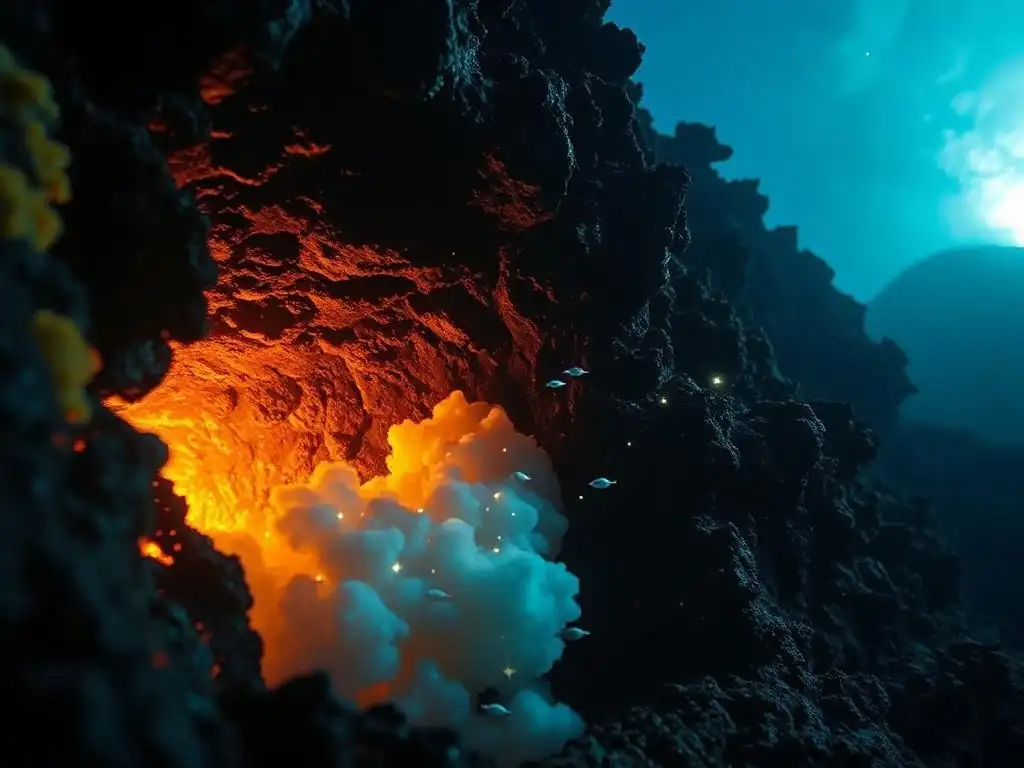
Potential Hazards: Submarine Landslides and Tsunami Generation
Underwater volcanoes, while fascinating natural phenomena, also pose potential hazards, particularly related to submarine landslides and tsunami generation. The steep slopes of underwater volcanoes, often composed of unstable volcanic materials, are prone to landslides. Large submarine landslides can displace vast volumes of water, generating tsunamis that can propagate across ocean basins and impact coastal communities. Historical records and geological evidence indicate that submarine landslides associated with volcanic islands and seamounts have triggered significant tsunamis in the past.
The flanks of volcanic islands like Hawaii and the Canary Islands are particularly susceptible to large-scale landslides. For example, the Storegga Slide off the coast of Norway, although not directly volcanic, serves as a stark reminder of the tsunami potential of submarine landslides. Underwater volcanic eruptions themselves can also trigger tsunamis, especially explosive eruptions in shallower waters.
Monitoring underwater volcanoes for signs of instability and potential landslide triggers, as well as improving tsunami early warning systems, are crucial for mitigating the hazards associated with these geological features. Understanding the mechanisms of submarine landslide and tsunami generation is an active area of research aimed at reducing risks to coastal populations.
Geothermal Energy: Harnessing the Power of Volcanic Heat
While underwater volcanoes can pose hazards, they also offer potential benefits, particularly in the realm of geothermal energy. The heat associated with volcanic activity can be harnessed to generate electricity and provide thermal energy. Iceland, for instance, is a world leader in geothermal energy production, utilizing the volcanic heat associated with the Iceland plume and the Mid-Atlantic Ridge to generate a significant portion of its electricity and heating needs. While current geothermal energy exploitation is primarily focused on land-based volcanic systems, the vast potential of underwater geothermal resources is increasingly being recognized.
Hydrothermal vents, in particular, are concentrated sources of geothermal energy. While directly harnessing energy from high-temperature black smoker vents presents technological challenges due to extreme conditions, lower-temperature hydrothermal systems and diffuse heat flow around underwater volcanoes offer more accessible geothermal resources. Research is ongoing to explore the feasibility of utilizing underwater geothermal energy, potentially through seafloor-based power plants or by transmitting energy to land via subsea cables. Harnessing the geothermal power of underwater volcanoes could provide a clean and sustainable energy source, particularly for island nations and coastal communities located near volcanic regions.
Potential for Seafloor Massive Sulfide (SMS) Deposits
Underwater volcanoes, especially hydrothermal vent systems, are associated with the formation of seafloor massive sulfide (SMS) deposits. These deposits are rich in valuable metals, including copper, zinc, gold, and silver, which precipitate from hydrothermal fluids as they mix with cold seawater. SMS deposits are attracting increasing interest as potential sources of critical minerals, particularly as terrestrial reserves of some metals become depleted. Exploration and potential mining of SMS deposits are being considered in some regions, although environmental concerns and technological challenges need to be carefully addressed.
The formation of SMS deposits is a complex process involving the leaching of metals from the oceanic crust by hydrothermal fluids and their subsequent precipitation at vent sites. The composition and metal content of SMS deposits vary depending on the geological setting and the characteristics of the hydrothermal system. While the economic potential of SMS deposits is significant, environmental impacts of mining these deep-sea resources, such as habitat destruction and disturbance of vent ecosystems, are major considerations. Sustainable and responsible approaches to SMS exploration and potential mining are essential to balance resource extraction with environmental protection.
The Future of Submarine Volcano Research
Understanding the Role of Underwater Volcanoes in Earth's Climate
Future research on underwater volcanoes will increasingly focus on their role in Earth's climate system. Volcanic eruptions, both on land and underwater, release gases that can influence atmospheric composition and climate. While the climatic impact of subaerial volcanoes is relatively well-studied, the role of submarine volcanoes is less understood. Underwater volcanoes release significant amounts of CO2, sulfur gases, and other volatile compounds into the ocean, which can affect ocean chemistry and potentially influence atmospheric CO2 levels over geological timescales.
Hydrothermal vents also play a role in ocean biogeochemical cycles, releasing dissolved metals and nutrients that can impact ocean productivity and carbon sequestration. Understanding the fluxes of gases and chemicals from underwater volcanoes and hydrothermal vents, and their interactions with the ocean and atmosphere, is crucial for assessing their contribution to long-term climate variability. Future research will involve improved monitoring of submarine volcanic emissions, modeling of ocean-atmosphere interactions, and paleoclimate studies to reconstruct the past influence of underwater volcanism on Earth's climate.
Predicting Underwater Eruptions: Improving Monitoring and Early Warning Systems
Improving the ability to predict underwater volcanic eruptions is a major goal for future research. Underwater eruptions can pose hazards to seafloor infrastructure, marine navigation, and coastal communities through tsunami generation. Developing effective monitoring and early warning systems for submarine eruptions requires a better understanding of pre-eruption signals and eruption processes. Current monitoring techniques include seafloor seismometers, hydrophones, pressure sensors, and geodetic instruments.
Future research will focus on enhancing these monitoring networks, developing new sensor technologies, and improving eruption forecasting models. Real-time data from seafloor observatories, such as the Ocean Observatories Initiative's cabled observatory at Axial Seamount, are crucial for studying pre-eruption unrest and eruption dynamics. Integrating data from multiple monitoring systems and developing advanced data analysis techniques, including machine learning, will be essential for improving the accuracy and timeliness of underwater eruption predictions and tsunami early warnings.
Exploring the Global Mid-Ocean Ridge System
The global mid-ocean ridge system, the longest mountain range on Earth, is a vast frontier for underwater volcano research. Mid-ocean ridges are the primary sites of seafloor spreading and submarine volcanism, yet large portions of this system remain unexplored. Future research will involve systematic exploration and mapping of mid-ocean ridges, particularly in remote and poorly surveyed regions. This will require deploying advanced technologies, such as AUVs, deep-towed sonar systems, and long-range submersibles, to survey vast stretches of the ridge system and investigate volcanic and hydrothermal activity.
Exploring the diversity of volcanic and hydrothermal processes along different segments of the mid-ocean ridge will provide fundamental insights into the dynamics of plate tectonics, mantle melting, and oceanic crust formation. Discovering new hydrothermal vent fields and associated ecosystems along unexplored ridge segments will also expand our understanding of deep-sea biodiversity and chemosynthetic life. International collaborations and coordinated research efforts are essential to tackle the immense task of exploring the global mid-ocean ridge system and unlocking its scientific secrets.
Underwater volcanoes and hotspots represent a hidden world of geological dynamism and biological wonder beneath the ocean's surface. From the formation of vast seamount chains by mantle plumes to the creation of unique ecosystems at hydrothermal vents, these submarine volcanic features play a crucial role in shaping our planet. While they pose potential hazards, they also offer potential benefits, from geothermal energy to valuable mineral resources.
Continued exploration and research are essential to unravel the mysteries of underwater volcanoes, understand their impact on Earth's systems, and appreciate the hidden volcanic landscapes that lie beneath the waves. By furthering our knowledge of these underwater giants, we can better understand our planet's past, present, and future.
Frequently Asked Questions
What are underwater volcanoes and hotspots?
Underwater volcanoes are volcanic vents located beneath the ocean's surface. Hotspots are regions where magma plumes rise from deep within the Earth's mantle, creating volcanic activity regardless of plate boundaries.
How do underwater volcanoes differ from volcanoes on land?
Underwater volcanoes erupt in a vastly different environment, with extreme pressure and rapid cooling from the surrounding water. This leads to different types of eruptions and unique geological formations, like pillow lava.
Where are most underwater volcanoes and hotspots located?
Many underwater volcanoes are found along mid-ocean ridges, where tectonic plates are diverging. Hotspots can be found in various locations, like Hawaii and Iceland, creating underwater and above-water volcanoes.
What are the potential dangers associated with underwater volcanic activity?
Underwater eruptions can cause tsunamis, submarine landslides, and release harmful gases into the ocean. They can also disrupt marine ecosystems and affect shipping routes.
How do scientists study underwater volcanoes and hotspots?
Scientists use sonar mapping, remotely operated vehicles (ROVs), and seismic monitoring to study underwater volcanoes. They also collect lava samples to analyze their composition and understand the processes driving volcanic activity.
Final Reflection: Unveiling the Ocean's Fiery Heart
The exploration of underwater volcanoes and hotspots, as detailed in this article, isn't just a scientific endeavor; it's a crucial step in understanding our planet's dynamic processes. These hidden realms, once relegated to the periphery of our awareness, are now recognized as vital players in shaping Earth's climate, geology, and even the very origins of life. Their impact resonates far beyond the ocean's surface, influencing everything from global currents to the composition of our atmosphere.
The sheer power and mystery of these underwater volcanoes continue to captivate and humble us. The realization that so much of our planet remains unexplored, teeming with unseen activity, underscores the importance of continued research and exploration. The potential for discovery, both scientific and philosophical, is immense. The sea, once it casts its spell, holds one in its net of wonder forever.
- Jacques Cousteau. This quote perfectly encapsulates the enduring allure of the ocean's depths and the compelling need to unravel its secrets.
Now, consider the implications of what you've learned. The knowledge of underwater volcanoes and hotspots empowers us to better understand and prepare for the future. What role will these fiery landscapes play in the face of climate change? How can we harness their energy responsibly? The answers lie in continued exploration, research, and a deep respect for the power and fragility of our planet. Let us all strive to be informed stewards of this underwater realm, ensuring its preservation for generations to come.
Unveil the Mysteries Below!
Thank you for exploring the fascinating world of submarine volcanoes with us! Now that you've discovered these hidden hotspots, we invite you to continue your journey. Here are a few ways to stay connected with the underwater volcanic world:
- Report any unusual volcanic activity to Volcano Explorers. Your observations will help our team understand these powerful forces of nature.
- Explore our interactive map showcasing documented submarine volcanoes to discover their locations and depths.
- Share this article with fellow volcano enthusiasts. Help spread awareness about these incredible underwater formations!
What question about submarine volcanoes intrigues you most? Share your thoughts in the comments below, and let's continue the exploration together!