
Unveiling the Hidden Gases: Discovering Trace Elements in Volcanic Emissions

Welcome to Volcano Explorers, where the Earth's fiery secrets are brought to light. Ever wondered what invisible clues are carried within a volcano's breath? Prepare to journey into the heart of volcanic activity and uncover the fascinating world of trace elements in volcanic gases. Their presence, though minuscule, holds the key to understanding a volcano's inner workings and predicting its future behavior. Intrigued? Dive deeper to unlock the secrets hidden within these volcanic emissions and discover how they're revolutionizing volcano monitoring and prediction.
- Introduction: The Importance of Studying Volcanic Gases
- Understanding Volcanic Gas Emissions: An Overview
- Methods for Detecting Trace Elements in Volcanic Gases
- Key Trace Elements and Their Significance in Volcanic Gases
- Case Studies: Discovering Trace Elements in Specific Volcanic Eruptions
- The Role of Trace Elements in Volcanic Hazard Assessment
- Challenges and Future Directions in Trace Element Research
- Conclusion: The Unseen World of Volcanic Trace Gases
-
Frequently Asked Questions
- How are trace elements in volcanic gases collected?
- Why are trace elements in volcanic gases important to study?
- What are some common trace elements found in volcanic gases?
- How do trace elements in volcanic gases affect the environment?
- Can the analysis of trace elements in volcanic gases help predict eruptions?
- Final Reflection: The Breath of the Earth and Our Future
- Ignite Your Inner Volcanologist!
Introduction: The Importance of Studying Volcanic Gases
Why Analyzing Volcanic Gas Composition Matters for Volcano Monitoring
Volcanic gases are a window into the Earth's interior, offering invaluable insights into the processes occurring deep beneath the surface. The composition of these gases, released from magma chambers and volcanic vents, is directly linked to the state of a volcano.
By meticulously analyzing the types and quantities of gases emitted, volcanologists can gain crucial information about magma ascent, degassing processes, and the potential for future eruptions. Changes in gas composition can precede volcanic eruptions, sometimes by weeks or even months, making gas monitoring a vital tool in forecasting volcanic activity and mitigating potential hazards to communities living near volcanoes.
The study of volcanic gases is not merely an academic exercise; it has direct implications for public safety and environmental understanding. Monitoring gas emissions allows for a more nuanced understanding of a volcano's behavior, moving beyond simply observing seismic activity or ground deformation.
For instance, an increase in the ratio of sulfur dioxide to carbon dioxide might indicate that magma is rising closer to the surface, increasing the likelihood of an eruption. Furthermore, understanding the composition of volcanic gases helps to assess the environmental impact of eruptions, from acid rain formation to the contribution of volcanic gases to the global atmosphere over geological timescales.
Focusing on Trace Elements: Beyond the Major Gas Components
While major gas components like water vapor (H2O), carbon dioxide (CO2), and sulfur dioxide (SO2) constitute the bulk of volcanic emissions, the study of trace elements in volcanic gases is increasingly recognized as critical for a more comprehensive understanding of volcanic systems. Trace elements, present in parts per million (ppm) or even parts per billion (ppb), can act as sensitive indicators of magmatic processes that are often masked when only focusing on the major gas species.
These elements, though present in minute quantities, can provide unique insights into the source region of magma, the degree of magma differentiation, and the subtle changes occurring within the volcanic plumbing system.
The significance of trace elements extends beyond volcano monitoring. Certain trace gases, such as mercury and halogens, have substantial environmental and atmospheric impacts. Volcanic emissions are a natural source of these elements to the atmosphere, and understanding their release rates and pathways is crucial for assessing their contribution to global geochemical cycles and potential health hazards. For example, volcanic halogens can play a significant role in stratospheric ozone depletion, while mercury deposition can contaminate ecosystems. Therefore, focusing on trace elements in volcanic gases offers a deeper and more holistic perspective on volcanic activity and its broader consequences.
Understanding Volcanic Gas Emissions: An Overview
Major Gas Constituents vs. Trace Gas Species in Volcanic Plumes
Volcanic plumes are complex mixtures of gases, aerosols, and ash particles, with the gaseous component dominated by a few major species. Water vapor (H2O) is typically the most abundant, often comprising over 70% of the total gas emissions. Carbon dioxide (CO2) and sulfur dioxide (SO2) are the next most prevalent, along with smaller amounts of hydrogen sulfide (H2S), hydrogen halides (HCl, HF), and carbon monoxide (CO). These major gases provide fundamental information about the overall degassing behavior of a volcano and are routinely monitored at many active volcanoes worldwide.
In contrast to these major components, trace gas species exist in significantly lower concentrations, often orders of magnitude smaller. These include a diverse array of elements and compounds such as helium (He), argon (Ar), mercury (Hg), radon (Rn), and various halogen species (e.g., bromine, iodine). Despite their low concentrations, trace elements in volcanic gases are not insignificant.
They can act as sensitive tracers of deep magmatic processes, providing information that is complementary to the data obtained from major gas species. The relative ratios of certain trace elements can be particularly diagnostic, revealing subtle changes in magma source, ascent paths, and degassing conditions that might be missed by focusing solely on the major gas components.
Factors Influencing Volcanic Gas Composition: Temperature, Pressure, and Magma Source
The composition of volcanic gases is not static; it is a dynamic reflection of the complex interplay of physical and chemical conditions within the Earth's volcanic systems. Temperature, pressure, and the source of the magma are primary factors that dictate the types and proportions of gases released. As magma ascends from depth, it experiences a decrease in pressure, leading to the exsolution of dissolved gases.
The solubility of different gas species varies with pressure, with less soluble gases like CO2 being released earlier and more deeply than more soluble gases like H2O. This pressure-dependent degassing process results in changes in gas composition as magma rises.
Temperature also plays a critical role. Higher temperatures generally favor the release of a wider range of gas species and can influence the relative proportions of different gases. For instance, higher temperatures may lead to increased emissions of sulfur-bearing gases like SO2 and H2S. Furthermore, the source of the magma itself is a fundamental control on gas composition.
Magmas derived from different mantle sources or crustal regions will have distinct initial compositions, including varying concentrations of volatile elements. Magmas interacting with crustal rocks can also undergo contamination and assimilation, further modifying their gas signatures. Therefore, understanding the interplay of temperature, pressure, and magma source is essential for interpreting the information encoded within volcanic gas emissions, particularly the subtle signals carried by trace elements in volcanic gases.
Methods for Detecting Trace Elements in Volcanic Gases
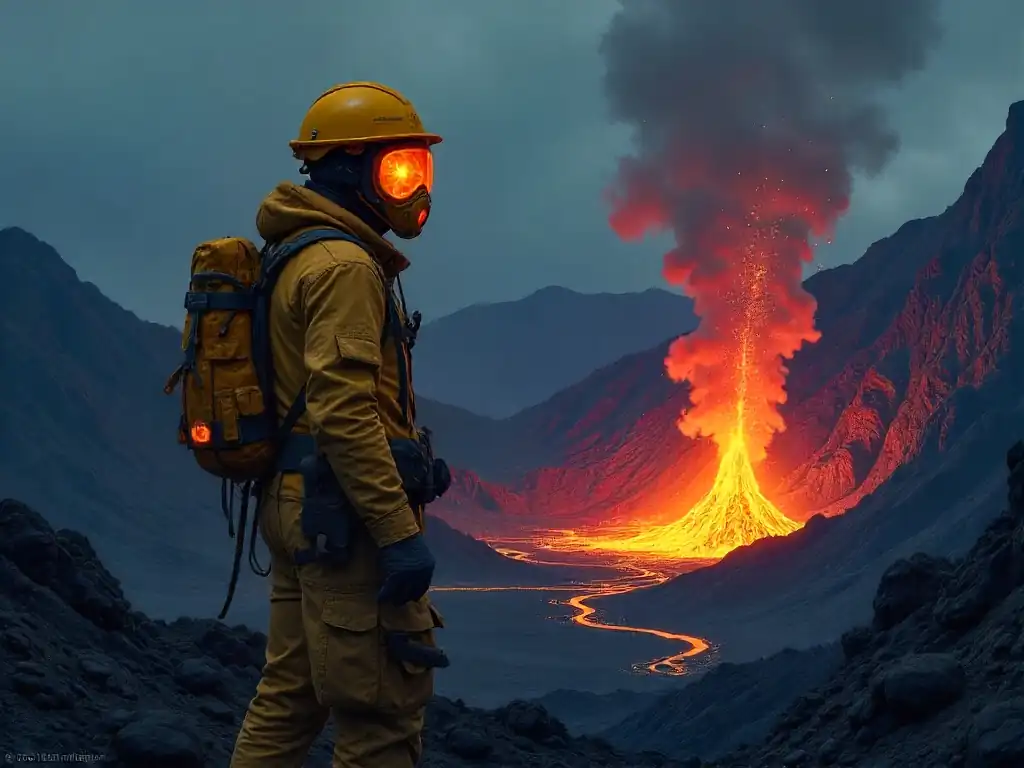
Direct Sampling Techniques: Collecting Volcanic Gas Samples for Analysis
Direct sampling techniques involve physically collecting volcanic gas samples directly from fumaroles, vents, or plumes for subsequent laboratory analysis. This method, while sometimes challenging and requiring careful planning and execution due to the hazardous volcanic environment, offers the advantage of providing a comprehensive suite of gas species for analysis, including trace elements in volcanic gases. Common direct sampling methods include using evacuated flasks or gas-tight bags to collect gas samples. These samples are then transported to laboratories equipped with sophisticated analytical instruments for detailed compositional analysis.
Laboratory analysis of directly sampled volcanic gases typically involves techniques such as Gas Chromatography (GC) and Mass Spectrometry (MS). GC separates different gas components based on their physical and chemical properties, while MS identifies and quantifies these components by measuring their mass-to-charge ratio.
For trace element analysis, techniques like Inductively Coupled Plasma Mass Spectrometry (ICP-MS) are often employed due to their high sensitivity and ability to detect a wide range of elements at low concentrations. Direct sampling and laboratory analysis provide the most accurate and detailed information on the composition of volcanic gases, including precise measurements of trace element concentrations.
Remote Sensing Techniques: Spectroscopic Analysis of Volcanic Plumes
Remote sensing techniques offer a complementary approach to direct sampling, allowing for the analysis of volcanic gas plumes from a distance, without the need for physical sample collection. These techniques rely on spectroscopic analysis, which involves studying the interaction of electromagnetic radiation (such as ultraviolet, visible, or infrared light) with volcanic gases.
Different gas molecules absorb and emit light at specific wavelengths, creating unique spectral signatures that can be used to identify and quantify the gases present in a volcanic plume. Remote sensing is particularly valuable for monitoring volcanic gas emissions in real-time and accessing hazardous or inaccessible volcanic areas.
Several spectroscopic techniques are used for remote sensing of volcanic gases. Differential Optical Absorption Spectroscopy (DOAS) is a widely used method that measures the absorption of ultraviolet and visible light by gases like SO2 and NO2 in volcanic plumes. Fourier Transform Infrared Spectroscopy (FTIR) analyzes the infrared spectrum of volcanic plumes to detect gases such as CO2, H2O, SO2, and HCl.
For trace element detection, techniques like Laser-Induced Breakdown Spectroscopy (LIBS) are being developed and refined. LIBS uses a pulsed laser to create a plasma on the volcanic plume, and the emitted light from the plasma is analyzed to determine the elemental composition, including trace elements. Remote sensing techniques provide continuous and spatially extensive data on volcanic gas emissions, complementing the detailed but often temporally and spatially limited information obtained from direct sampling.
Specific Instruments Used for Trace Element Detection: Differential Optical Absorption Spectroscopy (DOAS) and Fourier Transform Infrared Spectroscopy (FTIR)
While traditionally focused on major gas species, Differential Optical Absorption Spectroscopy (DOAS) and Fourier Transform Infrared Spectroscopy (FTIR) are being increasingly adapted and refined for the detection of certain trace elements in volcanic gases. DOAS, in its multi-component configuration, can be used to detect not only SO2 and NO2 but also trace gases like bromine oxide (BrO) and ozone (O3), which are relevant in understanding the atmospheric impact of volcanic plumes. For example, measurements of BrO in volcanic plumes provide insights into the release of bromine, a halogen that plays a significant role in stratospheric ozone depletion.
FTIR spectroscopy, particularly when coupled with advanced spectral analysis algorithms, can also extend its capabilities to detect some trace gas species. While FTIR is primarily used for major gases, specific spectral regions can be analyzed to identify and quantify trace gases like carbonyl sulfide (OCS) and ammonia (NH3). Furthermore, ongoing research and development are focused on enhancing the sensitivity and spectral resolution of both DOAS and FTIR instruments to improve their ability to detect a wider range of trace elements in volcanic gases.
This includes the development of new spectral fitting routines and the use of more sensitive detectors. These advancements are crucial for expanding the application of remote sensing techniques to the comprehensive monitoring of trace elements in volcanic emissions, providing valuable real-time data for volcano monitoring and atmospheric studies.
Key Trace Elements and Their Significance in Volcanic Gases
Sulfur Dioxide (SO2) and Hydrogen Sulfide (H2S): Indicators of Magmatic Activity
Sulfur dioxide (SO2) and hydrogen sulfide (H2S) are prominent sulfur-bearing gases in volcanic emissions and are widely recognized as key indicators of magmatic activity. SO2 is typically the most abundant sulfur gas in volcanic plumes, particularly during periods of unrest or eruption. Increased SO2 emission rates often signal magma ascent and degassing, making it a crucial parameter for volcano monitoring. For instance, a dramatic increase in SO2 flux was observed at Mount Pinatubo in the Philippines in the months leading up to its cataclysmic 1991 eruption, providing a critical warning sign of the impending event.
Hydrogen sulfide (H2S), while generally present in lower concentrations than SO2, is also significant. The ratio of SO2 to H2S can provide valuable information about the redox conditions and temperature of the volcanic system. Higher SO2/H2S ratios often indicate hotter, more oxidized conditions, potentially associated with magmatic degassing at shallower levels. Conversely, lower ratios might suggest cooler, more reduced conditions or interactions with hydrothermal systems. Both SO2 and H2S are relatively easy to monitor remotely using techniques like DOAS and FTIR, making them essential trace elements in volcanic gases for routine volcano surveillance and eruption forecasting.
Halogens (Fluorine, Chlorine, Bromine): Impact on Atmospheric Chemistry
Halogens, including fluorine (F), chlorine (Cl), and bromine (Br), are trace elements in volcanic gases that have a disproportionately large impact on atmospheric chemistry. Volcanoes are a significant natural source of halogens to the atmosphere, releasing them primarily in the form of hydrogen halides (HF, HCl, HBr). These halogen species play a crucial role in stratospheric ozone depletion.
Volcanically emitted chlorine and bromine, upon reaching the stratosphere, can participate in catalytic cycles that destroy ozone molecules, contributing to the thinning of the ozone layer. The eruption of Mount Pinatubo in 1991, for example, injected massive amounts of chlorine and sulfur into the stratosphere, leading to a measurable global decrease in ozone levels.
Fluorine, while also emitted by volcanoes as hydrogen fluoride (HF), primarily impacts the troposphere and has a shorter atmospheric lifetime compared to chlorine and bromine. HF is highly reactive and readily dissolves in water, contributing to acid rain formation and impacting local ecosystems downwind of volcanoes. Understanding the release rates and atmospheric behavior of volcanic halogens is essential for assessing their contribution to both stratospheric ozone depletion and tropospheric air quality. Monitoring these trace elements in volcanic gases, therefore, provides crucial information for evaluating the environmental consequences of volcanic eruptions and their long-term impact on the Earth's atmosphere.
Metals (e.g., Mercury, Lead, Arsenic): Environmental and Health Concerns
Volcanic gases also contain trace amounts of various metals, including mercury (Hg), lead (Pb), arsenic (As), and others. These metallic trace elements, while present in low concentrations in the gas phase, can have significant environmental and health implications. Mercury, in particular, is a global pollutant, and volcanoes are recognized as a major natural source of atmospheric mercury.
Volcanic mercury emissions can be transported long distances and deposited in ecosystems, where it can bioaccumulate in food chains, posing a risk to human health through the consumption of contaminated fish and other wildlife. Studies have shown elevated mercury levels in areas downwind of active volcanoes, highlighting the environmental impact of volcanic mercury emissions.
Lead and arsenic, although typically emitted in lower quantities than mercury, are also of concern due to their toxicity. Volcanic emissions of these elements can contribute to air pollution and soil contamination in areas surrounding volcanoes. Long-term exposure to even low levels of lead and arsenic can have adverse health effects.
Furthermore, volcanic ash, which often accompanies gas emissions during eruptions, can also contain trace metals, further contributing to environmental contamination. Monitoring the concentrations of metallic trace elements in volcanic gases is crucial for assessing the potential environmental and health risks associated with volcanic activity and for developing strategies to mitigate these risks in volcanic regions.
Case Studies: Discovering Trace Elements in Specific Volcanic Eruptions
Case Study 1: Mount St. Helens - Analyzing Trace Elements Before and After the 1980 Eruption
Mount St. Helens, in Washington State, USA, provides a compelling case study for understanding the role of trace elements in volcanic eruptions. Prior to its catastrophic eruption in 1980, scientists conducted extensive monitoring of gas emissions, including the analysis of trace elements in volcanic gases. Baseline measurements established the pre-eruption gas composition, allowing for comparison with post-eruption emissions. Analysis of gas samples collected from fumaroles and vents before the eruption revealed the presence of various trace elements, including sulfur species, halogens, and metals.
Following the 1980 eruption, which dramatically altered the landscape and volcanic system, gas monitoring continued, providing a unique opportunity to observe changes in trace element signatures. Post-eruption gas analyses showed significant shifts in the concentrations and ratios of certain trace elements compared to pre-eruption levels.
For example, changes in the ratios of sulfur to halogen gases were observed, reflecting changes in magma degassing processes and the source of the emitted gases. The Mount St. Helens case study underscores the importance of long-term gas monitoring, including trace element analysis, in understanding volcanic evolution and the impact of major eruptions on volcanic gas composition.
Case Study 2: Kilauea - Trace Gas Signatures and Lava Lake Dynamics
Kilauea volcano in Hawaii, known for its persistent volcanic activity and lava lake within Halemaʻumaʻu crater, offers another valuable case study for investigating trace elements in volcanic gases. Scientists have continuously monitored gas emissions from Kilauea for decades, utilizing both direct sampling and remote sensing techniques. Studies of Kilauea's gas plumes have revealed detailed trace gas signatures, including information on sulfur species, halogens, and noble gases. These trace gas measurements have been instrumental in understanding the dynamics of the lava lake and the degassing processes occurring within the volcano's shallow magma system.
For instance, variations in the ratios of helium isotopes (³He/⁴He) in Kilauea's gas emissions have provided insights into the mantle source of the magma feeding the volcano. Changes in trace element concentrations, particularly sulfur and halogen species, have been correlated with fluctuations in lava lake level and eruptive activity.
Furthermore, the continuous monitoring of SO2 emissions at Kilauea using remote sensing techniques has been crucial for tracking volcanic activity and assessing air quality impacts on the surrounding communities. The Kilauea case study demonstrates the power of trace gas analysis in unraveling the complex processes occurring within persistently active volcanic systems and their surface manifestations, such as lava lakes.
Comparing Trace Element Profiles Across Different Volcanic Environments
Comparing trace element profiles across different volcanic environments provides valuable insights into the diverse magmatic processes and geological settings that influence volcanic gas composition. Volcanoes located in subduction zones, such as those in the Pacific Ring of Fire, often exhibit distinct trace gas signatures compared to volcanoes in intraplate settings, like Hawaii or Iceland.
Subduction zone volcanoes tend to have higher concentrations of water vapor and halogen gases, reflecting the incorporation of water and sediments from the subducting plate into the magma source. In contrast, intraplate volcanoes, often associated with mantle plumes, may exhibit different noble gas isotope ratios and trace element abundances, reflecting their deeper mantle origin.
Studies comparing trace element profiles from volcanoes with varying eruptive styles, such as effusive versus explosive volcanoes, have also revealed significant differences. Explosive eruptions are often associated with magmas that are richer in volatile components and certain trace elements compared to effusive eruptions. Analyzing trace element variations across different volcanic environments helps to constrain the factors controlling magma generation, degassing, and eruptive behavior. This comparative approach is crucial for developing a more comprehensive understanding of the global diversity of volcanic gas emissions and their broader implications for Earth's geochemical cycles and atmospheric composition.
The Role of Trace Elements in Volcanic Hazard Assessment
Using Trace Gas Ratios to Predict Eruptive Style
Trace gas ratios, particularly those involving trace elements in volcanic gases, are increasingly recognized as valuable tools for predicting volcanic eruptive style. The ratios of certain trace gas species can be sensitive indicators of magma properties and degassing conditions that influence whether an eruption will be effusive (lava flows) or explosive (ash plumes and pyroclastic flows). For example, the ratio of sulfur dioxide (SO2) to hydrogen chloride (HCl) has been explored as a potential indicator of eruptive style. Higher SO2/HCl ratios might suggest a greater potential for explosive eruptions, while lower ratios could be associated with more effusive activity.
Similarly, ratios involving other trace elements, such as halogens or metals, are being investigated for their predictive capabilities. Changes in these trace gas ratios can reflect variations in magma viscosity, gas content, and the depth of magma degassing, all of which play a role in determining eruptive style.
While no single trace gas ratio is a foolproof predictor, combining multiple gas ratios with other monitoring data, such as seismic activity and ground deformation, can improve the accuracy of volcanic hazard assessments and eruption forecasting. Continued research into the relationships between trace gas ratios and eruptive style is crucial for enhancing our ability to anticipate and prepare for different types of volcanic eruptions.
Linking Trace Element Concentrations to Volcanic Unrest
Changes in the concentrations of certain trace elements in volcanic gases can be linked to periods of volcanic unrest, providing early warning signals of potential eruptions. Volcanic unrest is characterized by deviations from a volcano's normal background activity, such as increased seismicity, ground deformation, and changes in gas emissions.
Monitoring trace element concentrations during periods of unrest can reveal subtle changes in magmatic processes that might not be evident from major gas species alone. For instance, an increase in the concentration of certain metal trace elements, like mercury or lead, might indicate magma ascent and degassing at shallower depths, increasing the likelihood of an eruption.
Conversely, a decrease in the concentration of specific trace elements could also be significant, potentially signaling changes in magma supply or degassing pathways. The temporal evolution of trace element concentrations during volcanic unrest can provide valuable insights into the dynamics of the volcanic system and the progression towards eruption. By carefully monitoring trace element trends in volcanic gases during unrest periods, volcanologists can gain a more nuanced understanding of volcanic behavior and improve the accuracy of eruption forecasts and hazard assessments.
Improving Volcanic Monitoring with Trace Gas Data
Integrating trace gas data into comprehensive volcanic monitoring programs significantly enhances our ability to detect and interpret subtle changes in volcanic activity, leading to improved eruption forecasting and hazard mitigation. Traditional volcanic monitoring often focuses on seismic activity, ground deformation, and major gas species like SO2. However, incorporating trace element analysis into routine monitoring provides a more complete picture of volcanic processes. Trace elements can act as sensitive indicators of deep magmatic changes and subtle shifts in degassing conditions that may precede significant eruptive events.
Combining trace gas data with other monitoring datasets, such as seismic, deformation, and thermal data, allows for a more holistic and integrated approach to volcanic surveillance. Multivariate analysis techniques can be used to identify patterns and correlations between different monitoring parameters, including trace gas concentrations, to better understand volcanic behavior and refine eruption forecasting models. Furthermore, the development of new technologies for real-time trace gas monitoring, such as advanced remote sensing instruments and portable analytical devices, is crucial for making trace gas data more readily available and accessible for routine volcanic monitoring and hazard assessment efforts worldwide.
Challenges and Future Directions in Trace Element Research
Overcoming Limitations in Gas Sampling and Analysis
Despite the significant advancements in volcanic gas research, challenges remain in both gas sampling and analysis, particularly for trace elements in volcanic gases. Direct sampling in hazardous volcanic environments can be logistically difficult and pose risks to researchers. Contamination of samples during collection and storage is also a concern, especially for trace element analysis where even minute amounts of contamination can affect results. Furthermore, the analytical techniques used for trace element detection, while highly sensitive, can be complex and require specialized equipment and expertise.
Future directions in gas sampling and analysis include developing more robust and automated sampling systems that can be deployed remotely in hazardous areas, minimizing human exposure and improving data collection efficiency. Advances in analytical techniques are focused on enhancing sensitivity, reducing detection limits, and improving the accuracy and precision of trace element measurements. Miniaturization and portability of analytical instruments are also crucial for enabling in-situ trace gas analysis in the field, reducing the need for sample transport and laboratory delays. Overcoming these limitations will be essential for expanding the scope and impact of trace element research in volcanology.
Developing New Technologies for Real-Time Trace Gas Monitoring
The development of new technologies for real-time trace gas monitoring is a critical area of focus in volcanology. Current remote sensing techniques, like DOAS and FTIR, provide valuable real-time data on major gas species, but their capabilities for trace element detection are still being developed. Future technological advancements are aimed at creating instruments that can continuously and reliably monitor a wider range of trace elements in volcanic plumes in real-time. This includes research into more sensitive spectroscopic techniques, such as cavity ring-down spectroscopy and laser-induced fluorescence, which offer enhanced detection limits for trace gases.
Furthermore, the integration of drone technology and miniaturized sensors is opening new possibilities for deploying real-time trace gas monitoring systems in remote and hazardous volcanic areas. Drone-based gas sensors can access locations that are inaccessible to ground-based instruments, providing spatially extensive data on volcanic gas plumes. The development of robust and cost-effective real-time trace gas monitoring networks will revolutionize volcano monitoring capabilities, providing continuous and timely data for eruption forecasting and hazard assessment.
The Future of Volcanic Gas Monitoring: Integrating Trace Element Data into Comprehensive Models
The future of volcanic gas monitoring lies in the seamless integration of trace element data into comprehensive models of volcanic systems. While major gas species provide fundamental information, trace elements offer a wealth of additional insights into magmatic processes, degassing dynamics, and eruptive behavior.
Developing sophisticated models that incorporate trace element data, along with other monitoring parameters, is crucial for advancing our understanding of volcanic systems and improving eruption forecasting capabilities. These models will need to account for the complex interplay of physical and chemical factors that influence volcanic gas composition, including magma source, ascent paths, degassing processes, and interactions with hydrothermal systems.
Machine learning and artificial intelligence techniques are increasingly being applied to volcanic monitoring data, including trace gas data, to identify patterns, predict volcanic activity, and improve eruption forecasting accuracy. The integration of trace element data into these advanced modeling frameworks will enhance their predictive power and provide more robust and reliable assessments of volcanic hazards. The future of volcanic gas monitoring will be characterized by a more holistic and data-driven approach, leveraging the full potential of trace element information to unravel the complexities of volcanic systems and mitigate the risks posed by volcanic eruptions.
Conclusion: The Unseen World of Volcanic Trace Gases
Reinforcing the Importance of Trace Element Analysis in Volcanology
The study of trace elements in volcanic gases is not merely a niche area of volcanology; it is becoming increasingly recognized as an essential component of comprehensive volcano monitoring and hazard assessment. While major gas species provide a broad overview of volcanic degassing, trace elements offer a deeper, more nuanced perspective, acting as sensitive tracers of subtle changes in magmatic processes that may precede eruptions.
Trace element analysis provides unique insights into magma source characteristics, degassing pathways, and the potential for different eruptive styles. Ignoring trace elements in volcanic gases would be akin to overlooking vital clues in a complex puzzle, hindering our ability to fully understand and anticipate volcanic activity.
The significance of trace element analysis extends beyond volcano monitoring to encompass broader environmental and atmospheric implications. Volcanic emissions are a natural source of various trace elements to the atmosphere, including halogens and metals, which can have substantial impacts on stratospheric ozone, tropospheric air quality, and global geochemical cycles. Understanding the release rates and atmospheric behavior of volcanic trace elements is crucial for assessing their contribution to environmental change and potential health hazards. Therefore, trace element analysis is not only vital for volcanology but also for a more holistic understanding of Earth system processes.
Exploring the Ongoing Research and Discoveries in Volcanic Gas Emissions
The field of volcanic gas research, particularly the study of trace elements in volcanic gases, is a dynamic and rapidly evolving area of scientific inquiry. Ongoing research is continually pushing the boundaries of our understanding, leading to new discoveries and technological advancements. Scientists are developing more sensitive and sophisticated instruments for trace gas detection, refining analytical techniques, and exploring novel approaches to data interpretation and modeling. These efforts are driven by the need to improve volcano monitoring capabilities, enhance eruption forecasting accuracy, and better assess the environmental and atmospheric impacts of volcanic emissions.
The future of volcanic gas research promises exciting new discoveries and breakthroughs. As our ability to measure and interpret trace elements in volcanic gases improves, we will gain an even deeper understanding of the unseen world of volcanic processes occurring beneath the Earth's surface.
This knowledge is not only of scientific importance but also has direct societal benefits, contributing to improved volcanic hazard mitigation and a more resilient and informed approach to living with volcanoes. The ongoing exploration of volcanic gas emissions, particularly the subtle signals carried by trace elements, is essential for unlocking the secrets of these powerful natural phenomena and ensuring the safety of communities living in volcanic regions.
Frequently Asked Questions
How are trace elements in volcanic gases collected?
Volcanic gases are collected using specialized equipment like gas sampling bottles and remote sensing instruments. These tools allow scientists to capture and analyze the gases directly from volcanic vents or plumes.
Why are trace elements in volcanic gases important to study?
Trace elements provide insights into the magma's composition and the processes occurring within the volcano. Changes in their concentrations can indicate potential shifts in volcanic activity and impending eruptions.
What are some common trace elements found in volcanic gases?
Common trace elements include mercury, arsenic, cadmium, and lead. The presence and concentration of these elements vary depending on the volcano's geological setting and magma source.
How do trace elements in volcanic gases affect the environment?
Elevated levels of some trace elements can contaminate water sources and soil, impacting local ecosystems and potentially posing health risks to nearby communities.
Can the analysis of trace elements in volcanic gases help predict eruptions?
Yes, monitoring changes in the concentration of specific trace elements can serve as an early warning sign of increased volcanic activity. This data is crucial for hazard assessment and mitigation efforts.
Final Reflection: The Breath of the Earth and Our Future
The study of trace elements in volcanic gases, once a niche field, is now undeniably crucial for understanding our planet's complex systems and predicting potential hazards. The subtle whispers of these hidden gases hold the key to unlocking deeper insights into volcanic activity, climate change, and even the origins of life itself.
The ongoing research into these volcanic emissions has profoundly influenced our understanding of the Earth's inner workings. It reminds us that even the smallest components can have a monumental impact, a lesson that resonates far beyond the realm of volcanology. The earth has music for those who listen.
- William Shakespeare. This quote encapsulates the idea that we must pay attention to the subtle signals the Earth provides, including the trace elements in volcanic gases, to truly understand its processes and protect ourselves from its power.
As we conclude this exploration into the hidden gases of volcanoes, I invite you to reflect on the interconnectedness of our world. Consider how seemingly insignificant elements can hold profound secrets and influence global events. Let us all strive to listen more closely to the Earth's whispers, to learn from its power, and to act responsibly in safeguarding our planet for future generations.
Okay, here's a CTA draft based on your title and website information.
Ignite Your Inner Volcanologist!
Thank you for delving into the fascinating world of volcanic emissions! We hope you've gained valuable insights into the hidden gases and trace elements that shape our planet. Now, it's time to put that knowledge into action.
Here's how you can continue your volcanic exploration:
- Analyze local air quality reports for potential volcanic gas presence near you. (This is the primary action, inspired by the article's theme)
- Share this article with fellow science enthusiasts and spark a conversation about the impact of volcanic emissions.
- Consider documenting and reporting unusual plant or soil changes near known volcanic areas through citizen science initiatives.
What surprising insights did you gain about volcanic emissions, and what immediate actions will you take to learn more or get involved?