
Beyond the Eruption: Understanding Degassing and LongTerm Volcanic Activity Through Gas Monitoring

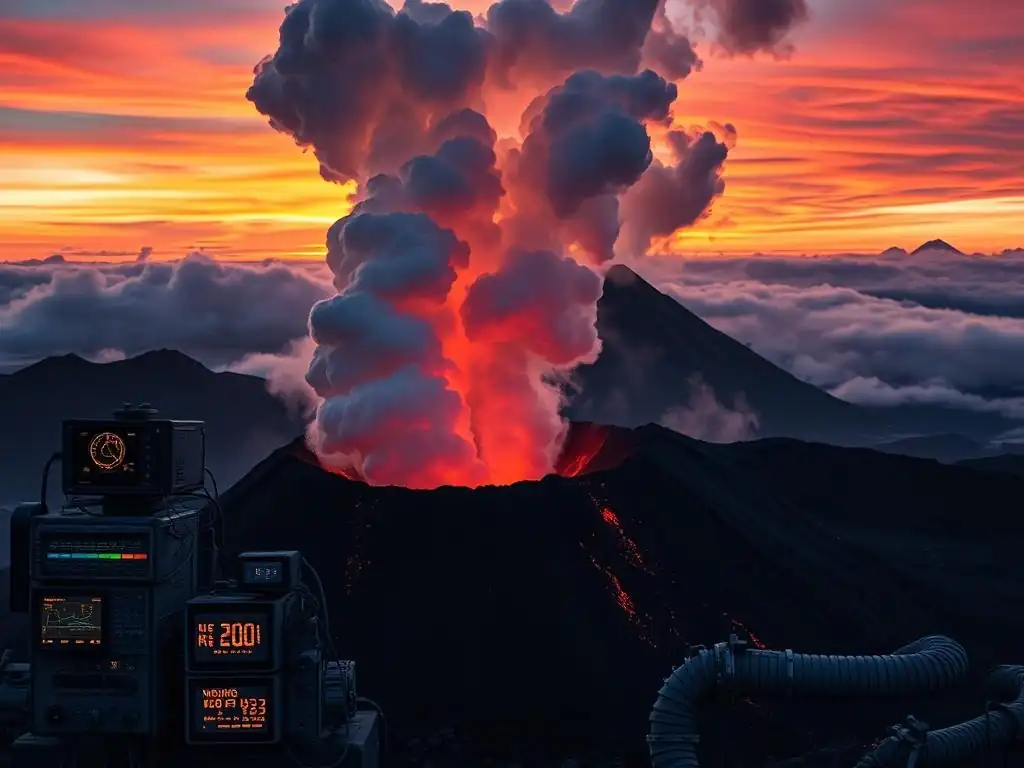
Welcome to Volcano Explorers!
Ever wondered what happens after the lava cools and the ash settles? The real story of a volcano's life cycle unfolds in its degassing. Dive into the fascinating world of longterm volcanic gas monitoring and uncover the secrets hidden within plumes of steam and subtle shifts in the Earth's breath. What can these invisible emissions tell us about future activity? The answer, and much more, awaits you below...
- Introduction: Unveiling Volcanic Secrets Through Long-Term Volcanic Gas Monitoring
- The Importance of Long-Term Volcanic Gas Monitoring
- Volcanic Degassing: A Continuous Process
- Methods of Long-Term Volcanic Gas Monitoring: An Overview
- Interpreting Volcanic Gas Data: What Does it Tell Us?
- Case Studies: Long-Term Volcanic Gas Monitoring in Action
- Challenges and Future Directions in Volcanic Gas Monitoring
- Conclusion: Long-Term Volcanic Gas Monitoring for Risk Mitigation
-
Frequently Asked Questions
- How does VolcanoExplorers.org define "Longterm Volcanic Gas Monitoring"?
- Why is "Longterm Volcanic Gas Monitoring" important according to VolcanoExplorers.org?
- What types of gases are typically monitored in "Longterm Volcanic Gas Monitoring" studies, according to VolcanoExplorers.org?
- How does VolcanoExplorers.org explain that "Longterm Volcanic Gas Monitoring" help with safety?
- Where can I find real-time updates on volcanic gas emissions on VolcanoExplorers.org?
- Final Reflection: The Breath of the Earth Endures
- Unearth the Secrets Volcanoes Still Whisper!
Introduction: Unveiling Volcanic Secrets Through Long-Term Volcanic Gas Monitoring
Volcanoes, often perceived as dormant giants punctuated by violent eruptions, are in fact dynamic systems that are constantly interacting with the Earth's interior and atmosphere. While eruptions capture immediate attention due to their dramatic and destructive power, a less visible but equally crucial process is continuously unfolding: volcanic degassing.
This ongoing release of gases from volcanoes, even during periods of quiescence, provides invaluable insights into the inner workings of these geological powerhouses. Long-term volcanic gas monitoring has emerged as a vital tool in volcanology, allowing scientists to decipher the subtle signals emitted by volcanoes and gain a deeper understanding of their long-term behavior, ultimately contributing to improved hazard assessment and risk mitigation.
The Importance of Long-Term Volcanic Gas Monitoring
Why Monitor Volcanic Gases Over the Long Term? Assessing Volcanic Hazards
Volcanic eruptions are inherently unpredictable, but understanding the processes leading up to them is paramount for effective hazard assessment and public safety. Long-term volcanic gas monitoring plays a critical role in this endeavor by providing continuous data on the state of a volcano's magmatic system. Changes in gas composition and emission rates can precede volcanic unrest, often weeks, months, or even years before an eruption.
For instance, an increase in the ratio of sulfur dioxide (SO2) to carbon dioxide (CO2) can indicate magma rising closer to the surface, a potential precursor to an eruption. By consistently tracking these gas emissions over extended periods, scientists can establish baseline levels for individual volcanoes and identify deviations that may signal heightened activity and potential hazards. This proactive approach allows for timely warnings and informed decision-making regarding evacuation and mitigation strategies for communities living in volcanic regions.
The Role of Gas Monitoring in Understanding Volcanic Behavior
Beyond eruption forecasting, long-term volcanic gas monitoring is fundamental to comprehending the fundamental processes governing volcanic behavior. Volcanic gases are messengers from the depths, carrying information about the composition, temperature, and pressure conditions within the magma reservoir and plumbing system. By analyzing the types and quantities of gases released, volcanologists can gain insights into magma genesis, storage, and ascent.
For example, the presence of helium-3 (³He), a primordial isotope, in volcanic gases can indicate the involvement of deep mantle sources in magma formation. Furthermore, monitoring gas fluxes over time can reveal how degassing patterns correlate with other volcanic activity, such as ground deformation or seismic events. This holistic approach, incorporating longterm gas monitoring data, allows for the development of more accurate models of volcanic systems, leading to a more comprehensive understanding of their eruptive history and potential future behavior.
Volcanic Degassing: A Continuous Process
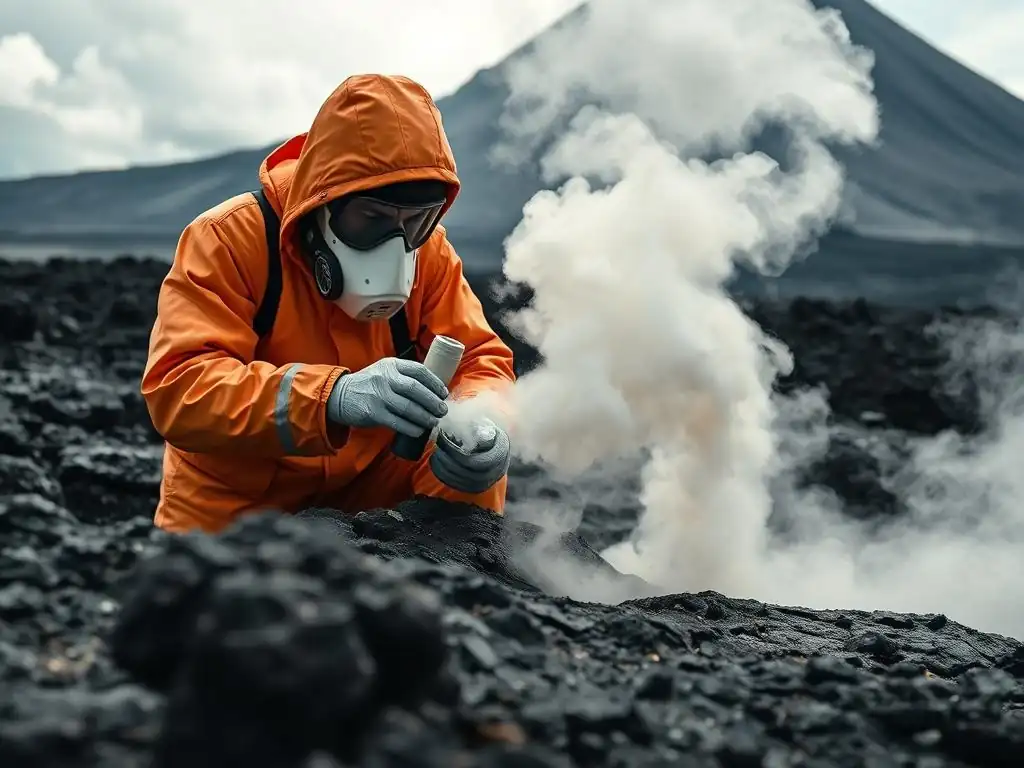
What is Volcanic Degassing and How Does it Work?
Volcanic degassing is the process by which dissolved gases within magma escape and are released into the atmosphere. Magma, molten rock beneath the Earth's surface, contains a significant amount of dissolved volatile compounds, primarily water vapor (H2O), carbon dioxide (CO2), sulfur dioxide (SO2), hydrogen sulfide (H2S), hydrogen halides (HCl, HF), and noble gases. As magma rises towards the surface, the pressure exerted upon it decreases.
This pressure reduction causes the dissolved gases to exsolve, similar to how carbon dioxide bubbles out of a carbonated drink when the bottle is opened. These exsolved gases then migrate upwards through fractures and pathways within the volcanic edifice, eventually escaping at the surface through vents, fumaroles, and diffuse ground degassing. This process is continuous, occurring even when a volcano is not actively erupting, making it a fundamental aspect of volcanic activity and a key indicator of the state of the underlying magmatic system.
Different Types of Volcanic Gases: Composition and Significance
The composition of volcanic gases is complex and varies depending on several factors, including the type of magma, the depth of degassing, and the tectonic setting of the volcano. Water vapor (H2O) is typically the most abundant volcanic gas, often comprising more than 80% of the total gas emissions. Carbon dioxide (CO2) is the second most abundant, followed by sulfur dioxide (SO2).
Other significant gases include hydrogen sulfide (H2S), hydrogen chloride (HCl), hydrogen fluoride (HF), and trace amounts of other elements and compounds. Each gas provides unique insights into volcanic processes.
For instance, SO2 is highly reactive and contributes to acid rain and volcanic smog (vog), while CO2 is a potent greenhouse gas and plays a role in global climate. The ratio of different gases, such as SO2/CO2 or H2S/SO2, can be particularly informative, as these ratios can change in response to magmatic processes occurring beneath the volcano, providing clues about magma ascent, differentiation, and potential eruptive activity.
Factors Influencing Volcanic Gas Emission Rates
Volcanic gas emission rates are not constant; they fluctuate due to a variety of factors, both internal and external to the volcanic system. Magma supply rate from the mantle is a primary control, as a higher magma flux generally leads to increased degassing. Magma composition also plays a crucial role; magmas richer in volatiles will naturally degas more profusely. Pressure changes within the magma reservoir, often driven by magma ascent or deflation, directly influence gas exsolution and release rates. Tectonic stresses and faulting can create or close pathways for gas migration, affecting the patterns of degassing. External factors like atmospheric pressure and even rainfall can also subtly influence gas emission rates, though these are typically secondary to the internal volcanic processes. Understanding these influencing factors is crucial for interpreting long-term volcanic gas monitoring data and distinguishing between background degassing variations and changes that may indicate significant shifts in volcanic activity.
Methods of Long-Term Volcanic Gas Monitoring: An Overview
Ground-Based Gas Monitoring Techniques: Direct Sampling and Remote Sensing
Ground-based volcanic gas monitoring methods are essential for obtaining high-resolution, detailed data on volcanic emissions. These techniques can be broadly categorized into direct sampling and remote sensing methods. Direct sampling involves physically collecting volcanic gases at vents or fumaroles and subsequently analyzing their composition in a laboratory. Remote sensing techniques, on the other hand, measure gas concentrations from a distance, without physically collecting the gas sample. Both approaches offer valuable, complementary information for long-term volcanic gas monitoring programs.
Direct Gas Sampling: Collecting and Analyzing Volcanic Gases
Direct gas sampling is a fundamental technique for obtaining precise measurements of volcanic gas composition. Scientists carefully collect gas samples from fumaroles, vents, or even diffuse soil degassing sites using specialized equipment, such as evacuated flasks or gas-tight syringes. These samples are then transported to laboratories where sophisticated analytical instruments, such as gas chromatographs and mass spectrometers, are used to determine the concentrations of various gas species.
Direct sampling provides highly accurate data on gas ratios, isotopic compositions, and trace element concentrations, offering detailed insights into the magmatic source and processes. However, direct sampling can be challenging and hazardous, requiring access to potentially dangerous volcanic areas and careful handling of hot and toxic gases. Furthermore, direct sampling is typically spatially and temporally limited, making it difficult to capture the full spatial extent and temporal variability of volcanic degassing over the long term.
Remote Sensing Techniques: DOAS, FTIR, and UV Spectroscopy
Remote sensing techniques offer a safer and more spatially comprehensive approach to volcanic gas monitoring, particularly for long-term studies. Differential Optical Absorption Spectroscopy (DOAS) is a widely used technique that measures the absorption of ultraviolet (UV) and visible light by volcanic gases, allowing for the quantification of SO2 and other gases in volcanic plumes.
Fourier Transform Infrared Spectroscopy (FTIR) measures the infrared radiation emitted by volcanic plumes, enabling the detection and quantification of a broader range of gases, including CO2, H2O, HCl, and HF. UV spectroscopy, specifically using upward-looking spectrometers, is particularly effective for measuring SO2 fluxes from volcanic plumes.
These remote sensing techniques can be deployed at fixed locations around a volcano for continuous monitoring or used in mobile surveys to map gas plumes and diffuse degassing areas. They provide real-time data and can be operated remotely, reducing the risks associated with working in close proximity to active volcanoes, making them ideal for longterm volcanic gas monitoring.
Satellite-Based Volcanic Gas Monitoring: A Global Perspective
Detecting Sulfur Dioxide (SO2) Emissions from Space
Satellite-based volcanic gas monitoring has revolutionized our ability to observe and study volcanoes on a global scale, particularly for sulfur dioxide (SO2) emissions. Satellites equipped with instruments like the Ozone Monitoring Instrument (OMI) and the Tropospheric Monitoring Instrument (TROPOMI) can detect and measure SO2 in the atmosphere by sensing its absorption of UV radiation. These satellite instruments provide daily global coverage, allowing for the detection of SO2 plumes from even remote and unmonitored volcanoes. Satellite data are particularly valuable for tracking large SO2 releases during eruptions, estimating SO2 fluxes, and identifying changes in SO2 emissions from volcanoes over time. Long-term satellite records of SO2 emissions have provided crucial insights into global volcanic degassing budgets and the impact of volcanoes on the atmosphere. While satellite data typically have lower spatial and temporal resolution compared to ground-based measurements, they offer an unparalleled synoptic view of volcanic activity worldwide, complementing ground-based monitoring efforts.
Monitoring Carbon Dioxide (CO2) Release from Volcanoes
Monitoring carbon dioxide (CO2) release from volcanoes from space is more challenging than monitoring SO2, primarily because CO2 is a greenhouse gas that is well-mixed in the atmosphere, and volcanic CO2 signals are often smaller and more diffuse. However, advancements in satellite technology and data analysis techniques are enabling progress in this area. Instruments like the Orbiting Carbon Observatory-2 (OCO-2) and OCO-3, designed for measuring atmospheric CO2 concentrations, are being used to detect and quantify volcanic CO2 emissions, particularly from volcanoes with strong and persistent degassing.
Researchers are developing sophisticated algorithms to isolate the relatively small volcanic CO2 signal from the much larger atmospheric background CO2. Satellite-based CO2 monitoring is still in its early stages compared to SO2 monitoring, but it holds significant potential for improving our understanding of the global volcanic CO2 budget and the long-term contribution of volcanoes to the carbon cycle.
Interpreting Volcanic Gas Data: What Does it Tell Us?
Using Gas Ratios to Infer Magmatic Processes
Volcanic gas ratios, such as SO2/CO2, H2S/SO2, and H2O/CO2, are powerful tools for inferring magmatic processes occurring beneath a volcano. These ratios can change in response to variations in magma composition, pressure, temperature, and oxidation state within the magmatic system. For instance, an increasing SO2/CO2 ratio can indicate magma ascent and decompression, as SO2 is typically released preferentially at shallower depths compared to CO2.
A decrease in the H2O/CO2 ratio might suggest magma differentiation and crystallization, as water is preferentially retained in the melt phase during crystallization. By carefully monitoring these gas ratios over time, volcanologists can track changes in the state of the magma reservoir and plumbing system, providing valuable insights into the processes leading up to volcanic unrest or eruption. Analyzing trends in gas ratios, in conjunction with other monitoring data, is crucial for developing robust eruption forecasting models.
Identifying Changes in Gas Composition as Indicators of Volcanic Unrest
Changes in the absolute concentrations and relative proportions of volcanic gases can serve as important indicators of volcanic unrest. An increase in the overall flux of volcanic gases, particularly SO2, is often a key precursor to volcanic eruptions. For example, before the 1991 eruption of Mount Pinatubo in the Philippines, SO2 emissions increased dramatically in the months leading up to the climactic eruption.
Changes in the composition of gases, such as an increase in the proportion of magmatic gases relative to hydrothermal gases, can also signal magma intrusion or pressurization of the volcanic system. Hydrothermal systems, heated by volcanic activity, release gases with a different signature than magmatic gases directly emanating from magma. Monitoring these subtle shifts in gas composition requires high-precision measurements and careful analysis, but they can provide early warning signs of impending volcanic activity, allowing for timely mitigation measures.
Modeling Volcanic Activity Based on Gas Emission Data
Volcanic gas emission data are increasingly being integrated into models of volcanic activity to improve eruption forecasting and hazard assessments. Gas flux rates and compositional changes can be used to constrain numerical models of magma ascent, degassing, and conduit dynamics. For example, models can be developed to simulate the relationship between gas release rates and magma volume changes in the reservoir, allowing for the estimation of magma accumulation or depletion based on gas monitoring data.
Furthermore, statistical models can be trained on historical gas emission data and eruption patterns to identify precursors and improve probabilistic eruption forecasts. Integrating gas monitoring data with other geophysical and geological data, such as seismic activity, ground deformation, and thermal anomalies, leads to more comprehensive and robust models that can enhance our ability to understand and predict volcanic behavior.
Case Studies: Long-Term Volcanic Gas Monitoring in Action
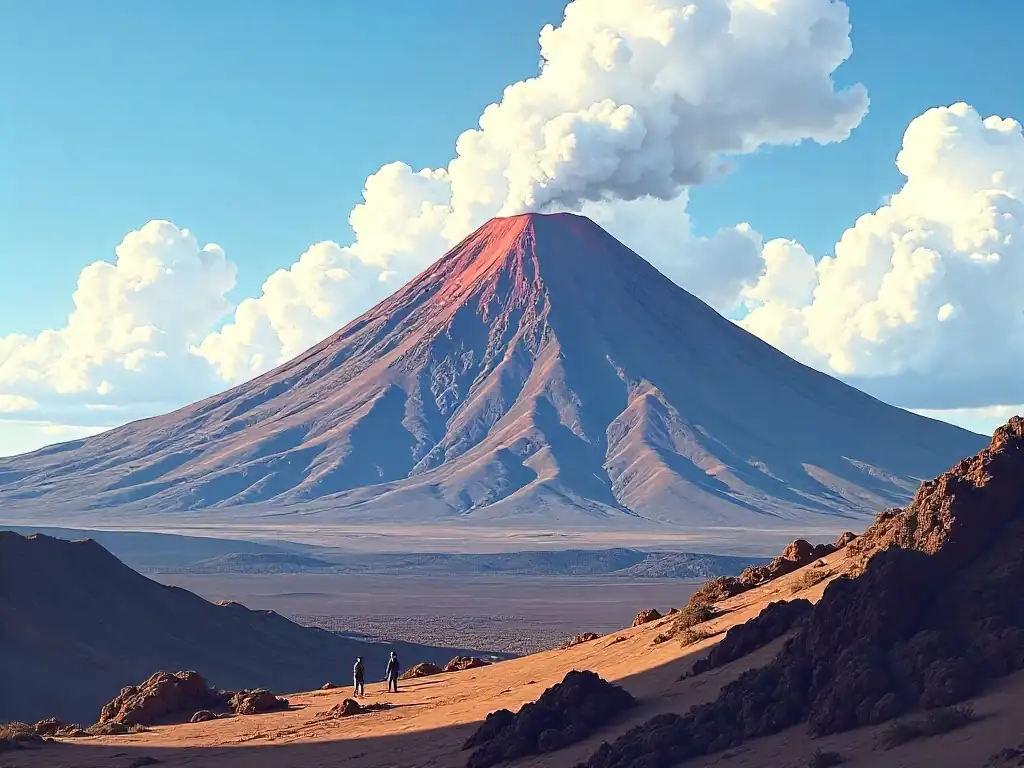
Monitoring at Mount Etna, Italy: Insights into Persistent Degassing
Mount Etna, Europe's largest and most active volcano, provides a compelling case study for the value of long-term volcanic gas monitoring in understanding persistent degassing. Scientists have been continuously monitoring gas emissions at Etna for decades, using a combination of ground-based and remote sensing techniques. These studies have revealed that Etna is one of the largest emitters of volcanic gases globally, even during periods of relative quiescence.
Long-term monitoring has shown that Etna's degassing is characterized by a complex interplay of magmatic and hydrothermal processes. Variations in gas fluxes and compositions have been linked to different eruptive styles, from Strombolian explosions to lava flows and more violent paroxysmal eruptions.
Analysis of gas ratios, such as CO2/SO2, has provided insights into the depth of magma degassing and the mixing of different magma batches within the volcano's plumbing system. The extensive long-term gas monitoring dataset at Etna has significantly advanced our understanding of open-conduit volcanoes and their persistent degassing behavior.
Monitoring at Kilauea, Hawaii: Understanding Eruptive Style and Gas Flux
Kilauea volcano in Hawaii, known for its effusive eruptions and long-lived lava lakes, provides another excellent example of the importance of long-term volcanic gas monitoring. Continuous gas monitoring at Kilauea's summit and rift zones has been critical for understanding its diverse eruptive styles and variations in gas flux.
During periods of persistent lava lake activity at Halema'uma'u crater, SO2 emissions were remarkably high, reaching tens of thousands of tonnes per day. Long-term monitoring captured the dramatic changes in gas emissions during the 2018 Lower East Rift Zone eruption, where a significant increase in SO2 flux preceded and accompanied the eruption.
Analysis of gas compositions and isotopic ratios during different eruptive phases has provided insights into the magma source, degassing processes, and the dynamics of magma transport within Kilauea's complex plumbing system. The long-term gas monitoring record at Kilauea has been instrumental in developing models of its eruptive behavior and improving hazard assessments for the surrounding communities.
Monitoring at Popocatépetl, Mexico: Forecasting Eruptions Through Gas Analysis
Popocatépetl volcano, located near Mexico City, poses a significant volcanic hazard due to its proximity to densely populated areas. Long-term volcanic gas monitoring is a crucial component of the volcano's surveillance and eruption forecasting efforts. Scientists have been continuously monitoring SO2 emissions from Popocatépetl using both ground-based DOAS instruments and satellite data. Studies have shown that increases in SO2 flux often precede explosive eruptions at Popocatépetl.
For example, significant increases in SO2 emissions were observed in the weeks and months leading up to several notable explosive events. Analysis of gas ratios and isotopic compositions, in conjunction with seismic and deformation data, has helped to refine eruption forecasting models for Popocatépetl. Long-term gas monitoring at Popocatépetl serves as a critical early warning system, enabling authorities to issue timely alerts and take precautionary measures to mitigate the risks posed by this active and potentially hazardous volcano.
Challenges and Future Directions in Volcanic Gas Monitoring
Overcoming Limitations of Current Gas Monitoring Techniques
Despite significant advancements in volcanic gas monitoring, several challenges remain. Direct gas sampling is inherently limited in spatial and temporal coverage and can be hazardous. Remote sensing techniques, while safer and more comprehensive, can be affected by weather conditions, plume opacity, and instrument limitations.
Satellite-based monitoring, although global in scope, typically has lower spatial and temporal resolution than ground-based methods and is primarily focused on SO2. Measuring other important volcanic gases, such as CO2 and H2S, with high accuracy and resolution remains a challenge, especially for diffuse degassing and low-flux volcanoes. Improving the sensitivity, accuracy, and robustness of current gas monitoring techniques, particularly for challenging environments and diverse gas species, is an ongoing area of research and development.
Developing New and Improved Gas Sensors and Instruments
The future of volcanic gas monitoring hinges on the development of new and improved gas sensors and instruments. Researchers are actively working on miniaturized, low-power, and cost-effective gas sensors that can be deployed in dense networks around volcanoes, providing near real-time, spatially distributed data. Advancements in laser-based spectroscopy and non-dispersive infrared (NDIR) sensors are leading to more sensitive and selective instruments for measuring a wider range of volcanic gases.
Unmanned aerial vehicles (UAVs or drones) equipped with gas sensors are being increasingly used to access hazardous volcanic areas and map gas plumes in three dimensions. Further development of robust and reliable gas sensors and instruments, particularly for long-term deployment in harsh volcanic environments, is crucial for enhancing our ability to monitor volcanic degassing and improve eruption forecasting capabilities.
Integrating Gas Monitoring with Other Geophysical Data for Enhanced Volcano Prediction
The most effective approach to volcano monitoring and eruption prediction involves integrating volcanic gas data with other geophysical datasets, such as seismic activity, ground deformation, thermal anomalies, and gravity changes. Multidisciplinary monitoring networks that combine these different data streams provide a more holistic view of volcanic processes and improve the accuracy and reliability of eruption forecasts. Advanced data analysis techniques, including machine learning and artificial intelligence, are being applied to integrate and interpret these complex datasets.
Developing integrated models that incorporate gas emission data with other geophysical parameters will lead to a more comprehensive understanding of volcanic systems and enhance our ability to anticipate and mitigate volcanic hazards. The future of volcano monitoring lies in the synergistic combination of diverse datasets, with long-term volcanic gas monitoring playing a vital and integral role.
Conclusion: Long-Term Volcanic Gas Monitoring for Risk Mitigation
The Vital Role of Gas Monitoring in Mitigating Volcanic Risks
Long-term volcanic gas monitoring is not merely an academic pursuit; it is a critical tool for mitigating volcanic risks and protecting communities living near active volcanoes. By providing continuous data on the state of a volcano's magmatic system, gas monitoring can provide early warning signs of volcanic unrest and potential eruptions. Timely detection of changes in gas emissions can enable authorities to issue alerts, implement evacuation plans, and take other precautionary measures to reduce the impact of volcanic hazards.
The economic and social benefits of effective volcanic risk mitigation through long-term gas monitoring are substantial, saving lives and reducing the disruption caused by volcanic crises. Investing in robust and sustained volcanic gas monitoring programs is essential for ensuring the safety and resilience of communities living in volcanic regions worldwide.
Advancing Volcanological Understanding Through Degassing Studies
Beyond its practical applications in risk mitigation, long-term volcanic gas monitoring is fundamental to advancing our fundamental understanding of volcanology. By studying volcanic degassing, we gain insights into the deep Earth processes that drive volcanic activity, from magma generation and storage to ascent and eruption. Long-term datasets of volcanic gas emissions provide invaluable information about the dynamics of magmatic systems, the composition and evolution of magmas, and the interaction between volcanoes and the atmosphere.
These studies contribute to a broader understanding of Earth's geological processes and the role of volcanoes in shaping our planet. Continued investment in long-term volcanic gas monitoring and degassing studies is essential for pushing the frontiers of volcanological knowledge and improving our ability to live safely with volcanoes.
Frequently Asked Questions
How does VolcanoExplorers.org define "Longterm Volcanic Gas Monitoring"?
It refers to the continuous or periodic measurement of gases released from a volcano over extended periods, even when there's no immediate eruption. This helps understand a volcano's internal state and potential for future activity.
Why is "Longterm Volcanic Gas Monitoring" important according to VolcanoExplorers.org?
Because gas emissions are a key indicator of magma movement and changes within a volcano. Monitoring them can help predict future eruptions and assess the overall volcanic hazard.
What types of gases are typically monitored in "Longterm Volcanic Gas Monitoring" studies, according to VolcanoExplorers.org?
Commonly monitored gases include sulfur dioxide (SO2), carbon dioxide (CO2), and water vapor (H2O). Ratios and concentrations of these gases offer insights into the magma's composition and activity.
How does VolcanoExplorers.org explain that "Longterm Volcanic Gas Monitoring" help with safety?
By detecting changes in gas emission rates and compositions, scientists can identify potential increases in volcanic activity that might lead to eruptions, allowing for timely warnings and evacuations.
Where can I find real-time updates on volcanic gas emissions on VolcanoExplorers.org?
The website offers real-time updates on volcanic activity worldwide, which may include data from various gas monitoring stations and research projects, depending on data availability.
Final Reflection: The Breath of the Earth Endures
The insights gained from longterm volcanic gas monitoring are not merely academic exercises; they are vital lifelines connecting us to the Earth's dynamic processes and providing crucial early warnings for communities living in the shadow of these magnificent, yet potentially devastating, giants. The ability to decipher the subtle shifts in volcanic gas emissions allows us to move beyond reactive responses to proactive strategies, mitigating risks and fostering resilience in vulnerable regions.
The ongoing influence of understanding volcanic degassing extends far beyond immediate hazard assessment. It shapes our comprehension of the planet's internal workings, influencing everything from climate models to resource exploration. The Earth speaks to those who listen. Volcanic gases are its whispers, revealing secrets of the deep.
This constant monitoring fosters a deeper respect for the power and complexity of our planet, reminding us of our interconnectedness with the natural world.
As we conclude this exploration of longterm volcanic gas monitoring, I invite you to consider your own relationship with the Earth. How can you, in your own life, contribute to a greater understanding and appreciation of the natural world? Let us all strive to be better listeners, more informed citizens, and more responsible stewards of this planet, ensuring a safer and more sustainable future for generations to come.
Unearth the Secrets Volcanoes Still Whisper!
Thank you for exploring the fascinating world of volcanic degassing with us! We hope you now have a deeper understanding of the ongoing processes shaping our planet. Ready to continue your volcanic exploration?
Here's how you can further your journey:
- Become a Citizen Scientist: Report any unusual smells or steaming activity near volcanic areas to your local geological survey. Your observations are vital for long-term monitoring.
- Explore our interactive map showcasing real-time gas emissions data from volcanoes worldwide. Discover patterns and contribute to our understanding of these dynamic systems.
- Share this article with fellow science enthusiasts and spark conversations about the powerful forces within our planet. Let's raise awareness about the importance of volcano monitoring!
What fascinating insight about volcanic degassing will you share today?