
Spectrometers and Sensors: The HighTech Arsenal of Volcanic Gas Monitoring

Welcome to Volcano Explorers!
Prepare to be captivated by the raw power and hidden secrets of volcanoes. But what if we told you that the key to understanding these fiery giants lies not just in observing their eruptions, but in smelling them? Dive into our featured article and discover how volcanic gas monitoring technologies are revolutionizing our ability to predict eruptions, safeguard communities, and unlock the mysteries bubbling beneath our feet. What secrets do these gases hold, and what can they tell us about the Earth's inner workings? Explore now and find out!
- Understanding Volcanic Gas Emissions and Their Significance
- Spectrometers: Analyzing the Composition of Volcanic Plumes
- Sensors: In-Situ Measurements of Volcanic Gas Concentrations
- Integrating Spectrometers and Sensors for Comprehensive Volcanic Gas Monitoring
- The Future of Volcanic Gas Monitoring Technologies
-
Frequently Asked Questions
- What is volcanic gas monitoring and why is it important?
- What are some common volcanic gases that are monitored?
- What types of technologies are used for volcanic gas monitoring?
- How do volcanologists use volcanic gas monitoring data to predict eruptions?
- Where can I find real-time updates on volcanic gas emissions and volcanic activity?
- Final Reflection: Breathing with the Volcano
- Ignite Your Inner Volcanologist: Explore the Gas Giants!
Understanding Volcanic Gas Emissions and Their Significance
Why Monitor Volcanic Gases?
Volcanic gas monitoring is a critical aspect of modern volcanology, providing invaluable insights into the inner workings of volcanoes and offering crucial warnings about potential eruptions. Volcanic gases are essentially the "breath" of a volcano, representing the escape of volatile components from magma beneath the surface. Changes in the composition and flux of these gases can signal shifts in magmatic activity, such as magma ascent, degassing, and potential pressurization leading to explosive eruptions.
For example, an increase in the emission rate of sulfur dioxide (SO2) often indicates the arrival of fresh, gas-rich magma closer to the surface, a phenomenon frequently observed before significant volcanic events. Therefore, consistent and accurate volcanic gas monitoring forms a cornerstone of eruption forecasting and hazard mitigation strategies in volcanically active regions around the globe.
Beyond eruption forecasting, monitoring volcanic gases provides a window into the deeper processes occurring within volcanic systems. The ratios of different gases, such as carbon dioxide (CO2) to sulfur dioxide (SO2), or water vapor (H2O) to sulfur gases, can reveal information about the depth of magma reservoirs, the degree of magma differentiation, and the interaction of magma with surrounding rocks and hydrothermal systems.
For instance, an increase in the CO2/SO2 ratio might suggest degassing from a deeper, more primitive magma source, while changes in the H2O content can reflect the influence of groundwater or hydrothermal fluids on the volcanic system. By meticulously tracking these gas signatures over time, volcanologists can build a more comprehensive understanding of the complex dynamics within a volcano and refine models of magma transport and storage, ultimately improving our ability to anticipate volcanic unrest and potential hazards.
Key Volcanic Gases to Monitor: SO2, CO2, H2S, HCl, and Others
Several volcanic gases are particularly important to monitor due to their abundance, their indicative nature of volcanic processes, and their potential environmental and health impacts. Sulfur dioxide (SO2) is often considered a primary indicator of volcanic activity. It is readily detectable and its release rate is strongly correlated with magma degassing.
During periods of unrest or eruption, significant increases in SO2 flux are commonly observed. For example, during the 2010 Eyjafjallajökull eruption in Iceland, massive amounts of SO2 were released into the atmosphere, disrupting air travel across Europe. Monitoring SO2 using volcanic gas monitoring technologies is crucial for tracking eruptive activity and assessing the potential for air quality impacts downwind.
Carbon dioxide (CO2) is another key volcanic gas, often being the most abundant volatile emitted from volcanoes globally. While less directly linked to imminent eruptions compared to SO2, CO2 flux provides valuable insights into the overall degassing budget of a volcano and the contribution of volcanic sources to the global carbon cycle. Elevated CO2 levels can also accumulate in volcanic areas, particularly in depressions or poorly ventilated spaces, posing a silent hazard as CO2 is denser than air and can displace oxygen.
Lake Nyos in Cameroon is a tragic example where a sudden release of CO2 from the lake bottom in 1986 asphyxiated over 1,700 people. Hydrogen sulfide (H2S), recognizable by its characteristic "rotten egg" smell, is another important gas to monitor. It is often associated with hydrothermal systems and fumaroles, and while generally present in lower concentrations than SO2 and CO2, H2S is highly toxic and can be a localized hazard.
Hydrogen chloride (HCl) and hydrogen fluoride (HF) are also monitored, especially during explosive eruptions, as they contribute to acid rain and can have corrosive effects on infrastructure and vegetation. While less frequently measured routinely, gases like helium (He) and radon (Rn) isotopes can provide insights into deeper magma sources and crustal processes, offering a broader perspective on the volcanic system's plumbing and evolution.
Spectrometers: Analyzing the Composition of Volcanic Plumes
What is a Spectrometer and How Does it Work?
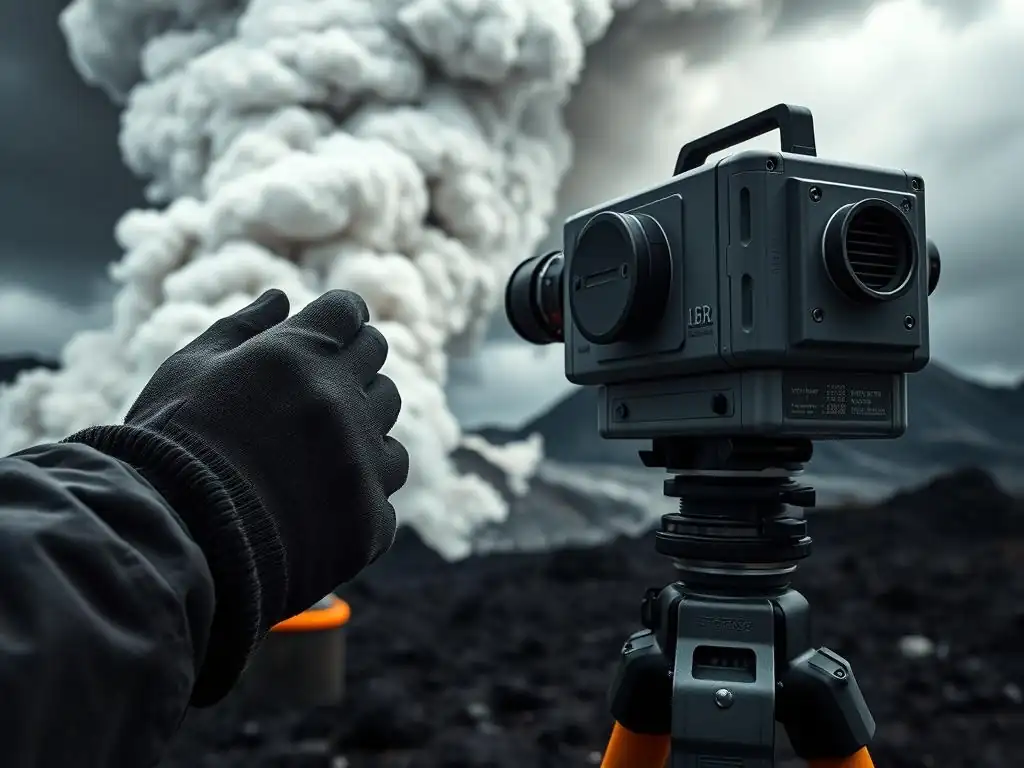
A spectrometer is an instrument designed to measure the properties of light over a specific portion of the electromagnetic spectrum. In the context of volcanic gas monitoring, spectrometers are primarily used to analyze the interaction of light with volcanic plumes, allowing for the identification and quantification of different gaseous components present. At its core, a spectrometer works by separating incoming light into its constituent wavelengths, much like a prism splits white light into a rainbow.
This separation is achieved through various optical elements, such as prisms, diffraction gratings, or interferometers. Once the light is dispersed into its spectrum, detectors measure the intensity of light at each wavelength.
The fundamental principle behind using spectrometers for volcanic gas analysis lies in the unique way different gases absorb or emit light at specific wavelengths. Each gas molecule has a distinct spectral "fingerprint," characterized by specific absorption or emission lines or bands in the ultraviolet (UV), visible, or infrared (IR) regions of the electromagnetic spectrum. When light passes through a volcanic plume, certain wavelengths are selectively absorbed by the gases present in the plume.
By analyzing the pattern and intensity of these absorption features in the measured spectrum, and comparing them to known spectral signatures of different gases, volcanologists can determine the composition and concentration of gases in the plume remotely. This remote sensing capability is a significant advantage, allowing for safe and efficient monitoring of volcanic emissions from a distance, even in hazardous environments.
Types of Spectrometers Used in Volcanic Gas Analysis
Volcanic gas monitoring technologies employ a range of spectrometer types, each tailored to detect specific gases and spectral ranges relevant to volcanic plumes. These spectrometers can be broadly categorized based on the spectral region they operate in, such as ultraviolet (UV), infrared (IR), and visible light spectrometers. The choice of spectrometer type depends on the target gases of interest and the specific monitoring application, whether it's ground-based measurements, airborne surveys, or satellite observations.
UV Spectrometers: Measuring Sulfur Dioxide (SO2) in Volcanic Plumes
UV spectrometers are particularly well-suited for measuring sulfur dioxide (SO2) in volcanic plumes due to SO2's strong absorption of ultraviolet radiation. SO2 exhibits a characteristic absorption spectrum in the UV range, specifically between approximately 280 nm and 320 nm. UV spectrometers designed for volcanic gas monitoring typically measure the attenuation of UV light as it passes through a volcanic plume. By comparing the measured UV spectrum with a reference spectrum (e.g., sunlight), the amount of SO2 along the light path can be quantified.
One widely used instrument based on UV spectroscopy is the COSPEC (Correlation Spectrometer), which has been a workhorse in volcanic SO2 monitoring for decades. Modern UV spectrometers often utilize diode array detectors, enabling rapid and continuous measurements of SO2 fluxes from volcanoes. Ground-based UV spectrometers are routinely deployed at volcanic observatories worldwide, providing crucial data for tracking SO2 emissions and assessing volcanic activity.
Infrared (IR) Spectrometers: Detecting Carbon Dioxide (CO2), Water Vapor (H2O), and Other Gases
Infrared (IR) spectrometers are essential for detecting gases like carbon dioxide (CO2), water vapor (H2O), and other volatile compounds that exhibit strong absorption features in the infrared region of the electromagnetic spectrum. CO2, for instance, has prominent absorption bands in the near-infrared (NIR) and mid-infrared (MIR) regions. IR spectrometers used in volcanic gas analysis often employ techniques like Fourier Transform Infrared Spectroscopy (FTIR) or non-dispersive infrared (NDIR) spectroscopy.
FTIR spectrometers are highly versatile, providing broadband IR spectra that can be used to identify and quantify multiple gases simultaneously. NDIR sensors, on the other hand, are typically more compact and cost-effective, often used for monitoring specific gases like CO2 in situ or in gas samples.
Open-path FTIR spectrometers can be deployed for remote sensing of volcanic plumes, measuring integrated gas concentrations along a line of sight. These instruments are crucial for understanding the full volatile budget of volcanoes, including gases that are not readily detectable in the UV range.
DOAS (Differential Optical Absorption Spectroscopy): A Powerful Technique for Remote Sensing of Volcanic Gases
Differential Optical Absorption Spectroscopy (DOAS) is a sophisticated and powerful technique widely used for remote sensing of various atmospheric trace gases, including volcanic gases. DOAS builds upon the principles of absorption spectroscopy but incorporates a differential approach to enhance sensitivity and minimize interference from broadband extinction effects, such as scattering by aerosols or particles in volcanic plumes. In DOAS, spectra are measured over a relatively long optical path through the atmosphere or volcanic plume.
The technique focuses on the narrow-band absorption features of the target gases, effectively filtering out the broader spectral variations due to scattering or other atmospheric constituents. By analyzing the "differential" absorption spectrum, DOAS provides highly accurate measurements of gas concentrations, even in complex and turbid volcanic plumes. DOAS systems can be configured for UV, visible, or IR spectral ranges, depending on the target gases.
For volcanic gas monitoring, UV-DOAS is commonly used for SO2, while visible DOAS can be employed for nitrogen dioxide (NO2) and bromine oxide (BrO), and IR-DOAS for gases like CO2 and methane (CH4). DOAS instruments can be deployed in ground-based, airborne, or even mobile configurations, offering flexibility for various volcanic monitoring scenarios.
Applications of Spectrometers in Volcanic Gas Research
Spectrometers have revolutionized volcanic gas research, enabling a wide range of applications from ground-based monitoring of individual vents to global-scale tracking of volcanic emissions from space. Their ability to remotely and quantitatively analyze volcanic plumes has provided unprecedented insights into volcanic processes and their impacts.
Ground-Based Remote Sensing of Volcanic Plumes
Ground-based spectrometers are a cornerstone of volcanic gas monitoring at observatories worldwide. Typically deployed at strategic locations around volcanoes, these instruments continuously or periodically measure the composition and flux of volcanic plumes emanating from vents, fumaroles, and diffuse degassing areas. Scanning spectrometers can traverse across volcanic plumes, providing spatial profiles of gas concentrations and enabling the estimation of total gas fluxes.
For instance, by measuring the SO2 concentration across a plume and combining it with wind speed data, the SO2 emission rate (in kg/s or tons/day) can be calculated. Ground-based UV spectrometers are particularly effective for monitoring SO2 emissions, providing near real-time data that can be integrated into eruption forecasting models.
FTIR spectrometers are also used in ground-based settings to monitor a broader suite of gases, offering a more comprehensive view of the volcanic gas composition. These ground-based measurements provide critical baseline data and allow for the detection of changes in volcanic gas emissions that may precede eruptive activity.
Airborne Spectrometry: Mapping Volcanic Gas Distributions from Aircraft
Airborne spectrometry extends the spatial coverage of volcanic gas monitoring, enabling the mapping of gas plumes over larger areas and in regions that are inaccessible from the ground. Spectrometers mounted on aircraft, including fixed-wing planes and helicopters, can fly through volcanic plumes, collecting spectral data along transects or across wider areas.
Airborne UV spectrometers are particularly effective for mapping SO2 distributions, providing detailed maps of SO2 plumes downwind of volcanoes. These maps are valuable for understanding the spatial extent of volcanic gas dispersal, assessing the potential for air quality impacts in populated areas, and estimating total SO2 emissions from volcanic sources.
Airborne FTIR spectrometers can also be used to map the spatial distribution of other gases, such as CO2 and H2S, providing a more complete picture of the gas plume composition and its spatial variability. Airborne surveys are often conducted during periods of volcanic unrest or eruption crises to provide rapid assessments of gas emissions and plume dynamics.
Satellite-Based Spectrometry: Global Monitoring of Volcanic Emissions
Satellite-based spectrometers have ushered in a new era of global volcanic gas monitoring, providing a synoptic view of volcanic emissions from space. Satellites equipped with UV and IR spectrometers can detect and measure volcanic gases on a global scale, even from remote and unmonitored volcanoes.
Instruments like the Ozone Monitoring Instrument (OMI) and the Tropospheric Monitoring Instrument (TROPOMI), both UV spectrometers, are highly effective at detecting and quantifying SO2 emissions from volcanoes worldwide. These satellite instruments provide daily global coverage, allowing for the tracking of major volcanic eruptions and the monitoring of long-term trends in volcanic SO2 emissions.
Satellite data are particularly valuable for studying volcanic plumes that reach high altitudes into the stratosphere, as these plumes can have significant impacts on atmospheric chemistry and climate. The Global Volcanic Gas Emissions Dataset (GVP-GAS) is a prime example of how satellite data are used to compile and analyze global volcanic SO2 emission inventories, providing crucial information for understanding the role of volcanoes in the Earth system.
Sensors: In-Situ Measurements of Volcanic Gas Concentrations
Electrochemical Sensors: Measuring Gas Concentrations at Vent Sites
Electrochemical sensors offer a complementary approach to spectrometers by providing in-situ measurements of volcanic gas concentrations directly at vent sites, fumaroles, and within volcanic plumes. These sensors operate based on the principle of electrochemistry, where a chemical reaction between the target gas and a sensing electrode generates an electrical signal proportional to the gas concentration.
Electrochemical sensors are available for a variety of volcanic gases, including SO2, H2S, CO, and O2. For example, SO2 electrochemical sensors typically consist of a porous membrane that allows SO2 to diffuse to an electrode where it undergoes an electrochemical reaction, producing a current that is measured and correlated to the SO2 concentration.
Electrochemical sensors are often deployed in networks around volcanoes to provide continuous, localized measurements of gas concentrations. They can be installed in fumarolic fields, near active vents, or even within gas plumes using specialized probes. These sensors are relatively small, low-power, and can be integrated into portable monitoring systems or deployed remotely using telemetry.
Data from electrochemical sensor networks can provide high temporal resolution information on gas concentration changes at specific locations, complementing the broader spatial coverage offered by spectrometers. For instance, electrochemical sensors deployed near fumaroles can detect subtle changes in gas flux that may precede changes detectable by remote sensing techniques, offering an early warning of potential volcanic unrest.
Semiconductor Sensors: Monitoring Gas Fluxes in Volcanic Areas
Semiconductor sensors, also known as metal oxide semiconductor (MOS) sensors, are another type of in-situ gas sensor used in volcanic gas monitoring, particularly for measuring gas fluxes and diffuse degassing in volcanic areas. These sensors rely on changes in the electrical conductivity of a semiconductor material when exposed to certain gases. The semiconductor material, typically a metal oxide like tin oxide (SnO2) or zinc oxide (ZnO), reacts with the target gas, causing a change in its resistance.
This change in resistance is measured and related to the gas concentration. Semiconductor sensors are sensitive to a range of gases, and their selectivity can be tuned by modifying the sensor material and operating temperature.
In volcanic gas monitoring, semiconductor sensors are often used in flux chambers to measure diffuse degassing rates from soils and fumarolic areas. A flux chamber is a device placed over the ground surface to collect gases emanating from the soil. By measuring the gas concentration buildup within the chamber over time using a semiconductor sensor, the gas flux from the ground can be determined.
Networks of flux chambers equipped with semiconductor sensors can be deployed across volcanic areas to map diffuse degassing patterns and quantify the total gas output from non-vent sources. Semiconductor sensors are also used in portable gas detectors for safety monitoring in volcanic environments, alerting personnel to potentially hazardous gas concentrations.
Advantages and Limitations of In-Situ Gas Sensors
In-situ gas sensors, like electrochemical and semiconductor sensors, offer several advantages for volcanic gas monitoring. Firstly, they provide direct measurements of gas concentrations at specific locations, offering high spatial and temporal resolution data that complements remote sensing techniques. Secondly, they are generally more sensitive to low gas concentrations compared to some remote sensing methods, making them valuable for detecting subtle changes in gas emissions. Thirdly, they are often more cost-effective and portable than sophisticated spectroscopic instruments, enabling the deployment of sensor networks in remote and challenging volcanic environments.
However, in-situ gas sensors also have limitations. They provide point measurements, meaning their spatial coverage is limited to the sensor locations. Maintaining sensor networks in harsh volcanic environments can be challenging due to sensor drift, corrosion, and potential damage from volcanic activity. Electrochemical sensors can be susceptible to cross-sensitivity to other gases, requiring careful calibration and validation. Semiconductor sensors can be influenced by humidity and temperature variations, necessitating environmental control or correction measures. Despite these limitations, in-situ gas sensors play a crucial role in volcanic gas monitoring, particularly when integrated with remote sensing techniques for a comprehensive approach.
Integrating Spectrometers and Sensors for Comprehensive Volcanic Gas Monitoring
Combining Remote Sensing and In-Situ Data for a Holistic View
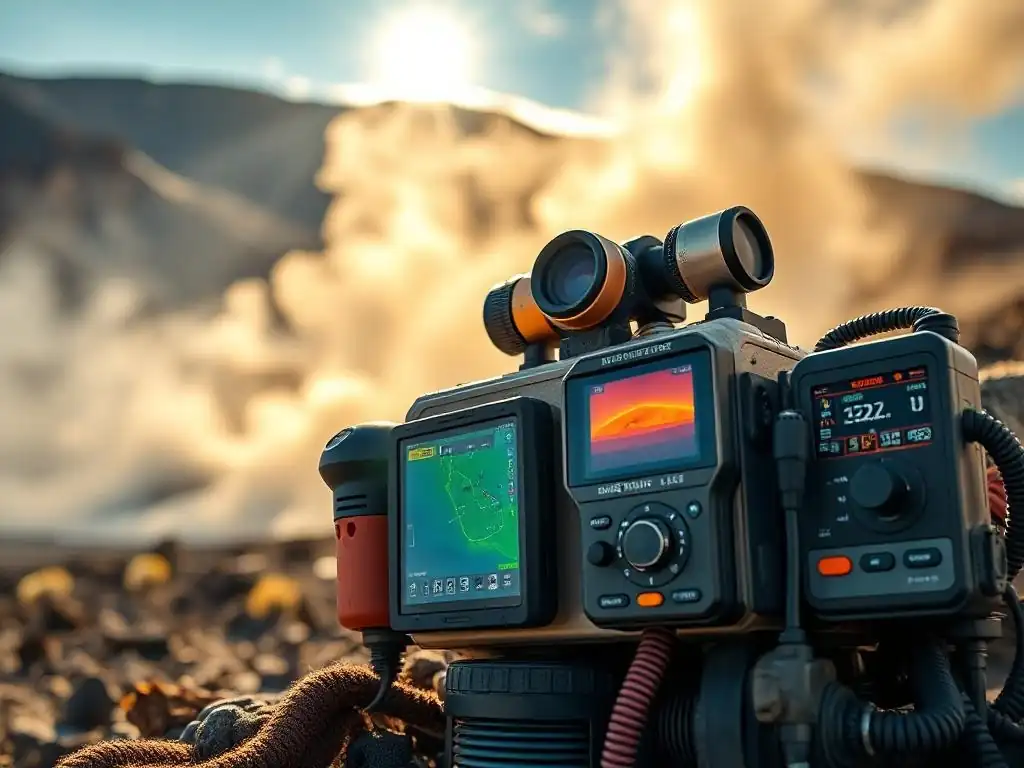
The most effective volcanic gas monitoring programs leverage the strengths of both remote sensing techniques, primarily using spectrometers, and in-situ measurements, employing gas sensors. Spectrometers provide broad spatial coverage, enabling the mapping of gas plumes and the quantification of total gas fluxes from a distance. They are particularly valuable for monitoring large-scale volcanic emissions and tracking plume dispersal. In-situ sensors, on the other hand, offer high temporal and spatial resolution measurements at specific locations, capturing localized variations in gas concentrations and providing direct measurements at vent sites and fumaroles.
By integrating data from spectrometers and in-situ sensors, volcanologists can achieve a more holistic understanding of volcanic gas emissions. Remote sensing data can provide the larger context of plume dynamics and total gas fluxes, while in-situ measurements can validate and refine these remote observations, providing ground-truth data and capturing fine-scale variations that may be missed by remote sensing. For example, ground-based spectrometer measurements of SO2 flux can be compared with SO2 concentrations measured by electrochemical sensors deployed near vents to calibrate the spectrometer data and improve flux estimates.
Similarly, satellite-based SO2 measurements can be validated and supplemented by ground-based and airborne spectrometer data. The combination of these techniques allows for a more robust and comprehensive assessment of volcanic gas emissions and their implications for volcanic activity and hazard assessment.
Case Studies: Examples of Effective Volcanic Gas Monitoring Programs
Several volcanic observatories around the world exemplify effective volcanic gas monitoring programs that integrate spectrometers and sensors. The Alaska Volcano Observatory (AVO) in the United States utilizes a combination of ground-based UV spectrometers for SO2 flux measurements at volcanoes like Mount Redoubt and Augustine Volcano, alongside satellite-based SO2 data from OMI and TROPOMI. AVO also deploys in-situ gas sensors at some volcanoes to monitor fumarolic gas compositions and detect changes in gas concentrations near vents. This integrated approach provides a multi-faceted view of volcanic gas emissions, contributing to AVO's robust volcanic monitoring and hazard assessment capabilities.
The Italian National Institute of Geophysics and Volcanology (INGV) maintains extensive gas monitoring networks at active Italian volcanoes like Etna, Stromboli, and Vesuvius. INGV utilizes ground-based scanning DOAS systems for SO2 flux measurements at Etna and Stromboli, and employs mobile DOAS systems for plume mapping and traverse measurements. They also operate permanent networks of electrochemical and semiconductor sensors at fumarolic fields and vent areas to monitor gas concentrations of SO2, CO2, and H2S.
INGV's comprehensive gas monitoring program, combining remote sensing and in-situ techniques, plays a vital role in assessing volcanic activity and providing timely warnings to civil protection authorities. These examples demonstrate the value of integrated volcanic gas monitoring technologies in enhancing our understanding of volcanic processes and mitigating volcanic hazards.
The Future of Volcanic Gas Monitoring Technologies
Advancements in Spectrometer and Sensor Technology
The field of volcanic gas monitoring technologies is continuously evolving, driven by advancements in spectrometer and sensor technology. Miniaturization is a key trend, with the development of smaller, lighter, and more portable spectrometers and sensors. Miniaturized UV spectrometers, for example, are being integrated into Unmanned Aerial Vehicles (UAVs) or drones, enabling remote gas plume measurements in previously inaccessible areas and providing high-resolution spatial data on gas distributions.
Advances in detector technology are leading to more sensitive spectrometers with improved spectral resolution, allowing for the detection of trace gases and the more accurate quantification of gas concentrations. New sensor types are also emerging, such as tunable diode laser absorption spectroscopy (TDLAS) sensors, which offer high selectivity and sensitivity for specific gases like CO2 and methane.
Another area of advancement is in sensor networking and data telemetry. Wireless sensor networks are becoming increasingly common in volcanic monitoring, enabling the deployment of large numbers of in-situ sensors that transmit data wirelessly to central receiving stations. This facilitates real-time monitoring of gas concentrations across broad volcanic areas.
Improved data processing and analysis techniques are also enhancing the capabilities of volcanic gas monitoring. Advanced algorithms are being developed to automatically process spectrometer data, extract gas concentrations, and calculate gas fluxes. Machine learning and artificial intelligence are being explored to identify subtle patterns in gas emission data that may indicate changes in volcanic activity, further improving eruption forecasting capabilities.
The Role of Volcanic Gas Monitoring in Volcanic Hazard Assessment
Volcanic gas monitoring is an indispensable component of comprehensive volcanic hazard assessment and mitigation strategies. Real-time data on volcanic gas emissions, particularly SO2 flux and changes in gas ratios, provide crucial information for tracking volcanic unrest and forecasting potential eruptions.
Increases in SO2 emission rates, changes in CO2/SO2 ratios, and the detection of specific gas species can all serve as early warning indicators of magma ascent, degassing, and potential eruptive activity. Volcanic gas monitoring data are integrated with other geophysical and geological monitoring datasets, such as seismicity, ground deformation, and thermal anomalies, to provide a multi-parameter assessment of volcanic activity.
By providing timely and accurate information on volcanic gas emissions, volcanic gas monitoring technologies contribute directly to public safety and risk reduction in volcanically active regions. Volcanic observatories use gas monitoring data to inform hazard assessments, issue eruption warnings, and guide evacuation decisions. For example, increased SO2 emissions and changes in gas ratios may trigger heightened alert levels and increased monitoring efforts, potentially leading to timely evacuations of at-risk populations. Continued advancements in volcanic gas monitoring technologies will further enhance our ability to anticipate volcanic eruptions, mitigate volcanic hazards, and protect communities living near these powerful natural phenomena.
Frequently Asked Questions
What is volcanic gas monitoring and why is it important?
Volcanic gas monitoring involves measuring the types and amounts of gases released by volcanoes. This is important because changes in gas composition can indicate changes in volcanic activity and potential eruptions.
What are some common volcanic gases that are monitored?
Key gases monitored include sulfur dioxide (SO2), carbon dioxide (CO2), and water vapor (H2O). The ratios and concentrations of these gases provide valuable insights into the magma's behavior and the volcano's state.
What types of technologies are used for volcanic gas monitoring?
The Spectrometers and Sensors: The HighTech Arsenal of Volcanic Gas Monitoring article focuses on advanced techniques, including spectrometers that analyze light absorption and emission, and various sensors deployed both on the ground and via aerial platforms.
How do volcanologists use volcanic gas monitoring data to predict eruptions?
Volcanologists analyze trends in gas emissions, looking for significant increases or changes in composition. These anomalies, coupled with other data like seismic activity and ground deformation, help assess the likelihood of an eruption.
Where can I find real-time updates on volcanic gas emissions and volcanic activity?
Websites like VolcanoExplorers.org often provide updates on volcanic activity worldwide. Additionally, many geological surveys and volcano observatories publish real-time data and reports on their respective monitored volcanoes.
Final Reflection: Breathing with the Volcano
The insights gleaned from exploring volcanic gas monitoring technologies are not merely academic; they are vital lifelines in our increasingly volatile world. Understanding the subtle shifts in volcanic emissions, as revealed by spectrometers and sensors, is paramount to safeguarding communities living in the shadow of these powerful forces of nature. The ability to predict eruptions, even with a degree of uncertainty, transforms from a scientific curiosity to a tangible act of preservation.
The ongoing evolution of these technologies has profoundly shaped how we perceive and interact with volcanoes. It's humbling to consider how far we've come from relying solely on visual observations to employing sophisticated instruments that can "smell" the volcano's breath. This shift represents a deeper understanding of our planet and our responsibility to protect those most vulnerable to its unpredictable nature. The Earth speaks to those who know how to listen.
- Native American Proverb (adapted to fit the theme). This proverb reminds us that technology is merely a tool to amplify our ability to hear and understand the Earth's warnings.
As we stand on the precipice of further advancements in volcanic gas monitoring, let us not forget the human element at the heart of this endeavor. Consider how you can support the development and deployment of these crucial technologies, whether through advocacy, education, or simply by staying informed. The next eruption may be averted, the next life saved, because of the knowledge we collectively cultivate and the actions we choose to take.
Ignite Your Inner Volcanologist: Explore the Gas Giants!
Thank you for exploring the fascinating world of volcanic gas monitoring! We hope you now have a deeper appreciation for the sophisticated tools scientists use to understand these powerful forces of nature and predict eruptions. Ready to continue your exploration?
Here are a few ways to delve deeper:
- Explore Real-Time Data: Visit the Volcano Explorers online database to see real-time volcanic gas data from around the world. Witness the science in action!
- Share Your Knowledge: Share this article with friends, family, or fellow science enthusiasts.
- Learn More: Explore our other articles on Volcano Explorers to discover more about volcano monitoring techniques and the groundbreaking research underway globally.
What volcanic gases intrigue you most, and what questions remain about how these advanced tools are used in the field? Share your thoughts in the comments below!