
Climate's Silent Driver: The Surprising Role of Volcanic Gases in Global Temperature


Welcome to Volcano Explorers!
Prepare to have your understanding of our planet ignited. Did you know that volcanic gases, often overlooked, play a surprisingly significant role in shaping Earth's climate? Delve into the science behind these invisible forces and discover how they can both cool and warm our world. Uncover the secrets behind climate's silent driver and prepare to question everything you thought you knew about global temperature.
- Introduction: Unveiling the Connection Between Volcanic Gases and Climate Change
- Understanding Volcanic Gases: A Primer
- The Cooling Effect: Sulfur Dioxide and Aerosol Formation
- The Warming Effect: Carbon Dioxide and the Greenhouse Effect
- Beyond Sulfur and Carbon: Other Volcanic Gases and Their Potential Climatic Influence
- Volcanic Eruptions and Climate Variability: Short-Term vs. Long-Term Effects
- Case Studies: Examining Specific Volcanic Events and Their Climatic Consequences
- Predicting and Monitoring Volcanic Gas Emissions: A Crucial Step in Climate Research
- The Future of Volcanic Gas Research: Addressing Key Uncertainties
- Conclusion: Volcanic Gases as a Key Piece in the Climate Puzzle
-
Frequently Asked Questions
- What role do volcanic gases play in climate change?
- How do volcanic eruptions affect the Earth's temperature?
- Do all volcanic eruptions have the same impact on climate?
- What other gases are released during volcanic eruptions, and how do they affect the atmosphere?
- Is there a way to predict the long-term climate impacts of volcanic eruptions?
- Final Reflection: The Breath of the Earth and Our Climate's Future
- Unearth Your Role in Understanding Volcanic Impacts!
Introduction: Unveiling the Connection Between Volcanic Gases and Climate Change
The Overlooked Impact of Volcanic Emissions
Volcanoes, often perceived for their dramatic eruptions and lava flows, also play a less visible but significant role in shaping our planet's climate through the release of volcanic gases. While the immediate aftermath of an eruption might capture headlines, the long-term influence of these gaseous emissions on global temperatures is a critical area of scientific inquiry.
For centuries, the focus on volcanoes has been on their destructive power and geological impact, but increasingly, researchers are turning their attention to the subtle yet profound ways in which volcanic gases, such as sulfur dioxide and carbon dioxide, interact with the atmosphere and influence Earth's energy balance.
Understanding the impact of volcanic emissions is crucial for a complete picture of Earth's climate system. Unlike anthropogenic emissions, which are largely driven by human activities, volcanic emissions are a natural component of the Earth's geological processes. However, their contribution to both short-term and long-term climate variability is undeniable. By studying past eruptions and continuously monitoring present-day volcanic activity, scientists are working to unravel the complexities of this relationship and improve our ability to predict future climate scenarios. This knowledge is essential not only for understanding natural climate fluctuations but also for contextualizing the impact of human-induced climate change.
Understanding Volcanic Gases: A Primer
Major Volcanic Gases: Composition and Characteristics (Sulfur Dioxide, Carbon Dioxide, Water Vapor, Hydrogen Sulfide)
Volcanic gases are a complex mixture released during volcanic eruptions and from quiescently degassing volcanoes. The most abundant volcanic gas is water vapor (H₂O), often making up more than 60% of total emissions. This water vapor originates from various sources, including magma itself, groundwater heated by magma, and even seawater interacting with submarine volcanoes. While a significant component, water vapor's direct climatic impact from volcanoes is relatively short-lived as it quickly condenses and precipitates out of the atmosphere as rain or snow, primarily contributing to local weather patterns rather than long-term global climate change.
Sulfur dioxide (SO₂) is another crucial volcanic gas, typically constituting around 5-25% of the total gas emissions from volcanoes. Its significance lies in its ability to react in the atmosphere to form sulfate aerosols. These aerosols are tiny particles that can reflect incoming sunlight back into space, leading to a cooling effect on the planet. Carbon dioxide (CO₂), while often present in smaller proportions compared to water vapor and sulfur dioxide (usually less than 20%), is a potent greenhouse gas.
Unlike SO₂, CO₂ contributes to warming the planet by trapping heat in the atmosphere. Hydrogen sulfide (H₂S), another notable volcanic gas, is known for its characteristic rotten egg smell and, while less abundant than the others, can have localized environmental impacts and contribute to acid rain. The relative proportions of these gases can vary significantly depending on the type of volcano, the magma composition, and the style of eruption.
Measuring Volcanic Gas Emissions: Techniques and Technologies (DOAS, COSPEC, FTIR)
Accurately measuring volcanic gas emissions is paramount to understanding their impact on the atmosphere and climate. Scientists employ a range of sophisticated techniques and technologies to quantify these emissions, both remotely and in situ. One widely used remote sensing technique is Differential Optical Absorption Spectroscopy (DOAS). DOAS instruments measure the absorption of sunlight or artificial light by different gases in the volcanic plume. By analyzing the spectral patterns of light absorption, scientists can determine the concentration of various gases like sulfur dioxide and bromine oxide in the plume, even from considerable distances.
Another classic instrument for measuring sulfur dioxide emissions is the Correlation Spectrometer (COSPEC). COSPEC, initially developed in the 1960s, measures the ultraviolet absorption of SO₂ in volcanic plumes. It has been instrumental in providing long-term datasets of SO₂ emissions from numerous volcanoes worldwide, contributing significantly to our understanding of volcanic degassing patterns. More recently, Fourier Transform Infrared (FTIR) spectroscopy has become a powerful tool for analyzing a broader range of volcanic gases simultaneously.
FTIR instruments measure the infrared radiation emitted by volcanic plumes. Different gases absorb infrared radiation at specific wavelengths, allowing FTIR to quantify gases like water vapor, carbon dioxide, sulfur dioxide, hydrogen chloride, and hydrogen fluoride with high precision. These technologies, often deployed from ground stations, aircraft, and satellites, provide a comprehensive toolkit for monitoring volcanic gas emissions and their evolving impact on the atmosphere.
The Cooling Effect: Sulfur Dioxide and Aerosol Formation
How Sulfur Dioxide (SO2) Converts to Sulfate Aerosols
The cooling effect of volcanic eruptions on the Earth's climate is primarily attributed to the transformation of sulfur dioxide (SO₂) into sulfate aerosols in the stratosphere. Once released into the atmosphere, SO₂ undergoes a series of chemical reactions, primarily through oxidation. This process involves reactions with hydroxyl radicals (OH), ozone (O₃), and other atmospheric oxidants. These reactions convert gaseous SO₂ into sulfuric acid (H₂SO₄). The sulfuric acid then readily condenses with water vapor and other substances present in the stratosphere to form sulfate aerosols, which are microscopic liquid droplets or solid particles.
The formation of sulfate aerosols is not instantaneous; it typically takes weeks to months for the SO₂ to fully convert and for the aerosols to reach their maximum concentration in the stratosphere. The altitude of injection is crucial; eruptions that inject SO₂ directly into the stratosphere, above the troposphere (the lowest layer of the atmosphere), have a far greater climatic impact. This is because the stratosphere is relatively stable and lacks precipitation, allowing sulfate aerosols to persist for months to years.
In contrast, SO₂ released into the troposphere is quickly washed out by rain, limiting its long-term climatic influence. The efficiency of this conversion process and the longevity of the resulting aerosols depend on various factors, including the amount of SO₂ emitted, the altitude of injection, and atmospheric conditions.
Sulfate Aerosols: Reflecting Sunlight and Lowering Global Temperatures
Sulfate aerosols, once formed in the stratosphere, act as tiny mirrors reflecting incoming solar radiation back into space. This phenomenon increases the Earth's albedo, which is the measure of how much sunlight is reflected back to space. By reflecting a portion of incoming solar energy, sulfate aerosols reduce the amount of solar radiation absorbed by the Earth's surface and atmosphere, leading to a net cooling effect. The effectiveness of sulfate aerosols in reflecting sunlight is related to their size and concentration. Aerosols with sizes comparable to the wavelength of visible light are most efficient at scattering sunlight.
The magnitude of the cooling effect depends on the quantity of SO₂ injected into the stratosphere and the resulting concentration of sulfate aerosols. Large volcanic eruptions that inject massive amounts of SO₂ can produce a significant global cooling effect that can last for several years. The cooling is not uniform across the globe; it tends to be more pronounced over landmasses, particularly in the Northern Hemisphere, and can influence regional climate patterns, including monsoon systems and atmospheric circulation. Furthermore, sulfate aerosols can also affect cloud formation and precipitation patterns, adding to the complexity of their climatic influence.
Historical Examples: Major Eruptions and Global Cooling Events (Mount Pinatubo, Tambora)
History provides compelling examples of how major volcanic eruptions and the resulting sulfate aerosols have caused significant global cooling events. The 1991 eruption of Mount Pinatubo in the Philippines is a well-documented case. It injected approximately 20 million tons of sulfur dioxide into the stratosphere, leading to a measurable global average temperature decrease of about 0.5°C (0.9°F) for one to two years following the eruption. Satellite and ground-based measurements confirmed the formation of a global sulfate aerosol cloud that effectively reflected sunlight. This event served as a modern confirmation of the cooling potential of volcanic aerosols.
Even more dramatically, the 1815 eruption of Mount Tambora in Indonesia is considered the largest volcanic eruption in recorded history. It injected an estimated 60-120 million tons of sulfur dioxide into the stratosphere. The following year, 1816, became known as the "Year Without a Summer" in many parts of the world, particularly in North America and Europe.
Widespread crop failures, famine, and social unrest ensued due to the exceptionally cold temperatures and disrupted weather patterns. Historical records, including temperature measurements, crop yields, and eyewitness accounts, vividly illustrate the profound and devastating global cooling caused by the Tambora eruption. These historical events underscore the significant, albeit temporary, cooling influence that volcanic sulfate aerosols can exert on the Earth's climate.
The Warming Effect: Carbon Dioxide and the Greenhouse Effect
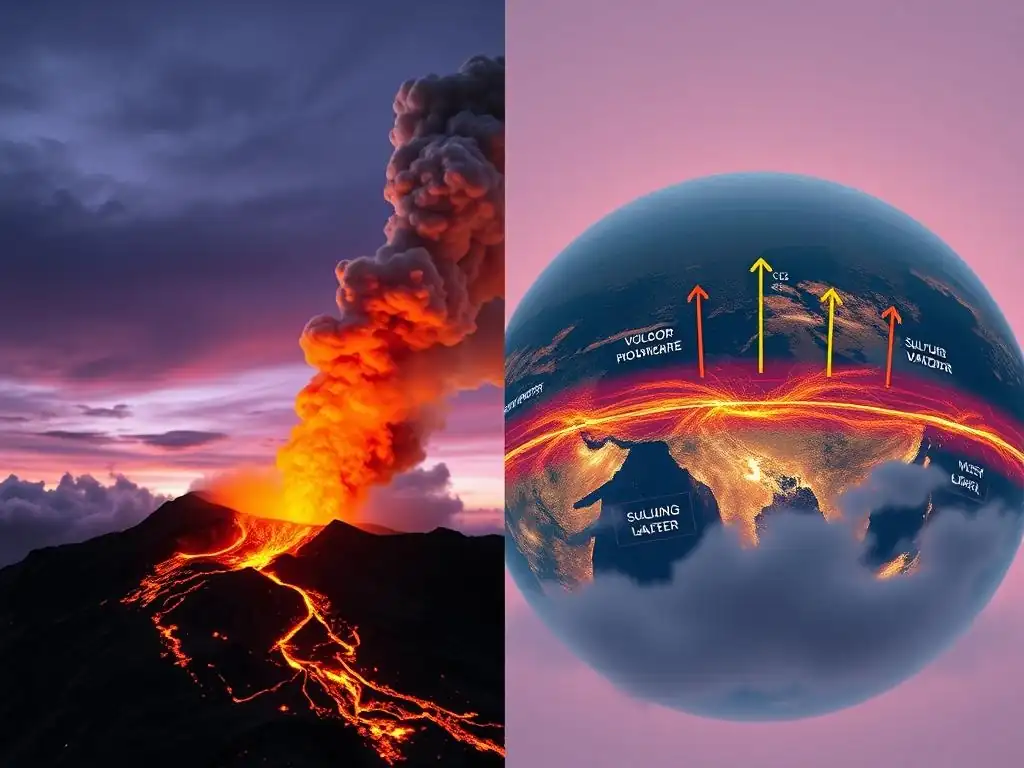
Volcanic Carbon Dioxide (CO2) Emissions: A Long-Term Perspective
While volcanic sulfur dioxide is responsible for short-term cooling, volcanic carbon dioxide (CO₂) emissions contribute to the greenhouse effect and long-term warming of the planet. CO₂ is a naturally occurring greenhouse gas that traps heat in the Earth's atmosphere. Volcanoes release CO₂ from magma beneath the surface and during eruptions.
This CO₂ is derived from the Earth's mantle and crust, representing carbon that has been stored within the planet for millions of years. Unlike the relatively short lifespan of sulfate aerosols, CO₂ persists in the atmosphere for centuries to millennia. Therefore, while individual volcanic eruptions might not release as much CO₂ as human activities annually, the cumulative effect of volcanic CO₂ emissions over geological timescales is significant in shaping Earth's long-term climate.
Volcanic CO₂ emissions occur through both explosive eruptions and more continuous, less dramatic degassing. Effusive eruptions, characterized by lava flows, and passive degassing from volcanoes between eruptions are ongoing sources of volcanic CO₂. Submarine volcanoes also contribute to global volcanic CO₂ emissions, releasing gases directly into the ocean and atmosphere. Estimating the total global volcanic CO₂ emission rate is challenging, but scientists use various methods, including direct measurements at volcanoes and geochemical analyses of rocks and gases, to refine these estimates. Current estimates suggest that volcanoes release hundreds of millions of tons of CO₂ into the atmosphere annually.
Comparing Volcanic CO2 to Anthropogenic CO2: Scale and Impact
When comparing volcanic CO₂ emissions to anthropogenic CO₂ emissions, it's crucial to consider the scale of human activities. Anthropogenic CO₂ emissions, primarily from the burning of fossil fuels, deforestation, and industrial processes, are vastly larger than volcanic CO₂ emissions. Current estimates indicate that human activities release tens of billions of tons of CO₂ into the atmosphere each year. This is orders of magnitude greater than the estimated annual volcanic CO₂ output. For example, the US Geological Survey estimates that volcanoes release around 0.26 billion tons of CO₂ per year, while human activities release over 35 billion tons annually.
Therefore, while volcanoes do contribute to the global carbon cycle and greenhouse effect, their current contribution is dwarfed by human-induced emissions. The rapid increase in atmospheric CO₂ concentration observed since the Industrial Revolution is overwhelmingly attributed to human activities. However, it's important to recognize that over geological timescales, volcanic CO₂ emissions have played a significant role in regulating Earth's climate.
Massive volcanic events, such as large igneous provinces, which occurred millions of years ago, released enormous quantities of CO₂ over extended periods, leading to significant warming events in Earth's history. While current volcanic CO₂ emissions are small compared to human emissions, understanding their long-term role is essential for a complete picture of Earth's climate history and future.
The Role of Volcanoes in the Global Carbon Cycle
Volcanoes are an integral part of the Earth's long-term carbon cycle, which describes the movement of carbon between the atmosphere, oceans, land, and Earth's interior. Volcanoes act as a natural pathway for carbon to be released from the Earth's interior back into the atmosphere and oceans.
This carbon originates from various sources, including carbon stored in the mantle and crust, and carbon recycled through subduction zones, where tectonic plates collide and one plate slides beneath another. During subduction, carbon-rich sediments and rocks are carried down into the Earth's mantle, where they can be melted and eventually released back to the surface through volcanic activity.
Over millions of years, the balance between carbon input into the Earth's interior through processes like sedimentation and carbon output through volcanic degassing has played a crucial role in regulating atmospheric CO₂ concentrations and Earth's climate. While human activities have drastically altered the carbon cycle in recent times by releasing vast amounts of stored carbon in a relatively short period, the long-term geological carbon cycle, including volcanic degassing, continues to operate.
Understanding the natural fluxes of carbon, including volcanic contributions, is essential for developing accurate climate models and predicting future climate scenarios. Volcanic CO₂ emissions, though relatively small compared to human emissions today, remain a fundamental component of the Earth's carbon cycle and a key factor in understanding long-term climate evolution.
Beyond Sulfur and Carbon: Other Volcanic Gases and Their Potential Climatic Influence
Halogens (Chlorine, Fluorine) and Ozone Depletion
While sulfur dioxide and carbon dioxide are the volcanic gases with the most pronounced climatic impacts, other volcanic gases, particularly halogens like chlorine and fluorine, can also influence the atmosphere. Volcanoes release chlorine and fluorine in the form of gases such as hydrogen chloride (HCl) and hydrogen fluoride (HF). When these gases reach the stratosphere, they can participate in chemical reactions that deplete the ozone layer. Ozone in the stratosphere is crucial because it absorbs harmful ultraviolet (UV) radiation from the sun, protecting life on Earth.
Volcanic halogens contribute to ozone depletion through catalytic cycles. For example, chlorine atoms released from HCl can react with ozone molecules, breaking them down into oxygen molecules. These chlorine atoms are then regenerated and can destroy many more ozone molecules, leading to significant ozone depletion.
While the impact of volcanic halogens on global ozone depletion is generally less significant than that of human-produced chlorofluorocarbons (CFCs), major volcanic eruptions that inject large quantities of halogens into the stratosphere can cause temporary but noticeable ozone depletion events, particularly in polar regions. The Montreal Protocol, an international treaty, has been successful in phasing out CFCs, but volcanic halogen emissions remain a natural source of ozone-depleting substances.
Water Vapor: A Complex Role in Atmospheric Processes
Water vapor (H₂O) is the most abundant volcanic gas, but its role in climate is complex and less straightforward than that of sulfur dioxide or carbon dioxide. While volcanic water vapor itself is a greenhouse gas, its direct contribution to long-term global warming from volcanic eruptions is generally considered to be minimal. This is because the residence time of water vapor in the atmosphere is relatively short, typically days to weeks. Volcanic water vapor quickly condenses and precipitates out as rain or snow, limiting its accumulation in the atmosphere and its long-term warming effect on a global scale.
However, volcanic water vapor plays a more significant role in regional and local atmospheric processes. Large explosive eruptions can inject substantial amounts of water vapor into the troposphere and lower stratosphere. This can influence local weather patterns, contribute to cloud formation, and potentially enhance precipitation downwind of volcanoes.
Furthermore, water vapor can interact with sulfate aerosols in the stratosphere, affecting their formation, size distribution, and radiative properties, indirectly influencing the cooling effect of volcanic eruptions. The complex interactions of volcanic water vapor with other atmospheric components and its relatively short lifespan make its overall climatic influence intricate and less well-defined compared to other volcanic gases.
Volcanic Eruptions and Climate Variability: Short-Term vs. Long-Term Effects
Short-Term Climatic Impacts of Explosive Eruptions
Explosive volcanic eruptions, particularly those that inject large quantities of sulfur dioxide into the stratosphere, are known for their significant short-term climatic impacts. The primary short-term effect is global cooling, caused by the formation of sulfate aerosols that reflect sunlight. This cooling can be detectable within months of a major eruption and typically lasts for one to three years. The magnitude of the cooling is directly related to the amount of sulfur dioxide injected and the altitude reached by the volcanic plume. Beyond global average temperature decreases, explosive eruptions can also disrupt regional weather patterns.
For instance, volcanic eruptions can influence monsoon systems, alter atmospheric circulation patterns, and potentially lead to changes in precipitation in different regions. The cooling can also affect ocean temperatures and sea ice extent. The short-term cooling effect of volcanic eruptions is generally considered a natural climate perturbation that temporarily offsets, to some extent, the long-term warming trend caused by greenhouse gases.
However, these cooling events are relatively short-lived, and the climate system typically returns to its pre-eruption state within a few years. The 1991 Pinatubo eruption serves as a clear example of the short-term cooling and regional climate disruptions associated with explosive volcanic events.
Long-Term Effects of Effusive Eruptions and Degassing
In contrast to the short-term cooling of explosive eruptions, effusive eruptions and passive degassing from volcanoes contribute to the long-term warming effect through the release of carbon dioxide. Effusive eruptions, characterized by lava flows, and continuous degassing from volcanoes between eruptions release CO₂ into the atmosphere over extended periods. While the annual CO₂ emissions from volcanoes are small compared to human emissions, their cumulative effect over geological timescales is significant. This long-term volcanic CO₂ release is a natural component of the Earth's carbon cycle and has played a role in shaping Earth's climate over millions of years.
The long-term effects of volcanic CO₂ emissions are gradual and subtle compared to the dramatic short-term cooling of explosive eruptions. However, over geological timescales, volcanic CO₂ has contributed to periods of warmer climates. Large igneous provinces (LIPs), massive outpourings of lava that occurred millions of years ago, are associated with significant increases in atmospheric CO₂ and global warming events in Earth's past.
These events highlight the long-term climatic influence of volcanic CO₂ release. Understanding the balance between short-term cooling from sulfur dioxide and long-term warming from carbon dioxide from volcanic activity is crucial for comprehending the overall role of volcanoes in climate variability.
The Interplay Between Volcanic Activity and Natural Climate Oscillations (El Niño-Southern Oscillation)
Volcanic eruptions can interact with natural climate oscillations, such as the El Niño-Southern Oscillation (ENSO), adding complexity to climate variability. ENSO is a naturally occurring climate pattern in the Pacific Ocean that fluctuates between warm (El Niño) and cool (La Niña) phases, influencing global weather patterns. Studies suggest that volcanic eruptions can potentially modulate ENSO patterns, although the exact mechanisms are still being researched. Some research indicates that volcanic eruptions might favor the development of La Niña-like conditions in the Pacific in the years following an eruption.
The cooling effect of volcanic aerosols can alter atmospheric circulation and sea surface temperatures, potentially influencing the Walker circulation, a key component of ENSO. However, the interplay between volcanic forcing and ENSO is complex and not fully predictable. The timing and location of volcanic eruptions, as well as the pre-existing state of ENSO, can influence the nature and magnitude of the interaction. Understanding these interactions is crucial for improving climate predictions, particularly in the context of volcanic eruptions. Research is ongoing to further unravel the intricate relationships between volcanic activity, natural climate oscillations, and overall climate variability.
Case Studies: Examining Specific Volcanic Events and Their Climatic Consequences
The Eruption of Krakatoa (1883): A Global Cooling Event
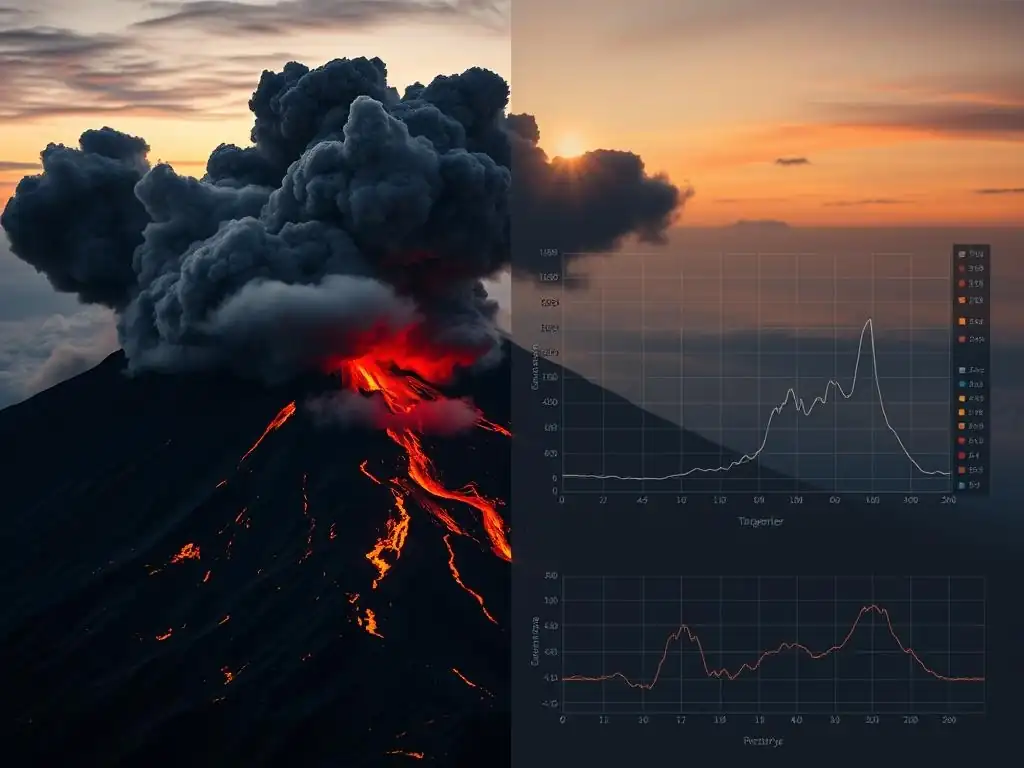
The 1883 eruption of Krakatoa, located in Indonesia, is a classic example of a volcanic event with significant global climatic consequences. While not as large as Tambora, Krakatoa injected a substantial amount of sulfur dioxide into the stratosphere, estimated to be around 10-15 million tons. The eruption was exceptionally explosive, producing a massive eruption column and a devastating tsunami. Following the eruption, observers around the world reported vivid sunsets and unusual atmospheric phenomena attributed to the stratospheric aerosol cloud.
Scientific analyses of historical temperature records and proxy data have confirmed that the Krakatoa eruption caused a measurable global cooling. Global average temperatures decreased by approximately 0.4°C (0.7°F) in the years following the eruption. This cooling effect, while less pronounced than that of Tambora, was still significant and lasted for several years.
The Krakatoa eruption provided early evidence of the link between volcanic eruptions and global cooling, contributing to the development of understanding of volcanic aerosols and their climatic impact. The event remains a significant case study in volcanology and climate science, illustrating the global reach of even a single, albeit powerful, volcanic eruption.
The Laki Fissure Eruption (1783-1784): Famine and Climate Disruption
The 1783-1784 Laki fissure eruption in Iceland represents a different type of volcanic event with severe climatic and societal consequences. Unlike the explosive Krakatoa or Pinatubo eruptions, Laki was primarily an effusive fissure eruption that released massive volumes of lava and volcanic gases over an extended period of eight months. While the SO₂ injection into the stratosphere was substantial, estimated at around 8 million tons, the eruption's impact was also influenced by the high latitude location of Iceland and the persistent nature of the eruption.
The Laki eruption caused a "dry fog" across Europe, a visible haze of sulfate aerosols and other volcanic gases. This fog reduced sunlight, leading to decreased temperatures across the Northern Hemisphere, particularly in Europe. The summer of 1783 was exceptionally cold, and crop failures were widespread.
In Iceland itself, the eruption had catastrophic consequences, leading to the "Mist Hardship" famine that killed a significant portion of the population. The Laki eruption is a stark example of how volcanic eruptions, even those not as explosively powerful as Tambora or Pinatubo, can have devastating regional and even hemispheric climatic and societal impacts, particularly when they occur in sensitive regions and disrupt agricultural systems.
Ongoing Research: Monitoring Volcanic Gases at Kīlauea and Assessing Potential Climate Impacts
Kīlauea volcano in Hawaii, while known for its relatively frequent effusive eruptions and lava flows, also provides an important ongoing case study for volcanic gas emissions and their potential climate impacts. Kīlauea is a persistently degassing volcano, releasing volcanic gases, including sulfur dioxide and carbon dioxide, even during periods of non-eruptive activity. Scientists continuously monitor gas emissions from Kīlauea using ground-based instruments and satellite observations, providing valuable data on volcanic degassing processes.
While Kīlauea's individual eruptions and degassing events are not typically large enough to cause global cooling on the scale of Pinatubo or Tambora, the continuous degassing from Kīlauea and other persistently active volcanoes contributes to the background level of volcanic gas emissions and their long-term influence on the atmosphere. Research at Kīlauea focuses on understanding the variations in gas emission rates, the composition of volcanic gases, and the atmospheric transport and dispersion of volcanic plumes.
This ongoing research is crucial for refining our understanding of volcanic degassing processes and their cumulative contribution to the global carbon cycle and climate variability. Furthermore, monitoring volcanoes like Kīlauea helps to improve our ability to detect changes in volcanic activity and assess potential hazards, including gas plumes that can impact air quality and aviation.
Predicting and Monitoring Volcanic Gas Emissions: A Crucial Step in Climate Research
Satellite Monitoring of Volcanic Plumes
Satellite technology has revolutionized the monitoring of volcanic gas emissions, providing a global and continuous view of volcanic plumes. Satellites equipped with specialized instruments can detect and measure volcanic gases, particularly sulfur dioxide, from space. Instruments like the Ozone Monitoring Instrument (OMI) and the Tropospheric Monitoring Instrument (TROPOMI) onboard satellites are designed to measure atmospheric composition, including volcanic SO₂. These instruments measure the absorption of ultraviolet and visible light by SO₂, allowing scientists to map the spatial distribution and quantify the total amount of SO₂ in volcanic plumes.
Satellite monitoring offers several advantages. It provides global coverage, enabling the detection of volcanic eruptions and gas plumes even in remote or inaccessible regions. It offers continuous monitoring, allowing for the tracking of volcanic gas emissions over time and the detection of changes in degassing rates.
Satellite data are crucial for assessing the global impact of volcanic eruptions on climate and for tracking the dispersion of volcanic plumes, which is important for aviation safety and air quality monitoring. Furthermore, satellite data are essential for validating and improving volcanic gas emission models and for understanding the long-term trends in volcanic degassing.
Ground-Based Measurements and Remote Sensing Techniques
While satellite monitoring provides a broad overview, ground-based measurements and remote sensing techniques offer more detailed and localized information about volcanic gas emissions. Ground-based instruments, such as DOAS and FTIR spectrometers, are deployed at volcanoes to measure gas concentrations directly in volcanic plumes. These instruments can provide high-resolution measurements of various volcanic gases, including SO₂, CO₂, H₂S, and halogens. Ground-based measurements are crucial for validating satellite data and for studying the detailed chemistry and dynamics of volcanic plumes at specific volcanoes.
Remote sensing techniques, such as lidar and thermal infrared imaging, are also used from the ground and aircraft to study volcanic plumes. Lidar (Light Detection and Ranging) can measure the altitude and spatial distribution of aerosols in volcanic plumes, providing information about plume dispersion and aerosol properties. Thermal infrared imaging can detect thermal anomalies associated with volcanic degassing and lava flows, helping to monitor volcanic activity. Combining ground-based and satellite measurements provides a comprehensive approach to monitoring volcanic gas emissions, integrating global coverage with detailed local observations.
Developing Models to Forecast Volcanic Gas Dispersion and Climate Impacts
Developing accurate models to forecast volcanic gas dispersion and climate impacts is a crucial step in mitigating the potential hazards and understanding the broader climatic consequences of volcanic eruptions. Volcanic gas dispersion models simulate the transport and diffusion of volcanic plumes in the atmosphere, taking into account factors such as wind patterns, atmospheric stability, and gas chemistry. These models are used to forecast the trajectory of volcanic plumes, predict the concentration of volcanic gases at different locations, and assess the potential impact on air quality and aviation.
Climate models are used to simulate the climatic effects of volcanic eruptions, particularly the cooling effect of sulfate aerosols. These models incorporate volcanic aerosol forcing, representing the radiative effect of sulfate aerosols on the Earth's energy balance. Climate models can simulate the global temperature response to volcanic eruptions, as well as regional climate changes and impacts on precipitation and atmospheric circulation.
Improving volcanic gas dispersion and climate models requires accurate input data on volcanic gas emissions, atmospheric conditions, and aerosol properties. Continued research and model development are essential for enhancing our ability to predict and prepare for the impacts of volcanic eruptions on both regional and global scales.
The Future of Volcanic Gas Research: Addressing Key Uncertainties
Improving Our Understanding of Volcanic Gas Chemistry
Despite significant advances in volcanic gas research, key uncertainties remain, particularly in our understanding of volcanic gas chemistry. The composition of volcanic gases can vary significantly depending on the type of volcano, magma composition, and eruptive style. More research is needed to better characterize the full range of volcanic gases released from different types of volcanoes and under various conditions. This includes improving our understanding of the degassing processes within magma chambers and during magma ascent, as well as the chemical reactions that volcanic gases undergo in the atmosphere.
Further research is also needed to investigate the role of minor volcanic gases, such as halogens and trace metals, in atmospheric processes and climate. While sulfur dioxide and carbon dioxide are the dominant gases in terms of climatic impact, other gases can also play a role, particularly in ozone depletion and aerosol formation. Improving our understanding of volcanic gas chemistry requires continued field measurements at volcanoes, laboratory experiments to simulate volcanic degassing processes, and advanced analytical techniques to characterize volcanic gas composition.
Refining Climate Models to Incorporate Volcanic Forcing
Refining climate models to more accurately incorporate volcanic forcing is crucial for improving climate predictions and understanding the role of volcanoes in climate variability. Current climate models generally represent volcanic forcing by prescribing the radiative effect of sulfate aerosols based on estimates of sulfur dioxide emissions. However, there are uncertainties in these estimates, and the representation of volcanic aerosol processes in climate models can be further improved. This includes better representing the formation, transport, and removal of sulfate aerosols in the stratosphere, as well as their radiative properties and interactions with clouds.
Furthermore, climate models need to better incorporate the effects of volcanic eruptions on atmospheric circulation and regional climate patterns. Volcanic eruptions can influence monsoon systems, ENSO, and other natural climate oscillations, and these interactions need to be more accurately represented in climate models. Improving the representation of volcanic forcing in climate models requires continued research on volcanic aerosol processes, atmospheric dynamics, and model development. This will lead to more accurate climate predictions and a better understanding of the role of volcanoes in both past and future climate variability.
The Importance of Continued Monitoring and Data Collection
Continued monitoring of volcanic gas emissions and data collection are essential for advancing volcanic gas research and improving our understanding of volcanic impacts on climate. Long-term monitoring of volcanic gas emissions from active volcanoes provides valuable datasets for studying degassing trends, detecting changes in volcanic activity, and assessing potential hazards. Satellite monitoring provides a global and continuous view of volcanic plumes, while ground-based measurements offer detailed local information. Sustained funding and international collaboration are crucial for maintaining and expanding volcanic gas monitoring networks and data collection efforts.
Furthermore, data from past volcanic eruptions, including historical records, ice core data, and geological archives, are invaluable for reconstructing past volcanic activity and its climatic consequences. Analyzing these data helps to improve our understanding of the long-term relationship between volcanic eruptions and climate variability. Continued data collection and research efforts are essential for reducing uncertainties in volcanic gas research, improving climate models, and enhancing our ability to predict and prepare for the impacts of volcanic eruptions on both society and the global climate.
Conclusion: Volcanic Gases as a Key Piece in the Climate Puzzle
Recognizing the Complex Relationship Between Volcanoes and Global Temperature
Volcanic gases play a complex and multifaceted role in regulating global temperature, acting as both a cooling and warming influence on the Earth's climate system. Sulfur dioxide emissions from explosive eruptions lead to short-term global cooling due to the formation of sulfate aerosols that reflect sunlight. Conversely, carbon dioxide emissions from volcanoes contribute to the long-term greenhouse effect and global warming.
Other volcanic gases, such as halogens, can influence ozone depletion, while water vapor has a more complex and localized role in atmospheric processes. Understanding the interplay of these different volcanic gases and their varying timescales of impact is crucial for comprehending the overall role of volcanoes in climate variability.
The relationship between volcanic gases and global temperature is not a simple linear one; it is influenced by a multitude of factors, including the type of eruption, the composition of volcanic gases, the altitude of injection, and interactions with other components of the climate system. While the short-term cooling effect of volcanic eruptions can temporarily offset warming trends, the long-term contribution of volcanic CO₂ to the greenhouse effect is a fundamental aspect of Earth's climate history. Recognizing this complexity is essential for developing a comprehensive understanding of climate change, both natural and human-induced.
Staying Informed About Volcanic Activity and Climate Research
Staying informed about volcanic activity and ongoing climate research is crucial for appreciating the dynamic relationship between volcanoes and our planet's climate. Volcanic eruptions are natural events that can have significant and sometimes unpredictable impacts on the atmosphere and climate. Monitoring volcanic activity worldwide, through satellite observations and ground-based networks, is essential for detecting eruptions, tracking volcanic gas plumes, and assessing potential hazards. Reliable sources of information on volcanic activity include volcano observatories, geological surveys, and scientific publications.
Furthermore, keeping abreast of the latest climate research, including studies on volcanic forcing and climate modeling, is important for understanding the broader context of volcanic impacts on climate. Climate science is a constantly evolving field, and new research is continually refining our understanding of the complex interactions within the Earth's climate system. By staying informed about both volcanic activity and climate research, we can better appreciate the intricate connections between these natural phenomena and their influence on our planet's environment.
Frequently Asked Questions
What role do volcanic gases play in climate change?
Volcanic gases, particularly sulfur dioxide, can have both short-term cooling and long-term warming effects on the climate. Sulfur dioxide forms sulfate aerosols that reflect sunlight, leading to temporary cooling. Carbon dioxide, a greenhouse gas, contributes to warming.
How do volcanic eruptions affect the Earth's temperature?
Large volcanic eruptions can inject sulfur dioxide into the stratosphere, forming a haze that reflects sunlight back into space. This leads to a noticeable decrease in global temperatures for a few years before the aerosols dissipate.
Do all volcanic eruptions have the same impact on climate?
No, the impact depends on the size and composition of the eruption. Eruptions that inject large quantities of sulfur dioxide into the stratosphere have the most significant cooling effect.
What other gases are released during volcanic eruptions, and how do they affect the atmosphere?
Besides sulfur dioxide and carbon dioxide, volcanoes release water vapor, hydrogen sulfide, and other trace gases. Water vapor is a greenhouse gas, but its effect is complex. Hydrogen sulfide can contribute to acid rain.
Is there a way to predict the long-term climate impacts of volcanic eruptions?
Predicting the long-term impacts is challenging due to the complexity of climate systems and the variability of volcanic eruptions. Scientists use climate models and data from past eruptions to improve predictions.
Final Reflection: The Breath of the Earth and Our Climate's Future
The exploration of volcanic gases and their impact on global temperature reveals a profound truth: Earth's internal processes are inextricably linked to our planet's climate system. What was once considered a peripheral factor in climate models is now emerging as a crucial element, demanding a more holistic understanding of the forces shaping our world. This realization underscores the complexity of climate change and the need to move beyond simplistic narratives.
This understanding has profoundly influenced my perspective on environmental stewardship. Recognizing the subtle yet powerful influence of natural phenomena like volcanic activity highlights the delicate balance within our planet's systems. It reminds us that our actions, however significant, are but one piece of a much larger puzzle. The Earth does not belong to us: we belong to the Earth.
- Chief Seattle. This quote encapsulates the humility we must embrace as we navigate the challenges of a changing climate, acknowledging our interconnectedness with the natural world.
Now, as we stand at a critical juncture in Earth's history, let us reflect on the lessons learned. Consider how a deeper understanding of natural processes, like the role of volcanic gases, can inform more effective and nuanced climate strategies. Embrace the complexity, seek knowledge, and commit to actions that honor the intricate web of life that sustains us all. The future of our planet depends on our willingness to learn, adapt, and act with informed intention.
Unearth Your Role in Understanding Volcanic Impacts!
Thank you for exploring the fascinating relationship between volcanic gases and global temperatures. Now that you've learned about this connection, let's consider how you can contribute to a better understanding of our planet's climate.
Here are a few ways to get started:
- Compare your personal carbon footprint to the estimated impact of a major volcanic eruption. Use an online carbon footprint calculator and consider the long-term atmospheric effects of volcanic gases.
- Share this article with your friends and family to spark conversations about the often-overlooked influences on climate change. Help spread awareness!
- Visit VolcanoExplorers.org to learn more about specific volcanic gases, their lifecycles, and their impact on the climate.
What surprising fact from this article will you share today to ignite curiosity about Earth's dynamic systems?