
Global Shield Volcanoes: Are They Found Beyond Earth?

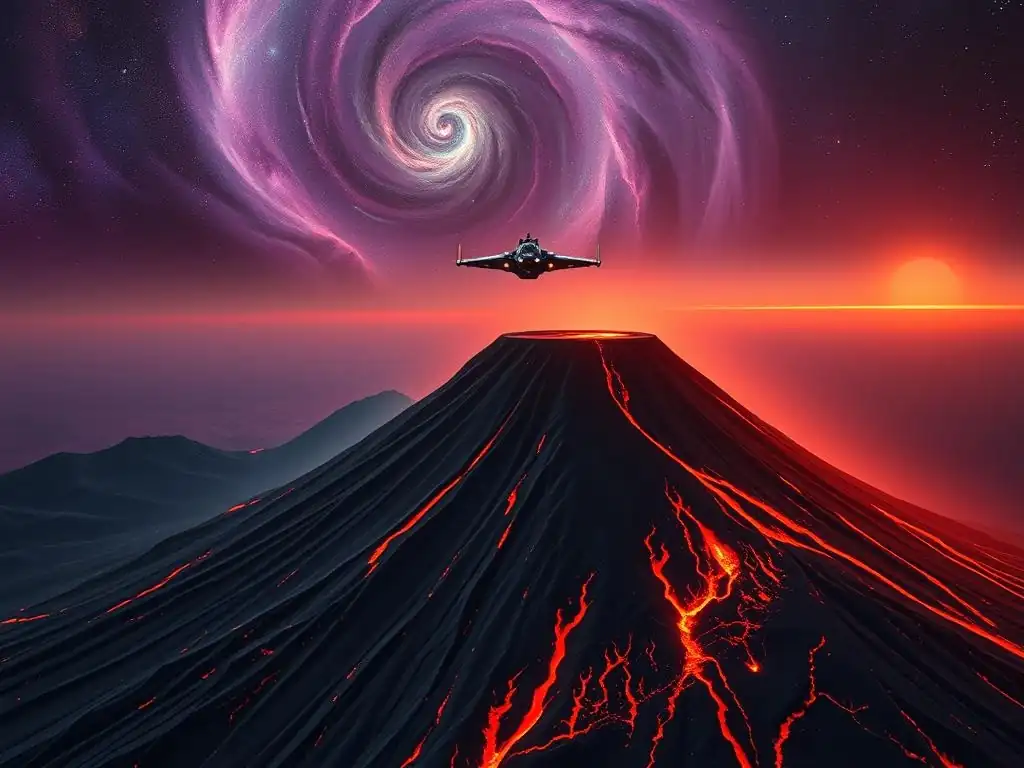
Welcome to Volcano Explorers, where the Earth's fiery heart is laid bare! Ever wondered if the colossal volcanic landscapes we see here are unique? Prepare to ignite your curiosity as we delve into a fascinating question: Are there Shield Volcanoes Beyond Earth? The answer might just reshape your understanding of planetary geology. Read on and embark on an explosive journey!
- Extraterrestrial Shield Volcanoes: A Solar System Perspective
- Introduction to Shield Volcanoes and Planetary Volcanism
- Identifying Shield Volcanoes Beyond Earth: Techniques and Challenges
- Martian Shield Volcanoes: Giants of the Red Planet
- Venusian Shield Volcanoes: Evidence of Widespread Volcanism
- Potential Shield Volcanoes on Icy Worlds: Cryovolcanism
- Comparative Volcanology: Earth vs. Other Planets
- Significance of Studying Extraterrestrial Volcanoes
- Future Exploration of Extraterrestrial Volcanoes
- Conclusion: Shield Volcanoes as a Common Planetary Feature
-
Frequently Asked Questions
- What are the defining characteristics of shield volcanoes that make them recognizable?
- If shield volcanoes are primarily formed from basaltic lava, what does that imply about the composition of planetary surfaces where they're found?
- Besides Earth, on which celestial bodies have shield volcanoes been identified or strongly suspected?
- What are some of the challenges in confirming the existence and composition of shield volcanoes on other planets?
- How does studying shield volcanoes on other planets help us understand Earth's own volcanic history and processes?
- Final Reflection: Unveiling Cosmic Giants
- Uncover the Secrets of Volcanoes Beyond Our World!
Extraterrestrial Shield Volcanoes: A Solar System Perspective
Introduction to Shield Volcanoes and Planetary Volcanism
Shield Volcano Morphology and Formation Mechanisms
Shield volcanoes, characterized by their broad, gently sloping profiles resembling a warrior's shield, are among the most voluminous volcanic edifices in our solar system. Their distinctive shape arises from the eruption of highly fluid, low-viscosity lava flows, primarily basaltic in composition. These lavas can travel vast distances, spreading out thinly and cooling slowly, layer upon layer, to construct the immense, sprawling structures we recognize as shield volcanoes.
The relatively low gas content of these basaltic lavas also contributes to their effusive eruption style, contrasting sharply with the explosive eruptions associated with stratovolcanoes. This effusive nature allows for the gradual build-up of these massive landforms over extended periods, often millions or even billions of years.
The formation of shield volcanoes is intrinsically linked to mantle plumes or hotspots – areas where unusually hot material rises from deep within a planet's mantle. As this plume material nears the surface and undergoes decompression melting, it generates magma that ascends to the surface and erupts. The persistent, long-lived nature of these hotspots ensures a continuous supply of magma, fueling the growth of shield volcanoes.
On Earth, prime examples like the Hawaiian Islands and Iceland are direct results of hotspot volcanism. Understanding these terrestrial examples provides a crucial framework for interpreting similar volcanic features observed on other planetary bodies.
PlanetaryVolcanoes.org: Exploring Volcanic Worlds
Imagine a digital portal, a comprehensive repository of knowledge dedicated to the captivating realm of planetary volcanism – consider this as PlanetaryVolcanoes.org. This hypothetical online resource, much like VolcanoExplorers.org, could serve as an invaluable platform for enthusiasts, researchers, and students alike to explore the diverse expressions of volcanic activity across our solar system and beyond. It would be a place to delve into the geological wonders of volcanic landscapes, from the familiar terrestrial volcanoes to the exotic volcanic features sculpted on distant moons and planets.
Such a platform could host a wealth of information, including detailed profiles of individual volcanoes, comparative studies of volcanic processes on different planetary bodies, and cutting-edge research findings from planetary missions. Interactive maps showcasing volcanic distributions, 3D models of volcanic terrains, and educational resources explaining complex geological concepts could further enhance the user experience. By centralizing and disseminating knowledge about extraterrestrial volcanism, PlanetaryVolcanoes.org would foster a deeper appreciation for the dynamic geological forces shaping the surfaces of worlds beyond our own, mirroring the mission of VolcanoExplorers.org in bringing the wonders of volcanoes to a wider audience.
Identifying Shield Volcanoes Beyond Earth: Techniques and Challenges
Remote Sensing and Planetary Missions for Volcano Detection
Identifying shield volcanoes beyond Earth relies heavily on remote sensing techniques and data gathered by planetary missions. Spacecraft equipped with a suite of instruments, including cameras operating across various wavelengths (visible, infrared, radar), altimeters for topographic mapping, and spectrometers for compositional analysis, are crucial for detecting and characterizing volcanic features on other planets and moons. For instance, radar imaging is particularly valuable for penetrating cloud cover, like that on Venus, and revealing surface features hidden from optical telescopes. Thermal infrared imaging can detect areas of elevated temperature, potentially indicating active volcanism or recent lava flows.
Planetary missions, such as NASA's Mars Reconnaissance Orbiter (MRO) and ESA's Venus Express, have provided a treasure trove of data that has revolutionized our understanding of extraterrestrial volcanism. High-resolution imagery from MRO's HiRISE camera has allowed for detailed studies of Martian volcanic terrains, revealing intricate lava flow patterns and volcanic vent structures.
Similarly, radar data from missions like Magellan to Venus has unveiled a landscape dominated by volcanic features. By analyzing these remotely sensed datasets, scientists can identify the characteristic morphology of shield volcanoes – their low, broad profiles and radiating lava flows – and differentiate them from other geological formations.
Distinguishing Volcanic Structures from Other Geological Formations
While the distinctive shield shape is a primary indicator, distinguishing volcanic structures from other geological formations on planetary surfaces requires careful analysis and consideration of multiple lines of evidence. Impact craters, for example, can sometimes exhibit circular features that might superficially resemble volcanic calderas. However, impact craters typically display raised rims, ejecta blankets, and central peaks – features generally absent in volcanic calderas, which are formed by the collapse of a volcano's magma chamber.
Geological context is paramount in accurate identification. The presence of sinuous rilles (lava channels), extensive lava plains, and volcanic vents in association with a shield-like structure strongly supports a volcanic origin. Compositional data, obtained through spectroscopy, can further strengthen the identification by confirming the presence of volcanic materials like basalt.
For example, the detection of olivine and pyroxene, common minerals in basalt, in association with a shield-shaped landform would be compelling evidence for its volcanic nature. Furthermore, analyzing the age of the surface through crater counting – assuming older surfaces accumulate more impact craters – can help determine the relative timing of volcanic activity and place it within the planet's geological history.
Martian Shield Volcanoes: Giants of the Red Planet
Olympus Mons: Characteristics of the Solar System's Largest Volcano
Olympus Mons, towering over the Tharsis region of Mars, is not only the largest volcano on Mars but also the largest known volcano in our solar system. This colossal shield volcano stands approximately 25 kilometers (15 miles) high, nearly three times the height of Mount Everest, and spans a staggering 624 kilometers (388 miles) in diameter – roughly the size of the state of Arizona.
Its summit caldera complex, formed by multiple collapses of the magma chamber, measures an impressive 85 kilometers (53 miles) across. The flanks of Olympus Mons exhibit gentle slopes, averaging only about 5 degrees, characteristic of shield volcanoes built from highly fluid basaltic lava flows.
Surrounding the base of Olympus Mons is a prominent escarpment, or cliff, reaching up to 8 kilometers (5 miles) high in places. The formation of this escarpment is still debated, but prevailing theories suggest it may be due to either tectonic faulting, gravitational slumping of the volcano's flanks, or erosion by ancient glaciers or lava flows that once extended further outwards.
The sheer scale of Olympus Mons is a testament to the prolonged and voluminous volcanic activity that has shaped the Martian surface over billions of years. Its immense size is likely facilitated by Mars' lower gravity and lack of plate tectonics, allowing magma to accumulate at a fixed location for extended periods.
Martian Shield Volcano Geology: Composition, Features, and Formation History
Martian shield volcanoes, including Olympus Mons and others in the Tharsis and Elysium regions, are predominantly composed of basaltic rocks, similar to shield volcanoes on Earth. Spectroscopic analyses from Martian orbiters have confirmed the presence of minerals like olivine, pyroxene, and plagioclase feldspar, which are characteristic of basaltic compositions. The lava flows that construct these Martian giants are exceptionally long and thin, extending for hundreds of kilometers, a consequence of the low viscosity of basaltic lava and the relatively flat Martian terrain.
Detailed imagery reveals a variety of volcanic features on Martian shield volcanoes, including lava tubes – underground tunnels formed by flowing lava – and lava channels – surface pathways carved by lava flows. Pahoehoe and aa lava textures, common on terrestrial basaltic volcanoes, have also been identified on Mars, indicating similar eruption processes.
Crater counting studies suggest that Martian shield volcanoes have experienced volcanic activity over vast timescales, spanning from the early Noachian period (over 3.7 billion years ago) to the Amazonian period (within the last few billion years, possibly even more recently in some locations). The longevity of Martian volcanism underscores the planet's dynamic geological history and its potential for past, and perhaps even present, volcanic activity.
Venusian Shield Volcanoes: Evidence of Widespread Volcanism
Volcanic Plains and Shield-Like Structures on Venus
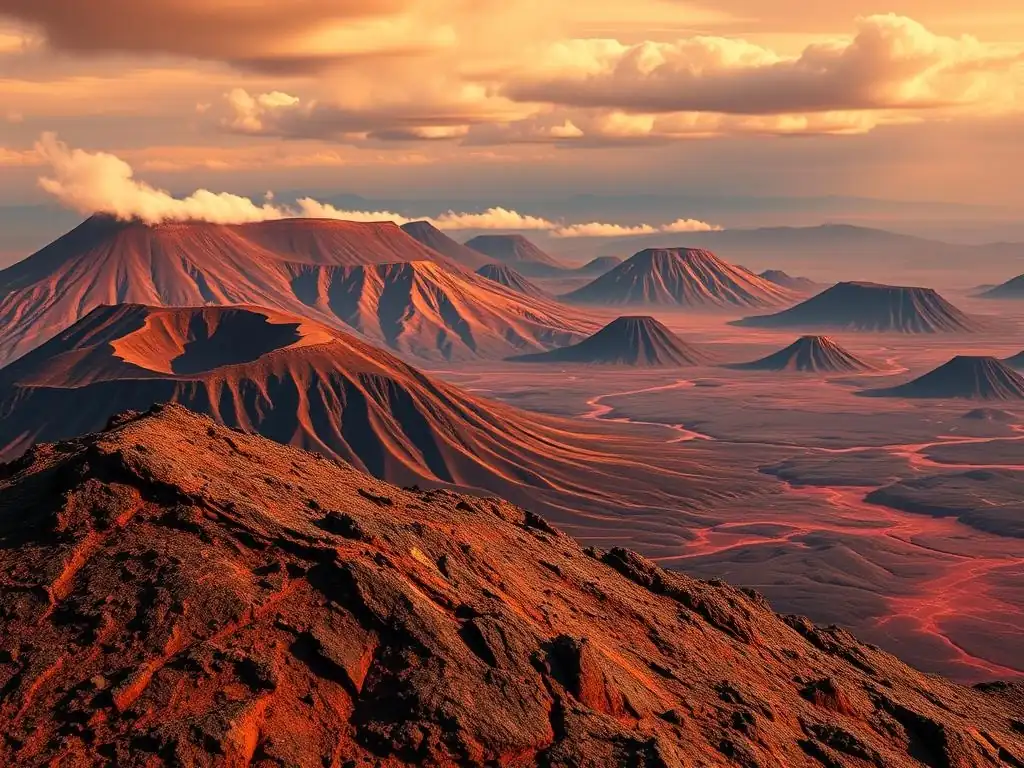
Venus, shrouded in a dense, opaque atmosphere, was long perceived as geologically quiescent. However, radar mapping missions like Magellan have unveiled a planet with a remarkably volcanic surface. Venus is overwhelmingly dominated by volcanic plains, covering approximately 80% of its surface. Interspersed within these plains are numerous shield volcanoes and shield-like structures, indicating a history of widespread and extensive volcanism. While Venus lacks towering giants like Olympus Mons, it boasts a much higher density of smaller shield volcanoes compared to Mars or Earth.
These Venusian shield volcanoes typically have diameters ranging from tens to hundreds of kilometers and are characterized by their low, gently sloping profiles, consistent with formation from highly fluid lava flows. Many of these structures exhibit features indicative of effusive eruptions, such as lava flows, channels, and volcanic domes. Radar imagery reveals complex flow patterns and textures, suggesting a variety of lava compositions and eruption styles. The sheer abundance of shield volcanoes and volcanic plains on Venus points to a planet shaped by intense volcanic resurfacing events throughout its geological history.
Venusian Volcanism and its Impact on Atmospheric Composition
Venusian volcanism is not only responsible for shaping the planet's surface but has also profoundly influenced its atmosphere. Volcanic eruptions release significant quantities of gases, including sulfur dioxide (SO2), carbon dioxide (CO2), and water vapor (H2O). On Venus, massive volcanic outgassing over billions of years is believed to have contributed significantly to its thick, CO2-rich atmosphere and the runaway greenhouse effect that makes Venus the hottest planet in our solar system.
The high concentration of sulfur dioxide in the Venusian atmosphere, particularly in the upper cloud layers, is also thought to be linked to ongoing or geologically recent volcanism. While direct evidence of currently active volcanoes on Venus remains elusive, fluctuations in atmospheric SO2 concentrations detected by Venus Express and other missions suggest the possibility of episodic volcanic eruptions continuing to this day. Studying Venusian volcanism provides crucial insights into the interplay between volcanic outgassing, atmospheric evolution, and planetary climate, with implications for understanding the habitability of planets both within and beyond our solar system.
Potential Shield Volcanoes on Icy Worlds: Cryovolcanism
Enceladus and Europa: Evidence of Cryovolcanism
Beyond the rocky planets, the icy moons of the outer solar system also exhibit volcanic activity, albeit in a dramatically different form – cryovolcanism. Instead of molten rock, cryovolcanoes erupt volatile substances like water, ammonia, and methane in liquid or vapor form. Enceladus, a small moon of Saturn, and Europa, a moon of Jupiter, are prime examples of icy worlds with compelling evidence for active cryovolcanism.
Enceladus famously erupts plumes of water vapor and ice particles from fractures near its south pole, dubbed "tiger stripes." These plumes, directly sampled by the Cassini spacecraft, are rich in salts and organic molecules, originating from a subsurface ocean beneath Enceladus' icy shell.
Europa, while not exhibiting plumes as dramatic as Enceladus, shows geological features suggestive of cryovolcanism, including smooth, relatively young surfaces, and evidence for subsurface ocean interactions with the surface. The heat source driving cryovolcanism on these icy moons is primarily tidal flexing – the gravitational squeezing and stretching caused by their parent planets, generating internal heat that melts subsurface ice.
Titan: Investigating Potential Cryovolcanoes and Their Composition
Titan, Saturn's largest moon, presents a more enigmatic case for cryovolcanism. Titan possesses a thick atmosphere and a surface sculpted by rivers, lakes, and seas of liquid hydrocarbons (methane and ethane). While direct observations of active cryovolcanoes on Titan are lacking, several landforms have been identified as potential cryovolcanic features. These include mountains with summit calderas and flows that resemble lava flows but are likely composed of cryomagma – a mixture of water ice, ammonia, and hydrocarbons.
One prominent candidate cryovolcano on Titan is Doom Mons, a large mountain with a caldera-like summit depression. Radar imagery reveals features radiating from Doom Mons that could be cryolava flows. The composition of Titan's cryovolcanoes is expected to be significantly different from terrestrial or even Martian volcanoes.
Cryomagma on Titan is likely a complex mixture of water ice, ammonia, methane, and other hydrocarbons, reflecting the moon's unique chemical environment. Future missions, like the Dragonfly rotorcraft mission, are planned to directly explore Titan's surface and investigate the nature and composition of these potential cryovolcanoes, offering unprecedented insights into cryovolcanism in the outer solar system.
Comparative Volcanology: Earth vs. Other Planets
Lava Composition and Eruption Styles: Influence of Planetary Environment
Comparative volcanology highlights the diverse ways volcanism manifests across different planetary bodies, influenced by varying planetary environments. Lava composition, a key factor determining eruption style and volcano morphology, is strongly influenced by the planet's internal composition and thermal history. Basaltic volcanism, dominant on Earth, Mars, and Venus, results from partial melting of the mantle. However, even within basaltic volcanism, variations exist. For example, Martian basalts are generally more iron-rich than terrestrial basalts, which can affect their viscosity and flow characteristics.
Eruption styles are also profoundly influenced by planetary conditions. Earth's volcanism encompasses a wide spectrum, from effusive shield volcanoes to explosive stratovolcanoes, depending on magma composition, gas content, and tectonic setting. On planets like Mars and Venus, where plate tectonics is absent, volcanism is largely characterized by effusive eruptions forming shield volcanoes and extensive lava plains. The lower atmospheric pressure on Mars, compared to Earth or Venus, can also influence eruption dynamics, potentially leading to more vigorous outgassing and different lava flow morphologies.
Gravity and Atmospheric Effects on Shield Volcano Morphology
Gravity and atmospheric pressure exert significant control over the morphology of shield volcanoes. Lower gravity, as on Mars compared to Earth, allows volcanoes to grow taller and broader because the erupted material experiences less downward force. This contributes to the immense size of Olympus Mons on Mars. Conversely, higher gravity would tend to flatten volcanic edifices.
Atmospheric pressure also plays a crucial role. A denser atmosphere, like that of Venus, can impede the dispersal of volcanic gases and potentially influence lava flow cooling rates and textures. The thin atmosphere on Mars allows for rapid cooling of lava flows, potentially contributing to the formation of longer, thinner flows compared to those on Earth, under similar lava compositions.
Furthermore, atmospheric conditions can influence erosion rates, which in turn shape the long-term evolution of volcanic landforms. Understanding these environmental factors is essential for interpreting the diverse morphologies of shield volcanoes observed across the solar system and for extrapolating to potentially volcanic exoplanets.
Significance of Studying Extraterrestrial Volcanoes
Planetary Evolution and Volcanic Processes
Studying extraterrestrial volcanoes is paramount for unraveling the evolutionary histories of planets and moons and for gaining a deeper understanding of fundamental volcanic processes. Volcanism is a primary mechanism for heat and material transport from a planet's interior to its surface and atmosphere. By examining the distribution, composition, and age of volcanic terrains on different planetary bodies, we can reconstruct their thermal histories, understand the evolution of their mantles and crusts, and constrain the processes driving planetary differentiation.
Comparative volcanology allows us to test and refine our models of magma generation, ascent, and eruption under diverse planetary conditions. Analyzing the morphology of shield volcanoes, lava flows, and volcanic vents on different planets provides valuable insights into the physics of lava flow, the role of volatiles in eruption dynamics, and the interplay between volcanism and planetary tectonics. Extraterrestrial volcanoes serve as natural laboratories for studying volcanic phenomena that may be difficult or impossible to observe directly on Earth.
Volcanic Activity and its Relationship to Planetary Habitability
Volcanic activity plays a crucial role in shaping planetary habitability. Volcanic outgassing is a primary source of atmospheric gases, including water vapor and carbon dioxide, which are essential for creating and maintaining habitable environments. On Earth, volcanism has played a key role in regulating the planet's climate over geological timescales. Conversely, excessive or runaway volcanism, as potentially occurred on Venus, can lead to uninhabitable conditions.
The discovery of cryovolcanism on icy moons like Enceladus and Europa has further expanded our understanding of the link between volcanism and habitability. Cryovolcanic plumes on Enceladus provide direct samples of a subsurface ocean that is potentially habitable, raising the exciting possibility of life beyond Earth within these icy worlds. Studying extraterrestrial volcanoes, both silicate and cryovolcanoes, is therefore essential for assessing the potential for past, present, and future habitability of planets and moons throughout the solar system and beyond.
Future Exploration of Extraterrestrial Volcanoes
Dragonfly Mission to Titan: Investigating Potential Cryovolcanism
The upcoming NASA Dragonfly mission to Titan represents a groundbreaking endeavor to directly explore a potentially cryovolcanically active world. Dragonfly is a rotorcraft lander designed to traverse diverse terrains on Titan, including potential cryovolcanic regions like the Selk crater region, which exhibits evidence for past cryovolcanic activity. The mission is equipped with a suite of instruments to analyze the composition of Titan's surface materials, image geological features in high resolution, and measure atmospheric conditions.
Dragonfly's exploration of potential cryovolcanoes on Titan will provide unprecedented insights into the nature of cryovolcanism in the outer solar system. By analyzing the chemical composition of cryovolcanic deposits, Dragonfly will help determine the composition of Titan's cryomagma and the processes driving cryovolcanic eruptions. The mission will also investigate the potential for liquid water and organic molecules in Titan's subsurface, further elucidating the moon's potential for habitability.
VERITAS Mission to Venus: Mapping Volcanic Activity and Geology
NASA's VERITAS (Venus Emissivity, Radio Science, InSAR, Topography, and Spectroscopy) mission, planned for launch later this decade, will provide a comprehensive and high-resolution view of Venus's volcanic landscape. VERITAS will utilize radar and infrared instruments to penetrate Venus's thick clouds and map its surface topography, geology, and thermal emission with unprecedented detail. The mission will search for evidence of active volcanism, such as thermal anomalies and changes in atmospheric composition, to determine if Venus is still volcanically active today.
VERITAS data will significantly enhance our understanding of Venusian shield volcanoes, volcanic plains, and other volcanic features. High-resolution topographic maps will reveal the detailed morphology of volcanic structures, while infrared spectroscopy will provide information on the mineral composition of Venusian rocks. By mapping the distribution of volcanic features and searching for signs of recent or ongoing activity, VERITAS will address fundamental questions about Venus's volcanic history, its role in shaping the planet's atmosphere and climate, and its overall geological evolution.
Conclusion: Shield Volcanoes as a Common Planetary Feature
Expanding Our Understanding of Planetary Processes Through Volcanism
Shield volcanoes, from the colossal Olympus Mons on Mars to the smaller, yet numerous, shields on Venus and potentially even cryovolcanic structures on icy moons, stand as testament to the widespread nature of volcanism throughout our solar system. Their prevalence across diverse planetary bodies highlights the fundamental role of volcanic processes in shaping planetary surfaces, atmospheres, and interiors. Studying these extraterrestrial shield volcanoes provides a comparative framework for understanding volcanism in general and for deciphering the unique geological histories of individual planets and moons.
By exploring shield volcanoes beyond Earth, we are not only expanding our knowledge of volcanic phenomena but also gaining crucial insights into the broader processes that govern planetary evolution. Volcanism is inextricably linked to planetary heat budgets, mantle convection, crustal formation, atmospheric development, and even the potential for habitability. Continued exploration and research into extraterrestrial volcanoes are essential for unlocking the secrets of planetary formation and evolution and for placing our own Earth within the broader context of volcanic worlds in the cosmos.
Frequently Asked Questions
What are the defining characteristics of shield volcanoes that make them recognizable?
Shield volcanoes are characterized by their broad, gently sloping shape, formed by the eruption of highly fluid basaltic lava. They lack the steep, cone-like structure of stratovolcanoes.
If shield volcanoes are primarily formed from basaltic lava, what does that imply about the composition of planetary surfaces where they're found?
The presence of shield volcanoes suggests a basalt-rich surface composition, indicating past or present volcanic activity involving the eruption of low-viscosity lava. This implies a history of mantle melting and differentiation.
Besides Earth, on which celestial bodies have shield volcanoes been identified or strongly suspected?
Shield volcanoes have been identified on Mars (e.g., Olympus Mons) and are suspected to exist on Venus and possibly some of the icy moons of the outer solar system, though the composition of the lavas may differ.
What are some of the challenges in confirming the existence and composition of shield volcanoes on other planets?
Challenges include limited observational data, especially concerning surface composition, and the difficulty in distinguishing volcanic features from other geological processes like impact cratering or tectonic deformation.
How does studying shield volcanoes on other planets help us understand Earth's own volcanic history and processes?
Comparing shield volcanoes across different planetary bodies provides insights into the factors influencing volcanic activity, such as gravity, crustal thickness, and mantle composition, enriching our understanding of Earth's own volcanism and planetary evolution.
Final Reflection: Unveiling Cosmic Giants
The exploration of shield volcanoes, both on Earth and potentially beyond, is more than just a scientific endeavor; it's a quest to understand the fundamental processes that shape planetary surfaces and, ultimately, the potential for life itself. The search for shield volcanoes beyond Earth highlights our insatiable curiosity and the drive to connect our own planet to the vast cosmos. This pursuit underscores the interconnectedness of geological processes throughout the universe and challenges us to broaden our understanding of planetary evolution.
The existence, or lack thereof, of shield volcanoes on other celestial bodies profoundly influences our understanding of planetary habitability and geological activity. The possibility that similar geological formations exist elsewhere sparks a sense of wonder and reminds us that Earth is not unique in its geological processes. The universe is a pretty big place. If it's just us, seems like an awful waste of space.
- Carl Sagan. This quote encapsulates the driving force behind our search for extraterrestrial geological features, suggesting that the discovery of shield volcanoes beyond Earth could be a significant step towards understanding our place in the universe.
As we continue to refine our techniques for identifying and characterizing planetary surfaces, both through remote sensing and future missions, let us remember that the search for "Shield volcanoes beyond Earth" is not just about finding geological formations. It's about expanding our understanding of the universe, our place within it, and the potential for life beyond our own planet.
Take a moment to consider the implications of such a discovery and how it might reshape our understanding of the cosmos. Let the quest for knowledge inspire you to look beyond the horizon and embrace the endless possibilities of the universe.
Uncover the Secrets of Volcanoes Beyond Our World!
Thank you for exploring the fascinating world of global shield volcanoes with us! Now that you've learned about their unique characteristics and the exciting possibility of their existence on other planets, it's time to take action.
Here are a few ways you can continue your volcanic adventure:
- Become a citizen scientist! Participate in online projects searching for volcanic features in satellite imagery of Mars and Venus. Your observations could help confirm the presence of these magnificent formations beyond Earth.
- Share this article with your fellow space and volcano enthusiasts! Let's spark a conversation about the possibilities lurking in the cosmos.
- Dive deeper into planetary geology. Research the specific missions and datasets being used to study the surfaces of other planets and consider what new discoveries await us.
What unexplored volcanic landscapes are you most excited to uncover? Share your thoughts and predictions in the comments below!