
Phreatomagmatic Eruptions: Underwater Explosions and Volcanic Islands

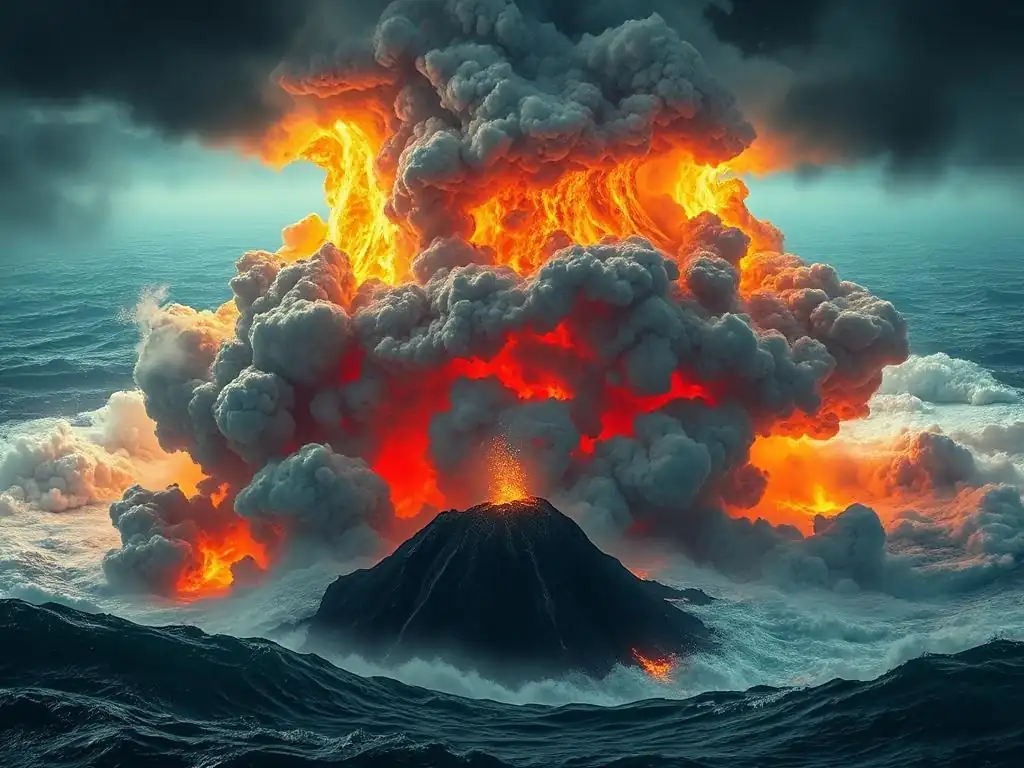
Welcome to Volcano Explorers, where the Earth's fiery secrets are revealed! Prepare to be captivated by the raw power and breathtaking beauty of volcanoes. Ever wondered what happens when molten rock meets the ocean's depths? Dive into our exploration of phreatomagmatic eruptions, those spectacular underwater explosions that can give birth to volcanic islands. What hidden forces drive these cataclysmic events, and what can we learn from their explosive creation? Uncover the answers and more as we delve into the fascinating science behind these volatile phenomena.
- Understanding Phreatomagmatic Eruptions: The Science of Underwater Volcanic Explosions
- The Mechanics of Phreatomagmatic Explosions: How Water and Magma Interact
- Types of Phreatomagmatic Eruptions: From Surtseyan to Subglacial
- Volcanic Landforms Created by Phreatomagmatic Activity
- Case Studies of Famous Phreatomagmatic Eruptions
- Hazards Associated with Phreatomagmatic Eruptions: Understanding the Risks
- Monitoring and Predicting Phreatomagmatic Eruptions
- The Significance of Phreatomagmatic Eruptions in Volcanic Island Formation
- Phreatomagmatic Eruptions: A Dynamic and Powerful Force of Nature
-
Frequently Asked Questions
- What exactly are phreatomagmatic eruptions?
- How do phreatomagmatic eruptions lead to the formation of volcanic islands?
- What makes phreatomagmatic eruptions so explosive?
- Are phreatomagmatic eruptions more dangerous than other types of volcanic eruptions?
- Where are phreatomagmatic eruptions most likely to occur?
- Final Reflection: The Enduring Power of Underwater Explosions
- Unearth the Secrets of Underwater Volcanoes!
Understanding Phreatomagmatic Eruptions: The Science of Underwater Volcanic Explosions
What are Phreatomagmatic Eruptions? Defining Underwater Volcanic Activity
Phreatomagmatic eruptions are a distinct type of volcanic explosion that occurs when magma interacts with external water sources, such as seawater, lake water, or groundwater. Unlike purely magmatic eruptions, which are driven by the pressure of gas within the magma itself, phreatomagmatic eruptions are characterized by the explosive interaction between hot magma or lava and cooler water. This interaction leads to rapid steam generation and violent explosions. These eruptions are particularly significant in underwater environments, including the ocean floor and beneath lakes, and they are responsible for the formation of many volcanic islands and unique coastal landforms.
The term "phreatomagmatic" itself is derived from the Greek words "phreas" (well or spring) and "magma," highlighting the crucial role of groundwater or external water in these volcanic events. Essentially, it describes a volcanic eruption that is significantly influenced, if not dominated, by the presence of water. Understanding phreatomagmatic eruptions is critical for comprehending volcanic activity in coastal regions, island arcs, and any area where magma encounters significant bodies of water. These eruptions can range in intensity from relatively mild steam explosions to powerful events that reshape landscapes and pose considerable hazards.
The Role of Water and Magma: Key Ingredients for Phreatomagmatic Explosions
The fundamental ingredients for a phreatomagmatic eruption are, as the name suggests, magma and water. Magma, molten rock from the Earth's interior, provides the heat source and the driving force for the volcanic activity. Water, in this context, acts as an external agent that drastically alters the nature of the eruption. The type of water body involved can vary widely, ranging from shallow coastal seawater to deep groundwater aquifers or even glacial meltwater. The critical factor is the rapid and intense heat transfer from the magma to the water.
When magma, typically at temperatures between 700°C and 1300°C (1300°F to 2400°F), comes into contact with water, which is at a much lower temperature, an extremely efficient heat exchange occurs. This rapid heating causes the water to flash into steam almost instantaneously. The volume expansion associated with this phase change from liquid water to steam is enormous – water can increase in volume by over 1,700 times when it vaporizes at atmospheric pressure.
This sudden expansion of volume is the primary mechanism that drives the explosive nature of phreatomagmatic eruptions. The type and quantity of both magma and water significantly influence the characteristics and intensity of these underwater volcanic explosions.
The Mechanics of Phreatomagmatic Explosions: How Water and Magma Interact
Magma-Water Interaction: The Science Behind the Steam Explosions
The interaction between magma and water in phreatomagmatic eruptions is a complex process that hinges on rapid heat transfer and phase changes. When hot magma encounters water, a thin film of steam initially forms around the magma. If the interaction is gentle, this steam layer can act as an insulator, slowing down further heat transfer and potentially leading to a less explosive, or even effusive, eruption. However, in phreatomagmatic eruptions, conditions are such that this steam film becomes unstable and collapses.
The collapse of the steam film allows for direct contact between the hot magma and liquid water. This direct contact leads to extremely rapid boiling, known as explosive boiling or vapor explosion. The efficiency of heat transfer in this direct contact scenario is far greater than through a steam film.
This rapid heat transfer is due to the large temperature difference and the high thermal conductivity of water compared to steam. The result is the formation of a shock wave and the fragmentation of both the magma and surrounding rocks, leading to the ejection of volcanic ash, steam, and rock fragments.
Rapid Vaporization and Expansion: The Force Driving Phreatomagmatic Eruptions
The explosive force behind phreatomagmatic eruptions is fundamentally driven by the rapid vaporization and subsequent expansion of water. As described earlier, the instantaneous conversion of liquid water to steam results in a dramatic increase in volume. This volume expansion occurs much faster than in typical magmatic eruptions where gas exsolution from the magma is a slower process. In phreatomagmatic events, the expansion is almost instantaneous and occurs within a confined space, leading to a powerful explosion.
This rapid expansion generates pressure waves that propagate outwards, shattering the surrounding magma and country rock. The energy released in a phreatomagmatic explosion is highly dependent on the efficiency of the magma-water mixing and the amount of water that is rapidly vaporized. The process is often described as a fuel-coolant interaction, similar to steam explosions in industrial accidents, but on a much larger and more powerful scale. The force generated is sufficient to eject material high into the atmosphere and create significant volcanic landforms.
Factors Influencing Explosion Intensity: Water Depth, Magma Composition, and More
Several factors determine the intensity and characteristics of phreatomagmatic eruptions. Water depth is a crucial factor; shallower water can lead to more violent explosions because the confining pressure is lower, allowing for more rapid steam expansion. In deeper water, the higher pressure can suppress boiling initially, but once an explosion is triggered, the energy released can be even more substantial.
The ratio of water to magma also plays a significant role. An excess of water can quench the magma and limit the explosive potential, while an optimal ratio, where water is sufficient to interact effectively but not overwhelm the magma, tends to produce the most powerful explosions.
Magma composition is another important factor. Magmas with lower silica content, such as basaltic magmas, tend to fragment more readily upon contact with water, leading to finer ash and broader dispersal. More viscous, silica-rich magmas, like rhyolitic magmas, may produce coarser fragments and more localized deposits.
The rate of magma supply also influences eruption style. A rapid influx of magma can lead to more sustained and intense phreatomagmatic activity. Finally, the type of confining environment (e.g., open water vs. confined aquifer) and the presence of pre-existing fractures or weaknesses in the surrounding rocks can also affect the path and intensity of phreatomagmatic eruptions.
Types of Phreatomagmatic Eruptions: From Surtseyan to Subglacial
Surtseyan Eruptions: The Birth of Volcanic Islands
Surtseyan eruptions are a specific type of phreatomagmatic eruption named after the island of Surtsey, which emerged off the coast of Iceland in 1963. These eruptions are characteristically shallow-water events, typically occurring in coastal areas or shallow seas. Surtseyan eruptions are notable for their dynamic and visually striking nature, often producing jet-like plumes of steam and ash that rise high above the water's surface. These eruptions are responsible for the creation of many volcanic islands around the world.
The process begins when magma erupts from a submarine vent and interacts with seawater. The initial explosions are often relatively weak as the magma encounters a large volume of water. However, as the eruption proceeds, a cone of fragmented material, primarily tephra (volcanic ash and rock fragments), builds up around the vent.
This cone eventually rises above sea level, partially isolating the vent from direct water contact. Despite this, water continues to seep into the vent from below and around the cone, leading to ongoing phreatomagmatic explosions that contribute to the island's growth. Surtseyan eruptions are crucial in the early stages of volcanic island formation.
Subglacial Phreatomagmatic Eruptions: Volcanoes Under Ice
Subglacial phreatomagmatic eruptions occur when volcanoes erupt beneath ice sheets or glaciers. These eruptions are particularly common in regions like Iceland, Antarctica, and parts of North America and South America, where volcanic activity and ice cover coexist. The interaction between magma and glacial meltwater in these settings results in distinctive volcanic landforms and can have significant impacts on glacial dynamics.
When magma erupts beneath ice, it melts the overlying ice, creating meltwater. This meltwater then interacts with the erupting magma, leading to phreatomagmatic explosions. The confining pressure of the overlying ice can influence the eruption style, often leading to more sustained and less violently explosive eruptions compared to shallow-water Surtseyan eruptions. Subglacial eruptions often produce distinctive flat-topped mountains called table mountains or tuyas, formed by lava accumulating within ice cavities and then solidifying as the ice melts away. These eruptions also contribute to glacial outburst floods (jökulhlaups) as large volumes of meltwater are rapidly released from beneath the ice.
Littoral Explosions: Coastal Phreatomagmatic Activity
Littoral explosions are phreatomagmatic eruptions that occur specifically at the coastline, where lava flows from land enter the sea or other bodies of water. These eruptions are common in volcanic areas where subaerial lava flows reach the coast, such as Hawaii, Iceland, and the Canary Islands. Littoral explosions are typically less energetic than Surtseyan eruptions but still represent a significant volcanic hazard in coastal areas.
When a lava flow enters water, the hot lava rapidly heats the seawater, causing steam explosions at the contact point. These explosions can throw fragments of lava and coastal rock into the air, creating localized hazards. Littoral explosions often produce small, temporary islands or cones of fragmented lava and beach material.
The intensity of littoral explosions depends on factors such as the volume and temperature of the lava flow, the water depth, and the nature of the coastline. While generally smaller in scale than other types of phreatomagmatic eruptions, littoral explosions can still pose risks to coastal infrastructure and populations.
Volcanic Landforms Created by Phreatomagmatic Activity
Tuff Rings and Cones: Characteristic Features of Phreatomagmatic Volcanoes
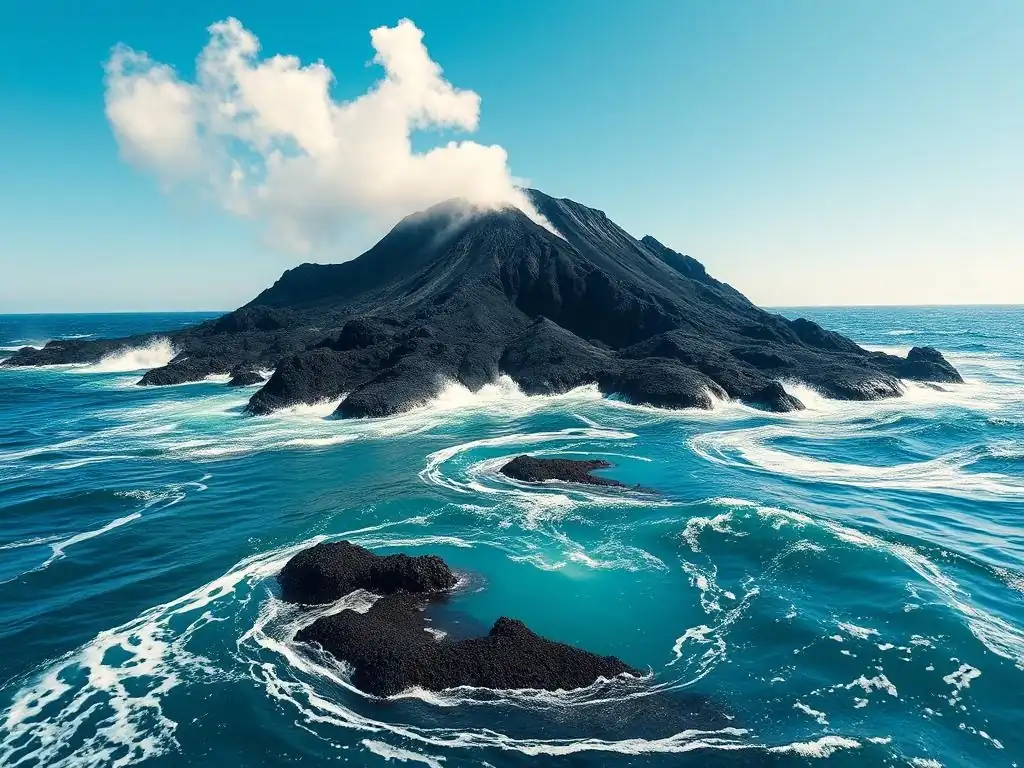
Tuff rings and tuff cones are distinctive volcanic landforms that are directly created by phreatomagmatic eruptions. These features are composed primarily of tuff, a type of volcanic rock made up of consolidated volcanic ash and fragmented rock debris. Tuff rings are typically low-relief, broad, and circular or oval-shaped features, often with a wide crater in the center. Tuff cones are generally steeper-sided and higher-relief than tuff rings, with a more conical shape.
The formation of both tuff rings and cones is attributed to the explosive interaction between magma and water near the Earth's surface. Tuff rings are thought to form when phreatomagmatic explosions occur in relatively shallow water or wet ground. The explosions eject material outwards in a base surge, a ring-shaped cloud of gas and ash that travels radially outwards from the vent.
The coarser material deposits closer to the vent, forming the ring, while finer ash is carried further away. Tuff cones, on the other hand, are believed to form when explosions are slightly more focused and energetic, leading to a more concentrated deposition of material around the vent, building a steeper cone. Both landforms are key indicators of past phreatomagmatic activity in a region.
Maars: Broad, Low-Relief Volcanic Craters Formed by Explosions
Maars are another type of volcanic landform specifically associated with phreatomagmatic eruptions. They are characterized by broad, low-relief craters that are often surrounded by a low rim of ejecta. Maars are formed by powerful, near-surface phreatomagmatic explosions that excavate a wide crater in the ground. Unlike tuff rings and cones, maars typically have a much lower profile relative to their diameter, often resembling large, shallow depressions.
The formation of maars involves the interaction of magma with groundwater. As magma rises towards the surface and encounters saturated ground or a shallow aquifer, the intense heat causes rapid vaporization of the groundwater, leading to a violent explosion. This explosion excavates a large volume of rock and soil, creating the maar crater.
The ejecta rim around the maar is usually composed of a mixture of volcanic ash, fragmented country rock, and some juvenile volcanic material. Maars are often filled with water, forming maar lakes, after the eruption ceases. Examples of maars can be found in regions with relatively shallow groundwater tables and basaltic volcanism, such as the Eifel region in Germany and parts of the western United States.
Formation of Volcanic Islands: A Phreatomagmatic Process
Phreatomagmatic eruptions play a fundamental role in the formation of many volcanic islands, particularly in island arc settings and mid-ocean ridges where submarine volcanism is prevalent. The Surtseyan type of eruption, as exemplified by the birth of Surtsey island, is a prime example of this island-building process. Repeated phreatomagmatic explosions, especially in shallow submarine environments, are crucial for accumulating enough volcanic material to build a volcanic edifice that eventually emerges above sea level.
The initial stages of volcanic island formation often involve submarine eruptions that may be purely magmatic or have a phreatomagmatic component. However, as the volcanic cone grows upwards towards the sea surface, the interaction with seawater becomes increasingly significant, leading to Surtseyan-style phreatomagmatic eruptions. These eruptions contribute to the rapid accumulation of tephra, which, over time, consolidates and forms the foundation of the volcanic island.
The ongoing phreatomagmatic activity, even after the island emerges, can further shape and expand the island's landmass. Volcanic islands like Surtsey, and many others in Iceland, Japan, and the Philippines, owe their existence, at least in part, to the power of phreatomagmatic eruptions.
Case Studies of Famous Phreatomagmatic Eruptions
The Surtsey Eruption (Iceland): A Classic Example of Island Formation
The Surtsey eruption, which began in 1963 off the southern coast of Iceland, is perhaps the most well-documented and iconic example of a phreatomagmatic eruption leading to island formation. The eruption started on November 14, 1963, when a submarine volcano began erupting on the seafloor. Over the following days and weeks, intense phreatomagmatic explosions ejected vast quantities of tephra into the air, gradually building a volcanic cone above sea level.
The eruption of Surtsey provided scientists with an unprecedented opportunity to observe the birth and evolution of a volcanic island in real-time. The initial phase was dominated by violent Surtseyan eruptions, characterized by dark plumes of ash and steam rising thousands of meters into the atmosphere. As the island grew, the eruption style transitioned to more Strombolian and effusive activity as the vent became increasingly isolated from direct seawater interaction.
By 1967, the main island of Surtsey had reached its maximum size. The Surtsey eruption remains a classic case study for understanding phreatomagmatic processes and island building, and the island itself is a protected natural laboratory for studying ecological colonization.
The Taal Volcano Eruption (Philippines, 2020): A Phreatomagmatic Event in a Caldera Lake
The Taal Volcano eruption in the Philippines in January 2020 serves as a more recent and hazardous example of a phreatomagmatic eruption. Taal Volcano is located within a caldera lake, making it particularly prone to phreatomagmatic activity due to the readily available water source. The 2020 eruption was characterized by a rapid escalation from steam explosions to a more sustained phreatomagmatic phase.
The eruption began with phreatic explosions driven by steam pressure, followed by the ascent of magma and the onset of phreatomagmatic explosions as magma interacted with the caldera lake water. The eruption produced a towering plume of steam and ash, reaching up to 19 kilometers (12 miles) in height, and generated pyroclastic density currents and volcanic lightning.
The eruption caused widespread ashfall across the region, affecting air travel and communities surrounding the volcano. The Taal Volcano 2020 eruption highlighted the significant hazards associated with phreatomagmatic eruptions in caldera lake settings and underscored the importance of monitoring and preparedness in such volcanic areas.
Analyzing the Impact of Past Underwater Volcanic Explosions
Studying past phreatomagmatic eruptions, both recent and ancient, is crucial for understanding volcanic hazards and the long-term geological impact of these events. Geological records preserve evidence of past underwater volcanic explosions in the form of tuff rings, maars, and specific volcanic deposits. By analyzing these deposits, volcanologists can reconstruct the characteristics of past eruptions, including their intensity, frequency, and distribution of volcanic products.
For example, studies of ancient tuff rings and maars provide insights into the locations and styles of past phreatomagmatic activity in a region. The distribution and thickness of tuff deposits can reveal the extent of ash dispersal and the potential impact on surrounding areas. Analysis of volcanic ash layers in sedimentary records can also help to date past eruptions and correlate them with other geological events. Understanding the patterns of past phreatomagmatic eruptions is essential for assessing future volcanic hazards and developing effective mitigation strategies in volcanically active regions, especially those with significant water bodies.
Hazards Associated with Phreatomagmatic Eruptions: Understanding the Risks
Explosive Blasts and Pyroclastic Surges: Immediate Dangers
Phreatomagmatic eruptions pose a range of significant hazards, with explosive blasts and pyroclastic surges being among the most immediate and dangerous. The rapid steam generation and magma fragmentation during these eruptions can produce powerful explosions that can propel rock fragments and hot gas outwards at high speeds. These blasts can cause direct damage from the force of the explosion and the impact of ejected material.
Pyroclastic surges are particularly hazardous. These are ground-hugging, turbulent clouds of hot gas, ash, and rock fragments that can travel at speeds of hundreds of kilometers per hour. Pyroclastic surges are generated by the collapse of eruption columns or by lateral blasts during phreatomagmatic explosions. They are extremely dangerous because of their high speed, high temperature, and density, capable of devastating everything in their path. Areas within several kilometers of a phreatomagmatic vent can be at risk from explosive blasts and pyroclastic surges.
Tephra Fallout: Ash Dispersal and its Effects
Tephra fallout, or ashfall, is another significant hazard associated with phreatomagmatic eruptions. These eruptions often produce large quantities of fine volcanic ash that can be dispersed over wide areas downwind of the volcano. While tephra fallout is generally less immediately life-threatening than pyroclastic surges, it can still cause substantial disruption and damage.
Heavy ashfall can collapse roofs of buildings due to its weight, disrupt transportation by reducing visibility and making roads slippery, and contaminate water supplies. Volcanic ash is also abrasive and can damage machinery, including engines and electronic equipment. Furthermore, inhaling volcanic ash can cause respiratory problems, particularly for individuals with pre-existing respiratory conditions. The extent of tephra fallout depends on the intensity of the eruption, the wind patterns, and the grain size of the ash. Even relatively small phreatomagmatic eruptions can produce ash plumes that affect air traffic and nearby communities.
Tsunamis: Potential for Large Waves Generated by Underwater Explosions
While less common than other volcanic hazards, phreatomagmatic eruptions, particularly those occurring in submarine or coastal environments, have the potential to generate tsunamis. Large underwater volcanic explosions can displace significant volumes of water, creating waves that radiate outwards from the eruption source. The potential for tsunami generation is higher for larger and more energetic phreatomagmatic eruptions.
Tsunamis generated by volcanic eruptions, known as volcanogenic tsunamis, can travel across oceans and cause devastating coastal flooding and damage. The height and impact of a volcanogenic tsunami depend on factors such as the magnitude of the underwater explosion, the depth of the water, and the distance from the eruption source to the coastline. While not all phreatomagmatic eruptions will generate tsunamis, the risk should be considered, especially in coastal volcanic areas. Historical examples, though rare, demonstrate the destructive potential of volcanogenic tsunamis.
Monitoring and Predicting Phreatomagmatic Eruptions
Seismic Monitoring: Detecting Underwater Volcanic Activity
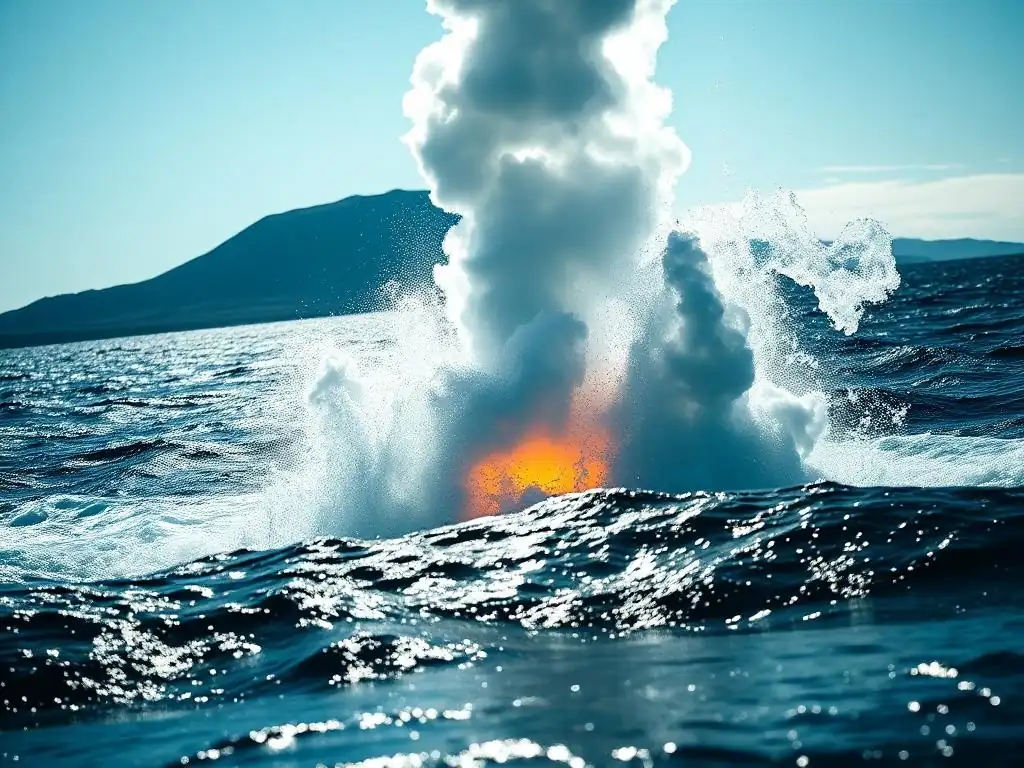
Monitoring volcanic activity is crucial for predicting eruptions and mitigating hazards, and seismic monitoring is a primary tool used for this purpose. Seismic instruments, such as seismometers, can detect ground vibrations caused by magma movement, explosions, and other volcanic processes. For phreatomagmatic eruptions, seismic monitoring can be particularly effective in detecting underwater volcanic activity that might not be immediately visible at the surface.
Underwater volcanoes and submarine eruptions can be monitored using ocean-bottom seismometers (OBS) and hydrophones (underwater microphones). These instruments can detect seismic signals associated with magma intrusion, volcanic explosions, and submarine landslides. Changes in seismic activity, such as an increase in the frequency or intensity of earthquakes and volcanic tremor, can indicate unrest and potential eruption. Seismic data, combined with other monitoring techniques, provides valuable information for assessing volcanic activity and forecasting phreatomagmatic eruptions.
Gas Emission Analysis: Identifying Changes in Volcanic Behavior
Analyzing volcanic gas emissions is another important technique for monitoring volcanic activity and detecting changes in volcanic behavior that might precede phreatomagmatic eruptions. Volcanic gases, such as sulfur dioxide (SO2), carbon dioxide (CO2), and water vapor (H2O), are released from magma and can provide insights into the magma's composition, degassing processes, and activity level.
Changes in the composition or flux of volcanic gases can indicate changes in magma supply, pressure, and eruption potential. For phreatomagmatic eruptions, an increase in steam emission or changes in the ratios of certain gases could suggest increased magma-water interaction. Gas monitoring can be conducted using ground-based instruments, such as spectrometers and gas sensors, and also through satellite-based remote sensing. Real-time gas monitoring networks provide continuous data that can be used to track volcanic activity and assess the likelihood of phreatomagmatic eruptions.
Modeling Phreatomagmatic Eruption Scenarios: Assessing Potential Risks
Volcanic hazard assessment and risk mitigation for phreatomagmatic eruptions rely heavily on modeling eruption scenarios. Numerical models and simulations are used to understand the complex processes involved in phreatomagmatic explosions and to predict the potential impacts of future eruptions. These models incorporate factors such as magma properties, water availability, eruption dynamics, and atmospheric conditions.
Models can simulate pyroclastic surges, tephra dispersal, and tsunami generation from phreatomagmatic eruptions. By running different eruption scenarios, scientists can assess the areas that are most vulnerable to these hazards and estimate the potential intensity of impacts. Eruption scenario modeling helps to create hazard maps, develop evacuation plans, and inform land-use planning in volcanic areas. These models are continuously refined and improved as our understanding of phreatomagmatic processes advances, enhancing our ability to assess and mitigate the risks associated with these powerful underwater volcanic explosions.
The Significance of Phreatomagmatic Eruptions in Volcanic Island Formation
Building New Land: How Phreatomagmatic Activity Creates Islands
Phreatomagmatic eruptions are a fundamental process in the creation of new land, particularly in the form of volcanic islands. As previously discussed with the example of Surtsey, these eruptions are directly responsible for building volcanic edifices from the seafloor up to and above sea level. The repeated explosive ejection of tephra and other volcanic materials during Surtseyan-type eruptions leads to the accumulation of enough material to form islands.
The efficiency of phreatomagmatic eruptions in building islands stems from the fragmentation and dispersal of volcanic material. The explosive nature of these eruptions effectively breaks down solid rock into smaller fragments, which are then more easily transported and deposited to build up the volcanic cone. Over time, the continued eruption and deposition of material lead to the emergence of a stable landmass above the water. Many volcanic islands in island arc settings and along mid-ocean ridges owe their origin to the land-building power of phreatomagmatic activity.
The Role of Phreatomagmatism in Coastal Evolution
Beyond forming new islands, phreatomagmatic eruptions also play a significant role in shaping and evolving coastlines in volcanic regions. Littoral explosions and other coastal phreatomagmatic activity can directly alter coastal morphology through erosion and deposition. Lava flows entering the sea, coupled with littoral explosions, can extend coastlines outwards, creating new land and modifying existing coastal features.
Conversely, powerful phreatomagmatic explosions near the coast can also erode coastal areas, creating bays, inlets, and cliffs. The deposition of tephra from phreatomagmatic eruptions can contribute to beach formation and the development of coastal plains over time. The interplay between phreatomagmatic volcanism and coastal processes leads to dynamic and constantly evolving coastal landscapes in volcanic regions. Understanding phreatomagmatic activity is therefore crucial for comprehending coastal evolution in these areas.
Long-Term Geological Impact of Underwater Volcanic Explosions
The long-term geological impact of phreatomagmatic eruptions extends far beyond the immediate formation of landforms. The volcanic deposits produced by these eruptions, such as tuff rings, maars, and tephra layers, become incorporated into the geological record, providing valuable information about past volcanic activity and environmental conditions. These deposits can be used to reconstruct eruption histories, date volcanic events, and study the evolution of volcanic landscapes over geological timescales.
Furthermore, the hydrothermal activity associated with phreatomagmatic systems can lead to the alteration of rocks and the formation of mineral deposits. The interaction between hot magma and water can leach minerals from the surrounding rocks and redeposit them in fractures and cavities. In the long term, phreatomagmatic volcanism contributes to the overall geological evolution of volcanic regions, influencing landscape development, rock formations, and the distribution of mineral resources.
Phreatomagmatic Eruptions: A Dynamic and Powerful Force of Nature
Frequently Asked Questions
What exactly are phreatomagmatic eruptions?
Phreatomagmatic eruptions are volcanic explosions that occur when magma interacts with water, typically groundwater or surface water like the ocean. This interaction causes rapid vaporization and violent explosions.
How do phreatomagmatic eruptions lead to the formation of volcanic islands?
The explosive nature of these eruptions deposits fragmented volcanic material in the water. Over time, repeated eruptions build up layers of this material, eventually forming new islands above sea level.
What makes phreatomagmatic eruptions so explosive?
The key is the rapid heating and vaporization of water when it comes into contact with hot magma. This creates a massive volume of steam almost instantaneously, leading to a powerful explosion.
Are phreatomagmatic eruptions more dangerous than other types of volcanic eruptions?
Phreatomagmatic eruptions can be particularly dangerous due to the unpredictability of the interaction between magma and water. The explosions can be highly localized and violent, generating surges of hot gas and debris.
Where are phreatomagmatic eruptions most likely to occur?
They are most common in coastal regions and areas with shallow groundwater near active volcanoes. Locations like Iceland, Indonesia, and parts of the Pacific Ring of Fire are prone to these types of underwater explosions.
Final Reflection: The Enduring Power of Underwater Explosions
The exploration of phreatomagmatic eruptions and underwater explosions reveals a fascinating intersection of fire and water, a dance of destruction and creation that continues to shape our planet. Understanding these powerful forces is not just an academic exercise; it's crucial for predicting volcanic hazards and safeguarding coastal communities. The volatile nature of these eruptions, as we've explored, underscores the delicate balance between geological processes and human safety, a balance we must strive to understand and respect.
The impact of phreatomagmatic eruptions extends far beyond immediate destruction, influencing the very landscapes we inhabit and the islands that dot our oceans. Witnessing the formation of volcanic islands, born from the chaos of underwater explosions, is a powerful reminder of nature's capacity for both devastation and renewal. The sea, once it casts forth a man helpless to swim, rarely gives him a second chance.
- Joseph Conrad. This quote, while speaking of the sea's unforgiving nature, also reflects the power and unpredictability inherent in the volcanic forces beneath its surface.
As we conclude this exploration of phreatomagmatic eruptions, I invite you to consider the profound implications of these underwater explosions. How can we, as individuals and as a society, better prepare for and mitigate the risks associated with these natural phenomena? Let us strive to learn from the past, embrace innovation, and work together to ensure a safer and more resilient future in the face of these powerful forces of nature.
Unearth the Secrets of Underwater Volcanoes!
Thanks for diving into the fascinating world of phreatomagmatic eruptions! We hope you now have a clearer picture of how these explosive events shape our planet and create stunning volcanic islands. Ready to explore further?
Here are a few things you can do next:
- Chart your own potential volcanic island chain using our interactive eruption simulator!
- Share this article with your friends and ignite their curiosity about the power of underwater volcanoes.
- Research the formation of Surtsey, Iceland – a real-world example of phreatomagmatic power!
What's the most surprising thing you learned about the science behind underwater volcanic explosions, and how does it change your view of volcanic landscapes?