
Is Another Volcanic Little Ice Age Possible? Lessons from the Past

Welcome to Volcano Explorers!
Prepare to be captivated by the raw power and hidden stories of volcanoes. Ever wondered if history could repeat itself? In this article, we delve into the chilling question: Is Another Volcanic Little Ice Age Possible? We’ll uncover lessons from the past, specifically examining the volcanic activity climate impact of historical eruptions and what they might foreshadow for our future. Could a silent giant be about to reshape our world? Explore with us and find out...
- Introduction: Volcanoes, Climate, and the Little Ice Age
- The Science of Volcanic Forcing: How Volcanoes Affect Global Temperatures
- Historical Volcanic Eruptions and Their Climate Consequences
- The Role of Volcanic Activity in the Little Ice Age: Evidence and Debate
- Can We Expect Another Volcanic Little Ice Age? Assessing Future Risks
- Lessons from the Past: Preparing for Future Volcanic Climate Impacts
- Conclusion: The Enduring Influence of Volcanoes on Earth's Climate
-
Frequently Asked Questions
- How does volcanic activity affect the climate?
- What is a "volcanic little ice age"?
- How long does the climate impact of a single volcanic eruption typically last?
- Could current volcanic activity lead to another "little ice age"?
- What can we learn from past volcanic eruptions about the future climate?
- Final Reflection: Echoes of Ash, Whispers of Ice
- Unearth Your Inner Volcanologist: Take Action Now!
Introduction: Volcanoes, Climate, and the Little Ice Age
Understanding the Connection Between Volcanic Eruptions and Climate Change
Volcanic eruptions, especially large explosive events, are known to have a significant, albeit temporary, impact on global climate. This influence stems from the injection of vast quantities of gases and particles into the stratosphere, the second layer of Earth's atmosphere. Unlike tropospheric pollution which is quickly washed out by rain, stratospheric aerosols can persist for months to years, circling the globe and altering the Earth's radiative balance. Among these emissions, sulfur dioxide (SO2) is particularly crucial.
Once in the stratosphere, SO2 reacts with water vapor to form sulfate aerosols, microscopic droplets of sulfuric acid. These aerosols act like a veil, reflecting incoming solar radiation back into space, thereby reducing the amount of sunlight reaching the Earth's surface and leading to a cooling effect. The magnitude and duration of this cooling are directly related to the size and sulfur content of the eruption.
The study of past volcanic eruptions and their climatic consequences is crucial for understanding the Earth's climate system and predicting future climate variations. Scientists analyze ice cores from Greenland and Antarctica, which contain layers of volcanic ash and sulfate deposits, providing a historical record of volcanic activity stretching back millennia.
By correlating these volcanic records with climate proxies like tree rings and glacial ice extent, researchers can reconstruct past climate conditions and identify the fingerprint of volcanic forcing on global temperatures. This interdisciplinary approach, combining volcanology, climatology, and paleoclimatology, allows for a deeper understanding of the complex interplay between volcanic activity and climate change, and is vital for assessing the potential for future volcanic events to influence our planet's climate trajectory.
The Little Ice Age: A Period of Global Cooling and Volcanic Influence
The Little Ice Age (LIA) was a period of regional cooling, most pronounced in the Northern Hemisphere, that spanned roughly from the 14th to the mid-19th centuries. While not a true ice age in the geological sense, the LIA was characterized by colder winters, shorter growing seasons, and glacial expansion in many parts of the world.
Historical records, including paintings depicting frozen rivers in Europe and accounts of crop failures and famines, vividly illustrate the societal impacts of this cooler climate. While the exact causes of the Little Ice Age are still debated, a growing body of scientific evidence points to a combination of factors, including decreased solar activity, changes in ocean circulation, and increased volcanic activity.
Volcanic eruptions are increasingly recognized as playing a significant role in initiating and sustaining the cooler temperatures of the Little Ice Age. Several periods within the LIA coincide with clusters of large volcanic eruptions, suggesting a causal link. For example, the onset of the LIA around the 14th century is temporally associated with a series of powerful volcanic events.
Furthermore, the mid-17th century, another period of intense cold within the LIA, is also marked by significant volcanic activity. The persistent nature of the Little Ice Age, lasting for centuries, may be attributed to a combination of sustained volcanic forcing and feedbacks within the climate system that amplified and prolonged the initial cooling. Understanding the interplay between volcanic eruptions and other climate drivers during the LIA is crucial for assessing the potential for future volcanic events to trigger similar periods of global cooling.
The Science of Volcanic Forcing: How Volcanoes Affect Global Temperatures
Sulfate Aerosols: The Key to Volcanic Cooling
The cooling effect of volcanic eruptions is primarily attributed to the formation of sulfate aerosols in the stratosphere. When a volcano erupts explosively, it releases vast quantities of sulfur dioxide gas (SO2) into the atmosphere, often reaching altitudes well above the troposphere, where weather occurs, and into the stratosphere. In the stratosphere, SO2 undergoes a series of chemical reactions, primarily with hydroxyl radicals (OH) and water vapor (H2O), to form sulfuric acid (H2SO4).
This sulfuric acid then condenses with water vapor to form sulfate aerosols, tiny droplets approximately 0.1 to 1 micrometer in diameter. These aerosols are highly reflective, meaning they efficiently scatter incoming solar radiation back into space.
The effectiveness of sulfate aerosols in cooling the planet hinges on their ability to reflect sunlight. These aerosols increase the Earth's albedo, which is the measure of how much solar radiation is reflected back into space. A higher albedo means less solar energy is absorbed by the Earth's surface and atmosphere, leading to a decrease in global temperatures.
Furthermore, sulfate aerosols can also absorb some outgoing longwave radiation (heat emitted from the Earth), but this warming effect is significantly smaller than their cooling effect through solar radiation reflection. The lifetime of these aerosols in the stratosphere is typically about 1-2 years, as they slowly settle out due to gravity and are eventually removed through atmospheric circulation and precipitation. This relatively short lifespan explains why volcanic cooling is generally a temporary phenomenon, although the cumulative effect of multiple eruptions over time can have longer-lasting climate consequences.
Volcanic Explosivity Index (VEI) and Climate Impact: Measuring the Magnitude
The Volcanic Explosivity Index (VEI) is a logarithmic scale, ranging from 0 to 8, used to measure the explosivity of volcanic eruptions. It quantifies the magnitude of an eruption based on several factors, including the volume of erupted material, the height of the eruption column, and the duration of the eruption.
Each increment on the VEI scale represents a tenfold increase in explosivity. For instance, a VEI 7 eruption, like Tambora in 1815, is ten times more explosive than a VEI 6 eruption, such as Krakatoa in 1883, and one hundred times more explosive than a VEI 5 eruption, like Mount St. Helens in 1980.
The VEI is a crucial tool for assessing the potential climate impact of volcanic eruptions. Generally, eruptions with a VEI of 6 or higher are considered to have a significant climate impact, as they are capable of injecting substantial amounts of sulfur dioxide into the stratosphere. VEI 7 and VEI 8 eruptions, often termed "super-eruptions," are extremely rare but can cause global cooling lasting for several years.
While VEI is a useful indicator, it's important to note that the climate impact is not solely determined by VEI. The sulfur content of the erupted magma and the latitude of the volcano also play significant roles.
Volcanoes located near the equator tend to have a greater global climate impact because the stratospheric circulation patterns distribute aerosols more effectively across both hemispheres. While VEI provides a valuable framework for categorizing eruption size, a comprehensive assessment of volcanic activity climate impact requires considering multiple factors beyond just the explosivity index.
Historical Volcanic Eruptions and Their Climate Consequences
The Tambora Eruption of 1815: A Year Without a Summer
The eruption of Mount Tambora in Indonesia in April 1815 was one of the largest volcanic eruptions in recorded history, estimated to be a VEI 7 event. It ejected an estimated 100-150 cubic kilometers of volcanic material and released approximately 60 teragrams of sulfur into the stratosphere.
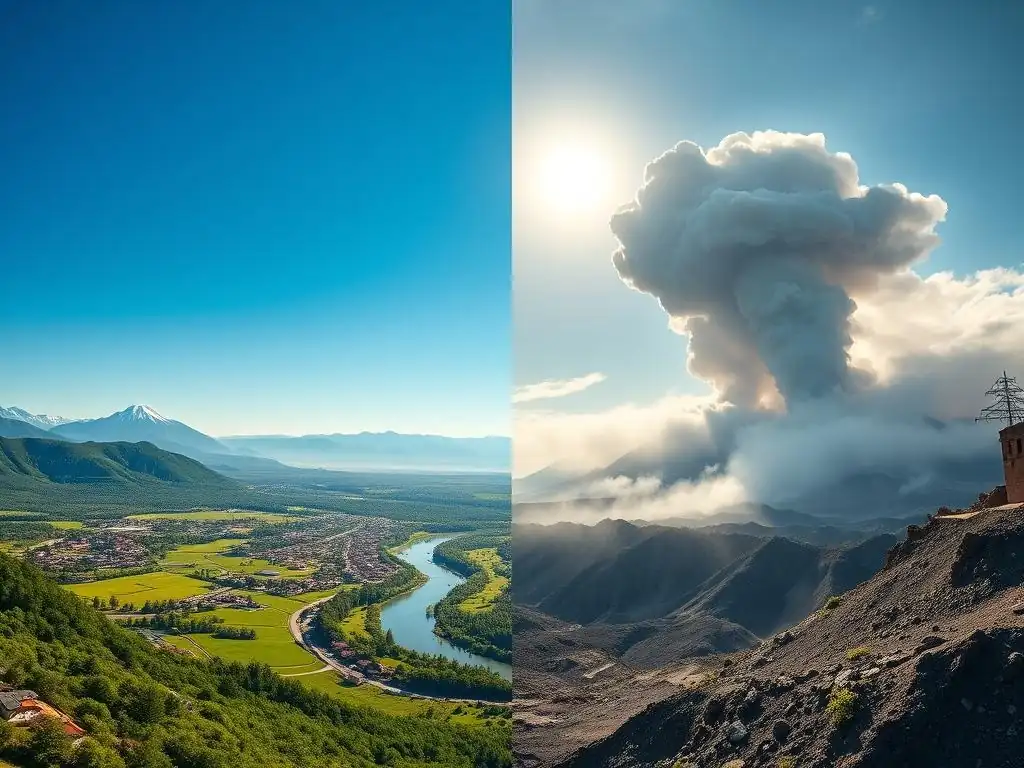
This massive injection of sulfur dioxide led to a significant increase in stratospheric sulfate aerosols, causing a global veil of haze that reduced solar radiation reaching the Earth's surface. The year 1816 became known as the "Year Without a Summer," particularly in North America and Europe, due to the exceptionally cold temperatures and unusual weather patterns.
The climate consequences of the Tambora eruption were widespread and devastating. Global average temperatures dropped by an estimated 0.4 to 0.7 °C, a significant cooling in the context of global climate averages. Regions across the Northern Hemisphere experienced severe frosts and snowfalls well into the summer months, leading to widespread crop failures and food shortages.
In New England, snow fell in June, and killing frosts occurred in July and August, decimating agriculture. Europe also suffered from failed harvests, leading to famine and social unrest. The Tambora eruption serves as a stark example of the profound and far-reaching climate and societal impacts that a single, large volcanic eruption can have, underscoring the potential for volcanic activity climate impact to disrupt global systems.
The Laki Fissure Eruption of 1783-1784: Climate and Societal Impacts
The Laki fissure eruption in Iceland, which lasted for eight months from June 1783 to February 1784, was a different type of volcanic event compared to Tambora, but nonetheless had significant climate and societal consequences. While not as explosive as Tambora (estimated VEI 4-5), Laki was a fissure eruption, characterized by the outpouring of vast quantities of basalt lava and volcanic gases, including an estimated 8 million tons of hydrogen fluoride and 120 million tons of sulfur dioxide. The eruption produced a persistent volcanic fog, which spread across Europe and beyond, impacting weather patterns and human health.
The climate effects of the Laki eruption were notable. Europe experienced an unusually hot summer in 1783, followed by a severe winter in 1783-1784. The volcanic fog caused reduced sunlight, leading to decreased photosynthesis and crop yields. In Britain, the summer of 1783 was described as "sand-summer" due to the dry fog.
The following winter was exceptionally harsh, causing widespread livestock deaths and further exacerbating food shortages. It is estimated that the Laki eruption led to the deaths of approximately 6 million people globally, primarily due to famine and respiratory illnesses caused by the volcanic fog. The Laki eruption highlights that even moderately explosive eruptions, particularly those rich in sulfur, can have substantial climate and societal impacts, demonstrating the diverse ways in which volcanic activity can influence global conditions.
The Samalas Eruption of 1257: A Possible Catalyst for the Little Ice Age
The Samalas eruption of 1257, located on the island of Lombok, Indonesia, is now considered one of the largest volcanic eruptions of the past millennium, potentially even larger than Tambora. While historical records from the time are scarce, ice core data from Greenland and Antarctica reveal a massive sulfate spike in the early 1260s, indicating a major volcanic eruption.
Tephra layers identified in ice cores and lake sediments have been geochemically linked to the Rinjani volcanic complex on Lombok, specifically to the Samalas caldera. The eruption is estimated to have been a VEI 7+ event, injecting a massive amount of sulfur into the stratosphere.
Scientists have proposed that the Samalas eruption may have played a crucial role in triggering or exacerbating the onset of the Little Ice Age. The timing of the eruption coincides with the beginning of a period of climate cooling in the late 13th and early 14th centuries.
Climate model simulations suggest that a large volcanic eruption like Samalas could have caused significant global cooling, particularly in the Northern Hemisphere, that could have persisted for several years. While other factors, such as solar variability and internal climate variability, also contributed to the Little Ice Age, the Samalas eruption provides compelling evidence for the potential of large volcanic events to act as catalysts for longer-term climate shifts.
Further research continues to investigate the precise role of the Samalas eruption and other volcanic events in shaping the climate of the Little Ice Age and understanding the broader implications of volcanic activity climate impact over centennial timescales.
The Role of Volcanic Activity in the Little Ice Age: Evidence and Debate
Correlating Volcanic Eruptions with Little Ice Age Climate Fluctuations
The correlation between volcanic eruptions and climate fluctuations during the Little Ice Age (LIA) is a key area of research in paleoclimatology. Scientists analyze ice core records, which provide a detailed history of past volcanic eruptions through sulfate deposition, and compare these records with climate proxies, such as tree rings, glacial advances, and historical documents, to identify temporal relationships.
Studies have revealed periods within the LIA that exhibit clusters of large volcanic eruptions, often followed by periods of colder temperatures, suggesting a causal link. For example, the early phases of the LIA in the 14th and 15th centuries, as well as the mid-17th century, are associated with increased volcanic activity as recorded in ice cores.
However, establishing a definitive causal relationship between volcanic eruptions and LIA climate fluctuations is complex. While the temporal correlations are suggestive, correlation does not necessarily equal causation. Furthermore, the climate response to volcanic forcing is not always immediate or linear.
The Earth's climate system is complex and influenced by multiple factors, and disentangling the specific role of volcanic eruptions from other climate drivers requires sophisticated statistical analyses and climate modeling. Despite these challenges, the growing body of evidence from paleoclimate archives and climate models increasingly supports the significant role of volcanic forcing in driving at least some of the climate variability observed during the Little Ice Age, emphasizing the importance of volcanic activity climate impact on long-term climate patterns.
Distinguishing Volcanic Forcing from Other Climate Drivers (Solar Activity, Orbital Changes)
Distinguishing the impact of volcanic forcing from other climate drivers, such as solar activity and orbital changes, is crucial for understanding the relative contributions of different factors to past climate change, including the Little Ice Age. Solar activity, measured by sunspot numbers and other proxies, varies over decadal to centennial timescales and can influence Earth's climate by altering the amount of solar radiation reaching the planet.
Orbital changes, known as Milankovitch cycles, are long-term variations in Earth's orbit around the sun that occur over thousands to hundreds of thousands of years and primarily drive glacial-interglacial cycles. These natural climate drivers operate on different timescales and have distinct spatial and temporal patterns of climate forcing compared to volcanic eruptions.
Volcanic forcing is characterized by relatively short-term, pulse-like injections of aerosols into the stratosphere, leading to rapid cooling that typically lasts for a few years. In contrast, solar variations tend to produce more gradual and longer-lasting changes in climate, while orbital changes operate on much longer geological timescales.
Scientists use climate models and statistical techniques to separate the signals of these different climate drivers in paleoclimate records. For instance, the spatial pattern of volcanic cooling is often characterized by a greater cooling in the Northern Hemisphere continents during summer, while solar forcing may have a more hemispheric or global impact.
By analyzing the timing, magnitude, and spatial patterns of climate changes in paleoclimate archives and comparing them with model simulations of different forcing scenarios, researchers can better disentangle the relative contributions of volcanic activity, solar variability, orbital changes, and other factors to past climate changes, providing a more nuanced understanding of volcanic activity climate impact within the broader context of Earth's climate system.
Limitations of the Historical Record and Challenges in Climate Reconstruction
Reconstructing past climate conditions and assessing the role of volcanic activity during periods like the Little Ice Age is inherently challenging due to limitations in the historical record and the uncertainties associated with climate proxies. Historical records, such as written accounts of weather events, crop yields, and glacial extent, provide valuable qualitative information about past climate, but they are often geographically limited, temporally discontinuous, and can be subject to biases and interpretations.
Climate proxies, such as tree rings, ice cores, lake sediments, and speleothems, offer quantitative data on past climate variables, but they also have limitations in terms of temporal resolution, spatial coverage, and sensitivity to specific climate parameters.
Ice core records, while invaluable for reconstructing volcanic history through sulfate deposition, have uncertainties in dating volcanic eruptions and in attributing sulfate signals to specific volcanoes. Tree rings, widely used to reconstruct past temperatures, are sensitive to temperature and moisture availability, and their climate signal can be influenced by local environmental factors. Furthermore, reconstructing global climate conditions from regional climate proxies requires careful spatial interpolation and statistical techniques, which introduce further uncertainties.
Climate models, while powerful tools for simulating past climate and testing hypotheses about volcanic forcing, are also simplifications of the complex Earth system and have their own limitations in representing all relevant climate processes and feedbacks. Acknowledging and addressing these limitations and uncertainties is crucial for robustly interpreting paleoclimate data and drawing reliable conclusions about the role of volcanic activity climate impact in shaping past climate variations.
Can We Expect Another Volcanic Little Ice Age? Assessing Future Risks
Frequency and Magnitude of Recent Volcanic Eruptions
Assessing the likelihood of another volcanic Little Ice Age requires understanding the frequency and magnitude of recent volcanic eruptions and comparing them to those that occurred during the LIA. Over the past few centuries, there have been several significant volcanic eruptions, including Tambora (1815), Krakatoa (1883), and Pinatubo (1991), which caused measurable, though temporary, global cooling.
However, none of these eruptions were large enough or occurred in sufficient frequency to trigger a sustained period of cooling comparable to the Little Ice Age. The VEI 7 Tambora eruption caused a global cooling of about 0.4-0.7 °C for a year or two, while the VEI 6 Pinatubo eruption led to a global cooling of about 0.5 °C for a similar duration.
Analysis of ice core records suggests that the frequency of very large volcanic eruptions (VEI 7 or greater) has been relatively low in recent centuries compared to earlier periods, including some periods within the Little Ice Age. While large eruptions are infrequent, they are a natural hazard that will inevitably occur again. The geological record indicates that even larger "super-eruptions" (VEI 8) have occurred in the past, although they are extremely rare, with intervals of thousands to tens of thousands of years between events.
Predicting the timing and magnitude of future volcanic eruptions remains a significant challenge, as volcanic activity is inherently unpredictable. However, understanding the statistical frequency of past eruptions of different magnitudes provides a basis for assessing the long-term risk of volcanic activity climate impact and the potential for future volcanic events to influence global climate.
Modeling the Potential Climate Impact of Future Large Volcanic Eruptions
Climate models are essential tools for assessing the potential climate impact of future large volcanic eruptions and exploring scenarios that could lead to volcanic cooling. Scientists use climate models to simulate the atmospheric dispersion of volcanic aerosols, their radiative effects, and the resulting changes in global temperatures, precipitation patterns, and other climate variables.
These models can be used to investigate the climate response to eruptions of different magnitudes, sulfur contents, and latitudes, as well as the potential for cumulative effects from multiple eruptions occurring in close succession. Model simulations generally confirm that large volcanic eruptions can cause significant global cooling, with the magnitude and duration of cooling depending on the eruption size and sulfur release.
Current climate models are increasingly sophisticated in their representation of volcanic aerosol processes and their interactions with the climate system. However, there are still uncertainties in modeling volcanic forcing, particularly in accurately representing the microphysical properties of volcanic aerosols and their evolution in the stratosphere.
Furthermore, the climate response to volcanic forcing can be influenced by various feedback mechanisms within the climate system, such as changes in sea ice, cloud cover, and ocean circulation, which can amplify or dampen the initial cooling effect. Despite these uncertainties, climate modeling provides valuable insights into the potential for future volcanic eruptions to influence global climate and helps to quantify the range of possible volcanic activity climate impact scenarios, including the potential for volcanic cooling to offset or temporarily mask the effects of anthropogenic warming.
Understanding the Earth's Current Climate State and its Sensitivity to Volcanic Forcing
Understanding the Earth's current climate state and its sensitivity to volcanic forcing is crucial for assessing the likelihood of another volcanic Little Ice Age in the context of ongoing anthropogenic climate change. The Earth's climate system is currently in a state of rapid warming due to increasing greenhouse gas concentrations in the atmosphere, primarily from human activities.
This warming trend is projected to continue and accelerate in the coming decades and centuries if greenhouse gas emissions are not significantly reduced. Against this backdrop of anthropogenic warming, the climate impact of a large volcanic eruption needs to be considered in terms of its potential to temporarily offset or mask the long-term warming trend.
Studies suggest that a large volcanic eruption, even one comparable in size to Tambora or Samalas, would likely cause a temporary cooling that would be superimposed on the ongoing warming trend. While a volcanic eruption could lead to a period of global cooling for a few years, it is unlikely to trigger a sustained Little Ice Age-like cooling in the long term, given the magnitude of the current anthropogenic forcing.
The Earth's climate system may also be less sensitive to volcanic forcing in a warmer world compared to the pre-industrial era, due to changes in atmospheric circulation and other climate feedbacks. Therefore, while future large volcanic eruptions remain a potential climate hazard, the dominant long-term climate trend is expected to be continued warming driven by greenhouse gas emissions, highlighting the need to focus on mitigating anthropogenic climate change even while considering the potential for volcanic activity climate impact.
Lessons from the Past: Preparing for Future Volcanic Climate Impacts
Improving Volcanic Monitoring and Early Warning Systems
Lessons from past volcanic eruptions, particularly those with significant climate impacts, underscore the importance of improving volcanic monitoring and early warning systems globally. Enhanced monitoring networks can provide crucial information on volcanic activity, including pre-eruption signals, eruption onset, eruption magnitude, and the dispersal of volcanic ash and gases. This information is essential for issuing timely and accurate warnings to populations at risk from volcanic hazards, including both direct volcanic impacts (e.g., ashfall, pyroclastic flows) and indirect climate impacts (e.g., cooling, altered precipitation).
Modern volcanic monitoring utilizes a range of techniques, including seismometers to detect ground deformation, gas sensors to measure volcanic gas emissions, and satellite-based instruments to track thermal anomalies and ash plumes. However, monitoring capabilities vary significantly across different volcanic regions, with some volcanoes being well-monitored while others have limited or no monitoring infrastructure.
Expanding and upgrading volcanic monitoring networks, particularly in regions with historically active and potentially explosive volcanoes, is crucial for improving early warning capabilities and reducing the risks associated with volcanic eruptions. International collaboration and data sharing are also essential for effective volcanic monitoring and early warning, enabling a more comprehensive and coordinated response to volcanic activity climate impact and other volcanic hazards.
Developing Climate Models that Accurately Represent Volcanic Effects
Developing climate models that accurately represent volcanic effects is essential for improving our understanding of volcanic activity climate impact and for making reliable projections of future climate. Climate models need to accurately simulate the injection of volcanic gases and aerosols into the stratosphere, their transport and dispersion, their radiative properties, and their interactions with other components of the climate system. This requires incorporating detailed representations of volcanic aerosol microphysics, stratospheric chemistry, and aerosol-cloud interactions in climate models.
Ongoing research is focused on improving the representation of volcanic processes in climate models, including refining the parameterization of volcanic aerosol formation and growth, better representing the vertical distribution of volcanic aerosols in the stratosphere, and incorporating the effects of volcanic aerosols on cloud properties and precipitation. Validating climate models against observations of past volcanic eruptions, including both historical eruptions and paleoclimate records, is crucial for assessing model accuracy and identifying areas for improvement.
Improved climate models are essential for quantifying the potential climate impacts of future volcanic eruptions, exploring different volcanic eruption scenarios, and assessing the effectiveness of potential mitigation or adaptation strategies to volcanic activity climate impact.
Societal Resilience: Mitigating the Impacts of Volcanic Cooling on Agriculture and Infrastructure
Building societal resilience to the potential impacts of volcanic cooling is crucial for mitigating the risks associated with future large volcanic eruptions. Volcanic cooling can have significant impacts on agriculture, infrastructure, and human health, as demonstrated by historical examples like the "Year Without a Summer" following the Tambora eruption. Preparing for potential volcanic cooling requires developing strategies to enhance food security, protect critical infrastructure, and improve public health systems.
In the agricultural sector, strategies to mitigate volcanic cooling impacts include developing crop varieties that are more resilient to cooler temperatures and shorter growing seasons, improving agricultural practices to enhance soil health and water management, and diversifying food production systems to reduce reliance on vulnerable regions. Protecting infrastructure from volcanic cooling impacts may involve strengthening infrastructure to withstand extreme weather events associated with volcanic cooling, such as severe winters and heavy snowfalls, and developing contingency plans for disruptions to transportation, energy, and communication systems.
Public health systems need to be prepared to address potential health impacts of volcanic cooling, such as increased respiratory illnesses, malnutrition, and mental health issues. Building societal resilience to volcanic cooling requires a multi-faceted approach involving governments, communities, and individuals, and should be integrated into broader climate change adaptation and disaster risk reduction strategies, acknowledging the significant potential for volcanic activity climate impact.
Conclusion: The Enduring Influence of Volcanoes on Earth's Climate
The Importance of Studying Past Volcanic Events to Understand Future Climate Risks
The study of past volcanic events, particularly their climate consequences, is of paramount importance for understanding future climate risks and preparing for potential volcanic activity climate impact. Past eruptions, like Tambora, Laki, and Samalas, provide valuable case studies of the diverse ways in which volcanoes can influence global climate, ranging from short-term cooling events to potential catalysts for longer-term climate shifts like the Little Ice Age.
Analyzing paleoclimate records and historical accounts of volcanic eruptions allows scientists to quantify the magnitude and duration of volcanic cooling, identify the key processes driving volcanic climate forcing, and assess the societal impacts of volcanic climate perturbations.
By studying past volcanic events, we can gain insights into the frequency and magnitude of large eruptions, the potential for volcanic activity to trigger abrupt climate changes, and the sensitivity of the Earth's climate system to volcanic forcing. This knowledge is crucial for improving climate models, refining volcanic hazard assessments, and developing effective strategies for mitigating and adapting to future volcanic climate impacts.
Understanding the lessons from past volcanic events is essential for building societal resilience to volcanic hazards and ensuring that we are better prepared for the inevitable occurrence of future large volcanic eruptions and their potential consequences for global climate and society.
Volcanic Activity Climate Impact: A Continuing Research Frontier
Volcanic activity climate impact remains a continuing research frontier, with many unanswered questions and ongoing investigations aimed at deepening our understanding of the complex interplay between volcanoes and climate. Key research areas include improving the representation of volcanic processes in climate models, refining paleoclimate reconstructions of past volcanic eruptions and their climate effects, and assessing the potential for future volcanic eruptions to interact with ongoing anthropogenic climate change.
Scientists are working to better quantify the uncertainties associated with volcanic forcing, to disentangle the relative contributions of volcanic activity and other climate drivers to past climate changes, and to improve our ability to predict the timing, magnitude, and climate consequences of future volcanic eruptions.
Advancements in volcanic monitoring, climate modeling, and paleoclimate analysis are continuously enhancing our understanding of volcanic activity climate impact. International collaborations and interdisciplinary research efforts are crucial for addressing the complex challenges in this field.
Continued research is essential for reducing the uncertainties surrounding volcanic forcing, improving our ability to assess and manage volcanic climate risks, and ensuring that we are well-informed and prepared for the enduring influence of volcanoes on Earth's climate system. The ongoing exploration of volcanic activity climate impact is not only crucial for advancing scientific knowledge but also for informing societal decision-making and building resilience to natural climate variability and change.
Frequently Asked Questions
How does volcanic activity affect the climate?
Volcanic eruptions release large amounts of sulfur dioxide into the stratosphere, which forms sulfate aerosols. These aerosols reflect sunlight back into space, leading to a temporary cooling effect on the Earth's surface.
What is a "volcanic little ice age"?
A "volcanic little ice age" refers to a period of sustained global cooling caused by a series of significant volcanic eruptions. These eruptions inject large quantities of aerosols into the atmosphere over several years or decades.
How long does the climate impact of a single volcanic eruption typically last?
The cooling effect from a single, large volcanic eruption typically lasts for a few years (1-3 years). This is because the sulfate aerosols eventually settle out of the stratosphere.
Could current volcanic activity lead to another "little ice age"?
While volcanic activity can cause temporary cooling, the current levels of anthropogenic greenhouse gas emissions far outweigh the potential cooling effects of volcanoes. Therefore, a new "little ice age" is unlikely.
What can we learn from past volcanic eruptions about the future climate?
Studying past volcanic eruptions helps us understand the complex interactions between volcanoes and the climate system. This knowledge can improve climate models and better predict future climate changes under different scenarios.
Final Reflection: Echoes of Ash, Whispers of Ice
The exploration of past volcanic eruptions and their chilling impact on global climate, as detailed in this article, isn't just an academic exercise; it's a vital lesson in understanding the profound and immediate influence of volcanic activity on our planet's delicate climate system. The historical record serves as a stark reminder that seemingly distant events can trigger widespread and long-lasting consequences, demanding a more proactive and informed approach to climate change mitigation.
The specter of another "Little Ice Age" induced by volcanic activity underscores the fragility of our current climate stability and the urgent need for comprehensive monitoring and predictive models. The lessons gleaned from studying past eruptions, their ash clouds, and their subsequent cooling effects resonate deeply in a world grappling with unprecedented climate challenges. Those who cannot remember the past are condemned to repeat it.
- George Santayana. This quote serves as a potent reminder of the importance of learning from history to navigate the uncertainties of the future.
As we stand at a critical juncture in Earth's history, let us not dismiss the warnings whispered by the past. Consider the implications of this knowledge in your own life. How can you contribute to a more informed and resilient society, one that is prepared to face the potential climate impacts of future volcanic events? Let the echoes of ash and whispers of ice inspire you to advocate for responsible environmental stewardship and a future where humanity and nature can thrive in harmony.
Unearth Your Inner Volcanologist: Take Action Now!
Thanks for exploring the fascinating history of volcanic activity and its impact on Earth's climate! We hope you found valuable insights into the potential for future volcanic events to influence our world. Now, let's turn that knowledge into action.
Here are a few ways you can get involved:
- Dive deeper into the data! Download the historical volcanic eruption dataset we referenced and start identifying patterns yourself. See if you can predict the timing of the next major climate-altering eruption.
- Share this article with friends interested in Earth science or climate change. Let's spread awareness and spark conversations about the potential impacts of volcanic activity.
- Brainstorm solutions! How can communities become more resilient to potential volcanic-induced climate shifts? Share your ideas in the comments below!
What fascinating patterns did you discover in the historical volcanic eruption data, and how do you think we can best prepare for future events? Share your thoughts below!