
Honing Your Eye: Techniques for Spotting Rare Volcano Mineral Specimens

Welcome to Volcano Explorers!
Have you ever wondered about the secrets hidden within the fiery heart of a volcano? Venture with us into a world of molten rock and incredible geological formations. Today, we're sharpening our focus, teaching you the techniques for spotting rare volcano mineral specimens. Prepare to hone your eye and unlock the beauty concealed within these volcanic treasures. But what makes these minerals so rare, and where can you find them? Let's explore!
- Introduction: The Allure of Rare Volcano Minerals and Why They're Worth Finding
- How to Spot Rare Volcanic Mineral Specimens: A Step-by-Step Guide
- Advanced Techniques: Taking Your Mineral Hunting to the Next Level
- Case Studies: Inspiring Stories of Rare Volcano Mineral Discoveries
- Monetizing Your Passion: Turning Your Hobby into a Revenue Stream
- Conclusion: The Rewarding Journey of Spotting Rare Volcano Minerals
-
Frequently Asked Questions
- How can I improve my chances of finding rare volcano minerals?
- What tools and equipment are essential for spotting rare volcano minerals?
- What are some common indicators that a site might contain rare volcano minerals?
- How do I properly identify a mineral once I've found a potential specimen?
- Are there any ethical considerations or regulations I should be aware of when collecting volcano minerals?
- Final Reflection: Unearthing Earth's Hidden Treasures
- Unearth Your Inner Mineralogist!
Introduction: The Allure of Rare Volcano Minerals and Why They're Worth Finding
Why Collect Volcano Minerals? More Than Just Rocks
Volcano minerals are more than just rocks; they are tangible pieces of Earth's dynamic processes, each specimen a unique testament to the planet's fiery heart. Collecting these minerals offers a fascinating journey into geology, connecting you directly to the powerful forces that shape our world.
Unlike minerals formed in sedimentary or metamorphic environments, volcanic minerals often crystallize rapidly from molten rock or hot gases, creating spectacular and diverse formations. From the vibrant greens of olivine to the glassy black sheen of obsidian and the intricate crystal structures of zeolites, volcano minerals showcase a remarkable range of colors, shapes, and textures that captivate both amateur enthusiasts and seasoned collectors.
The intrinsic value of rare volcano minerals extends beyond their aesthetic appeal. They provide invaluable insights into volcanic processes, magma composition, and the Earth's mantle. Specific minerals can indicate the type of volcanic eruption, the depth of magma origin, and the cooling history of volcanic rocks.
For instance, the presence of certain minerals like leucite or nepheline is diagnostic of alkaline volcanic rocks, which are relatively rare in some regions. Furthermore, some volcano minerals, like peridot (gem-quality olivine), are prized gemstones, adding an economic dimension to their allure. The thrill of discovering a rare specimen, knowing its geological significance and potential beauty, is a powerful motivator for collectors worldwide, driving them to explore volcanic landscapes and hone their mineral-spotting skills.
Understanding the Geology: A Foundation for Identifying Rare Specimens
To effectively spot rare volcano minerals, a foundational understanding of volcanology and mineralogy is crucial. Volcanoes are not monolithic entities; they are diverse geological features, each with unique magma compositions, eruption styles, and hydrothermal systems, all of which influence the types of minerals they produce. For example, basaltic volcanoes, common in shield volcanoes like those in Hawaii, are known for minerals like olivine, pyroxene, and plagioclase feldspar. In contrast, rhyolitic volcanoes, associated with explosive eruptions and caldera formations, might yield minerals like quartz, sanidine, and obsidian, often accompanied by rarer hydrothermal minerals in their associated hot spring systems.
The formation of volcano minerals is intimately linked to the cooling and crystallization of magma and the interaction of volcanic gases and hydrothermal fluids with surrounding rocks. Minerals crystallize in a specific sequence as magma cools, dictated by Bowen's Reaction Series. This series explains why certain minerals like olivine and pyroxene crystallize at higher temperatures and are often found in mafic (basaltic) rocks, while minerals like quartz and feldspar crystallize at lower temperatures, more common in felsic (rhyolitic) rocks.
Furthermore, hydrothermal activity, where hot, chemically charged water circulates through volcanic rocks, can deposit a wide array of minerals in fractures and cavities. Understanding these geological processes – from magmatic differentiation to hydrothermal alteration – provides a crucial framework for predicting and identifying potential locations for specific rare volcano mineral specimens.
How to Spot Rare Volcanic Mineral Specimens: A Step-by-Step Guide
Step 1: Identifying Potential Locations for Mineral Hunting
Consulting Geological Maps: Uncovering Promising Volcanic Areas
Geological maps are indispensable tools for any aspiring volcano mineral hunter. These maps, produced by geological surveys and academic institutions, provide detailed information about the types and ages of rocks exposed at the Earth's surface. By learning to interpret geological maps, you can pinpoint areas with volcanic rock formations, significantly increasing your chances of finding mineral specimens. Look for map units described as "basalt," "andesite," "rhyolite," "obsidian flows," or "volcanic tuff."
These descriptions indicate the presence of volcanic rocks that are potential hosts for various minerals. For instance, a geological map might highlight areas of "Miocene basalt flows" in a particular region. This information tells you that basaltic volcanic rocks of Miocene age are present, which could be a promising location to search for minerals like olivine or zeolites.
Furthermore, geological maps often depict structural features like faults and fractures, which can be pathways for hydrothermal fluids and thus potential sites for mineral deposition. Areas near volcanic vents, caldera rims, or regions with known hydrothermal activity, as indicated on geological maps, are particularly promising. Many geological surveys offer online map viewers that allow you to zoom in on specific areas and access detailed geological information.
Resources like the USGS National Geologic Map Database in the United States or similar geological survey websites in other countries are invaluable starting points. Learning to navigate and interpret these maps is a fundamental skill in spotting rare volcano minerals and directing your mineral hunting expeditions to the most geologically fertile grounds.
Researching Past Volcanic Activity: Focusing Your Search
Delving into the history of volcanic activity in a region is another crucial step in focusing your mineral search. Knowing the age and type of past eruptions can provide valuable clues about the minerals you might expect to find. For example, areas with relatively recent volcanic activity, particularly those associated with explosive eruptions and pyroclastic flows, might be more likely to contain fresh, unaltered mineral specimens. Conversely, older volcanic terrains may have undergone more weathering and alteration, potentially changing the mineral assemblages present or making specimens harder to find.
Researching past volcanic events can involve consulting geological survey reports, academic publications, and even local historical records. Information on eruption dates, volcanic explosivity index (VEI), and the composition of erupted materials can be particularly helpful. For instance, if you are researching a specific volcanic field, you might discover reports detailing past basaltic eruptions that produced olivine-rich lava flows.
This information would suggest that areas with those specific lava flows are prime locations for hunting peridot (gem-quality olivine). Websites like the Smithsonian Institution's Global Volcanism Program provide extensive databases of volcanic eruptions worldwide, offering a wealth of information to refine your mineral hunting strategies and target areas with the most promising geological history.
Contacting Geological Surveys: Seeking Expert Advice
Directly contacting geological surveys or university geology departments can be an incredibly valuable, though often overlooked, resource for mineral hunters. Geologists working in these institutions possess in-depth knowledge of local geology and mineral occurrences and are often willing to provide guidance to amateur enthusiasts. Reaching out to a geological survey in the region you plan to explore can provide access to expert advice on promising mineral locations, specific regulations for collecting in certain areas, and even information on recent geological studies that might highlight mineral-rich zones.
Geological surveys often publish reports, maps, and databases that may not be readily available to the general public but can be accessed through direct contact or by visiting their libraries or online resources. Inquiring about local geological experts specializing in volcanic mineralogy can also lead to invaluable insights. University geology departments are another excellent resource, particularly those located near volcanic regions.
Professors and researchers in volcanology and mineralogy often conduct field studies and have extensive knowledge of mineral localities. Don't hesitate to contact these institutions; many geologists are passionate about sharing their knowledge and fostering public interest in Earth science, and they might be able to offer specific tips and guidance that significantly enhances your chances of spotting rare volcano minerals.
Step 2: Essential Tools for Volcano Mineral Hunting
The Geologist's Hammer: A Reliable Rock Pick
The geologist's hammer, often called a rock pick, is the quintessential tool for any mineral hunter. This specialized hammer is designed not for driving nails, but for breaking rocks to expose fresh surfaces and extract mineral specimens. A geologist's hammer typically features a hardened steel head with a chisel end and a pointed pick end.
The chisel end is used for splitting layered rocks along bedding planes or cleavage lines, while the pick end is effective for prying apart fractured rocks and breaking up larger boulders. Different weights and handle materials are available, but a hammer with a weight around 20-24 ounces and a fiberglass or hickory handle is a good all-around choice for most volcano mineral hunting scenarios.
When using a geologist's hammer, safety is paramount. Always wear safety glasses to protect your eyes from flying rock fragments. Strike rocks with controlled blows, aiming along natural fractures or weaknesses in the rock. Avoid striking directly at your feet or in a direction where rock chips could injure yourself or others.
The hammer is not just for brute force; it's a tool for careful exploration. Use it to gently tap rocks, listen for changes in sound that might indicate cavities or mineral-filled veins, and to strategically break rocks to reveal their inner secrets. With practice and care, the geologist's hammer becomes an extension of your hand and eye, essential for accessing the hidden world of volcano minerals.
Protective Eyewear: Safety First When Breaking Rocks
Protective eyewear is non-negotiable when engaging in any form of rock breaking or mineral hunting. Volcanic rocks, while often fascinating, can be brittle and fracture unpredictably when struck with a hammer. Flying rock fragments, even small chips, can cause serious eye injuries, ranging from minor scratches to severe corneal damage. Investing in a good pair of safety glasses or goggles is a small price to pay for safeguarding your vision. Look for eyewear that meets ANSI Z87.1 standards, indicating impact resistance. Wrap-around styles offer the best protection, shielding your eyes from all angles.
Ensure your protective eyewear fits comfortably and securely, allowing for a clear field of vision. Fogging can be a common problem, especially in varying weather conditions or during physical exertion. Consider anti-fog safety glasses or sprays to maintain clear vision. Even when you are not actively hammering rocks, wearing safety glasses in volcanic terrains is a good practice.
Loose rocks, landslides, and even wind-blown debris can pose eye hazards. Make it a habit to put on your safety glasses before you even pick up your hammer, and keep them on until you are finished with rock collecting for the day. Prioritizing eye safety ensures that your volcano mineral hunting adventures remain enjoyable and injury-free.
Magnifying Glass or Loupe: Examining Crystal Structures
A magnifying glass or a jeweler's loupe is an indispensable tool for examining the fine details of mineral specimens in the field. Many rare volcano minerals occur as small crystals or intricate intergrowths that are not easily visible to the naked eye. A magnifying glass allows you to closely inspect crystal shapes, surface textures, and internal features, aiding in mineral identification and the appreciation of their intricate beauty. A 10x magnification loupe is a standard tool for mineralogists, providing sufficient magnification for most field observations. Higher magnification loupes (15x, 20x) are also available for examining even finer details.
When using a loupe, hold the specimen close to your eye and bring the loupe into focus. Practice will help you become proficient in quickly examining specimens. A magnifying glass with a larger lens and built-in light can be particularly useful for examining larger specimens or working in shaded areas.
Look for features like crystal habit (the characteristic shape of a crystal), cleavage (how a mineral breaks), and luster (how light reflects off the mineral surface). For example, distinguishing between different types of zeolites, which are common in volcanic rocks, often requires close examination of their crystal shapes and arrangements under magnification. A loupe or magnifying glass is not just for identification; it enhances your appreciation for the microscopic artistry found within volcano minerals, revealing details that would otherwise remain hidden.
Field Notebook and Pen: Documenting Your Finds
A field notebook and pen are essential for systematically documenting your mineral hunting expeditions and the specimens you collect. Detailed field notes are crucial for remembering the context of your finds, tracking locations, and aiding in later identification and cataloging. Choose a notebook that is durable and water-resistant, as field conditions can be unpredictable. A pen with waterproof ink is also recommended to prevent smudging or fading in damp environments.
In your field notebook, record the date, location (GPS coordinates if possible, or detailed descriptions of landmarks), the type of volcanic rock you are examining, and the minerals you find. For each specimen, note its characteristics: color, crystal shape, size, luster, and any other distinguishing features you observe. Sketching the mineral's habit or the geological setting can also be very helpful.
If you are collecting specimens from a specific location, label each specimen bag with a corresponding number or code that links back to your field notebook entries. Detailed field notes transform your mineral collection from a random assortment of rocks into a scientifically valuable record of your explorations, allowing you to revisit locations, compare finds, and contribute to your growing knowledge of volcano minerals.
Backpack for Carrying Specimens: A Lightweight and Comfortable Pack
A comfortable and lightweight backpack is a practical necessity for carrying your mineral hunting tools and specimens. When exploring volcanic terrains, you may be hiking over uneven ground and carrying weight for extended periods. A well-chosen backpack distributes weight evenly, reducing strain and allowing you to carry your essentials comfortably. Look for a backpack with padded shoulder straps, a waist belt, and adjustable chest strap to ensure a secure and balanced fit. A capacity of 20-30 liters is usually sufficient for a day trip, providing enough space for tools, water, snacks, a first-aid kit, and your collected mineral specimens.
Choose a backpack made from durable and water-resistant materials to protect your gear and specimens from the elements. Internal compartments and external pockets are helpful for organizing your tools and separating specimens. Consider a backpack with padded dividers or foam inserts to protect delicate mineral specimens from damage during transport. A lightweight backpack minimizes unnecessary weight burden, allowing you to focus on your mineral hunting and explore further without fatigue. Remember to pack your backpack strategically, placing heavier items closer to your back and distributing weight evenly to maintain balance and comfort throughout your volcano mineral hunting adventures.
Step 3: Recognizing Key Mineral Characteristics
Color Variations: Understanding Mineral Composition
Color is often the first characteristic we notice in a mineral, but it's important to understand that color can be variable and sometimes misleading in identifying volcano minerals. While some minerals have distinctive colors, like the green of olivine or the yellow of sulfur, many minerals can occur in a range of colors due to trace impurities or variations in their chemical composition. For example, quartz, a common volcanic mineral, can be found in clear (rock crystal), white (milky quartz), purple (amethyst), pink (rose quartz), and smoky gray varieties, all due to different trace elements within its crystal structure.
Understanding the causes of color variations in minerals can be helpful in narrowing down possibilities. Idiochromatic minerals, like malachite (green due to copper), have their color as an essential part of their chemical composition. Allochromatic minerals, on the other hand, owe their color to impurities.
For instance, the presence of iron in trace amounts can cause quartz to be amethyst (purple) or smoky quartz (gray). In volcanic environments, hydrothermal alteration can also influence mineral color, leading to variations in minerals like chlorite (green) or epidote (green to yellowish-green). While color alone is rarely definitive, observing color variations in conjunction with other properties like crystal habit and luster can be a valuable initial step in recognizing potential volcano mineral specimens.
Crystal Habits: Identifying Unique Formations
Crystal habit refers to the characteristic shape or form in which a mineral crystal grows. Understanding and recognizing common crystal habits is a powerful tool for identifying volcano minerals. Minerals crystallize in specific shapes determined by their internal atomic structure, and these shapes can be diagnostic. For example, quartz commonly forms hexagonal prisms terminated by pyramids, while feldspars often exhibit blocky or tabular shapes. Pyrite, sometimes found in volcanic hydrothermal deposits, typically forms cubic or octahedral crystals.
Volcanic environments can produce a wide variety of crystal habits depending on the conditions of mineral formation. Rapid cooling of lava flows can result in fine-grained or even glassy textures, where distinct crystals are not readily visible. However, in cavities within volcanic rocks, or in hydrothermal veins, minerals may have more space to grow and develop well-formed crystals with characteristic habits.
Zeolites, for instance, are famous for their diverse and often intricate crystal habits, including radiating, fibrous, and blocky forms, often found lining cavities in basalt. Learning to recognize common crystal habits, such as prismatic, cubic, acicular (needle-like), botryoidal (grape-like), and radiating, significantly enhances your ability to spot and identify different types of volcano minerals in the field.
Luster and Cleavage: Identifying Mineral Surfaces
Luster and cleavage are two important physical properties that describe how a mineral surface interacts with light and how a mineral breaks, respectively. Luster describes the way light reflects from a mineral's surface and can be categorized as metallic (like metals), vitreous (glassy), pearly, silky, resinous, or dull (earthy). Observing luster can provide clues to the mineral's identity. For example, pyrite (iron sulfide), often found in volcanic hydrothermal systems, has a metallic luster, while quartz typically exhibits a vitreous luster. Obsidian, volcanic glass, has a vitreous to resinous luster.
Cleavage describes the tendency of a mineral to break along specific planes of weakness in its crystal structure. Cleavage is described by the number of directions and the quality of cleavage (perfect, good, poor). For example, feldspars have two directions of cleavage at approximately 90 degrees, while mica minerals have perfect cleavage in one direction, allowing them to be easily split into thin sheets.
Quartz, on the other hand, exhibits conchoidal fracture, meaning it breaks with curved, shell-like surfaces, rather than along cleavage planes. In volcanic rocks, observing luster and cleavage, or fracture, in conjunction with other properties can help distinguish between different minerals. For instance, distinguishing between feldspar and quartz in a volcanic rock can be aided by observing feldspar's cleavage and quartz's conchoidal fracture and vitreous luster.
Hardness Testing: Using a Mohs Hardness Scale
Hardness is a mineral's resistance to scratching, and it's a relatively simple yet valuable property to test in the field using the Mohs Hardness Scale. The Mohs scale ranks minerals from 1 (talc, the softest) to 10 (diamond, the hardest).
It's a relative scale, meaning that a mineral with a hardness of 6 (orthoclase feldspar) will scratch a mineral with a hardness of 5 (apatite), but will be scratched by a mineral with a hardness of 7 (quartz). A basic hardness testing kit typically includes a set of Mohs hardness picks or minerals of known hardness, such as quartz (hardness 7), glass plate (hardness approximately 5.5), and a copper penny (hardness approximately 3.5).
To perform a hardness test, try to scratch the unknown mineral with a mineral of known hardness. For example, if you suspect a mineral might be quartz, try to scratch it with a piece of glass. If the mineral scratches the glass, it is harder than glass (hardness 5.5) and could be quartz (hardness 7).
If the glass scratches the mineral, then the mineral is softer than glass. It's important to perform the scratch test on a fresh, flat surface of the mineral and to ensure that you are actually scratching the mineral and not just leaving a powder streak.
Hardness testing, especially in conjunction with other properties, can be a very helpful tool in narrowing down the identity of volcano minerals in the field. For instance, distinguishing between quartz and calcite, both of which can be found in volcanic environments, is readily done by hardness testing: quartz (hardness 7) will scratch glass, while calcite (hardness 3) will not.
Step 4: Specific Techniques for Finding Specific Rare Minerals
Hunting for Peridot (Olivine): Inclusions in Basalt Flows
Peridot, the gem-quality variety of olivine, is a beautiful green mineral often associated with basaltic volcanic rocks. Olivine is a common mineral in the Earth's mantle and is brought to the surface in basaltic magmas. However, gem-quality peridot, large enough and clear enough to be cut into gemstones, is rarer. To hunt for peridot, focus your search on basalt flows, particularly those that are relatively young and have undergone minimal weathering. Look for areas where basaltic lava flows have solidified and fractured, creating vesicles (gas bubbles) and cavities.
Peridot often occurs as granular aggregates or as individual crystals embedded within the basalt matrix or lining vesicles. The characteristic olive-green color of olivine is a key identifying feature. Use your geologist's hammer to carefully break open basalt rocks, especially those with vesicular textures. Examine fresh surfaces closely, using your magnifying glass or loupe to look for small, glassy, green crystals.
Some of the most famous peridot localities, like Peridot Beach in Hawaii or San Carlos, Arizona, are associated with basalt flows and volcanic cinder cones. The peridot found at Peridot Beach, for example, is eroded from basalt flows and concentrated in the beach sands. When hunting for peridot, patience and a keen eye are essential, as the crystals can be small and require careful examination to spot within the darker basalt matrix.
Finding Zeolites: Look for Cavities in Vesicular Basalt
Zeolites are a fascinating group of hydrated aluminosilicate minerals known for their intricate crystal structures and their occurrence in cavities within volcanic rocks, particularly vesicular basalt. Vesicular basalt, formed when gas bubbles are trapped in cooling lava, provides ideal spaces for zeolites to crystallize from hydrothermal fluids. To find zeolites, target areas with basalt flows, especially those that exhibit a vesicular or amygdaloidal texture (vesicles filled with secondary minerals). Roadcuts, quarries, and stream beds that expose basalt flows are often productive locations.
Look for cavities and vugs (larger openings) within the basalt. Zeolites typically line these cavities, forming radiating clusters, delicate sprays, or well-formed individual crystals. Common zeolite minerals found in volcanic rocks include analcime, natrolite, scolecite, stilbite, and heulandite, each with its own distinctive crystal habit and color, ranging from colorless and white to pink, yellow, and even green. Use your geologist's hammer to carefully open up vesicular basalt rocks, focusing on areas with visible cavities.
Examine the cavity linings closely with your magnifying glass or loupe to identify the zeolite crystals. Many zeolite localities are associated with specific basalt formations, like the Deccan Traps in India or the Columbia River Basalts in the Pacific Northwest of the United States. Researching known zeolite localities and targeting similar geological settings can significantly increase your success in finding these beautiful and diverse minerals.
Identifying Rare Obsidian Varieties: Rainbow Obsidian & Sheen Obsidian
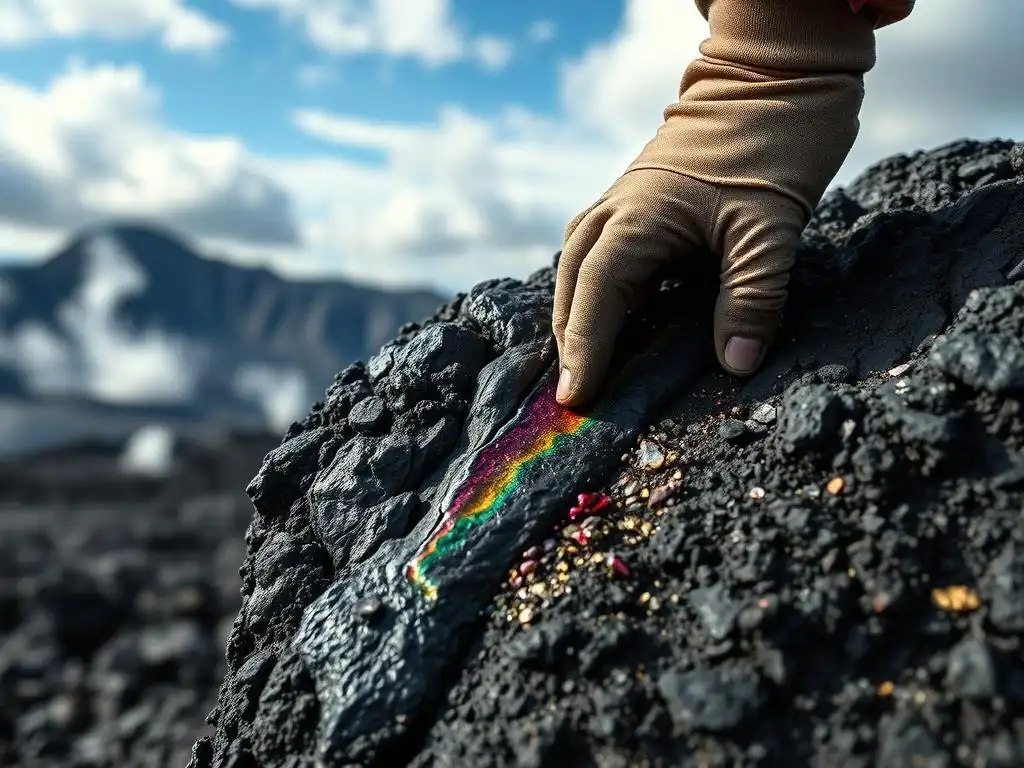
Obsidian, volcanic glass formed from rapidly cooled rhyolitic lava, is typically black and glassy. However, rare varieties of obsidian exhibit fascinating optical phenomena, making them highly sought after by collectors. Rainbow obsidian and sheen obsidian are two such varieties, displaying iridescent colors or a silvery or golden sheen due to internal structures within the glass.
Rainbow obsidian owes its colors to microscopic layers of magnetite nanoparticles within the glass, which diffract light and create a rainbow effect. Sheen obsidian, also known as silver sheen or gold sheen obsidian, displays a silvery or golden luster caused by aligned gas bubbles or crystallites within the obsidian.
To find rainbow obsidian, look for obsidian flows, particularly those associated with rhyolitic volcanoes or caldera complexes. Rainbow obsidian is often found in areas where obsidian is relatively abundant, but its occurrence is localized. Examine obsidian outcrops carefully, rotating specimens in sunlight to observe for flashes of color. The rainbow effect is often subtle and may only be visible at certain angles of light.
Sheen obsidian is similarly found in obsidian flows, and its sheen effect is best observed by tilting the specimen in light. Locations like Glass Buttes in Oregon and Davis Creek in California are known for producing rainbow and sheen obsidian. When hunting for these rare obsidian varieties, patience and careful observation are key. Look for obsidian outcrops and examine them thoroughly under different lighting conditions to reveal their hidden colors and sheens.
Searching for Sulfur Crystals: Near Fumaroles and Volcanic Vents
Sulfur crystals are a striking and relatively rare find in volcanic environments, typically forming near fumaroles and volcanic vents where hot volcanic gases rich in sulfur compounds escape to the surface. Native sulfur crystallizes from these gases as they cool and condense, often forming bright yellow, orthorhombic crystals. To search for sulfur crystals, focus your attention on areas of active or recently active volcanism, particularly around fumarole fields and volcanic vents. These areas are often characterized by the smell of sulfur dioxide gas and the presence of altered volcanic rocks.
Sulfur crystals often form as crusts, coatings, or small individual crystals lining fumarole vents or cavities in altered volcanic rocks. The bright yellow color of sulfur is a distinctive identifying feature. Be extremely cautious when exploring fumarole fields, as volcanic gases can be hot and toxic. Always maintain a safe distance from active vents and be aware of potential hazards like unstable ground and gas emissions.
Sulfur deposits are often associated with other volcanic minerals, such as alunite, gypsum, and opal. Volcanic areas like Sulfur Banks in Hawaii Volcanoes National Park or various volcanic regions in Italy and Japan are known for sulfur deposits. When searching for sulfur crystals, prioritize safety and be mindful of the potential hazards associated with volcanic gas emissions.
Step 5: Ethical Collecting and Preservation
Respecting Private Property: Permission Before Prospecting
Ethical mineral collecting is paramount, and respecting private property rights is a fundamental aspect of responsible collecting. Before venturing onto any land for mineral hunting, determine land ownership and obtain permission from the landowner if the land is privately owned. Trespassing on private property is illegal and unethical and can damage the reputation of mineral collecting as a hobby. Land ownership information can often be obtained from local government offices, online property records, or by inquiring with local residents.
If you are unsure about land ownership, err on the side of caution and assume the land is private until you have confirmed otherwise. When seeking permission, be polite, explain your purpose clearly, and be prepared to answer questions about your collecting activities. Landowners may have specific rules or restrictions regarding collecting, and it's essential to respect these guidelines. Even if permission is granted, be mindful of the landowner's property and avoid damaging fences, roads, or vegetation. Ethical collecting builds positive relationships with landowners and ensures continued access to mineral localities for future generations of collectors.
Minimizing Environmental Impact: Leaving No Trace
Minimizing environmental impact is a crucial responsibility for all mineral collectors. Volcanic landscapes are often fragile ecosystems, and responsible collecting practices are essential to preserve these environments for future generations. Adopt a "Leave No Trace" ethic in your mineral hunting activities. Stay on established trails whenever possible to avoid trampling vegetation and disturbing wildlife habitats. Avoid collecting in sensitive areas, such as protected natural reserves or areas with rare or endangered plant or animal species.
When collecting specimens, take only what you need and avoid indiscriminately digging or breaking rocks. Refill any holes you dig and try to restore the collecting site to its original condition as much as possible. Pack out all trash and debris, including any rock fragments you create while hammering. Do not disturb or damage geological features unnecessarily. Respect wildlife and avoid approaching or feeding animals. By minimizing your environmental impact, you contribute to the long-term sustainability of mineral collecting and help protect the natural beauty and ecological integrity of volcanic terrains.
Cleaning and Labeling Your Specimens: Ensuring Long-Term Preservation
Proper cleaning and labeling are essential steps in preserving your volcano mineral specimens and maintaining their scientific and collectible value over time. Once you return from a mineral hunting trip, carefully clean your specimens to remove dirt, dust, and loose rock fragments. Gentle washing with water and a soft brush is usually sufficient for most specimens. For more stubborn dirt, you can use mild soap and water, but avoid harsh chemicals that could damage delicate minerals. Some minerals, particularly zeolites, may be water-sensitive, so research the cleaning requirements of specific minerals before washing them.
After cleaning, allow your specimens to dry thoroughly before labeling and storing them. Label each specimen with a small, permanent label that includes essential information, such as the mineral name, locality (specific location where it was found), date of collection, and your collector's initials or number. Use archival-quality labels and pens that will not fade or deteriorate over time.
Attach the label securely to the specimen, or place it in the specimen container. Cataloging your specimens in a database or spreadsheet can further enhance your collection's organization and value, allowing you to easily track your finds and access information about each specimen. Proper cleaning, labeling, and cataloging ensure the long-term preservation of your volcano mineral collection and its scientific and personal significance.
Advanced Techniques: Taking Your Mineral Hunting to the Next Level
Using UV Light: Detecting Fluorescent Minerals
Ultraviolet (UV) light can reveal a hidden world of color and beauty in certain minerals through the phenomenon of fluorescence. Some minerals, when exposed to UV light, emit visible light of different colors due to the presence of trace elements in their crystal structure. Fluorescence can be a valuable tool for identifying certain volcano minerals and adding an exciting dimension to your collection. There are two main types of UV light used in mineral fluorescence: shortwave UV and longwave UV. Different minerals fluoresce under different wavelengths of UV light.
To use UV light for mineral hunting, you will need a portable UV lamp, available from mineral supply stores or online retailers. In a darkened room or at night in the field, shine the UV light on your mineral specimens and observe for fluorescence. Some volcanic minerals known to fluoresce include certain varieties of opal (green, yellow, blue), fluorite (various colors, often blue or purple), and calcite (red, orange).
For example, some volcanic opals from regions like Virgin Valley, Nevada, are famous for their spectacular green fluorescence under UV light. Experimenting with both shortwave and longwave UV light can reveal different fluorescent responses in minerals. UV fluorescence adds another layer of fascination to volcano mineral collecting, unveiling colors and patterns invisible under normal light.
Microscopic Analysis: Identifying Minute Crystal Structures
Microscopic analysis takes mineral identification to a much finer scale, allowing you to examine minute crystal structures and textures that are not visible to the naked eye or even with a hand lens. A petrographic microscope, also known as a polarizing microscope, is a specialized microscope used by geologists to study thin sections of rocks and minerals.
Thin sections are extremely thin slices of rock (typically 30 micrometers thick) mounted on glass slides, allowing light to pass through them. Under a petrographic microscope, minerals exhibit unique optical properties, such as birefringence (splitting light into two rays) and pleochroism (changing color with crystal orientation), which are diagnostic for mineral identification.
While owning a petrographic microscope might be beyond the reach of most amateur collectors, many universities and geological surveys have microscopy facilities that may be accessible for educational purposes or specimen analysis. Microscopic analysis can be particularly useful for identifying fine-grained minerals, distinguishing between similar-looking minerals, and studying the textures and mineral assemblages of volcanic rocks.
For instance, identifying different types of volcanic glass (obsidian, perlite, pumice) or distinguishing between various feldspars in a volcanic rock often requires microscopic examination. Exploring microscopic analysis opens up a deeper understanding of the mineral world and provides a powerful tool for advanced volcano mineral identification.
Consulting with Experts: Verifying Rare Finds
When you believe you have found a particularly rare or unusual volcano mineral specimen, consulting with experts is a wise step to verify your identification and gain further insights. Mineral identification can be challenging, especially for rare or less common minerals, and expert confirmation can provide valuable assurance and knowledge. Local geological surveys, university geology departments, mineralogical societies, and mineral shows are excellent resources for finding mineral experts.
Geologists and mineralogists at these institutions often have extensive experience in mineral identification and may be willing to examine your specimens and offer their expertise. Mineralogical societies often have members with specialized knowledge in specific mineral groups or localities. Mineral shows provide opportunities to interact with experienced mineral dealers and collectors who can offer opinions and insights on your finds.
When consulting with experts, provide detailed information about the locality where you found the specimen, its physical properties (color, hardness, luster, crystal habit), and any field tests you have conducted. Expert verification not only confirms the identity of your rare finds but also provides opportunities to learn more about the mineral, its geological significance, and its rarity, enhancing your knowledge and appreciation of volcano minerals.
Case Studies: Inspiring Stories of Rare Volcano Mineral Discoveries
The Discovery of Exceptional Benitoite Crystals in a Volcanic Region
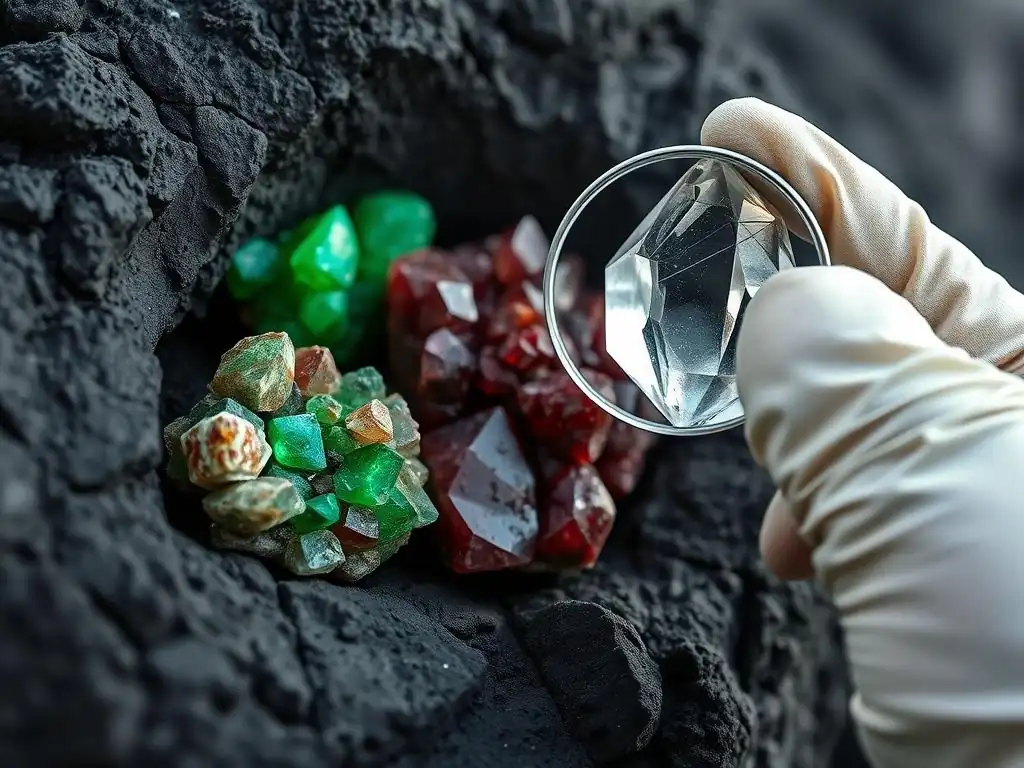
In the rugged, serpentinite-rich terrains associated with the Diablo Range in San Benito County, California, lies a world-renowned locality for benitoite, a rare and strikingly beautiful blue barium titanium silicate mineral. Benitoite is found almost exclusively in this specific geological setting, making it a highly prized collector's item. The discovery of benitoite in the early 1900s was a significant event in mineralogy, as its intense blue color and unique crystal structure were unlike any mineral known at the time. Local miners, initially searching for mercury, stumbled upon these brilliant blue crystals embedded in natrolite veins within the serpentinite.
Over the decades, dedicated mineral collectors and miners have unearthed exceptional benitoite specimens from this region, some exhibiting gem-quality transparency and deep sapphire-blue hues. These benitoite crystals, often associated with white natrolite and black neptunite, are celebrated for their rarity, brilliance, and unique geological context.
The story of benitoite's discovery and the ongoing efforts to find and preserve these exceptional crystals serve as an inspiring example of how focused exploration and geological knowledge can lead to the unearthing of truly rare and remarkable volcano-related minerals. While benitoite is not directly formed in volcanic rocks, its serpentinite host rock is often associated with tectonic processes that can be linked to volcanic arc environments, highlighting the interconnectedness of geological systems.
Unearthing Rare Poudretteite Specimens in a Basalt Quarry
Mount Saint-Hilaire, a unique geological complex in Quebec, Canada, is renowned for its extraordinary diversity of rare and unusual minerals, many of which are found nowhere else in the world. This alkaline intrusive complex, with its associated volcanic rocks, has yielded over 400 mineral species, including poudretteite, an exceptionally rare pink gem mineral. Poudretteite was first discovered in the Poudrette Quarry on Mount Saint-Hilaire in the late 1980s and was initially misidentified due to its rarity and unusual composition. Subsequent analysis revealed it to be a new mineral species, named after the Poudrette family who operated the quarry.
Poudretteite occurs as small, transparent, pink to reddish-pink crystals, often associated with other rare minerals in cavities within the alkaline rocks of Mount Saint-Hilaire. Gem-quality poudretteite is exceedingly rare and highly valued by collectors and gem enthusiasts. The discovery of poudretteite underscores the potential for finding new and rare minerals even in well-studied geological localities.
The ongoing mineral exploration at Mount Saint-Hilaire continues to yield new discoveries, demonstrating that volcanic and related alkaline complexes can be treasure troves of mineralogical rarities. The story of poudretteite highlights the importance of careful observation, detailed mineralogical analysis, and the persistent pursuit of mineralogical knowledge in uncovering Earth's hidden mineralogical wonders.
Monetizing Your Passion: Turning Your Hobby into a Revenue Stream
Selling Specimens Online: Using Platforms Like Etsy and eBay
For dedicated volcano mineral collectors, the passion for finding and appreciating these geological treasures can potentially be transformed into a revenue stream through online sales. Platforms like Etsy and eBay provide accessible marketplaces to reach a global audience of mineral collectors, enthusiasts, and educators. Setting up an online shop to sell your collected specimens can be a rewarding way to share your passion and generate income to support your hobby. When selling minerals online, high-quality photographs, accurate descriptions, and competitive pricing are crucial for success.
Tips for Photographing Minerals for Sale: Highlighting Key Features
High-quality photographs are essential for attracting buyers and showcasing the beauty and unique features of your mineral specimens in online sales. Invest time and effort in learning basic mineral photography techniques. Use good lighting, preferably natural daylight or softbox lighting, to illuminate your specimens evenly and bring out their colors and textures. Use a neutral background, such as white or black, to avoid distractions.
Take multiple photos from different angles to showcase the crystal habit, luster, and any interesting features or inclusions. Use macro photography techniques or close-up lenses to capture fine details and crystal structures. Edit your photos to adjust brightness, contrast, and color balance, but avoid over-editing, which can misrepresent the specimen's appearance. Clear, well-lit, and detailed photographs are key to selling minerals online and conveying their value and appeal to potential buyers.
Pricing Your Specimens: Considering Rarity and Quality
Pricing your mineral specimens for online sale requires careful consideration of several factors, including rarity, quality, size, aesthetics, and market demand. Research comparable specimens being sold online and at mineral shows to get a sense of current market prices. Rarity is a primary factor; rare minerals or rare varieties of common minerals command higher prices. Quality refers to the specimen's condition, crystal size, clarity, color saturation, and overall aesthetics. Well-formed crystals, vibrant colors, and undamaged specimens are generally more valuable. Size also plays a role, with larger, well-crystallized specimens often being more desirable. Consider the aesthetics of the specimen; visually appealing specimens tend to sell better. Factor in your costs, including collecting expenses, cleaning, labeling, photography, and platform fees, when setting your prices. Pricing your specimens fairly and competitively, based on these factors, is essential for successful online sales and building a sustainable revenue stream from your mineral collecting hobby.
Affiliation with Mineral Supply Companies: Earning Commissions
Another avenue for monetizing your volcano mineral collecting passion is through affiliation with mineral supply companies or stores. Many mineral supply companies have affiliate programs that allow you to earn commissions by promoting their products to your audience. If you have a website, blog, or social media presence related to mineral collecting, you can partner with mineral suppliers and include affiliate links to their products in your content. When your audience clicks on these links and makes a purchase, you earn a percentage of the sale as a commission.
Partnering with Mineral Supply Stores: Linking to Their Products
Partnering with mineral supply stores can be a mutually beneficial arrangement. You can promote their products to your audience, and they can gain exposure to a wider customer base through your platform. Mineral supply stores offer a variety of products relevant to mineral collectors, including tools, books, display cases, and, of course, mineral specimens.
By carefully selecting reputable mineral suppliers and promoting products that align with your audience's interests, you can create valuable content and generate affiliate income. Ensure that you disclose your affiliate relationships transparently to maintain trust with your audience. Affiliate marketing can be a sustainable way to monetize your passion for volcano minerals and support the mineral collecting community.
Creating Educational Content: Sharing Your Knowledge and Expertise
Sharing your knowledge and expertise in volcano mineral collecting through educational content is not only a rewarding way to contribute to the community but also a potential path to monetization. Creating valuable educational resources, such as blog posts, articles, videos, or online courses, can attract a dedicated audience interested in learning about volcano minerals and mineral collecting techniques. Monetization can be achieved through various methods, including advertising, sponsored content, selling educational materials, or offering premium content to subscribers.
Building a Website or Blog: Showcasing Your Discoveries
Building a website or blog dedicated to volcano mineral collecting is a powerful way to showcase your discoveries, share your knowledge, and connect with a wider audience. Your website or blog can serve as a central hub for your educational content, including articles, photographs, videos, locality guides, and mineral identification resources. You can document your mineral hunting adventures, share tips and techniques for spotting rare minerals, and provide information on the geology and mineralogy of volcanic regions.
Monetization can be implemented through advertising, affiliate marketing, selling merchandise (e.g., mineral identification guides, T-shirts), or offering premium content or memberships. A well-maintained and informative website or blog can establish you as a knowledgeable resource in the volcano mineral collecting community and attract a loyal following.
Offering Guided Mineral Hunting Tours: Sharing Your Passion with Others
For those who enjoy sharing their passion in person, offering guided mineral hunting tours can be a rewarding and potentially lucrative way to monetize your expertise. If you are knowledgeable about specific volcanic mineral localities and skilled in mineral hunting techniques, you can organize and lead guided tours for individuals or small groups interested in learning about volcano minerals and experiencing the thrill of discovery firsthand. Guided tours can cater to different skill levels, from beginners to experienced collectors.
You can charge a fee for your guided tours, covering your time, expertise, and any necessary equipment or permits. Offering guided mineral hunting tours allows you to share your passion directly with others, provide hands-on learning experiences, and generate income while engaging in your favorite hobby. Ensure you obtain any necessary permits or permissions for conducting tours on public or private lands and prioritize safety in all your guided activities.
Conclusion: The Rewarding Journey of Spotting Rare Volcano Minerals
The pursuit of spotting rare volcano minerals is a deeply rewarding journey that combines scientific exploration, outdoor adventure, and the thrill of discovery. It's a hobby that engages both the mind and the senses, connecting you to the powerful geological forces that have shaped our planet. From the initial research and planning to the excitement of finding a sparkling crystal in a volcanic cavity, each step of the process offers unique satisfactions. The knowledge gained about volcanology, mineralogy, and the natural world enriches your understanding of Earth's dynamic processes.
Beyond the scientific and aesthetic rewards, volcano mineral collecting fosters a deep appreciation for the beauty and complexity of nature. It encourages patience, observation, and respect for the environment. Whether you are a seasoned collector or just beginning your journey, the world of volcano minerals offers endless opportunities for learning, exploration, and the joy of uncovering Earth's hidden treasures. The techniques and knowledge you acquire in spotting rare volcano minerals will not only enhance your collecting success but also deepen your connection to the awe-inspiring world of volcanoes and the remarkable minerals they create.
Frequently Asked Questions
How can I improve my chances of finding rare volcano minerals?
Focus on areas near active or recently active volcanoes, particularly around lava flows and hydrothermal vents. Research the specific minerals known to occur in the region you are exploring.
What tools and equipment are essential for spotting rare volcano minerals?
A geological hammer, safety glasses, a magnifying glass, and a field notebook are crucial. A mineral identification guide and a GPS device can also be extremely helpful.
What are some common indicators that a site might contain rare volcano minerals?
Look for unusual rock formations, discoloration in the soil, or the presence of specific types of volcanic rock like obsidian or pumice. Evidence of hydrothermal activity, such as hot springs, is also a good sign.
How do I properly identify a mineral once I've found a potential specimen?
Start by observing its color, luster, and crystal shape. Perform simple tests like a streak test or a hardness test. Consult a mineral identification guide or an expert for confirmation.
Are there any ethical considerations or regulations I should be aware of when collecting volcano minerals?
Always obtain permission from landowners before collecting on private property. Be mindful of environmental regulations and avoid disturbing sensitive ecosystems. Collect responsibly and only take what you need.
The pursuit of rare volcano minerals, as explored in this article, is more than just a scientific endeavor; it's a testament to our enduring curiosity and the human drive to uncover the Earth's hidden stories. In a world increasingly dominated by the digital, the tangible connection to our planet offered by these unique specimens provides a grounding and a reminder of the powerful forces that shape our world.
The allure of spotting rare volcano minerals lies not only in their scientific significance but also in the personal connection we forge with the geological processes that birthed them. Each crystal, each inclusion, tells a tale of immense pressure, searing heat, and the slow, deliberate dance of elements. The best geologist is the one who has seen the most rocks,
a sentiment that underscores the importance of direct observation and the profound learning that comes from engaging with the natural world. This engagement fosters a deeper appreciation for the Earth's complexity and the delicate balance that sustains life.
Now, armed with the techniques and knowledge shared within these pages, I invite you to look anew at the world around you. Whether you're trekking across volcanic landscapes or simply examining a rock in your backyard, remember the potential for discovery that lies within. Let the quest for spotting rare volcano minerals be a catalyst for a lifelong journey of learning, exploration, and a deeper understanding of our planet's incredible story.
Unearth Your Inner Mineralogist!
Thanks for exploring the fascinating world of rare volcano mineral specimens! We hope you've gained valuable insights to improve your searching skills and make your next expedition even more rewarding. Now, let's put that knowledge into action!
Here are a few ways to continue your journey:
- Embark on your own mineral-hunting adventure! Plan a trip to a nearby volcanic region and apply the techniques you've learned to find unique specimens.
- Share your best finds and tips! Post photos and descriptions of your volcanic mineral discoveries on social media using #VolcanoExplorers and inspire fellow enthusiasts.
- Attend a local geology or mineralogy club meeting. You might even discover a guided tour to a hidden location rich in volcanic minerals!
Ready to put your newfound skills to the test? Which volcanic region will you explore first, and what mineral are you hoping to discover? Share your plans in the comments below!