
Superplumes: Are There Giant Mantle Plumes Reshaping Continents?

Welcome to Volcano Explorers!
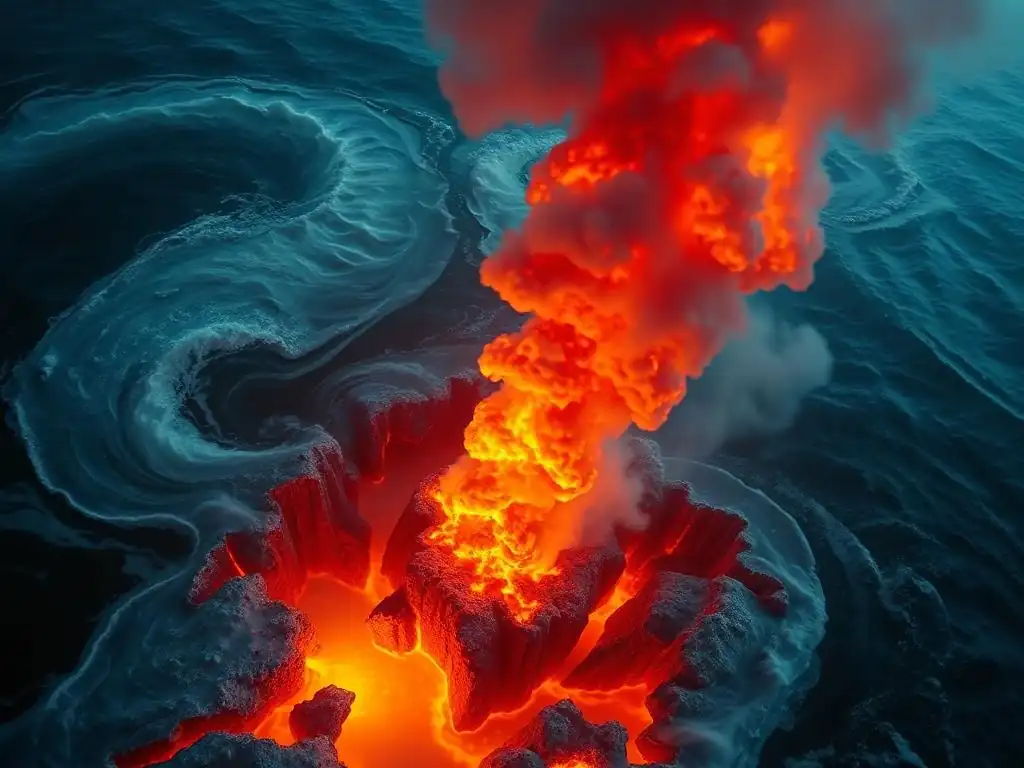
Prepare to journey into the fiery heart of our planet. Are you ready to uncover the truth behind the Earth's most powerful forces? This site explores the raw, untamed energy that sculpts our world, and today, we're diving deep into the fascinating world of giant mantle plume effects. But could these colossal upwellings be doing more than we thought, perhaps even reshaping continents? Read on to ignite your curiosity and explore the evidence...
- Introduction: Exploring the Enigma of Superplumes and Continental Reshaping
- Understanding Mantle Plumes: The Basics for Volcano Explorers
- The Superplume Hypothesis: Giant Mantle Plume Effects on a Global Scale
- Giant Mantle Plume Effects: Investigating the Impact on Continental Landmasses
- Case Studies: Examining Potential Giant Mantle Plume Examples
- Alternative Explanations: Challenging the Superplume Theory
- The Future of Superplume Research: Unveiling Earth's Deep Secrets
- Conclusion: The Ongoing Quest to Understand Giant Mantle Plume Effects
-
Frequently Asked Questions
- How do giant mantle plumes contribute to the reshaping of continents?
- What evidence supports the existence of giant mantle plume effects?
- How do superplumes differ from smaller, more common mantle plumes?
- What are some potential hazards associated with the giant mantle plume effects?
- How can volcanologists study the effects of giant mantle plumes?
- Final Reflection: Unveiling Earth's Deep Power
- Unearth Your Inner Geologist!
Introduction: Exploring the Enigma of Superplumes and Continental Reshaping
Volcanoes, in their majestic and sometimes terrifying displays of power, are often associated with plate tectonics – the movement and collision of Earth's crustal plates. However, some volcanic phenomena occur far from plate boundaries, in the interiors of continents and ocean basins. These enigmatic volcanic hotspots have long puzzled geologists, leading to the development of the mantle plume theory.
But what if some of these plumes are not just ordinary conduits of molten rock from the deep Earth? What if some are colossal, super-sized upwellings of mantle material, capable of exerting immense forces on the planet's surface, dramatically reshaping continents and influencing global geological processes? This article delves into the fascinating hypothesis of "superplumes" and their potential "giant mantle plume effects" on our planet, exploring the evidence, debates, and ongoing research surrounding these geological titans.
We embark on a journey into the Earth's depths to understand these colossal forces, examining the scientific evidence that both supports and challenges the superplume concept. From the vast, elevated plateaus of continents to the dramatic rifting events that tear landmasses apart, we will investigate whether superplumes are the underlying architects of some of Earth's most significant geological features. Join us as we explore the cutting edge of volcanological research, seeking to unravel the mysteries of these potential "giant mantle plume effects" and their profound influence on the dynamic evolution of our planet.
Understanding Mantle Plumes: The Basics for Volcano Explorers
What are Mantle Plumes? A Deep Dive into Earth's Interior
Mantle plumes are hypothesized upwellings of abnormally hot rock within the Earth's mantle. Imagine a lava lamp, where blobs of hot, less dense fluid rise through a denser medium. Similarly, mantle plumes are thought to originate deep within the Earth, possibly at the core-mantle boundary, approximately 2,900 kilometers (1,800 miles) beneath the surface.
These plumes are considered to be buoyant because they are hotter than the surrounding mantle material. As this hotter material rises, it undergoes decompression melting as it reaches shallower depths where pressure is lower. This process generates magma, which can then ascend to the surface, leading to volcanic activity.
Unlike volcanism at plate boundaries, which is primarily driven by plate tectonics and the subduction or spreading of plates, mantle plume volcanism is considered to be relatively stationary with respect to the moving plates above. This means that as tectonic plates drift over a stationary plume, a chain of volcanoes can be formed, with the oldest volcanoes furthest away from the plume source and the youngest directly above it.
A classic example of this is the Hawaiian Island chain in the Pacific Ocean, where the Pacific plate is moving over what is believed to be a stationary mantle plume, creating a linear sequence of volcanic islands and seamounts. The temperature of mantle plumes is estimated to be about 100-300°C hotter than the surrounding mantle, contributing to their buoyancy and ability to melt and create magma.
The Role of Mantle Plumes in Volcanic Hotspot Formation
Mantle plumes are widely considered the primary driving force behind volcanic hotspots. Hotspots are locations on Earth's surface that exhibit persistent, long-lived volcanism that is not directly associated with plate boundaries. These areas often display anomalously high heat flow and can be found in both oceanic and continental settings. The Hawaiian hotspot, mentioned earlier, is a prime example of an oceanic hotspot. In continental settings, Yellowstone in North America and Iceland in the North Atlantic are often cited as hotspot examples.
The concept of mantle plumes elegantly explains several characteristics of hotspots. The relatively fixed position of hotspots over geological timescales, despite plate movement, is consistent with the idea of deep-seated plumes rising from a fixed point in the mantle. The geochemical composition of hotspot lavas, which often differs from mid-ocean ridge basalts (MORB) formed at plate boundaries, also supports a deeper mantle source for plume material.
For instance, hotspot lavas often exhibit higher ratios of helium-3 to helium-4, isotopes considered to be primordial and originating from the deep Earth. Furthermore, seismic studies have provided evidence for lower seismic velocity zones in the mantle beneath some hotspots, interpreted as pathways of hotter, less dense plume material ascending from depth. The Iceland hotspot, for example, has been linked to a deep mantle plume extending down to the lower mantle, based on seismic tomography studies.
The Superplume Hypothesis: Giant Mantle Plume Effects on a Global Scale
Defining Superplumes: Characteristics and Distinctive Features
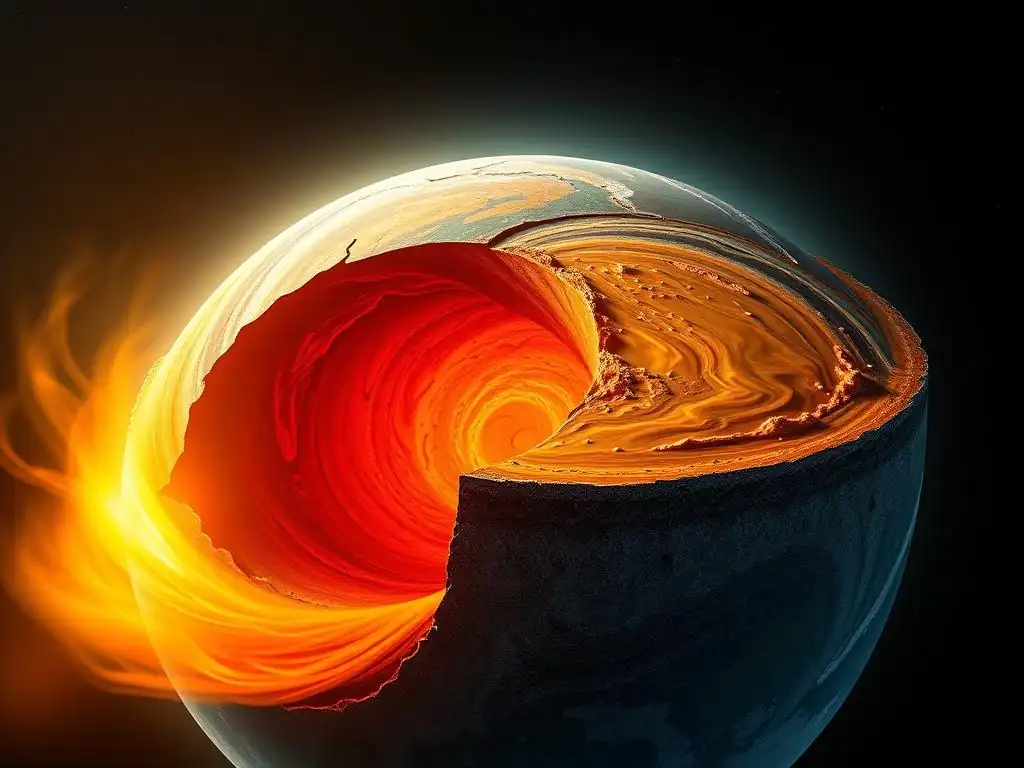
While mantle plumes are considered significant geological phenomena, the concept of "superplumes" takes this idea to an even grander scale. Superplumes, as the name suggests, are hypothesized to be exceptionally large and powerful mantle plumes, characterized by significantly greater volume flux and thermal energy release compared to "regular" mantle plumes.
Imagine mantle plumes as rivers of hot rock rising from the deep mantle; superplumes would be more akin to vast oceanic currents, carrying an immense volume of hot material. This increased scale is proposed to lead to "giant mantle plume effects" that are far more impactful on Earth's surface and deep Earth dynamics.
One key distinguishing feature of superplumes is their potential influence on global geodynamics. While regular mantle plumes are primarily associated with localized volcanic hotspots and intraplate volcanism, superplumes are theorized to have broader, more regional or even global consequences. These could include large-scale continental uplift, extensive flood basalt eruptions, and even contribute to continental breakup.
The estimated volumetric flow rate of a superplume is thought to be orders of magnitude greater than that of a typical mantle plume. For example, some researchers suggest that superplumes might have flow rates exceeding 100 cubic kilometers per year, compared to typical plumes with rates around 1-10 cubic kilometers per year. This massive flux of material and heat from the deep mantle would have profound implications for the Earth's thermal budget and surface geology.
Evidence for Superplumes: Seismic Anomalies and Geochemical Signatures
The evidence for superplumes is largely indirect, based on the interpretation of various geophysical and geochemical data. Seismic tomography, a technique that uses seismic waves to image the Earth's interior, has revealed large-scale, low-velocity anomalies in the mantle beneath certain regions. These low-velocity zones are interpreted as regions of hotter, less dense material, potentially indicative of superplumes.
Two particularly prominent low-velocity provinces are observed in the lower mantle beneath Africa and the Pacific Ocean. These regions, often referred to as Large Low Shear Velocity Provinces (LLSVP), are vast structures extending thousands of kilometers laterally and vertically, and have been proposed as potential locations of superplume upwellings.
Geochemical evidence also contributes to the superplume hypothesis. Ocean island basalts (OIB), lavas erupted at hotspots, often exhibit distinct geochemical signatures compared to mid-ocean ridge basalts (MORB). Some OIB compositions are interpreted as originating from very deep mantle sources, possibly representing material derived from the core-mantle boundary or even deeper.
The isotopic ratios of elements like helium, strontium, neodymium, and lead in certain OIB samples suggest a long-term isolation from the convecting upper mantle, consistent with a deep mantle plume origin. Furthermore, some researchers propose that certain geochemical anomalies, such as high ³He/⁴He ratios, are more prevalent in regions associated with potential superplumes, suggesting a link to primordial mantle reservoirs. For instance, the high ³He/⁴He ratios observed in some Iceland and Hawaiian lavas are cited as evidence for a deep mantle plume source.
Giant Mantle Plume Effects: Investigating the Impact on Continental Landmasses
Continental Uplift and Rifting: A Consequence of Superplume Activity?
One of the most significant "giant mantle plume effects" proposed is continental uplift. The immense thermal buoyancy and upward pressure exerted by a superplume impinging on the base of the lithosphere (Earth's crust and uppermost mantle) can cause significant uplift of the overlying continental crust. This uplift can manifest as broad, elevated plateaus or regional topographic swells. The East African Plateau, for example, is a vast elevated region that has been suggested to be related to the African superplume. The uplift can be substantial, reaching hundreds to thousands of meters over vast areas.
Furthermore, the stretching and thinning of the lithosphere caused by superplume-induced uplift can lead to continental rifting. As the crust is stretched and weakened, it becomes susceptible to fracturing and faulting, eventually leading to the formation of rift valleys. The East African Rift System, one of the most dramatic rift systems on Earth, is often cited as a potential example of superplume-driven rifting.
This rift system is characterized by active volcanism, faulting, and crustal extension, and is located above the proposed African superplume. The Rhine Graben in Europe and the Baikal Rift in Siberia are other examples of continental rifts that have been linked to mantle plume activity, although the scale and intensity of rifting associated with superplumes are hypothesized to be particularly significant.
The Influence of Superplumes on Continental Flood Basalts
Another dramatic "giant mantle plume effect" is the generation of continental flood basalts (CFBs). These are massive outpourings of basaltic lava that erupt over relatively short geological timescales, covering vast areas with thick layers of volcanic rock. CFBs are among the largest volcanic events in Earth's history and have had profound impacts on the planet's environment and climate. The Deccan Traps in India and the Siberian Traps in Russia are two of the largest and most well-known CFB provinces.
The prevailing theory links CFB eruptions to mantle plume activity. The arrival of a large mantle plume head beneath the lithosphere can trigger extensive decompression melting, generating massive volumes of basaltic magma. The rapid ascent and eruption of this magma can lead to CFB events.
Superplumes, with their greater thermal flux and magma production rates, are considered particularly effective in generating CFBs. The timing of some major CFB events appears to coincide with periods of continental rifting and breakup, further suggesting a link to mantle plume activity and potential "giant mantle plume effects" influencing both volcanism and tectonics. The Deccan Traps, for example, are associated with the breakup of Gondwana and the northward drift of the Indian plate, while the Siberian Traps are linked to the Permian-Triassic extinction event, highlighting the potentially catastrophic global impacts of CFB eruptions.
Superplumes and Continental Breakup: A Geological Connection?
The most far-reaching "giant mantle plume effect" proposed is their potential role in continental breakup. The rifting processes initiated by superplume-induced uplift and lithospheric thinning can, in some cases, progress to full continental breakup, leading to the formation of new ocean basins. The breakup of supercontinents like Pangaea and Gondwana is a fundamental process in Earth's geological history, shaping the distribution of continents and ocean basins we see today.
The Central Atlantic Magmatic Province (CAMP), one of the largest igneous provinces on Earth, is associated with the opening of the Atlantic Ocean and the breakup of Pangaea. The eruption of CAMP basalts around 200 million years ago is thought to have been triggered by a mantle plume impinging on the lithosphere, leading to rifting and ultimately the separation of North America from Africa and Europe.
Similarly, the breakup of Gondwana, the southern supercontinent, is also linked to extensive magmatism and rifting events, potentially driven by multiple mantle plumes or a large superplume. The proposed African superplume is located beneath a region that has experienced multiple episodes of rifting and breakup throughout geological history, suggesting a long-term influence on continental dynamics.
The relationship between superplumes and continental breakup is complex and still debated, but the spatial and temporal correlations between large igneous provinces, rifting, and plume activity suggest a significant geological connection.
Case Studies: Examining Potential Giant Mantle Plume Examples
The African Superplume: A Hotspot Under the Continent?
The African continent is a region of intense geological interest, exhibiting a wide range of volcanic and tectonic activity. Beneath Africa lies one of the two major Large Low Shear Velocity Provinces (LLSVPs) detected by seismic tomography, often referred to as the African LLSVP or the African superplume. This vast, deep-seated anomaly extends from the core-mantle boundary up into the mid-mantle and is considered a prime candidate for a superplume. The African superplume is proposed to be responsible for a variety of geological features across the continent.
The elevated topography of eastern and southern Africa, including the East African Plateau and the southern African plateau, is often attributed to the dynamic uplift caused by the African superplume. The East African Rift System, a zone of active rifting and volcanism, is also considered to be influenced by the plume. Furthermore, major volcanic regions in Africa, such as the Afar Triangle, a triple junction where three branches of the East African Rift meet, and the volcanic provinces of Cameroon and Tibesti, are potentially linked to the upwelling of hot material from the African superplume.
Geochemical studies of volcanic rocks from these regions often show signatures consistent with a deep mantle source, further supporting the superplume hypothesis. The African superplume example highlights the potential for "giant mantle plume effects" to manifest as broad continental uplift, rifting, and widespread volcanism.
The Pacific Superplume: Its Role in the Pacific Ring of Fire
The Pacific Ocean basin is another region characterized by intense volcanic and tectonic activity, dominated by the Pacific Ring of Fire, a zone of frequent earthquakes and volcanic eruptions along the margins of the Pacific plate. Beneath the Pacific, the other major LLSVP, the Pacific LLSVP, is observed in seismic tomography.
This vast anomaly, similar to the African LLSVP, is also proposed as a potential superplume, often referred to as the Pacific superplume. While the Pacific Ring of Fire is primarily driven by plate subduction, the Pacific superplume is suggested to play a role in intraplate volcanism and potentially influence the broader dynamics of the Pacific basin.
The numerous volcanic island chains and seamounts in the Pacific Ocean, such as Hawaii, Samoa, and Tahiti, are classic examples of hotspot volcanism, often attributed to mantle plumes. The Pacific superplume, being a larger and more voluminous upwelling, could contribute to a higher density of hotspots and a greater overall flux of volcanic material in the Pacific basin.
Some researchers have also proposed that the Pacific superplume might influence the dynamics of plate tectonics in the region, potentially contributing to the westward drift of the Pacific plate and the subduction processes along the Ring of Fire. The interaction between the Pacific superplume and plate tectonics is a complex area of ongoing research, with potential implications for understanding the distribution of volcanism and seismicity in the Pacific region.
The Iceland Plume: A Potential Driver of North Atlantic Volcanism and Rifting
Iceland, a volcanically active island in the North Atlantic, is situated on the Mid-Atlantic Ridge, a divergent plate boundary where the North American and Eurasian plates are moving apart. Iceland is also considered to be a hotspot, attributed to the Iceland plume, a mantle plume rising from the deep mantle beneath the North Atlantic.
While the Iceland plume is generally considered a "regular" mantle plume, its location near a plate boundary and its potential influence on North Atlantic rifting make it a relevant case study in the context of superplume discussions. Some researchers have even suggested that the Iceland plume might have characteristics of a smaller-scale superplume, or that it represents a particularly vigorous or long-lived mantle plume.
The Iceland plume is thought to be responsible for the voluminous volcanism in Iceland, which has built the island above sea level and continues to shape its landscape. The plume is also proposed to play a role in the breakup of the North Atlantic region, contributing to the rifting and separation of Greenland from Europe.
The North Atlantic Igneous Province (NAIP), a large igneous province associated with the opening of the North Atlantic, is linked to the Iceland plume and its activity during the early stages of rifting. The Iceland plume example highlights the complex interplay between mantle plumes, plate tectonics, and continental rifting, and raises questions about the spectrum of mantle plume sizes and their varying "giant mantle plume effects".
Alternative Explanations: Challenging the Superplume Theory
The Debate: Are Superplumes Truly Distinct from Regular Mantle Plumes?
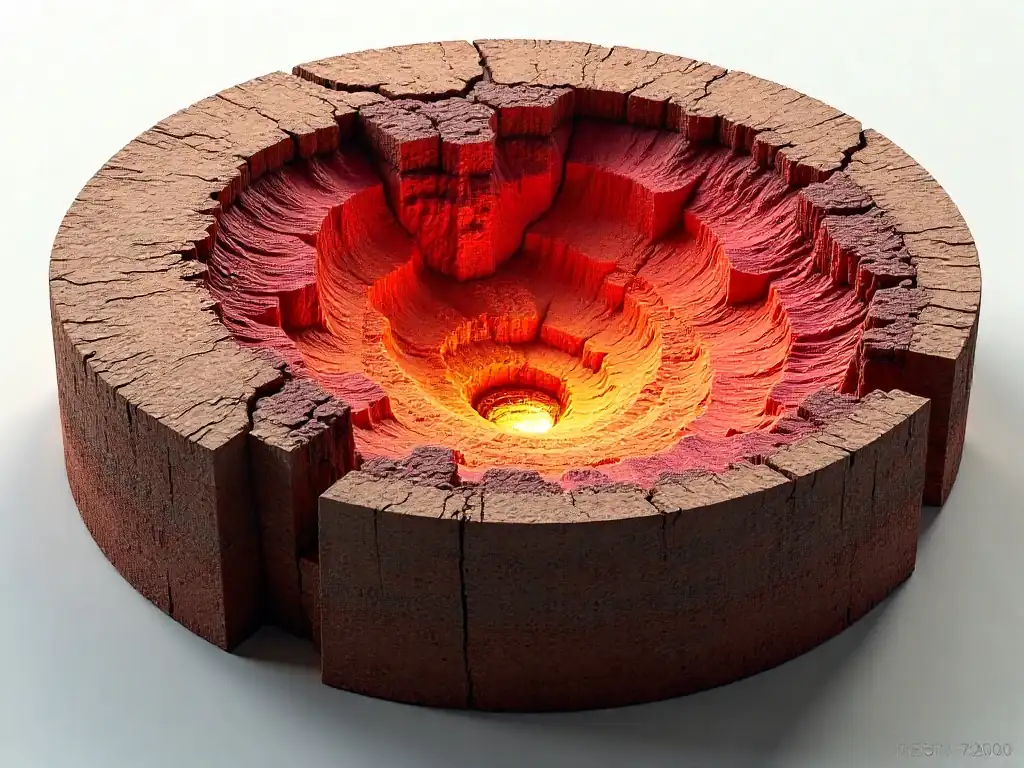
Despite the compelling evidence and geological features potentially linked to superplumes, the concept remains debated within the scientific community. One key area of debate is whether superplumes are truly distinct entities from "regular" mantle plumes, or simply represent the larger end-member of a continuous spectrum of plume sizes and intensities. Some researchers argue that the observed differences attributed to superplumes, such as larger scale uplift and flood basalt eruptions, can be explained by variations in plume temperature, flux rate, or lithospheric conditions, without requiring a fundamentally different type of mantle plume.
The definition and criteria for distinguishing superplumes from regular plumes are not universally agreed upon. Some studies suggest that the LLSVPs, often cited as evidence for superplumes, might not be simple upwellings of hot material, but rather complex structures with heterogeneous composition and potentially different origins. Alternative models propose that the LLSVPs could be ancient piles of chemically distinct material accumulated at the core-mantle boundary, rather than purely thermal anomalies. The debate about the distinctiveness of superplumes highlights the ongoing effort to refine our understanding of mantle plume dynamics and their role in Earth's geological evolution.
Alternative Models for Continental Deformation: Plate Tectonics and Other Factors
While superplumes are proposed as a significant driver of continental deformation, alternative explanations emphasize the role of plate tectonics and other factors. Plate tectonic processes, such as plate collisions, subduction, and extension, are undoubtedly major forces shaping continents. Continental uplift and rifting can also be driven by intraplate stresses related to plate motions, without necessarily requiring deep mantle plumes. For example, compressional forces from plate collisions can cause crustal thickening and uplift, while extensional forces can lead to crustal thinning and rifting.
Furthermore, the role of lithospheric structure and composition in influencing continental deformation should not be underestimated. Variations in crustal thickness, density, and strength can affect how continents respond to tectonic stresses or mantle upwelling. Pre-existing zones of weakness in the lithosphere, such as ancient sutures or fault zones, can preferentially localize rifting and deformation.
Alternative models for continental deformation often emphasize the complex interplay between plate tectonics, lithospheric structure, and mantle convection, suggesting that while mantle plumes may play a role, they are not the sole or dominant factor in all cases. The relative contributions of superplumes versus plate tectonics and other factors to specific geological features remain a subject of active research and debate.
The Future of Superplume Research: Unveiling Earth's Deep Secrets
Ongoing Research and Technological Advancements in Mantle Plume Studies
Research into mantle plumes and superplumes is a dynamic and evolving field, benefiting from ongoing technological advancements and new datasets. Seismic tomography continues to improve in resolution and coverage, providing increasingly detailed images of the Earth's mantle and allowing for better characterization of plume structures and LLSVPs. Advances in geodynamic modeling are enabling researchers to simulate mantle convection and plume dynamics with greater complexity and realism, testing different hypotheses about plume origins, behavior, and interactions with the lithosphere.
Geochemical studies of volcanic rocks continue to provide valuable insights into the composition and origin of mantle plume material. New analytical techniques and isotopic systems are being developed, allowing for more precise and comprehensive geochemical analyses. Ocean bottom seismometers (OBS) are deployed in increasing numbers to study seismic activity beneath the oceans, providing crucial data for imaging mantle structures in oceanic regions, including potential plume locations.
Drilling projects, such as the International Ocean Discovery Program (IODP), recover samples from oceanic crust and seamounts, providing direct geological evidence for hotspot volcanism and mantle plume processes. These ongoing research efforts and technological advancements are constantly refining our understanding of mantle plumes and their potential "giant mantle plume effects".
Implications of Superplume Research for Understanding Volcanic Hazards
Understanding superplumes and their "giant mantle plume effects" has implications beyond fundamental geological science, potentially contributing to a better understanding of volcanic hazards. While superplume-related volcanism might not be as frequent as plate boundary volcanism, the scale and intensity of events like continental flood basalt eruptions, potentially linked to superplumes, can have significant global impacts, including climate change and mass extinctions. Studying the processes that trigger and control these massive volcanic events is crucial for assessing and mitigating long-term volcanic hazards.
Furthermore, understanding the dynamics of mantle plumes, including potential superplumes, can help in assessing volcanic hazards in hotspot regions like Hawaii, Iceland, and Yellowstone. Monitoring volcanic activity in these areas, combined with improved understanding of plume behavior, can contribute to better eruption forecasting and hazard assessment. Research into superplumes also has broader implications for understanding the Earth's deep interior, its thermal evolution, and the processes that shape our planet over geological timescales. By unraveling the mysteries of these giant mantle upwellings, we gain a deeper appreciation for the dynamic and interconnected nature of Earth's systems.
Conclusion: The Ongoing Quest to Understand Giant Mantle Plume Effects
The hypothesis of superplumes and their "giant mantle plume effects" presents a compelling and intriguing perspective on the Earth's deep dynamics and its influence on surface geology. While the concept remains debated and requires further research, the evidence accumulated from seismic tomography, geochemistry, and geological observations suggests that exceptionally large and powerful mantle upwellings may indeed exist and exert significant forces on continents. From continental uplift and rifting to massive flood basalt eruptions and even continental breakup, the potential "giant mantle plume effects" are profound and far-reaching, shaping the Earth's surface and influencing its long-term evolution.
The ongoing quest to understand superplumes is a testament to the dynamic nature of geological science. As technology advances and new data become available, our understanding of mantle plumes and their role in Earth processes will continue to evolve.
Whether superplumes are truly distinct entities or simply the extreme end of a spectrum, their study provides valuable insights into the workings of our planet's deep interior and the powerful forces that shape the world we live in. The journey to unravel the enigmas of superplumes is an ongoing exploration into the Earth's deep secrets, promising to further illuminate the dramatic and awe-inspiring world of volcanoes and the "giant mantle plume effects" that may be reshaping continents over millions of years.
Frequently Asked Questions
How do giant mantle plumes contribute to the reshaping of continents?
Giant mantle plumes, also known as superplumes, are thought to cause continental rifting and the formation of large igneous provinces by bringing up enormous amounts of heat and material from deep within the Earth's mantle. This upwelling material can thin and weaken the continental crust.
What evidence supports the existence of giant mantle plume effects?
Evidence includes the presence of large igneous provinces, uplifted land surfaces, and unusual heat flow patterns in the Earth's crust. Scientists also analyze seismic waves to image these structures deep within the Earth.
How do superplumes differ from smaller, more common mantle plumes?
Superplumes are significantly larger and more powerful than regular mantle plumes, affecting vast areas and potentially triggering major geological events. They originate from much deeper within the mantle.
What are some potential hazards associated with the giant mantle plume effects?
While not directly causing volcanic eruptions in the same way as smaller plumes near subduction zones, superplumes can lead to massive outpourings of lava (flood basalts) over extended periods. This can have significant environmental consequences, including climate change.
How can volcanologists study the effects of giant mantle plumes?
Volcanologists use a variety of techniques, including seismic tomography to image plume structures, geochemical analysis of volcanic rocks to determine their origin, and geological mapping to understand the extent of large igneous provinces.
Final Reflection: Unveiling Earth's Deep Power
The exploration of superplumes and their giant mantle plume effects isn't just an academic exercise in understanding Earth's deep interior; it's a crucial endeavor for deciphering the very forces that shape our continents and influence our planet's dynamic evolution. Understanding these colossal upwellings of heat and material from the Earth's mantle provides invaluable insights into past geological events and helps us anticipate potential future impacts on our planet's surface.
The ongoing influence of mantle plumes on the Earth's crust is undeniable, leaving an indelible mark on the landscapes we inhabit and the resources we depend on. This research underscores the profound interconnectedness of Earth's layers and challenges us to reconsider the scale and speed at which geological processes operate. The Earth is a dynamic planet, constantly evolving, and mantle plumes are a key driver of that evolution.
This quote encapsulates the enduring relevance of studying these phenomena and their implications for understanding Earth's past, present, and future.
As we conclude this exploration of giant mantle plume effects, I invite you to reflect on the immense power that lies beneath our feet. Consider how these deep-seated forces have shaped the world we know and how our understanding of them can inform our stewardship of this planet. Let us embrace the challenge of unraveling Earth's mysteries and use this knowledge to build a more sustainable and resilient future for generations to come.
Unearth Your Inner Geologist!
Thank you for exploring the fascinating world of superplumes and their impact on our planet! We hope this article sparked your curiosity about the immense forces shaping continents. Now, let's take that knowledge and put it to use!
- Dive deeper! Explore our interactive online map of global hotspots to visualize the potential reach of superplumes and see if one might be affecting your region.
- Share your newfound knowledge! Discuss the potential effects of superplumes with friends or in online forums.
- Suggest a future topic for Volcano Explorers, and share information about a local volcanic feature or geological formation influenced by mantle activity.
What unexpected connection did you discover between superplumes and the landscapes you know best?