
The Krakatoa Vortex: The Atmospheric Chaos Created by the 1883 Eruption

Welcome to Volcano Explorers!
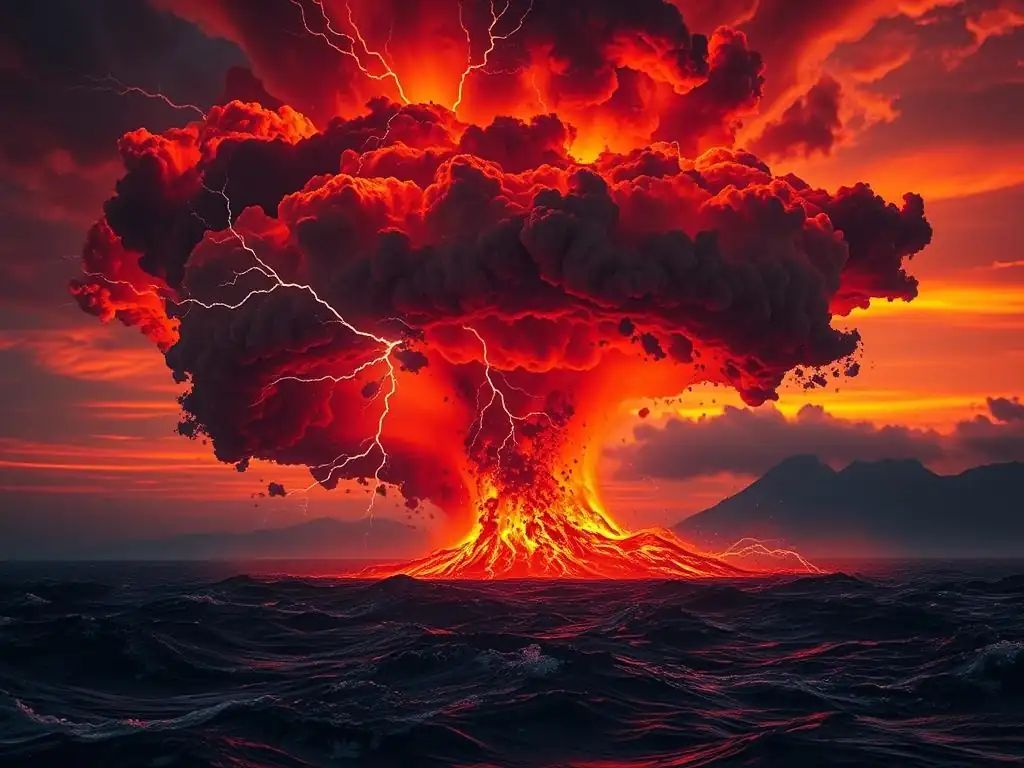
Prepare to be captivated by the raw power and stunning beauty of volcanoes. Ever wondered how a single eruption could ripple across the globe, leaving its mark on the very air we breathe? Dive in and uncover the secrets of the Krakatoa eruption, and how its devastating atmospheric effects reshaped our world. What strange colors painted the skies, and how did this volcanic event impact global weather patterns? Explore the story below and begin your journey into the heart of volcanic mysteries.
- Krakatoa 1883 Eruption: A Global Cataclysm
- Atmospheric Effects of the 1883 Krakatoa Eruption: Initial Observations
- Krakatoa's Impact on Global Weather Patterns: Transient Climate Perturbations
- Optical Phenomena: Spectacular Sunsets and Twilights After Krakatoa
- The "Equatorial Smoke Stream": Tracing Krakatoa's Atmospheric Reach
- Krakatoa and the Sound Heard Around the World: Auditory Anomalies
- Long-Term Atmospheric Consequences of the Krakatoa Eruption
- Krakatoa Eruption Atmospheric Effects: A Case Study in Volcanic Forcing
- Krakatoa's Legacy: Continued Research on Volcanic Atmospheric Phenomena
-
Frequently Asked Questions
- What were the immediate atmospheric effects of the 1883 Krakatoa eruption?
- How did the Krakatoa eruption affect global temperatures?
- What is the "Bishop's Ring" and how was it related to Krakatoa?
- How long did the atmospheric effects of the Krakatoa eruption last?
- Besides temperature, what other weather patterns were affected by the Krakatoa eruption?
- Final Reflection: Echoes of Krakatoa's Fury
- Ignite Your Inner Volcanologist!
Krakatoa 1883 Eruption: A Global Cataclysm
Understanding the Scale of the Krakatoa Explosion
The 1883 eruption of Krakatoa, a volcanic island situated in the Sunda Strait between Java and Sumatra, was one of the most violent volcanic events in recorded history. Estimates place the Volcanic Explosivity Index (VEI) at 6, on a scale of 0 to 8, signifying a 'Colossal' eruption.
The energy released was equivalent to approximately 200 megatons of TNT, dwarfing even the largest nuclear weapons ever detonated. This immense energy release was not only manifested in the devastating local destruction, including the near-complete destruction of the island itself, but also in profound and far-reaching atmospheric disturbances that circled the globe multiple times.
The eruption's power stemmed from a complex interplay of geological factors. Krakatoa was located in a tectonically active zone where the Indo-Australian Plate subducts beneath the Eurasian Plate, leading to magma generation. The magma beneath Krakatoa was rich in dissolved gases, and the interaction of this gas-rich magma with seawater during the eruption led to phreatomagmatic explosions of extraordinary force. These explosions pulverized rock, ejected vast quantities of ash and gas into the atmosphere, and generated devastating tsunamis that claimed tens of thousands of lives along the coasts of Java and Sumatra.
Placing the Eruption in the Context of Other Notable Eruptions
While the Krakatoa eruption was exceptionally powerful, it is crucial to understand its place among other significant volcanic events. Compared to the VEI 7 eruption of Tambora in 1815, which triggered the "Year Without a Summer," Krakatoa was less powerful in terms of sheer volume of ejected material. Tambora ejected an estimated 160 cubic kilometers of tephra, while Krakatoa ejected around 25 cubic kilometers. However, Krakatoa's eruption was still significantly larger than the 1980 eruption of Mount St. Helens (VEI 5) or the 1991 eruption of Mount Pinatubo (VEI 6), both of which had notable atmospheric impacts.
The eruption's impact was amplified by its location in a densely populated region and the advanced state of global communication at the time. The telegraph network, relatively new in 1883, allowed news of the eruption and its effects to spread rapidly around the world, contributing to the global awareness and scientific scrutiny of the event. The eruption served as a stark reminder of the Earth's immense geological power and spurred significant advancements in the study of volcanology and atmospheric science.
Atmospheric Effects of the 1883 Krakatoa Eruption: Initial Observations
The Unprecedented Air Pressure Wave: Speed and Distance
One of the most remarkable immediate atmospheric effects of the Krakatoa eruption was the generation of an extraordinarily powerful air pressure wave. This wave, essentially a massive pulse of compressed air, radiated outwards from Krakatoa at supersonic speeds. Barographs around the world, instruments designed to measure atmospheric pressure, recorded this wave multiple times as it circled the globe. The initial wave was recorded at meteorological stations as far away as Calcutta, India, and Melbourne, Australia, within hours of the eruption.
The air pressure wave, traveling at an estimated speed of around 1,100 kilometers per hour (700 mph), was so intense that it shattered windows hundreds of kilometers from Krakatoa. It was detected passing around the Earth three, and possibly even four times in each direction over the course of several days.
This phenomenon demonstrated the sheer magnitude of the energy imparted to the atmosphere by the eruption and provided early scientists with an unprecedented opportunity to study the propagation of atmospheric waves on a global scale. The ability of this wave to travel vast distances highlighted the interconnectedness of the Earth's atmosphere.
Volcanic Ash and Aerosols: Global Distribution Patterns
Beyond the pressure wave, the eruption injected colossal quantities of volcanic ash and sulfur dioxide gas high into the stratosphere, reaching altitudes of up to 80 kilometers (50 miles). This material was rapidly dispersed by stratospheric winds, creating a global veil of volcanic aerosols. The ash, composed of fine rock particles, primarily affected the atmosphere in the immediate aftermath, causing darkness and disrupting local weather patterns closer to the eruption site. Reports from ships near Krakatoa described complete darkness for days due to the dense ash cloud.
However, it was the sulfur dioxide gas that had the most prolonged and far-reaching atmospheric effects. In the stratosphere, sulfur dioxide reacted with water vapor to form sulfate aerosols, microscopic droplets of sulfuric acid. These aerosols are highly reflective and efficiently scatter sunlight back into space. The stratospheric winds carried these aerosols around the globe within weeks, creating a global layer that persisted for several years. The distribution of these aerosols was not uniform, but satellite observations from later eruptions, like Pinatubo, have confirmed similar patterns of global aerosol dispersal from major tropical eruptions.
Krakatoa's Impact on Global Weather Patterns: Transient Climate Perturbations
Temperature Anomalies: Global and Regional Cooling
The global veil of sulfate aerosols from the Krakatoa eruption had a significant impact on Earth's radiation budget, leading to a measurable decrease in global average temperatures. By reflecting incoming solar radiation, the aerosols reduced the amount of sunlight reaching the Earth's surface. Estimates of the global average temperature decrease following the Krakatoa eruption range from 0.3 to 0.5 degrees Celsius (0.5 to 0.9 degrees Fahrenheit). While seemingly small, this cooling was significant in the context of late 19th-century climate and was detectable in global temperature records.
The cooling effect was not uniform across the globe. Some regions experienced more pronounced cooling than others, and there were also regional variations in the timing of the temperature decrease. Furthermore, the cooling was most pronounced in the years immediately following the eruption. While the global temperature decrease was relatively short-lived, lasting for a few years until the sulfate aerosols gradually settled out of the stratosphere, it provided early evidence of the sensitivity of global climate to volcanic forcing.
Changes in Precipitation Patterns
Beyond temperature changes, the Krakatoa eruption is also believed to have influenced global precipitation patterns, although these effects are more complex and harder to definitively quantify than temperature changes. Changes in atmospheric circulation patterns driven by the altered temperature gradients could have shifted rainfall belts and affected monsoon systems. Some studies suggest that regions in the tropics and subtropics experienced changes in precipitation patterns in the years following the eruption.
However, disentangling the effects of the Krakatoa aerosols from natural climate variability in precipitation is challenging. Historical records of precipitation are less comprehensive and geographically consistent than temperature records, making it difficult to establish clear cause-and-effect relationships. Nevertheless, the potential for large volcanic eruptions to alter regional and global precipitation patterns remains an area of active research in climate science.
Optical Phenomena: Spectacular Sunsets and Twilights After Krakatoa
The Science Behind the Vivid Colors: Sulfate Aerosols and Light Scattering
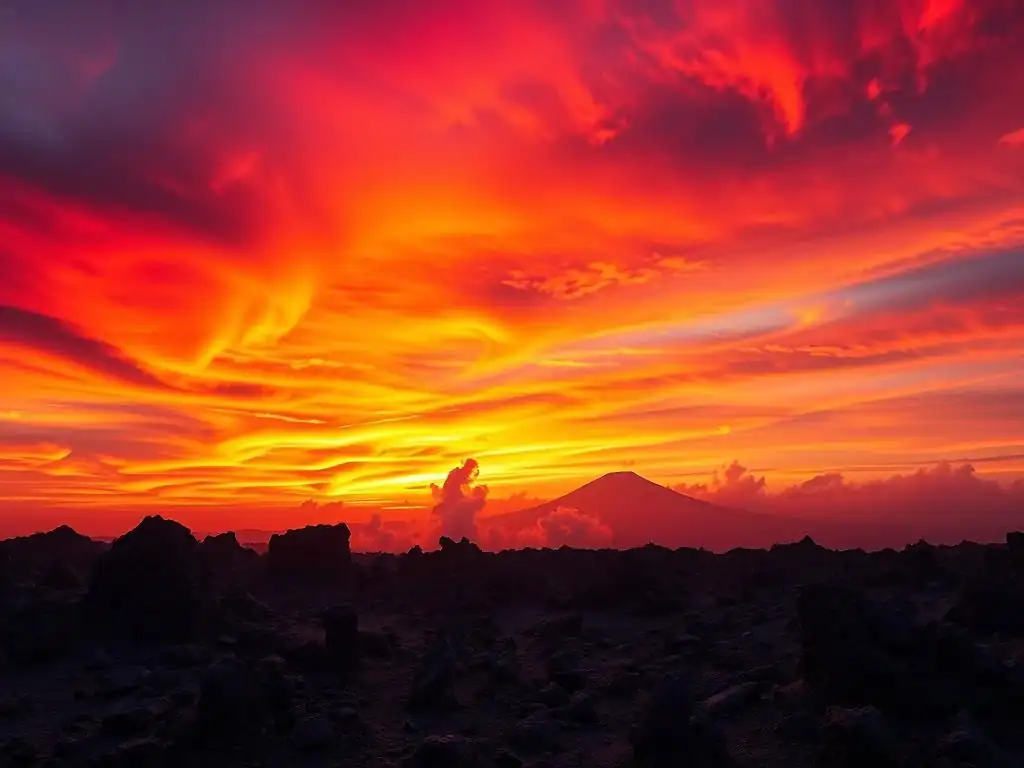
Perhaps the most visually striking and widely reported atmospheric effect of the Krakatoa eruption was the appearance of extraordinarily vivid sunsets and twilights around the world for several years after the event. These sunsets were characterized by intense reds, oranges, and purples, far more saturated and prolonged than typical sunsets. These spectacular displays were directly caused by the stratospheric sulfate aerosols from the eruption.
Sulfate aerosols are particularly effective at scattering shorter wavelengths of light, such as blue and green, while allowing longer wavelengths, like red and orange, to pass through. When the sun is low on the horizon during sunset and twilight, sunlight travels a longer path through the atmosphere. The increased path length means that more of the blue and green light is scattered away by the aerosols, leaving the red and orange hues to dominate, resulting in the brilliant and unusual sunset colors observed globally.
Documented Observations of Unusual Sunsets Worldwide
Reports of extraordinary sunsets and twilights flooded in from across the globe in the months and years following the Krakatoa eruption. These descriptions were not limited to scientific observations; they also appeared in personal diaries, letters, and newspaper articles from locations as diverse as Europe, North and South America, and Australia. Artists were inspired to capture these unusual colors in paintings, providing a visual record of the atmospheric phenomenon.
One particularly famous example is the series of sunsets painted by Edvard Munch in the years surrounding the eruption, including his iconic painting "The Scream." While the exact connection is debated, some art historians and scientists suggest that the intensely dramatic skies depicted in "The Scream" may have been influenced by the vivid sunsets caused by the Krakatoa aerosols. These widespread and visually compelling sunset displays served as a constant reminder of the eruption's global atmospheric reach and captured the public imagination worldwide.
The "Equatorial Smoke Stream": Tracing Krakatoa's Atmospheric Reach
Monitoring the Dispersion of Volcanic Debris
Scientists in the late 19th century, equipped with relatively rudimentary atmospheric observation tools, were nonetheless able to track the movement and dispersion of the volcanic debris from Krakatoa. They observed a phenomenon they termed the "equatorial smoke stream," a band of haze and unusual optical effects that circled the Earth in the tropics and mid-latitudes. This "smoke stream" was the visible manifestation of the stratospheric aerosol cloud spreading globally.
Observations of the "smoke stream" relied on visual sightings, reports from ships, and measurements of atmospheric transparency using instruments like photometers. Meteorological observatories and individual scientists meticulously documented the appearance and movement of this haze, providing valuable data on the direction and speed of stratospheric winds. These observations, although qualitative compared to modern satellite data, were crucial in establishing the global scale of the eruption's atmospheric impact and the pathways of stratospheric aerosol transport.
Impact on Atmospheric Circulation
The injection of vast quantities of aerosols into the stratosphere by the Krakatoa eruption likely had some influence on atmospheric circulation patterns, although the precise nature and extent of these impacts are still being studied. The altered radiative balance caused by the aerosols, with reduced solar heating at the surface and potentially increased absorption in the stratosphere, could have affected temperature gradients and thus wind patterns.
Some research suggests that the Krakatoa eruption might have contributed to changes in the strength or position of jet streams or altered large-scale atmospheric circulation cells like the Hadley cell. However, isolating the specific impact of Krakatoa on atmospheric circulation from natural variability and other factors is a complex task. Modern climate models and reanalysis datasets are being used to further investigate these potential circulation changes and refine our understanding of volcanic forcing on atmospheric dynamics.
Krakatoa and the Sound Heard Around the World: Auditory Anomalies
The Physics of the Sound Wave: Propagation and Atmospheric Refraction
Beyond the visual and meteorological effects, the Krakatoa eruption is also famous for generating a sound wave of such extraordinary intensity that it was reportedly heard thousands of miles away. This auditory phenomenon was a direct consequence of the explosive energy release, which created a powerful pressure pulse that propagated through the atmosphere as a sound wave. The unusual distances over which the sound was heard are explained by the physics of sound wave propagation and atmospheric refraction.
Sound waves typically weaken with distance due to spreading and energy dissipation. However, under certain atmospheric conditions, sound waves can be refracted, or bent, back towards the Earth's surface, allowing them to travel much further than expected. Temperature and wind gradients in the atmosphere can cause this refraction. In the case of Krakatoa, it is likely that specific atmospheric conditions, perhaps related to the eruption itself or prevailing weather patterns, enhanced the long-range propagation of the sound wave.
Documented Accounts of the Krakatoa Boom Heard Thousands of Miles Away
Numerous documented accounts confirm that the sound of the Krakatoa eruption was heard over an incredibly vast area. Reports came from locations as far away as Rodrigues Island near Mauritius in the Indian Ocean, approximately 4,800 kilometers (3,000 miles) west of Krakatoa, and Alice Springs in central Australia, roughly 3,600 kilometers (2,200 miles) to the southeast. These distances are unprecedented for audible sounds from volcanic eruptions or any other natural event.
Eyewitness accounts from these distant locations described the sound as resembling cannon fire, distant thunder, or even the sound of heavy surf. In some cases, people initially mistook the sound for local explosions or earthquakes. The sheer geographical extent of these auditory reports provides compelling evidence for the extraordinary power of the Krakatoa explosion and the unusual efficiency of sound wave propagation in the atmosphere on that day.
Long-Term Atmospheric Consequences of the Krakatoa Eruption
Recovery of the Atmosphere: Duration of the Effects
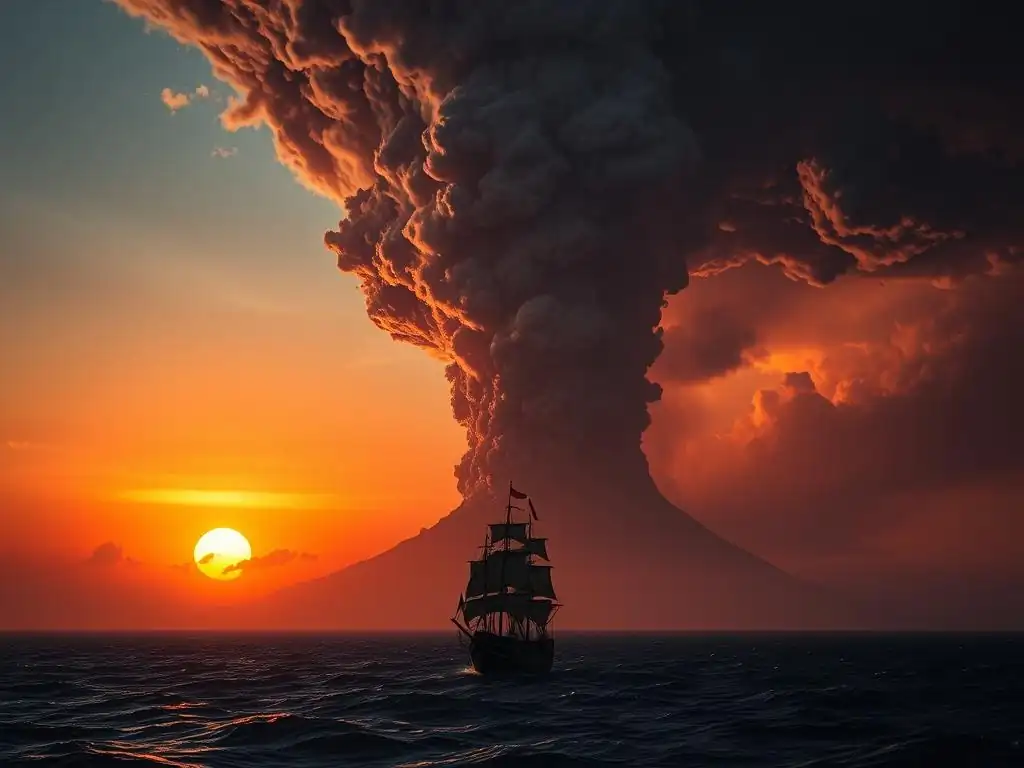
The atmospheric perturbations caused by the Krakatoa eruption were not permanent. The sulfate aerosols injected into the stratosphere gradually settled out of the atmosphere over a period of several years. This removal process occurs through gravitational settling and also through transport of aerosols from the stratosphere back into the troposphere, where they are rained out. The timescale for this stratospheric aerosol removal is typically a few years for large volcanic eruptions.
By the late 1880s, the most pronounced atmospheric effects of Krakatoa, such as the vivid sunsets and the global cooling, had largely subsided. Global temperatures returned to pre-eruption levels, and the unusual optical phenomena diminished in intensity and frequency. However, subtle, longer-term effects on atmospheric circulation or ozone chemistry might have persisted for somewhat longer periods, although these are more difficult to detect and attribute solely to the Krakatoa eruption.
Lessons Learned: Modeling Future Volcanic Eruption Atmospheric Impacts
The Krakatoa eruption, despite occurring before the era of modern satellite observations and sophisticated climate models, provided invaluable early insights into the atmospheric impacts of large volcanic eruptions. The event highlighted the potential for volcanoes to inject material into the stratosphere, cause global cooling, alter weather patterns, and produce spectacular optical phenomena. These lessons learned from Krakatoa have been crucial for developing and validating modern climate models used to simulate volcanic forcing.
Today, scientists use advanced climate models that incorporate volcanic aerosol radiative effects to simulate the atmospheric impacts of past and potential future eruptions. These models are essential for understanding the role of volcanoes in climate variability and for assessing the potential climate risks associated with future large eruptions. The Krakatoa eruption serves as a crucial case study for testing and improving these models, enhancing our ability to predict and prepare for the atmospheric consequences of future volcanic events.
Krakatoa Eruption Atmospheric Effects: A Case Study in Volcanic Forcing
Studying the Relationship Between Volcanic Eruptions and Climate
The Krakatoa eruption stands as a significant case study in the field of volcanology and climate science, providing a clear example of volcanic forcing on the Earth's climate system. Volcanic forcing refers to the influence of volcanic eruptions on climate through the injection of gases and aerosols into the atmosphere, which alter the Earth's radiative balance. The Krakatoa eruption, along with other major volcanic events like Tambora and Pinatubo, has been instrumental in establishing the link between volcanic eruptions and short-term climate cooling.
By studying the atmospheric effects of Krakatoa, scientists have gained a deeper understanding of the processes involved in volcanic forcing, including the formation and dispersion of sulfate aerosols, their radiative properties, and their impact on global temperatures and atmospheric circulation. The eruption has also underscored the importance of considering volcanic eruptions as a natural factor influencing climate variability, alongside other factors like solar variations and greenhouse gas emissions.
The Importance of Understanding Atmospheric Dynamics
The Krakatoa eruption and its far-reaching atmospheric consequences emphasized the importance of understanding atmospheric dynamics in a global context. The rapid dispersal of volcanic aerosols around the world, the propagation of the air pressure wave, and the long-range transmission of sound all highlighted the interconnectedness of the Earth's atmosphere and the ability of atmospheric disturbances to propagate across vast distances.
The study of Krakatoa's atmospheric effects contributed to the development of meteorology and atmospheric physics as global sciences. It spurred research into atmospheric waves, stratospheric circulation, and the radiative transfer properties of aerosols. The event served as a natural experiment, demonstrating the power of the atmosphere to transport and disperse materials on a planetary scale and underscoring the need for a holistic, global perspective in studying atmospheric phenomena.
Krakatoa's Legacy: Continued Research on Volcanic Atmospheric Phenomena
Modern Tools for Monitoring Volcanic Ash and Aerosols
The legacy of the Krakatoa eruption extends to modern volcanology and atmospheric science, particularly in the development of advanced monitoring techniques for volcanic ash and aerosols. Today, satellites equipped with sophisticated sensors play a crucial role in tracking volcanic plumes, measuring aerosol concentrations, and monitoring the dispersion of volcanic ash clouds in real-time. These satellite observations are essential for aviation safety, climate monitoring, and understanding volcanic impacts on the atmosphere.
Instruments like lidar (light detection and ranging) and radar are used to probe volcanic plumes and measure the altitude and composition of ash clouds. Ground-based networks of aerosol monitoring stations provide continuous measurements of atmospheric aerosol concentrations and properties. These modern tools, unavailable in the 19th century, provide a far more detailed and comprehensive picture of volcanic atmospheric phenomena than was possible at the time of the Krakatoa eruption.
Future Research Directions
Research on the atmospheric effects of volcanic eruptions continues to be an active and important area of scientific inquiry. Future research directions include improving climate models to better simulate volcanic forcing, understanding the regional and long-term climate impacts of volcanic eruptions, and investigating the potential links between volcanic eruptions and extreme weather events. Scientists are also working to refine our understanding of the sulfur cycle in volcanic plumes and the processes that control the formation and properties of sulfate aerosols.
Furthermore, there is growing interest in the potential for geoengineering approaches that mimic the cooling effect of volcanic aerosols to mitigate climate change. However, such approaches are highly controversial and raise significant ethical and environmental concerns. The study of past volcanic eruptions like Krakatoa provides valuable insights into the potential benefits and risks associated with such geoengineering strategies and underscores the need for careful consideration and responsible research in this area.
Frequently Asked Questions
What were the immediate atmospheric effects of the 1883 Krakatoa eruption?
The immediate effects included a massive pressure wave that circled the globe multiple times, vivid sunsets and sunrises caused by ash and aerosols in the atmosphere, and a temporary decrease in global temperatures.
How did the Krakatoa eruption affect global temperatures?
The eruption injected large amounts of sulfur dioxide into the stratosphere, which formed sulfate aerosols. These aerosols reflected sunlight back into space, resulting in a temporary global cooling that lasted for several years.
The Bishop's Ring was a diffraction phenomenon seen around the sun after the Krakatoa eruption. It was caused by the fine volcanic dust and ash suspended in the upper atmosphere, scattering sunlight.
How long did the atmospheric effects of the Krakatoa eruption last?
While the immediate effects like the pressure wave were instantaneous, the vivid sunsets and global cooling persisted for several years. Trace amounts of aerosols from the eruption remained detectable for even longer.
Besides temperature, what other weather patterns were affected by the Krakatoa eruption?
The eruption is believed to have influenced rainfall patterns, causing unusual monsoons and other regional weather anomalies. These changes were linked to the altered atmospheric circulation caused by the injected aerosols.
Final Reflection: Echoes of Krakatoa's Fury
The echoes of Krakatoa's 1883 eruption continue to resonate today, serving as a stark reminder of the raw power of nature and its profound impact on our planet. Understanding the Krakatoa eruption atmospheric effects is not merely a historical exercise; it's a crucial step in comprehending the complex interplay between volcanic activity and global climate patterns, knowledge that is increasingly vital in our era of climate change. The lessons learned from this cataclysmic event can inform our strategies for monitoring and mitigating the potential consequences of future eruptions.
The sheer scale of Krakatoa's atmospheric disruption underscores the interconnectedness of our world. Witnessing the sunrises and sunsets painted with volcanic aerosols for years after the event highlights the enduring legacy of a single, devastating moment. The sky was filled with a strange, unearthly light, a reminder of the forces that lie beneath our feet.
This quote, echoing the sentiments of many who lived through the aftermath, reminds us that the consequences of such events extend far beyond the immediate devastation, shaping our cultural memory and inspiring both awe and trepidation.
As we reflect on the Krakatoa eruption and its atmospheric effects, let us not simply marvel at the science, but also contemplate our own relationship with the natural world. How can we, as individuals and as a society, better prepare for the inevitable challenges that lie ahead? Let the story of Krakatoa inspire you to become more informed, more resilient, and more committed to safeguarding our planet for future generations. The atmospheric chaos of 1883 serves as a powerful call to action, urging us to understand, respect, and protect the delicate balance of our Earth.
Ignite Your Inner Volcanologist!
Thanks for delving into the atmospheric mysteries unleashed by the 1883 Krakatoa eruption. Now that you understand the science behind this dramatic event, it's time to take your exploration further!
Here's how you can keep the volcanic fire burning:
- Unleash your inner meteorologist: Calculate the approximate wind speeds that could have carried ash particles across the globe using online wind speed calculators and research current atmospheric conditions. Compare your results to historical data!
- Share your newfound knowledge! Spread the word about Krakatoa's impact on the atmosphere by creating a short video summarizing the article and posting it on social media. Don't forget to tag us!
- Dive deeper into the world of volcanic eruptions! Explore other fascinating eruptions throughout history, focusing on their unique atmospheric effects and compare them to Krakatoa.
Ready to unleash your inner explorer and contribute to understanding these powerful natural events? What surprising connection did you find between Krakatoa's eruption and today's weather patterns?