
The Global Hotspot Guide: First Aid Differences for Volcanoes Around the World

Welcome to Volcano Explorers, where the earth breathes fire and the landscape whispers tales of ancient power. Ever wondered how first aid differs when facing the raw fury of a volcano in Iceland versus the subtle threat of a simmering giant in Hawaii? Dive into our latest guide, " The Global Hotspot Guide: First Aid Differences for Volcanoes Around the World," and unlock the secrets to surviving the unexpected. What life-saving techniques are universal, and which are uniquely tailored to specific volcanic environments? The answers might surprise you... and could one day save your life. Explore on!
- Understanding First Aid for Volcano Emergencies: A Global Perspective
- First Aid Kits Specifically Designed for Volcanic Hazards: A Comparative Guide
-
First Aid for Specific Volcanic Hazards: A Region-by-Region Breakdown
- First Aid for Ash Inhalation: From Mount Etna to Mount St. Helens
- First Aid for Lava Burns: Lessons from Kilauea and Pacaya
- First Aid for Lahar Exposure: Strategies for Nevado del Ruiz and Mount Rainier
- First Aid for Volcanic Gas Exposure: Coping with VOG from Hawaiian Volcanoes and Sulfur Dioxide at Poás
- Building Your Own Volcanic First Aid Kit: A Customizable Approach
- Real-World Examples: First Aid in Action During Volcanic Eruptions
- First Aid Training for Volcano Explorers: Enhancing Your Skills and Knowledge
- Conclusion: Prioritizing Safety and Preparedness in Volcanic Regions
-
Frequently Asked Questions
- What are the most common injuries associated with volcanic eruptions?
- How does First Aid for Volcano Emergencies differ depending on location?
- What are some essential items to include in a volcano emergency first aid kit?
- What is the most important thing to do if you are caught in a volcanic ashfall?
- Where can I find reliable, up-to-date information about volcanic activity in my area?
- Final Reflection: Embracing Resilience in Volcanic Landscapes
- Ignite Your Volcanic Preparedness!
Understanding First Aid for Volcano Emergencies: A Global Perspective
Why First Aid Protocols Vary Around the World’s Volcanoes
First aid protocols for volcano emergencies are not universally standardized due to the highly variable nature of volcanic hazards and the diverse geographical locations of active volcanoes. A primary reason for these variations lies in the specific types of volcanic activity prevalent in different regions. For instance, volcanoes in Iceland are often characterized by effusive eruptions and glacial meltwater interactions leading to jökulhlaups (glacial outburst floods), demanding first aid preparedness for hypothermia and water-related injuries, in addition to burn care.
Conversely, stratovolcanoes in the Pacific Ring of Fire, such as those in Japan or the Philippines, are known for explosive eruptions producing pyroclastic flows and lahars. First aid protocols in these areas must prioritize treatment for severe burns, traumatic injuries from debris impact, and respiratory distress from ash and volcanic gases.
Furthermore, the accessibility and infrastructure surrounding volcanic regions significantly impact first aid protocols. Volcanoes situated near densely populated areas with well-established emergency services, like Mount Vesuvius in Italy, benefit from rapid access to advanced medical care and potentially more streamlined evacuation procedures. In contrast, volcanoes located in remote or less developed regions, such as those in parts of Indonesia or South America, require a greater emphasis on self-sufficiency in first aid.
In these areas, first responders may face logistical challenges in reaching affected populations quickly, necessitating more robust pre-eruption preparedness and community-based first aid training. Cultural and socioeconomic factors can also influence first aid practices. For example, local knowledge of traditional remedies and resource availability might shape initial responses in certain communities, which must be considered alongside conventional first aid guidelines.
Global Variations in Volcanic Hazards and Their Impact on First Aid Needs
The Earth's diverse volcanic landscapes present a spectrum of hazards, each necessitating tailored first aid approaches. In Hawaii, the primary volcanic hazard is lava flows and volcanic smog (VOG). First aid focuses on burn treatment, respiratory care for VOG exposure, and managing heat stress in the tropical climate.
VOG, a mixture of sulfur dioxide and other volcanic gases, can cause significant respiratory irritation and trigger asthma, requiring readily available inhalers and respiratory protection. In contrast, the Cascade Range in the United States, home to volcanoes like Mount Rainier and Mount St. Helens, poses risks from explosive eruptions, ashfall, lahars, and pyroclastic flows.
First aid here must encompass treatment for severe trauma from debris, burns from pyroclastic flows, respiratory issues from heavy ashfall, and injuries related to mudflows. The 1980 eruption of Mount St. Helens highlighted the devastating impact of pyroclastic flows and the need for burn management and trauma care in such events.
Moving to South America, the Andes volcanic belt presents unique challenges. Volcanoes like Nevado del Ruiz in Colombia are notorious for generating lahars, devastating mudflows of volcanic debris and water. The 1985 Nevado del Ruiz eruption tragically demonstrated the destructive power of lahars and underscored the need for first aid focused on trauma from mudflow impact, hypothermia from exposure to cold, wet mud, and wound care amidst unsanitary conditions. In Iceland, besides lava flows and VOG from eruptions like those at Fagradalsfjall, the interaction of volcanoes with glaciers creates jökulhlaups. First aid preparedness must extend to managing hypothermia from glacial meltwater exposure, injuries from flash floods, and potential waterborne illnesses following such events. The eruption of Eyjafjallajökull in 2010, while primarily known for its ash cloud disruption to air travel, also presented localized flooding risks and highlighted the need for varied first aid skills even in seemingly less explosive eruptions.
First Aid Kits Specifically Designed for Volcanic Hazards: A Comparative Guide
Comparing Pre-Made Volcanic First Aid Kits: Adventure Medical Kits vs. Medi-First
While the concept of a "volcanic first aid kit" isn't as commercially widespread as, say, a wilderness first aid kit, we can evaluate existing pre-made kits through the lens of volcanic hazard preparedness. Brands like Adventure Medical Kits, known for their robust outdoor and disaster preparedness kits, offer options that can be readily adapted for volcanic environments. Their "Mountain Series Medical Kit," for instance, prioritizes wound care, burn treatment, and trauma supplies, crucial for many volcanic scenarios.
It typically includes items like assorted bandages, antiseptic wipes, burn dressings, pain relievers, and tools like tweezers and scissors. However, it may lack specific items crucial for volcanic ash and gas exposure, such as N95 masks or specialized eye protection.
Medi-First, a brand focusing on workplace and general safety first aid, provides kits that are more geared towards basic injury management and regulatory compliance. Their kits often emphasize OSHA-required items and general wound care supplies. While practical for minor injuries, standard Medi-First kits might fall short in addressing the more specific and severe hazards associated with volcanoes.
They may lack advanced burn dressings, specialized respiratory protection beyond basic dust masks, or trauma-specific equipment needed for more serious volcanic emergencies. Therefore, when considering pre-made kits, it's more effective to view them as a base to be customized. Starting with a robust kit from Adventure Medical Kits or a similar brand known for outdoor or disaster preparedness, and then supplementing it with volcano-specific items, is often a more practical approach than relying solely on a generic first aid kit.
Essential Components of a Volcanic First Aid Kit: Global Standard vs. Region-Specific Additions
A globally applicable volcanic first aid kit should prioritize core elements addressing the most common hazards: respiratory protection, eye protection, burn care, wound care, and basic trauma management. Respirators are paramount. N95 masks are a baseline for ash and particulate matter, but for volcanic gases, full-face respirators with acid gas cartridges (like those rated for sulfur dioxide and hydrogen sulfide) are essential, particularly in areas prone to VOG or sulfurous emissions, such as Hawaii or certain geothermal regions.
Eye protection must go beyond basic sunglasses. Sealed safety goggles, like Pyramex I-Force, are crucial to prevent ash and irritants from entering the eyes. Sterile saline solution for eye irrigation should be readily available.
Burn care needs to be comprehensive. Beyond standard burn dressings, consider silver sulfadiazine cream for more severe burns, common in pyroclastic flow or lava fragment scenarios. Wound care should include a variety of bandages, antiseptic wipes (povidone-iodine or chlorhexidine), and trauma dressings for larger wounds resulting from debris impact or lahar exposure.
For trauma management, consider items like triangular bandages for slings, elastic bandages for sprains, and potentially even a CAT tourniquet for severe bleeding control, especially in areas prone to explosive eruptions and lahars. Region-specific additions are vital. In colder volcanic regions like Iceland or the Pacific Northwest during winter, hypothermia prevention becomes critical.
Mylar emergency blankets and chemical heat packs should be included. In tropical volcanic areas like Hawaii or Indonesia, sunscreen (SPF 50 broad spectrum) and hydration salts are important to combat heat stress and sun exposure. Areas with known lahar risks, like the Philippines around Mayon Volcano, should include extra considerations for injuries associated with mudflows, such as robust splinting materials and waterproof dressings.
First Aid for Specific Volcanic Hazards: A Region-by-Region Breakdown
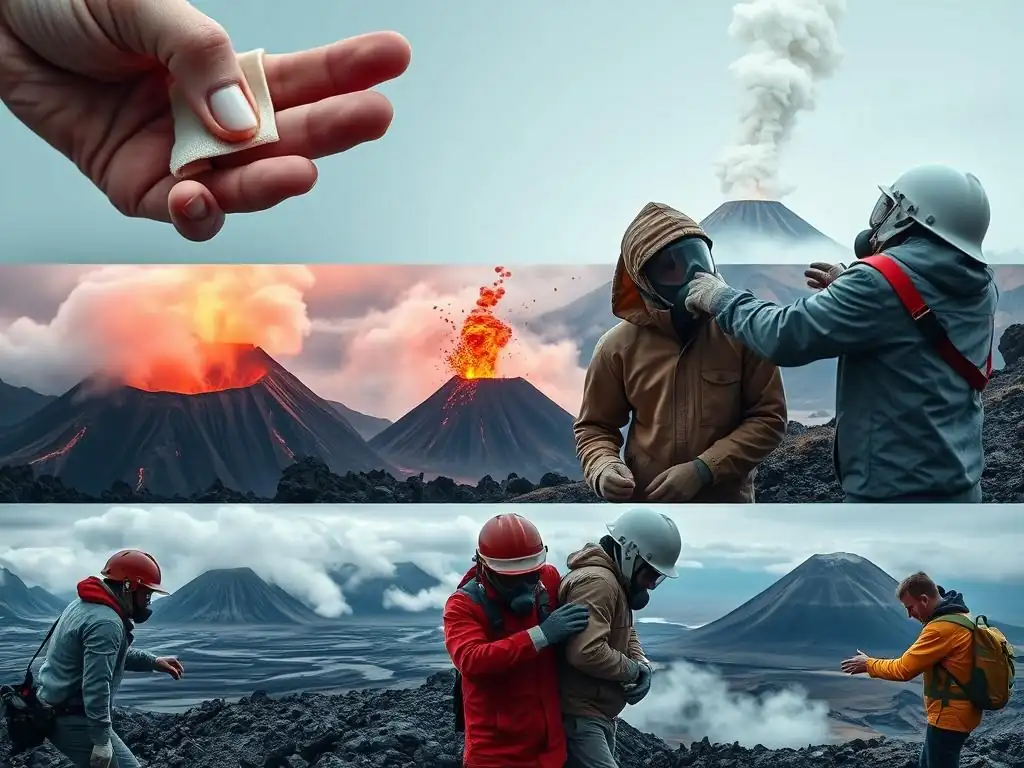
First Aid for Ash Inhalation: From Mount Etna to Mount St. Helens
Volcanic ash, composed of fine particles of rock, mineral, and volcanic glass, is a widespread hazard from explosive eruptions, affecting areas from the slopes of Mount Etna in Italy to regions downwind of Mount St. Helens in the USA. Inhalation of volcanic ash can cause significant respiratory problems, ranging from mild irritation to severe conditions, especially in individuals with pre-existing respiratory ailments like asthma or bronchitis. The severity of the impact depends on the ash particle size, concentration, and the duration of exposure.
Ash particles can irritate the airways, causing coughing, wheezing, shortness of breath, and sore throat. Prolonged exposure can lead to more serious conditions like acute bronchitis or exacerbate existing respiratory illnesses.
Treating Respiratory Issues Caused by Volcanic Ash: Using N95 Masks for Protection
The primary first aid for respiratory issues from volcanic ash inhalation is prevention through respiratory protection. N95 masks are the minimum recommended level of protection, filtering out at least 95% of airborne particles, including volcanic ash. Proper donning and fit are crucial for mask effectiveness. For individuals with beards or facial hair, a tight seal might be challenging, and alternative respirators or shaving may be necessary.
If respiratory symptoms develop despite mask use, or if masks are unavailable, moving to a less ash-laden environment is the immediate priority. If symptoms persist or worsen, seeking medical attention is essential. For mild symptoms like coughing or sore throat, over-the-counter cough suppressants and throat lozenges can provide temporary relief. Staying hydrated by drinking plenty of water can help soothe irritated airways and thin mucus.
Eye Irritation Relief: Recommending Sterile Saline Solution for Ash Exposure
Volcanic ash is not only a respiratory irritant but also a significant eye irritant. The fine, abrasive particles can scratch the cornea, the clear front surface of the eye, leading to pain, redness, tearing, and blurred vision. Eye irritation from ash is a common complaint during and after volcanic eruptions, affecting populations near volcanoes like Mount Etna in Sicily, which frequently experiences ashfall. First aid for eye irritation from volcanic ash focuses on immediate irrigation and protection.
The recommended first-aid treatment for eye irritation due to ash exposure is to flush the eyes copiously with sterile saline solution. If sterile saline is unavailable, clean water can be used as a temporary measure. Avoid rubbing the eyes, as this can worsen corneal abrasions. Continuous irrigation helps to physically remove ash particles from the eye surface.
After irrigation, wearing protective eyewear, such as sealed safety goggles like Pyramex I-Force goggles, is crucial to prevent further ash exposure and allow the eyes to heal. If symptoms persist, such as continued pain, redness, blurred vision, or the sensation of something still being in the eye, seeking medical evaluation is necessary to rule out corneal abrasions or other more serious eye injuries. An ophthalmologist can assess the eye and prescribe lubricating eye drops or other treatments as needed.
First Aid for Lava Burns: Lessons from Kilauea and Pacaya
Lava flows, a defining feature of volcanoes like Kilauea in Hawaii and Pacaya in Guatemala, present a significant burn hazard. While direct contact with flowing lava is often avoidable due to its relatively slow pace, radiant heat and contact with lava fragments or recently solidified lava can cause severe burns. Lava temperatures can range from 700°C to 1200°C (1300°F to 2200°F), capable of causing deep, full-thickness burns very rapidly. The extent and severity of lava burns depend on the duration of exposure, the temperature of the lava or fragment, and the area of the body affected.
Treating Superficial Burns from Lava Fragments: Applying Silver Sulfadiazine Cream
Superficial burns from lava fragments, while less severe than direct lava contact burns, still require prompt and appropriate first aid. These burns might occur from contact with smaller, cooled lava fragments or from brief exposure to radiant heat. First aid for superficial lava burns follows standard burn care principles. The first step is to cool the burn area immediately with cool (not cold) running water for 10-20 minutes.
This helps to reduce tissue damage and pain. After cooling, gently clean the burn area with mild soap and water, avoiding harsh scrubbing. For superficial burns, applying a thin layer of silver sulfadiazine cream is beneficial. Silver sulfadiazine is a topical antibiotic cream that helps prevent infection and promotes healing in burn wounds.
It is particularly useful for burns as it has broad-spectrum antibacterial activity. After applying the cream, cover the burn with a sterile, non-adhesive dressing to protect it from contamination and further injury. Change the dressing daily or as needed, reapplying silver sulfadiazine cream with each dressing change.
Preventing Infection in Burn Wounds: The Importance of Povidone-Iodine Wipes
Preventing infection in burn wounds, whether superficial or more severe, is paramount in volcanic environments where hygiene can be compromised and the risk of contamination from ash and volcanic debris is elevated. Burn wounds compromise the skin's protective barrier, making them susceptible to bacterial infections, which can delay healing and lead to serious complications. Povidone-iodine wipes are a valuable tool for infection prevention in burn first aid.
Povidone-iodine is an antiseptic agent that effectively kills a wide range of bacteria, viruses, and fungi. Using povidone-iodine wipes to gently cleanse the skin around the burn wound before applying dressings or topical medications helps reduce the bacterial load and minimize the risk of infection.
It is important to note that povidone-iodine should be used on the intact skin surrounding the burn, not directly within the burn wound itself, as it can be cytotoxic to wound tissues in higher concentrations. For cleaning the burn wound itself, sterile saline solution or mild soap and water are preferred.
After cleansing the surrounding skin with povidone-iodine wipes, applying a topical antibiotic like silver sulfadiazine (as mentioned for superficial burns) and covering with a sterile dressing further enhances infection prevention. Regular dressing changes, maintaining wound cleanliness, and monitoring for signs of infection (increased redness, swelling, pus, fever) are crucial aspects of burn wound care in volcanic settings.
First Aid for Lahar Exposure: Strategies for Nevado del Ruiz and Mount Rainier
Lahars, volcanic mudflows composed of water, rock debris, and volcanic ash, are among the most devastating volcanic hazards, exemplified by the tragic 1985 Nevado del Ruiz lahar in Colombia and the potential lahar threat from Mount Rainier in the United States. Lahars are fast-moving, powerful flows capable of destroying infrastructure, burying landscapes, and causing severe trauma and injuries.
First aid for lahar exposure must address the multifaceted injuries resulting from impact, burial, and hypothermia associated with these events. Injuries from lahar exposure can range from fractures and lacerations from being struck by debris to crush injuries from being trapped in the mudflow and hypothermia from prolonged exposure to cold, wet mud.
Managing Injuries from Mudflows: Utilizing Trauma Dressings
Managing injuries resulting from lahar exposure requires a focus on trauma care. Due to the forceful nature of lahars, injuries are often severe and can include significant bleeding wounds, fractures, and soft tissue trauma. Trauma dressings are essential components of a first aid kit for lahar-prone areas.
Trauma dressings are designed to control severe bleeding quickly and effectively. They are typically thicker and more absorbent than standard bandages and often incorporate features like pressure bars or elastic wraps to apply direct pressure to the wound. In lahar incidents, lacerations from debris impact are common, and trauma dressings are crucial for managing bleeding from these wounds.
For example, if an individual sustains a deep cut from being struck by a rock carried in the lahar, a trauma dressing can be applied directly to the wound to stem blood loss until more advanced medical care is available. In addition to trauma dressings for bleeding control, splinting materials are important for managing suspected fractures sustained in lahar events. Rigid splints or improvised splints, along with triangular bandages for slings, can stabilize fractures and reduce further injury during evacuation or transport.
Preventing Hypothermia After Lahar Exposure: The Role of Mylar Emergency Blankets
Hypothermia is a significant risk following lahar exposure, especially in cooler climates or during colder seasons. Lahars are composed of water and mud, and immersion in these cold flows, coupled with potential exposure to wind and rain, rapidly leads to heat loss and hypothermia. The 1985 Nevado del Ruiz lahar, occurring in a high-altitude environment, resulted in many casualties exacerbated by hypothermia.
Mylar emergency blankets, also known as space blankets, play a vital role in preventing hypothermia after lahar exposure. These blankets are made of a thin, reflective plastic material that reflects body heat back to the individual, significantly reducing heat loss. They are lightweight, compact, and easily stored in a first aid kit.
After extricating someone from a lahar, immediately removing wet clothing and wrapping them in a Mylar emergency blanket is crucial. The blanket should be applied as soon as possible to minimize heat loss. If available, layering the Mylar blanket with additional insulating materials like dry clothing or blankets will further enhance its effectiveness.
In addition to Mylar blankets, chemical heat packs can provide supplementary warmth. These heat packs, when activated, generate heat through a chemical reaction and can be placed inside clothing or blankets to provide localized warming, particularly to the core body areas like the chest and groin. Monitoring for signs of hypothermia – shivering, confusion, slurred speech, drowsiness – is important, and seeking medical attention for hypothermic individuals is essential as rewarming in a controlled medical setting may be necessary for severe cases.
First Aid for Volcanic Gas Exposure: Coping with VOG from Hawaiian Volcanoes and Sulfur Dioxide at Poás
Volcanic gas emissions are a pervasive hazard associated with many volcanoes worldwide, ranging from the volcanic smog (VOG) prevalent in Hawaii from Kilauea volcano to sulfur dioxide emissions at Poás Volcano in Costa Rica. These gases, including sulfur dioxide (SO2), carbon dioxide (CO2), and hydrogen sulfide (H2S), can pose serious health risks upon inhalation, causing respiratory distress, poisoning, and even death in high concentrations. The specific gases emitted and their concentrations vary depending on the volcano and its activity, but respiratory protection and awareness of gas poisoning symptoms are crucial for first aid preparedness in volcanic regions.
Recognizing the Symptoms of Gas Poisoning: Carbon Dioxide, Sulfur Dioxide, and Hydrogen Sulfide
Recognizing the symptoms of volcanic gas poisoning is critical for timely first aid intervention. Different volcanic gases produce distinct symptoms. Carbon dioxide (CO2), being heavier than air, can accumulate in low-lying areas and displace oxygen, leading to asphyxiation. Symptoms of CO2 poisoning include rapid breathing, headache, dizziness, confusion, loss of consciousness, and ultimately, respiratory arrest.
Sulfur dioxide (SO2) is a respiratory irritant causing coughing, wheezing, shortness of breath, chest tightness, and eye and throat irritation. In higher concentrations, SO2 can cause pulmonary edema (fluid in the lungs) and be life-threatening, especially for individuals with asthma or other respiratory conditions. Hydrogen sulfide (H2S) has a characteristic "rotten egg" smell at low concentrations, but at higher levels, it can paralyze the olfactory nerve, eliminating the smell, and rapidly cause respiratory failure and death. Symptoms of H2S poisoning include eye and respiratory irritation, nausea, vomiting, headache, dizziness, confusion, seizures, and coma.
Using Respiratory Protection Against Volcanic Gases: The Effectiveness of Full-Face Respirators with Acid Gas Cartridges
Respiratory protection is the cornerstone of first aid for volcanic gas exposure. While N95 masks are effective for volcanic ash, they offer limited protection against volcanic gases. For gases like sulfur dioxide and hydrogen sulfide, full-face respirators with acid gas cartridges are necessary. Full-face respirators provide a sealed barrier over the entire face, protecting the eyes, nose, and mouth from gas exposure.
Acid gas cartridges contain chemical sorbents that specifically remove acid gases like SO2 and H2S from the inhaled air. These cartridges are typically color-coded (often yellow or green) to indicate their specific gas protection capabilities. The effectiveness of respirators depends on proper fit and cartridge selection.
Respirator fit testing is essential to ensure a tight seal against the face. Cartridges have a limited lifespan and must be replaced regularly, especially after exposure to high gas concentrations or after their expiration date. For situations where high concentrations of multiple volcanic gases are possible, such as near active fumaroles or during periods of increased volcanic degassing, self-contained breathing apparatus (SCBA) providing independent oxygen supply may be required for responders and professionals working in these hazardous environments.
Treating Respiratory Distress from Volcanic Gases: The Importance of Oxygen and Albuterol Inhalers
Treating respiratory distress caused by volcanic gas exposure involves immediate removal from the gas-contaminated environment and supportive care. Supplemental oxygen is crucial for individuals experiencing respiratory distress from any volcanic gas exposure, particularly CO2 or SO2 poisoning. Administering oxygen helps to increase blood oxygen saturation and alleviate hypoxia (oxygen deficiency).
For individuals with pre-existing respiratory conditions like asthma or chronic obstructive pulmonary disease (COPD), volcanic gas exposure, especially SO2, can trigger bronchospasm (narrowing of the airways) and asthma attacks. Albuterol inhalers (also known as salbutamol) are bronchodilators that quickly relax airway muscles and improve airflow. Having albuterol inhalers readily available in volcanic first aid kits is essential for individuals with asthma or those experiencing wheezing and shortness of breath from volcanic gas inhalation.
In severe cases of respiratory distress or gas poisoning, advanced medical care is necessary, including potential intubation and mechanical ventilation in a hospital setting. Prompt evacuation to a medical facility is crucial for individuals with significant respiratory symptoms following volcanic gas exposure.
Building Your Own Volcanic First Aid Kit: A Customizable Approach
Essential Items for a Basic Volcanic First Aid Kit: Prioritizing Safety and Preparedness
Building a customized volcanic first aid kit allows for tailoring to specific volcanic hazards and personal needs. A basic kit should prioritize respiratory protection, eye protection, skin protection, and wound care, the fundamental elements for "First Aid for Volcano Emergencies".
Respiratory Protection: Selecting the Right Mask for Volcanic Ash and Gases (Reviewing 3M 8210, Moldex 2300)
For respiratory protection, consider options for both ash and gases. For volcanic ash, N95 masks like the 3M 8210 or Moldex 2300 are reliable choices. The 3M 8210 is a widely available and cost-effective disposable N95 respirator, effective for filtering out at least 95% of non-oil-based particles, including volcanic ash. It features a two-strap design for secure fit and is suitable for general ash protection.
The Moldex 2300 N95 respirator is another comparable option, known for its comfort and molded mesh shell that helps maintain its shape in humid conditions. Both are effective for ash, but neither provides protection against volcanic gases. For volcanic gas protection, a full-face respirator with acid gas cartridges is necessary (discussed previously). For basic ash protection in many volcanic scenarios, the 3M 8210 or Moldex 2300 are adequate and practical choices for a basic kit.
Eye Protection: Shielding Your Eyes from Irritants with Pyramex I-Force Safety Goggles
Eye protection in a volcanic environment requires more than just sunglasses. Pyramex I-Force safety goggles are an excellent choice for a volcanic first aid kit. These goggles provide sealed eye protection, preventing ash, dust, and volcanic gases from entering the eyes. They feature a dual-lens design with an anti-fog coating, crucial for maintaining clear vision in varying weather conditions and during physical exertion.
The I-Force goggles also offer impact resistance, protecting against flying debris. Their comfortable and adjustable straps ensure a secure fit. For comprehensive eye protection against volcanic hazards, Pyramex I-Force safety goggles are a recommended addition to any volcanic first aid kit, offering superior protection compared to standard safety glasses or goggles that may not provide a complete seal.
Skin Protection: Choosing Appropriate Clothing and Sunscreen for Volcanic Environments (Recommending SPF 50 Broad Spectrum Sunscreen)
Skin protection in volcanic environments involves both clothing and sunscreen. Appropriate clothing should be long-sleeved, long pants, and preferably made of tightly woven fabric to minimize ash and sun exposure. Light-colored clothing is preferable in sunny volcanic regions to reflect heat.
Hats are essential for sun protection, and closed-toe shoes or boots provide foot protection from rough terrain and potential lava fragments or hot ground. Sunscreen is crucial, even on cloudy days, as UV radiation can be intense, especially at higher elevations common in volcanic regions. SPF 50 broad-spectrum sunscreen is recommended, protecting against both UVA and UVB rays.
Apply sunscreen liberally to all exposed skin areas, including the face, neck, ears, and back of hands, and reapply every two hours, especially after sweating or water exposure. For sunscreen, consider brands like Neutrogena Ultra Sheer Dry-Touch or La Roche-Posay Anthelios Melt-In Sunscreen Milk SPF 60, known for their high SPF, broad-spectrum protection, and non-greasy formulas suitable for outdoor activities.
Wound Care: Treating Cuts, Burns, and Abrasions (featuring Band-Aid Brand Adhesive Bandages and Betadine Antiseptic Solution)
Basic wound care is a fundamental component of any first aid kit, including a volcanic kit. For minor cuts, scrapes, and abrasions, Band-Aid Brand Adhesive Bandages are a practical and readily available choice. Include a variety of sizes and shapes of bandages to cover different types of wounds. For antiseptic cleansing of minor wounds, Betadine Antiseptic Solution (povidone-iodine) is effective.
Betadine helps to kill bacteria and prevent infection in minor cuts and scrapes. Apply Betadine to the wound after cleaning it with water, and then cover with a Band-Aid. In addition to bandages and antiseptic, include items like sterile gauze pads, medical tape, and antiseptic wipes in your wound care section. For burn care within the basic kit, consider including burn gel or burn dressings for minor burns, supplementing the more advanced burn care items discussed for lava burn first aid.
Advanced First Aid Kit Components: Preparing for Serious Injuries in Volcanic Zones
An advanced volcanic first aid kit prepares for more serious injuries and emergencies in remote volcanic locations, going beyond basic first aid to include trauma management, emergency communication, and navigation tools.
Trauma Management: Addressing Bleeding, Fractures, and Dislocations using CAT Tourniquets and SAM Splints
For trauma management in a volcanic first aid kit, consider including items to address severe bleeding, fractures, and dislocations. A CAT (Combat Application Tourniquet) is a crucial item for controlling life-threatening extremity bleeding. The CAT tourniquet is a widely used and effective tourniquet for rapidly stopping arterial bleeding in arms or legs due to severe trauma. Proper training in tourniquet application is essential.
For managing suspected fractures and dislocations, SAM Splints are highly versatile and valuable. SAM Splints are lightweight, moldable splints that can be shaped and secured to immobilize fractures or sprains in various parts of the body. They are radiolucent, meaning they do not interfere with X-rays, and are reusable.
Include at least two SAM Splints of different sizes in an advanced kit. In addition to tourniquets and splints, trauma dressings, mentioned earlier for lahar injuries, are also essential for controlling severe bleeding from larger wounds. Consider adding chest seals for penetrating chest injuries (though these require specialized training) and items for managing shock, such as oral rehydration salts.
Emergency Communication: Staying Connected in Remote Volcanic Locations (Reviewing Garmin inReach Mini 2)
Emergency communication is paramount in remote volcanic locations where cell phone service is often unreliable or non-existent. The Garmin inReach Mini 2 is a compact and robust satellite communicator ideal for volcanic explorers. The inReach Mini 2 allows for two-way text messaging via satellite, enabling communication even outside of cellular coverage areas. It also features SOS emergency capabilities, allowing users to trigger an interactive SOS to Garmin Response, a 24/7 emergency response coordination center, which can then dispatch local search and rescue services to your location.
The device offers GPS tracking and location sharing, useful for informing others of your whereabouts and for navigation. It has long battery life and is rugged and water-resistant, suitable for outdoor use. While requiring a satellite subscription, the Garmin inReach Mini 2 provides crucial peace of mind and emergency communication capabilities in remote volcanic environments where traditional communication methods may fail.
Navigation Tools: Navigating Difficult Terrain and Locating Emergency Services (Promoting Garmin GPSMAP 66i)
Navigation in volcanic terrain can be challenging due to rugged landscapes, poor visibility from ash or fog, and the potential for rapidly changing conditions. The Garmin GPSMAP 66i, while also featuring inReach satellite communication, is a more advanced GPS handheld device specifically designed for outdoor navigation. The GPSMAP 66i offers high-accuracy GPS and GLONASS satellite reception for reliable location tracking, even in challenging terrain or under dense tree cover.
It comes preloaded with TopoActive maps, providing detailed topographic information, trails, and points of interest. It features a large color display that is easy to read even in bright sunlight. The device is rugged, waterproof, and offers long battery life.
Beyond basic navigation, the GPSMAP 66i can be used for route planning, waypoint marking, and tracking your progress. Its integration with the inReach satellite communication features allows for seamless communication and location sharing in emergencies. For serious volcano explorers and those venturing into remote volcanic regions, the Garmin GPSMAP 66i provides essential navigation and safety capabilities.
Real-World Examples: First Aid in Action During Volcanic Eruptions
Case Study 1: Mount St. Helens Eruption - Lessons Learned in First Aid Response
The 1980 eruption of Mount St. Helens in Washington State, USA, serves as a significant case study for understanding first aid needs and responses during a major explosive volcanic eruption. The eruption, while tragically resulting in fatalities, also provided valuable lessons for disaster preparedness and first aid in volcanic events. Key hazards included the massive lateral blast, pyroclastic flows, heavy ashfall, and lahars.
Initial first aid responses were often hampered by the sheer scale of the disaster and the widespread ashfall, which disrupted transportation and communication. Many injuries were related to trauma from the blast and pyroclastic flows, including severe burns, fractures, and lacerations. Respiratory issues from ash inhalation were also prevalent, particularly downwind of the volcano.
Lessons learned from Mount St. Helens highlighted the critical need for readily available burn dressings, trauma supplies, and respiratory protection (N95 masks) in volcanic emergency preparedness. The importance of pre-positioned first aid caches and trained first responders in areas at risk from volcanic hazards became evident. The eruption also emphasized the challenges of communication and coordination during large-scale volcanic events, underscoring the need for robust emergency communication systems, potentially including satellite communication for remote areas.
Public education on volcanic hazards and appropriate first aid measures, including ashfall protection and evacuation procedures, was also recognized as crucial for community resilience. The Mount St. Helens eruption contributed significantly to improving volcanic hazard assessment and emergency response protocols in the Cascade Range and globally.
Case Study 2: Mount Nyiragongo Eruption - The Importance of Preparedness and Training
The 2002 eruption of Mount Nyiragongo in the Democratic Republic of Congo, while different in nature from Mount St. Helens (primarily lava flows), provides another crucial case study in volcanic emergency response, particularly highlighting the importance of preparedness and training in densely populated areas near volcanoes. Nyiragongo is known for its fast-moving lava flows due to its unusually fluid lava. The 2002 eruption sent lava flows through the city of Goma, causing widespread destruction and displacement.
First aid needs were primarily focused on burn treatment from lava flows and injuries related to building collapse and displacement. The rapid onset of the eruption and the speed of the lava flows overwhelmed initial response capabilities.
The Nyiragongo eruption underscored the critical importance of pre-eruption preparedness and community-based first aid training in volcanically active areas. Due to the densely populated region and limited resources in Goma, local communities played a vital role in initial first aid and evacuation efforts. The eruption highlighted the need for readily accessible burn care supplies, wound care materials, and basic trauma supplies within communities at risk.
Training local populations in basic first aid, burn care, and evacuation procedures before an eruption is essential for improving community resilience and reducing casualties. The Nyiragongo event also emphasized the need for volcano monitoring and early warning systems to provide timely alerts and allow for proactive evacuation, where feasible, in areas threatened by fast-moving lava flows or other volcanic hazards. International aid and coordinated response efforts were also crucial in the aftermath of the Nyiragongo eruption to address the large-scale humanitarian crisis.
First Aid Training for Volcano Explorers: Enhancing Your Skills and Knowledge
Basic First Aid and CPR Certification: A Foundation for Volcanic Emergency Response
Basic First Aid and CPR (Cardiopulmonary Resuscitation) certification are fundamental prerequisites for anyone venturing into volcanic regions or preparing for volcanic emergencies. These certifications provide essential skills to handle common medical emergencies and injuries that can occur in any setting, including volcanic environments.
Basic first aid courses typically cover topics such as wound care (controlling bleeding, dressing wounds), burn management, treatment for sprains and fractures, management of allergic reactions, and addressing common medical emergencies like fainting and seizures. CPR certification equips individuals with the skills to recognize and respond to cardiac arrest and respiratory arrest, crucial life-saving skills in any emergency situation.
For volcano explorers and those living in volcanic areas, Basic First Aid and CPR certification provide a crucial foundation for responding to injuries and medical emergencies that may arise during volcanic activity or in the aftermath of an eruption. These skills are applicable to a wide range of scenarios, from minor injuries to more serious medical events, and are the starting point for more specialized training in wilderness or volcanic first aid. Organizations like the American Red Cross, the American Heart Association, and St. John Ambulance offer widely recognized and accessible Basic First Aid and CPR certification courses.
Wilderness First Aid Training: Preparing for Remote Volcanic Environments
Wilderness First Aid (WFA) training builds upon basic first aid skills and provides specialized knowledge and techniques for managing medical emergencies in remote and resource-limited environments, highly relevant for volcano explorers venturing into backcountry volcanic areas. WFA courses focus on adapting first aid principles to situations where access to definitive medical care is delayed or unavailable.
Topics covered in WFA courses often include advanced wound management techniques, fracture and dislocation management in remote settings, treatment of environmental emergencies like hypothermia and heatstroke, altitude illness, and improvised techniques for patient evacuation and care using limited resources. WFA training emphasizes decision-making, problem-solving, and improvisation skills crucial for managing emergencies in challenging wilderness conditions.
For volcano explorers, WFA training is particularly valuable as many volcanoes are located in remote and rugged terrain, far from immediate medical assistance. WFA skills equip individuals to handle injuries and illnesses encountered while exploring volcanoes, providing them with the knowledge and confidence to manage emergencies effectively until evacuation or professional medical help can be reached. Numerous organizations offer Wilderness First Aid courses, including the National Outdoor Leadership School (NOLS) and Wilderness Medical Associates International, both recognized for their high-quality wilderness medicine education.
Specialized Training for Volcanic Hazards: Learning from Experts in the Field (Links to NOLS and Wilderness Medical Associates)
To further enhance preparedness for volcanic emergencies, specialized training focused specifically on volcanic hazards and related first aid is highly beneficial. While general first aid and wilderness first aid provide a strong foundation, targeted training addressing the unique challenges of volcanic environments can significantly improve response capabilities. Organizations like NOLS and Wilderness Medical Associates, mentioned for WFA training, also offer advanced wilderness medicine courses and potentially customized training modules that could be tailored to volcanic hazards. Searching their websites (NOLS and Wilderness Medical Associates) for "wilderness medicine," "disaster response," or "volcanic hazards" may reveal relevant courses or resources.
Specialized training could cover topics such as in-depth management of burn injuries from lava or pyroclastic flows, advanced respiratory care for volcanic ash and gas exposure, trauma management in lahar scenarios, and wilderness search and rescue techniques specific to volcanic terrain. Such training might involve hands-on simulations and scenarios relevant to volcanic emergencies, allowing participants to practice their skills in realistic settings.
Connecting with volcanology organizations, emergency management agencies in volcanic regions, or search and rescue teams specializing in volcanic areas may also provide opportunities for specialized training or workshops focused on volcanic hazard first aid and emergency response. Continuously seeking advanced and specialized training is crucial for volcano explorers and those responsible for safety in volcanic regions to stay updated on best practices and enhance their preparedness for volcanic emergencies.
Conclusion: Prioritizing Safety and Preparedness in Volcanic Regions
The Importance of a Comprehensive Volcanic First Aid Plan
Prioritizing safety and preparedness in volcanic regions demands a comprehensive approach, with a well-defined volcanic first aid plan as a cornerstone. A comprehensive plan extends beyond simply assembling a first aid kit; it involves understanding the specific volcanic hazards in a given area, tailoring first aid supplies and training to those hazards, and developing clear emergency protocols and evacuation procedures. Knowing the types of volcanoes in the region (e.g., stratovolcano, shield volcano), their eruption history, and the potential hazards (ashfall, lava flows, lahars, pyroclastic flows, gas emissions) is the first step in developing a targeted first aid plan. This knowledge informs the selection of appropriate first aid kit components, respiratory protection, eye protection, and specialized equipment.
A comprehensive volcanic first aid plan also includes regular training and drills for individuals and communities at risk. Practicing first aid skills, emergency communication protocols, and evacuation routes ensures a more effective and coordinated response during a volcanic event. The plan should also address communication strategies for remote volcanic areas, including satellite communication options, and navigation tools for safe evacuation and search and rescue. Regularly reviewing and updating the volcanic first aid plan based on new scientific information, lessons learned from past eruptions, and evolving best practices in emergency response is crucial to maintain its effectiveness and relevance.
Staying Informed and Updated on Volcanic Activity and First Aid Protocols
Staying informed and updated on volcanic activity and first aid protocols is an ongoing and essential aspect of volcanic safety and preparedness. Volcanic activity can change rapidly, and eruption forecasts and hazard assessments are continuously refined based on monitoring data and scientific research.
Reliable sources of information on volcanic activity include volcano observatories (e.g., the USGS Volcano Hazards Program, the Smithsonian Global Volcanism Program), national geological surveys, and reputable news outlets specializing in science and natural disasters. Monitoring these sources for volcano alerts, eruption updates, and hazard advisories is crucial for staying informed about potential volcanic risks in specific regions.
Similarly, first aid protocols and best practices evolve over time as medical knowledge and emergency response techniques advance. Staying updated on current first aid guidelines from reputable organizations like the American Red Cross, Wilderness Medical Associates, and other relevant sources ensures that first aid practices are aligned with the most effective and evidence-based approaches.
Attending refresher courses in first aid, wilderness first aid, or specialized volcanic hazard first aid training helps to maintain skills and stay informed about updated protocols. Proactive preparedness, continuous learning, and staying informed are the cornerstones of mitigating risks and ensuring safety in the dynamic and awe-inspiring world of volcanoes.
Frequently Asked Questions
What are the most common injuries associated with volcanic eruptions?
The most common injuries include burns from heat and ash, respiratory problems due to ash inhalation, and trauma from falling debris.
How does First Aid for Volcano Emergencies differ depending on location?
First aid protocols can vary slightly based on the type of volcano and the specific hazards present in each region. Availability of medical resources also influences the approach.
What are some essential items to include in a volcano emergency first aid kit?
Essential items include respiratory protection (masks/respirators), burn cream, eye protection (goggles), and a basic first aid kit with bandages and antiseptic.
What is the most important thing to do if you are caught in a volcanic ashfall?
The most important thing is to protect your respiratory system by wearing a mask or covering your mouth and nose with a cloth. Seek shelter indoors if possible.
Where can I find reliable, up-to-date information about volcanic activity in my area?
VolcanoExplorers.org provides real-time updates on volcanic activity worldwide. Also, consult your local civil defense or geological survey websites for localized alerts and information.
Final Reflection: Embracing Resilience in Volcanic Landscapes
The stark reality of volcanic eruptions, as explored throughout this guide, underscores the urgent need for specialized first aid knowledge. Understanding the nuances of treating injuries in these unique environments is not just academic; it's a matter of life and death for communities living in the shadow of these powerful forces of nature. The differences in first aid protocols across various volcanic regions highlight the importance of localized preparedness and the adaptability required to face these unpredictable events.
The enduring impact of volcanic eruptions extends far beyond the immediate aftermath. They reshape landscapes, displace communities, and leave lasting scars on both the physical environment and the collective psyche. The knowledge shared in this guide serves as a crucial tool for mitigating suffering and fostering resilience in the face of adversity. The only way to survive is to transform.
– Grace Lee Boggs. This quote encapsulates the spirit of adaptation and preparedness that is essential for communities living near active volcanoes.
As you reflect on the information presented in this guide, consider the power of knowledge and preparedness. How can you contribute to building safer and more resilient communities, whether in your own backyard or across the globe? Take the lessons learned here and use them to advocate for better training, improved resources, and a deeper understanding of the unique challenges posed by volcanic emergencies. The future of these communities depends on our collective commitment to preparedness and our willingness to learn from the earth's most dramatic displays of power.
Okay, I'm ready to craft a compelling Call to Action (CTA) for the end of a web article titled "The Global Hotspot Guide: First Aid Differences for Volcanoes Around the World" for Volcano Explorers (volcanoexplorers.org). Here it is:
Ignite Your Volcanic Preparedness!
Thanks for delving into the unique first aid considerations for volcanoes around the globe. You now possess valuable knowledge to better prepare yourself for safe and informed exploration. Let's translate that knowledge into action!
Here's how you can take the next step:
- Prioritize your safety: Assemble a volcano-specific first aid kit tailored to the unique hazards of your local volcanic region. Don't just pack it – learn how to use it!:
- Share this guide with fellow volcano enthusiasts! By spreading awareness, we can ensure everyone explores responsibly.
- Uncover hidden volcanic gems near you: Research local geological surveys and community resources for lesser-known, yet fascinating, volcanic sites waiting to be explored.
What's the most surprising thing you learned about first aid for different types of volcanoes, and how will it change your approach to future expeditions? Share your thoughts below!