
Economic Ruin: How Mount Pelée's Eruption Decimated SaintPierre's Prosperity

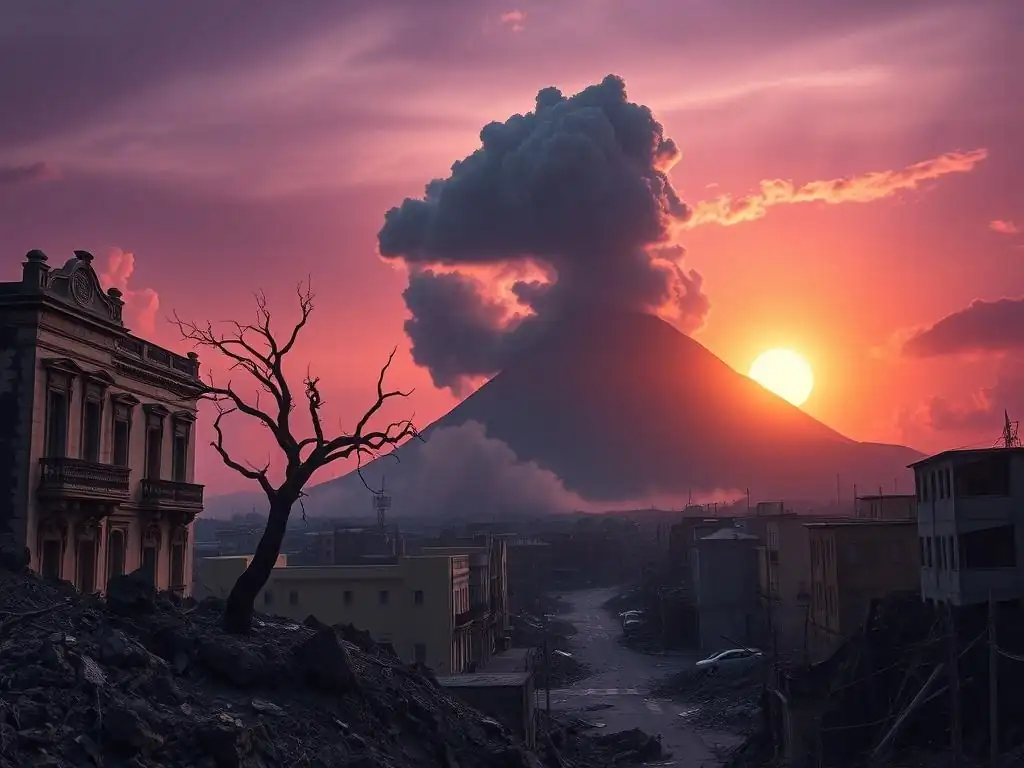
Welcome to Volcano Explorers, where we journey into the fiery heart of our planet! Ever wondered how a single eruption can reshape not just the landscape, but also the very fabric of a society? Then prepare to be astonished. Today, we delve into a chilling chapter of volcanic history, exploring the devastating economic impact of the Mount Pelée eruption. But beyond the immediate destruction, what lasting scars did this event leave on Saint-Pierre? Uncover the answers and more as we unravel the story of a city consumed, and the economic ruin that followed.
- Introduction: The Flourishing City of Saint-Pierre Before the Mount Pelée Eruption
- The Catastrophic Mount Pelée Eruption of 1902
- Immediate Economic Impact: The Annihilation of Saint-Pierre's Infrastructure
- Long-Term Economic Consequences of the Mount Pelée Eruption
- The Mount Pelée Eruption Economic Impact: A Comparative Analysis
- Mount Pelée's Eruption: Economic Impact on Martinique's Overall Economy
- Remembering Saint-Pierre: The Economic Legacy of Mount Pelée's Fury
- Conclusion: The Unrecoverable Loss and the Enduring Lessons of Saint-Pierre
-
Frequently Asked Questions
- What was the primary economic impact of the Mount Pelée eruption on Saint-Pierre?
- How did the loss of Saint-Pierre as a port affect Martinique's trade?
- What industries were most severely affected by the Mount Pelée eruption?
- Did the French government provide economic aid to Saint-Pierre after the eruption?
- How did the Mount Pelée eruption impact the value of land and property in Saint-Pierre?
- Final Reflection: The Enduring Echoes of Disaster
- Relive History: Chart a Course for Understanding!
Introduction: The Flourishing City of Saint-Pierre Before the Mount Pelée Eruption
Saint-Pierre: The "Paris of the Caribbean" and its Economic Significance
Before the catastrophic eruption of Mount Pelée in 1902, Saint-Pierre was not merely a city in Martinique; it was the undisputed economic and cultural capital of the French Caribbean. Often referred to as the "Paris of the Caribbean," this bustling port city was renowned for its architectural elegance, vibrant arts scene, and thriving commercial activity.
Its strategic location on the western coast of Martinique made it a pivotal hub for trade and maritime traffic throughout the region. Saint-Pierre's significance extended beyond Martinique, acting as a crucial link in the broader network of Caribbean commerce, connecting Europe and the Americas through its bustling harbor.
The city's economic engine was powered by its role as the primary port for exporting sugar and rum, the staples of Martinique's agricultural economy. Saint-Pierre's wharves were constantly active, laden with goods flowing in and out, fueling the city's prosperity and contributing significantly to the wealth of Martinique and France. Beyond trade, Saint-Pierre was also a center of administration, education, and entertainment, drawing people from all over the island and beyond. This concentration of economic and cultural activities firmly established Saint-Pierre as the heart of Martinique, a city whose vibrancy belied the dormant volcanic giant looming in the distance.
A Glimpse into Saint-Pierre's Pre-Eruption Economy: Trade, Culture, and Commerce
Saint-Pierre's pre-eruption economy was a dynamic mix of trade, agriculture, and a burgeoning commercial sector. The city thrived as the central marketplace for Martinique’s lucrative sugar and rum industries. Vast sugar plantations dotted the landscape surrounding Saint-Pierre, their produce funneled through the city’s port for export to France and other parts of the world. Rum distilleries, many located within or near Saint-Pierre, added further value to the sugarcane crop, creating a robust export economy. The city's commercial district bustled with shops, markets, and warehouses, catering to both local needs and the demands of international trade.
Beyond agriculture, Saint-Pierre was also a cultural and administrative center, which indirectly bolstered its economy. The presence of colonial administration, coupled with a flourishing Creole society, fostered a unique blend of European and Caribbean cultures.
This cultural richness attracted visitors and residents alike, contributing to a vibrant urban life and supporting a range of businesses from hotels and restaurants to theaters and artistic workshops. Saint-Pierre’s economic strength was not solely reliant on agriculture but was diversified by its role as a regional hub for services, culture, and administration, making it a relatively resilient economy, or so it seemed before the fateful eruption.
The Catastrophic Mount Pelée Eruption of 1902
The Escalation of Volcanic Activity: Warning Signs Ignored
In the weeks leading up to May 8, 1902, Mount Pelée began exhibiting increasingly alarming signs of volcanic unrest. Initially, these were relatively minor, starting with fumarolic activity and small steam explosions from the summit crater. As April progressed into May, these signs intensified. Sulfurous fumes became more pungent, and ash began to fall on nearby villages. Perhaps the most dramatic and ominous event was the appearance of a new volcanic dome within the crater, growing visibly larger day by day, a clear indication of increasing magma pressure within the volcano.
Despite these escalating warnings, a confluence of factors led to a tragic underestimation of the impending disaster in Saint-Pierre. Political considerations, particularly upcoming elections, played a role as local authorities downplayed the risks to avoid panic and maintain order. Furthermore, a prevailing sense of disbelief and perhaps a degree of colonial arrogance contributed to the dismissal of indigenous knowledge and historical accounts of volcanic eruptions.
Many residents, accustomed to Mount Pelée’s long periods of dormancy, were reluctant to abandon their homes and businesses. Tragically, these ignored warning signs and misjudgments set the stage for the catastrophe that was to come, leading to a devastating loss of life and economic ruin.
May 8, 1902: The Day Saint-Pierre Was Erased
May 8, 1902, Ascension Day, dawned seemingly normal in Saint-Pierre. However, beneath the surface, Mount Pelée was primed for a colossal eruption. At 7:52 AM, the volcano unleashed its fury. A massive pyroclastic flow, a superheated avalanche of gas, ash, and volcanic debris, erupted from a breach in the volcano's side and roared down the Vallée de la Rivière Blanche directly towards Saint-Pierre. Moving at an estimated speed of over 100 miles per hour and reaching temperatures of over 1,000 degrees Celsius, the pyroclastic flow engulfed the city in mere minutes.
The impact was instantaneous and devastating. The intense heat incinerated everything in its path, igniting buildings, ships in the harbor, and instantly killing almost all living beings. Eyewitness accounts from the few survivors, mostly those on ships just offshore, describe a terrifying black cloud descending upon the city, followed by explosions and widespread fire.
Within moments, the vibrant and prosperous Saint-Pierre was transformed into a smoldering ruin. The eruption was not just a natural disaster; it was an event that effectively erased a city, leaving behind a scene of unimaginable destruction and marking a profound turning point in Martinique's history and economy.
The Pyroclastic Flow: A Force of Unimaginable Destruction
The primary agent of destruction in the Mount Pelée eruption was the pyroclastic flow, a phenomenon little understood at the time but now recognized as one of the most lethal volcanic hazards. A pyroclastic flow is a ground-hugging current of hot gas and volcanic matter (tephra) that moves at extremely high speeds.
These flows are generated by the collapse of eruption columns, dome collapses, or lateral explosions, and are driven by gravity and the expansion of hot gases. The Mount Pelée pyroclastic flow originated from a lateral blast, propelled sideways from the volcano rather than vertically upwards, which directed its full force towards Saint-Pierre.
The destructive power of a pyroclastic flow stems from a combination of factors. Firstly, the extreme temperature, often exceeding 500°C and potentially reaching over 1000°C, instantly incinerates organic material and ignites flammable structures. Secondly, the high velocity, comparable to hurricane-force winds, carries immense momentum, capable of flattening buildings and uprooting trees.
Thirdly, the flow is a dense mixture of gas and solid particles, creating a suffocating and abrasive environment. In the case of Saint-Pierre, the pyroclastic flow was particularly devastating due to its density, speed, and direct trajectory towards a densely populated urban center. It was this terrifying force of nature that rendered Saint-Pierre uninhabitable in minutes and inflicted catastrophic economic damage.
Immediate Economic Impact: The Annihilation of Saint-Pierre's Infrastructure
Loss of Life and Labor Force: The Human Cost of the Eruption
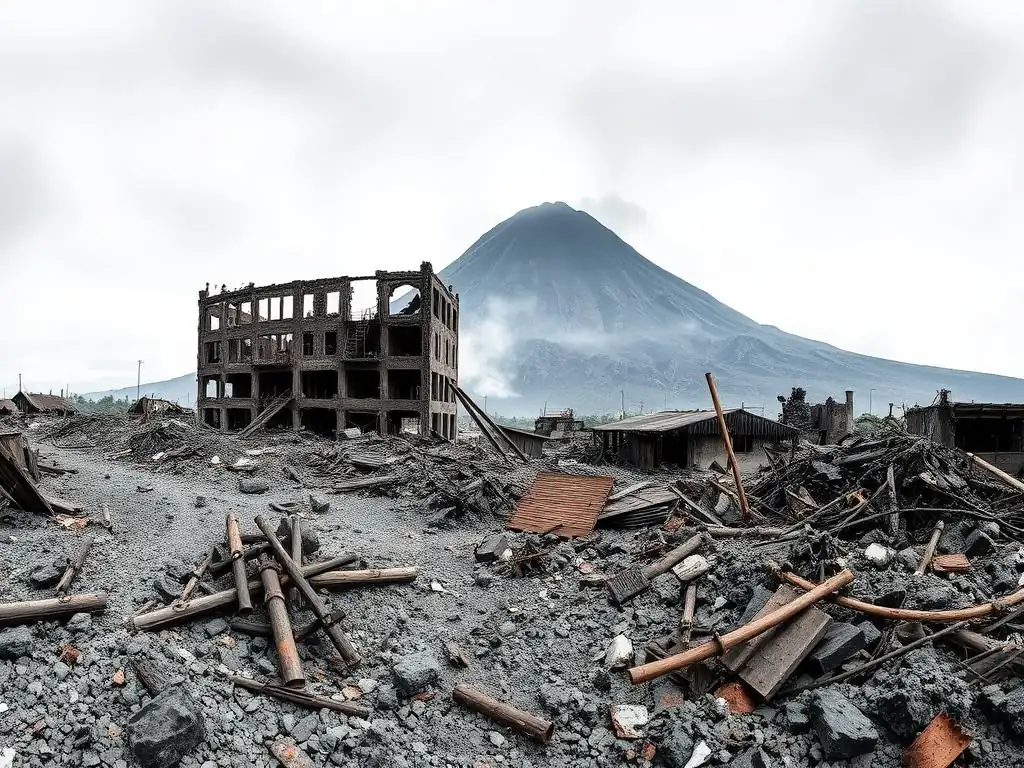
The most immediate and devastating economic impact of the Mount Pelée eruption was the staggering loss of life in Saint-Pierre. Estimates vary, but it is widely accepted that approximately 30,000 people perished in the disaster. This represented nearly the entire population of the city and a significant portion of Martinique's overall workforce. The death toll included not only laborers and merchants but also skilled professionals, administrators, and the city's elite. The decimation of Saint-Pierre's population represented an immediate and catastrophic loss of human capital, crippling the city's ability to function economically.
The impact extended beyond the sheer number of fatalities. The loss of skilled workers, business owners, and administrators created a vacuum that was impossible to fill quickly. Industries reliant on skilled labor, such as shipbuilding and specialized trades, were particularly hard hit.
Furthermore, the psychological trauma of such a massive loss of life had profound and long-lasting effects on the survivors and the broader Martiniquan society, hindering their capacity for immediate recovery and economic rebuilding. The human cost of the Mount Pelée eruption was not just a tragedy; it was a direct and crippling blow to the economic foundations of Saint-Pierre and Martinique.
Destruction of Buildings and Infrastructure: Ports, Markets, and Businesses
The pyroclastic flow that obliterated Saint-Pierre left behind a wasteland of ruins, effectively erasing the city's entire infrastructure. Buildings, from grand colonial mansions to modest homes, were either incinerated or collapsed. The port of Saint-Pierre, the lifeblood of the city’s economy, was utterly devastated. Wharves, warehouses, and maritime facilities were destroyed, and numerous ships anchored in the harbor were sunk or burned. The bustling marketplaces, centers of local commerce and trade, were reduced to ashes. Businesses of all sizes, from small shops to large commercial establishments, were completely wiped out.
This wholesale destruction of physical capital represented an economic catastrophe of immense proportions. The cost of rebuilding infrastructure alone was astronomical, far exceeding the resources immediately available to Martinique. The destruction of markets and businesses paralyzed trade and commerce, halting economic activity in Saint-Pierre and severely disrupting it across the island. The physical annihilation of Saint-Pierre's infrastructure was not just a visual spectacle of devastation; it was the tangible manifestation of the city's immediate economic collapse, severing its capacity to function as a commercial and economic center.
The Collapse of Trade and Commerce: Saint-Pierre's Economic Lifeline Severed
Saint-Pierre’s economy was fundamentally reliant on trade and commerce, and the Mount Pelée eruption effectively severed this economic lifeline. The destruction of the port and the city's commercial district brought trade to an abrupt halt. Exports of sugar and rum, the cornerstones of Martinique's economy and channeled through Saint-Pierre, ceased immediately. Imports of essential goods and supplies were also disrupted, impacting the entire island's access to necessities. The intricate network of merchants, traders, and businesses that facilitated Saint-Pierre's economic activity was annihilated, leaving behind a void in the island's commercial system.
The collapse of trade and commerce in Saint-Pierre had cascading effects throughout Martinique's economy. Plantations that relied on Saint-Pierre as their export outlet were stranded, unable to sell their produce. Businesses across the island that depended on Saint-Pierre for trade, supplies, or financial services faced severe disruptions. The economic shockwaves rippled outwards, impacting agricultural sectors, related industries, and even other towns and villages in Martinique. The sudden cessation of trade and commerce in Saint-Pierre was not merely a local issue; it was a systemic economic crisis that plunged Martinique into a period of hardship and uncertainty.
Long-Term Economic Consequences of the Mount Pelée Eruption
Shift in Economic Power: Fort-de-France Becomes the New Economic Hub
The Mount Pelée eruption irrevocably altered the economic geography of Martinique, leading to a permanent shift in economic power away from Saint-Pierre and towards Fort-de-France, the island's administrative capital located on the opposite coast. Before the eruption, Fort-de-France was already the official capital, but Saint-Pierre held the undisputed economic crown. With Saint-Pierre in ruins, Fort-de-France naturally stepped into the void, becoming the new center for trade, commerce, and administration. The infrastructure in Fort-de-France, though less developed than Saint-Pierre's pre-eruption, remained intact, allowing it to absorb the economic functions displaced from the devastated city.
This shift was not merely a geographical relocation of economic activity; it represented a fundamental restructuring of Martinique's economic landscape. Businesses and merchants that survived the disaster, or new enterprises seeking to capitalize on the changing circumstances, gravitated towards Fort-de-France. Investment and development focused on expanding Fort-de-France's port facilities and infrastructure to accommodate the increased economic activity. While Saint-Pierre would eventually be partially rebuilt, it never regained its former economic prominence. The Mount Pelée eruption effectively served as a catalyst, accelerating Fort-de-France's ascendance and permanently diminishing Saint-Pierre's economic stature in Martinique.
Decline of Saint-Pierre's Agricultural Sector: Impact on Sugar and Other Crops
Beyond the immediate destruction of Saint-Pierre, the eruption had long-term repercussions for Martinique's agricultural sector, particularly the sugar industry, which was intrinsically linked to Saint-Pierre’s prosperity. While the eruption did not directly damage the sugar plantations located outside the immediate vicinity of Saint-Pierre, the destruction of the city and its port significantly disrupted the sugar export chain. The loss of Saint-Pierre as the primary port and commercial hub meant that plantations faced new logistical challenges and increased transportation costs to export their crops, primarily through the now-dominant port of Fort-de-France.
Furthermore, the economic shockwaves of the disaster impacted investment in the agricultural sector. Uncertainty about the future of the region and the disruption to established trade networks made investors hesitant to commit to long-term agricultural projects. The labor shortage caused by the eruption also affected agricultural production.
While the sugar industry eventually recovered to some extent, the Mount Pelée eruption marked the beginning of a gradual decline in Saint-Pierre's and Martinique’s agricultural dominance, contributing to a broader economic shift away from agriculture and towards other sectors over the following decades. The eruption, therefore, had a lasting and detrimental impact on the agricultural foundations of Saint-Pierre's former economic strength.
The Stunted Recovery of Saint-Pierre: A City Struggling to Rebuild
Despite efforts to rebuild Saint-Pierre after the 1902 eruption, the city never fully recovered its former economic glory. While a new, smaller Saint-Pierre emerged from the ashes, it remained a shadow of its pre-eruption self, struggling to regain its economic dynamism and regional importance. Several factors contributed to this stunted recovery.
The sheer scale of destruction meant that rebuilding was a monumental and costly undertaking, requiring significant time and resources that were not readily available. The psychological impact of the disaster, with the collective trauma of losing almost an entire city's population, also hindered the city's ability to regenerate its social and economic fabric.
Moreover, the shift of economic power to Fort-de-France was a structural change that was difficult to reverse. Businesses and investment had already migrated to the new economic center, creating a self-reinforcing cycle that further marginalized Saint-Pierre.
The lingering threat of Mount Pelée, which remained active for years after the major eruption and continued to exhibit smaller eruptions and seismic activity, also deterred large-scale reinvestment and long-term economic development in Saint-Pierre. As a result, Saint-Pierre's recovery was slow, incomplete, and ultimately unsuccessful in restoring it to its pre-1902 economic prominence, serving as a stark example of the long-term economic scars left by catastrophic volcanic events.
The Mount Pelée Eruption Economic Impact: A Comparative Analysis
Comparing Saint-Pierre's Fate to Other Volcanic Disaster Recoveries
The economic fate of Saint-Pierre following the Mount Pelée eruption offers a compelling case study when compared to other volcanic disaster recoveries throughout history. While some volcanic regions have demonstrated remarkable resilience, Saint-Pierre’s experience highlights the factors that can impede economic recovery. Consider, for instance, the eruption of Vesuvius in 79 AD, which buried Pompeii and Herculaneum.
While these Roman cities were never reoccupied in the same way, the surrounding region eventually recovered and prospered, albeit with shifted urban centers. Similarly, regions affected by volcanic eruptions in Iceland have repeatedly demonstrated strong recovery capabilities, often aided by robust social safety nets and national reconstruction efforts.
In contrast, Saint-Pierre's recovery was hampered by a combination of factors, including the scale of destruction, the loss of its economic primacy to Fort-de-France, and potentially, the colonial context which might have influenced the speed and extent of recovery assistance. Unlike some examples where volcanic disasters spurred economic diversification or new industries like tourism (as seen in some parts of Italy and Iceland), Saint-Pierre struggled to find a new economic niche to replace its pre-eruption dominance in trade and commerce.
Comparing Saint-Pierre's experience with other volcanic disaster recoveries underscores that economic resilience is not automatic but is shaped by a complex interplay of geographical, historical, political, and social factors.
Several interwoven factors contributed to the hindered economic revival of Saint-Pierre after the Mount Pelée disaster. Politically, the colonial administration at the time, while providing some relief, may not have possessed the resources or the focused long-term commitment necessary for a full-scale economic reconstruction of a devastated city. Decisions made in the wake of the disaster, such as the prioritization of Fort-de-France as the new economic hub, also shaped Saint-Pierre's trajectory.
Socially, the trauma of the eruption and the loss of a significant portion of the population created a long-lasting impact on the community's ability to rebuild and attract new residents and businesses. The disruption of social networks and institutional memory also played a role.
Environmentally, the continued activity of Mount Pelée in the years following the major eruption cast a long shadow over Saint-Pierre. Ongoing volcanic risk and the potential for future eruptions discouraged substantial reinvestment and long-term development in the immediate vicinity of the volcano. The altered landscape, while eventually becoming fertile again, took time to recover, impacting agricultural possibilities in the short to medium term. These political, social, and environmental factors, acting in concert, created a challenging environment for Saint-Pierre's economic recovery, resulting in its lasting diminished status compared to its pre-eruption prominence.
Lessons Learned: Disaster Preparedness and Economic Resilience
The economic devastation of Saint-Pierre following the Mount Pelée eruption provides crucial lessons for disaster preparedness and building economic resilience in volcanic regions and beyond. Firstly, the importance of heeding scientific warnings is paramount. The tragedy of Saint-Pierre was exacerbated by the dismissal of clear warning signs of escalating volcanic activity. Effective disaster preparedness requires robust monitoring systems, clear communication channels, and a culture of respecting scientific expertise and local knowledge.
Secondly, diversification of economies is crucial for resilience. Saint-Pierre's over-reliance on trade and commerce, concentrated in a single city, made it exceptionally vulnerable to a localized disaster. Economies with diversified sectors and geographical distribution are better equipped to absorb shocks and recover from localized crises.
Thirdly, proactive planning for economic recovery is essential. Disaster response should not only focus on immediate relief but also include long-term strategies for economic revitalization, including infrastructure rebuilding, business support, and diversification initiatives. Finally, social resilience is as important as economic and physical resilience.
Supporting community recovery, addressing psychological trauma, and fostering social cohesion are vital components of building overall resilience to disasters. The Mount Pelée eruption economic impact serves as a stark reminder that disaster preparedness and economic resilience are not just about mitigating physical risks but also about building robust and adaptable societies capable of weathering and recovering from catastrophic events.
Mount Pelée's Eruption: Economic Impact on Martinique's Overall Economy
Ripple Effects: The Island-Wide Economic Downturn Following the Disaster
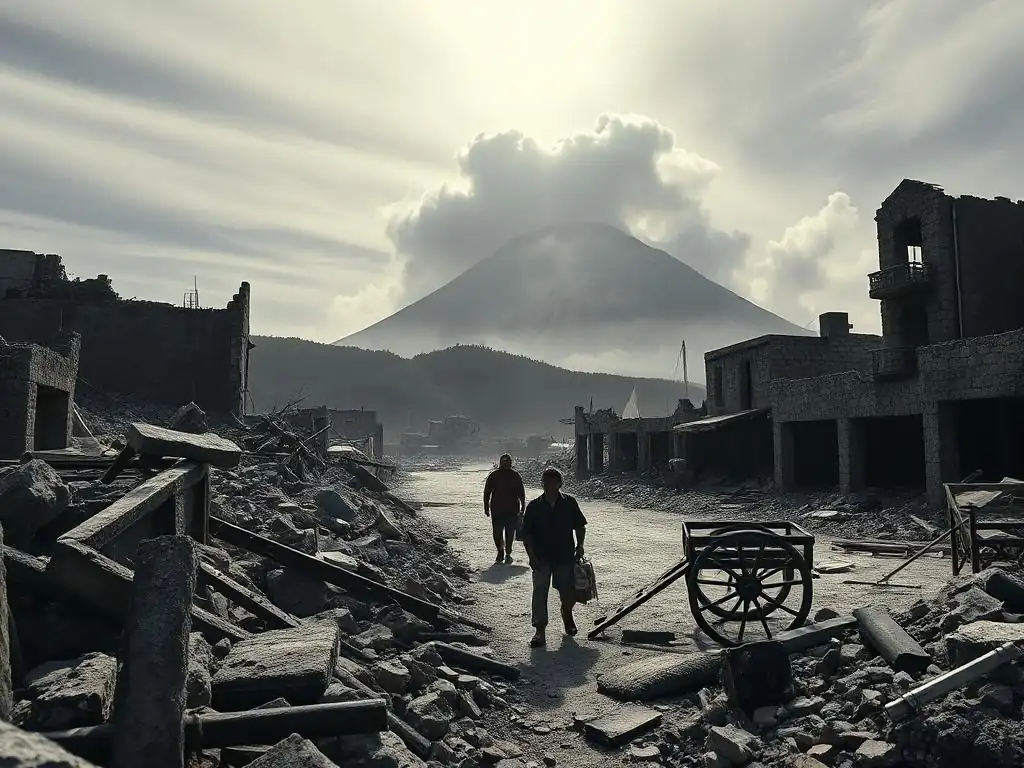
While the immediate and direct economic impact of the Mount Pelée eruption was concentrated in Saint-Pierre, the disaster had significant ripple effects that extended across the entire island of Martinique, causing a widespread economic downturn. Saint-Pierre was not just a city; it was the economic engine of Martinique. Its destruction sent shockwaves through the island's interconnected economy.
The disruption of trade and commerce in Saint-Pierre directly impacted plantations and businesses island-wide that relied on the city as their primary trading hub. The cessation of sugar and rum exports through Saint-Pierre affected Martinique's overall export revenue, leading to a decline in the island's economic output.
Furthermore, the disaster created a general climate of economic uncertainty and fear across Martinique. Businesses hesitated to invest, and consumer spending likely decreased as people grappled with the aftermath of the catastrophe and the uncertain future. The loss of life in Saint-Pierre also impacted the labor force across the island, albeit to a lesser extent than within the city itself.
While the immediate physical destruction was localized, the economic consequences were island-wide, triggering a period of economic hardship and adjustment for Martinique as a whole. The Mount Pelée eruption economic impact was not confined to Saint-Pierre but had a systemic effect on Martinique's broader economy.
Government Response and Relief Efforts: Assessing the Adequacy of Aid
In the immediate aftermath of the Mount Pelée eruption, the French colonial government and various international organizations mobilized to provide relief to Martinique. Aid efforts focused on providing emergency supplies, medical assistance, and temporary shelter to survivors and those displaced by the disaster. Financial aid was also allocated for initial rebuilding efforts. However, assessing the adequacy of the aid provided is complex and depends on perspective. In the context of the time, the response was significant, representing one of the largest international disaster relief efforts of the early 20th century.
However, in retrospect, and compared to modern disaster relief standards, the aid may be viewed as limited in scope and duration, particularly in addressing the long-term economic recovery needs of Saint-Pierre and Martinique. The focus was primarily on immediate humanitarian needs, with less emphasis on comprehensive economic reconstruction plans.
Furthermore, the colonial context may have influenced the nature and extent of aid provided, potentially prioritizing the maintenance of colonial order and economic interests over a truly transformative recovery plan for the affected population. While relief efforts were undoubtedly crucial in the immediate aftermath, questions remain about the adequacy and long-term effectiveness of the aid in facilitating a full economic recovery for Martinique.
The Rise of Tourism Focused on the Volcanic Landscape: A Silver Lining?
In the long term, and somewhat unexpectedly, the volcanic landscape of Mount Pelée and the ruins of Saint-Pierre began to attract a new form of economic activity: tourism. The dramatic and tragic story of the eruption, coupled with the stark beauty of the volcanic landscape and the poignant ruins of the destroyed city, created a unique and compelling tourist attraction.
Visitors became interested in witnessing the power of nature, learning about volcanic processes, and reflecting on the human cost of the disaster. Guided tours of the ruins of Saint-Pierre and excursions to view Mount Pelée became increasingly popular, particularly in later decades.
This nascent tourism industry offered a potential "silver lining" to the economic devastation, providing a new source of revenue and employment for the region. While tourism could never fully replace the economic significance of pre-eruption Saint-Pierre, it offered a pathway for economic diversification and a way to capitalize on the unique historical and geological legacy of the disaster. The rise of tourism focused on the volcanic landscape demonstrates how even catastrophic events can, over time, reshape economic landscapes and create unexpected opportunities for development, albeit often in dramatically altered forms.
Remembering Saint-Pierre: The Economic Legacy of Mount Pelée's Fury
The Ruins as a Reminder: Preserving the Memory of the Disaster
The ruins of Saint-Pierre, deliberately preserved after the eruption, serve as a powerful and enduring reminder of the devastating force of Mount Pelée and the profound economic and human cost of the disaster. These ruins are not merely remnants of destruction; they are tangible historical artifacts that speak volumes about the city's former grandeur and the abruptness of its demise.
The skeletal remains of buildings, the ghostly outlines of streets, and the poignant remnants of daily life all contribute to a somber yet compelling historical site. Preserving these ruins is crucial not only for commemorating the victims and honoring the memory of Saint-Pierre but also for educating future generations about volcanic hazards and the importance of disaster preparedness.
From an economic perspective, the ruins have also become an integral part of Saint-Pierre's identity as a tourist destination. They attract visitors interested in history, volcanology, and disaster studies, contributing to the local economy through tourism revenue.
The ruins, therefore, are not just relics of the past; they are actively woven into the present-day economic fabric of Saint-Pierre, albeit in a profoundly different way than the bustling port city that existed before 1902. Their preservation ensures that the economic legacy of the Mount Pelée eruption is not just a historical account but a living reminder embedded in the landscape itself.
Modern Saint-Pierre: A City Reborn, but Forever Marked by the Past
Modern Saint-Pierre is a city reborn, but it is also a city forever marked by the past. Rebuilt on a smaller scale than its pre-eruption predecessor, it retains a distinct character shaped by the volcanic disaster. While it has regained some economic activity, primarily through tourism and local commerce, it has never reclaimed its former status as the economic capital of Martinique. The city's architecture, while modern, often incorporates elements that acknowledge its history, and the presence of preserved ruins within the urban landscape serves as a constant visual reminder of the 1902 catastrophe.
Economically, modern Saint-Pierre is more reliant on tourism than it was in the past, with the volcanic landscape and the ruins being key attractions. Local businesses cater to the tourist trade, and the city's economy is intertwined with the narrative of the eruption.
While this tourism-based economy provides livelihoods and opportunities, it also represents a significant shift from the diversified, trade-based economy of pre-eruption Saint-Pierre. The city's rebirth is a testament to human resilience, but it is also a poignant example of how a catastrophic event can fundamentally alter a city's economic trajectory and identity, leaving an indelible mark that shapes its present and future.
The Enduring Relevance of the Mount Pelée Eruption Economic Impact Study for Modern Volcanic Risk Management
The study of the Mount Pelée eruption economic impact remains profoundly relevant for modern volcanic risk management and disaster preparedness efforts worldwide. It provides a detailed historical case study of the devastating economic consequences of a major volcanic eruption on a densely populated urban center. The Saint-Pierre example underscores the vulnerability of economies heavily reliant on specific geographical locations or sectors to localized disasters. It highlights the importance of economic diversification, robust infrastructure, and effective disaster preparedness planning to mitigate economic losses from volcanic eruptions and other natural hazards.
Furthermore, the Saint-Pierre case emphasizes the long-term economic and social consequences of volcanic disasters, extending far beyond the immediate destruction. The stunted recovery of Saint-Pierre, the shift in economic power to Fort-de-France, and the lasting impact on Martinique's agricultural sector offer valuable lessons for policymakers and disaster management agencies.
Understanding the Mount Pelée eruption economic impact, therefore, is not just an exercise in historical analysis; it is a crucial input for developing more effective strategies for volcanic risk reduction, economic resilience building, and sustainable development in volcanic regions around the globe, ensuring that the lessons of Saint-Pierre are not forgotten and that similar tragedies are prevented or mitigated in the future.
Conclusion: The Unrecoverable Loss and the Enduring Lessons of Saint-Pierre
The Mount Pelée eruption of 1902 inflicted an unrecoverable economic loss upon Saint-Pierre, transforming a vibrant and prosperous city into a tragic example of volcanic devastation. The annihilation of its population, infrastructure, and economic base crippled Saint-Pierre’s capacity for full recovery, leading to a permanent decline in its regional economic significance and a lasting shift in Martinique's economic landscape. While a new Saint-Pierre emerged, it never regained its former glory, serving as a poignant reminder of the fragility of human endeavors in the face of nature's immense power.
However, from this catastrophe emerge enduring lessons. The Mount Pelée eruption economic impact study underscores the critical importance of heeding scientific warnings, investing in disaster preparedness, diversifying economies, and building resilient communities.
The story of Saint-Pierre is not just a tale of destruction but also a call to action, urging us to learn from the past, to better understand volcanic risks, and to proactively implement measures that can mitigate economic and human losses from future volcanic eruptions. The enduring legacy of Saint-Pierre is a testament to the unrecoverable losses of the past and a vital guide for building a safer and more resilient future in volcanic regions worldwide.
Frequently Asked Questions
What was the primary economic impact of the Mount Pelée eruption on Saint-Pierre?
The primary economic impact was the complete devastation of Saint-Pierre, which served as the commercial capital of Martinique. This led to the collapse of its economy and a shift in economic power to Fort-de-France.
How did the loss of Saint-Pierre as a port affect Martinique's trade?
The destruction of Saint-Pierre's port significantly disrupted trade routes and reduced Martinique's overall trade volume. This resulted in economic hardship for the entire island.
What industries were most severely affected by the Mount Pelée eruption?
The most affected industries included shipping, sugar production, and rum manufacturing. These industries were heavily reliant on Saint-Pierre's infrastructure and workforce, both of which were decimated.
Did the French government provide economic aid to Saint-Pierre after the eruption?
Yes, the French government provided some economic aid in the aftermath, but it was insufficient to restore Saint-Pierre to its former glory. The city never fully recovered economically.
How did the Mount Pelée eruption impact the value of land and property in Saint-Pierre?
The eruption caused a catastrophic decline in land and property values in Saint-Pierre. The city became a ghost town, making it difficult to attract investment and rebuild.
Final Reflection: The Enduring Echoes of Disaster
The story of Saint-Pierre and the eruption of Mount Pelée serves as a stark reminder that nature's power can irrevocably reshape economies and societies. The devastation wrought upon the city, once a thriving hub of commerce, demonstrates the fragility of prosperity in the face of unpredictable natural events, a lesson profoundly relevant in our era of increasing climate instability.
The economic ruin of Saint-Pierre is not just a historical footnote; it's a cautionary tale that continues to influence our understanding of risk management and disaster preparedness. The resilience of communities in the face of such overwhelming loss underscores the importance of proactive planning and international cooperation. The only thing constant is change.
- Heraclitus. This ancient wisdom resonates deeply when considering the ever-present threat of natural disasters and the need for adaptable economic strategies.
Let us remember the lessons of Saint-Pierre not merely as a tragedy, but as an impetus for change. Consider how we can better prepare our own communities for unforeseen challenges, fostering economic resilience and ensuring that the echoes of past disasters serve as a catalyst for a safer, more sustainable future for all.
Alright, here's a Call to Action (CTA) tailored for the end of your article about the economic devastation caused by the eruption of Mount Pelée in Saint-Pierre, designed for Volcano Explorers:
Relive History: Chart a Course for Understanding!
Thank you for delving into the tragic story of Saint-Pierre and the economic ruin brought about by Mount Pelée. Now that you understand the scale of this disaster and its lasting impact, let's turn knowledge into action:
- Dive deeper into the science! Explore geological surveys and historical reports from the period to comprehend the eruption's magnitude and its direct impact on Saint-Pierre’s economic infrastructure.
- Share this poignant story! Help others understand the consequences of volcanic eruptions by sharing this article on social media or discussing it with friends and family.
- Reflect on modern disaster preparedness. Consider: What steps could have mitigated Saint-Pierre’s fate, and how can contemporary societies learn from this historical tragedy?
What other examples of volcanic eruptions that deeply impacted economies have you been investigating? Share your insights in the comments below!