
Little Ice Age Landscapes: Shaped by Ice, Wind, and Volcanic Fury

Welcome to Volcano Explorers!
Prepare to journey back in time, where fire and ice collide. What secrets are etched into the Little Ice Age volcano landscapes? Uncover the dramatic interplay between frigid conditions and volcanic fury, revealing how these forces sculpted the world we see today. Dive in to discover the surprising ways eruptions shaped the land during this pivotal period – and what those landscapes can tell us about our planet's past... and its future.
- Introduction: Unveiling Little Ice Age Landscapes
- The Role of Volcanic Eruptions in Shaping Little Ice Age Landscapes
- Sculpting the Land: Glacial Activity and Volcanic Ash
- Wind's Influence: Aeolian Processes in Volcanic Landscapes
- Case Studies: Little Ice Age Landscapes Shaped by Volcanoes
- The Lasting Impact: Modern Landscapes and Little Ice Age Volcanoes
- Conclusion: The Enduring Legacy of Volcanoes on Little Ice Age Landscapes
-
Frequently Asked Questions
- What role did volcanoes play in shaping Little Ice Age landscapes?
- How did volcanic ash affect the Little Ice Age landscapes?
- What evidence suggests a link between volcanic eruptions and the Little Ice Age?
- Besides ash, what other volcanic outputs impacted Little Ice Age Landscapes?
- How do volcanologists study the impact of volcanoes on Little Ice Age landscapes?
- Final Reflection: Echoes of a Frozen Past
- Ignite Your Inner Geologist: Explore the Echoes of Ice!
Introduction: Unveiling Little Ice Age Landscapes
Setting the Stage: The Little Ice Age Climate
The Little Ice Age (LIA), a period of regional cooling, gripped the world from roughly the 14th to the mid-19th centuries. This era wasn't a true ice age but a significant climatic downturn that brought harsher winters, cooler summers, and glacial expansion across many parts of the globe. Historical records, tree rings, and ice core data reveal a period marked by fluctuating but generally colder temperatures, particularly in the Northern Hemisphere.
For example, studies of tree rings in Europe indicate suppressed growth during several periods within the LIA, correlating with periods of documented colder weather and societal disruption. The Thames River in London, for instance, famously froze over numerous times, events that were rare before or after this period.
The climatic shifts of the Little Ice Age were not uniform across the planet. While Europe and North America experienced significant cooling, other regions saw more variable changes. However, the global impact was substantial, affecting agriculture, ecosystems, and even human societies. Mountainous regions, in particular, felt the LIA's effects acutely, with glaciers advancing to their most extended positions in millennia in many areas. The landscapes of the Little Ice Age were thus molded by a complex interplay of colder temperatures and altered weather patterns, creating a distinct environmental context for geological processes, including volcanic activity.
Volcanoes and the Little Ice Age: A Powerful Connection
While the exact causes of the Little Ice Age are still debated, a growing body of evidence points to a significant role played by explosive volcanic eruptions. These eruptions, capable of injecting massive quantities of sulfur dioxide and volcanic ash high into the stratosphere, had a profound impact on the Earth's climate system.
Unlike greenhouse gases that trap heat, volcanic aerosols, particularly sulfate aerosols formed from sulfur dioxide, reflect incoming solar radiation back into space, leading to a cooling effect on the planet. This mechanism, known as volcanic forcing, is a key factor in understanding the climatic anomalies of the Little Ice Age volcano landscapes.
The connection between volcanic eruptions and the Little Ice Age is not merely correlational; it's supported by both historical records and scientific data. Periods of intense volcanic activity often coincide with particularly cold phases within the LIA. Ice cores from Greenland and Antarctica show spikes in sulfate deposition corresponding to known large eruptions during this period.
Furthermore, climate models incorporating volcanic forcing are better able to simulate the temperature patterns observed during the Little Ice Age than models that do not. This suggests that volcanic eruptions were not just a background influence but a significant driver of the Little Ice Age climate, shaping the very landscapes we associate with this era.
The Role of Volcanic Eruptions in Shaping Little Ice Age Landscapes
Understanding Volcanic Forcing: How Eruptions Impact Climate
Volcanic forcing is the term used to describe the influence of volcanic eruptions on the Earth's energy balance and, consequently, its climate. When a large, explosive volcano erupts, it doesn't just release lava and ash locally. It propels vast quantities of gases, most importantly sulfur dioxide (SO₂), and ash particles into the stratosphere, the layer of the atmosphere above the troposphere. In the stratosphere, sulfur dioxide reacts with water vapor to form sulfate aerosols. These aerosols are very effective at reflecting sunlight back into space, reducing the amount of solar radiation that reaches the Earth's surface.
The lifetime of these stratospheric aerosols is typically one to two years. During this time, they can spread globally, causing a temporary but significant cooling effect. The magnitude of the cooling depends on the size and sulfur content of the eruption.
For instance, the 1815 eruption of Mount Tambora in Indonesia, one of the largest eruptions in recorded history, injected an estimated 50-100 million tons of sulfur dioxide into the stratosphere. This eruption is widely believed to have caused the "Year Without a Summer" in 1816, with widespread crop failures and famine across the Northern Hemisphere, demonstrating the potent climate-altering capacity of volcanic eruptions and their role in shaping Little Ice Age volcano landscapes.
Major Volcanic Eruptions During the Little Ice Age: A Timeline
The Little Ice Age was punctuated by several significant volcanic eruptions that contributed to its overall cooling trend and the formation of distinctive Little Ice Age volcano landscapes. While pinpointing every eruption's precise impact is complex, certain events stand out for their size and documented climatic effects. One of the earliest major eruptions linked to the LIA is the unknown eruption of a volcano, possibly in the tropics, around 1257. Ice core records show a large sulfate spike at this time, suggesting a substantial eruption that could have initiated or exacerbated early LIA cooling.
Moving into the heart of the Little Ice Age, the late 16th and 17th centuries witnessed a cluster of powerful eruptions. The 1600 eruption of Huaynaputina in Peru was particularly significant, leaving a massive caldera and injecting a substantial amount of sulfur into the stratosphere. Historical records from around the world document unusually cold years following this eruption.
Another crucial event was the 1640s eruption of Mount Parker in the Philippines. While less well-known than Tambora, this eruption is estimated to have been comparable in size and likely contributed to cooling during the mid-17th century.
Finally, the 1815 Tambora eruption, while technically at the tail end of the LIA, represents the culmination of volcanic forcing during this period and serves as a stark reminder of the power of volcanoes to reshape climate and landscapes. These eruptions, among others, collectively contributed to the cooler temperatures and altered landscapes characteristic of the Little Ice Age volcano landscapes.
Sculpting the Land: Glacial Activity and Volcanic Ash
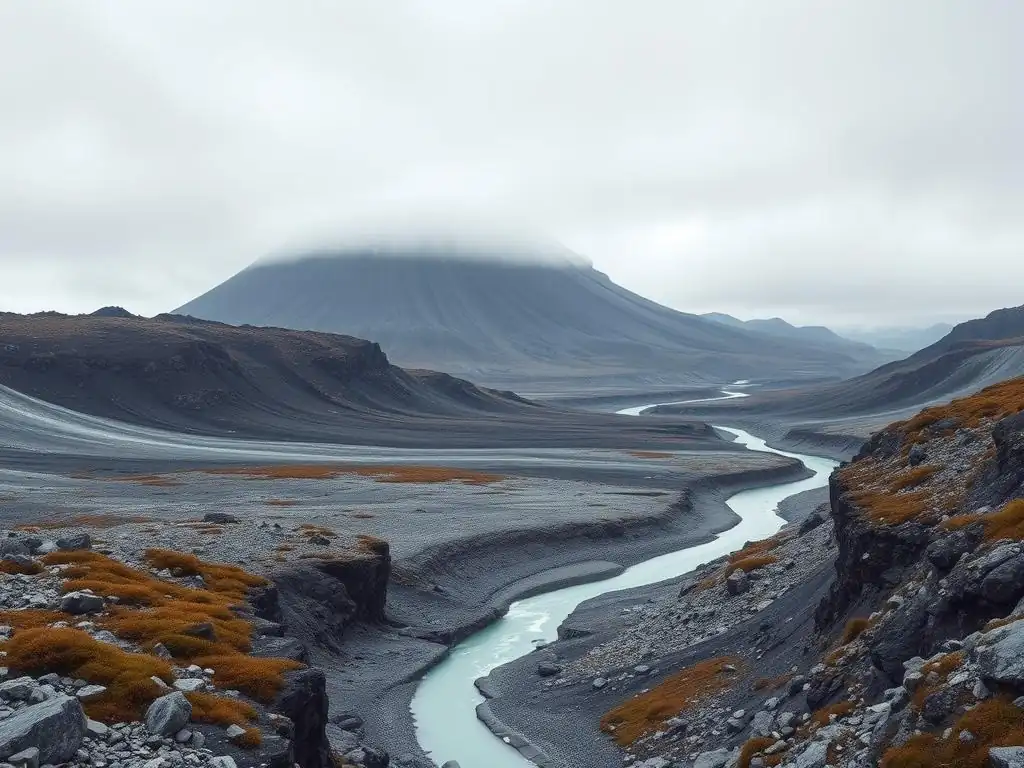
Glacial Expansion and Retreat: Little Ice Age Ice Dynamics
Glaciers are highly sensitive indicators of climate change, and the Little Ice Age is synonymous with glacial expansion in many mountainous regions. During this period, glaciers advanced significantly in the Alps, Scandinavia, Iceland, the Andes, and New Zealand, among other places. In the European Alps, for instance, glaciers reached their maximum Holocene extent, engulfing villages, destroying farmland, and altering river courses. Studies of moraines, the ridges of debris left behind by glaciers, provide physical evidence of this glacial advance during the Little Ice Age.
The colder temperatures driven in part by volcanic forcing played a crucial role in this glacial expansion. Lower temperatures reduced melting in the summer months and increased snowfall in the winter, leading to a positive mass balance for glaciers – more ice accumulating than melting. However, the relationship between volcanic eruptions and glacial dynamics is more complex than just overall cooling.
Volcanic eruptions can also influence glaciers more directly. For example, large ashfalls can darken the surface of glaciers, reducing their albedo (reflectivity) and potentially increasing melting, at least in the short term. Conversely, in the longer term, ash layers can insulate ice and affect meltwater runoff patterns, further contributing to the complex interplay shaping Little Ice Age volcano landscapes.
Tephra Deposition: Volcanic Ash Layers and Their Effects
Tephra is the collective term for all airborne volcanic ejecta, ranging in size from fine ash to large volcanic bombs. During explosive volcanic eruptions, vast quantities of tephra are ejected into the atmosphere and can be transported by wind over considerable distances. When this tephra settles back to Earth, it forms distinct layers in the geological record. These tephra layers, also known as ash layers, are a significant feature of Little Ice Age volcano landscapes, particularly in regions close to active volcanic areas.
Tephra deposition has several significant effects on landscapes and ecosystems. Thick ashfalls can bury vegetation, disrupt drainage patterns, and alter soil properties. The chemical composition of tephra can also influence soil fertility, sometimes initially enriching the soil with nutrients but potentially leading to long-term changes in soil chemistry.
In glaciated regions, tephra layers can be incorporated into glacial ice, creating visible bands within ice cores and glaciers themselves. These tephra layers serve as valuable markers in time, allowing scientists to date ice cores and sediment sequences and reconstruct the history of volcanic eruptions and their impact on Little Ice Age volcano landscapes. For example, Icelandic tephra layers are found throughout Europe, providing crucial time markers in paleoclimate studies.
The Interplay: Glaciers and Volcanoes Shaping Landscapes
The interaction between glaciers and volcanoes is particularly potent in shaping landscapes, and this interplay was especially pronounced during the Little Ice Age. Volcanic eruptions in glaciated regions can trigger dramatic events like jökulhlaups – glacial outburst floods. These occur when volcanic heat melts ice beneath a glacier, causing a sudden and massive release of meltwater.
Jökulhlaups can carve deep canyons, transport enormous volumes of sediment, and dramatically reshape river valleys in a matter of hours or days. Iceland, with its numerous volcanoes beneath ice caps, is a prime example of a landscape heavily sculpted by these glacial outburst floods.
Conversely, glaciers themselves can erode and modify volcanic landforms. Glacial erosion can carve out valleys in volcanic cones, expose underlying volcanic structures, and transport volcanic debris downstream. The combined action of glacial erosion and volcanic eruptions creates unique and dynamic landscapes.
During the Little Ice Age, with increased glacial activity and continued volcanic eruptions, this interplay was intensified, leading to the distinctive features of Little Ice Age volcano landscapes. Regions like Iceland, Kamchatka, and the Andes showcase this dynamic interaction, where volcanic landforms are draped with glaciers, and glacial valleys are punctuated by volcanic features, creating dramatic and often hazardous environments.
Wind's Influence: Aeolian Processes in Volcanic Landscapes
Wind Erosion: Sculpting Volcanic Features
Wind, a ubiquitous force on Earth, plays a significant role in shaping volcanic landscapes, especially in arid and semi-arid regions, and its influence was amplified in the colder, often drier conditions of the Little Ice Age in certain areas. Wind erosion, also known as aeolian erosion, is the process by which wind removes and transports loose surface material. In volcanic landscapes, this material is often composed of volcanic ash, pumice, and other pyroclastic debris.
Wind erosion can sculpt distinctive landforms in volcanic terrains. Yardangs, for example, are streamlined, wind-eroded ridges that are common in volcanic ash deposits. Ventifacts, rocks sculpted by wind abrasion, are another indicator of wind's erosive power.
In areas with significant tephra deposits from Little Ice Age eruptions, wind erosion has played a crucial role in modifying the landscape over centuries. The rate of wind erosion is influenced by factors like wind speed, vegetation cover, and the erodibility of the volcanic material itself. During drier periods within the Little Ice Age, and in regions with sparse vegetation due to cold climates or volcanic disturbances, wind erosion would have been particularly effective in reshaping Little Ice Age volcano landscapes.
Loess Deposits: Evidence of Windblown Volcanic Material
Loess is a fine-grained, windblown sediment, often yellowish in color, that accumulates over vast areas. Significantly, volcanic ash is a major source material for loess deposits in many parts of the world. During and after volcanic eruptions, wind can pick up fine ash particles and transport them hundreds or even thousands of kilometers downwind. When this windblown ash settles out, it can form thick blankets of loess.
Loess deposits are important archives of past environmental conditions and provide valuable evidence of wind's role in shaping Little Ice Age volcano landscapes. The composition of loess can reveal the source volcanoes and the nature of past eruptions.
The thickness and distribution of loess layers can also provide insights into wind patterns and climate conditions during the period of deposition. For example, extensive loess deposits in central Asia and parts of North America contain significant proportions of volcanic ash, indicating the widespread dispersal of volcanic material by wind following major eruptions, potentially during periods coinciding with the Little Ice Age.
Wind's Role in Tephra Distribution: Patagonia
Patagonia, in South America, provides a compelling real-world example of wind's influence on tephra distribution and the formation of Little Ice Age volcano landscapes. The Andes Mountains, which run through Patagonia, are volcanically active, and prevailing westerly winds are a dominant feature of the region's climate. Following volcanic eruptions in the Andes, these strong westerly winds transport vast plumes of volcanic ash eastward across Patagonia.
This wind-driven tephra dispersal has resulted in extensive ash deposits across the Patagonian landscape. These ash layers are clearly visible in soil profiles and geological sections, providing a chronological record of past volcanic activity. The thickness of these ash deposits decreases eastward, reflecting the decreasing concentration of ash with distance from the volcanic source.
The Patagonian example vividly illustrates how wind acts as a powerful agent in distributing volcanic material and shaping landscapes downwind of volcanic arcs. The Little Ice Age, with its potentially altered wind patterns in some regions, may have further influenced the distribution and deposition of tephra in Patagonia and other similar areas, contributing to the specific characteristics of Little Ice Age volcano landscapes.
Case Studies: Little Ice Age Landscapes Shaped by Volcanoes
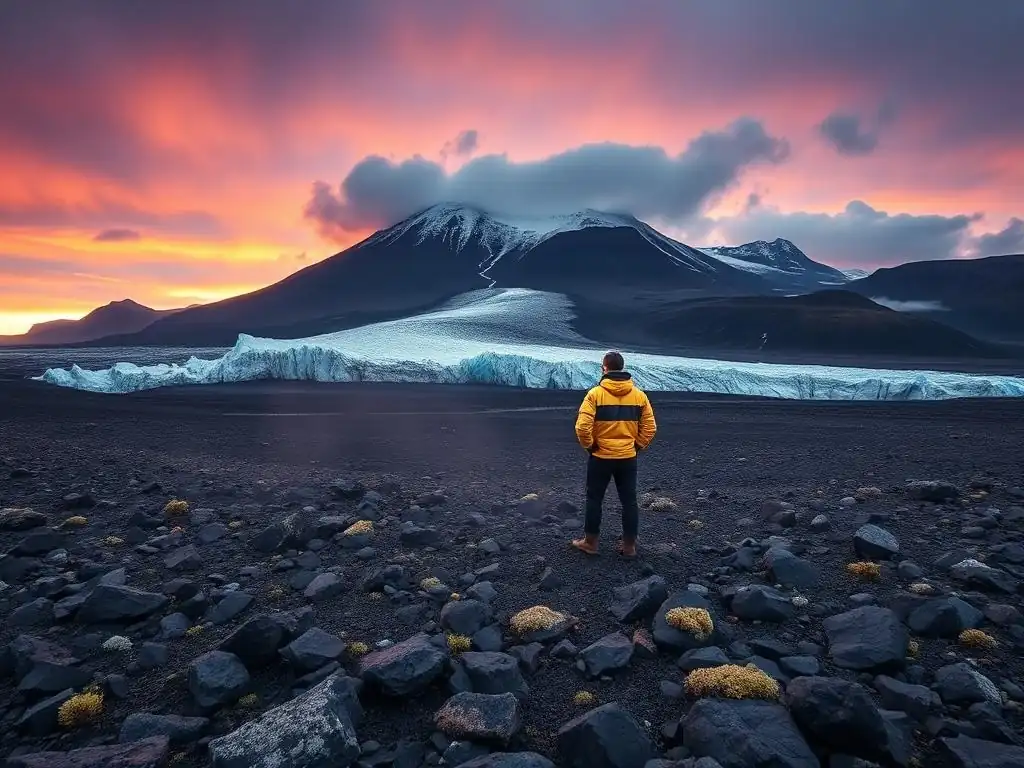
Case Study 1: Iceland - Glacial Outburst Floods and Volcanic Activity
Iceland, the "Land of Fire and Ice," is a quintessential example of a landscape shaped by the interplay of glaciers and volcanoes, especially during the Little Ice Age. The island's location on the Mid-Atlantic Ridge makes it highly volcanically active, with numerous volcanoes located beneath ice caps and glaciers. During the Little Ice Age, Iceland experienced significant cooling and glacial expansion, coupled with frequent volcanic eruptions. This combination led to dramatic landscape-altering events, most notably jökulhlaups, or glacial outburst floods.
The subglacial volcanoes of Iceland, such as Grímsvötn beneath the Vatnajökull ice cap, frequently erupt, melting vast quantities of ice and triggering massive jökulhlaups. These floods can carry enormous volumes of water, ice, and sediment, carving out new river channels, depositing vast outwash plains, and dramatically reshaping the landscape downstream.
For instance, the Skeiðarársandur outwash plain in southern Iceland is one of the largest of its kind in the world, formed by repeated jökulhlaups from Grímsvötn and other subglacial volcanoes. The Little Ice Age, with its enhanced glacial cover and continued volcanic activity, likely saw an increased frequency and intensity of jökulhlaups in Iceland, profoundly shaping its valleys, plains, and coastlines, creating the dramatic Little Ice Age volcano landscapes we see today.
Case Study 2: The Andes - Volcanic Ash and High-Altitude Glaciers
The Andes Mountains, with their extensive high-altitude glaciers and numerous active volcanoes, provide another compelling case study of Little Ice Age volcano landscapes. During the LIA, Andean glaciers expanded significantly, and volcanic eruptions continued to deposit ash across the region. The high altitude and steep slopes of the Andes make them particularly sensitive to both glacial and volcanic processes.
Volcanic ash deposition on Andean glaciers has several important effects. As mentioned before, ash can darken the ice surface, initially increasing melt. However, thick ash layers can also insulate the ice, reducing melt rates over time.
Furthermore, volcanic ash can be incorporated into the ice, forming distinctive dark bands within glaciers, visible in icefalls and glacier snouts. In regions like the Altiplano-Puna plateau, straddling Bolivia, Chile, and Argentina, extensive ash deposits from past eruptions cover vast areas, influencing soil properties, vegetation patterns, and water resources. The combination of glacial processes, volcanic ash deposition, and the harsh high-altitude environment has sculpted unique and fragile Little Ice Age volcano landscapes in the Andes, characterized by ash-covered glaciers, volcanic peaks, and high-altitude wetlands.
Case Study 3: Kamchatka - Pyroclastic Flows and Landscape Evolution
The Kamchatka Peninsula in far eastern Russia is another region where volcanic activity and glacial processes have intensely shaped the landscape, particularly during the Little Ice Age. Kamchatka is home to numerous active volcanoes, many of which are ice-clad or located in areas that were heavily glaciated during the LIA. Pyroclastic flows, fast-moving currents of hot gas and volcanic debris, are a significant volcanic hazard in Kamchatka and have played a major role in landscape evolution.
Pyroclastic flows are generated during explosive volcanic eruptions and can travel down volcanic slopes at high speeds, devastating everything in their path. They deposit a mixture of ash, pumice, and rock fragments, forming characteristic pyroclastic flow deposits. In Kamchatka, these deposits are widespread and often interbedded with glacial sediments, indicating the close interaction between volcanic and glacial processes.
During the Little Ice Age, with both increased glacial extent and continued volcanic eruptions, pyroclastic flows would have repeatedly swept down valleys, burying glacial features, altering drainage patterns, and contributing to the formation of complex and layered Little Ice Age volcano landscapes. The Valley of Geysers in Kamchatka, while not directly formed by pyroclastic flows, exists in a volcanic caldera heavily modified by past eruptions and glacial activity, showcasing the long-term landscape evolution driven by these forces.
The Lasting Impact: Modern Landscapes and Little Ice Age Volcanoes
Legacy Landscapes: Identifying Little Ice Age Features Today
The Little Ice Age may have ended in the mid-19th century, but its imprint on landscapes shaped by volcanoes is still visible today. Identifying these legacy landscapes requires understanding the characteristic features left behind by glacial and volcanic processes during this period. In formerly glaciated regions, moraines marking the maximum extent of LIA glaciers are prominent landscape features. These moraines, often vegetated but still distinct ridges, indicate the former ice margins and can be used to reconstruct past glacial extents.
Volcanic features associated with the LIA, such as tephra layers, pyroclastic flow deposits, and volcanic landforms modified by glacial erosion, are also readily identifiable. Tephra layers, in particular, serve as valuable stratigraphic markers, often visible in soil profiles, riverbanks, and road cuts.
By studying the distribution and characteristics of these features, geologists and geomorphologists can reconstruct the environmental conditions and geological processes that shaped Little Ice Age volcano landscapes. Modern mapping techniques, such as LiDAR (Light Detection and Ranging), are increasingly used to reveal subtle topographic features related to past glacial and volcanic activity, further enhancing our ability to recognize and study these legacy landscapes.
Climate Change and Vulnerability: Future Challenges for Volcanic Landscapes
Climate change is now rapidly altering the landscapes shaped by volcanoes and the Little Ice Age. Glaciers worldwide are retreating at an accelerated rate due to warming temperatures. In volcanic regions, this glacial retreat can increase the risk of volcanic hazards. For example, as glaciers thin and retreat, they can destabilize volcanic slopes, increasing the likelihood of landslides and debris flows. The melting of ice can also reduce the confining pressure on subglacial volcanoes, potentially influencing eruption frequency or style, although this is a complex and still debated topic.
Furthermore, changes in precipitation patterns associated with climate change can affect erosion rates and sediment transport in volcanic landscapes. Increased rainfall intensity in some regions may lead to more frequent and severe flash floods and debris flows, particularly in areas with loose volcanic ash deposits. Conversely, drier conditions in other regions may exacerbate wind erosion and dust storms.
Understanding how climate change interacts with volcanic landscapes is crucial for assessing future hazards and managing risks in these dynamic and often populated areas. The legacy of the Little Ice Age provides valuable insights into how past climate changes have shaped these landscapes, informing our understanding of future vulnerabilities.
Studying Past Eruptions: Lessons for Volcano Hazard Mitigation
The study of Little Ice Age volcano landscapes is not just an academic exercise; it has direct relevance to volcano hazard mitigation today. By understanding the frequency, magnitude, and impacts of past volcanic eruptions, particularly those that occurred during the LIA, we can better assess the potential hazards posed by volcanoes in the future. Tephra layers preserved in LIA landscapes provide a historical record of past eruptions, allowing scientists to estimate eruption recurrence intervals and identify potentially hazardous volcanoes.
Analyzing the deposits from past eruptions, such as pyroclastic flow deposits and lahar deposits, helps to delineate areas at risk from future volcanic events. This information is crucial for land-use planning, infrastructure development, and emergency preparedness in volcanic regions. For instance, understanding the extent of past pyroclastic flows in a particular valley can inform evacuation planning and building codes.
Furthermore, studying the climatic impacts of past large eruptions, like those during the Little Ice Age, can help us better prepare for the potential global effects of future major volcanic events, including disruptions to air travel, agriculture, and global climate patterns. The landscapes of the Little Ice Age, shaped by volcanic fury, offer valuable lessons for living safely with volcanoes in the 21st century.
Conclusion: The Enduring Legacy of Volcanoes on Little Ice Age Landscapes
The landscapes of the Little Ice Age are a testament to the powerful and intertwined forces of ice, wind, and volcanic fury. Volcanic eruptions, by triggering periods of global cooling, played a significant role in driving the glacial expansion that defined much of the Little Ice Age. The interaction between glaciers and volcanoes, particularly in regions like Iceland and the Andes, created dramatic landscapes sculpted by glacial erosion, volcanic deposition, and catastrophic glacial outburst floods. Wind, too, played a crucial role, distributing volcanic ash across vast areas, forming loess deposits, and further modifying volcanic landforms through erosion.
The case studies of Iceland, the Andes, and Kamchatka vividly illustrate the diverse ways in which volcanoes and the Little Ice Age shaped regional landscapes. From the jökulhlaup-carved plains of Iceland to the ash-covered glaciers of the Andes and the pyroclastic flow-dominated valleys of Kamchatka, these regions bear the indelible marks of this period of climatic and volcanic dynamism.
Even today, these Little Ice Age volcano landscapes continue to evolve, now under the influence of rapid climate change. Understanding the legacy of volcanoes during the Little Ice Age is not only crucial for deciphering Earth's past but also for preparing for the challenges and hazards of a future where climate and volcanic activity will continue to shape our planet.
Frequently Asked Questions
What role did volcanoes play in shaping Little Ice Age landscapes?
Volcanic eruptions during the Little Ice Age significantly impacted landscapes through ash deposition and altered weather patterns. These changes influenced glacial growth and overall environmental conditions, shaping the terrain.
How did volcanic ash affect the Little Ice Age landscapes?
The deposition of volcanic ash across landscapes during the Little Ice Age altered soil composition and vegetation. This impacted plant life, animal habitats, and the overall appearance of the affected areas.
What evidence suggests a link between volcanic eruptions and the Little Ice Age?
Scientists have found ice core records showing increased volcanic activity during the Little Ice Age period. This, combined with geological evidence of volcanic deposits, supports a correlation.
Besides ash, what other volcanic outputs impacted Little Ice Age Landscapes?
Beyond ash, eruptions released sulfur dioxide into the atmosphere, which led to global cooling by reflecting sunlight. This cooling further contributed to glacial expansion and altered landscapes.
How do volcanologists study the impact of volcanoes on Little Ice Age landscapes?
Volcanologists analyze geological formations, ice core samples, and historical records to understand volcanic activity. They then use this data to assess the long-term impact on the environment and landscape.
Final Reflection: Echoes of a Frozen Past
The landscapes sculpted during the Little Ice Age, particularly those bearing the scars of volcanic activity, are not merely relics of a bygone era; they are stark reminders of the Earth's dynamic power and our planet's capacity for dramatic climate shifts. Understanding these "Little Ice Age volcano landscapes" is crucial, not just for historical accuracy, but for anticipating and mitigating the impacts of future climate change.
The enduring influence of the Little Ice Age is palpable in the altered ecosystems, glacial formations, and even the cultural narratives of communities that lived through it. The resilience displayed by those who adapted to these harsh conditions serves as a powerful lesson in our current climate crisis. The past is never dead. It's not even past.
- William Faulkner. This quote resonates deeply when considering the Little Ice Age; its effects continue to shape our world, urging us to learn from history's icy grip.
As we stand at a new precipice of environmental change, let us not forget the lessons etched into the "Little Ice Age volcano landscapes." Consider how the forces of nature, both destructive and transformative, have shaped the world around you. What can you learn from the past to build a more sustainable and resilient future? Let the echoes of the Little Ice Age inspire you to act, to protect, and to understand the delicate balance of our planet.
Okay, here's a CTA crafted for the end of a web article titled "Little Ice Age Landscapes: Shaped by Ice, Wind, and Volcanic Fury," intended for the website "Volcano Explorers" (volcanoexplorers.org):
Ignite Your Inner Geologist: Explore the Echoes of Ice!
Thank you for journeying with us through the frozen history etched onto our landscapes. Now that you've uncovered the powerful forces that sculpted these breathtaking vistas, let's translate that knowledge into action!
Here are a few ways you can continue your exploration:
- Boldly seek out your own evidence: Plan a visit to a local geological site or museum to witness firsthand the impact of past climate events. Research sites near you that showcase glacial landforms or volcanic deposits.
- Unleash your creativity: Document the effects of current weather events in your area and compare them to what you've learned about the Little Ice Age. Share your observations using #VolcanoExplorers.
- Join the conversation: Share this article with a friend!
What other unexpected connections can you find between volcanic activity, glacial landscapes, and our planet's ever-shifting climate? Share your thoughts in the comments below!