
Divergent Boundaries: Where Plates Divide and Volcanoes Rise from the Depths

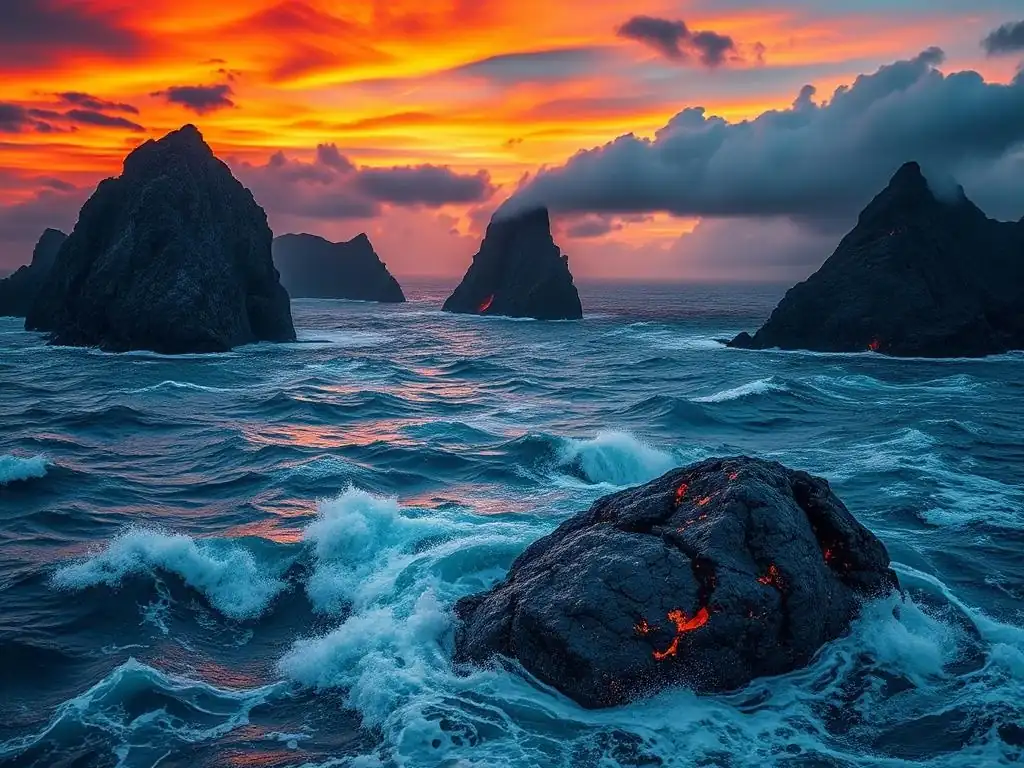
Welcome to Volcano Explorers, where the Earth's fiery heart is laid bare! Prepare to journey into the fascinating world of volcanoes, a realm of raw power and breathtaking beauty. Ever wondered why some volcanoes seem to emerge from nowhere? Our latest exploration unveils the secrets of divergent plate boundaries volcanoes, revealing how these geological battlegrounds give birth to colossal mountains of fire. Dare to delve deeper and uncover the profound connection between these dividing plates and the magnificent volcanic landscapes they create...
- Divergent Boundaries: Where Plates Divide and New Crust Forms
- Understanding Divergent Plate Boundaries and Volcanic Activity
-
Frequently Asked Questions
- How do divergent plate boundaries create volcanoes?
- What types of volcanoes are typically found at divergent plate boundaries?
- Are divergent plate boundaries the only places where volcanoes form?
- What's the connection between divergent plate boundaries and the Mid-Atlantic Ridge?
- What safety measures should people living near divergent boundary volcanoes take?
- Final Reflection: Embracing the Earth's Creative Destruction
- Ignite Your Inner Volcanologist!
Divergent Boundaries: Where Plates Divide and New Crust Forms
Understanding Divergent Plate Boundaries and Volcanic Activity
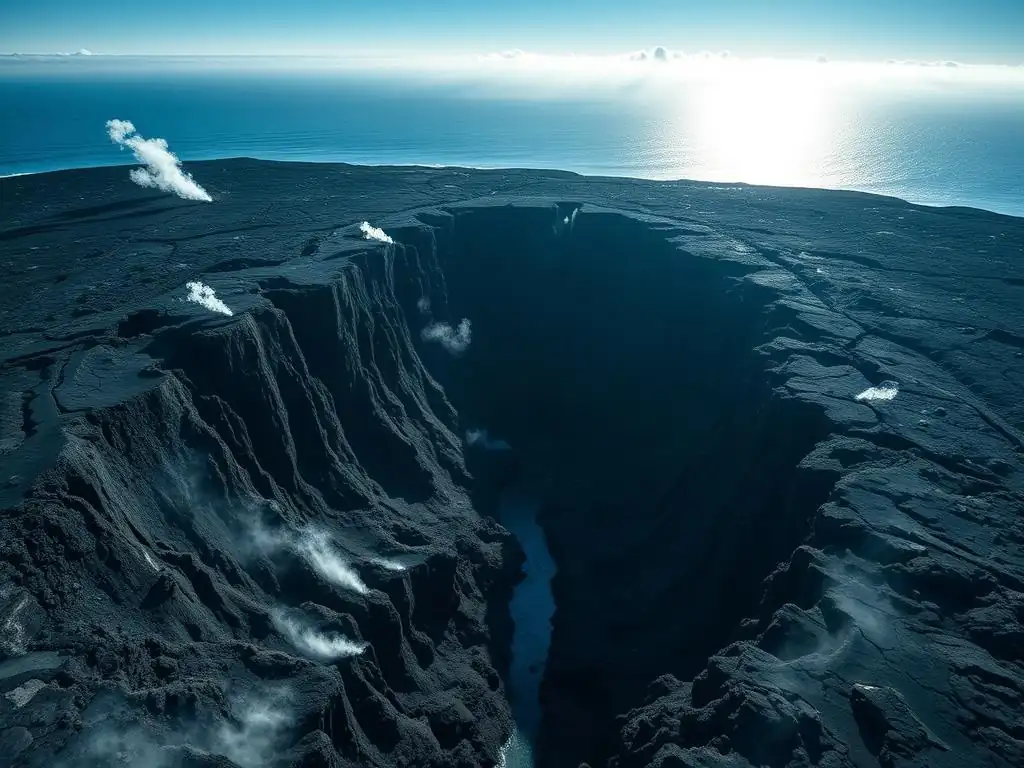
What are Divergent Plate Boundaries? A Geological Overview
Divergent plate boundaries are regions where tectonic plates move apart from each other. This separation occurs due to tensional forces within the Earth's lithosphere, leading to the thinning and fracturing of the crust. Imagine two massive conveyor belts moving in opposite directions; where they separate, a gap is created. In the Earth's context, this gap isn't empty but is filled by upwelling magma from the mantle beneath. This process is fundamental to plate tectonics, the theory that explains the large-scale motion of Earth's lithosphere, and it plays a crucial role in shaping our planet’s surface.
These boundaries are also known as constructive margins because they are zones where new crust is generated. As the plates pull away, molten rock from the asthenosphere rises to the surface, cools, and solidifies, creating new oceanic crust.
This continuous creation of new lithosphere at divergent boundaries is balanced by the destruction of lithosphere at convergent boundaries, where plates collide and one plate subducts beneath another. The geological features associated with divergent boundaries are varied and striking, ranging from rift valleys on continents to vast underwater mountain ranges in the oceans, all testament to the powerful forces of plate tectonics at work.
The Role of Tectonic Plates in Volcanic Formation
Tectonic plates are massive slabs of Earth's lithosphere that float and move on the semi-fluid asthenosphere beneath. Their movement is driven by convection currents in the mantle, a process similar to boiling water, where hotter, less dense material rises, and cooler, denser material sinks. Where these plates diverge, or move apart, the pressure on the underlying mantle decreases. This reduction in pressure, known as decompression, is a critical factor in the formation of magma and subsequent volcanic activity.
When the pressure decreases on the hot mantle rock, its melting point is lowered. This allows the mantle rock to partially melt, even though the temperature remains relatively constant. This process, called decompression melting, generates magma that is less dense than the surrounding solid rock.
The buoyant magma then rises through fractures created by the diverging plates, eventually reaching the surface and erupting as lava, forming volcanoes and new crust. Therefore, the movement of tectonic plates at divergent boundaries is not just about separation; it’s a dynamic process that directly triggers magma generation and volcanism, constantly reshaping the Earth's surface and contributing to its geological dynamism.
Frequently Asked Questions
How do divergent plate boundaries create volcanoes?
Divergent boundaries are where tectonic plates move apart. As the plates separate, magma rises from the Earth's mantle to fill the gap, often resulting in volcanic activity and the formation of new crust.
What types of volcanoes are typically found at divergent plate boundaries?
The volcanoes formed at divergent plate boundaries are usually shield volcanoes. These volcanoes are characterized by their broad, gently sloping shape and are formed by basaltic lava flows.
Are divergent plate boundaries the only places where volcanoes form?
No, volcanoes also form at convergent plate boundaries (where plates collide) and at hotspots (areas of volcanic activity unrelated to plate boundaries). Divergent boundaries are just one specific type of location.
What's the connection between divergent plate boundaries and the Mid-Atlantic Ridge?
The Mid-Atlantic Ridge is a prime example of a divergent plate boundary. It's a massive underwater mountain range where the North American and Eurasian plates are separating, resulting in extensive volcanism.
What safety measures should people living near divergent boundary volcanoes take?
While eruptions at divergent boundaries tend to be less explosive, it's still important to be prepared. Stay informed about volcanic activity updates, understand evacuation routes, and have a disaster preparedness kit ready.
Final Reflection: Embracing the Earth's Creative Destruction
The relentless forces shaping our planet at divergent plate boundaries are not just geological phenomena; they are a powerful metaphor for the constant evolution and renewal that defines life itself. Just as the Earth's crust is torn apart and rebuilt, so too are our own perspectives and understandings challenged and reshaped by new experiences and knowledge. The volcanoes that rise from these depths are a testament to the raw, untamed energy that lies beneath the surface, a reminder that creation often emerges from destruction.
The ongoing impact of understanding divergent plate boundaries extends far beyond the realm of geology. It underscores the interconnectedness of our planet and the delicate balance that sustains life. The Earth does not belong to us: we belong to the Earth.
- Chief Seattle. This profound statement resonates deeply when we consider the powerful forces at play beneath our feet, reminding us of our responsibility to understand and respect the natural world that supports us. The volcanoes, born of this division, are not just destructive forces; they are also the architects of new land, the creators of fertile soil, and the providers of geothermal energy.
As you reflect on the dynamic processes described in this article, consider the "divergent boundaries" in your own life. Where are you being pulled in different directions? What new opportunities might arise from embracing these divisions? Just as the Earth finds strength and renewal in its constant transformation, so too can you find growth and resilience in navigating the challenges and opportunities that lie ahead. Embrace the creative destruction, and allow it to shape you into something new and extraordinary.
Ignite Your Inner Volcanologist!
Thank you for exploring the fascinating world of divergent plate boundaries and the volcanoes they create! We hope you've gained a deeper understanding of the powerful forces shaping our planet. Now, let's put that knowledge to work.
- Dive deeper: Build a model of a divergent boundary using household materials and share your creation with friends and family!
- Explore: Research a specific volcano formed at a divergent boundary, such as those found in Iceland or along the Mid-Atlantic Ridge. Uncover its unique history and geological characteristics.
- Share: Join the conversation in the comments below. What surprised you most about divergent boundaries? What questions remain unanswered?
Which newly formed volcanic island most intrigues you, and why?