
The Krakatoa Enigma: More Than Just a Volcanic Explosion

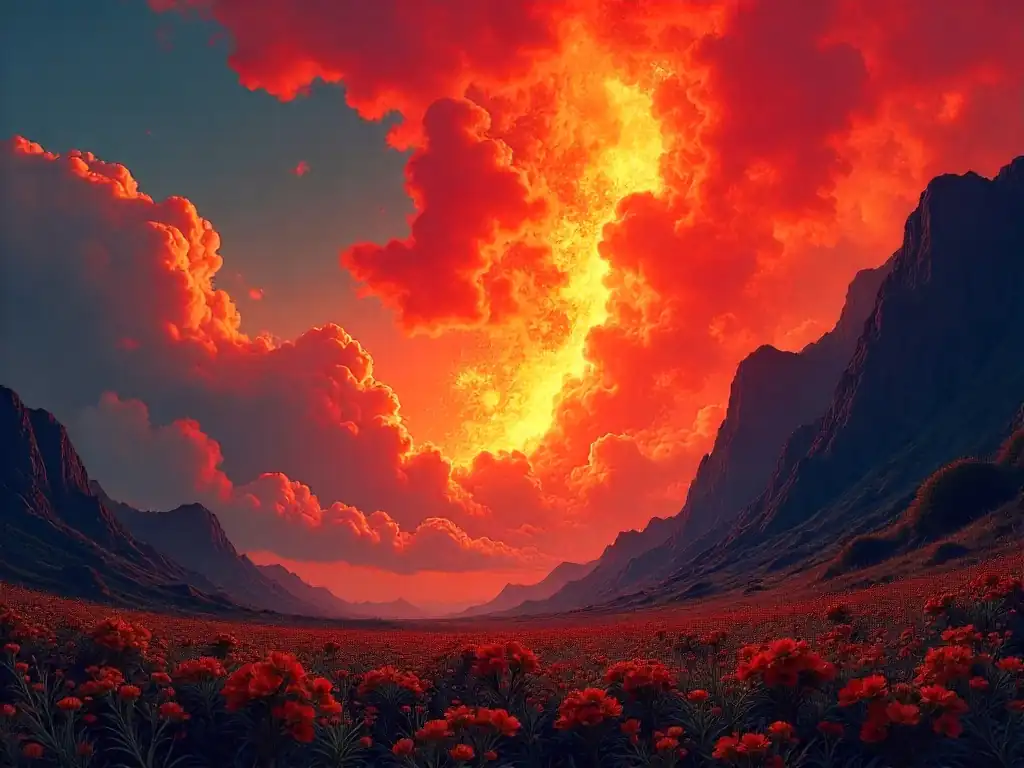
Welcome to Volcano Explorers, where the Earth breathes fire! Are you ready to uncover the secrets hidden beneath the surface? Dive into the Krakatoa Enigma, and discover that the infamous 1883 eruption was more than just a volcanic explosion—it was a cataclysm that reshaped the world, and its echoes still resonate today. Prepare to explore the explosive history that awaits you.
- The Krakatoa Eruption: A Chronicle of Destruction and Rebirth
- Introduction: Unveiling the Power and Legacy of Krakatoa
- Geological Context: Krakatoa's Formation in a Dynamic Region
- The 1883 Eruption: A Moment-by-Moment Reconstruction
- The Widespread Aftermath: Environmental and Societal Consequences
- Legacy and Lessons: Scientific Advancements and Cultural Echoes
- Krakatoa Today: Monitoring a Living Volcano
- Conclusions: The Lasting Significance of the Krakatoa Eruption
-
Frequently Asked Questions
- What made the 1883 Krakatoa eruption so significant?
- Where was Krakatoa located, and what is its current status?
- What were the immediate consequences of the Krakatoa eruption?
- How did the Krakatoa eruption impact the global climate?
- What lessons have volcanologists learned from studying the Krakatoa eruption?
- Final Reflection: Echoes of Krakatoa's Legacy
- Unearth Krakatoa's Secrets: Your Exploration Begins Now!
The Krakatoa Eruption: A Chronicle of Destruction and Rebirth
Introduction: Unveiling the Power and Legacy of Krakatoa
Setting the Stage: The Allure of Volcanic Landscapes and Krakatoa's Infamy
Volcanoes have always held a captivating and terrifying allure for humanity. Their raw power, capable of sculpting landscapes and altering climates, stands as a stark reminder of Earth's dynamic forces. From the fiery glow of molten lava to the towering plumes of ash and gas, these geological giants command respect and ignite our imaginations.
Among the pantheon of volcanic behemoths, Krakatoa occupies a particularly infamous position. Its name resonates with a cataclysmic event, a benchmark of volcanic violence that reshaped our understanding of these natural phenomena. The mere mention of Krakatoa conjures images of unimaginable explosions and a sound that reverberated across the globe, etching itself into the annals of history as one of the most devastating volcanic eruptions ever recorded.
Krakatoa, or Krakatau as it is also known, is more than just a geographical location; it represents a pivotal moment in our planet's recent history. The 1883 eruption transcends the typical narrative of natural disasters; it is a complex story encompassing geological forces, global repercussions, and lasting scientific and cultural impacts.
This event serves as a potent example of the interconnectedness of Earth's systems, demonstrating how a localized volcanic event can trigger worldwide consequences. Exploring the history of the Krakatoa volcanic eruption is not simply recounting a past catastrophe, but understanding the profound and enduring legacy of a natural event that continues to shape our world today.
Beyond the Blast: Understanding the Enduring Significance of the 1883 Eruption
While the sheer explosive force of the 1883 Krakatoa eruption is undeniably staggering, its significance extends far beyond the immediate destruction. The event became a watershed moment for volcanology, providing invaluable data and insights into the mechanics of explosive eruptions. Scientists meticulously studied the eruption's aftermath, analyzing the volcanic deposits, the atmospheric effects, and the generated tsunamis.
This unprecedented event spurred advancements in seismology, atmospheric science, and our understanding of the long-range impacts of volcanic activity. The eruption served as a natural laboratory, allowing researchers to witness and document the Earth's power on a grand scale, prompting new theories and methodologies in the study of volcanoes.
Furthermore, the Krakatoa eruption's impact was not confined to the scientific realm. The global reach of its effects, felt across continents and oceans, highlighted the interconnectedness of the planet. The eruption's sound was heard thousands of kilometers away, atmospheric disturbances circled the globe for days, and the resulting tsunamis caused devastation across the Indian Ocean.
The event dramatically illustrated how natural disasters could transcend regional boundaries and have truly global consequences. Beyond the immediate physical destruction and loss of life, the Krakatoa eruption also left an indelible mark on human culture, inspiring literature, art, and shaping our collective perception of natural disasters and the awesome power of volcanoes. The Krakatoa volcanic eruption history is therefore not just a tale of destruction, but a story of scientific awakening, global interconnectedness, and enduring cultural impact.
Geological Context: Krakatoa's Formation in a Dynamic Region
The Sunda Strait: A Crucible of Tectonic Activity
The story of Krakatoa is deeply intertwined with its geographical setting within the Sunda Strait, a narrow waterway separating the islands of Java and Sumatra in Indonesia. This region is a veritable crucible of tectonic activity, situated at the convergence of the Indo-Australian and Eurasian tectonic plates. The Indo-Australian plate is subducting beneath the Eurasian plate, a process that drives intense geological phenomena, including frequent earthquakes, volcanic eruptions, and the formation of island arcs.
The Sunda Strait lies directly within the Sunda Arc, a volcanic arc renowned for its high density of active volcanoes. This subduction zone provides the fundamental geological framework for the existence of Krakatoa and the explosive nature of its eruptions.
The immense pressure and heat generated by the subducting plate melt the overlying mantle rock, creating magma that is rich in volatiles like water and gases. This volatile-rich magma is buoyant and rises towards the surface, accumulating in magma chambers beneath volcanoes. The Sunda Strait's location within this highly active tectonic setting means that volcanoes in this region, including Krakatoa, are inherently prone to explosive eruptions.
The interaction of seawater with magma also plays a crucial role, as it can lead to phreatomagmatic eruptions, which are characterized by their highly explosive nature due to the rapid vaporization of water into steam within the volcanic conduit. Understanding the Sunda Strait's tectonic context is essential to grasp the underlying reasons for Krakatoa's explosive potential and its dramatic volcanic history.
Krakatoa's Ancestry: Tracing the Volcanic Evolution Before 1883
Long before the cataclysmic events of 1883, Krakatoa was already a known volcanic island, part of a larger volcanic complex. Geological evidence suggests that the Krakatoa archipelago had experienced volcanic activity for hundreds of thousands of years. Prior to 1883, the Krakatoa island group consisted of three main islands: Lang (Long Island), Verlaten (Deserted Island), and Krakatoa Island itself, which was the southernmost and largest.
These islands were remnants of previous volcanic edifices, suggesting a long and complex history of volcanic construction and destruction in the area. While detailed records of earlier eruptions are sparse, historical accounts and geological studies indicate that Krakatoa had experienced smaller eruptions in the centuries leading up to 1883.
For instance, accounts from 1680 mention a possible eruption of Krakatoa, although the details are somewhat ambiguous. However, geological surveys have revealed evidence of older caldera formations and pyroclastic deposits surrounding the Krakatoa islands, confirming a history of significant eruptions predating the 19th century.
These earlier eruptions likely played a role in shaping the topography of the Krakatoa islands and contributed to the accumulation of volatile-rich magma beneath the surface, setting the stage for the massive eruption of 1883. Therefore, the 1883 Krakatoa eruption was not an isolated event, but rather the culmination of a long and dynamic volcanic history within the Sunda Strait, building upon centuries of geological processes and previous eruptions.
The 1883 Eruption: A Moment-by-Moment Reconstruction
Precursors of Disaster: Escalating Activity Leading to the Cataclysm
The year 1883 began with subtle signs of unrest at Krakatoa, hinting at the impending catastrophe. In May, after a period of dormancy, reports emerged of increased seismic activity and venting of steam and ash from the volcano. These initial phases of activity were relatively minor and did not immediately raise widespread alarm.
However, as the months progressed, the volcanic activity gradually intensified. Plumes of ash and steam became more frequent and substantial, and rumbling sounds were heard in nearby settlements. These precursors served as warnings, though perhaps not fully understood or heeded at the time, of the escalating pressure building beneath Krakatoa.
By August, the signs of an imminent major eruption were becoming increasingly pronounced. Ships passing through the Sunda Strait reported seeing significant plumes of ash rising high above Krakatoa. The intensity of the explosions increased, and incandescent ejecta was observed being thrown from the volcanic vents.
These escalating events were clear indicators of the growing instability within the volcanic system. Local inhabitants and those observing from passing vessels were witnessing a volcano awakening from a period of quiescence, transitioning into a phase of intense unrest that would ultimately culminate in one of the most powerful volcanic explosions in recorded history. These precursors, though initially subtle, provided a clear timeline of escalating volcanic activity leading directly to the cataclysmic eruption.
The Explosive Climax: The Sequence of Events on August 26-27
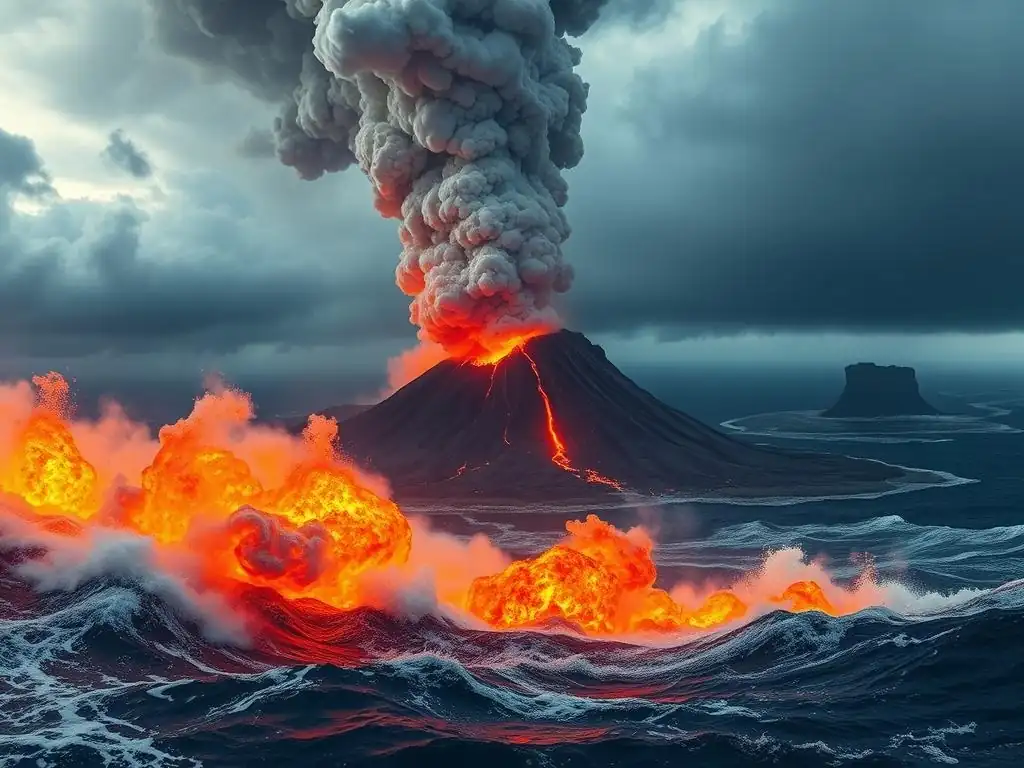
The climax of the Krakatoa eruption unfolded over two days, August 26th and 27th, 1883, marking a period of unparalleled volcanic violence. On August 26th, a series of increasingly powerful explosions began to rock Krakatoa. These explosions sent towering plumes of ash and pumice high into the atmosphere, reaching estimated heights of up to 27 kilometers (17 miles). Pyroclastic flows, searing hot mixtures of gas and volcanic debris, cascaded down the flanks of the volcano into the sea. Despite the ferocity of these events, the most devastating phase was yet to come.
The cataclysmic eruption occurred on the morning of August 27th. At 10:02 AM local time, the most powerful explosion in the sequence ripped through Krakatoa. This single event was estimated to have released energy equivalent to approximately 200 megatons of TNT, thousands of times more powerful than the atomic bomb dropped on Hiroshima.
The eruption obliterated much of Krakatoa island, triggering massive tsunamis and sending ash clouds soaring to an astonishing height of 80 kilometers (50 miles) into the stratosphere. This explosive climax marked the peak of the Krakatoa volcanic eruption history, leaving an indelible scar on the landscape and inflicting devastation across a vast region. The sheer scale and intensity of this event solidified Krakatoa's place as a benchmark of volcanic power and destruction.
The Audible Catastrophe: The Global Reach of the Eruption's Soundwave
Perhaps one of the most extraordinary and globally significant aspects of the 1883 Krakatoa eruption was the unprecedented reach of its soundwave. The cataclysmic explosion at 10:02 AM on August 27th generated a pressure wave so immense that it propagated outwards in all directions, circling the globe multiple times. This acoustic phenomenon, often described as the loudest sound in recorded history, was heard thousands of kilometers away, demonstrating the truly global scale of the eruption's impact.
Reports of the sound being heard were documented across vast distances. In Rodrigues Island, located approximately 4,800 kilometers (3,000 miles) west of Krakatoa in the Indian Ocean, the sound was described as resembling distant cannon fire. Even further away, in Perth, Australia, over 3,100 kilometers (1,900 miles) to the east, and on the island of Diego Garcia, over 3,200 kilometers (2,000 miles) to the west-southwest, people reported hearing loud booms.
The pressure wave was detected by barographs around the world, instruments designed to measure atmospheric pressure. These instruments recorded the wave circling the Earth multiple times over several days. This global propagation of the eruption's soundwave is a testament to the sheer magnitude of the Krakatoa explosion and remains a unique and awe-inspiring feature of the Krakatoa volcanic eruption history.
The Widespread Aftermath: Environmental and Societal Consequences
Tsunamis Unleashed: The Devastation of Coastal Communities
The most immediate and devastating consequence of the Krakatoa eruption was the generation of massive tsunamis that radiated outwards from the volcano, impacting coastal communities across the Sunda Strait and beyond. The colossal explosions and the caldera collapse that followed displaced an enormous volume of seawater, triggering a series of waves that reached catastrophic heights. These tsunamis were responsible for the vast majority of the fatalities associated with the 1883 eruption.
Coastal areas of Java and Sumatra, particularly those closest to Krakatoa, bore the brunt of the tsunami's destructive power. Waves estimated to be as high as 40 meters (130 feet) slammed into the coastlines, obliterating entire villages and towns. The force of the water surge swept away buildings, infrastructure, and vegetation, leaving behind a landscape of devastation.
Even locations further afield, across the Indian Ocean, experienced the effects of the tsunamis, though with reduced intensity. The tsunamis generated by the Krakatoa eruption stand as a stark reminder of the secondary hazards associated with explosive volcanic eruptions and the devastating impact they can have on coastal populations. The scale of destruction caused by these tsunamis underscores a critical aspect of the Krakatoa volcanic eruption history: its capacity to generate far-reaching and deadly secondary effects.
Atmospheric Perturbations: Ash Clouds, Global Temperature Changes, and Optical Phenomena
Beyond the immediate devastation, the Krakatoa eruption unleashed a cascade of atmospheric effects that were felt globally for years afterward. The enormous volume of volcanic ash, dust, and sulfur dioxide gas injected into the stratosphere had profound consequences for the Earth's atmosphere and climate. The ash clouds, reaching altitudes of up to 80 kilometers, circled the globe, reducing sunlight and causing a measurable drop in global average temperatures.
Global temperatures are estimated to have decreased by as much as 1.2 degrees Celsius (2.2 degrees Fahrenheit) in the year following the eruption. This cooling effect, though temporary, was significant and detectable worldwide. Furthermore, the sulfur dioxide gas reacted with water vapor in the stratosphere to form sulfate aerosols, which scattered sunlight and created spectacular optical phenomena.
Sunsets and sunrises around the world were unusually vibrant and colorful for months after the eruption, often described as intensely red and orange hues. These vivid sunsets became known as "Krakatoa sunsets" and were widely reported and depicted in paintings and literature of the time. These atmospheric perturbations, ranging from temperature drops to stunning sunsets, highlight the global environmental footprint of the Krakatoa volcanic eruption history.
The Human Cost: Quantifying the Loss of Life and Long-Term Societal Impacts
The 1883 Krakatoa eruption resulted in a staggering loss of human life and profound long-term societal impacts. While precise figures remain debated, the most widely accepted estimate places the death toll at around 36,000 people. The vast majority of these fatalities were attributed to the tsunamis that inundated coastal areas of Java and Sumatra. Entire communities were wiped out, and the social and economic fabric of the region was shattered.
Beyond the immediate loss of life, the eruption had long-lasting consequences for the affected populations. Survivors faced displacement, loss of livelihoods, and psychological trauma. The devastation of agricultural lands and fishing grounds led to food shortages and economic hardship.
Reconstruction efforts were slow and challenging, and the region took many years to recover from the disaster. The Krakatoa eruption also prompted advancements in disaster preparedness and early warning systems in the region, although these were still in their nascent stages at the time. The human cost of the Krakatoa volcanic eruption history is a sobering reminder of the vulnerability of human societies to natural disasters and the long-term consequences that extend far beyond the immediate event.
Legacy and Lessons: Scientific Advancements and Cultural Echoes
Volcanological Insights: Advancing Our Understanding of Explosive Eruptions
The 1883 Krakatoa eruption served as a pivotal moment in the development of volcanology, providing unprecedented insights into the dynamics of explosive volcanic eruptions. The sheer scale and global reach of the event allowed scientists to study phenomena that had previously been largely theoretical or poorly understood. The eruption spurred advancements in various fields, including seismology, atmospheric science, and tsunami research.
The detailed observations and data collected after the eruption helped refine models of caldera formation, pyroclastic flow generation, and the propagation of volcanic soundwaves. Scientists analyzed the composition of volcanic ash and gases, gaining a better understanding of the magma processes driving explosive eruptions. The study of the Krakatoa tsunamis contributed significantly to the development of tsunami early warning systems in subsequent years.
The Krakatoa eruption became a benchmark event against which future volcanic eruptions were compared, and its study continues to inform volcanological research to this day. The scientific legacy of the Krakatoa volcanic eruption history is profound, marking a significant leap forward in our understanding of Earth's most powerful geological processes.
The Emergence of Anak Krakatau: The Rebirth of a Volcanic Island
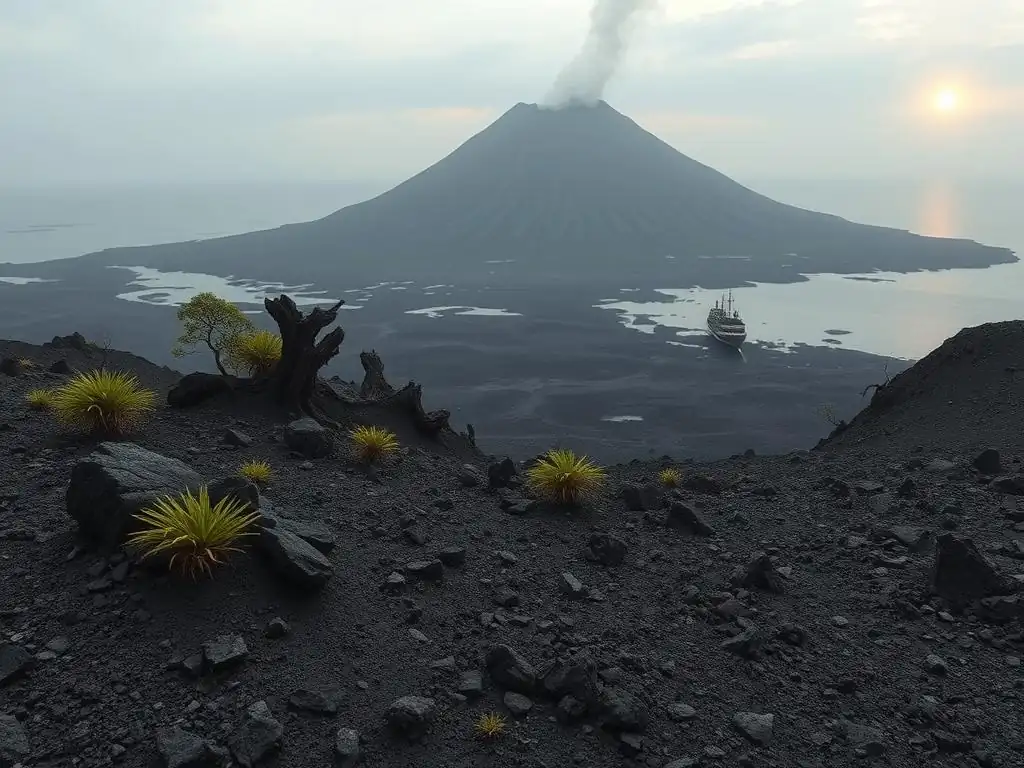
Remarkably, from the ashes of destruction, life and land began to reclaim the area where Krakatoa once stood. Decades after the cataclysmic 1883 eruption, new volcanic activity emerged in the Krakatoa caldera. In 1927, a new volcanic island breached the surface of the sea, marking the beginning of Anak Krakatau, meaning "Child of Krakatoa." This new volcano represents a dramatic example of volcanic rebirth and the ongoing dynamic nature of volcanic landscapes.
Anak Krakatau has grown steadily since its emergence, fueled by ongoing eruptions of lava and ash. It has provided volcanologists with a unique opportunity to study the formation and evolution of a volcanic island in real-time. The island has become a living laboratory, allowing scientists to monitor volcanic processes, ecological succession, and the interaction between volcanism and the environment.
Anak Krakatau serves as a potent symbol of nature's resilience and the cyclical processes of destruction and creation that characterize volcanic regions. The story of Anak Krakatau is an integral part of the Krakatoa volcanic eruption history, demonstrating that even from catastrophic destruction, new beginnings can emerge.
Krakatoa's Enduring Presence: Its Depiction in Literature and Art
The Krakatoa eruption transcended the realms of science and geology, embedding itself deeply into popular culture and inspiring artistic expression across various mediums. The dramatic nature of the event, its global reach, and the stunning atmospheric phenomena it produced captured the imaginations of writers, artists, and musicians for generations to come.
Literature, in particular, has been significantly influenced by the Krakatoa eruption. Simon Winchester's book "Krakatoa: The Day the World Exploded" is a prominent example, providing a comprehensive account of the eruption and its global impacts. Numerous fictional works, poems, and songs have also drawn inspiration from the event, often using Krakatoa as a metaphor for natural power, destruction, or societal upheaval.
Visual artists, captivated by the "Krakatoa sunsets," captured the vibrant colors and atmospheric effects in paintings and illustrations. The eruption's story has also been adapted into films and documentaries, further cementing its place in popular consciousness. Krakatoa's enduring presence in literature and art underscores its profound and lasting impact on human culture, ensuring that the Krakatoa volcanic eruption history continues to resonate far beyond its immediate geological context.
Krakatoa Today: Monitoring a Living Volcano
Anak Krakatau's Current Activity: Recent Eruptions and Scientific Monitoring
Anak Krakatau remains an active and closely monitored volcano, a testament to the ongoing volcanic processes in the Sunda Strait. Since its emergence in the 20th century, Anak Krakatau has experienced frequent eruptions, ranging from Strombolian activity to more explosive events. In recent years, Anak Krakatau has shown periods of heightened activity, reminding us of its inherent dynamism and potential for further eruptions.
A significant eruption occurred in December 2018, which triggered a flank collapse and generated a localized tsunami that impacted coastlines around the Sunda Strait. This event, though smaller in scale than the 1883 eruption, served as a reminder of the ongoing hazards associated with Anak Krakatau and the region. Volcanologists continuously monitor Anak Krakatau using a variety of techniques, including seismic monitoring, gas measurements, and satellite observations.
This constant surveillance is crucial for detecting changes in volcanic activity and providing early warnings to nearby populations. The ongoing activity of Anak Krakatau ensures that the Krakatoa volcanic eruption history remains a living and evolving narrative.
Visiting Anak Krakatau: Opportunities and Risks of Volcanic Tourism
The dramatic history and ongoing volcanic activity of Anak Krakatau have made it a destination of interest for adventurous travelers and volcano enthusiasts. Volcanic tourism to Anak Krakatau offers a unique opportunity to witness a young, actively growing volcanic island and experience the raw power of nature firsthand. Boat tours and guided excursions are available, allowing visitors to approach the island and observe its volcanic features, such as lava flows, ash plumes, and volcanic cones.
However, volcanic tourism to Anak Krakatau is not without risks. The volcano is active and unpredictable, and eruptions can occur with little warning. Visitors must be aware of the potential hazards, including volcanic gases, ashfall, and the possibility of explosions or tsunamis.
Tour operators and authorities closely monitor volcanic activity and may restrict access to the island depending on the level of risk. Despite the risks, the allure of witnessing an active volcano and experiencing the legacy of Krakatoa continues to draw visitors to Anak Krakatau, making it a compelling, albeit potentially hazardous, destination within the Krakatoa volcanic eruption history.
Conclusions: The Lasting Significance of the Krakatoa Eruption
Krakatoa: A Reminder of Earth's Power and Fragility
The Krakatoa eruption of 1883 stands as a monumental event in Earth's history, a stark and unforgettable reminder of the planet's immense power and the fragility of human existence in the face of such forces. It was an eruption that reshaped landscapes, altered climates, and resonated across the globe, leaving an indelible mark on both the natural world and human society.
The sheer scale of the destruction, the global reach of its effects, and the enduring legacy of the event solidify Krakatoa's place as a benchmark of volcanic catastrophe and a powerful symbol of nature's capacity for both creation and destruction.
The Krakatoa volcanic eruption history serves as a crucial lesson in humility, reminding us of the dynamic and sometimes violent nature of our planet. It underscores the importance of understanding and respecting geological processes, particularly in volcanic regions. The event also highlights the interconnectedness of Earth's systems, demonstrating how a localized volcanic event can trigger global consequences, from atmospheric changes to tsunamis that traverse oceans. In an era of increasing awareness of natural hazards and global environmental change, the lessons of Krakatoa remain as relevant and important as ever.
Future Research: Unanswered Questions and Ongoing Investigations
Despite the extensive research conducted on the Krakatoa eruption, unanswered questions and avenues for future investigation remain. Scientists continue to study the volcanic deposits, atmospheric data, and historical records to refine our understanding of the eruption's mechanics and long-term impacts. Ongoing research focuses on aspects such as the precise sequence of events during the caldera collapse, the dynamics of tsunami generation and propagation, and the long-term effects of volcanic aerosols on climate.
Furthermore, the emergence and ongoing activity of Anak Krakatau provide a living laboratory for studying volcanic island formation and evolution. Scientists are actively monitoring Anak Krakatau to understand its magma system, eruption patterns, and potential for future large-scale eruptions. Continued research on Krakatoa and Anak Krakatau is crucial for improving our ability to forecast volcanic eruptions, mitigate volcanic hazards, and better understand the complex interplay between volcanism and the Earth's environment. The Krakatoa volcanic eruption history is not a closed chapter but an ongoing area of scientific inquiry, promising further insights into the powerful and enigmatic world of volcanoes.
Frequently Asked Questions
What made the 1883 Krakatoa eruption so significant?
The 1883 Krakatoa eruption was significant due to its massive explosive force, the widespread tsunami it generated, and the global climatic effects that followed. It impacted weather patterns across the globe.
Where was Krakatoa located, and what is its current status?
Krakatoa was located in the Sunda Strait between Java and Sumatra in Indonesia. Today, Anak Krakatau ("Child of Krakatoa") is a new volcanic island that has emerged from the caldera.
What were the immediate consequences of the Krakatoa eruption?
The immediate consequences included devastating tsunamis, which caused widespread destruction and loss of life along the coasts of Java and Sumatra. There was also significant ashfall and pyroclastic flows.
How did the Krakatoa eruption impact the global climate?
The eruption injected massive amounts of ash and sulfur dioxide into the stratosphere, leading to a temporary decrease in global temperatures and vibrant sunsets around the world for several years.
What lessons have volcanologists learned from studying the Krakatoa eruption?
Studying Krakatoa has provided insights into volcanic explosivity, tsunami generation, and the global impacts of large volcanic eruptions. It informs hazard assessments and monitoring efforts worldwide.
Final Reflection: Echoes of Krakatoa's Legacy
The story of Krakatoa, as we've explored, is far more than just a recounting of a catastrophic volcanic eruption. It's a testament to the raw power of nature and its enduring impact on our world. The reverberations of the 1883 eruption continue to shape our understanding of volcanology, climate science, and even the resilience of life itself. Krakatoa serves as a stark reminder of the forces that lie beneath our feet, forces that demand our respect and continued study.
The eruption's influence extends beyond the scientific realm, deeply impacting the cultural and social landscape of the region and beyond. The tales and legends that arose from the ashes of Krakatoa speak to the human capacity for both fear and adaptation in the face of unimaginable devastation. The only constant is change,
Heraclitus famously said. Krakatoa embodies this truth, forcing us to confront the impermanence of our world and the importance of preparedness.
As we conclude this exploration of Krakatoa's volcanic eruption history, I invite you to consider its profound lessons. How can we, as individuals and as a society, learn from the past to better prepare for the future? Let Krakatoa's story not only be a historical account, but a catalyst for reflection, inspiring us to embrace scientific understanding, foster community resilience, and appreciate the delicate balance of our planet.
Unearth Krakatoa's Secrets: Your Exploration Begins Now!
Thank you for exploring the captivating story of Krakatoa! We hope you've gained a deeper understanding of nature's power and the enduring impact of this iconic eruption. Now, continue your journey of discovery.
Here's how to delve further:
- Delve into Krakatoa's geological impact: Research Anak Krakatau's formation and current activity using scientific resources and online databases.
- Share your insights! Post on social media about your favorite Krakatoa fact and tag Volcano Explorers. Let's spread the word!
- Embark on a virtual expedition! Explore interactive maps and simulations showcasing Krakatoa's eruption and its environmental effects.
What lesser-known aspect of Krakatoa's history most intrigues you, and what questions remain about its global influence? Share your thoughts in the comments below!