
From Fire to Famine: Tracing the Deadly Chain of Volcanic Events


Welcome to Volcano Explorers!
Prepare to be captivated by the raw power and devastating beauty of volcanoes. Ever wondered how a single volcanic eruption can trigger a cascade of global consequences, impacting everything from the climate to the very food on our tables? Unravel the mysteries behind these catastrophic events as we delve into the deadly chain reactions that follow, starting with a look at the historical eruptions that have shaped our world. What secrets lie buried beneath the ash? Keep reading to discover more...
- Introduction: The Devastating Link Between Volcanic Eruptions and Famine
- Part 1: The Immediate Impacts of Volcanic Eruptions on Agriculture
- Part 2: The Climate Connection: Volcanic Aerosols and Global Cooling
- Part 3: Case Studies: Historical Volcanic Eruptions and Resulting Famines
- Part 4: The Long-Term Consequences: Soil Degradation and Economic Instability
- Part 5: Modern Challenges: Vulnerability to Volcanic Eruptions and Food Security in the 21st Century
- Part 6: Mitigation and Prevention: Strategies for Reducing the Impact of Volcanic Eruptions on Food Supplies
- Conclusion: Breaking the Chain: Building Resilience Against Volcanic Hazards and Food Insecurity
-
Frequently Asked Questions
- What are the primary causes of volcanic eruptions?
- How do volcanic eruptions impact global climate?
- What are some of the most significant hazards associated with volcanic eruptions?
- How do volcanologists monitor and predict volcanic eruptions?
- What are some long-term impacts of volcanic eruptions on ecosystems and human societies?
- Final Reflection: Echoes of Ash, Seeds of Resilience
- Unearth the Secrets: Become a Volcano Explorer!
Introduction: The Devastating Link Between Volcanic Eruptions and Famine
Understanding the Far-Reaching Consequences of Volcanic Activity
Volcanic eruptions are often perceived as localized disasters, primarily causing destruction in their immediate vicinity through lava flows, pyroclastic flows, and ashfall. However, the impacts of significant volcanic events extend far beyond the directly affected areas. The release of massive quantities of volcanic gases and ash into the atmosphere can trigger a cascade of environmental changes, profoundly impacting global climate patterns and, consequently, food production on a vast scale. These broader, often overlooked, consequences can lead to widespread famine, demonstrating a deadly chain reaction initiated by volcanic activity.
The interconnectedness of Earth's systems means that a major volcanic eruption is not merely a geological event but a potential catalyst for ecological and societal crises. Historical records and scientific studies reveal a recurring pattern: large eruptions are followed by periods of climate anomalies, agricultural failures, and subsequent famines.
Understanding this chain of events is crucial not only for comprehending past societal collapses and migrations but also for building resilience against future volcanic hazards in an increasingly interconnected and populous world. The implications of volcanic eruptions and their impacts on food security are therefore a critical area of study and preparedness.
Why Focus on Volcanic Eruptions and Their Impacts on Food Security?
Focusing on the relationship between volcanic eruptions and food security is paramount because it highlights a critical vulnerability of human societies to natural disasters. While immediate volcanic hazards like lava flows and ashfalls are geographically constrained, the climatic repercussions of large eruptions can affect global food supplies, impacting populations far removed from the volcanic source. In a world increasingly reliant on globalized food systems, a disruption in agricultural production in key regions due to volcanic activity can have cascading effects worldwide, potentially triggering widespread food shortages and price spikes.
Moreover, studying the historical links between volcanic eruptions and famines provides valuable lessons for disaster preparedness and mitigation. By analyzing past events such as the Tambora eruption of 1815 or the Laki eruption of 1783, we can identify the mechanisms through which volcanic activity translates into food crises.
This historical perspective, combined with modern scientific understanding of atmospheric processes and agricultural systems, is essential for developing strategies to minimize the impact of future volcanic eruptions on global food security. Understanding the dynamics of volcanic eruptions and their impacts is not just an academic exercise; it is crucial for safeguarding human lives and livelihoods in volcanically active regions and beyond.
Part 1: The Immediate Impacts of Volcanic Eruptions on Agriculture
Ashfall: A Blanket of Destruction Over Croplands
Volcanic ash, composed of fine particles of rock, mineral, and volcanic glass, is one of the most widespread and immediate hazards to agriculture during volcanic eruptions. While a light dusting of ash can sometimes have beneficial effects on soil fertility over very long periods, heavy ashfall is overwhelmingly detrimental to crops. A thick layer of ash can physically smother plants, blocking sunlight essential for photosynthesis and hindering gas exchange. Furthermore, the weight of the ash, particularly when wet, can cause structural damage to plants, breaking branches and collapsing crops like grains.
The impact of ashfall varies depending on the type of crop, the thickness of the ash layer, and weather conditions. For example, pasturelands and grazing areas can be rendered unusable as ash contaminates fodder and can cause fluorosis in livestock if ingested in large quantities over time. Root crops may be less directly affected initially, but heavy ashfall can still hinder harvesting and contaminate the soil.
In regions like the Philippines, which experiences frequent volcanic eruptions from volcanoes like Mount Pinatubo and Mayon, ashfall has repeatedly devastated rice paddies and vegetable farms, leading to immediate food shortages in affected communities. The 1991 eruption of Mount Pinatubo, for instance, deposited significant ashfall across Luzon Island, causing widespread crop damage and livestock losses.
Pyroclastic Flows and Their Scorching Effect on Vegetation
Pyroclastic flows, high-speed avalanches of hot gas and volcanic debris, are among the most destructive phenomena associated with explosive volcanic eruptions. Moving at speeds exceeding hundreds of kilometers per hour and reaching temperatures of up to 1000°C (1832°F), pyroclastic flows incinerate everything in their path. When these flows sweep across agricultural lands, they leave behind a barren, scorched landscape, completely destroying crops, orchards, and vegetation. The intense heat instantly combusts organic matter, leaving no chance for plant survival.
The area directly impacted by pyroclastic flows is typically limited to valleys and slopes surrounding the volcano, but within these zones, the devastation is absolute. For agricultural communities located in the vicinity of volcanoes prone to pyroclastic flows, such as those around Mount Vesuvius in Italy or Mount Merapi in Indonesia, the risk of complete agricultural destruction is a constant threat.
The eruption of Mount Vesuvius in 79 AD, which buried Pompeii and Herculaneum, also obliterated the fertile agricultural lands surrounding the volcano, demonstrating the catastrophic impact of pyroclastic flows on ancient agricultural systems. Even in more recent eruptions, like those of Mount Unzen in Japan in the early 1990s, pyroclastic flows caused significant damage to nearby farmland and infrastructure.
The Initial Disruption to Food Production and Supply Chains
Beyond the direct destruction of crops and vegetation, volcanic eruptions cause significant disruption to food production and supply chains. Ashfall can contaminate water sources, making them unsuitable for irrigation and drinking, further hindering agricultural activities. Roads and transportation infrastructure can be blocked by ashfall, lava flows, or lahars (volcanic mudflows), impeding the movement of agricultural products to markets and consumers. This disruption can lead to localized food shortages even in areas that were not directly impacted by the immediate volcanic hazards.
Furthermore, the panic and displacement caused by volcanic eruptions can disrupt planting and harvesting cycles. Farmers may be forced to evacuate their lands, abandoning crops in the field, leading to significant losses. Livestock may be killed directly by volcanic hazards or perish due to lack of fodder and water in the aftermath of an eruption.
The cumulative effect of these disruptions is a rapid decline in local and regional food production capacity. For instance, after the 2010 eruption of Eyjafjallajökull in Iceland, while the direct agricultural damage within Iceland was limited, the ash cloud disrupted air travel across Europe, impacting the transportation of perishable goods, including food, highlighting the interconnectedness of modern food supply chains and their vulnerability to volcanic events.
Part 2: The Climate Connection: Volcanic Aerosols and Global Cooling
Sulfur Dioxide Emissions: Fueling the Global Cooling Effect
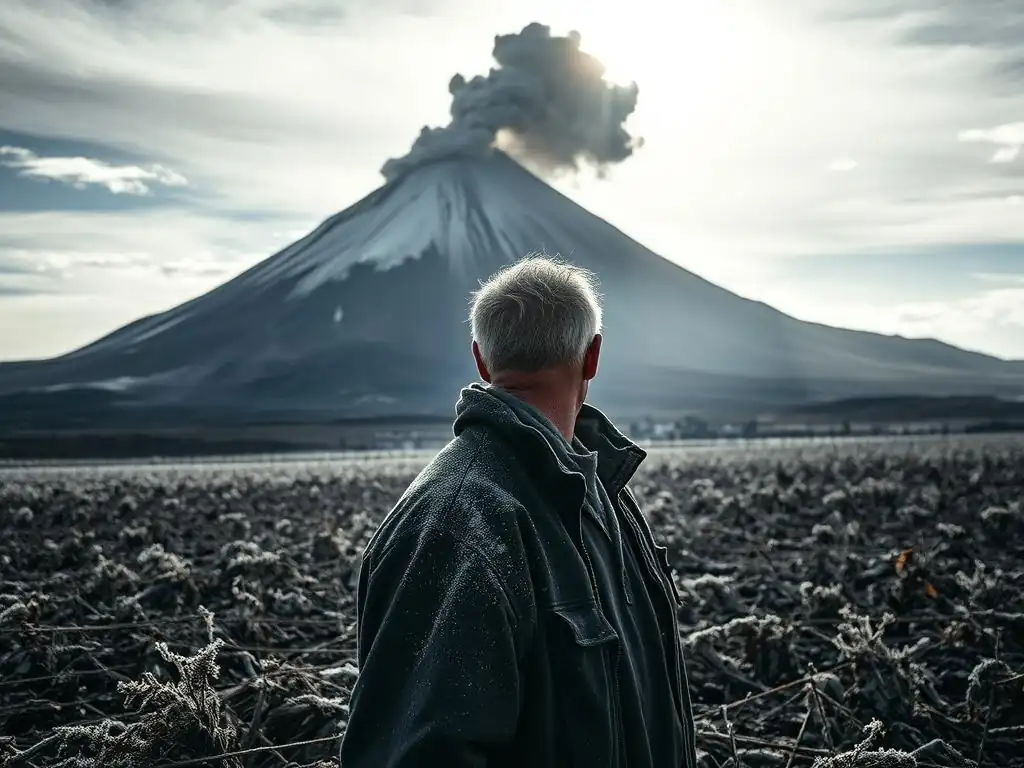
While the immediate impacts of volcanic eruptions are devastating locally, the most far-reaching and globally significant consequence for food security stems from the release of volcanic gases, particularly sulfur dioxide (SO2), into the stratosphere. Large explosive eruptions can inject vast quantities of SO2 high into the atmosphere, reaching altitudes above the troposphere where weather systems can quickly remove pollutants. In the stratosphere, SO2 reacts with water vapor to form sulfate aerosols, tiny droplets of sulfuric acid that can persist for months or even years.
These sulfate aerosols act as a global sunscreen, reflecting incoming solar radiation back into space and reducing the amount of sunlight reaching the Earth's surface. This reduction in solar radiation leads to a decrease in global average temperatures, a phenomenon known as volcanic cooling. The magnitude of the cooling effect depends on the amount of SO2 injected and the altitude it reaches.
Eruptions that inject SO2 primarily into the troposphere have a less significant and shorter-lived cooling effect because the aerosols are washed out by rain within days or weeks. However, stratospheric injections can have a prolonged and substantial impact on global climate.
The Volcanic Winter: Short-Term Climate Change After Major Eruptions
The term "volcanic winter" describes the period of global cooling that can follow major volcanic eruptions due to the stratospheric aerosol veil. This is not literally a winter season but rather a period of diminished sunlight and cooler temperatures worldwide. The intensity and duration of a volcanic winter are proportional to the size of the eruption and the amount of SO2 injected into the stratosphere. Large eruptions can cause global average temperatures to drop by several degrees Celsius, with these effects lasting for one to several years.
Historical examples of volcanic winters demonstrate their profound impact on global climate. The 1815 eruption of Mount Tambora, one of the largest eruptions in recorded history, injected an estimated 60 megatons of sulfur dioxide into the stratosphere. This led to "The Year Without a Summer" in 1816, characterized by widespread crop failures, famine, and social unrest across Europe and North America.
Average global temperatures dropped by approximately 0.4–0.7 °C, with some regions experiencing even more significant cooling. Similarly, the 1783 Laki fissure eruption in Iceland, although smaller than Tambora, also caused significant cooling in the Northern Hemisphere, contributing to crop failures and famine in Europe.
How Volcanic Eruptions Affect Rainfall Patterns and Growing Seasons
Volcanic eruptions and their associated global cooling not only lower temperatures but also disrupt rainfall patterns and shorten growing seasons, further exacerbating their impact on agriculture and food security. Changes in atmospheric circulation patterns caused by volcanic aerosols can alter monsoon systems, shift jet streams, and lead to droughts in some regions and increased rainfall in others. These shifts in precipitation can be highly detrimental to agriculture, particularly in regions reliant on seasonal rains for crop cultivation.
Reduced temperatures and altered rainfall can significantly shorten growing seasons, leaving insufficient time for crops to mature before the onset of frost or drought. This can lead to widespread crop failures and reduced yields, even in areas far removed from the volcano itself. The "Year Without a Summer" following the Tambora eruption saw devastating frosts occur in June, July, and August across North America and Europe, destroying crops that had already been planted.
In India, monsoon failures have been linked to volcanic eruptions, leading to drought conditions and impacting rice production. The complex interplay between volcanic aerosols, global climate patterns, and regional weather systems makes predicting and mitigating the agricultural impacts of volcanic eruptions a significant challenge.
Part 3: Case Studies: Historical Volcanic Eruptions and Resulting Famines
The Laki Fissure Eruption (1783): Iceland's Famine and European Impacts
The 1783-1784 Laki fissure eruption in Iceland was a prolonged basalt flood eruption that released an estimated 8 million tons of hydrogen fluoride and 120 million tons of sulfur dioxide. While lava flows were devastating locally in Iceland, it was the atmospheric impact of the volcanic gases that had far-reaching consequences.
The eruption caused a visible haze across Europe, known as the "Laki haze," which reduced sunlight and caused respiratory problems. In Iceland, the fluorine poisoning from the volcanic gases killed over 80% of sheep, 50% of cattle, and 50% of horses, leading to a severe famine that killed approximately 25% of the Icelandic population.
Beyond Iceland, the Laki eruption contributed to climate anomalies across Europe. The summer of 1783 was unusually hot, followed by a harsh winter. While the exact contribution of Laki to these European climate patterns is still debated, studies suggest that the volcanic aerosols exacerbated existing weather extremes.
Crop yields were reduced in many parts of Europe, and the eruption is considered a contributing factor to pre-existing social and economic tensions that eventually culminated in the French Revolution just a few years later. The Laki eruption serves as a stark example of how a volcanic event, even from a relatively remote location, can trigger both local and broader regional crises, including famine and social unrest.
The Mount Tambora Eruption (1815): "The Year Without a Summer" and Global Food Shortages
The 1815 eruption of Mount Tambora in Indonesia was one of the largest volcanic eruptions in recorded history, with a Volcanic Explosivity Index (VEI) of 7. It injected an unprecedented amount of volcanic gases and ash into the stratosphere, leading to a profound and globally significant volcanic winter. The following year, 1816, became known as "The Year Without a Summer." Global average temperatures dropped by 0.4–0.7 °C, and in some regions, particularly in the Northern Hemisphere, the cooling was even more pronounced.
The immediate effects were catastrophic for agriculture. Across North America and Europe, frosts occurred in every summer month, destroying crops repeatedly. Snow fell in June in New England, and widespread crop failures led to severe food shortages and famine.
Grain prices soared, and starvation and disease spread across Europe. The famine triggered by the Tambora eruption is estimated to have caused hundreds of thousands of deaths worldwide, either directly from starvation or from famine-related diseases. The eruption of Mount Tambora is a definitive case study illustrating the devastating global impact of a major volcanic eruption on food security, demonstrating the potential for widespread famine and societal disruption.
The Mount Pinatubo Eruption (1991): Global Cooling and Agricultural Impacts in Southeast Asia
The 1991 eruption of Mount Pinatubo in the Philippines, while smaller than Tambora or Laki, was still a significant event that injected approximately 20 megatons of sulfur dioxide into the stratosphere. This eruption provided a modern, well-documented example of volcanic cooling and its effects on global climate and agriculture. Following the eruption, global average temperatures decreased by about 0.5–0.6 °C over the next two years.
While the global cooling was measurable, the agricultural impacts of Pinatubo were more localized and complex compared to Tambora. Southeast Asia, including the Philippines, experienced altered monsoon patterns and rainfall. Some regions experienced droughts, while others faced increased flooding.
In the Philippines itself, while the immediate ashfall caused significant agricultural damage, the longer-term climatic effects were less dramatic compared to the 1816 "Year Without a Summer." However, the Pinatubo eruption did demonstrate that even a moderate-sized stratospheric volcanic eruption can have detectable impacts on global climate and regional weather patterns, with potential implications for agriculture, particularly in vulnerable regions reliant on monsoon rains. The eruption served as a valuable modern case study for understanding and modeling the climatic and agricultural consequences of volcanic eruptions.
Part 4: The Long-Term Consequences: Soil Degradation and Economic Instability
The Impact of Volcanic Ash on Soil Fertility: Initial Benefits vs. Long-Term Drawbacks
Volcanic ash, while initially destructive, can have a complex and sometimes beneficial long-term impact on soil fertility. Fresh volcanic ash contains essential minerals and nutrients, such as silica, calcium, potassium, and magnesium, which are crucial for plant growth. Over time, the weathering of volcanic ash can enrich soils, making them more fertile. In volcanic regions, soils derived from volcanic ash, known as Andisols, are often highly productive and support thriving agricultural systems. This is particularly true in regions with moderate rainfall that helps to leach out potentially toxic elements from the ash and facilitate the release of beneficial nutrients.
However, the initial impact of heavy ashfall can be detrimental to soil health. Thick layers of ash can alter soil physical properties, reducing water infiltration and aeration. Fresh volcanic ash can also be acidic or alkaline, depending on its composition, which can temporarily disrupt soil pH and nutrient availability.
Furthermore, some volcanic ash contains trace amounts of heavy metals or toxic elements, such as fluorine or arsenic, which can contaminate soils and pose risks to plant and animal health if present in high concentrations. The long-term effects of volcanic ash on soil fertility are therefore highly variable and depend on the composition of the ash, the thickness of the deposit, climate conditions, and soil type. While volcanic ash can contribute to long-term soil fertility, the immediate and medium-term impacts can be challenging for agriculture.
Volcanic eruptions that lead to widespread famine inevitably trigger significant economic downturn and social unrest. Agricultural losses due to volcanic hazards and climate disruptions result in reduced food production, leading to food shortages and soaring food prices. This economic shock disproportionately affects the poorest and most vulnerable populations, who rely heavily on agriculture for their livelihoods and have limited resources to cope with food scarcity. Famine conditions can lead to malnutrition, disease outbreaks, and increased mortality rates, further exacerbating social and economic instability.
Historically, famines triggered by volcanic eruptions have been associated with social unrest, migrations, and even political upheaval. The "Year Without a Summer" following the Tambora eruption contributed to widespread economic hardship and social unrest in Europe and North America. In Iceland, the Laki eruption famine led to significant population decline and economic devastation. When food becomes scarce and expensive, social tensions rise, and governments may face challenges in maintaining order and providing adequate relief. The economic consequences of volcanic eruptions and famine can extend far beyond the immediate disaster, impacting trade, employment, and long-term development.
Volcanic Soil and its Influence on Wine Production in Specific Regions
Despite the potential for devastation, volcanic regions are also known for producing unique and high-quality agricultural products, particularly wine. Volcanic soils, especially Andisols, possess characteristics that are highly favorable for viticulture in certain climates. The mineral composition of volcanic ash, combined with good drainage and water retention properties of volcanic soils, contributes to the distinctive flavors and characteristics of wines produced in volcanic regions. Specific volcanic regions around the world, such as parts of Italy (e.g., Mount Etna, Vesuvius), Greece (Santorini), and the Canary Islands, are renowned for their volcanic wines.
For example, the volcanic slopes of Mount Etna in Sicily produce distinctive red and white wines with mineral notes and complex flavors, attributed to the unique volcanic terroir. The volcanic soils of Santorini in Greece, derived from the Minoan eruption thousands of years ago, are crucial for the production of Assyrtiko, a highly regarded white wine variety known for its crisp acidity and minerality. Volcanic soils in these regions provide excellent drainage, preventing waterlogging, while also retaining sufficient moisture for vine growth.
The mineral content of the soil contributes to the complexity and terroir-driven character of these wines. This demonstrates that while volcanic eruptions pose significant threats, volcanic landscapes can also offer unique agricultural opportunities, particularly in specialized sectors like wine production, where the specific soil characteristics are highly valued.
Part 5: Modern Challenges: Vulnerability to Volcanic Eruptions and Food Security in the 21st Century
Population Growth and Increased Reliance on Vulnerable Agricultural Regions
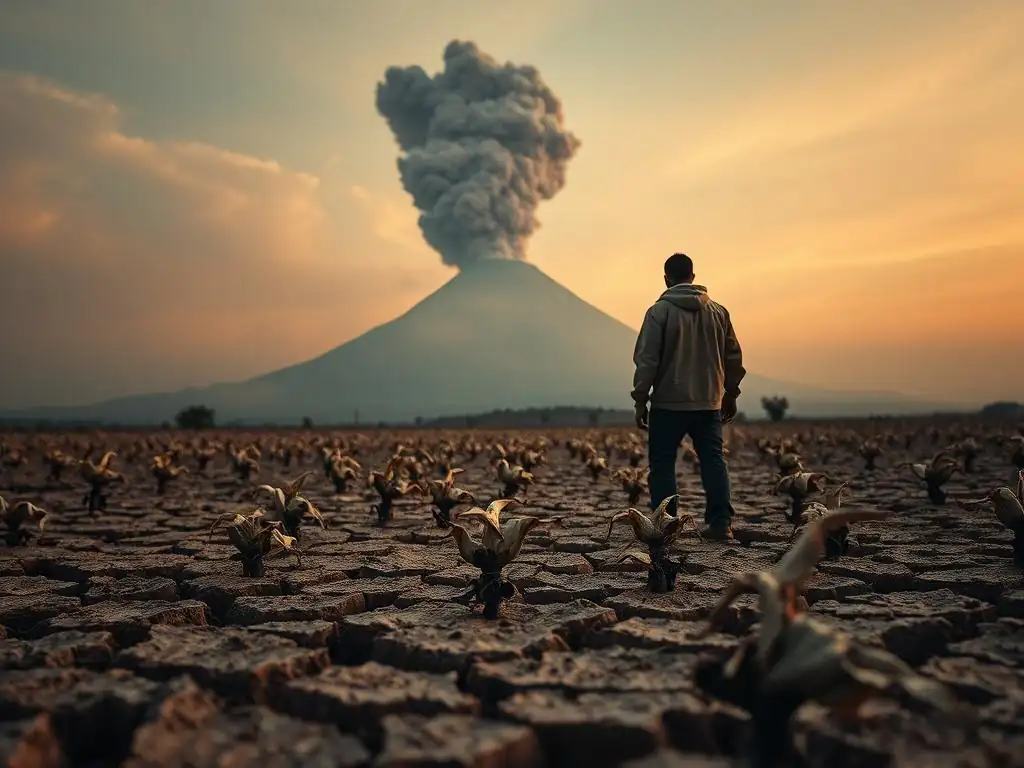
In the 21st century, global population growth and increased reliance on vulnerable agricultural regions exacerbate the risks of volcanic-induced famine. Many densely populated areas are located in volcanically active regions, particularly in Southeast Asia, Central and South America, and parts of Africa and Europe. These regions often rely heavily on agriculture, and their food systems can be highly vulnerable to volcanic eruptions. Population growth puts increasing pressure on land and resources, leading to greater agricultural intensification in areas that may be at risk from volcanic hazards.
Furthermore, globalization has led to increased interconnectedness of food supply chains, making them potentially more vulnerable to disruptions caused by volcanic eruptions. A major volcanic eruption in a key agricultural producing region could have cascading effects on global food markets, leading to price volatility and food shortages in distant locations. The concentration of food production in specific geographical areas, often vulnerable to natural disasters, increases the risk of systemic disruptions to global food security. Population growth and globalization amplify the potential for volcanic eruptions to trigger widespread food crises in the modern era.
Climate Change Exacerbating the Risks of Volcanic-Induced Famine
Climate change further complicates the relationship between volcanic eruptions and food security. Climate change is already leading to more frequent and intense extreme weather events, such as droughts, floods, and heatwaves, which are impacting agricultural production worldwide. When a major volcanic eruption occurs in a world already grappling with climate change impacts on agriculture, the combined effects can be particularly devastating. Volcanic cooling can exacerbate existing climate variability and intensify the impacts of climate change on agricultural systems.
For instance, if a large volcanic eruption occurs during a period of already prolonged drought, the volcanic winter could further reduce rainfall and extend the drought conditions, leading to more severe crop failures and famine. Climate change may also alter atmospheric circulation patterns and monsoon systems, potentially influencing the dispersion of volcanic aerosols and modifying the climatic impacts of volcanic eruptions in unpredictable ways. The interaction between volcanic eruptions and climate change creates a complex and potentially synergistic threat to global food security, requiring a holistic approach to risk assessment and mitigation.
The Role of Preparedness and Mitigation Efforts in High-Risk Volcanic Regions
Given the increasing vulnerability to volcanic-induced famine, preparedness and mitigation efforts in high-risk volcanic regions are crucial. Effective volcanic monitoring and early warning systems are essential for providing timely alerts to populations at risk, allowing for evacuation and reducing casualties from immediate volcanic hazards. However, preparedness must extend beyond immediate hazards to address the potential for long-term agricultural and food security impacts.
This includes developing contingency plans for food distribution and emergency food reserves in volcanically active regions. Investing in research on volcanic ash impacts on agriculture and developing strategies for mitigating ashfall damage to crops and livestock are important. Promoting diversified agricultural systems and drought-resistant crops can enhance resilience to both volcanic eruptions and climate change.
Strengthening infrastructure, including transportation networks and food storage facilities, can improve the ability to respond to food crises in the aftermath of volcanic eruptions. A comprehensive approach to preparedness and mitigation, involving governments, communities, and international organizations, is essential for reducing the risks of volcanic-induced famine in the 21st century.
Part 6: Mitigation and Prevention: Strategies for Reducing the Impact of Volcanic Eruptions on Food Supplies
Early Warning Systems and Volcanic Activity Monitoring
Robust early warning systems and continuous volcanic activity monitoring are fundamental for mitigating the impact of volcanic eruptions on food supplies. Modern volcano monitoring networks utilize a range of technologies, including seismometers, GPS stations, gas sensors, and satellite imagery, to detect changes in volcanic activity and provide early warnings of impending eruptions. These systems are crucial for enabling timely evacuations and minimizing casualties from immediate volcanic hazards like pyroclastic flows and lava flows.
However, early warning systems also play a crucial role in mitigating the longer-term impacts on agriculture and food security. By providing advance notice of a potential eruption, these systems allow for proactive measures to be taken to protect crops and livestock, such as harvesting crops early, sheltering animals, and stockpiling food and water. Improved forecasting of ashfall distribution and volcanic gas dispersion can help to target mitigation efforts more effectively. Investing in and strengthening volcano monitoring networks, particularly in densely populated and agriculturally important volcanic regions, is a critical step in reducing vulnerability to volcanic-induced famine.
Developing Drought-Resistant Crops and Diversifying Food Sources
Developing drought-resistant crops and diversifying food sources are essential strategies for building resilience to volcanic eruptions and their climatic impacts. Volcanic winters can lead to reduced rainfall and prolonged drought conditions, making drought-resistant crop varieties particularly valuable in volcanically active regions. Breeding and promoting the cultivation of crops that are tolerant to drought, temperature extremes, and ashfall can enhance agricultural productivity in the face of volcanic hazards.
Diversifying food sources beyond staple crops can also improve food security. Promoting the cultivation of a wider range of crops, including root crops, fruits, and vegetables, and supporting livestock diversification can reduce reliance on any single food source that may be vulnerable to volcanic impacts. Exploring alternative food sources, such as aquaculture and insect farming, can further enhance food system resilience. Diversification at the farm, regional, and national levels is a key strategy for mitigating the food security risks associated with volcanic eruptions and other environmental shocks.
International Collaboration and Disaster Relief Efforts
International collaboration and well-coordinated disaster relief efforts are crucial for effectively responding to volcanic eruptions and mitigating their impacts on food security, particularly in developing countries with limited resources. Major volcanic eruptions often require international assistance to provide emergency aid, food supplies, and technical expertise. International organizations, such as the World Food Programme (WFP), the Food and Agriculture Organization (FAO), and the Red Cross/Red Crescent, play a vital role in coordinating disaster relief efforts and providing humanitarian assistance in the aftermath of volcanic eruptions.
Pre-established international agreements and protocols for disaster response can facilitate rapid and efficient deployment of aid and resources. Sharing best practices and knowledge on volcanic hazard mitigation and food security strategies among nations can strengthen global preparedness. International collaboration in research, monitoring, and early warning systems is also essential for improving our understanding of volcanic processes and reducing risks worldwide. A global and cooperative approach is necessary to effectively address the challenges posed by volcanic eruptions and their impacts on food security.
Conclusion: Breaking the Chain: Building Resilience Against Volcanic Hazards and Food Insecurity
The Importance of Understanding Volcanic Hazards and Their Impacts
Understanding volcanic hazards and their complex impacts, especially the deadly chain from volcanic fire to famine, is of paramount importance in a world increasingly vulnerable to natural disasters. Volcanic eruptions are not merely geological events confined to volcanic regions; they are global phenomena with the potential to disrupt climate patterns, devastate agriculture, and trigger widespread food crises. Recognizing the interconnectedness of Earth's systems and the far-reaching consequences of volcanic activity is crucial for effective risk assessment, preparedness, and mitigation.
By studying historical eruptions and their impacts, we gain valuable insights into the mechanisms through which volcanic events translate into food insecurity and societal disruption. This knowledge informs the development of strategies to break the chain of events leading from volcanic eruption to famine, focusing on building resilience in vulnerable communities and strengthening global food systems. A deeper understanding of volcanic hazards and their impacts is the foundation for creating a safer and more food-secure future.
Fostering Global Cooperation to Protect Vulnerable Populations
Fostering global cooperation is essential for protecting vulnerable populations from the devastating consequences of volcanic eruptions and food insecurity. Volcanic hazards transcend national borders, and their impacts can be felt globally through climate disruptions and food market volatility. International collaboration in volcano monitoring, early warning systems, disaster relief, and research is crucial for sharing resources, expertise, and best practices. A coordinated global effort is needed to strengthen preparedness in volcanically active regions, particularly in developing countries with limited capacity to respond to large-scale disasters.
Building resilience to volcanic-induced famine requires a collective approach involving governments, international organizations, scientific communities, and local communities. Sharing knowledge, technology, and resources, and working together to develop and implement effective mitigation strategies, are essential for safeguarding vulnerable populations and reducing the risks of volcanic-induced food crises. Global cooperation is not just a matter of humanitarian concern; it is a strategic imperative for ensuring global stability and food security in a world facing increasing environmental challenges.
Recap of Key Points and Call to Action for Further Research and Community Engagement
Volcanic eruptions pose a significant and often underestimated threat to global food security. The chain of events from volcanic fire to famine involves immediate destruction from ashfall and pyroclastic flows, followed by longer-term climate disruptions due to volcanic aerosols, leading to crop failures, food shortages, and potential famine. Historical case studies, such as the Laki, Tambora, and Pinatubo eruptions, vividly illustrate the devastating impacts of volcanic events on agriculture and societies. Modern challenges, including population growth and climate change, exacerbate the vulnerability to volcanic-induced famine, highlighting the urgent need for preparedness and mitigation efforts.
To break this deadly chain, we must prioritize strengthening early warning systems, developing drought-resistant crops, diversifying food sources, and fostering international collaboration in disaster relief. Further research is needed to improve our understanding of volcanic processes, climate impacts, and agricultural vulnerabilities. Community engagement and education are crucial for raising awareness and building local resilience in volcanically active regions. A concerted and proactive approach, combining scientific knowledge, technological innovation, and global cooperation, is essential to mitigate the risks of volcanic-induced famine and ensure food security for all.
Frequently Asked Questions
What are the primary causes of volcanic eruptions?
Volcanic eruptions are primarily caused by the buildup of pressure from magma containing dissolved gases beneath the Earth's surface. This pressure eventually overcomes the strength of the surrounding rocks, leading to an eruption.
How do volcanic eruptions impact global climate?
Volcanic eruptions can release large quantities of sulfur dioxide into the stratosphere. This gas forms sulfate aerosols, which reflect sunlight and can cause temporary global cooling for several years.
What are some of the most significant hazards associated with volcanic eruptions?
Significant hazards include pyroclastic flows (fast-moving currents of hot gas and rock), lahars (mudflows composed of volcanic ash and debris), and tephra fall (airborne volcanic debris).
How do volcanologists monitor and predict volcanic eruptions?
Volcanologists use a variety of techniques, including seismic monitoring, gas emission measurements, and ground deformation studies, to detect changes in volcanic activity that may indicate an impending eruption.
What are some long-term impacts of volcanic eruptions on ecosystems and human societies?
Long-term impacts can include changes in soil fertility due to ash deposition, disruptions to agricultural practices, and displacement of communities living near affected areas.
Final Reflection: Echoes of Ash, Seeds of Resilience
The chilling narrative of volcanic eruptions and their impacts, as explored throughout this article, isn't just a historical account; it's a stark reminder of the Earth's raw power and our enduring vulnerability. The lessons learned from past cataclysms are more crucial now than ever, as climate change exacerbates environmental instability and potentially increases the frequency and intensity of extreme weather events, including those triggered by volcanic activity.
The legacy of these eruptions extends far beyond immediate destruction, shaping landscapes, influencing climate patterns, and even impacting the course of human history. Understanding this interconnectedness is paramount to fostering a more resilient future. We cannot stop natural disasters but we can arm ourselves with knowledge: so many lives wouldn't have to be lost if there was enough disaster preparedness.
- Petra Nemcova. This quote encapsulates the urgent need for proactive measures and informed decision-making in the face of inevitable geological events.
As you reflect on the stories of devastation and survival detailed within these pages, consider the role you can play in building a more prepared and sustainable world. Let the knowledge of past volcanic eruptions and their impacts fuel a commitment to environmental stewardship, responsible resource management, and a deeper understanding of the delicate balance that sustains life on our planet. The future hinges on our ability to learn from the past and act decisively in the present.
Unearth the Secrets: Become a Volcano Explorer!
Thanks for delving into the fascinating and, at times, terrifying world of volcanic events! We hope you've gained a deeper understanding of the interconnectedness of these geological forces. Now, it's time to channel that knowledge into action.
Here are some ways to continue your volcanic exploration:
- Dig deeper: Share your knowledge!: Contribute your own insights or experiences related to volcanic events in the comments section below. Let's learn from each other!
- Become a Citizen Scientist: Report any unusual seismic activity or observations on our platform to help us predict potential volcanic eruptions and safeguard communities. This is the primary action we encourage you to take.
- Explore our website for more detailed analyses of specific volcanoes and the communities that live in their shadow.
What insights from this article resonated most with you, and how will you apply them to better understand and respect the power of nature?