
The Year Without Summer: Tambora's Global Grip and Societal Unrest


Welcome to Volcano Explorers, where the Earth's fiery secrets are unveiled. Ever wondered how a single eruption could plunge the world into darkness and spark societal upheaval? Prepare to journey back in time and uncover the chilling truth behind the Tambora volcanic eruption impact, exploring how one of history's most devastating events triggered "The Year Without Summer" and left an indelible mark on civilization. But what were the long-term consequences, and could such a catastrophe happen again? Dive in to discover the answers and prepare to be captivated.
- Introduction: The Cataclysmic Tambora Eruption and its Aftermath
- The Eruption of Mount Tambora: A Volcanic Explosion of Unprecedented Scale
- Global Climate Impact of the Tambora Eruption: The "Year Without a Summer"
- Societal Unrest and the Tambora Eruption Impact: A Cascade of Crises
- Regional Case Studies: Examining the Tambora Eruption's Impact Across the Globe
- Lessons Learned: Understanding the Long-Term Impact of Volcanic Eruptions
- Conclusion: Tambora's Legacy and the Enduring Power of Volcanoes
-
Frequently Asked Questions
- What was the Tambora volcanic eruption, and why is it significant?
- What were the immediate climatic effects of the Tambora eruption?
- How did the Tambora eruption impact societies around the world?
- What role did ash and sulfur play in the global cooling after the Tambora eruption?
- How do volcanologists study past eruptions like Tambora to understand future volcanic hazards?
- Final Reflection: Echoes of a Silent Summer
- Unearth the Lessons of Tambora: Act Now!
Introduction: The Cataclysmic Tambora Eruption and its Aftermath
In the annals of volcanic history, few eruptions resonate with such profound and far-reaching consequences as the 1815 eruption of Mount Tambora. This colossal event, unfolding on the Indonesian island of Sumbawa, unleashed a force that not only devastated the immediate surroundings but also plunged the world into a period of climatic upheaval and societal distress, famously known as the "Year Without a Summer". The Tambora volcanic eruption impact extended far beyond the ash-laden skies and fiery flows, triggering a chain reaction of environmental and social catastrophes that spanned continents and reshaped the course of the 19th century.
The sheer scale of the Tambora explosion, estimated to be several times larger than Krakatoa's 1883 eruption and comparable only to the most immense volcanic events in Earth's distant past, released unprecedented quantities of volcanic gases and ash into the stratosphere. This atmospheric veil acted as a global sunshade, dramatically altering weather patterns and agricultural cycles across the globe. The subsequent years witnessed failed harvests, widespread famine, economic depression, and social unrest, painting a stark picture of humanity's vulnerability to the raw power of nature and the enduring Tambora volcanic eruption impact on global systems.
The Eruption of Mount Tambora: A Volcanic Explosion of Unprecedented Scale
Geological Context: Understanding Tambora's Volcanic Activity
Mount Tambora, before its cataclysmic eruption, stood as a majestic stratovolcano, a towering cone built up over centuries by layers of hardened lava, tephra, pumice, and volcanic ash. Situated on the northern peninsula of Sumbawa, part of the Lesser Sunda Islands volcanic arc within Indonesia, Tambora was a product of the region's intense tectonic activity.
This area lies within the Pacific Ring of Fire, a zone characterized by frequent earthquakes and volcanic eruptions due to the subduction of the Indo-Australian Plate beneath the Eurasian Plate. The immense pressure and heat generated in this subduction zone fuel the formation of magma, the molten rock that drives volcanic activity.
Tambora's geological history is marked by a long period of dormancy punctuated by explosive eruptions. Before 1815, it had been inactive for centuries, allowing for the accumulation of a large magma chamber beneath its summit. This chamber, rich in gas and under immense pressure, was a ticking time bomb. The specific composition of Tambora's magma, likely a viscous and gas-rich andesite or dacite, played a crucial role in the explosivity of the 1815 eruption. The build-up of pressure in this gas-charged magma, coupled with tectonic triggers, ultimately led to the catastrophic release that would redefine global climate and history.
The Magnitude of the Tambora Eruption: Ranking and Comparative Analysis
The 1815 eruption of Mount Tambora is classified as a VEI-7 eruption on the Volcanic Explosivity Index (VEI), the second-highest ranking on this scale, reserved for "super-colossal" events. To put this into perspective, VEI is a logarithmic scale, meaning each increment represents a tenfold increase in explosivity. A VEI-7 eruption like Tambora is approximately ten times more powerful than a VEI-6 eruption, such as the 1991 eruption of Mount Pinatubo in the Philippines, which itself had significant global climate impacts.
Estimates suggest that the Tambora eruption ejected around 160 cubic kilometers (38 cubic miles) of volcanic material into the atmosphere. This volume is staggering when compared to other significant eruptions in recorded history. For instance, the Krakatoa eruption of 1883, famously known for its devastating tsunami and loud explosion, is estimated to have ejected around 25 cubic kilometers of material – a substantial eruption, yet dwarfed by Tambora.
Even the eruption of Mount Vesuvius in 79 AD, which buried Pompeii and Herculaneum, is estimated to be several orders of magnitude smaller than Tambora. The sheer volume of ejecta, coupled with the high sulfur content of the volcanic gases, cemented Tambora’s place as one of the most impactful volcanic events of the last millennium, with an unparalleled Tambora volcanic eruption impact on the planet.
Global Climate Impact of the Tambora Eruption: The "Year Without a Summer"
Atmospheric Effects: Aerosols, Sulfur Dioxide, and Sunlight Reduction
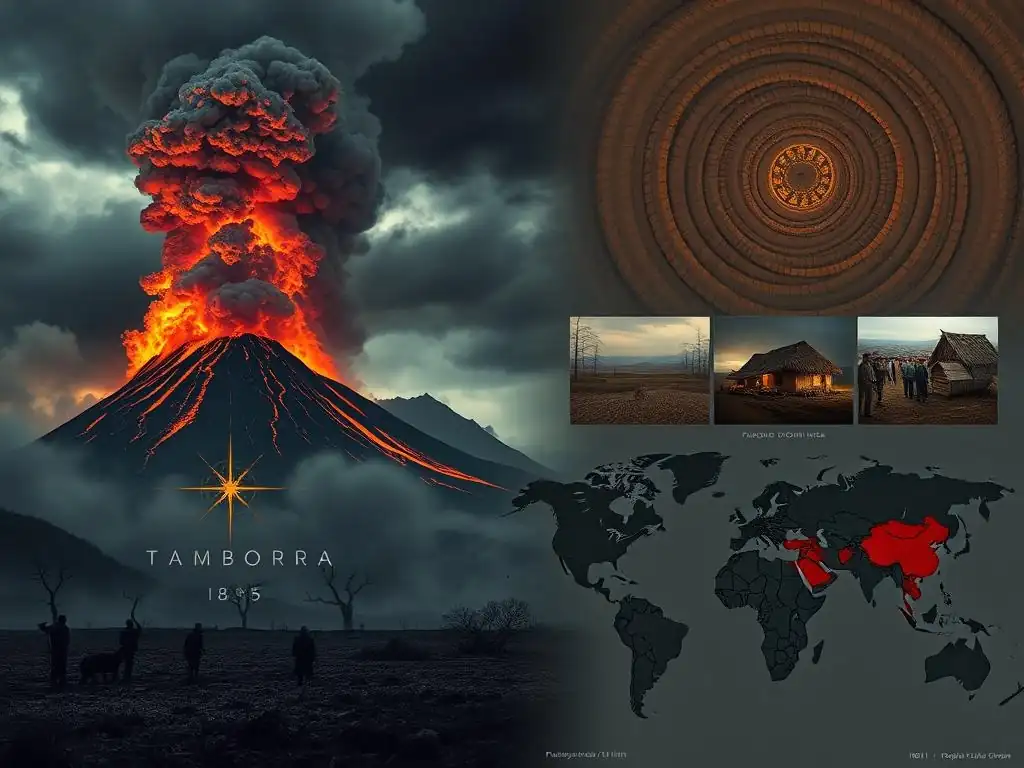
The primary driver behind the global climate anomalies following the Tambora eruption was the massive injection of sulfur dioxide (SO2) into the stratosphere. During the eruption, it is estimated that Tambora released between 30 to 50 million tons of sulfur dioxide gas. Upon reaching the stratosphere, this SO2 reacted with water vapor to form sulfate aerosols – tiny droplets of sulfuric acid. These aerosols acted as a global veil, reflecting incoming solar radiation back into space and thus reducing the amount of sunlight reaching the Earth's surface.
The stratospheric aerosols from Tambora persisted for several years, creating a prolonged cooling effect. Unlike volcanic ash, which is heavier and settles out of the atmosphere relatively quickly, these aerosols are much finer and can remain aloft for months or even years, spreading globally by stratospheric winds.
Scientific analysis of ice cores drilled in Greenland and Antarctica shows a clear spike in sulfate deposition corresponding to the 1815 eruption, providing direct evidence of the widespread dispersal of Tambora's volcanic aerosols and confirming the eruption's significant impact on the Earth's radiative balance. This reduction in solar radiation was the key mechanism behind the "Year Without a Summer" and the widespread climate disruptions that followed the Tambora volcanic eruption impact.
Worldwide Weather Anomalies: Frost, Floods, and Famine
The atmospheric veil created by Tambora's eruption led to a cascade of dramatic and disruptive weather anomalies across the globe, culminating in the infamous "Year Without a Summer" in 1816. Global average temperatures dropped by approximately 0.4 to 0.7 °C (0.7 to 1.3 °F), a seemingly small change but with profound consequences for weather patterns and agricultural productivity. Europe and North America experienced particularly severe conditions.
In Europe, the spring of 1816 was unusually cold and wet, followed by a summer marked by persistent storms, torrential rains, and killing frosts in June and July. These summer frosts devastated crops across the continent, particularly grain harvests which were crucial for sustenance. Similarly, North America experienced a "year of poverty" as described by some, with repeated frosts throughout the summer months, particularly in New England and Eastern Canada.
Snow fell in June in Albany, New York, and killing frosts were reported as late as August. Beyond the immediate temperature drops, the altered atmospheric circulation patterns likely contributed to shifts in rainfall, leading to both droughts in some regions and excessive rainfall and flooding in others, further exacerbating the agricultural crisis and amplifying the Tambora volcanic eruption impact on global weather systems.
Societal Unrest and the Tambora Eruption Impact: A Cascade of Crises
Agricultural Failures and Food Shortages: The Impact on Subsistence Farming
The immediate and most devastating consequence of the "Year Without a Summer" was widespread agricultural failure. The unseasonably cold temperatures, persistent frosts, and altered rainfall patterns decimated crops across vast regions of the Northern Hemisphere. Subsistence farmers, who relied on each harvest to feed their families through the year, were particularly vulnerable. The grain harvests of 1816 were catastrophically low in many parts of Europe and North America.
In Switzerland, for example, the year 1816 became known as "Achtzehnhundert und sechzehn, das Jahr ohne Sommer" (Eighteen hundred and sixteen, the year without a summer), with widespread crop failures leading to severe food shortages. Ireland, already suffering from poverty and overpopulation, experienced a devastating potato crop failure, a precursor to the Great Famine decades later.
In New England, corn crops failed, and livestock suffered due to lack of fodder. The lack of food reserves, combined with the widespread crop failures, triggered a severe global food crisis, demonstrating the profound Tambora volcanic eruption impact on agricultural systems and global food security.
The agricultural failures of 1816 rapidly translated into economic hardship and social instability. As food supplies dwindled, prices for grains and other essential foodstuffs skyrocketed. In Europe, grain prices doubled or even tripled in many markets, making food unaffordable for the poor and working classes. This dramatic price inflation led to widespread famine, hunger riots, and social unrest.
In Switzerland, desperation drove people to consume leaves, grass, and even cats and rats. Food riots erupted in several European cities. In Britain, economic depression following the Napoleonic Wars was exacerbated by the crop failures, leading to increased poverty and social tensions. The price of wheat in England, for instance, reached record highs. The economic shockwaves reverberated through trade networks as well, disrupting commerce and contributing to a general sense of crisis. The widespread economic hardship and social discontent were direct consequences of the Tambora volcanic eruption impact on global economies and social order.
Disease and Mortality: The Spread of Illness in Famine-Struck Populations
Famine conditions created by the Tambora-induced climate anomalies led to a significant increase in disease and mortality. Malnutrition weakens the immune system, making populations more susceptible to infectious diseases. As people migrated in search of food and gathered in overcrowded conditions, disease transmission intensified. Dysentery, typhus, and cholera epidemics swept through famine-stricken regions, further exacerbating the crisis.
In India, unusually heavy monsoon rains in 1816, possibly linked to the Tambora eruption, contributed to the spread of cholera, marking the beginning of the first documented cholera pandemic, which ultimately spread globally, causing millions of deaths over the following decades. In Europe, famine-related diseases contributed to increased mortality rates.
While precise mortality figures directly attributable to the Tambora eruption are difficult to ascertain, it is clear that the famine and disease outbreaks triggered by the climate disruption significantly increased death tolls in many parts of the world, highlighting the deadly Tambora volcanic eruption impact on global health and mortality.
Regional Case Studies: Examining the Tambora Eruption's Impact Across the Globe
Europe: Famine, Migration, and Political Tensions
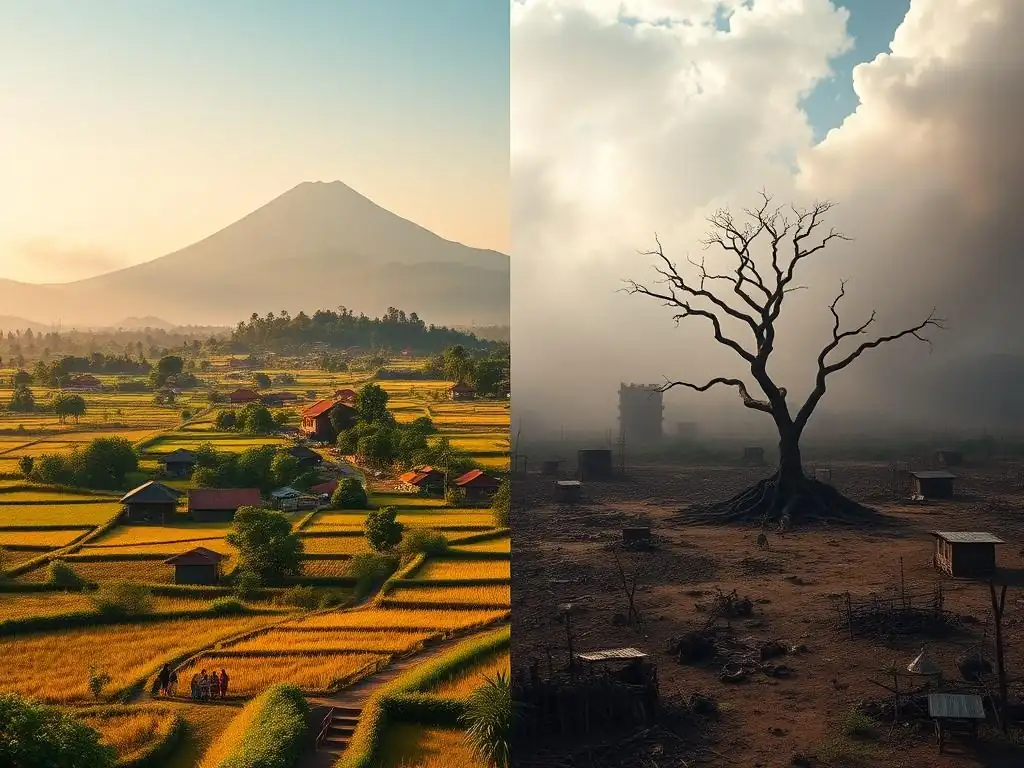
Europe bore the brunt of the "Year Without a Summer" in terms of immediate agricultural and social impact. The widespread crop failures led to severe famine conditions across the continent. Switzerland, Germany, and France were particularly hard hit. In Switzerland, the crisis was so acute that it triggered mass emigration to North America, with thousands of Swiss families seeking a better life away from the famine.
In Germany, the crop failures and food shortages exacerbated existing political tensions and social inequalities. The crisis contributed to a period of social unrest and political instability in many European countries still recovering from the Napoleonic Wars. The economic hardship and famine also contributed to increased crime rates and social disorder. The Tambora volcanic eruption impact on Europe was multifaceted, encompassing famine, migration, political instability, and long-lasting social and economic scars.
North America: Agricultural Crisis and Economic Strain
North America, particularly New England and Eastern Canada, also experienced a severe agricultural crisis in 1816. The repeated summer frosts decimated crops, especially corn, which was a staple food. The "Year of Poverty" in New England saw widespread hardship, with many families facing food shortages and economic strain. Livestock suffered due to lack of feed, and farmers struggled to survive.
While the famine in North America was not as severe as in Europe, it still caused significant economic disruption. The agricultural crisis led to price increases for food and other commodities, impacting trade and commerce. The economic strain added to the challenges faced by a young nation still developing its infrastructure and economy. The Tambora volcanic eruption impact on North America, while less severe than in Europe, still represented a significant agricultural and economic setback.
Asia: The Spread of Famine and Disease in Vulnerable Regions
While the "Year Without a Summer" is primarily associated with Europe and North America, Asia was also significantly impacted by the Tambora eruption, though the effects were often more indirect and less documented in Western historical records. Changes in monsoon patterns, potentially linked to the eruption, led to widespread crop failures and famine in parts of India and China.
In India, as mentioned earlier, the unusually heavy monsoon rains in 1816 contributed to the emergence of the first cholera pandemic. In China, crop failures in several provinces led to famine and social unrest. The vulnerability of densely populated Asian regions to climate shocks meant that even relatively small changes in weather patterns could have devastating consequences. The Tambora volcanic eruption impact on Asia, though less directly studied than in the West, highlights the global reach of the eruption's effects and its capacity to exacerbate existing vulnerabilities in different regions of the world.
Lessons Learned: Understanding the Long-Term Impact of Volcanic Eruptions
The Importance of Volcanic Monitoring and Early Warning Systems
The Tambora eruption serves as a stark reminder of the immense power of volcanoes and their potential to disrupt global systems. One of the crucial lessons learned from this event is the importance of volcanic monitoring and early warning systems. While predicting the exact timing of a volcanic eruption remains a challenge, modern volcanology has made significant strides in monitoring volcanic activity and assessing eruption potential.
Today, sophisticated networks of seismometers, GPS instruments, gas sensors, and satellite monitoring are used to track volcanic unrest and provide early warnings of impending eruptions. These systems are vital for mitigating the immediate hazards of volcanic eruptions, such as ashfall, pyroclastic flows, and lahars, but also for understanding the potential for climate impacts from large eruptions. Investing in and improving volcanic monitoring infrastructure, particularly in regions with active volcanoes and vulnerable populations, is essential for reducing the risks posed by future eruptions and minimizing the Tambora volcanic eruption impact in the modern era.
Climate Change and Volcanic Eruptions: A Complex Interplay
The Tambora eruption provides a historical precedent for understanding the potential climate impacts of large volcanic eruptions in the context of modern climate change. While volcanic eruptions cause temporary global cooling by injecting aerosols into the stratosphere, human-caused climate change is driving long-term global warming due to greenhouse gas emissions. The interplay between these two forces is complex.
Some research suggests that climate change may influence volcanic activity, for example, by altering ice melt and glacial unloading, which can affect magma pressure and eruption frequency in some volcanic regions. Conversely, large volcanic eruptions can temporarily mask or offset the effects of global warming. However, the cooling effect of volcanic eruptions is temporary, lasting only a few years, while the warming effect of greenhouse gases is long-term and cumulative.
Understanding this complex interplay is crucial for developing accurate climate models and predicting future climate scenarios, especially as the frequency and intensity of extreme weather events are projected to increase in a warming world. Learning from the Tambora volcanic eruption impact is vital for preparing for future environmental challenges, both natural and human-induced.
Conclusion: Tambora's Legacy and the Enduring Power of Volcanoes
The 1815 eruption of Mount Tambora stands as a watershed moment in human history, a dramatic demonstration of the Earth's raw power and the profound interconnectedness of global systems. The "Year Without a Summer" and its aftermath of famine, disease, and social unrest underscore the vulnerability of human societies to large-scale natural disasters and the enduring Tambora volcanic eruption impact on global civilization.
Tambora's legacy extends beyond the immediate devastation. It serves as a crucial case study for understanding the climate impacts of volcanic eruptions, the importance of volcanic monitoring and early warning systems, and the complex interplay between natural climate variability and human-induced climate change. As we face an era of increasing environmental challenges, the lessons learned from Tambora remain profoundly relevant, reminding us of the enduring power of volcanoes and the need for global resilience in the face of planetary forces.
Frequently Asked Questions
What was the Tambora volcanic eruption, and why is it significant?
The Tambora eruption in 1815 was a massive volcanic event that ejected huge amounts of ash and gas into the atmosphere. Its significance lies in its profound global climatic and societal impacts.
What were the immediate climatic effects of the Tambora eruption?
The eruption caused a significant drop in global temperatures, leading to widespread crop failures and extreme weather events. This period became known as the "Year Without a Summer" in 1816.
How did the Tambora eruption impact societies around the world?
The eruption led to famine, disease outbreaks, and social unrest in many regions. Food shortages and economic hardship triggered widespread migration and political instability.
What role did ash and sulfur play in the global cooling after the Tambora eruption?
Volcanic ash and sulfur dioxide released into the stratosphere reflected sunlight back into space. This reduced the amount of solar radiation reaching the Earth's surface, causing the global cooling effect.
How do volcanologists study past eruptions like Tambora to understand future volcanic hazards?
By analyzing geological deposits, historical records, and climate data, volcanologists can reconstruct the size and impact of past eruptions. This helps them assess and mitigate risks associated with future volcanic activity.
Final Reflection: Echoes of a Silent Summer
The chilling narrative of 1816, the "Year Without a Summer," serves as a stark reminder that nature's power transcends borders and eras. The Tambora volcanic eruption impact, though felt most acutely two centuries ago, continues to resonate today, urging us to confront our vulnerability to global environmental shifts and the societal fragility they expose.
The eruption's legacy extends far beyond crop failures and famine; it fundamentally altered the cultural and social landscape, inspiring artistic expressions born from despair and prompting innovative solutions driven by necessity. The lessons learned from Tambora's global grip – resilience, adaptation, and the interconnectedness of humanity – are more vital now than ever, as we navigate the complexities of climate change. The only constant is change.
- Heraclitus. This ancient wisdom rings particularly true when considering the enduring impact of Tambora and the ever-evolving challenges we face.
As we reflect on the "Year Without a Summer" and the profound Tambora volcanic eruption impact, let us not simply remember the past, but actively shape a more resilient future. Consider how you can contribute to mitigating the effects of environmental crises, fostering community strength, and embracing the spirit of innovation that emerged from the ashes of 1816. The echoes of Tambora serve as a powerful call to action: let us learn from history and build a world better prepared for the challenges that lie ahead.
Okay, I will craft a Call to Action (CTA) for the end of a web article titled "The Year Without Summer: Tambora's Global Grip and Societal Unrest" for the website "Volcano Explorers" (volcanoexplorers.org). Here's the CTA:
Unearth the Lessons of Tambora: Act Now!
Thank you for delving into the chilling tale of Tambora's impact and its ripple effects across the globe. You've now gained a deeper understanding of how a single volcanic eruption reshaped societies and climates. What can you do with this knowledge?
Here are some actions you can take to further explore, share, and learn:
- Delve deeper: Research the local impacts of the "Year Without a Summer" in your own region. Explore historical records and see how communities near you were affected.
- Share your knowledge: Share this article with friends, family, or your social networks to illuminate the importance of understanding volcanic activity and its global consequences. Help others learn from the past.
- Explore past eruptions: Dig into the stories of other volcanic eruptions and their impacts on human civilization. Search similar articles on volcanoexplorers.org.
How will you use this newfound understanding of Tambora to appreciate the power and potential impact of volcanic events in our modern world?