
Early Volcanologists: Brave Pioneers Who Chased Lava in the 1800s

Welcome to Volcano Explorers!
Dare to step into a world of fire and brimstone, where the earth breathes and mountains roar. Ever wondered who first braved the molten heart of these geological giants? Prepare to be amazed as we uncover the history of early volcanologists: the intrepid pioneers of the 1800s who risked everything to understand Earth's fiery temper. What secrets did they unlock, and what dangers did they face? Let's ignite your curiosity and delve into their extraordinary tales...
- Introduction: The Dawn of Volcanology in the 19th Century
- 19th-Century Volcanic Eruptions: A Catalyst for Scientific Inquiry
- Key Figures in the History of Early Volcanology: Profiles of the Pioneers
- Challenges Faced by Early Volcanologists: A Dangerous Profession
- Early Volcanological Discoveries: Laying the Foundation for Modern Science
- The Impact of 19th-Century Volcanology on Modern Volcanic Research
- Case Studies: Examining the Work of Early Volcanologists During Specific Eruptions
- Tools and Techniques Used by Pioneers in Volcanology
- The Social and Cultural Context of Early Volcanology
- Conclusion: Celebrating the Bravery and Vision of Early Volcanologists
-
Frequently Asked Questions
- What were some of the biggest challenges faced by early volcanologists?
- Why is the 1800s considered a significant period for volcanology?
- How did early volcanologists contribute to our understanding of volcanic eruptions?
- What motivated these early volcanologists to study such dangerous phenomena?
- Where can I find more information about the "history of early volcanologists"?
- Final Reflection: Echoes of Courage in Volcanic History
- Unearth Your Inner Explorer: Embrace the Volcano's Call!
Introduction: The Dawn of Volcanology in the 19th Century
EarlyVolcanoExplorers.org: Exploring the Roots of Volcanic Science
VolcanoExplorers.org serves as a digital gateway to the thrilling and often perilous realm of volcanology, inviting users to journey back in time to understand the genesis of this crucial scientific discipline. Within its virtual pages, one can trace the evolution of our understanding of volcanoes, beginning with the intrepid individuals who first dared to approach these formidable natural phenomena with a scientific lens. This exploration into the history of early volcanologists is not just a recounting of past events, but a vital component in appreciating the sophisticated tools and knowledge we possess today for studying and mitigating volcanic hazards.
By delving into the narratives of these pioneering figures, VolcanoExplorers.org illuminates the challenges they faced, the rudimentary tools they employed, and the groundbreaking observations they made. The website aims to connect the early, often perilous, investigations into volcanic activity with the sophisticated, data-driven volcanology of the 21st century. Understanding the history of early volcanologists provides crucial context for appreciating the advancements in volcanic science and recognizing the enduring human fascination with these powerful geological forces.
19th-Century Volcanic Eruptions: A Catalyst for Scientific Inquiry
How Major Eruptions Shaped the History of Early Volcanologists
The 19th century witnessed a surge in global volcanic activity, a period now recognized as a pivotal era in shaping the history of early volcanologists and the nascent field of volcanology itself. Major eruptions, such as the Tambora eruption in 1815 and Krakatoa in 1883, were not merely geological events; they were catalysts that spurred scientific curiosity and necessitated a more rigorous approach to understanding volcanoes.
These cataclysmic events demonstrated the immense power of volcanic forces and their profound impact on climate, society, and the very landscape of our planet, compelling scientists to move beyond mere observation and delve into systematic investigation.
The sheer scale and devastation of these eruptions provided unprecedented opportunities for early scientists to study volcanic phenomena firsthand. The Tambora eruption, for instance, led to the "Year Without a Summer" in 1816, triggering widespread famine and social unrest across Europe and North America. The global reach of its effects underscored the need for a deeper comprehension of volcanic processes.
Similarly, the explosive eruption of Krakatoa in 1883, with its devastating tsunamis and atmospheric disturbances detected worldwide, further galvanized scientific interest and spurred international collaborations to study and monitor volcanoes. These events became crucial turning points, transforming the study of volcanoes from a largely descriptive endeavor to a more analytical and data-driven science.
Key Figures in the History of Early Volcanology: Profiles of the Pioneers
Giuseppe Mercalli: A Trailblazer in Volcanic Observation
Giuseppe Mercalli (1850-1914), an Italian volcanologist and seismologist, stands as a pivotal figure in the history of early volcanology, renowned for his meticulous observations and innovative approaches to studying volcanic phenomena. Beyond his significant contributions to seismology, specifically the Mercalli intensity scale that assesses earthquake damage, his work in volcanology was characterized by a dedication to detailed field observations and a systematic approach to understanding eruptive processes. Mercalli’s career was marked by his direct engagement with active volcanoes, particularly in Italy, where he tirelessly documented eruptions of Vesuvius and Stromboli.
Mercalli’s detailed descriptions of volcanic eruptions were groundbreaking for their time. He meticulously recorded the sequence of eruptive events, the types of volcanic products ejected, and the impact of eruptions on the surrounding environment. For example, during the eruptions of Vesuvius in the late 19th and early 20th centuries, Mercalli provided comprehensive accounts of ash fall distribution, lava flow paths, and the formation of volcanic bombs. His commitment to firsthand observation and detailed documentation laid a crucial foundation for future volcanological studies, emphasizing the importance of rigorous field work in understanding volcanic behavior.
Tempest Anderson: Pioneering Techniques in Volcanic Photography
Tempest Anderson (1846-1913), a British ophthalmologist and amateur volcanologist, occupies a unique place in the history of early volcanology through his pioneering use of photography to document volcanic eruptions and landscapes. Anderson recognized the immense potential of the then-developing photographic technology to capture the dynamic and often fleeting nature of volcanic activity. He traveled extensively to volcanic regions around the world, from the Caribbean to Iceland and Japan, armed with cumbersome photographic equipment to visually record eruptions, lava flows, and volcanic formations.
Anderson's photographs were not merely scenic; they were scientifically invaluable records of volcanic phenomena. His images of the 1902 eruptions of Mount Pelée in Martinique and Soufrière in St. Vincent, for instance, provided crucial visual evidence of the devastating pyroclastic flows and lahars, phenomena that were still poorly understood at the time.
These photographs, presented at scientific meetings and published in journals, offered a new dimension to the study of volcanoes, allowing scientists and the public alike to witness the raw power and destructive beauty of volcanic eruptions in unprecedented detail. His work significantly advanced the visual documentation of volcanology, establishing photography as an essential tool in volcanic research and communication.
Alfred Lacroix: Documenting the Effects of Eruptions on Mineralogy
Alfred Lacroix (1863-1948), a French mineralogist and petrologist, played a vital role in the history of early volcanology, particularly through his meticulous documentation of the mineralogical and petrological effects of volcanic eruptions. Lacroix is best known for his extensive study of the 1902 eruption of Mount Pelée in Martinique, an event that tragically destroyed the city of Saint-Pierre. Dispatched to Martinique by the French government, Lacroix conducted a comprehensive investigation of the eruption's products and its aftermath, focusing on the newly formed volcanic rocks and minerals.
Lacroix’s detailed analysis of the volcanic ejecta from Mount Pelée led to the identification and characterization of a new type of volcanic rock, peléite, named in honor of the volcano. His work went beyond simple description; he meticulously studied the mineral composition, texture, and formation conditions of these volcanic rocks, providing crucial insights into the processes occurring within the volcano during the eruption.
Furthermore, Lacroix’s investigations extended to the study of volcanic gases and their role in mineral formation, contributing significantly to the understanding of magmatic differentiation and the genesis of volcanic rocks. His rigorous mineralogical approach became a cornerstone of modern volcanology, emphasizing the importance of petrological analysis in deciphering volcanic processes.
Challenges Faced by Early Volcanologists: A Dangerous Profession
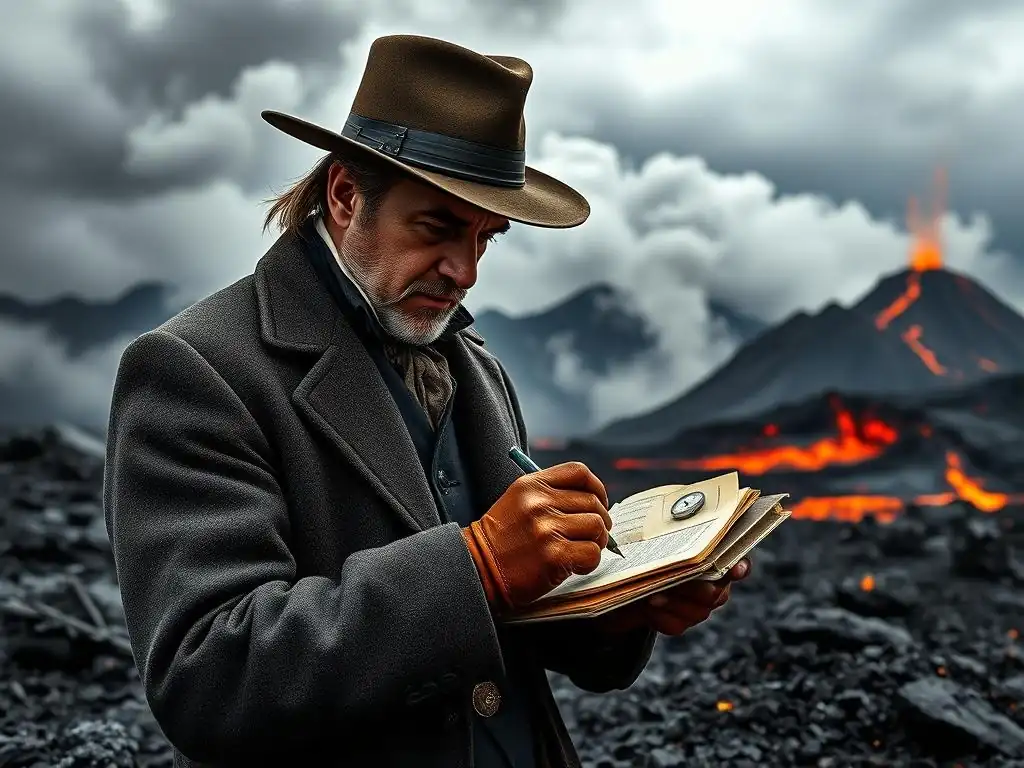
The Perils of Approaching Active Volcanoes in the 1800s
Venturing close to active volcanoes in the 1800s was an inherently perilous undertaking, demanding exceptional bravery and resilience from early volcanologists. Without the advanced monitoring equipment and safety gear available today, these pioneers faced a multitude of dangers. Approaching erupting volcanoes meant navigating treacherous terrain often covered in unstable ash and lava flows, risking burns from intense heat and exposure to toxic volcanic gases such as sulfur dioxide and hydrogen sulfide, which could be lethal in high concentrations.
The unpredictable nature of volcanic eruptions posed a constant threat. Sudden explosions, pyroclastic flows, and lahars could occur with little to no warning, leaving early volcanologists vulnerable to injury or death. Furthermore, logistical challenges were immense; travel to remote volcanic regions often involved arduous journeys by sea and land, and establishing base camps near active volcanoes required significant planning and resourcefulness. In an era lacking reliable communication systems, these researchers were often isolated and reliant on their own judgment and skills to navigate these hazardous environments, making their contributions to the history of early volcanology all the more remarkable.
Limited Technology and its Impact on Early Volcanic Research
The limited technology available in the 1800s profoundly shaped the methods and scope of early volcanic research. Without sophisticated instruments for measuring ground deformation, gas emissions, or seismic activity, early volcanologists relied heavily on direct visual observation and rudimentary tools. Temperature measurements were taken with basic thermometers, and gas samples were collected using simple glass tubes, methods that were prone to inaccuracies and provided limited quantitative data compared to modern techniques.
The absence of advanced analytical equipment also constrained the depth of scientific inquiry. Chemical analysis of volcanic rocks and gases was a laborious and time-consuming process using early chemistry techniques, limiting the number of samples that could be analyzed and the precision of the results.
Similarly, the understanding of subsurface volcanic processes was largely inferential, lacking the geophysical tools like seismographs and gravimeters that are essential for modern volcano monitoring. Despite these technological limitations, the ingenuity and meticulous observations of early volcanologists laid the crucial groundwork for the technological advancements that would revolutionize volcanology in the 20th and 21st centuries.
Funding and Recognition: Securing Support for Volcanic Studies
Securing adequate funding and gaining widespread recognition for volcanological studies presented significant challenges for early volcanologists. In the 19th century, volcanology was still a nascent science, often perceived as less prestigious or practical compared to more established fields like geology or astronomy. Funding for scientific expeditions and research was often limited and primarily directed towards areas deemed to have more immediate economic or societal benefits.
Early volcanologists frequently had to rely on personal resources, patronage from wealthy individuals or scientific societies, or seek support from government agencies only after major volcanic disasters underscored the importance of understanding these phenomena. Gaining academic recognition for volcanological research was also an uphill battle; universities and scientific institutions were still developing dedicated volcanology programs, and publications in the field were sometimes viewed with skepticism or relegated to less prominent journals.
Despite these hurdles, the dedication and perseverance of early volcanologists gradually elevated the profile of volcanology, demonstrating its scientific merit and societal relevance, paving the way for increased funding and institutional support in later years.
Early Volcanological Discoveries: Laying the Foundation for Modern Science
Groundbreaking Observations of Lava Flows and Volcanic Gases
Early volcanologists made groundbreaking observations of lava flows and volcanic gases that were fundamental in shaping our modern understanding of volcanic processes. Through direct observation and careful documentation, they described the different types of lava flows, from fluid basaltic flows to viscous andesitic flows, noting their varying speeds, temperatures, and textures. They recognized the role of viscosity and gas content in controlling lava flow behavior, laying the groundwork for later studies on magma rheology and eruption dynamics.
Furthermore, early investigations into volcanic gases, though limited by rudimentary sampling and analytical techniques, were crucial in identifying the major components of volcanic emissions, such as water vapor, carbon dioxide, sulfur dioxide, and hydrogen sulfide. These early analyses, coupled with observations of fumaroles and volcanic plumes, established the significance of volcanic gases in driving eruptions and influencing atmospheric chemistry. The meticulous descriptions and initial chemical analyses of lava flows and volcanic gases by these pioneers provided the essential empirical data upon which subsequent generations of volcanologists built their more sophisticated models and theories.
Early Theories on the Formation and Behavior of Volcanoes
The 19th century saw the development of early theories on the formation and behavior of volcanoes, driven by the observations and insights of pioneering volcanologists. While lacking the plate tectonic framework that revolutionized geology in the 20th century, these early theories grappled with fundamental questions about the origin of volcanoes, the sources of magma, and the mechanisms driving eruptions. Some early theories proposed that volcanoes were formed by chemical reactions within the Earth’s crust, while others recognized the connection between volcanic activity and deeper geological processes.
Early volcanologists also debated the role of water in volcanic eruptions, with some suggesting that water influx triggered explosive activity. Observations of different eruption styles, from effusive lava flows to violent explosions, led to initial classifications of eruption types and attempts to link them to magma properties and gas content.
Although these early theories were often incomplete or lacked the comprehensive understanding of magma generation and plate tectonics that we have today, they represented crucial first steps in conceptualizing volcanic systems and establishing a scientific framework for studying their complex behavior. These early theoretical frameworks, however rudimentary, provided the intellectual scaffolding upon which more refined and accurate models of volcanic processes would later be constructed.
The Development of Early Volcanic Monitoring Techniques
While lacking the sophisticated instrumentation of today, early volcanologists developed rudimentary yet important volcanic monitoring techniques. One of the earliest and most fundamental methods was visual observation, with volcanologists meticulously recording changes in volcanic activity, such as increased fumarole activity, changes in plume characteristics, or swelling of the volcano's cone. These visual observations, often documented through sketches and written descriptions, provided crucial early warning signs of potential eruptions.
The development of early seismographs in the late 19th century offered a nascent technological tool for monitoring volcanoes. Although these early seismographs were less sensitive and provided less detailed data than modern instruments, they allowed volcanologists to detect volcanic tremors and earthquakes associated with magma movement and eruptive activity.
Early attempts at ground deformation monitoring also emerged, with surveyors using leveling techniques to detect subtle changes in the volcano’s shape, indicative of magma inflation or deflation. These early monitoring efforts, though limited in scope and precision, demonstrated the growing recognition of the importance of systematic observation and instrumental measurements in forecasting volcanic eruptions, laying the groundwork for the sophisticated volcano monitoring networks of the 20th and 21st centuries.
The Impact of 19th-Century Volcanology on Modern Volcanic Research
How Early Research Influenced Current Understanding of Eruption Dynamics
The research conducted by 19th-century volcanologists profoundly influenced our current understanding of eruption dynamics. Their meticulous field observations, though made with limited technology, provided the foundational descriptions of different eruption styles, from Strombolian bursts to Plinian explosions, and identified key volcanic phenomena like pyroclastic flows and lahars. These early descriptions established a basic taxonomy of volcanic eruptions that is still used and refined today.
Furthermore, the early investigations into lava flow behavior and volcanic gas composition provided crucial empirical data that informed later theoretical models of magma ascent, fragmentation, and eruption column dynamics. The recognition of the role of gas pressure in driving explosive eruptions, for instance, stemmed from early observations of gas release during eruptions and rudimentary analyses of volcanic gases. The legacy of 19th-century volcanology is thus deeply embedded in the core concepts and terminology of modern eruption dynamics research, demonstrating the enduring value of their pioneering work despite the technological limitations of their time.
The Legacy of Early Volcanologists in Volcanic Hazard Assessment
The legacy of early volcanologists extends significantly into the field of volcanic hazard assessment. Their detailed accounts of past eruptions, including the spatial extent of lava flows, ash fall distribution, and the destructive impact of pyroclastic flows and lahars, provided the first historical datasets for understanding volcanic hazards. These historical records, compiled through the diligent efforts of early volcanologists, became essential for identifying areas vulnerable to volcanic hazards and estimating the potential scale and frequency of future eruptions.
The recognition of different types of volcanic hazards and their potential impacts on human populations and infrastructure, which is central to modern volcanic hazard assessment, owes much to the early descriptive work of 19th-century volcanologists. Their observations of the devastating effects of eruptions like Krakatoa and Mount Pelée underscored the need for systematic hazard mapping and the development of mitigation strategies. In this way, the early history of volcanology directly contributed to the development of a hazard-focused approach to volcanic research, emphasizing the societal relevance of understanding and mitigating volcanic risks.
Case Studies: Examining the Work of Early Volcanologists During Specific Eruptions
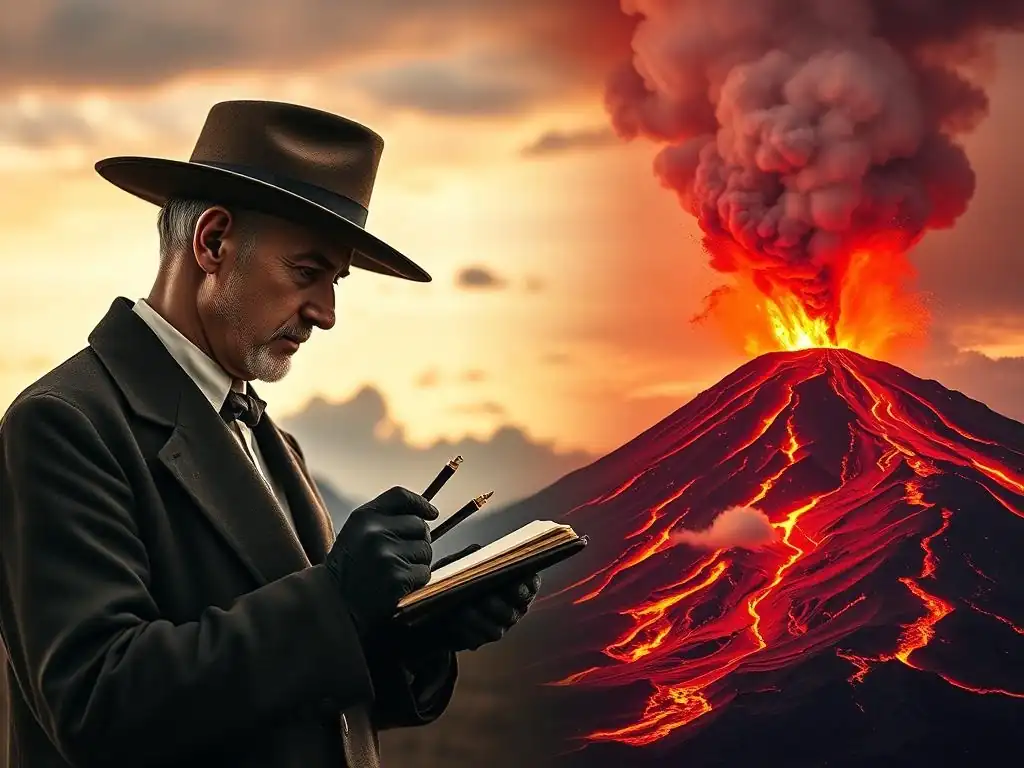
The 1883 Krakatoa Eruption: Insights from Early Volcanological Accounts
The 1883 eruption of Krakatoa, one of the most cataclysmic volcanic events in recorded history, provided a crucial case study for early volcanologists. While the eruption itself predates many of the formalized volcanological institutions, the event spurred significant scientific interest and attracted the attention of early investigators who meticulously documented its effects. Accounts from ship captains, colonial administrators, and early scientists on scene provided valuable insights into the eruption's sequence, the formation of the devastating tsunami, and the global atmospheric effects of the volcanic ash cloud.
These early accounts, though not always systematically collected or scientifically rigorous by modern standards, captured crucial details about the eruption's intensity and impact. For example, descriptions of the sound of the eruption being heard thousands of kilometers away, the widespread darkness caused by the ash cloud, and the devastating tsunami waves that impacted coastlines across the Indian Ocean, highlighted the unprecedented scale of the event.
These early observations formed the basis for later scientific analyses of the Krakatoa eruption, contributing significantly to the understanding of large explosive eruptions and their far-reaching consequences. The history of early volcanologists and their efforts to document Krakatoa laid the foundation for future studies of similar large-scale volcanic events.
The 1902 Mount Pelée Eruption: Early Documentation of Pyroclastic Flows
The 1902 eruption of Mount Pelée in Martinique, which tragically destroyed the city of Saint-Pierre, stands as a pivotal event in the history of early volcanology, particularly for the early documentation of pyroclastic flows. This eruption, characterized by its devastating lateral blast and pyroclastic flows, presented a novel and terrifying volcanic phenomenon that was initially poorly understood. Early volcanologists, including Tempest Anderson and Alfred Lacroix, were among the first to arrive and document the eruption's effects, providing crucial firsthand accounts and photographs of the pyroclastic deposits and the devastated landscape.
Lacroix’s detailed study of the Mount Pelée eruption was particularly significant. His meticulous descriptions and analyses of the pyroclastic flows, which he termed "nuées ardentes" (glowing clouds), were instrumental in establishing the nature and destructive power of these volcanic phenomena.
His work differentiated pyroclastic flows from lava flows, recognizing them as hot, gas-charged flows of volcanic ash, pumice, and rock fragments that could travel at high speeds and cause widespread devastation. The 1902 Mount Pelée eruption, through the lens of early volcanologists like Lacroix and Anderson, became a defining case study in understanding pyroclastic flows, shaping the future direction of volcanological research and hazard assessment related to these deadly volcanic phenomena.
Tools and Techniques Used by Pioneers in Volcanology
The Seismograph: A detailed explanation of its use
The seismograph, though in its nascent stages of development during the 19th century, represented a revolutionary tool for early volcanologists. Early seismographs, often based on mechanical principles involving pendulums and levers, were designed to detect and record ground motion caused by earthquakes and volcanic tremors. These instruments, while less sensitive and sophisticated than modern digital seismographs, allowed early volcanologists to begin systematically monitoring volcanic activity and detecting subtle ground vibrations that were imperceptible to human senses.
The installation of seismographs near active volcanoes, such as Vesuvius and Etna in Italy, marked a significant step towards quantitative volcano monitoring. By analyzing the seismograms, early researchers could identify the timing, duration, and relative intensity of volcanic earthquakes, providing insights into magma movement and pressure changes within the volcanic system. While the interpretation of these early seismograms was often challenging and limited by the technology, the seismograph fundamentally shifted volcanology from primarily observational science towards a more data-driven approach, paving the way for the sophisticated seismic monitoring networks that are crucial for volcano forecasting today.
Chemical Analysis: Early versions and their limitations
Early versions of chemical analysis played a crucial role in the history of early volcanology, albeit with significant limitations compared to modern analytical techniques. Pioneering volcanologists utilized early chemical methods to analyze volcanic rocks, gases, and waters, seeking to understand their composition and the chemical processes driving volcanic activity. Techniques such as wet chemistry, involving titrations and precipitation reactions, were employed to determine the major element composition of volcanic samples.
However, these early methods were often laborious, time-consuming, and less precise than modern instrumental techniques like X-ray fluorescence (XRF) or inductively coupled plasma mass spectrometry (ICP-MS). The analysis of trace elements, which are now recognized as crucial indicators of magma source and evolution, was particularly challenging or impossible with the available technology.
Furthermore, the collection and analysis of volcanic gases were hampered by rudimentary sampling methods and analytical tools, limiting the ability to accurately quantify gas compositions and fluxes. Despite these limitations, early chemical analyses provided valuable initial insights into the geochemical diversity of volcanic rocks and gases, laying the foundation for the sophisticated geochemical studies that are central to modern volcanology.
Public Perception of Volcanoes in the 19th Century
Public perception of volcanoes in the 19th century was a complex mix of awe, fear, and growing scientific curiosity. Volcanic eruptions, often dramatic and destructive events, naturally evoked fear and a sense of the sublime in the face of nature's power. For communities living near active volcanoes, eruptions were a constant threat, shaping their livelihoods and cultural narratives. However, the 19th century also witnessed a rise in scientific interest in volcanoes, fueled by major eruptions and the broader Enlightenment ideals of scientific inquiry and exploration.
Romanticism, a dominant cultural movement of the era, also influenced the public perception of volcanoes. Volcanoes were often romanticized as symbols of untamed nature, power, and dramatic beauty. Artists and writers were drawn to volcanic landscapes, capturing their grandeur and danger in paintings and literature. This romanticized view, alongside growing scientific understanding, contributed to a shift in public perception, moving from purely superstitious interpretations of volcanoes towards a more scientifically informed and fascinated view of these geological wonders. Early volcanologists played a key role in shaping this evolving public understanding, bridging the gap between fear and scientific curiosity.
The Role of Volcanology in Shaping Scientific Thought
Volcanology, as a nascent scientific discipline in the 19th century, played a significant role in shaping broader scientific thought, particularly within geology and related fields. The study of volcanoes provided crucial evidence for understanding Earth's internal processes and challenging prevailing geological theories. Observations of volcanic eruptions and the formation of igneous rocks contributed to the development of uniformitarianism, the principle that geological processes operating today are the same as those that operated in the past, a cornerstone of modern geology.
Furthermore, volcanology spurred advancements in related scientific fields. The study of volcanic gases contributed to the development of geochemistry and atmospheric science. The investigation of volcanic earthquakes and ground deformation spurred the development of seismology and geodesy. Volcanology, therefore, acted as a catalyst for interdisciplinary scientific inquiry, driving innovation in instrumentation, analytical techniques, and theoretical frameworks across multiple scientific domains. The history of early volcanologists highlights their crucial contribution to not only understanding volcanoes but also to the broader advancement of scientific knowledge in the 19th century.
Conclusion: Celebrating the Bravery and Vision of Early Volcanologists
The Enduring Significance of Their Contributions to Understanding Volcanoes
The early volcanologists of the 1800s were truly brave pioneers, venturing into hazardous and largely unexplored territories to unravel the mysteries of volcanoes. Their unwavering dedication, often in the face of limited resources and significant personal risk, laid the essential foundations for our modern understanding of these powerful geological forces. Their meticulous observations, ingenious adaptations of rudimentary technologies, and persistent pursuit of knowledge have left an enduring legacy that continues to shape volcanology today.
From the detailed documentation of eruption sequences to the early classifications of volcanic phenomena and the development of rudimentary monitoring techniques, their contributions were transformative. The history of early volcanologists serves as an inspiration, reminding us of the crucial role of courageous exploration, meticulous observation, and scientific curiosity in advancing our knowledge of the natural world. Their work not only advanced the science of volcanology but also underscored the importance of understanding and mitigating volcanic hazards, leaving a lasting impact on both scientific inquiry and societal safety in volcanic regions worldwide.
Frequently Asked Questions
What were some of the biggest challenges faced by early volcanologists?
Early volcanologists faced significant challenges, including a lack of advanced technology and the inherent dangers of approaching active volcanoes. They also often lacked formal funding for their research.
Why is the 1800s considered a significant period for volcanology?
The 1800s saw a surge in interest and study of volcanoes, marking a turning point in the field. This era saw the emergence of dedicated volcanologists and the development of foundational theories about volcanic activity.
How did early volcanologists contribute to our understanding of volcanic eruptions?
They provided valuable first-hand observations of volcanic phenomena and developed early classification systems for different types of eruptions. They also began to link volcanic activity to geological processes.
What motivated these early volcanologists to study such dangerous phenomena?
A combination of scientific curiosity, a desire for exploration and discovery, and a belief in the importance of understanding these powerful natural forces drove them. Many were also motivated by the potential to mitigate volcanic hazards.
Where can I find more information about the "history of early volcanologists"?
VolcanoExplorers.org offers educational content dedicated to the history of volcanology, including profiles of key figures and accounts of significant eruptions studied during the 1800s.
Final Reflection: Echoes of Courage in Volcanic History
The stories of early volcanologists, as we've explored, aren't just dusty tales from the 1800s; they're a testament to the enduring human spirit of exploration and scientific curiosity. Their unwavering dedication to understanding the Earth's fiery heart laid the groundwork for modern volcanology, impacting how we predict and mitigate volcanic hazards today. Their bravery, often bordering on recklessness, continues to inspire scientists to push the boundaries of knowledge, even in the face of immense risk.
The legacy of these pioneers deeply influences how we perceive the relationship between humanity and the raw power of nature. Their struggles and triumphs remind us that scientific progress often demands courage, resilience, and a willingness to venture into the unknown. The important thing is never to stop questioning,
a sentiment that perfectly encapsulates the spirit of these early volcanologists, and which should guide us in our own pursuits of knowledge and understanding.
As we reflect on the history of early volcanologists, let us not only admire their daring exploits but also internalize their unwavering commitment to discovery. Consider how you can embrace a similar spirit of curiosity and courage in your own life, whether it's tackling a challenging problem, pursuing a new passion, or simply questioning the world around you. Let their legacy ignite your own inner explorer, pushing you to venture beyond the familiar and embrace the transformative power of knowledge.
Unearth Your Inner Explorer: Embrace the Volcano's Call!
Thanks for delving into the lives of these incredible early volcanologists! You've now seen the courage and dedication it took to understand our planet's fiery heart. Ready to continue their legacy in your own way?
Here's how you can ignite your own volcanology adventure:
- Dive Deep into Volcanic Data: Explore real-time volcano monitoring data on the Volcano Explorers website. Start with your local geological survey and track recent activity! This is your primary action to emulate the volcanologists from the article.
- Share the Thrill: Share this article with a friend or family member who loves science and adventure, sparking their curiosity about volcanoes.
- Imagine the Journey: Write a short story about what it would feel like to have travelled with these brave pioneers in the 1800's, share your story in the comments.
What volcano fascinates you the most, and what question would you ask those early volcanologists if you could meet them today? Share your thoughts below!