
Central vs Fissure Vents: Magma's Diverse Escape Routes

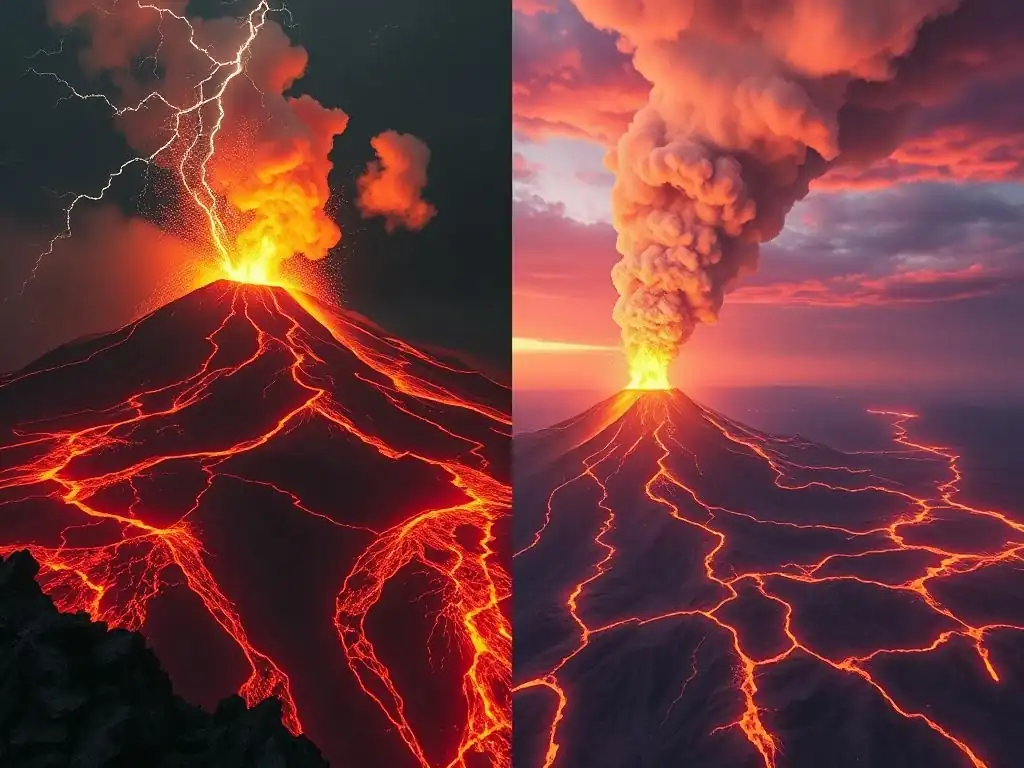
Welcome to Volcano Explorers, where the Earth's fiery heart beats for all to see! Ever wondered about the secrets hidden beneath the Earth's crust, waiting to explode onto the surface? This isn't just about mountains that rumble; it's about understanding the very pathways of molten rock. Today, we're diving deep into the fascinating world of types of volcanic vent systems, exploring the diverse escape routes magma takes.
Prepare to be amazed as we unravel the differences between central and fissure vents, and discover how these geological features shape our planet. What forces dictate magma's path, and what can they tell us about the potential for eruption? Let's ignite your curiosity and find out!
- Understanding Volcanic Vent Systems: An Introduction
- Central Vent Volcanoes: A Single Point of Eruption
- Fissure Vent Volcanoes: Linear Pathways for Lava Flow
- Central Vents vs. Fissure Vents: A Detailed Comparison
- Factors Influencing the Formation of Different Volcanic Vent Systems
- Volcanic Vent Systems and Monitoring Techniques
- Conclusion: The Diversity of Magmatic Escape Routes
-
Frequently Asked Questions
- What are the two main types of volcanic vent systems discussed on VolcanoExplorers.org?
- How do central vents differ from fissure vents in terms of eruption style?
- Which type of volcanic vent is more likely to create a shield volcano?
- Does VolcanoExplorers.org provide information on the geological processes that lead to the formation of different vent types?
- Where can I find more information about the safety precautions related to different types of volcanic eruptions mentioned on VolcanoExplorers.org?
- Final Reflection: Earth's Fiery Breath
- Unearth Your Inner Volcanologist!
Understanding Volcanic Vent Systems: An Introduction
Exploring Magma Pathways: From Source to Surface
Volcanic vent systems are the Earth's exclamatory punctuation marks, the surface expressions of immense geological forces working deep within our planet. Imagine the Earth's interior as a vast pressure cooker, where molten rock, or magma, is constantly generated in the mantle. This magma, less dense than the surrounding solid rock, embarks on an upward journey, driven by buoyancy and pressure gradients.
The pathways this magma takes are not always straightforward; they can be complex networks of fractures and conduits leading from magma chambers kilometers beneath the surface towards the eventual point of release – the volcanic vent. Understanding these pathways is crucial to deciphering the behavior of volcanoes and predicting their eruptions.
The journey of magma is influenced by a multitude of factors, including the density and viscosity of the magma itself, the stress regime within the Earth's crust, and the presence of pre-existing weaknesses or faults. As magma ascends, it can accumulate in magma chambers, acting as temporary reservoirs. From these chambers, magma continues its upward trek, often exploiting zones of weakness in the Earth's crust.
These zones of weakness become the nascent volcanic vent systems, the final conduits through which magma, now often referred to as lava once it reaches the surface, and volcanic gases are expelled onto the Earth's surface or into the atmosphere. The nature of these vent systems profoundly influences the style and intensity of volcanic eruptions, and the types of volcanic landforms that are created.
The Role of Vents in Volcanic Eruptions
Volcanic vents are the focal points of volcanic activity, acting as the direct channels through which molten rock, volcanic gases, and pyroclastic materials are ejected during an eruption. They are not merely passive openings; rather, they are integral components of the entire volcanic system, dictating the style, magnitude, and duration of eruptions. The geometry and configuration of these vents – whether they are singular, central conduits or elongated fissures – fundamentally control how volcanic energy is released and dispersed. Understanding the role of vents is paramount to comprehending the diverse manifestations of volcanic eruptions and the associated hazards.
The characteristics of a volcanic vent system significantly influence eruption dynamics. For instance, a single, central vent often leads to focused, potentially explosive eruptions, building up conical volcanic edifices over time. Conversely, fissure vents, which are linear cracks in the Earth's crust, facilitate more effusive eruptions, characterized by the outpouring of lava flows over broader areas.
The type of volcanic vent system also affects the distribution of volcanic products; central vents tend to concentrate deposits around the vent, whereas fissure vents lead to more widespread lava fields. Furthermore, the vent system can influence the degassing process, affecting the explosivity of an eruption. Therefore, studying volcanic vent systems is essential for volcanic hazard assessment and mitigation, providing crucial insights into the potential eruption styles and areas at risk.
Central Vent Volcanoes: A Single Point of Eruption
Formation of Central Vent Structures
Central vent volcanoes, as their name suggests, are characterized by a single, primary conduit through which magma ascends to the surface. The formation of these central vents is typically associated with focused magma upwelling from a magma chamber beneath. This upwelling often exploits zones of weakness in the crust but ultimately converges towards a singular point of exit.
Over time, repeated eruptions from this central vent build up volcanic edifices around it, creating the classic cone-shaped volcanoes that are iconic landforms in many parts of the world. The process of central vent formation is a dynamic interplay between magma pressure, crustal stresses, and the erosional forces acting on the developing volcanic structure.
The architecture of a central vent system can be complex, involving a main conduit that may branch into smaller subsidiary vents near the surface. The vent itself is often located at the summit of the volcano, within a crater that forms due to explosive eruptions and the collapse of the vent area. As eruptions occur, volcanic materials – lava, ash, and pyroclastic flows – are deposited around the central vent, layer upon layer, gradually constructing the volcanic cone.
The shape and size of the cone are influenced by factors such as the magma composition, eruption style, and the duration of volcanic activity. Central vent volcanoes are commonly found in various tectonic settings, including subduction zones, hotspots, and continental rift zones, reflecting the diverse geological processes that can lead to focused magma ascent.
Characteristics of Central Vent Eruptions
Central vent eruptions are notable for their focused release of volcanic energy from a single point. This concentration of energy often leads to more explosive eruption styles compared to fissure vents, although effusive eruptions are also common from central vents. The characteristics of these eruptions are heavily influenced by the magma's properties, particularly its viscosity and gas content.
Viscous, gas-rich magmas tend to produce explosive eruptions, while less viscous, gas-poor magmas result in effusive lava flows. The cyclical nature of magma supply and pressure build-up within the volcanic system also contributes to the eruptive patterns observed at central vent volcanoes.
Eruptions from central vents can range dramatically in scale and intensity, from relatively mild Strombolian eruptions, characterized by intermittent bursts of gas and lava, to highly explosive Plinian eruptions, which can eject vast columns of ash and gas high into the stratosphere. The shape of the volcanic cone itself plays a role in eruption dynamics, influencing the direction and distribution of pyroclastic flows and lava flows.
Steep-sided cones can channel pyroclastic flows down their flanks, while gentler slopes allow for wider lava flow dispersal. Central vent volcanoes are dynamic systems, capable of exhibiting a variety of eruptive styles over their lifespan, often alternating between explosive and effusive phases, reflecting the complex interplay of magmatic and tectonic processes.
Explosive Eruptions from Central Vents: Mount St. Helens
Mount St. Helens, located in Washington State, USA, is a prime example of a central vent volcano known for its explosive eruptive history. Its most famous eruption on May 18, 1980, was a powerful lateral blast triggered by a magnitude 5.1 earthquake, which destabilized a large bulge that had been growing on the volcano's north flank.
This lateral blast, one of the largest in recorded history, devastated an area of approximately 600 square kilometers and was followed by a vertical eruption column that reached over 24 kilometers into the atmosphere. The 1980 eruption of Mount St. Helens dramatically demonstrated the potential for explosive power from central vent systems.
The explosivity of the Mount St. Helens eruption was largely attributed to the high silica content and gas content of its magma. The viscous magma trapped dissolved gases under immense pressure, leading to a catastrophic release when the confining pressure was suddenly reduced by the landslide. The eruption produced pyroclastic flows, lahars (volcanic mudflows), and a significant ashfall that impacted regions hundreds of kilometers away.
The eruption significantly altered the landscape surrounding the volcano, creating a large horseshoe-shaped crater open to the north and depositing thick layers of ash and pumice. Mount St. Helens continues to be an active central vent volcano, with ongoing monitoring and research providing valuable insights into the dynamics of explosive volcanism.
Effusive Eruptions from Central Vents: Mauna Loa
In contrast to the explosive nature of Mount St. Helens, Mauna Loa in Hawaii exemplifies effusive eruptions from a central vent. Mauna Loa is a shield volcano, characterized by its broad, gently sloping profile, built up by countless lava flows emanating from its summit caldera, a large central depression formed by past collapses.
Eruptions at Mauna Loa are typically characterized by the outpouring of basaltic lava, which is relatively low in silica and gas content, resulting in less viscous and less explosive eruptions compared to volcanoes like Mount St. Helens. Mauna Loa is considered the largest active volcano on Earth in terms of volume and area, a testament to the long-term effusive activity from its central vent system.
The lava flows from Mauna Loa eruptions are extensive and can travel great distances, reshaping the landscape and adding new land to the island of Hawaii. These eruptions are often preceded by periods of inflation and increased seismic activity, providing warnings of impending lava flows. While generally less hazardous than explosive eruptions, effusive eruptions from Mauna Loa can still pose significant threats, particularly to infrastructure and communities located in lava flow pathways. The consistent effusive activity at Mauna Loa highlights the diversity of eruption styles even within central vent volcanoes, depending on magma composition and tectonic setting.
Examples of Famous Central Vent Volcanoes
Beyond Mount St. Helens and Mauna Loa, numerous other volcanoes around the world exemplify the central vent type. Mount Fuji in Japan, with its iconic symmetrical cone, is a stratovolcano formed by eruptions from a central vent. Vesuvius in Italy, famous for its eruption that buried Pompeii and Herculaneum, is another historically significant central vent volcano. Popocatépetl in Mexico, a highly active volcano near Mexico City, also represents a central vent system with a history of both explosive and effusive eruptions. These examples showcase the global distribution and diverse eruptive behaviors associated with central vent volcanoes.
Other notable examples include Mount Rainier in Washington State, a potentially highly explosive stratovolcano, and Mount Kilimanjaro in Tanzania, an iconic, albeit currently dormant, volcanic peak. The Andes Mountains are home to a chain of central vent volcanoes, including Cotopaxi in Ecuador and Villarrica in Chile, each with its unique eruptive history and characteristics. Studying these diverse examples of central vent volcanoes provides a broader understanding of the processes that govern their formation, eruption styles, and long-term evolution, contributing to improved volcanic hazard assessment and mitigation efforts worldwide.
Fissure Vent Volcanoes: Linear Pathways for Lava Flow
Formation of Fissure Vent Systems
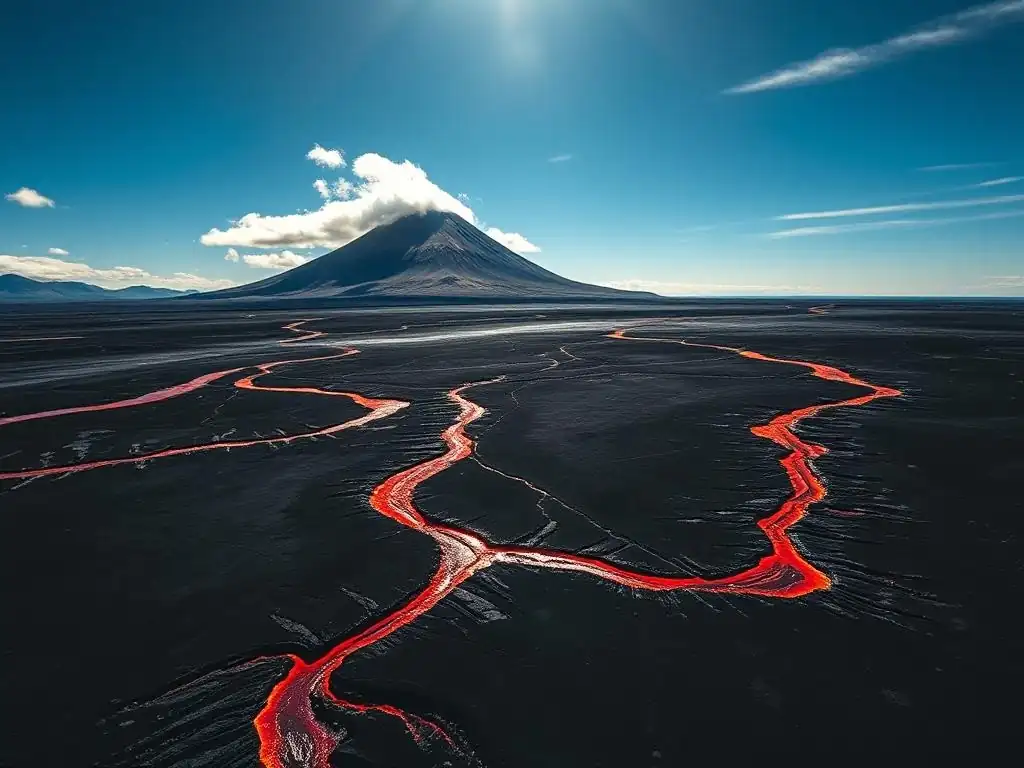
Fissure vent volcanoes are fundamentally different from central vent volcanoes, characterized by eruptions emanating from linear cracks or fissures in the Earth's crust rather than a single, point source. These fissures are typically associated with extensional tectonic settings, where the crust is being pulled apart, creating fractures that allow magma to ascend to the surface.
Fissure vents are common in rift valleys, mid-ocean ridges, and areas undergoing crustal extension. The formation of fissure vent systems is directly linked to the stress regime within the Earth's crust, with tensional forces playing a dominant role in creating these linear pathways for magma ascent.
The length of fissure vents can vary significantly, ranging from a few meters to tens of kilometers. Magma can erupt along the entire length of the fissure or from multiple points along it, leading to the formation of extensive lava flows and volcanic plains. Unlike central vent volcanoes that build up conical edifices, fissure vents often result in relatively flat, broad volcanic landscapes.
The magma supply to fissure vents is typically derived from shallow magma reservoirs or directly from the mantle in areas of significant crustal thinning. The style of eruption from fissure vents is generally effusive, although explosive activity can occur under certain conditions, particularly if magma interacts with groundwater or surface water.
Characteristics of Fissure Vent Eruptions
Fissure vent eruptions are predominantly characterized by effusive activity, with large volumes of basaltic lava flowing out onto the surface. The low viscosity and gas content of basaltic magma facilitate long, fluid lava flows that can cover vast areas. While generally less explosive than central vent eruptions, fissure vent eruptions can still be highly impactful due to the sheer volume of lava erupted and the extensive areas they can inundate. The eruption rate from fissure vents can vary over time, with periods of intense lava effusion followed by periods of relative quiescence.
The linear nature of fissure vents allows for lava to be distributed over a wide area, creating lava fields and volcanic plateaus. The eruptions are often accompanied by fire fountains, where jets of lava are propelled into the air due to the release of dissolved gases. However, sustained explosive eruptions are less common from fissure vents compared to central vents.
The volcanic landforms associated with fissure vents are typically low-relief features, such as lava plains, shield volcanoes with elongated shapes aligned along fissures, and spatter ramparts built up along the fissure itself. Fissure vent eruptions play a crucial role in shaping the Earth's surface, particularly in regions like Iceland, Hawaii, and rift valleys in East Africa.
Effusive Eruptions from Fissure Vents: Laki, Iceland
The Laki fissure eruption in Iceland in 1783-1784 stands as a dramatic example of the scale and impact of effusive eruptions from fissure vents. This eruption, one of the largest basaltic fissure eruptions in historical times, released an estimated 14 cubic kilometers of lava and vast quantities of volcanic gases, including sulfur dioxide. The Laki fissure, part of the Grímsvötn volcanic system, erupted along a 25-kilometer-long fissure, producing extensive lava flows that covered approximately 600 square kilometers of land. The eruption had devastating environmental and societal consequences, both locally and globally.
The massive release of sulfur dioxide during the Laki eruption led to a volcanic fog that spread across Europe, causing respiratory problems and crop failures. In Iceland, the eruption resulted in widespread livestock deaths due to fluorine poisoning from volcanic ash, and crop failures due to the volcanic fog and ashfall.
It is estimated that the eruption contributed to a significant famine in Iceland, killing a large percentage of the population. The Laki eruption serves as a stark reminder of the far-reaching impacts of large fissure vent eruptions, demonstrating their ability to influence not only local landscapes but also regional and even global climate and societal systems.
Lava Flows and Fissure Vents: Spreading Across the Landscape
Lava flows from fissure vents are characterized by their extensive spread and ability to reshape landscapes over vast areas. The fluid nature of basaltic lava, commonly erupted from fissure vents, allows it to flow for considerable distances, creating broad lava fields and plains. These lava flows can inundate valleys, bury pre-existing topography, and create entirely new surfaces. The rate of lava flow advance depends on factors such as lava viscosity, eruption rate, slope angle, and cooling rate. Fast-flowing lava can travel at speeds of several kilometers per hour, while slower flows may advance only a few meters per hour.
The morphology of lava flows from fissure vents varies depending on the lava's cooling and solidification processes. Pahoehoe lava, characterized by its smooth, ropy surface, forms from highly fluid lava flows. Aa lava, with its rough, blocky surface, develops from slightly more viscous lava flows.
The accumulation of multiple lava flows from fissure vents over time can build up thick sequences of basaltic rock, forming volcanic plateaus like the Columbia River Basalt Group in the northwestern United States and the Deccan Traps in India. These vast lava plateaus are testament to the immense volumes of lava that can be erupted from fissure vent systems over geological timescales.
Examples of Notable Fissure Vent Eruptions
Beyond Laki, several other fissure vent eruptions stand out in terms of scale and impact. The Eldgjá eruption in Iceland, around 939 AD, is believed to be even larger than the Laki eruption, representing one of the largest basaltic fissure eruptions of the Holocene epoch. The Myvatn Fires in Iceland (1724-1729) were a series of fissure eruptions that lasted for five years, producing significant lava flows and volcanic features. The ongoing eruptions at Kilauea volcano in Hawaii, although primarily associated with a central vent caldera, have also involved significant fissure vent activity along rift zones extending from the summit.
The Krafla Fires in Iceland (1975-1984) were a series of rifting episodes and fissure eruptions within the Krafla volcanic system, demonstrating the dynamic nature of fissure vent activity in rift zones. The Pu'u 'Ō'ō eruption on Kilauea, which began in 1983 and continued for over 30 years, was largely characterized by effusive eruptions from a series of fissure vents on the volcano's East Rift Zone. These examples illustrate the diverse locations and eruption styles associated with fissure vent volcanism around the globe, highlighting their importance in shaping the Earth's surface and influencing geological and environmental processes.
Central Vents vs. Fissure Vents: A Detailed Comparison
Eruption Styles: Point Source vs. Linear Source
The fundamental difference between central and fissure vents lies in their geometry and the resulting eruption styles. Central vents are point sources of eruption, concentrating volcanic activity at a single location. This often leads to focused, conical volcanic edifices and a wider range of eruption styles, including both explosive and effusive eruptions. The concentration of energy at a central vent can result in powerful explosions, particularly with viscous, gas-rich magmas, as exemplified by stratovolcanoes.
Fissure vents, in contrast, are linear sources of eruption, distributing volcanic activity along a crack in the Earth's crust. This typically results in effusive eruptions of fluid basaltic lava, creating broad lava flows and volcanic plains. While explosive activity is less common from fissure vents, it can occur, particularly if magma interacts with water or if there is a build-up of gas pressure along the fissure. The linear nature of fissure vents leads to a more dispersed release of volcanic energy compared to the focused energy release at central vents, resulting in different volcanic landforms and eruption characteristics.
Landform Development: Cones vs. Plains
The contrasting eruption styles and vent geometries of central and fissure vents directly influence the landforms they create. Central vent volcanoes are primarily associated with the formation of conical volcanic structures, such as stratovolcanoes and shield volcanoes. Stratovolcanoes, built from alternating layers of lava flows and pyroclastic deposits, tend to be steep-sided and conical, reflecting their explosive eruption history. Shield volcanoes, formed by effusive eruptions of fluid basaltic lava from a central vent, have gentler slopes and a broad, shield-like profile.
Fissure vent volcanoes, on the other hand, typically do not build up prominent cones. Instead, they create relatively flat or gently sloping volcanic landscapes dominated by lava plains and lava fields. Extensive lava flows emanating from fissures can cover vast areas, burying pre-existing topography and creating new volcanic surfaces.
While small spatter cones and ramparts may form along fissure vents due to localized accumulation of volcanic material, the overall landform development is characterized by broad, linear features rather than conical edifices. The contrasting landform development reflects the fundamental difference in magma discharge and eruption style between central and fissure vent systems.
Magma Supply: Influence on Vent Type
The nature of magma supply plays a critical role in determining whether a central or fissure vent system develops. Central vent volcanoes often form in settings where magma is supplied from a deep-seated magma chamber that acts as a focused source. This concentrated magma supply promotes the development of a single, dominant conduit to the surface, leading to the formation of a central vent. The magma composition and eruption rate also influence the type of central vent volcano that forms, with more viscous magmas and explosive eruptions building stratovolcanoes, and less viscous magmas and effusive eruptions building shield volcanoes.
Fissure vent systems, in contrast, are typically associated with more distributed magma supply from shallower magma reservoirs or directly from the mantle in extensional tectonic settings. The tensional forces in these settings create fractures that allow magma to ascend along linear pathways, rather than being focused into a single conduit. The magma composition for fissure vent eruptions is predominantly basaltic, reflecting magma sources in the mantle or lower crust. The sustained supply of basaltic magma along fissures, often over long periods, is responsible for the formation of extensive lava plains and volcanic plateaus characteristic of fissure vent volcanism.
Factors Influencing the Formation of Different Volcanic Vent Systems

Tectonic Setting and Vent Formation
The tectonic setting is a primary control on the type of volcanic vent system that develops in a particular region. Central vent volcanoes are commonly associated with convergent plate boundaries, such as subduction zones, where the descent of one tectonic plate beneath another generates magma at depth. This magma rises to the surface, often through focused conduits, leading to the formation of stratovolcanoes and volcanic arcs along the plate boundary. Central vent volcanoes are also found at hotspots, where plumes of hot mantle material rise beneath the lithosphere, creating volcanic island chains like Hawaii.
Fissure vent systems, on the other hand, are predominantly associated with divergent plate boundaries and extensional tectonic settings. Mid-ocean ridges, where tectonic plates are pulling apart, are characterized by extensive fissure vent volcanism, creating new oceanic crust. Continental rift valleys, such as the East African Rift Valley and Iceland, are also regions of significant fissure vent activity, driven by crustal extension and thinning. The extensional stresses in these settings promote the formation of linear fractures that serve as pathways for magma ascent, leading to the development of fissure vent systems and associated volcanic landforms.
Magma Composition and Vent Styles
Magma composition is another crucial factor influencing the type of volcanic vent and the style of eruption. Magmas with high silica content, such as rhyolite and andesite, tend to be more viscous and gas-rich, leading to explosive eruptions and the formation of stratovolcanoes associated with central vents. The high viscosity of these magmas traps dissolved gases, resulting in pressure build-up and explosive release when the confining pressure is overcome. Central vents are well-suited to accommodate the focused release of energy associated with these explosive eruptions.
Basaltic magmas, with lower silica content, are less viscous and typically have lower gas content, leading to more effusive eruptions. Fissure vents are particularly well-suited for the eruption of large volumes of fluid basaltic lava. The linear nature of fissure vents facilitates the widespread dispersal of basaltic lava, creating lava flows and volcanic plains. While central vents can also erupt basaltic lava, fissure vents are the dominant vent type in settings where large-scale effusive basaltic volcanism is prevalent, such as mid-ocean ridges and continental flood basalt provinces.
Crustal Structure and Vent Location
The structure of the Earth's crust also plays a significant role in determining the location and type of volcanic vent systems. Pre-existing weaknesses in the crust, such as faults and fractures, can act as pathways for magma ascent, influencing the location of volcanic vents. In areas with complex fault systems, magma may exploit these weaknesses to reach the surface, potentially leading to the development of fissure vents along fault lines or central vents at fault intersections. The thickness and strength of the crust can also influence vent formation.
In regions with thin crust, such as mid-ocean ridges and rift valleys, magma can more easily reach the surface, often resulting in fissure vent volcanism. Thicker, more stable crust may favor the development of central vent volcanoes, as magma may become focused into singular conduits during its ascent. The presence of sedimentary basins or aquifers within the crust can also affect vent styles.
Interaction of magma with groundwater can lead to phreatomagmatic eruptions, which can be explosive even with basaltic magmas, and may influence the morphology and location of volcanic vents. Therefore, understanding the crustal structure is essential for interpreting the distribution and characteristics of volcanic vent systems.
Volcanic Vent Systems and Monitoring Techniques
Identifying and Mapping Volcanic Vents
Identifying and mapping volcanic vents is a crucial aspect of volcanic hazard assessment and monitoring. For central vent volcanoes, the primary vent is typically located within the summit crater or caldera, which can be identified through geological mapping, remote sensing techniques, and field observations. Satellite imagery, aerial photography, and topographic data are valuable tools for mapping volcanic craters and cones, which are indicative of central vent locations. Geophysical surveys, such as gravity and magnetic surveys, can also help delineate subsurface volcanic structures and identify potential vent locations.
Fissure vents, being linear features, require different mapping techniques. Field mapping along with aerial and satellite imagery are essential for tracing the extent and orientation of fissures. Geophysical methods, such as electrical resistivity surveys, can help identify subsurface fractures and magma pathways associated with fissure vent systems. Volcanic gas emissions and thermal anomalies, detected through remote sensing and ground-based measurements, can also provide clues to the location of active vents, both central and fissure types. Accurate mapping of volcanic vents is fundamental for understanding volcanic systems and assessing potential eruption pathways and hazard zones.
Monitoring Volcanic Activity Around Different Vent Types
Monitoring volcanic activity around different types of volcanic vent systems requires tailored approaches, reflecting their distinct eruption characteristics. For central vent volcanoes, monitoring efforts often focus on detecting changes in summit deformation, gas emissions, seismic activity, and thermal output. Ground deformation measurements, using GPS and InSAR (Interferometric Synthetic Aperture Radar), can detect magma accumulation and pressure changes beneath the volcano, which may precede eruptions from the central vent. Gas monitoring, including measurements of sulfur dioxide and carbon dioxide, can provide insights into magma degassing and potential eruption triggers.
Seismic monitoring is crucial for detecting magma movement and volcanic unrest, with seismometers deployed around the volcano to record volcanic earthquakes and tremor. Thermal monitoring, using infrared sensors, can detect changes in heat flow, which may indicate magma ascent or increased volcanic activity. For fissure vent systems, monitoring efforts also include deformation measurements, but may focus on detecting strain changes along rift zones and fissures.
Seismic monitoring can help track magma migration along fissures, and gas monitoring can detect degassing along the fissure system. Thermal monitoring can identify areas of increased heat flow along fissures, potentially indicating areas of impending eruption. The specific monitoring techniques and strategies are adapted to the unique characteristics of each volcanic vent system to provide early warnings of potential eruptions.
Predicting Eruptions Based on Vent Characteristics
Predicting volcanic eruptions is a complex endeavor, but understanding the characteristics of volcanic vent systems can provide valuable insights and improve forecasting capabilities. Central vent volcanoes, with their focused eruption points, often exhibit precursory signs of unrest that are concentrated around the summit area. Changes in summit deformation, increased gas emissions from the crater, and elevated seismic activity beneath the summit can be indicators of an impending eruption from the central vent.
Monitoring these parameters and detecting significant deviations from background levels can help forecast potential eruptions. However, the timing and style of eruptions from central vents can still be challenging to predict precisely.
Fissure vent eruptions, while often less explosive, can also be preceded by detectable precursory signals. Deformation along rift zones, increased seismic activity along fissures, and changes in gas emissions along the fissure system can indicate magma movement and potential eruption. However, predicting the exact location and extent of fissure vent eruptions can be more challenging, as magma may erupt along different segments of the fissure.
Statistical analysis of past eruption patterns, combined with real-time monitoring data, can improve eruption forecasting for both central and fissure vent systems. Continued research into volcanic vent dynamics and eruption processes is essential for enhancing our ability to predict volcanic eruptions and mitigate volcanic hazards.
Conclusion: The Diversity of Magmatic Escape Routes
The Importance of Understanding Volcanic Vent Systems
Understanding volcanic vent systems is paramount for comprehending the diverse manifestations of volcanism and mitigating volcanic hazards. Volcanic vents are not merely passive conduits; they are integral components of volcanic systems that dictate eruption styles, landform development, and the distribution of volcanic products. Distinguishing between central and fissure vents provides a fundamental framework for classifying volcanoes and interpreting their behavior. Central vent volcanoes, with their focused eruptions and conical edifices, pose distinct hazards compared to fissure vent volcanoes, which are characterized by effusive eruptions and extensive lava flows.
Knowledge of volcanic vent systems is essential for volcanic hazard assessment and risk management. Mapping vent locations, understanding eruption histories, and monitoring volcanic activity around different vent types are crucial for identifying areas at risk and developing effective mitigation strategies. Predicting volcanic eruptions relies on understanding the processes that control magma ascent and eruption, and the characteristics of volcanic vent systems provide valuable insights into these processes. Continued research and monitoring efforts focused on volcanic vent systems are essential for improving our ability to forecast volcanic eruptions and protect communities living in volcanic regions.
Further Research and Exploration of Volcanic Vents
Further research and exploration of volcanic vent systems are crucial for advancing our understanding of volcanism and improving volcanic hazard assessments. Detailed studies of the internal structure of volcanic vents, using geophysical techniques and drilling projects, can provide valuable insights into magma pathways and eruption dynamics.
Investigating the processes that control the formation and evolution of different vent types, through field studies, laboratory experiments, and numerical modeling, is essential for developing more comprehensive models of volcanic systems. Exploring volcanic vents in diverse tectonic settings and magma compositions will broaden our understanding of the factors that influence vent morphology and eruption behavior.
Continued monitoring of active volcanic vent systems, using advanced techniques such as satellite remote sensing and real-time geophysical networks, is crucial for improving eruption forecasting capabilities. Developing improved methods for identifying and mapping subsurface volcanic vents, particularly in regions with complex volcanic histories, is essential for comprehensive hazard assessments.
Research into the long-term evolution of volcanic vent systems, including their lifespan and potential for reactivation, is important for understanding long-term volcanic hazards. By continuing to explore and study volcanic vent systems, we can deepen our knowledge of Earth's dynamic processes and enhance our ability to live safely in volcanic environments.
Frequently Asked Questions
What are the two main types of volcanic vent systems discussed on VolcanoExplorers.org?
The article primarily covers central vents, which are singular openings where magma erupts, and fissure vents, which are linear cracks from which lava flows.
How do central vents differ from fissure vents in terms of eruption style?
Central vents often produce more explosive eruptions due to the concentrated release of pressure, while fissure vents tend to generate more effusive eruptions with flowing lava.
Which type of volcanic vent is more likely to create a shield volcano?
Fissure vents, with their effusive lava flows, are more likely to contribute to the formation of shield volcanoes, which are characterized by their broad, gently sloping shapes.
Does VolcanoExplorers.org provide information on the geological processes that lead to the formation of different vent types?
While the article focuses on the vent types themselves, VolcanoExplorers.org generally offers educational content on magma formation and other geological processes that influence volcanic activity.
VolcanoExplorers.org features safety guides and evacuation tips specifically tailored for people living near active volcanoes, which are crucial regardless of the type of vent involved.
Final Reflection: Earth's Fiery Breath
The exploration of central and fissure vents, the diverse escape routes for magma, reveals not just geological processes but also the raw power shaping our planet. Understanding these volcanic systems is more crucial than ever in a world increasingly vulnerable to natural disasters. As populations expand and encroach upon volcanic regions, a deeper comprehension of these geological features becomes paramount for effective risk assessment and mitigation strategies.
The study of volcanic vents has profoundly shaped our understanding of Earth's dynamic nature, influencing not only scientific research but also cultural perceptions of power and destruction. Witnessing the aftermath of eruptions, whether from a concentrated central vent or a sprawling fissure, evokes a sense of awe and humility before the forces of nature. The volcano reminds us that the earth is alive, that it is constantly changing, and that we are but temporary residents on its surface.
This quote encapsulates the enduring impact of volcanic activity on our collective consciousness, urging us to respect and learn from these powerful phenomena.
Now, consider the implications of this knowledge. How can you, as an individual, contribute to a greater understanding and preparedness for volcanic events? Reflect on the importance of scientific literacy and the role it plays in shaping informed decisions about land use, resource management, and community resilience. Let the fiery breath of Earth inspire you to advocate for responsible stewardship of our planet and to embrace the power of knowledge in mitigating the risks posed by these awe-inspiring geological forces.
Unearth Your Inner Volcanologist!
Thanks for joining us on this fiery journey into the world of volcanic vents! We hope you now have a deeper understanding of how magma reaches the surface through central and fissure vents. Ready to further explore the fascinating world of volcanoes?
Here are a few ways to ignite your passion:
- Start a Volcano Log: Begin documenting different volcanoes you encounter, either in person or through research. Focus on identifying whether they erupt primarily from central or fissure vents. This will solidify your understanding and build a personal collection of volcanic wonders.
- Share this article with fellow Earth science enthusiasts and spark a conversation about the most interesting facts you learned. Consider forming a study group!
- Dive deeper into our "Volcano Glossary"—unlock the secrets of volcanic terminology and become a true volcano expert.
What are three volcanoes that come to mind when you think of central versus fissure vents, and why? Share your examples in the comments below!