
The Ash Cloud's Shadow: Tracking the Global Reach of Volcanic Climate Forcing

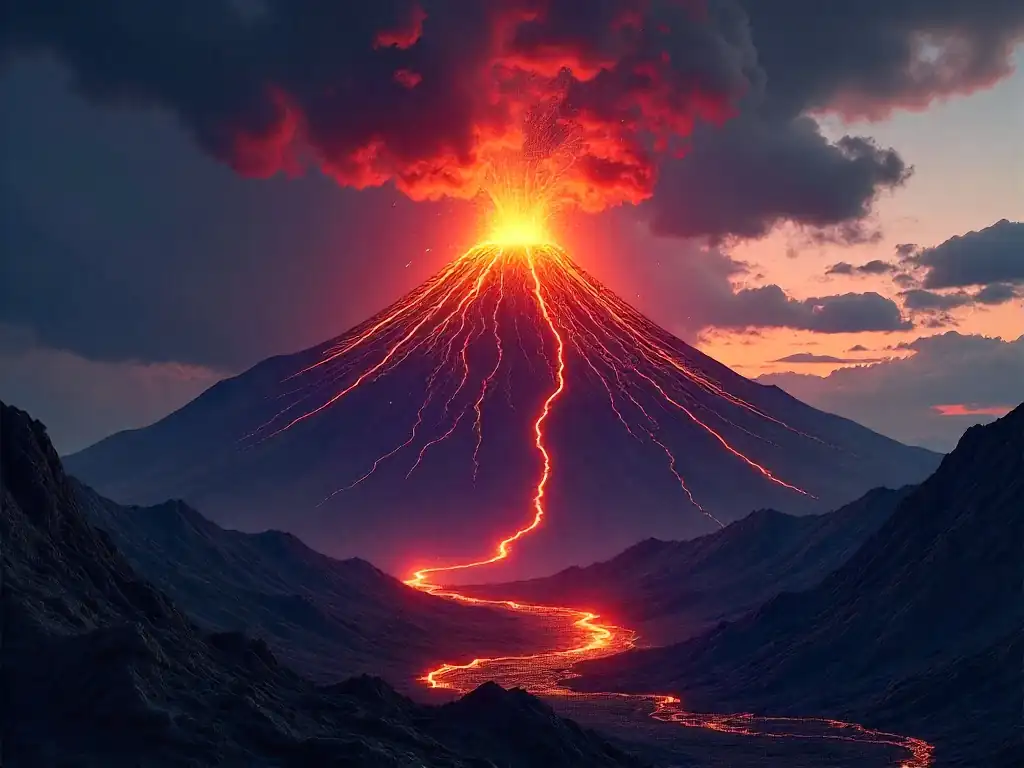
Welcome to Volcano Explorers!
Ever wondered how a single eruption can cast a shadow across the entire planet? Dive into the heart of our latest exploration and uncover the intricate details of the global volcanic climate impact. Prepare to be amazed as we unravel the complex relationship between fiery eruptions and the delicate balance of Earth's climate. This isn't just about ash; it's about a planet-altering phenomenon. Ready to see the bigger picture?
Defining Volcanic Climate Forcing: An Introduction
Volcanic climate forcing refers to the transient alteration in Earth's radiative balance caused by volcanic eruptions, primarily through the injection of gases and particles into the stratosphere. When a volcano erupts explosively, it releases significant quantities of sulfur dioxide (SO₂), ash, and other aerosols into the atmosphere. These volcanic emissions, especially sulfur dioxide which converts into sulfate aerosols, can have a profound, albeit temporary, impact on the planet's climate system.
Unlike greenhouse gases that trap heat, volcanic aerosols primarily reflect incoming solar radiation back into space, leading to a net cooling effect on the Earth's surface. This cooling influence is quantified as 'negative radiative forcing' because it reduces the amount of solar energy absorbed by the Earth and atmosphere.
Understanding volcanic climate forcing is crucial for comprehending natural climate variability and disentangling it from anthropogenic climate change. The magnitude and duration of this forcing are determined by several factors, including the eruption's intensity, the altitude reached by the volcanic plume, and the latitude of the eruption.
For instance, eruptions in the tropics tend to have a more widespread and longer-lasting climate impact because stratospheric aerosols are more easily distributed globally from the equatorial regions. Furthermore, the composition of volcanic emissions plays a key role; while ash has a relatively short lifespan in the atmosphere, sulfate aerosols can persist for one to two years in the stratosphere, leading to a more prolonged period of climate influence.
- How do volcanoes impact the global climate?
- What is "volcanic climate forcing," and how does it work?
- How long does the climate impact of a volcanic eruption typically last?
- Which volcanic eruptions have had the most significant impact on global climate in recorded history?
- How do volcanologists track and measure the global impact of volcanic eruptions on the climate?
Frequently Asked Questions
How do volcanoes impact the global climate?
Volcanoes release large quantities of sulfur dioxide into the stratosphere, which forms sulfate aerosols. These aerosols reflect sunlight back into space, leading to a temporary cooling effect on the global climate.
What is "volcanic climate forcing," and how does it work?
Volcanic climate forcing refers to the influence of volcanic eruptions on the Earth's climate system. It primarily works by altering the amount of solar radiation reaching the Earth's surface, leading to changes in temperature.
How long does the climate impact of a volcanic eruption typically last?
The cooling effect from volcanic eruptions is generally short-lived, typically lasting from one to three years. This is because the sulfate aerosols are eventually washed out of the atmosphere by precipitation.
Which volcanic eruptions have had the most significant impact on global climate in recorded history?
Eruptions such as Mount Tambora (1815) and Mount Pinatubo (1991) are well-known for their substantial cooling effects. These eruptions injected massive amounts of aerosols into the stratosphere, causing measurable global temperature drops.
How do volcanologists track and measure the global impact of volcanic eruptions on the climate?
Volcanologists use a variety of methods, including satellite observations to monitor aerosol distribution, climate models to simulate the effects of eruptions, and ice core analysis to reconstruct past volcanic activity and its climate impacts.
Final Reflection: Echoes of Eruption, Whispers of Change
The exploration of volcanic climate forcing, as detailed throughout this article, isn't merely an academic exercise; it's a vital lens through which we understand the fragile interconnectedness of our planet. The ash cloud's shadow, once a distant threat, now serves as a stark reminder of the profound and often unpredictable influence of natural events on global climate patterns, demanding a more proactive and informed approach to climate science.
The ongoing impact of volcanic eruptions on global temperatures and atmospheric composition continues to shape our world in subtle yet significant ways. From altering precipitation patterns to influencing ocean currents, the echoes of these events resonate far beyond their immediate aftermath. The Earth does not belong to us: we belong to the Earth.
- Marlee Matlin. This quote encapsulates the profound responsibility we have to understand and respect the powerful forces that shape our planet.
As we conclude this journey through the science of volcanic climate impact, I invite you to reflect on your own role in safeguarding our shared future. Consider how the lessons learned from these natural events can inform your daily choices and inspire you to advocate for sustainable practices. Let the ash cloud's shadow not be a symbol of fear, but a catalyst for awareness, action, and a deeper appreciation for the delicate balance of our global climate.
Alright, here's a CTA tailored for your "The Ash Cloud's Shadow: Tracking the Global Reach of Volcanic Climate Forcing" article on Volcano Explorers (volcanoexplorers.org):
Deepen Your Understanding: Unveil Volcanoes' Impact!
Thank you for exploring the intricate connections between volcanic eruptions and global climate. We hope this article has provided you with valuable insights into the far-reaching effects of volcanic climate forcing. Now, take action to further your understanding and contribute to the conversation:
- Share this article with friends, family, or colleagues interested in climate science or volcanology to broaden awareness.
- Explore the Volcano Explorers interactive map to see real-time data and historical records of volcanic eruptions worldwide. You can even contribute your own observations!
- Delve into our recommended reading list of peer-reviewed research papers on volcanic climate forcing to gain even greater scientific depth.
What specific volcanic event, past or present, do you believe has had the most significant impact on our global climate, and why? Share your thoughts in the comments below!