
The Enigma of Eruption Styles: Why Volcanoes Behave So Differently

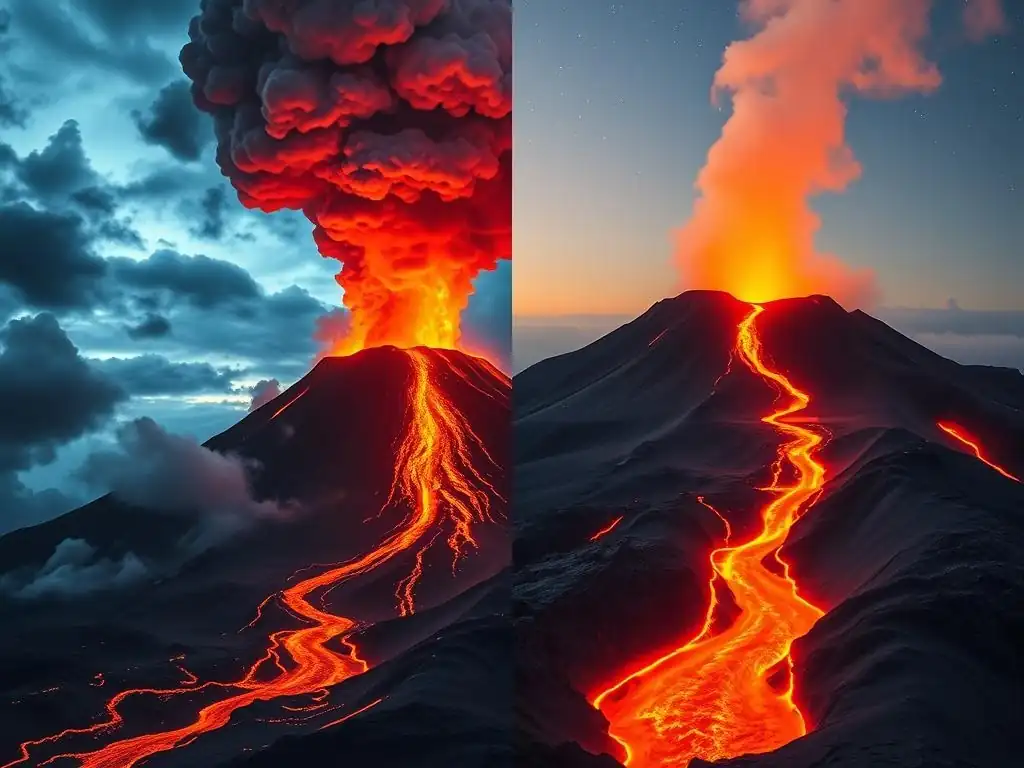
Welcome to Volcano Explorers, where the Earth breathes fire. Prepare to be captivated by the raw power and beauty of volcanoes. Have you ever wondered why some volcanoes gently weep lava while others explode with unimaginable force? Join us as we unravel the enigma of different types of volcanic eruptions and discover the secrets behind these dramatic displays of nature's fury. Your journey into the heart of volcanic science begins now... Dare to explore?
- Understanding Different Types of Volcanic Eruptions: An Introduction
- Effusive vs. Explosive Eruptions: The Two Main Styles
- Factors Influencing Volcanic Eruption Styles
- Examining the Spectrum of Volcanic Eruption Types
- Case Studies: Comparing Eruption Styles in Different Volcanoes
- Predicting Volcanic Eruptions: Assessing the Potential for Different Eruption Styles
- Conclusion: The Dynamic and Diverse World of Volcanic Eruptions.
-
Frequently Asked Questions
- What are the main factors that determine the style of a volcanic eruption?
- How does the silica content of magma affect the type of eruption?
- Can a volcano change its eruption style over time?
- What are some examples of different types of volcanic eruptions?
- Are there warning signs that can indicate a change in a volcano's eruption style?
- Final Reflection: Embracing Volcanic Diversity
- Unleash Your Inner Volcanologist: Explore the Fiery Depths!
Understanding Different Types of Volcanic Eruptions: An Introduction
Volcanic Activity: An Overview
Volcanic activity, in its most basic form, is the Earth's way of releasing internal heat and pressure. This release manifests in a spectacular array of phenomena, from slow-moving rivers of molten rock to cataclysmic explosions that can send ash and gas miles into the atmosphere. Volcanoes are not monolithic entities; each one is a unique geological feature with its own personality, dictated by a complex interplay of factors deep beneath the Earth's surface.
Understanding these factors is key to deciphering why some volcanoes ooze lava gently while others erupt with devastating force. The study of volcanology seeks to unravel these mysteries, helping us to not only appreciate the raw power of nature but also to mitigate the risks associated with living in volcanic regions.
The Earth's crust is fractured into tectonic plates, and volcanic activity is often concentrated at the boundaries where these plates interact. These interactions can take several forms: plates colliding and one sliding beneath the other (subduction zones), plates pulling apart (divergent boundaries), or plates sliding past each other (transform boundaries). While transform boundaries are less commonly associated with volcanism, subduction and divergent zones are hotbeds of volcanic activity.
The type of plate boundary, along with the composition of the Earth's mantle and crust in a particular region, significantly influences the characteristics of the magma produced, and consequently, the style of volcanic eruption that will occur. This interplay of geological forces results in the fascinating diversity we observe in volcanic landscapes and eruption styles around the globe.
Effusive vs. Explosive Eruptions: The Two Main Styles
Defining Effusive Volcanic Activity: Gentle Lava Flows
Effusive volcanic activity is characterized by the outpouring of lava onto the Earth's surface. This type of eruption is often described as "gentle" in comparison to its explosive counterpart, but this is a relative term. Effusive eruptions can still produce significant volumes of lava that can cover vast areas and alter landscapes dramatically.
The key feature of effusive eruptions is the relatively low viscosity of the magma involved. Viscosity, in this context, refers to the magma's resistance to flow – think of honey versus water. Magmas that produce effusive eruptions are typically less viscous, allowing them to flow easily across the surface.
This lower viscosity is primarily due to a lower silica content in the magma. Basaltic magmas, for instance, are rich in iron and magnesium and relatively poor in silica. These magmas are common at divergent plate boundaries and hotspots, where the Earth's mantle partially melts to generate magma.
As this less viscous magma rises to the surface, dissolved gases can escape relatively easily, preventing pressure buildup. The result is a steady, often spectacular, flow of lava, creating features like lava flows, lava lakes, and lava fountains. Volcanoes known for their effusive activity include Kilauea in Hawaii and Piton de la Fournaise on Réunion Island, which frequently exhibit stunning displays of flowing lava without the violent explosions associated with other eruption types.
Defining Explosive Volcanic Activity: Violent Ejections of Ash and Gas
In stark contrast to effusive eruptions, explosive volcanic activity is defined by the forceful ejection of fragmented magma, ash, gas, and rocks into the atmosphere. These eruptions are driven by the rapid expansion of gases within a highly viscous magma. Imagine shaking a bottle of soda and then quickly opening it – the sudden release of pressure allows the dissolved carbon dioxide to violently escape, propelling liquid and gas outwards.
A similar process, albeit on a much grander and more powerful scale, occurs in explosive volcanic eruptions. The high viscosity of the magma traps dissolved gases, leading to a significant pressure buildup beneath the surface.
The magmas responsible for explosive eruptions are typically richer in silica, such as andesitic and rhyolitic compositions. This higher silica content makes the magma more viscous, hindering the escape of dissolved gases like water vapor, carbon dioxide, and sulfur dioxide. As the magma ascends, the pressure decreases, and these dissolved gases begin to exsolve, forming bubbles.
In viscous magma, these bubbles struggle to escape and instead coalesce, increasing the internal pressure. When the pressure exceeds the strength of the surrounding rocks, a violent explosion occurs, fragmenting the magma into ash, pumice, and volcanic bombs, and propelling them skyward in towering eruption columns or laterally in devastating pyroclastic flows. Mount St. Helens' 1980 eruption and the eruption of Mount Vesuvius in 79 AD, which buried Pompeii and Herculaneum, are stark reminders of the destructive power of explosive volcanic eruptions.
Factors Influencing Volcanic Eruption Styles
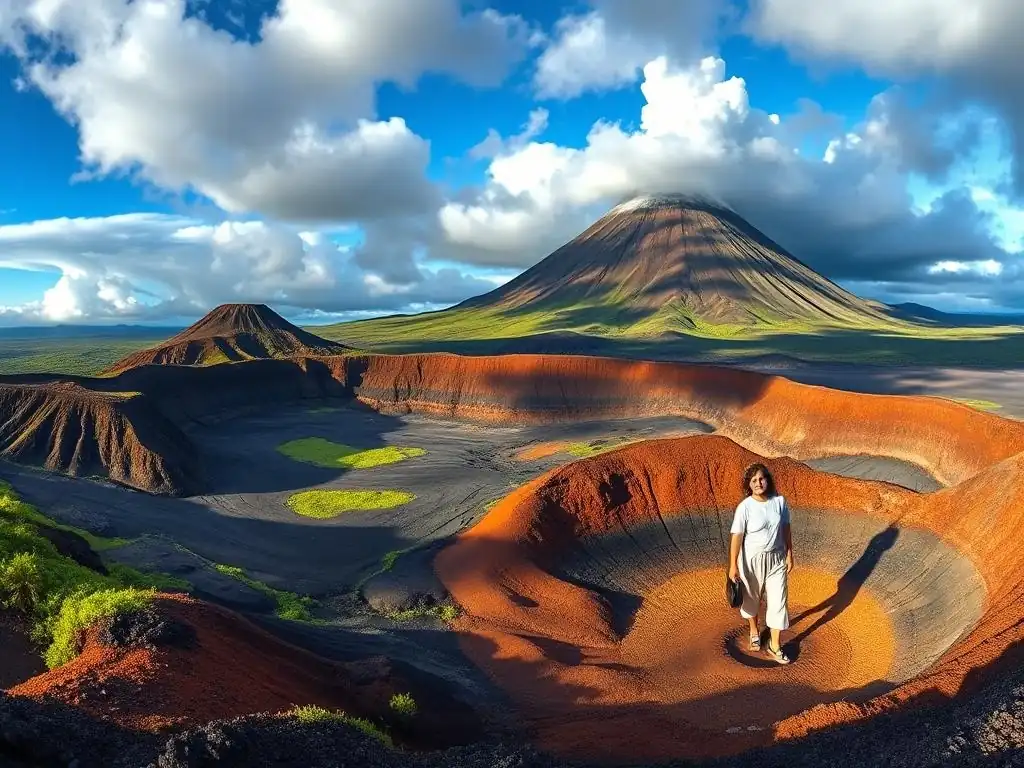
Magma Composition: The Key to Eruption Behavior
Silica Content and Viscosity: How They Determine Eruption Style
The composition of magma is arguably the most critical factor determining whether a volcanic eruption will be effusive or explosive. Specifically, the silica (silicon dioxide, SiO2) content of magma plays a dominant role in controlling its viscosity, which in turn dictates eruption style. Magma with a low silica content, typically less than 52% SiO2, is considered basaltic.
Basaltic magma is relatively fluid and flows easily, much like motor oil. This low viscosity is due to the relatively simple structure of silica molecules at these concentrations, allowing them to move past each other with less resistance. Consequently, gases can escape more readily from basaltic magma, leading to gentler, effusive eruptions.
Conversely, magma with a high silica content, generally above 63% SiO2, such as rhyolitic magma, is extremely viscous – resembling toothpaste or even peanut butter. The high silica content leads to the formation of complex, interconnected chains of silica tetrahedra within the magma. These complex structures impede flow and dramatically increase viscosity.
In these highly viscous magmas, dissolved gases are trapped, unable to escape easily. As the magma rises and pressure decreases, these trapped gases expand rapidly, eventually overcoming the strength of the surrounding rock and leading to explosive eruptions. Andesitic magma, with an intermediate silica content (around 52-63% SiO2), exhibits intermediate viscosity and can produce both effusive and explosive eruptions, depending on other factors.
Gas Content: Driving Force Behind Explosive Eruptions
While silica content dictates magma viscosity, the amount and type of dissolved gases within the magma are the primary drivers of explosive volcanic eruptions. Magma contains dissolved gases, primarily water vapor (H2O), carbon dioxide (CO2), and sulfur dioxide (SO2), among others. The concentration of these gases can vary significantly depending on the magma's origin, depth of formation, and interaction with surrounding rocks. Magma generated at subduction zones, for example, tends to be richer in water vapor due to the incorporation of water-rich oceanic crust and sediments.
As magma ascends towards the Earth's surface, the surrounding pressure decreases. This reduction in pressure causes the dissolved gases to exsolve, or come out of solution, forming bubbles. In low-viscosity magma, these bubbles can rise and escape relatively easily, leading to effusive eruptions. However, in high-viscosity magma, the bubbles are trapped.
As more gas exsolves, the number and size of bubbles increase, building up immense pressure within the magma chamber and conduit. If the pressure becomes sufficiently high to overcome the confining strength of the surrounding rocks, a violent explosion occurs, propelling magma fragments, ash, and gas into the atmosphere. The more gas-rich the magma and the more effectively it is trapped by high viscosity, the more explosive the potential eruption.
Tectonic Setting: Linking Plate Boundaries to Eruption Types
Subduction Zones: Sites of Explosive Stratovolcanoes
The tectonic setting of a volcano plays a crucial role in determining the type of magma it produces and, consequently, its typical eruption style. Subduction zones, where one tectonic plate slides beneath another, are particularly associated with explosive volcanism and the formation of stratovolcanoes, also known as composite volcanoes. These zones are characterized by the recycling of oceanic crust back into the Earth's mantle. As the subducting plate descends, it releases water and other volatile compounds into the overlying mantle wedge. This introduction of water lowers the melting point of the mantle rocks, leading to the generation of magma.
The magma produced at subduction zones is typically andesitic to rhyolitic in composition, meaning it is relatively rich in silica and has a high viscosity. This is partly due to the melting of both mantle material and crustal material, which is generally more silica-rich than the mantle. Furthermore, the incorporation of water from the subducting plate increases the gas content of the magma.
The combination of high viscosity and high gas content makes subduction zone volcanoes prone to explosive eruptions. Stratovolcanoes, like Mount Fuji in Japan, Mount Rainier in the USA, and Popocatépetl in Mexico, are iconic examples of volcanoes formed in subduction zone settings and are renowned for their potentially violent explosive eruptions.
Divergent Boundaries: Home to Effusive Shield Volcanoes
In contrast to subduction zones, divergent plate boundaries, where tectonic plates are moving apart, are typically associated with effusive volcanism and the formation of shield volcanoes. These boundaries are characterized by the upwelling of hot mantle material to fill the gap created by the separating plates. As the pressure decreases on this rising mantle material, it undergoes decompression melting, generating large volumes of magma.
The magma produced at divergent boundaries is predominantly basaltic in composition, characterized by low silica content and low viscosity. This basaltic magma is generated directly from the Earth's mantle and is relatively dry, meaning it has a lower gas content compared to magmas from subduction zones. The combination of low viscosity and lower gas content favors effusive eruptions.
Shield volcanoes, such as Mauna Loa and Mauna Kea in Hawaii and the volcanoes of Iceland, are classic examples of volcanoes formed at divergent boundaries and hotspots. They are characterized by their broad, gently sloping profiles, built up over time by countless flows of fluid basaltic lava. While eruptions at shield volcanoes can be spectacular with lava fountains and extensive lava flows, they are generally less violently explosive than those at stratovolcanoes.
Conduit Geometry: The Shape of the Plumbing System
Narrow Conduits and Explosive Eruptions: Fragmentation and Pressure Buildup
The shape and geometry of the volcanic conduit, the pathway through which magma travels from the magma chamber to the surface, also influence eruption style. A narrow conduit can significantly contribute to pressure buildup and magma fragmentation, promoting explosive eruptions. Imagine trying to force a large volume of fluid through a narrow pipe – pressure will build up significantly. Similarly, in a volcano with a narrow conduit, as viscous, gas-rich magma ascends, it encounters increased resistance and pressure.
This constriction in the conduit can lead to several processes that enhance explosivity. Firstly, the increased pressure can further inhibit gas escape, exacerbating the pressure buildup within the magma. Secondly, the shearing forces within the narrow conduit can cause magma fragmentation.
As the viscous magma is forced through the constricted passage, it can be torn apart, creating smaller fragments. This fragmentation dramatically increases the surface area of the magma exposed to the expanding gases, leading to more efficient gas release and a more violent explosion. Volcanoes with steep-sided cones and evidence of past explosive eruptions often have narrow conduits that contribute to their characteristic eruption style.
Wide Conduits and Effusive Eruptions: Reduced Pressure and Free Flow
Conversely, a wide volcanic conduit facilitates effusive eruptions by reducing pressure and allowing for a smoother, less restricted flow of magma to the surface. A wide conduit acts like a large pipe, allowing a greater volume of magma to pass through with less resistance. This reduced resistance translates to lower pressure buildup within the conduit. With lower pressure, dissolved gases in the magma can escape more easily and gradually, rather than being trapped and building up to an explosive threshold.
Furthermore, a wide conduit reduces the shearing forces on the ascending magma, minimizing fragmentation. The magma can flow more freely and continuously, resulting in effusive eruptions characterized by lava flows, lava fountains, and lava lakes. Shield volcanoes, known for their effusive eruptions, often possess wide conduit systems that allow for the efficient transport of large volumes of basaltic magma to the surface. The broad, gently sloping shape of shield volcanoes is a testament to the sustained, effusive activity facilitated by their wide conduit systems.
Examining the Spectrum of Volcanic Eruption Types
Hawaiian Eruptions: Gentle Lava Fountains
Hawaiian eruptions are named after the volcanoes of Hawaii, which are renowned for this type of effusive activity. They are characterized by the gentle eruption of fluid basaltic lava, often from vents or fissures. These eruptions are typically the least explosive type of volcanic eruption. The low viscosity and low gas content of basaltic magma allow for the easy escape of gases, preventing significant pressure buildup. Hawaiian eruptions are often visually stunning, featuring lava fountains that can reach hundreds of meters in height as dissolved gases propel incandescent lava into the air.
These lava fountains are not explosive in the same way as other eruption types; rather, they are a result of gas bubbles expanding and bursting at the surface of the lava. The ejected lava then falls back to the ground, often forming lava flows that can travel for kilometers.
Hawaiian eruptions can also produce lava lakes, where molten lava accumulates in craters or depressions, and lava flows that advance slowly but steadily across the landscape. Kilauea volcano in Hawaii is a prime example, frequently exhibiting Hawaiian-style eruptions with spectacular lava fountains and extensive lava flows, posing hazards primarily from lava inundation.
Strombolian Eruptions: Moderate Bursts of Gas and Lava
Strombolian eruptions are named after the Stromboli volcano in Italy, which has been in near-continuous eruption for centuries, showcasing this moderately explosive style. Strombolian eruptions are characterized by discrete, episodic bursts of gas and lava. These bursts are more energetic than Hawaiian eruptions but less violent than Vulcanian or Plinian eruptions. They typically involve the ejection of incandescent lava bombs, lapilli (gravel-sized fragments), and ash to heights ranging from tens to hundreds of meters. The eruptions are driven by the bursting of large gas bubbles within the magma conduit.
The magma involved in Strombolian eruptions is generally basaltic or andesitic, with slightly higher viscosity and gas content than that of Hawaiian eruptions. This slightly increased viscosity and gas pressure lead to the more energetic bursts. Strombolian eruptions are often described as "fire fountains" or "cannon-like" explosions.
They are typically rhythmic and predictable, occurring at intervals ranging from minutes to hours. While Strombolian eruptions are not as devastating as Plinian eruptions, they can still pose hazards from falling volcanic bombs and ashfall in areas close to the vent. Stromboli volcano itself is a classic example, consistently putting on displays of Strombolian activity.
Vulcanian Eruptions: Short-Lived, Violent Explosions
Vulcanian eruptions are named after the Italian island of Vulcano, although Vulcano itself doesn't exhibit purely Vulcanian eruptions today. These eruptions are characterized by short-lived, moderately explosive bursts of ash, volcanic bombs, and blocks. They are more violent than Strombolian eruptions but generally less sustained and less powerful than Plinian eruptions. Vulcanian eruptions are often initiated by the buildup of pressure beneath a solidified lava plug or cap in the volcanic conduit. This plug acts like a cork, preventing the escape of gases and magma.
As pressure builds beneath the plug, it eventually exceeds the strength of the plug, leading to a sudden and violent explosion that shatters the plug and ejects fragmented material. Vulcanian eruptions typically produce ash columns that rise several kilometers into the atmosphere, along with ballistic projectiles that can be thrown considerable distances from the vent. The magma involved in Vulcanian eruptions is typically andesitic to rhyolitic, with higher viscosity and gas content than Strombolian magma.
Vulcanian eruptions can be hazardous due to the ballistic projectiles, ashfall, and the potential to escalate into more explosive eruption types. Volcanoes like Sakurajima in Japan and some eruptions at Mount Etna in Italy exhibit Vulcanian characteristics.
Plinian Eruptions: Catastrophic Columns of Ash and Gas
Plinian eruptions are named after Pliny the Younger, who described the eruption of Mount Vesuvius in 79 AD. These are the most explosive and catastrophic type of volcanic eruption. Plinian eruptions are characterized by sustained, powerful ejections of gas, ash, and pumice, forming towering eruption columns that can reach tens of kilometers into the stratosphere. These columns can disrupt air traffic and inject vast amounts of volcanic aerosols into the atmosphere, potentially affecting global climate. Plinian eruptions are driven by highly viscous, gas-rich magma, typically rhyolitic or dacitic in composition.
The extreme explosivity of Plinian eruptions is due to the combination of high viscosity, which traps gases effectively, and very high gas content. As the magma ascends, the rapid exsolution of gases, coupled with the inability of the viscous magma to decompress smoothly, leads to tremendous pressure buildup and subsequent explosive fragmentation. Plinian eruptions often produce pyroclastic flows and surges, which are fast-moving, extremely hot mixtures of gas and volcanic debris that can devastate areas surrounding the volcano.
Ashfall from Plinian eruptions can blanket vast regions, causing building collapse, crop failure, and respiratory problems. The 79 AD eruption of Vesuvius, the 1980 eruption of Mount St. Helens, and the 1991 eruption of Mount Pinatubo are all examples of devastating Plinian eruptions.
Phreatomagmatic Eruptions: The Power of Water-Magma Interaction
Phreatomagmatic eruptions are a distinct category of volcanic eruptions driven by the interaction of magma or lava with external water sources, such as groundwater, surface water, or ice. The rapid heating and vaporization of water in contact with hot magma or lava leads to explosive eruptions. The intensity of phreatomagmatic eruptions depends on the amount and temperature of magma, the volume and type of water, and the depth of interaction. Phreatomagmatic eruptions are generally more explosive than purely magmatic eruptions because the rapid vaporization of water creates a large volume expansion, contributing to fragmentation and ejection of material.
The interaction between magma and water can occur in various settings, leading to different types of phreatomagmatic eruptions. Coastal and island volcanoes, volcanoes beneath glaciers, and volcanoes located near lakes or aquifers are particularly prone to phreatomagmatic activity. The fragmentation process in phreatomagmatic eruptions is often more efficient than in magmatic eruptions, resulting in finer-grained ash and the formation of characteristic landforms like tuff rings and maars.
Surtseyan Eruptions: Formation of New Islands Through Explosive Interaction
Surtseyan eruptions are a specific type of phreatomagmatic eruption that occurs in shallow seawater or lake water. They are named after the island of Surtsey, which emerged off the coast of Iceland in 1963-1967 during a prolonged Surtseyan eruption. These eruptions are characterized by highly explosive interactions between basaltic magma and water, leading to the formation of tuff rings and tuff cones. When magma encounters shallow water, the rapid heat transfer causes violent steam explosions.
These explosions fragment the magma and surrounding rocks into fine ash and lapilli, which are then ejected in jets and plumes. The continuous accumulation of this fragmented material around the vent builds up a tuff ring or cone. Surtseyan eruptions are often characterized by dark, cauliflower-shaped eruption clouds rich in steam and ash. The island of Surtsey itself is a classic example of a volcanic island formed entirely by Surtseyan eruptions. These eruptions are particularly important in the formation of new volcanic islands and coastal landforms.
Phreatic Eruptions: Steam-Driven Explosions Without Magma Ejection
Phreatic eruptions, also known as steam-blast eruptions, are explosive eruptions driven by the superheating of groundwater or surface water by magma or hot rocks, but without the direct ejection of magma. In phreatic eruptions, the heat from a volcanic system interacts with water, causing it to flash into steam.
This rapid vaporization of water creates a powerful explosion that can eject steam, water, rock fragments, and ash, but typically does not involve the eruption of fresh magma. Phreatic eruptions can occur even when there is no new magma reaching the surface, making them potentially hazardous as they can be sudden and unexpected.
Phreatic eruptions are often associated with hydrothermal systems within volcanoes, where groundwater is heated by magma or hot rocks at depth. They can be triggered by various factors, including changes in hydrothermal activity, seismic events, or even heavy rainfall that increases groundwater pressure. Phreatic eruptions are generally smaller in scale than magmatic eruptions, but they can still be dangerous due to the suddenness of the explosions and the ejection of hot rocks and steam. Examples of volcanoes that have experienced phreatic eruptions include Mount Ontake in Japan in 2014 and Whakaari/White Island in New Zealand in 2019.
Case Studies: Comparing Eruption Styles in Different Volcanoes
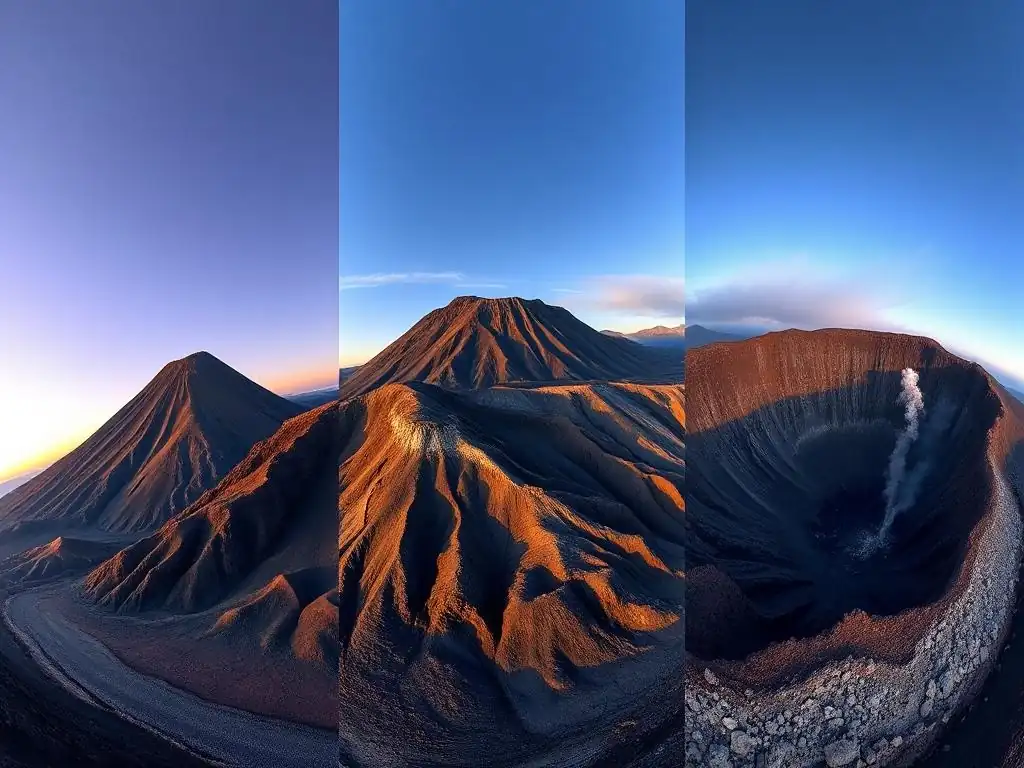
Kilauea, Hawaii: A Classic Example of Effusive Volcanism
Kilauea volcano on the Big Island of Hawaii is arguably the world's most active volcano and a quintessential example of effusive volcanism. For decades, Kilauea has been characterized by frequent, and sometimes continuous, eruptions of basaltic lava. Its eruptions are predominantly Hawaiian in style, featuring lava flows, lava fountains, and lava lakes. The magma erupted at Kilauea is basaltic, with low silica content and low viscosity, originating from a hotspot in the Earth's mantle beneath the Pacific Plate. This magma rises readily to the surface, and its low viscosity allows for easy degassing, resulting in relatively gentle eruptions.
Kilauea's Puʻuʻōʻō eruption, which lasted from 1983 to 2018, was a prolonged period of effusive activity, producing vast lava flows that covered significant areas and altered the coastline of the Big Island. The 2018 lower Puna eruption was another significant effusive event, characterized by fissure eruptions that generated fast-moving lava flows that destroyed communities and reshaped the landscape. Kilauea's eruptions, while largely effusive, are not without hazards.
Lava flows can destroy infrastructure, and volcanic gases, such as sulfur dioxide, can pose health risks. However, the eruptions are generally predictable and less violently explosive compared to volcanoes like Mount St. Helens.
Mount St. Helens, USA: A Devastating Explosive Eruption
Mount St. Helens, located in Washington State, USA, is a stratovolcano that experienced one of the most well-documented and devastating explosive eruptions of the 20th century on May 18, 1980. This eruption was a stark contrast to the effusive style of Kilauea, showcasing the destructive power of explosive volcanism. The 1980 eruption of Mount St. Helens was a complex event that included a Plinian eruption and a massive lateral blast. The magma involved was dacitic, with high silica content and high viscosity, typical of stratovolcanoes in subduction zones.
Leading up to the eruption, Mount St. Helens exhibited increased seismic activity and ground deformation, indicating magma movement beneath the surface. The eruption was triggered by a magnitude 5.1 earthquake, which caused a massive landslide on the volcano's north flank, depressurizing the magma chamber and triggering a lateral blast. This lateral blast, traveling at supersonic speeds, devastated an area of over 600 square kilometers.
Following the lateral blast, a Plinian eruption ensued, sending an ash column 24 kilometers into the atmosphere. Pyroclastic flows and surges further added to the devastation. The 1980 eruption of Mount St. Helens serves as a powerful reminder of the hazards associated with explosive stratovolcanoes and the importance of volcano monitoring and hazard assessment.
Eyjafjallajökull, Iceland: A Volcanic Eruption with Global Impact
Eyjafjallajökull, a volcano in Iceland beneath an ice cap, gained global notoriety in 2010 due to its eruption, which, while not exceptionally large in volcanic terms, had a profound impact on air travel worldwide. The 2010 Eyjafjallajökull eruption was a phreatomagmatic eruption, driven by the interaction of basaltic-andesitic magma with meltwater from the overlying glacier. The initial phase of the eruption was relatively effusive, but as magma interacted with glacial meltwater, it became increasingly explosive.
The interaction of magma and meltwater led to the fragmentation of magma and the production of fine ash, which was lofted high into the atmosphere. This fine ash plume drifted across Europe, forcing the closure of airspace for several days, causing widespread travel disruption and significant economic losses.
The explosivity of the Eyjafjallajökull eruption was enhanced by the ice-magma interaction, which increased magma fragmentation and produced ash particles of a size and composition particularly hazardous to aircraft engines. The Eyjafjallajökull eruption highlighted the global interconnectedness of our world and the far-reaching consequences even of moderate-sized volcanic eruptions, especially those that produce fine ash in ice-covered regions.
Predicting Volcanic Eruptions: Assessing the Potential for Different Eruption Styles
Monitoring Volcanic Activity: Key Indicators of an Impending Eruption
Predicting volcanic eruptions, and specifically the type of eruption that might occur, is a complex but crucial endeavor for mitigating volcanic hazards. Volcanologists employ a range of monitoring techniques to detect changes in volcanic activity that may indicate an impending eruption. These techniques focus on detecting changes in ground deformation, gas emissions, and seismic activity, among other parameters. By continuously monitoring these indicators, scientists can often provide warnings of potential eruptions, allowing for timely evacuations and reducing the risk to human lives and property.
The ability to differentiate between potential effusive and explosive eruptions based on monitoring data is an ongoing area of research. While no single indicator can definitively predict eruption style, patterns in the data can provide valuable insights. For example, rapid ground deformation and a sharp increase in sulfur dioxide emissions might suggest a buildup of pressure and a potential for explosive activity, whereas slow inflation and steady degassing might be more indicative of an effusive eruption. Integrating data from multiple monitoring techniques and understanding the volcano's history are essential for improving eruption forecasting and hazard assessment.
Ground Deformation: Inflation and Deflation of the Volcano
Ground deformation monitoring is a critical tool in volcano forecasting. Changes in the shape of a volcano's surface, known as ground deformation, can indicate magma movement beneath the surface. As magma accumulates in a magma chamber or moves through the conduit system, it can cause the ground to inflate or swell. Conversely, deflation, or shrinking of the ground, can occur when magma is withdrawn from the chamber or erupted. Scientists use various techniques to measure ground deformation, including GPS (Global Positioning System), InSAR (Interferometric Synthetic Aperture Radar), and tiltmeters.
GPS stations placed on the volcano's flanks can measure horizontal and vertical movements of the ground with millimeter precision. InSAR uses satellite radar images to detect subtle changes in ground elevation over large areas. Tiltmeters are highly sensitive instruments that measure changes in the slope of the ground. Patterns of ground deformation can provide clues about the potential eruption style.
Rapid inflation, especially if accompanied by other indicators of unrest, may suggest a buildup of pressure and an increased likelihood of an explosive eruption. Slower, more gradual inflation might be associated with magma accumulation that could lead to either effusive or less explosive eruptions, depending on other factors. Deflation following inflation can sometimes precede an eruption as magma is mobilized towards the surface.
Gas Emissions: Changes in Composition and Flux
Monitoring volcanic gas emissions is another essential aspect of volcano monitoring. Volcanic gases, such as sulfur dioxide (SO2), carbon dioxide (CO2), and water vapor (H2O), are released from magma and hydrothermal systems. Changes in the composition and flux (rate of emission) of these gases can provide valuable information about magma degassing and potential eruption activity. Scientists use various instruments to measure volcanic gas emissions, including spectrometers, gas sensors, and remote sensing techniques.
Increases in the flux of SO2 are often associated with magma ascent and degassing, and can be an indicator of increased volcanic activity. Changes in the ratios of different gases, such as the CO2/SO2 ratio, can also provide insights into the depth and source of magma and the potential for explosive eruptions. For instance, an increase in the CO2/SO2 ratio might indicate deeper magma degassing and a potentially more explosive eruption. Monitoring gas emissions is particularly important for detecting changes in volcanic activity that may not be immediately apparent from ground deformation or seismic data alone.
Seismic Activity: Increased Frequency and Intensity of Earthquakes
Seismic activity is one of the most common and readily detectable precursors to volcanic eruptions. Earthquakes are generated by the movement of magma, fracturing of rocks, and pressure changes within the volcanic system. Volcano seismology involves monitoring the frequency, intensity, and types of earthquakes occurring at and around a volcano. Seismic networks consisting of seismometers placed around the volcano record ground vibrations caused by earthquakes.
An increase in the frequency and intensity of volcanic earthquakes, particularly shallow earthquakes occurring beneath the volcano, is a strong indicator of magma movement and potential eruption. Different types of earthquakes can also provide clues about volcanic processes. For example, long-period earthquakes are often associated with magma movement and fluid pressure changes, while volcanic tremor, a continuous rhythmic shaking of the ground, can indicate magma flow within the conduit. Analyzing seismic data patterns, including earthquake swarms, changes in earthquake depth, and the onset of volcanic tremor, is crucial for assessing the state of volcanic unrest and forecasting potential eruptions.
Volcanic Hazard Assessment: Preparing for Different Eruption Scenarios
Volcanic hazard assessment is the process of identifying, evaluating, and mapping potential volcanic hazards in areas surrounding a volcano. Understanding the different types of volcanic eruptions and the factors that control them is fundamental to effective hazard assessment. Hazard assessments consider the potential impacts of various eruption scenarios, ranging from effusive lava flows to highly explosive Plinian eruptions and phreatomagmatic events. For each volcano, hazard maps are developed that delineate areas at risk from different volcanic hazards, such as lava flows, pyroclastic flows, ashfall, lahars (volcanic mudflows), and ballistic projectiles.
Hazard assessments are based on a combination of factors, including the volcano's eruption history, geological mapping of past deposits, monitoring data, and numerical modeling of potential eruption scenarios. By understanding the range of possible eruption styles for a given volcano, authorities can develop appropriate emergency plans and mitigation strategies. For volcanoes prone to effusive eruptions, hazard mitigation might focus on lava flow diversion structures and evacuation routes in areas threatened by lava inundation.
For volcanoes with a history of explosive eruptions, preparedness plans must include warnings for ashfall, pyroclastic flows, and lahars, and may involve evacuation zones and public education campaigns. Effective volcanic hazard assessment and preparedness are crucial for reducing the risks associated with living in volcanic regions.
Conclusion: The Dynamic and Diverse World of Volcanic Eruptions.
The world of volcanic eruptions is remarkably dynamic and diverse, showcasing a spectrum of styles from gentle lava flows to catastrophic explosions. This diversity arises from a complex interplay of factors, most notably magma composition, gas content, tectonic setting, and conduit geometry. Understanding these factors is crucial for deciphering the enigma of eruption styles and for improving our ability to forecast volcanic activity and mitigate its hazards. Different types of volcanic eruptions pose varying degrees of risk and require tailored monitoring and preparedness strategies.
From the effusive beauty of Hawaiian eruptions to the explosive power of Plinian events, each type of volcanic eruption reflects the Earth's internal processes at work, shaping landscapes and influencing our planet in profound ways. Continued research and monitoring efforts are essential to further unravel the complexities of volcanic systems, enhance our predictive capabilities, and ensure the safety of communities living in the shadow of these awe-inspiring, yet potentially dangerous, natural phenomena.
The study of different types of volcanic eruptions not only deepens our scientific understanding but also highlights the need for constant vigilance and preparedness in the face of Earth's dynamic forces.
Frequently Asked Questions
What are the main factors that determine the style of a volcanic eruption?
The style of eruption is primarily determined by the magma's composition (specifically its silica content), the amount of dissolved gas, and the viscosity of the magma. These factors influence how easily gas escapes, leading to either effusive or explosive eruptions.
How does the silica content of magma affect the type of eruption?
Higher silica content makes magma more viscous. This increased viscosity traps gas, leading to higher pressure build-up and ultimately more explosive eruptions. Low-silica magmas are less viscous, allowing gas to escape more easily, resulting in effusive eruptions.
Can a volcano change its eruption style over time?
Yes, a volcano can change its eruption style. This is usually due to changes in the magma source deep within the Earth, which can alter the magma's composition and gas content, thus influencing the eruption characteristics.
What are some examples of different types of volcanic eruptions?
Examples include effusive eruptions like those at Hawaiian volcanoes (characterized by lava flows), explosive eruptions such as Plinian eruptions (associated with powerful ash plumes), and Strombolian eruptions (moderate bursts of gas and lava). Understanding these styles is key to volcanic hazard assessment.
Are there warning signs that can indicate a change in a volcano's eruption style?
Yes, changes in gas emissions, increased seismic activity, ground deformation (swelling or tilting of the land), and changes in the composition of emitted gases can all indicate a potential shift in eruption style. Monitoring these changes is crucial for forecasting.
Final Reflection: Embracing Volcanic Diversity
The exploration of different types of volcanic eruptions reveals not just scientific complexities, but a profound lesson in the unpredictable power of nature. Understanding why volcanoes behave so differently is crucial, not only for mitigating potential disasters but also for appreciating the intricate dance between Earth's internal forces and its surface expression. The sheer variety of eruption styles, from gentle lava flows to explosive pyroclastic surges, serves as a constant reminder of the planet's dynamic and ever-changing nature.
This understanding has deeply influenced how we perceive the world around us. The knowledge that seemingly dormant giants can awaken with such varied and devastating force underscores the need for respect and preparedness. The Earth is a living organism and volcanoes are its vital organs.
This quote, though attributed to many, encapsulates the ongoing influence of volcanic activity on our planet and our collective consciousness. It reminds us that we are but temporary inhabitants on a dynamic and powerful world.
As we conclude this journey through the fascinating world of volcanic eruptions, consider the lessons learned. Just as each eruption is unique, so too is each individual's perspective and responsibility. Let us strive to be informed, prepared, and above all, respectful of the immense power that lies beneath our feet. Reflect on how you can contribute to a safer and more sustainable future, one where we coexist harmoniously with the forces of nature, understanding and appreciating the different types of volcanic eruptions and the stories they tell.
Unleash Your Inner Volcanologist: Explore the Fiery Depths!
Thanks for diving into the fascinating world of volcanic eruption styles! We hope you've gained a new appreciation for the complex forces at play beneath the Earth's surface and the incredible diversity of volcanic activity. Ready to put your knowledge to the test and become a true Volcano Explorer?
Here's how you can take action now:
- Delve deeper: Visit the "Volcano Types" section on volcanoexplorers.org to compare and contrast the characteristics of different eruption styles and their associated volcanic formations. This is your primary action, directly building on the article's core theme.
- Share your insights: Discuss your favorite volcanic eruption style with friends and family. Challenge them to guess the primary factors influencing its behavior.
- Imagine you're a volcanologist: Design a hypothetical volcano with unique magma composition and tectonic setting. What kind of eruption style would you predict, and why?
What surprising factor influencing eruption styles did you discover today, and how has it changed your perspective on volcanic activity? Share your thoughts in the comments below!