
Volcanic Migrations: How Eruptions Forced Civilizations to Relocate and Adapt

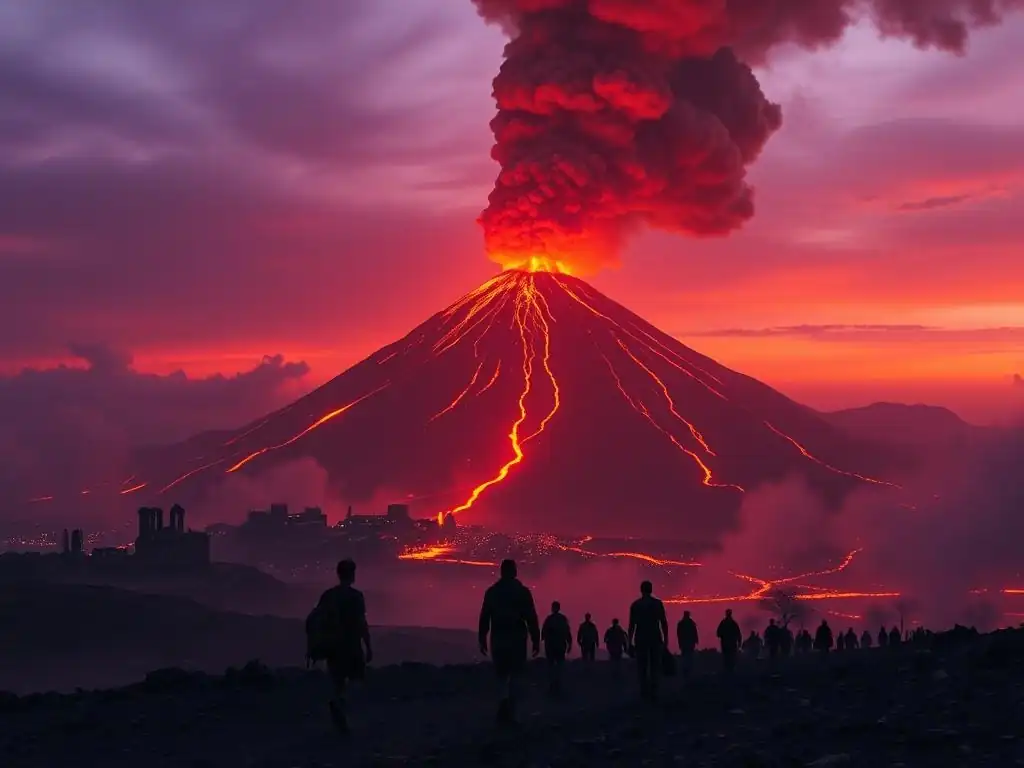
Welcome to Volcano Explorers, where the Earth breathes fire and legends are forged. Ever wondered how a single eruption could alter the course of entire civilizations? Our latest exploration dives deep into volcano eruptions impact civilizations, revealing the dramatic stories of communities forced to migrate and adapt in the face of nature's raw power. Prepare to uncover the untold histories hidden within the ash.
- Introduction: The Devastating Power of Volcano Eruptions on Ancient Societies
- Historical Eruptions: A Catalyst for Civilizational Shifts
- Volcano Eruptions Impact Civilizations: A Story of Survival and Adaptation
- Case Studies: Examining Specific Instances of Volcanic Migration
- The Science Behind Volcanic Displacement: Understanding the Mechanisms
- Adaptation Strategies: How Civilizations Responded to Volcanic Threats
- Lessons Learned: The Enduring Legacy of Volcanic Migrations
- Conclusion: Volcano Eruptions as Agents of Change in Human History
-
Frequently Asked Questions
- How have volcano eruptions impacted civilizations throughout history?
- What are some examples of civilizations forced to relocate due to volcanic eruptions?
- What types of adaptations did civilizations make after being impacted by volcanic eruptions?
- How do volcanologists help civilizations prepare for and mitigate the impact of volcano eruptions?
- Besides destruction, have volcanic eruptions ever benefited civilizations?
- Final Reflection: Echoes of Fire, Seeds of Resilience
- Rediscover Your Resilience: Lessons from Volcanic Migrations
Introduction: The Devastating Power of Volcano Eruptions on Ancient Societies
Volcano eruptions are among the most powerful and destructive natural forces on Earth. Throughout history, these dramatic events have not only reshaped landscapes but have also profoundly influenced the course of human civilization. The sheer magnitude of volcanic eruptions, with their capacity to unleash pyroclastic flows, ashfall, and lahars, has repeatedly tested the resilience of societies. From antiquity to more recent times, communities living in the shadow of volcanoes have faced the daunting challenge of survival, often leading to mass migrations and the necessity to adapt to drastically altered environments.
The impact of volcano eruptions on civilizations extends far beyond immediate destruction. Eruptions can trigger long-term environmental changes, disrupting agricultural cycles, contaminating water sources, and altering climate patterns. These cascading effects have historically led to famine, disease, and societal upheaval, forcing entire populations to abandon their ancestral lands in search of safer and more sustainable environments. Understanding how ancient societies responded to these volcanic crises offers valuable insights into human adaptability and the enduring relationship between humanity and the dynamic forces of nature.
Historical Eruptions: A Catalyst for Civilizational Shifts
Category: Historical Eruptions
Volcanic eruptions have acted as significant catalysts for societal change throughout history. While some eruptions resulted in localized devastation, others have had far-reaching consequences, contributing to the decline or transformation of entire civilizations. The archaeological and historical records are replete with examples where volcanic events coincide with periods of significant societal disruption, population movements, and cultural shifts. These instances underscore the profound and often underestimated role that natural disasters, particularly volcanic eruptions, have played in shaping human history.
The study of historical eruptions and their impact on civilizations is a multidisciplinary endeavor, drawing upon archaeology, geology, climatology, and historical analysis. By examining the geological evidence of past eruptions in conjunction with historical accounts and archaeological findings, researchers can reconstruct the sequence of events and assess the societal consequences. This interdisciplinary approach provides a more comprehensive understanding of how volcano eruptions impact civilizations, revealing not only the destructive power of nature but also the remarkable capacity of human societies to adapt, innovate, and rebuild in the face of adversity.
Volcano Eruptions Impact Civilizations: A Story of Survival and Adaptation
Main Keyword: volcano eruptions impact civilizations
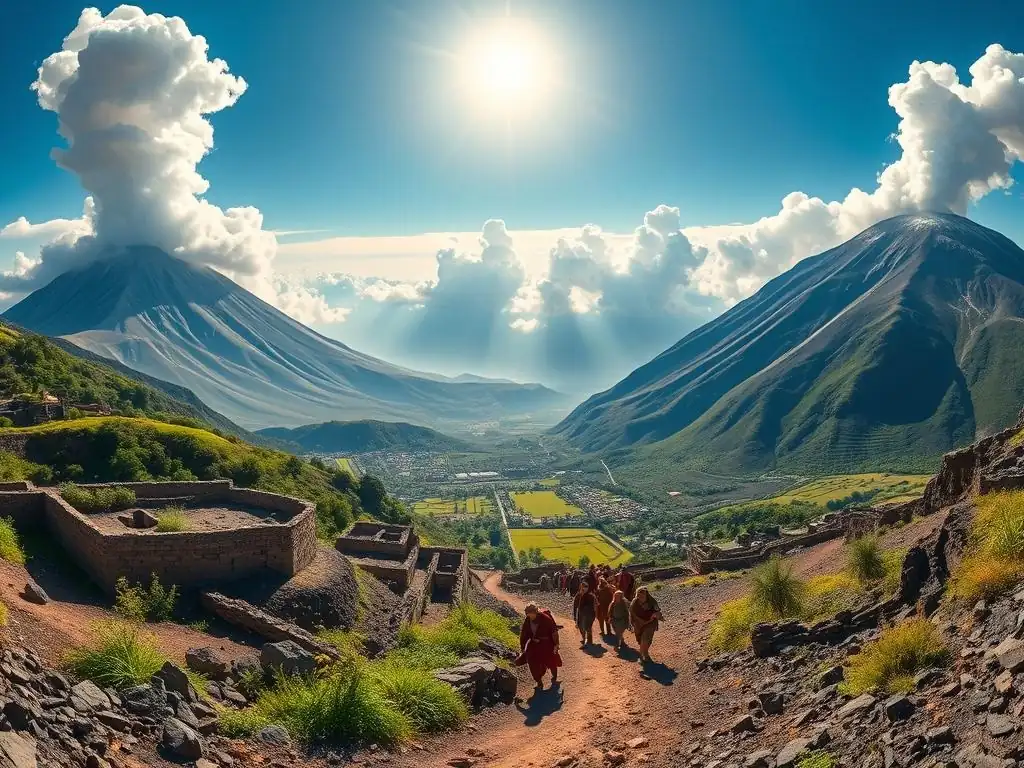
The narrative of how volcano eruptions impact civilizations is fundamentally a story of survival and adaptation. Faced with the immediate threats of volcanic activity and the long-term challenges of environmental degradation, affected populations have consistently demonstrated resilience and resourcefulness. Volcanic eruptions, while undeniably destructive, have also acted as powerful drivers of human migration, forcing communities to seek refuge elsewhere and, in the process, sometimes leading to the spread of knowledge, technologies, and cultural practices.
The ways in which civilizations have adapted to the impact of volcano eruptions are diverse and multifaceted. From developing innovative agricultural techniques to mitigate ashfall to constructing more resilient infrastructure and establishing early warning systems, human societies have constantly sought to minimize their vulnerability to volcanic hazards. These adaptations are not merely reactive responses to crises; they often represent significant advancements in societal organization, technological capabilities, and environmental understanding, ultimately shaping the trajectory of human development in volcanic regions.
Case Studies: Examining Specific Instances of Volcanic Migration
Thera (Santorini): A Bronze Age Collapse Triggered by Volcanic Cataclysm
The Minoan Civilization and the Thera Eruption: A Connection?
The eruption of Thera, modern-day Santorini in Greece, is one of the most intensely debated volcanic events in archaeological history. Dating back to the Bronze Age, around 1600 BCE, this colossal eruption is often hypothesized to have played a significant role in the decline of the Minoan civilization, which flourished on the island of Crete, approximately 120 kilometers south of Santorini.
While the precise extent of the eruption's impact is still debated, the sheer magnitude of the volcanic event and its proximity to Minoan centers of power make it a compelling case study in the potential for volcano eruptions to impact civilizations.
The Thera eruption was likely one of the largest volcanic events of the Holocene epoch, ejecting an estimated 60 cubic kilometers of volcanic material and generating a massive caldera collapse. This eruption would have unleashed a cascade of devastating effects, including widespread ashfall across the Aegean region, tsunamis that could have inundated coastal settlements, and significant climate disruption. The Minoan civilization, known for its advanced maritime trade, sophisticated urban centers, and vibrant culture, would have faced unprecedented challenges in the wake of such a cataclysm, potentially weakening its societal structure and contributing to its eventual decline.
Evidence of Volcanic Impact on Minoan Crete
While direct evidence of the Thera eruption destroying Minoan civilization is still debated, there is growing archaeological and geological evidence pointing to significant impacts on Minoan Crete. Ash layers from the Thera eruption have been found in archaeological sites across Crete, indicating that the island was indeed affected by the fallout. Furthermore, studies suggest that the eruption may have triggered earthquakes and tsunamis that caused widespread damage to Minoan coastal settlements and infrastructure, disrupting trade networks and agricultural production.
Recent research has focused on the long-term environmental consequences of the Thera eruption on Crete. Volcanic ashfall, while initially fertile, can also lead to soil degradation and reduced agricultural yields in the long run. The eruption may have also caused changes in regional climate patterns, affecting rainfall and growing seasons.
These environmental stresses, combined with the immediate destruction from the eruption, could have placed significant strain on Minoan society, contributing to economic instability, social unrest, and ultimately, vulnerability to external pressures, such as the rise of Mycenaean power on the Greek mainland. The Thera eruption serves as a stark reminder of how a single volcanic event can have complex and cascading effects, potentially contributing to the reshaping of entire civilizations.
Mount Vesuvius: The Destruction of Pompeii and Herculaneum
The Immediate Aftermath: Loss of Life and Displacement
The eruption of Mount Vesuvius in 79 CE is one of the most well-known and vividly documented volcanic disasters in history, primarily due to the preservation of the Roman cities of Pompeii and Herculaneum under layers of volcanic ash and pyroclastic flows. This eruption, though smaller in scale than Thera, had devastating local consequences, leading to the immediate deaths of thousands and the complete displacement of the surviving population. The eruption serves as a powerful example of the immediate and catastrophic impact volcano eruptions can have on densely populated areas.
The eruption of Vesuvius was characterized by a Plinian phase, producing a towering column of ash and pumice that rained down on Pompeii, followed by pyroclastic surges that engulfed Herculaneum and later Pompeii. These pyroclastic flows, fast-moving currents of hot gas and volcanic debris, were the primary cause of death in both cities, instantly incinerating those caught in their path.
Survivors who managed to escape faced a landscape utterly transformed, with fertile agricultural land buried under meters of volcanic deposits and their homes and livelihoods destroyed. The immediate aftermath was marked by immense human suffering, loss of life, and the urgent need for resettlement and rebuilding.
Long-Term Societal and Economic Consequences of the Vesuvius Eruption
Beyond the immediate tragedy, the Vesuvius eruption had long-term societal and economic consequences for the region surrounding the volcano. The fertile volcanic soils that had supported thriving agriculture were initially buried, leading to temporary disruptions in food production. However, in the longer term, the volcanic ash enriched the soil, contributing to the region's continued agricultural productivity in subsequent centuries. The displacement of the populations of Pompeii and Herculaneum also led to shifts in demographics and land ownership patterns in the surrounding areas.
The Roman government responded to the disaster with relief efforts and attempts to rebuild, but the scale of the devastation meant that Pompeii and Herculaneum were essentially abandoned and forgotten for centuries. The rediscovery of these cities in the 18th century provided invaluable insights into Roman life and the destructive power of volcanoes, but for the inhabitants of the time, the Vesuvius eruption represented a profound societal and economic shock, forcing them to adapt to a dramatically altered environment and rebuild their lives elsewhere.
The event highlights how even localized volcano eruptions can have lasting impacts on the social fabric and economic structures of affected regions.
Mount Tambora: The Year Without a Summer and Global Impacts
Tambora's Eruption and Its Effect on Global Climate
The 1815 eruption of Mount Tambora in Indonesia was one of the largest volcanic eruptions in recorded history, dwarfing even Thera and Vesuvius in scale. This cataclysmic event had global repercussions, most notably triggering the "Year Without a Summer" in 1816. Tambora's eruption provides a compelling example of how volcano eruptions can impact civilizations not just locally but on a global scale through their influence on climate.
The sheer volume of sulfur dioxide injected into the stratosphere by the Tambora eruption was unprecedented in recent history. This sulfur dioxide reacted with water vapor to form sulfate aerosols, which effectively reflected sunlight back into space, reducing the amount of solar radiation reaching the Earth's surface. The result was a global cooling effect that led to widespread climate anomalies in 1816, particularly in the Northern Hemisphere. Temperatures plummeted, summer frosts became common, and growing seasons were drastically shortened, leading to agricultural failures across vast regions.
Famine, Disease, and Migration Patterns Following the Tambora Eruption
The climate disruptions caused by the Tambora eruption had devastating consequences for societies around the world. The "Year Without a Summer" led to widespread crop failures in North America, Europe, and Asia, resulting in severe food shortages and famine. Grain prices soared, and many people faced starvation. The weakened populations became more susceptible to disease outbreaks, and epidemics of typhus, cholera, and dysentery spread across Europe and beyond.
The Tambora eruption also triggered significant migration patterns. In New England, for example, the agricultural crisis led to a westward migration as farmers sought more fertile land and better climates. In Europe, food shortages and economic hardship contributed to social unrest and migration within and between countries.
The global impact of the Tambora eruption demonstrates how a single volcanic event can have cascading effects, triggering environmental, social, and economic crises that force populations to relocate and adapt on a massive scale. This eruption serves as a stark reminder of the interconnectedness of the global climate system and the vulnerability of human societies to large-scale volcanic events.
Laki Fissure Eruption: Iceland's Environmental and Societal Catastrophe
Impact on Icelandic Agriculture and Livestock
The Laki fissure eruption in Iceland, which began in 1783 and lasted for eight months, represents another significant case study of a volcano eruption's impact on civilization. While not as globally impactful as Tambora, the Laki eruption had catastrophic consequences for Iceland, causing a severe environmental and societal crisis. The eruption primarily affected Iceland through its impact on agriculture and livestock, the foundation of the Icelandic economy and society at the time.
The Laki eruption released massive quantities of sulfur dioxide and fluorine gas, which had devastating effects on Iceland's environment. Sulfur dioxide caused acid rain that damaged vegetation and contaminated water sources. Fluorine poisoning, known as fluorosis, accumulated in plants and poisoned grazing livestock, leading to widespread deaths of sheep, cattle, and horses. The loss of livestock decimated Iceland's agricultural output, leading to famine and societal collapse.
Population Decline and Emigration Following the Laki Eruption
The environmental catastrophe caused by the Laki eruption resulted in a severe famine known as the "Mist Hardships" in Iceland. It is estimated that approximately 20-25% of Iceland's population died during the famine, primarily due to starvation and disease. The economic devastation and loss of life led to a significant population decline and a wave of emigration from Iceland, particularly to North America.
The Laki eruption serves as a grim reminder of the vulnerability of societies heavily reliant on agriculture to environmental shocks, particularly volcanic eruptions. The eruption's long duration and the widespread contamination of the environment made recovery extremely difficult. The societal trauma of the Laki eruption had lasting effects on Iceland, shaping its history and its understanding of volcanic hazards. It underscores the importance of understanding the specific environmental impacts of volcano eruptions and developing strategies for mitigating their consequences on agricultural societies.
The Science Behind Volcanic Displacement: Understanding the Mechanisms
Ashfall and Its Effects on Agriculture and Water Sources
Volcanic ashfall is one of the most widespread and immediate consequences of volcano eruptions, capable of causing significant displacement and disruption to civilizations. While often perceived as less dangerous than pyroclastic flows or lahars, ashfall can have devastating effects on agriculture, water sources, and infrastructure, leading to long-term societal impacts. Understanding the mechanisms of ashfall impact is crucial for mitigating its effects in volcanic regions.
Volcanic ash, composed of fine particles of volcanic glass and rock, can blanket vast areas downwind from an eruption. Even relatively thin layers of ash can smother crops, block sunlight, and contaminate grazing lands, leading to widespread agricultural losses. Furthermore, ash can contaminate water sources, both surface water and groundwater, making them unsafe for drinking and irrigation. Heavy ashfall can also collapse roofs, disrupt transportation networks, and damage infrastructure, further exacerbating societal disruption and displacement. The long-term effects of ashfall on soil fertility and ecosystem health can also contribute to prolonged environmental and societal challenges.
Pyroclastic Flows and Their Devastating Reach
Pyroclastic flows are among the most lethal and destructive phenomena associated with volcano eruptions. These fast-moving currents of hot gas, ash, and volcanic debris can travel at speeds exceeding hundreds of kilometers per hour and reach temperatures of hundreds of degrees Celsius. Their devastating reach and intensity make them a primary driver of displacement in volcanic eruptions, often leaving behind landscapes utterly devoid of life.
Pyroclastic flows are generated by the collapse of eruption columns or lava domes, and they typically flow down the flanks of volcanoes, following valleys and topographic depressions. Their extreme heat and velocity incinerate everything in their path, including vegetation, buildings, and infrastructure. The sheer force of pyroclastic flows can also reshape landscapes, eroding terrain and depositing thick layers of volcanic debris. Areas affected by pyroclastic flows are rendered uninhabitable for extended periods, forcing complete evacuation and long-term displacement of populations. The threat of pyroclastic flows is a major factor in volcanic risk assessment and evacuation planning around active volcanoes.
Lahars: Mudflows and Their Ability to Reshape Landscapes
Lahars, volcanic mudflows or debris flows, represent another significant mechanism of volcanic displacement. These powerful flows are mixtures of volcanic ash, rock debris, and water, often triggered by heavy rainfall or the melting of snow and ice during or after an eruption. Lahars can travel long distances from volcanoes, following river valleys and drainage systems, reshaping landscapes and burying settlements in thick layers of mud and debris.
Lahars are particularly dangerous because they can occur even long after an eruption has ceased, as unstable volcanic deposits on volcano slopes can be remobilized by rainfall. Their high density and flow velocity give them immense erosive and destructive power, capable of destroying buildings, bridges, and infrastructure in their path. Lahars can also bury agricultural land under layers of mud, rendering it unproductive for years. The unpredictable nature of lahars and their ability to travel far from the volcano source necessitate careful land-use planning and early warning systems in lahar-prone areas to minimize displacement and loss of life.
Volcanic Gases and Their Impact on Human Health
Volcanic gases, released during and between eruptions, pose a less visible but significant threat to human health and can contribute to displacement, particularly in the long term. While the immediate dangers of eruptions are often associated with explosions, pyroclastic flows, and lahars, the chronic exposure to volcanic gases can have subtle but pervasive impacts on populations living near active volcanoes.
The primary volcanic gases of concern are sulfur dioxide (SO2), carbon dioxide (CO2), hydrogen sulfide (H2S), and hydrogen fluoride (HF). Sulfur dioxide can cause respiratory problems and acid rain, damaging vegetation and infrastructure. Carbon dioxide, while not directly toxic in low concentrations, can accumulate in low-lying areas and displace oxygen, creating asphyxiation hazards.
Hydrogen sulfide is toxic and can cause irritation and respiratory distress. Hydrogen fluoride, released during some eruptions, can cause fluorosis, a debilitating bone and teeth disease, particularly affecting livestock and humans through contaminated water and food. Long-term exposure to volcanic gases can degrade air quality, contaminate water sources, and impact agricultural productivity, potentially contributing to health problems, economic hardship, and ultimately, displacement.
Adaptation Strategies: How Civilizations Responded to Volcanic Threats
Relocation: Abandoning Settlements in the Face of Imminent Danger
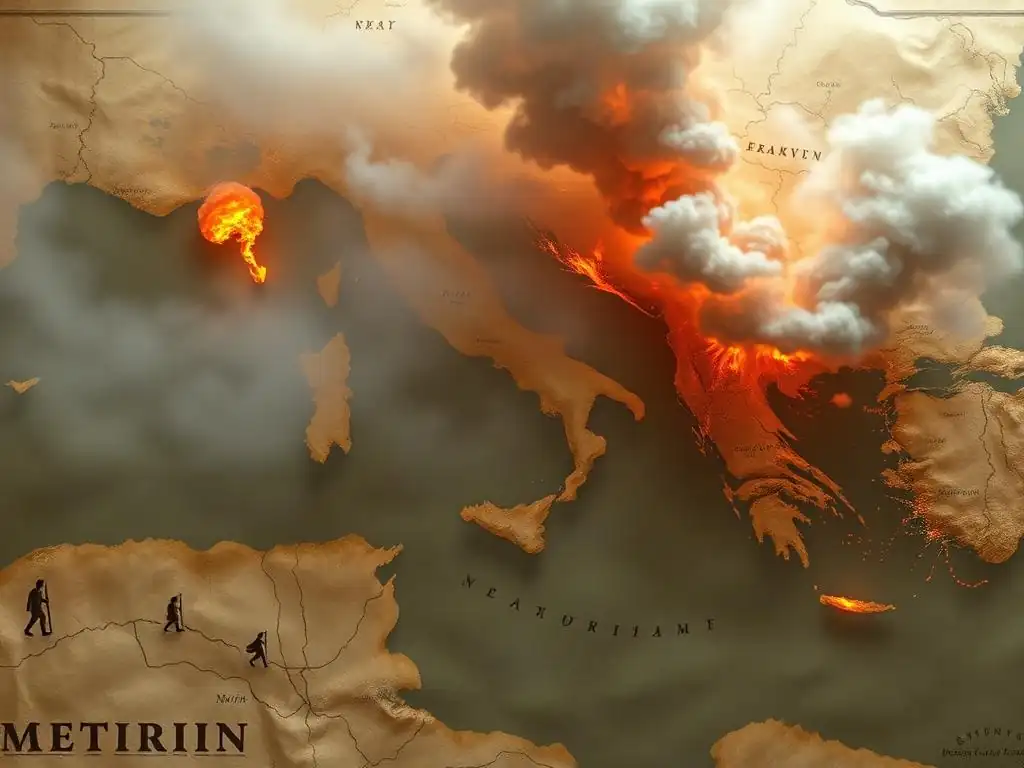
Relocation, the abandonment of settlements in the face of imminent volcanic danger, is perhaps the most fundamental and often necessary adaptation strategy employed by civilizations throughout history. When faced with the overwhelming threat of volcanic eruptions, particularly pyroclastic flows, lahars, or large-scale ashfall, communities have often made the difficult decision to evacuate and seek refuge in safer areas. This strategy prioritizes immediate survival and avoids direct exposure to the most hazardous volcanic phenomena.
Historical and archaeological records provide numerous examples of volcanic migrations. The inhabitants of Pompeii and Herculaneum were forced to flee the eruption of Mount Vesuvius, though tragically, many perished. Following the Thera eruption, Minoan settlements on Santorini were abandoned, and populations likely relocated to other parts of Crete and the Aegean.
In more recent times, eruptions of volcanoes like Mount Pinatubo in the Philippines and Mount St. Helens in the United States have led to the temporary or permanent relocation of communities living in high-risk zones. Relocation, while disruptive and often traumatic, remains a crucial adaptation strategy for ensuring the survival of populations living near active volcanoes.
Innovation: Developing New Agricultural Techniques to Cope with Ashfall
Beyond relocation, civilizations have also demonstrated remarkable innovation in adapting to the long-term environmental challenges posed by volcano eruptions, particularly in the realm of agriculture. Volcanic ashfall, while initially destructive, can also enrich soils with essential nutrients over time. However, in the immediate aftermath of an eruption, ash can pose significant challenges to agriculture, requiring the development of new techniques to mitigate its negative impacts.
Farmers in volcanic regions have developed various strategies to cope with ashfall. These include techniques for removing ash from fields, such as plowing or washing it away, and methods for improving soil drainage and aeration in ash-covered soils. Crop diversification and the selection of ash-tolerant crops are also important adaptation strategies. In some volcanic regions, farmers have even learned to utilize volcanic ash as a soil amendment, recognizing its long-term benefits for soil fertility. These agricultural innovations demonstrate human ingenuity in adapting to the environmental changes brought about by volcano eruptions and ensuring food security in volcanic landscapes.
Community resilience, the ability of a community to withstand and recover from shocks and stresses, is a critical factor in how civilizations respond to volcanic threats. Strong social structures, effective support systems, and cooperative networks can enhance a community's capacity to cope with volcanic crises, facilitate evacuation and resettlement, and promote long-term recovery. Resilience is not merely about physical infrastructure but also about the social and organizational capacity of a community to act collectively and support its members during times of adversity.
Traditional societies living near volcanoes often possess deep knowledge of volcanic hazards and well-established social mechanisms for coping with eruptions. These may include traditional warning systems, communal evacuation plans, and systems of mutual aid and resource sharing. In more modern contexts, community-based disaster preparedness programs, volunteer networks, and effective communication channels are essential for building resilience to volcanic hazards. Strengthening community resilience is a crucial aspect of reducing vulnerability to volcano eruptions and promoting sustainable development in volcanic regions.
Construction of Subterranean Shelters and Granaries
In some volcanic regions, civilizations have developed ingenious architectural adaptations to mitigate the impacts of volcano eruptions, particularly ashfall and volcanic gases. The construction of subterranean shelters and granaries represents a specialized adaptation strategy aimed at protecting people, livestock, and food supplies from volcanic hazards. These underground structures provide refuge from ashfall, pyroclastic flows (to a limited extent), and volcanic gases, enhancing survival and food security during and after eruptions.
Examples of subterranean adaptations can be found in various volcanic regions around the world. In Cappadocia, Turkey, ancient civilizations carved elaborate underground cities into volcanic tuff formations, providing refuge from both volcanic eruptions and invasions. In Iceland, turf houses, partially buried in the ground, offered insulation and protection from harsh weather and volcanic ash.
Underground granaries have also been used in volcanic areas to protect stored food from ash contamination and temperature fluctuations. These architectural innovations demonstrate the diverse ways in which civilizations have adapted to living in volcanic environments, utilizing local materials and ingenuity to minimize vulnerability to volcanic hazards.
Lessons Learned: The Enduring Legacy of Volcanic Migrations
Understanding the Vulnerability of Populations Near Active Volcanoes
The historical and contemporary experiences of civilizations facing volcano eruptions offer crucial lessons about the vulnerability of populations living near active volcanoes. These lessons underscore the need for proactive risk reduction strategies, effective disaster preparedness, and sustainable land-use planning in volcanic regions. Understanding the specific vulnerabilities of different communities and contexts is essential for tailoring effective mitigation measures.
Vulnerability to volcano eruptions is not solely determined by the physical proximity to a volcano; it is also shaped by social, economic, and political factors. Poverty, inequality, and lack of access to resources can exacerbate vulnerability, making it more difficult for communities to prepare for, respond to, and recover from volcanic crises. Effective risk reduction strategies must address these underlying vulnerabilities, promoting equitable development, strengthening social safety nets, and empowering communities to participate in disaster risk management.
The Importance of Early Warning Systems and Evacuation Plans
One of the most critical lessons learned from volcanic migrations is the paramount importance of early warning systems and well-defined evacuation plans. Timely and accurate warnings can provide crucial lead time for communities to evacuate from hazardous areas, significantly reducing casualties and minimizing displacement. Effective evacuation plans require clear communication channels, designated evacuation routes, safe shelters, and coordinated logistical arrangements.
Modern volcanology has made significant strides in monitoring volcanic activity and developing early warning systems. Seismic monitoring, ground deformation measurements, gas emission analysis, and remote sensing techniques are used to detect signs of impending eruptions. However, technical capabilities alone are not sufficient. Effective early warning systems must also be integrated with community-based preparedness programs, ensuring that warnings are effectively communicated to at-risk populations and that communities are prepared to respond appropriately. Investing in robust early warning systems and evacuation planning is a fundamental step in reducing the impact of volcano eruptions on civilizations.
Integrating Volcanic Risk Assessment into Urban Planning
As urbanization continues to expand into volcanic regions, integrating volcanic risk assessment into urban planning becomes increasingly crucial. Sustainable urban development in volcanic areas requires a comprehensive understanding of volcanic hazards, careful land-use zoning, and the implementation of building codes and infrastructure designs that minimize vulnerability to volcanic impacts. Risk-informed urban planning can reduce exposure to volcanic hazards, limit potential damage, and promote long-term resilience.
Volcanic risk assessment should be an integral part of urban planning processes in volcanic regions. This includes identifying high-hazard zones, such as areas prone to pyroclastic flows, lahars, and heavy ashfall, and restricting development in these areas. Land-use zoning can be used to guide development away from high-risk zones and promote safer land uses in areas with lower volcanic hazards.
Building codes can be adapted to ensure that structures are more resistant to ashfall, earthquakes, and other volcanic impacts. Investing in resilient infrastructure, such as ash-resistant roofs and underground utilities, can also reduce urban vulnerability. Integrating volcanic risk assessment into urban planning is essential for creating safer and more sustainable cities in volcanic environments.
Conclusion: Volcano Eruptions as Agents of Change in Human History
Volcano eruptions, throughout human history, have acted as profound agents of change, forcing civilizations to relocate, adapt, and innovate. From the Bronze Age collapse potentially linked to Thera to the global impacts of Tambora and the local devastation of Vesuvius and Laki, these events have repeatedly tested the resilience of human societies. The study of volcanic migrations reveals not only the destructive power of nature but also the remarkable capacity of human civilizations to respond to crises, learn from adversity, and shape their trajectory in the face of formidable environmental challenges.
The enduring legacy of volcanic eruptions is a testament to the dynamic interplay between humanity and the Earth's powerful geological forces. Understanding how volcano eruptions impact civilizations, the mechanisms of volcanic displacement, and the diverse adaptation strategies employed by affected populations offers valuable insights for contemporary disaster risk reduction and sustainable development in volcanic regions. By learning from the past, embracing scientific advancements, and fostering community resilience, we can strive to minimize the negative impacts of volcano eruptions and build safer, more sustainable futures in the shadow of these awe-inspiring and potentially hazardous natural wonders.
Frequently Asked Questions
How have volcano eruptions impacted civilizations throughout history?
Volcanic eruptions have significantly impacted civilizations through destruction of infrastructure and displacement of populations. These events have forced communities to relocate and adapt to new environments.
What are some examples of civilizations forced to relocate due to volcanic eruptions?
Historical records show several examples, including communities affected by the eruption of Mount Vesuvius in Pompeii and the eruption of Mount Tambora in Indonesia. These events led to mass migrations and societal changes.
What types of adaptations did civilizations make after being impacted by volcanic eruptions?
Adaptations included developing new agricultural techniques to cope with altered soil conditions, creating new building designs resistant to ashfall, and forming new social structures for community support.
How do volcanologists help civilizations prepare for and mitigate the impact of volcano eruptions?
Volcanologists monitor volcanic activity, assess risks, and provide early warning systems. They also develop hazard maps and educate communities on evacuation procedures to minimize damage and loss of life.
Besides destruction, have volcanic eruptions ever benefited civilizations?
Yes, volcanic ash can enrich the soil, leading to more fertile land for agriculture in the long term. Volcanic landscapes can also attract tourism, providing economic opportunities for local communities.
Final Reflection: Echoes of Fire, Seeds of Resilience
The narrative of volcanic migrations, as explored throughout this article, isn't just a historical account; it's a potent reminder of the unyielding power of nature and the enduring spirit of humanity. The stories of civilizations forced to relocate and adapt in the face of volcanic eruptions resonate deeply today, as we grapple with the increasing challenges posed by climate change and other environmental disruptions. These historical migrations serve as stark lessons in resilience, preparedness, and the crucial need for understanding and respecting the forces that shape our world.
The impact of volcanic eruptions on civilizations extends far beyond immediate destruction. It reshapes cultural landscapes, forces innovation, and leaves an indelible mark on the collective memory of affected communities. Witnessing these historical shifts underscores the profound interconnectedness between humanity and the natural world, a connection often overlooked in our modern, technology-driven society. The only constant is change.
- Heraclitus. This ancient wisdom rings true as we contemplate the cyclical nature of destruction and renewal, a cycle vividly illustrated by the stories of those who have faced the fury of volcanoes.
As you reflect on the "volcano eruptions impact civilizations," consider the adaptability and resourcefulness displayed by those who came before us. Let their experiences inspire you to cultivate your own resilience, to embrace change with courage, and to advocate for a future where communities are better prepared to face the inevitable challenges that lie ahead. What lessons can you draw from these volcanic migrations to better navigate the uncertainties of your own life and contribute to a more sustainable and resilient world for generations to come?
Rediscover Your Resilience: Lessons from Volcanic Migrations
Thank you for exploring the fascinating history of volcanic eruptions and their impact on human civilizations. You've learned about nature's power and the remarkable resilience of the human spirit. Let's consider how these lessons apply to our lives today.
Here are some ways to connect with this powerful history:
- Reflect on your own ability to adapt and overcome challenges. How can the experiences of migrating civilizations inspire you to navigate change in your own life?
- Explore the stories of specific eruptions and their impact, such as those of Pompeii, Santorini, or Krakatoa, and share your discoveries with others.
- Support organizations aiding communities vulnerable to volcanic activity. Contribute to disaster relief and resilience efforts to help ensure these communities receive the support they need.
What innovative strategies can modern societies adopt to protect vulnerable populations from future volcanic disasters, learning from the adaptations of past civilizations? Share your thoughts in the comments below!