
Shaping Continents: The Prehistoric Power of Volcanic Activity

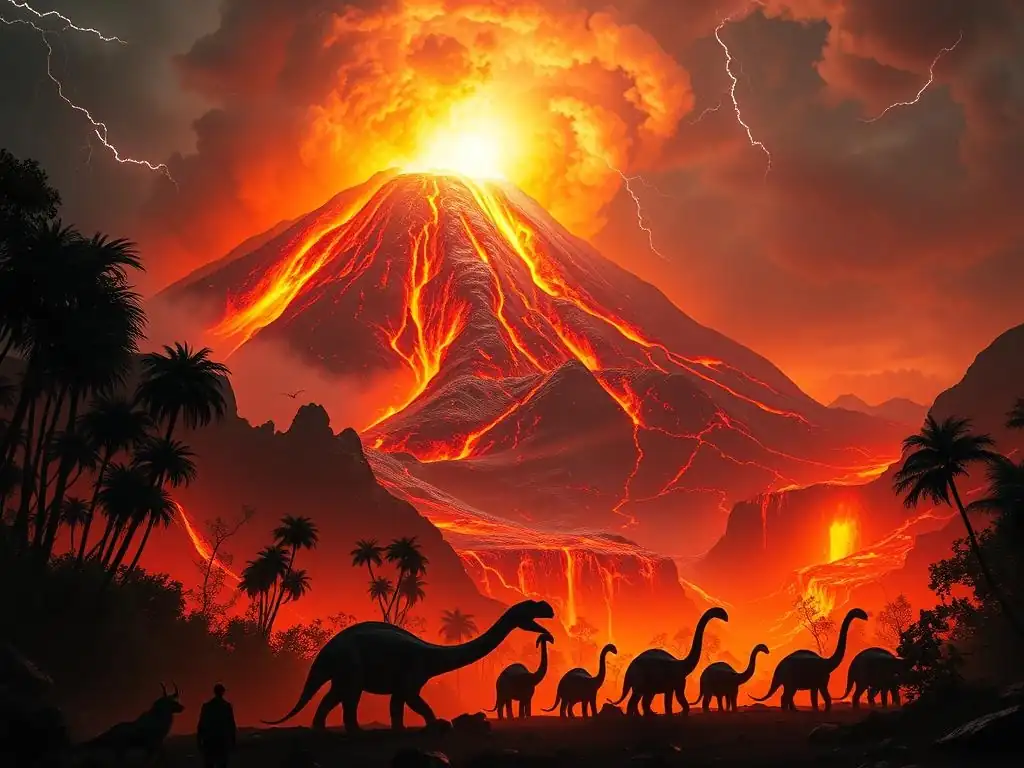
Welcome to Volcano Explorers!
Prepare to journey back in time and uncover secrets buried beneath layers of ash and rock. Ever wondered how prehistoric volcanic activity sculpted the very continents we stand on today? Delve into the earth's fiery past and discover the profound impact these ancient eruptions had on shaping our world. The story is more explosive than you imagine... Are you ready to explore?
- Introduction: Understanding the Prehistoric Volcanic Activity Impact
- Prehistoric Volcanic Eruptions and Continental Formation
- Major Geological Events Driven by Prehistoric Volcanic Activity
- The Geological Evidence of Prehistoric Volcanic Events
- Case Studies: Examining Specific Prehistoric Volcanic Events
- The Impact of Prehistoric Volcanic Activity on Early Life
- Distinguishing Between Different Types of Prehistoric Eruptions
- Techniques Used to Study Prehistoric Volcanic Activity
- The Long-Term Effects of Prehistoric Volcanic Activity on Ecosystems
- Conclusion: The Enduring Legacy of Prehistoric Volcanic Activity
-
Frequently Asked Questions
- How did prehistoric volcanic activity shape continents?
- What evidence do we have of prehistoric volcanic activity's impact?
- What were some of the long-term environmental consequences of prehistoric volcanic eruptions?
- How did prehistoric volcanic activity influence the development of early life?
- How do volcanologists study the impact of prehistoric volcanic activity today?
- Final Reflection: Echoes of Creation
- Embark on Your Volcanic Journey!
Introduction: Understanding the Prehistoric Volcanic Activity Impact
The Role of Volcanoes in Earth's Early Formation
Volcanoes were not just features on the early Earth; they were architects of the planet itself. In the Earth's infancy, billions of years ago, volcanic activity was far more intense and widespread than it is today. During the Hadean and Archean eons, the Earth's mantle was significantly hotter, leading to vigorous convection and frequent eruptions.
These eruptions released vast quantities of gases like water vapor, carbon dioxide, and nitrogen, which gradually formed the primordial atmosphere and oceans. Imagine a young Earth constantly bombarded by meteorites and simultaneously experiencing relentless volcanic outpourings – this tumultuous period was crucial in setting the stage for the geological and biological evolution that followed. The very continents we inhabit owe their existence, in part, to this prehistoric volcanic activity impact.
The early volcanic eruptions were predominantly basaltic, similar to those seen in modern-day shield volcanoes like those in Hawaii, but on a much grander scale. These effusive eruptions built up the Earth's crust, adding new material from the mantle. Over immense geological timescales, the accumulation of volcanic rocks contributed to the formation of the first continents.
Furthermore, the water vapor released by volcanoes condensed to form rain, which then accumulated in basins to create the first oceans. Thus, prehistoric volcanic activity was not just a destructive force; it was a fundamental constructive process that shaped the planet’s surface and laid the foundation for life as we know it.
Why Study Ancient Volcanic Events?
Delving into ancient volcanic events is not merely an academic exercise in understanding Earth's past; it is crucial for comprehending the planet's dynamic systems and anticipating future volcanic hazards. By studying prehistoric volcanic activity, we gain insights into the long-term cycles of volcanic eruptions, the scale of their impact, and the geological processes that drive them.
For instance, the study of ancient super-eruptions, events that dwarf any volcanic activity in recorded human history, provides critical data on the potential magnitudes and consequences of such cataclysmic events. These events, though prehistoric, have left indelible marks on the geological record and offer valuable lessons for assessing and mitigating future volcanic risks.
Furthermore, understanding the prehistoric volcanic activity impact on past climates and ecosystems is vital for predicting how future volcanic eruptions might interact with our already changing environment. Large volcanic eruptions can inject massive amounts of aerosols and gases into the stratosphere, leading to global cooling and significant shifts in weather patterns.
Analyzing the effects of past eruptions, such as the eruptions that may have contributed to mass extinction events, allows scientists to refine climate models and better understand the complex interplay between volcanic activity, climate, and life on Earth. The knowledge gleaned from studying prehistoric volcanic events is thus indispensable for both fundamental geological understanding and for practical applications in hazard assessment and climate prediction.
Prehistoric Volcanic Eruptions and Continental Formation
The Link Between Volcanic Activity and Landmass Development
The continents we see today are not static entities but are the product of billions of years of geological processes, with prehistoric volcanic activity playing a starring role in their formation and evolution. Early continental crust was likely formed through the partial melting of the mantle, a process heavily influenced by volcanic activity. Volcanic arcs, similar to those found in modern-day Japan or the Aleutian Islands, were crucial sites of continental crust generation.
These arcs form where tectonic plates collide, and one plate subducts beneath the other, leading to magma generation and volcanic eruptions. Over vast stretches of geological time, the repeated cycles of volcanic eruptions and tectonic activity have gradually built up the continental landmasses.
The processes of plate tectonics and mantle convection, which drive volcanic activity, are intimately linked to the growth and reshaping of continents. As continents drift and collide, volcanic activity along plate boundaries contributes to mountain building and the creation of new crust. Large Igneous Provinces (LIPs), massive outpourings of basaltic lava that occurred periodically throughout Earth's history, are further examples of prehistoric volcanic activity impact on continental formation.
These LIPs, such as the Siberian Traps and the Deccan Traps, covered vast areas with volcanic rock and significantly altered the landscape. Therefore, from the initial formation of continental nuclei to the ongoing reshaping of continental margins, volcanic activity has been a fundamental force in landmass development throughout Earth’s history.
Evidence of Ancient Supervolcanoes: Shaping the Landscape
While we are familiar with the eruptions of volcanoes like Mount Vesuvius or Mount St. Helens, prehistoric Earth witnessed volcanic events of a magnitude almost unimaginable today – super-eruptions from supervolcanoes. Evidence of these colossal events is etched into the geological record in the form of massive caldera structures, extensive ash deposits, and unique volcanic rock formations.
For example, the Yellowstone Caldera in the United States is the remnant of a supervolcano that has erupted cataclysmically multiple times in the past, with the last major eruption occurring approximately 640,000 years ago. This eruption ejected an estimated 1,000 cubic kilometers of volcanic material, significantly altering the landscape and blanketing vast areas with ash.
Other examples of prehistoric supervolcanoes include the Long Valley Caldera in California and the Lake Toba Caldera in Sumatra, Indonesia. The Toba super-eruption, which occurred around 74,000 years ago, is considered one of the largest volcanic eruptions in the last 2 million years. It released an estimated 2,800 cubic kilometers of volcanic material and is theorized by some researchers to have had a significant impact on human evolution due to the resulting volcanic winter.
The geological evidence, including the sheer size of these calderas and the extensive distribution of their ash deposits, provides undeniable proof of the immense power of prehistoric volcanic activity and its profound ability to shape the landscape on a continental scale. These ancient super-eruptions serve as stark reminders of the planet's dynamic nature and the potential for future events of similar magnitude.
Major Geological Events Driven by Prehistoric Volcanic Activity
The Formation of the Andes Through Volcanism
The Andes Mountains, the longest continental mountain range in the world, are a dramatic testament to the power of prehistoric volcanic activity in shaping major geological features. The Andes owe their existence primarily to the subduction of the Nazca plate beneath the South American plate. This ongoing tectonic process has been occurring for tens of millions of years, driving intense volcanic activity along the western edge of South America.
The subduction process causes the mantle wedge above the subducting plate to melt, generating magma that rises to the surface and erupts, forming volcanoes. These volcanoes, over millions of years, have built up the towering peaks and vast plateaus that characterize the Andean mountain range.
The Andes are not just a product of folding and faulting; volcanism has been integral to their construction. The vast volumes of volcanic rocks, including andesites and rhyolites, that make up the Andes are direct evidence of the extensive prehistoric volcanic activity impact in this region.
The Andean Volcanic Belt is still highly active today, with numerous active volcanoes that continue to shape the landscape and pose significant hazards to nearby populations. Studying the geological history of the Andes reveals a long and complex interplay between tectonic forces and volcanic eruptions, demonstrating how prehistoric volcanic activity can be a primary driver in the formation of major mountain ranges and continental features.
Prehistoric Volcanic Eruptions and the Creation of the Deccan Traps
The Deccan Traps in India represent one of the largest volcanic provinces on Earth, a colossal outpouring of basaltic lava that occurred approximately 66 million years ago, around the time of the Cretaceous-Paleogene extinction event. This massive episode of prehistoric volcanic activity involved the eruption of an estimated 1.3 million cubic kilometers of lava over a relatively short geological period, perhaps within a few hundred thousand years.
The Deccan Traps cover an area of about 500,000 square kilometers today, and originally, they were likely much more extensive. The sheer scale of this volcanic event is staggering, and its impact on the global environment and life on Earth was profound.
The prevailing theory for the formation of the Deccan Traps is mantle plume activity. A plume of hot mantle material rising from deep within the Earth is believed to have triggered the extensive melting and volcanic eruptions. The Deccan Traps eruptions released massive amounts of volcanic gases, including carbon dioxide and sulfur dioxide, into the atmosphere.
These gases are thought to have caused significant climate change, potentially contributing to the Cretaceous-Paleogene extinction event that wiped out the dinosaurs and many other forms of life. The Deccan Traps stand as a powerful example of how prehistoric volcanic activity, particularly large igneous province eruptions, can dramatically reshape landscapes and exert a global impact on climate and life, illustrating the immense prehistoric volcanic activity impact.
The Geological Evidence of Prehistoric Volcanic Events
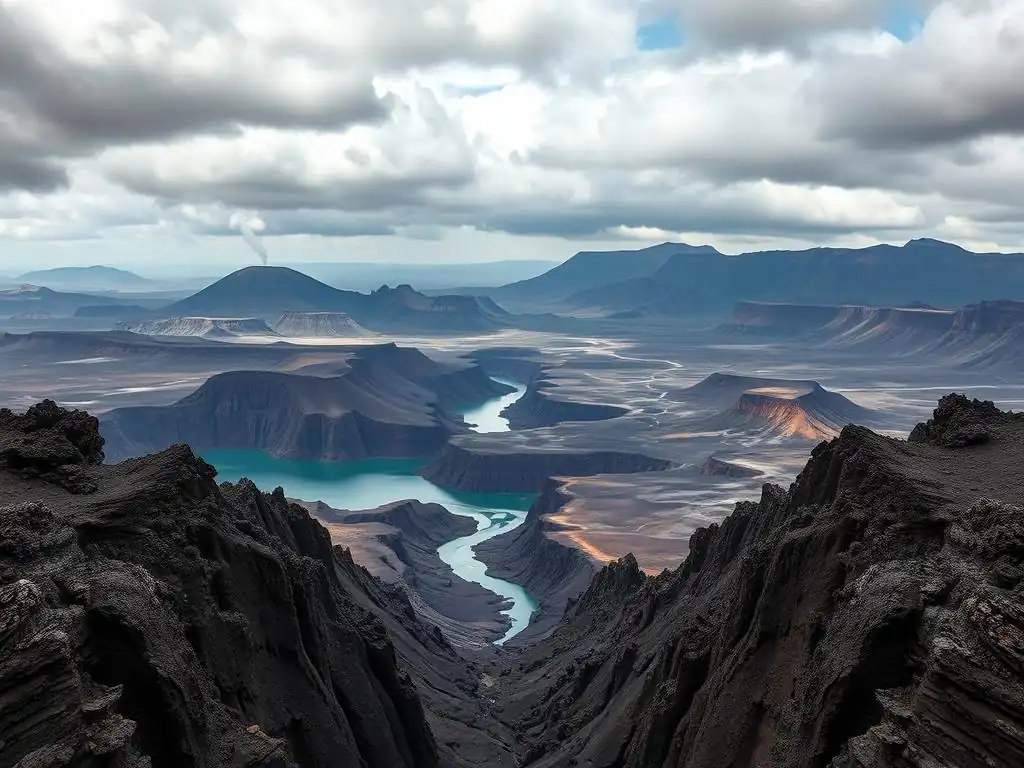
Analyzing Rock Formations for Signs of Ancient Eruptions
Geologists employ a variety of techniques to decipher the story of prehistoric volcanic activity written in the Earth's rocks. Volcanic rock formations themselves provide crucial clues about past eruptions. For instance, the type of volcanic rock – whether basalt, andesite, rhyolite, or tuff – can indicate the composition of the magma and the style of eruption.
Basaltic rocks, often associated with effusive eruptions, form vast lava flows and shield volcanoes. Rhyolitic rocks, on the other hand, are typically linked to explosive eruptions and the formation of calderas. The textures and structures within volcanic rocks, such as vesicularity (the presence of gas bubbles) and flow banding, also provide insights into the eruption processes and the conditions under which the rocks solidified.
Furthermore, the study of sedimentary rocks interbedded with volcanic layers is invaluable. These sedimentary layers can contain ash fall deposits, volcanic debris flows, and reworked volcanic material, all of which offer evidence of prehistoric volcanic activity. By analyzing the mineralogy and chemistry of these volcanic components within sedimentary rocks, geologists can determine the source of the volcanic eruptions and correlate volcanic events across different regions.
The presence of features like columnar jointing in basalt flows or welded tuff structures in ash flow deposits are further indicators of volcanic origin and the specific cooling and emplacement processes. Through careful examination of rock formations, geologists can reconstruct the history of prehistoric volcanic activity and understand its role in shaping the Earth's crust.
Tephra Layers as Markers of Prehistoric Volcanic Activity Impact
Tephra layers, composed of volcanic ash, pumice, and rock fragments ejected during explosive volcanic eruptions, are invaluable markers of prehistoric volcanic activity impact and provide crucial time horizons in the geological record. These layers, often distributed over vast areas depending on the eruption magnitude and wind patterns, can be identified and correlated across continents, serving as synchronous time markers for geological events.
The composition and characteristics of tephra, such as the mineralogy, glass shard morphology, and chemical fingerprint, are unique to specific volcanic eruptions, allowing geologists to trace tephra layers back to their volcanic source and distinguish between different eruptions.
Tephrochronology, the technique of dating and correlating tephra layers, is a powerful tool for reconstructing prehistoric volcanic activity and establishing chronologies for geological and archaeological records. By dating tephra layers using radiometric methods like Argon-Argon dating, scientists can precisely determine the age of volcanic eruptions and use these layers to date surrounding sediments and archaeological sites.
Tephra layers also provide information about the intensity and style of prehistoric eruptions, the dispersal patterns of volcanic ash, and the potential environmental impact of these events. The widespread distribution and distinctive characteristics of tephra layers make them essential markers for understanding the prehistoric volcanic activity impact and for correlating geological records across vast distances.
Case Studies: Examining Specific Prehistoric Volcanic Events
The Siberian Traps Eruption Event: A Detailed Analysis
The Siberian Traps, located in present-day Siberia, represent one of the largest known Large Igneous Provinces (LIPs) and a pivotal event in Earth’s history. This massive episode of prehistoric volcanic activity occurred around 252 million years ago, coinciding with the Permian-Triassic extinction event, the largest mass extinction in Earth’s history. The Siberian Traps eruptions involved the outpouring of an estimated 3 million cubic kilometers of basaltic lava, covering an area of millions of square kilometers and lasting for perhaps a million years or more. The scale of this event dwarfs any volcanic activity witnessed in human history.
Detailed analysis of the Siberian Traps volcanic rocks reveals a complex history of eruption styles and magma compositions. The eruptions were predominantly effusive, characterized by vast lava flows, but also included explosive phases. The volcanic gases released during the Siberian Traps eruptions, particularly carbon dioxide and sulfur dioxide, are believed to have triggered profound environmental changes, including global warming, ocean acidification, and widespread ocean anoxia (oxygen depletion).
These environmental stresses are thought to have been major contributing factors to the Permian-Triassic extinction event, which wiped out an estimated 96% of marine species and 70% of terrestrial vertebrate species. The Siberian Traps serve as a stark example of the catastrophic prehistoric volcanic activity impact on global ecosystems and life on Earth.
The Columbia River Basalt Group Eruption: Lessons from the Past
The Columbia River Basalt Group (CRBG), located in the northwestern United States, is another significant Large Igneous Province, although smaller than the Siberian Traps. The CRBG eruptions occurred between approximately 17 and 6 million years ago, with the most intense phase of activity between 17 and 15 million years ago. During this period, massive volumes of basaltic lava erupted, covering a vast area of present-day Washington, Oregon, and Idaho, forming the Columbia Plateau. The total volume of lava erupted is estimated to be around 170,000 cubic kilometers, still a colossal amount of prehistoric volcanic activity.
Studying the CRBG provides valuable insights into the processes and impacts of large basaltic eruptions. The CRBG eruptions were primarily effusive, with lava flows traveling hundreds of kilometers from their source vents. These lava flows carved out canyons, reshaped landscapes, and significantly altered drainage patterns in the region.
While the CRBG eruptions did not coincide with a major mass extinction event like the Siberian Traps, they did have significant regional and potentially global environmental impacts. The release of volcanic gases, although likely less than from the Siberian Traps, still contributed to climate change and altered atmospheric chemistry. The CRBG serves as a valuable case study for understanding the dynamics of large basaltic eruptions and their long-term geological and environmental consequences, offering lessons about prehistoric volcanic activity impact that are relevant to understanding volcanic hazards today.
The Impact of Prehistoric Volcanic Activity on Early Life
Volcanic Gases and the Evolution of Earth's Atmosphere
Prehistoric volcanic activity has profoundly shaped Earth's atmosphere throughout geological time. Volcanic eruptions are a significant source of gases released from the Earth's interior into the atmosphere. In the early Earth, volcanic outgassing was the primary mechanism for forming the primordial atmosphere, which was vastly different from today's atmosphere.
Early volcanic gases were rich in water vapor (H₂O), carbon dioxide (CO₂), sulfur dioxide (SO₂), nitrogen (N₂), and other trace gases. The water vapor condensed to form oceans, while carbon dioxide and other greenhouse gases played a critical role in trapping heat and keeping the early Earth warm enough for liquid water to exist.
The composition of volcanic gases has evolved over time, reflecting changes in the Earth's mantle and crust. However, volcanic activity has consistently been a major contributor to the atmospheric carbon cycle and the regulation of Earth's climate. Prehistoric volcanic activity, through the release of gases like CO₂, has influenced long-term climate trends, contributing to both warming and cooling periods throughout geological history.
Furthermore, volcanic gases like sulfur dioxide can react in the atmosphere to form sulfate aerosols, which can reflect sunlight back into space and cause short-term cooling. Thus, volcanic gases released by prehistoric volcanic activity have been a crucial factor in the evolution of Earth's atmosphere and the long-term habitability of the planet for life.
Volcanic Activity and the Permian-Triassic Extinction Event
The Permian-Triassic extinction event, often referred to as the "Great Dying," was the most severe extinction event in Earth's history, and prehistoric volcanic activity is strongly implicated as a major contributing factor. As mentioned earlier, the Siberian Traps eruptions occurred precisely at the time of the Permian-Triassic boundary. The immense scale and duration of these eruptions released colossal amounts of volcanic gases into the atmosphere and oceans, triggering a cascade of environmental catastrophes. The primary culprits are believed to be carbon dioxide and sulfur dioxide.
The massive release of carbon dioxide led to rapid global warming, ocean acidification, and changes in ocean circulation. The release of sulfur dioxide likely caused acid rain and short-term cooling, followed by longer-term warming as sulfur aerosols rained out of the atmosphere. These environmental stresses, combined with other factors potentially linked to volcanic activity, such as ozone depletion and mercury poisoning, created a hostile environment for life.
The Permian-Triassic extinction event dramatically reshaped the biosphere, paving the way for the rise of dinosaurs and the Mesozoic Era. This catastrophic event underscores the profound and potentially devastating impact of prehistoric volcanic activity on life on Earth, demonstrating the prehistoric volcanic activity impact at its most extreme.
Distinguishing Between Different Types of Prehistoric Eruptions
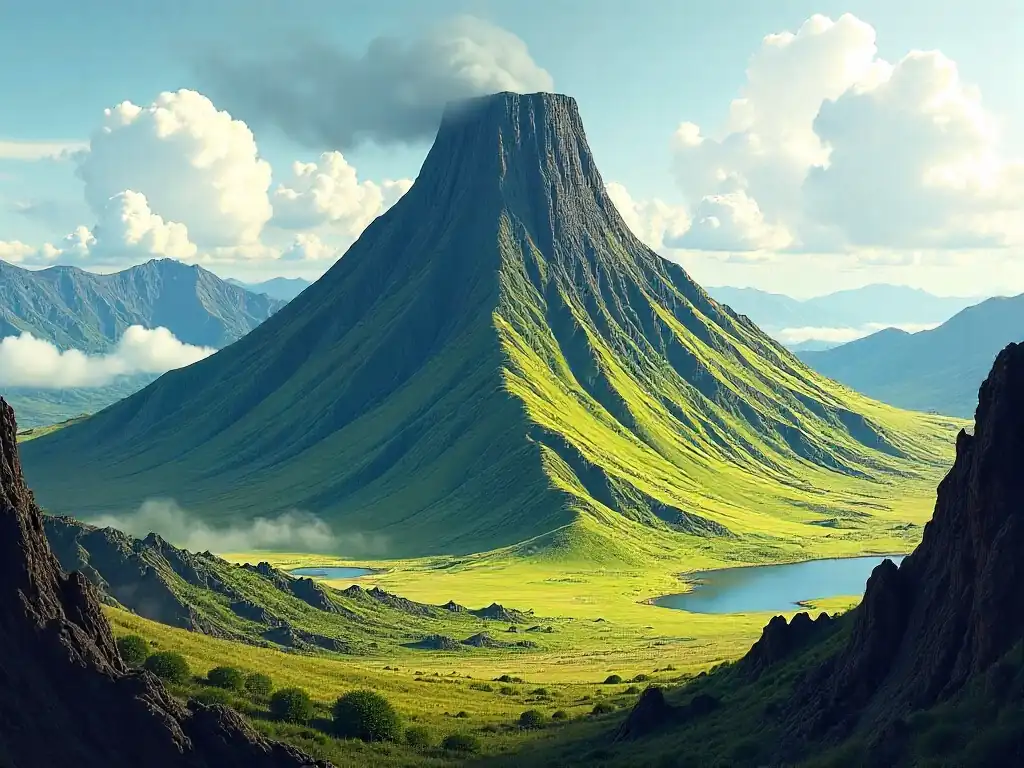
Identifying Effusive vs. Explosive Prehistoric Volcanic Activity
Prehistoric volcanic activity manifested in diverse eruption styles, broadly categorized as effusive and explosive. Distinguishing between these styles is crucial for understanding the nature of past volcanic events and their potential hazards. Effusive eruptions are characterized by the relatively quiet outpouring of lava flows. Basaltic magmas, with low viscosity and gas content, typically produce effusive eruptions. Evidence of prehistoric effusive activity includes extensive lava flow fields, shield volcano structures, and volcanic rocks like basalt with flow textures. The Columbia River Basalt Group is a prime example of the products of prehistoric effusive eruptions.
Explosive eruptions, in contrast, are driven by the rapid expansion of gases within viscous, gas-rich magmas, such as andesitic and rhyolitic magmas. These eruptions are characterized by the violent ejection of ash, pumice, rock fragments (tephra), and volcanic gases into the atmosphere. Evidence of prehistoric explosive activity includes caldera formations, thick ash fall deposits, pyroclastic flow deposits, and volcanic rocks like tuff and pumice.
Supervolcano eruptions, such as those at Yellowstone or Toba, are extreme examples of prehistoric explosive volcanic activity. Geologists use various techniques, including analyzing volcanic rock types, deposit characteristics, and caldera structures, to differentiate between prehistoric effusive and explosive eruptions and reconstruct past volcanic events.
The Role of Magma Composition in Prehistoric Eruption Styles
Magma composition is a primary control on prehistoric eruption styles. The key factors are silica content and gas content, which influence magma viscosity and eruption explosivity. Magmas with low silica content, like basaltic magmas, have low viscosity (they flow easily) and typically low gas content. These magmas tend to produce effusive eruptions, with lava flowing out onto the surface. The low viscosity allows gases to escape relatively easily, reducing the pressure buildup that leads to explosive eruptions. Prehistoric effusive eruptions were often associated with basaltic magmas.
Magmas with high silica content, like rhyolitic magmas, have high viscosity (they are sticky and resistant to flow) and can have high gas content. The high viscosity traps gases within the magma, leading to a buildup of pressure. When the pressure exceeds the strength of the surrounding rocks, explosive eruptions occur, ejecting fragmented magma and volcanic gases violently into the atmosphere.
Prehistoric explosive eruptions, particularly super-eruptions, are often associated with rhyolitic magmas. Andesitic magmas, with intermediate silica content, can produce both effusive and explosive eruptions. Understanding the magma composition of prehistoric volcanic rocks is therefore essential for deciphering past eruption styles and assessing potential volcanic hazards.
Techniques Used to Study Prehistoric Volcanic Activity
Radiometric Dating and the Timeline of Volcanic Events
Radiometric dating is an indispensable tool for establishing the timeline of prehistoric volcanic events and understanding the long history of volcanic activity on Earth. This technique relies on the predictable decay of radioactive isotopes in minerals within volcanic rocks. By measuring the ratios of parent isotopes to daughter isotopes, scientists can calculate the age of the rock since it solidified from magma. Common radiometric dating methods used for volcanic rocks include Potassium-Argon (K-Ar) dating and Argon-Argon (⁴⁰Ar/³⁹Ar) dating, which are particularly effective for dating rocks millions to billions of years old, relevant to prehistoric volcanic activity.
Uranium-Lead (U-Pb) dating is another powerful method, especially useful for dating zircon crystals, which are often found in volcanic rocks and can provide very precise ages. Carbon-14 (¹⁴C) dating, while limited to younger materials (up to around 50,000 years old), can be used to date organic materials associated with recent volcanic eruptions, helping to refine chronologies of more recent prehistoric volcanic activity.
By applying these radiometric dating techniques to volcanic rocks and tephra layers, geochronologists can construct detailed timelines of prehistoric volcanic eruptions, determine eruption frequencies, and correlate volcanic events across different regions. This precise dating is crucial for understanding the prehistoric volcanic activity impact on geological and biological history.
Analyzing Volcanic Deposits to Reconstruct Past Eruptions
Analyzing volcanic deposits is fundamental to reconstructing the characteristics of prehistoric volcanic eruptions. Volcanic deposits, including lava flows, ash fall deposits, pyroclastic flow deposits, and volcanic debris flows, preserve a wealth of information about past eruptions. The thickness, distribution, and composition of these deposits provide clues about eruption magnitude, intensity, and style. For example, thick, widespread ash fall deposits indicate large, explosive eruptions, while extensive lava flow fields suggest voluminous effusive eruptions.
Detailed analysis of volcanic deposits involves examining their texture, grain size, mineralogy, and chemical composition. Grain size analysis of ash deposits can reveal eruption column heights and dispersal patterns. The presence of specific volcanic minerals can indicate magma source and eruption conditions.
Chemical analysis of volcanic rocks and glass shards can provide unique fingerprints for individual eruptions, allowing for correlation of tephra layers and reconstruction of volcanic provinces. Studying the stratigraphy (layering) of volcanic deposits helps to establish the sequence of eruptions and the time intervals between them. By integrating field observations, laboratory analyses, and geochronological data, volcanologists can reconstruct detailed scenarios of prehistoric volcanic eruptions and assess their prehistoric volcanic activity impact on the environment and landscape.
The Long-Term Effects of Prehistoric Volcanic Activity on Ecosystems
Soil Formation and the Legacy of Volcanic Ash
Prehistoric volcanic activity, while often associated with destruction, also plays a vital role in long-term ecosystem development, particularly through soil formation. Volcanic ash, deposited during explosive eruptions, is rich in minerals and nutrients that are essential for plant growth. Over time, weathering processes break down volcanic ash, releasing these nutrients into the soil. Volcanic ash-derived soils, known as Andisols, are often highly fertile and productive, supporting diverse ecosystems and agricultural lands in many volcanic regions around the world.
The rapid weathering of volcanic glass and minerals in ash releases elements like phosphorus, potassium, calcium, magnesium, and trace elements that enhance soil fertility. The porous nature of volcanic ash also improves soil drainage and water retention. In areas with frequent volcanic ashfall, ecosystems can become adapted to these nutrient pulses, with vegetation thriving in volcanic soils.
The long-term legacy of prehistoric volcanic activity, therefore, includes the creation of fertile soils that support plant life and contribute to ecosystem productivity. This positive aspect of prehistoric volcanic activity impact is often overlooked in discussions of volcanic hazards, but it is a crucial factor in shaping landscapes and supporting biodiversity over geological timescales.
The Role of Volcanoes in Shaping Biodiversity Over Millennia
Volcanoes, through prehistoric volcanic activity, have played a complex and multifaceted role in shaping biodiversity over millennia. While catastrophic volcanic eruptions can cause mass extinctions and decimate ecosystems in the short term, volcanic landscapes also create new habitats and opportunities for biological diversification over longer periods. Volcanic islands, formed by volcanic activity in ocean basins, are classic examples of "natural laboratories" for evolution. The isolation and unique environmental conditions of volcanic islands often lead to rapid speciation and the development of endemic species, found nowhere else on Earth.
Volcanic activity also creates diverse habitats on continents. Volcanic landscapes are characterized by varied topography, soil types, and microclimates, supporting a wide range of plant and animal communities. Lava flows, volcanic craters, and geothermal areas provide unique ecological niches. Furthermore, volcanic ash-derived soils, with their high nutrient content, can support highly productive ecosystems. The interplay of destruction and creation associated with prehistoric volcanic activity has thus been a significant driver of biodiversity evolution throughout Earth's history. Volcanic regions are often hotspots of biodiversity, demonstrating the complex and long-term prehistoric volcanic activity impact on life on Earth.
Conclusion: The Enduring Legacy of Prehistoric Volcanic Activity
Understanding Our Planet Through the Lens of Ancient Eruptions
Studying prehistoric volcanic activity provides a unique lens through which to understand the dynamic and ever-changing nature of our planet. Ancient eruptions have not only shaped the continents and oceans but have also profoundly influenced Earth's atmosphere, climate, and the evolution of life. The geological record, preserved in volcanic rocks and sedimentary strata, is a rich archive of prehistoric volcanic activity impact, offering insights into the forces that have sculpted our world over billions of years. By deciphering this record, we gain a deeper appreciation for the long-term processes that have shaped the Earth we inhabit today.
Understanding prehistoric volcanic events allows us to contextualize current volcanic activity and assess future volcanic hazards. The scale and intensity of some prehistoric eruptions, such as super-eruptions and large igneous province eruptions, dwarf anything in recorded human history, highlighting the potential for truly catastrophic volcanic events. Studying these ancient events helps us to recognize the full spectrum of volcanic activity and to prepare for the possibility of future eruptions of similar magnitude. The lessons learned from prehistoric volcanic activity are therefore crucial for responsible planetary stewardship and for mitigating the risks associated with living on a volcanically active planet.
The Importance of Studying Prehistoric Volcanic Activity Impact for Future Volcanic Risk Assessment
The study of prehistoric volcanic activity impact is not just an academic pursuit; it is essential for improving future volcanic risk assessment and hazard mitigation strategies. By understanding the frequency, magnitude, and style of past eruptions in a given volcanic region, scientists can better assess the likelihood and potential consequences of future eruptions. Analyzing prehistoric volcanic deposits allows for the identification of areas that have been affected by volcanic hazards in the past, such as pyroclastic flows, lava flows, and ash fall, and to map potential hazard zones for future eruptions.
Furthermore, studying prehistoric volcanic activity helps to refine volcanic monitoring techniques and eruption forecasting models. By examining the precursory signals associated with past eruptions, such as ground deformation, gas emissions, and seismic activity, scientists can improve their ability to detect and interpret warning signs of impending eruptions.
Understanding the long-term volcanic history of a region is also crucial for land-use planning and infrastructure development in volcanic areas. By incorporating knowledge of prehistoric volcanic activity impact into risk assessments and mitigation strategies, we can better protect communities and infrastructure from the hazards posed by volcanoes and build more resilient societies in volcanically active regions.
Frequently Asked Questions
How did prehistoric volcanic activity shape continents?
Prehistoric volcanic activity played a crucial role by adding landmass through lava flows and eruptions, and also by altering existing landscapes via massive explosions and caldera formation. This significantly impacted the early formation and evolution of continents.
What evidence do we have of prehistoric volcanic activity's impact?
Evidence includes igneous rock formations, such as basalt columns and granite intrusions, and geological structures like ancient calderas and volcanic ash deposits found across various continents. These provide a direct record of past eruptions.
What were some of the long-term environmental consequences of prehistoric volcanic eruptions?
Long-term consequences included climate change due to the release of greenhouse gasses, mass extinctions linked to sudden environmental shifts, and the enrichment of soils with volcanic minerals, impacting plant life over millennia.
How did prehistoric volcanic activity influence the development of early life?
Volcanic activity likely created unique environments that fostered the development of extremophiles and other early life forms. Furthermore, volcanic vents may have provided essential chemicals for the origin of life and the formation of early ecosystems.
How do volcanologists study the impact of prehistoric volcanic activity today?
Volcanologists use techniques like radiometric dating to determine the age of volcanic rocks, geochemical analysis to understand magma composition, and geophysical surveys to map subsurface volcanic structures and reconstruct past eruptive events.
Final Reflection: Echoes of Creation
The narrative of prehistoric volcanic activity is not merely a geological history lesson; it's a vital key to understanding the very foundations upon which our world is built. From the formation of continents to the shaping of early ecosystems, the impact of these ancient eruptions resonates even now, influencing everything from soil fertility to the distribution of natural resources.
The sheer scale of prehistoric volcanic events is humbling, forcing us to confront the immense power that shaped our planet long before humanity's arrival. Understanding this power is crucial, not just for scientific advancement, but for appreciating the delicate balance of the Earth's systems and our place within them. The Earth does not belong to us: we belong to the Earth.
- Chief Seattle. This profound statement reminds us that we are inheritors of a planet sculpted by forces far greater than ourselves, and that our actions today will determine the legacy we leave for future generations.
As you reflect on the profound impact of prehistoric volcanic activity, consider the interconnectedness of all things. The Earth's history is not a series of isolated events, but a continuous chain reaction, where the past shapes the present and influences the future. Let us learn from the fiery birth of our continents, and strive to be responsible stewards of this planet, ensuring a sustainable future for all.
Embark on Your Volcanic Journey!
Thank you for exploring the monumental impact of volcanic activity with us! You've now glimpsed the immense power that shaped our world. Ready to deepen your understanding of these earth-shaping forces?
- Become a Volcano Explorer! Sign up for our free email newsletter to receive exclusive updates, fascinating facts, and early access to new content.
- Explore the geological history of a specific volcano. Research a lesser-known volcano and share your findings in the comments below.
- Share this article with fellow earth science enthusiasts and spark a conversation about the profound influence of volcanism.
What will you explore next? Let us know in the comments!