
Cinder Cones: More Than Just Small Volcanoes?

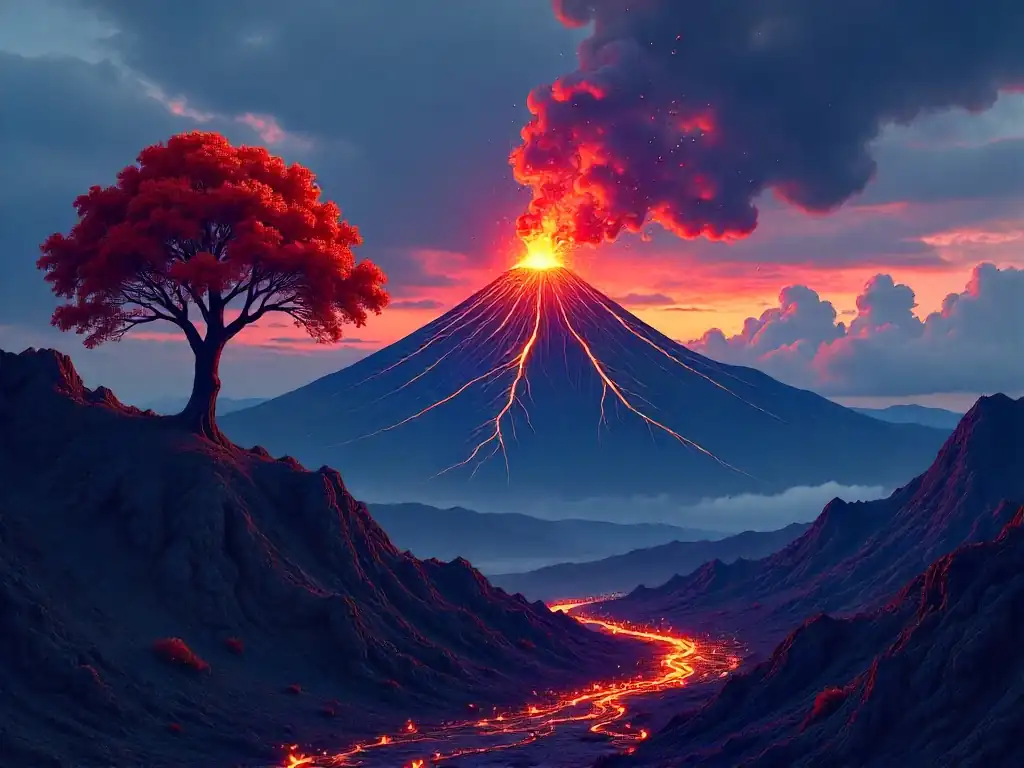
Welcome to Volcano Explorers, where the Earth breathes fire! Prepare to be captivated by the raw power and breathtaking beauty of volcanoes. Ever wondered about those seemingly insignificant hills dotting the landscape? Our latest exploration dives deep into Understanding Cinder Cone Volcanoes, revealing secrets hidden within their unassuming slopes. Are they truly just "small volcanoes," or do they hold a key to unlocking deeper geological mysteries? Journey with us and uncover the surprising story behind these fiery formations!
- Understanding Cinder Cone Volcanoes: An Introduction
- The Formation of Cinder Cones: A Step-by-Step Process
- Cinder Cone Morphology: Key Features and Characteristics
- Beyond the Cone: Associated Volcanic Features
- Cinder Cones Around the World: Notable Examples
- The Impact of Cinder Cones: Environmental and Human Considerations
- Cinder Cone Research: Ongoing Studies and Future Directions
- Exploring Cinder Cones: A Guide for Volcano Enthusiasts
- Frequently Asked Questions
- Final Reflection: Appreciating Earth's Fiery Sculptors
Understanding Cinder Cone Volcanoes: An Introduction
What is a Cinder Cone Volcano? A Concise Definition
Cinder cone volcanoes, often perceived as the smallest and simplest type of volcano, are more complex and fascinating than their diminutive stature suggests. Understanding cinder cone volcanoes begins with a clear definition: they are steep, conical hills of loose pyroclastic fragments, such as volcanic cinders, ash, and bombs, that accumulate around a volcanic vent.
These fragments, known as tephra, are ejected during explosive eruptions and build up over time, forming the characteristic cone shape. Unlike their larger counterparts, stratovolcanoes or shield volcanoes, cinder cones are typically monogenetic, meaning they are formed from a single eruptive episode, which can last from weeks to years, but they do not erupt again from the same vent.
These volcanoes are easily recognizable in volcanic landscapes due to their classic cone shape, resembling inverted ice cream cones or piles of ash. They rarely exceed 1,000 feet (300 meters) in height and have relatively wide craters at their summits. The material composing them is unconsolidated, meaning it is loosely packed and not cemented together, making them susceptible to erosion over geological timescales.
However, in relatively young volcanic fields, their distinct conical forms stand out as prominent features, offering valuable insights into past volcanic activity and the processes that shape our planet. Understanding cinder cone volcanoes starts with appreciating their fundamental nature as accumulations of ejected volcanic debris, born from specific types of eruptions.
Why Study Cinder Cone Volcanoes? Their Significance in Volcanology
Studying cinder cone volcanoes holds significant value in the field of volcanology for several reasons. Firstly, their relatively simple structure and monogenetic nature make them excellent natural laboratories for understanding fundamental volcanic processes. Because they are formed by single eruptive events, scientists can more easily isolate and study the variables that influence eruption dynamics, magma composition, and tephra dispersal.
By examining the deposits of a cinder cone, researchers can reconstruct the eruption history, determine the intensity and duration of the eruption, and gain insights into the magma source and conduit system. This detailed analysis helps to refine our broader understanding of how all volcanoes work, from small cinder cones to massive caldera systems.
Secondly, cinder cones are geographically widespread and abundant, making them a common feature in volcanic landscapes worldwide. Their prevalence means they pose a significant volcanic hazard in many populated regions. Understanding their formation, eruption styles, and potential for associated hazards like lava flows and lahars is crucial for risk assessment and mitigation in volcanic areas.
Furthermore, the study of cinder cones contributes to our understanding of the broader volcanic history of a region. By dating cinder cones and analyzing their distribution, volcanologists can reconstruct the tectonic and magmatic evolution of volcanic fields, providing valuable information about the Earth's dynamic processes over geological time scales. In essence, understanding cinder cone volcanoes is not just about studying small volcanoes; it is about gaining fundamental insights into volcanism that are applicable across scales and contribute to hazard mitigation and understanding Earth's evolution.
The Formation of Cinder Cones: A Step-by-Step Process
Magma Composition and its Role in Cinder Cone Eruptions
The formation of cinder cone volcanoes is intrinsically linked to the composition of the magma that fuels their eruptions. Typically, cinder cones are associated with basaltic to andesitic magmas. Basaltic magmas, being relatively low in silica and rich in gases, are particularly conducive to the Strombolian eruptive style that characterizes cinder cone formation.
The lower silica content results in lower viscosity, allowing gases to escape more readily, but still with enough force to fragment the magma into pyroclastic material. Andesitic magmas, with slightly higher silica content, can also form cinder cones, often resulting in more explosive eruptions and a mix of cinder cone and stratovolcano characteristics in some volcanic fields.
The dissolved gas content within the magma is a critical factor. As magma rises to the surface, the pressure decreases, causing dissolved gases like water vapor, carbon dioxide, and sulfur dioxide to exsolve and form bubbles. In basaltic magmas, this gas exsolution is often vigorous, driving the fragmentation of magma into tephra.
The type and amount of gas present, along with the magma's viscosity, dictate the explosivity of the eruption and the characteristics of the resulting cinder cone. For instance, magmas with higher water content tend to produce more explosive eruptions, generating finer-grained tephra and potentially influencing the cone's morphology. Understanding the subtle variations in magma composition and gas content is key to deciphering the diverse forms and eruption styles observed in cinder cone volcanoes around the world.
Eruptive Style: Strombolian Eruptions and Tephra Formation
Cinder cone volcanoes are predominantly formed by Strombolian eruptions, a type of volcanic activity named after the Stromboli volcano in Italy. Strombolian eruptions are characterized by moderate bursts of gas that propel incandescent blobs of lava, known as volcanic bombs and lapilli, into the air. These eruptions are typically short-lived, lasting from seconds to minutes, and occur intermittently from a central vent.
The explosivity of Strombolian eruptions is driven by the intermittent release of accumulated gas pressure within the magma conduit. As gas bubbles coalesce and grow, they eventually overcome the strength of the surrounding magma, bursting at the surface and fragmenting the molten rock.
The tephra produced during Strombolian eruptions is not highly fragmented; it consists mainly of cinders (lapilli-sized fragments) and volcanic bombs. These pyroclastic fragments are still molten or semi-molten when ejected and cool and solidify in flight or upon landing.
The relative lack of fine ash compared to more explosive eruption types is a defining characteristic of Strombolian activity and contributes to the relatively coarse-grained nature of cinder cone deposits. The intermittent and relatively gentle explosive nature of Strombolian eruptions allows for the gradual build-up of the cinder cone around the vent, as ejected material falls back to the ground and accumulates in a conical shape.
Building the Cone: Accumulation of Pyroclastic Material
The construction of a cinder cone volcano is a process of gradual accumulation of pyroclastic material ejected during Strombolian eruptions. As each eruptive burst occurs, tephra is thrown into the air, following ballistic trajectories around the vent.
Heavier fragments, like volcanic bombs and larger cinders, tend to land closer to the vent, forming the steeper slopes near the crater rim. Finer particles, such as smaller lapilli and ash (though less abundant in typical cinder cone eruptions), can be carried further downwind, contributing to the broader base of the cone and potentially forming a slight asymmetry if wind patterns are consistent during the eruption.
Over time, repeated Strombolian eruptions deposit layer upon layer of tephra around the vent, gradually building up the conical structure. The loose, unconsolidated nature of the pyroclastic material allows for steep slopes to form, typically reaching angles of repose of around 30 to 40 degrees. The accumulation process is primarily driven by gravity, with ejected material rolling and sliding down the slopes until it comes to rest.
This process, repeated thousands or even millions of times during an eruption, shapes the classic conical morphology of cinder cone volcanoes. The final size and shape of the cinder cone are influenced by the duration of the eruption, the eruption rate, and the prevailing wind direction during its formation.
Cinder Cone Morphology: Key Features and Characteristics
Cone Shape and Size: Factors Influencing Cinder Cone Dimensions
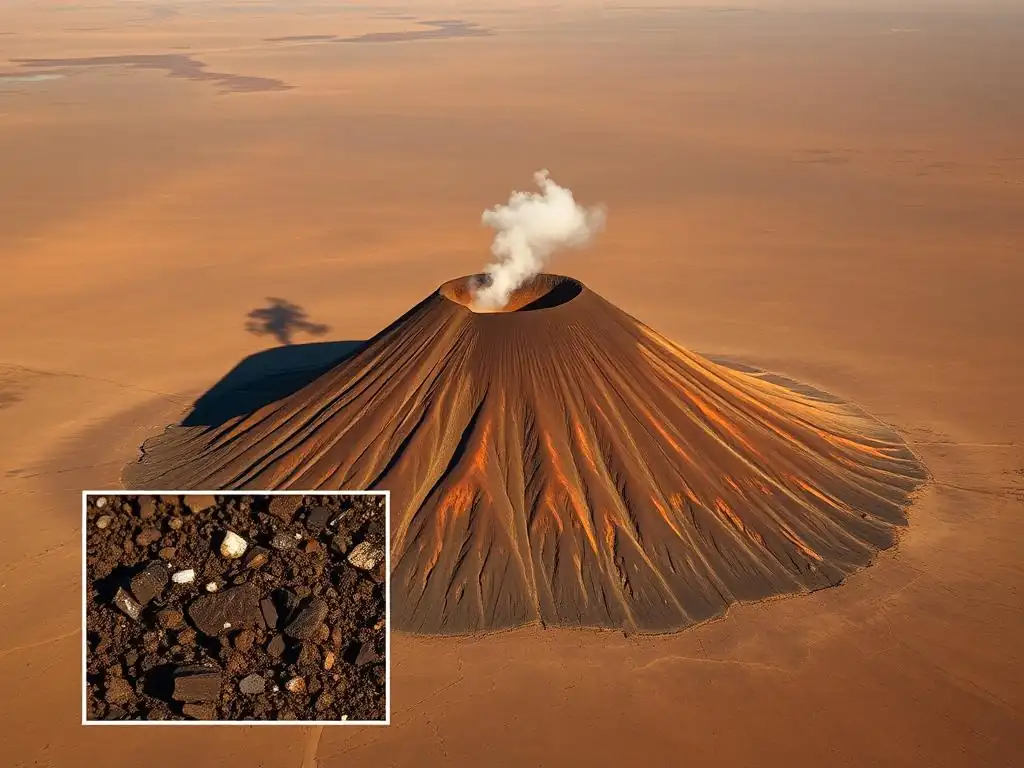
Cinder cone volcanoes are easily recognized by their conical shape, but their exact dimensions – height and base diameter – can vary depending on several factors. The duration of the eruption is a primary control; longer eruptions naturally lead to larger cones as more material is erupted and deposited. The eruption rate, or the volume of tephra erupted per unit time, also plays a crucial role. Higher eruption rates can result in faster cone building and potentially larger cones, assuming the eruption duration is sufficient.
The underlying topography also influences cinder cone dimensions. If a cinder cone forms on a pre-existing slope, it may develop an asymmetrical shape, with the cone being more elongated in the downslope direction. Furthermore, the composition and grain size of the erupted tephra affect the cone's angle of repose, which in turn influences its overall shape.
Coarser, blockier material can support steeper slopes compared to finer, ash-rich material. Despite these variations, most cinder cones remain relatively small volcanic edifices, typically ranging in height from tens to hundreds of meters, with base diameters a few times larger than their height. Their relatively small size is a defining characteristic, distinguishing them from larger volcanic landforms.
The Summit Crater: Formation and Evolution
At the summit of a cinder cone volcano lies a crater, a bowl-shaped depression that marks the vent from which eruptions occurred. The crater forms as tephra is ejected outwards during Strombolian eruptions, leaving a void at the vent. Initially, the crater is typically relatively deep and steep-sided, reflecting the explosive nature of the eruptions that created it. However, the crater morphology can evolve over time due to several processes.
Post-eruptive processes, such as slumping and erosion, can modify the crater shape. The unconsolidated nature of the cinder cone material makes it susceptible to gravity-driven collapse, especially on the steep crater walls. Rainfall and weathering can also erode the crater rim and walls, gradually widening and shallowing the crater.
In some cases, subsequent, smaller eruptions might occur within the original crater, partially filling it with new tephra or even lava flows. The size and depth of the summit crater, therefore, offer clues to the age and eruptive history of the cinder cone, with fresher, younger cones typically exhibiting deeper and more pristine craters compared to older, more eroded cones.
Layers of Tephra: Evidence of Eruptive History
Cinder cone volcanoes are essentially built layer by layer, with each Strombolian eruption depositing a new stratum of tephra. These layers, visible in cross-sections of the cone, provide a valuable record of the volcano's eruptive history. By studying the characteristics of these tephra layers, volcanologists can glean information about changes in eruption style, magma composition, and eruption intensity over time. For example, variations in grain size, color, and composition between layers can indicate fluctuations in magma source or eruptive conditions.
The layering also reflects the intermittent nature of Strombolian eruptions. Distinct layers often represent individual eruptive pulses or phases, separated by periods of quiescence.
In some cases, paleosols (ancient soil horizons) might be found interbedded within the tephra layers, indicating periods of volcanic inactivity long enough for soil to develop on the cone slopes before being buried by subsequent eruptions. Analyzing the tephra layers, including dating techniques like radiocarbon dating on interbedded organic material, allows for the reconstruction of the eruption chronology of the cinder cone, providing insights into the frequency and duration of volcanic activity at a particular location.
Beyond the Cone: Associated Volcanic Features
Lava Flows: How They Complement Cinder Cone Formation
While cinder cones are primarily built from pyroclastic material, lava flows are often associated with their formation and can significantly influence the surrounding landscape. Lava flows typically erupt from vents located at the base of the cinder cone or from fissures that open up during the eruptive episode. These lava flows are usually basaltic in composition, consistent with the magma type that forms cinder cones. The relatively low viscosity of basaltic lava allows it to flow for considerable distances, spreading out across the surrounding terrain.
Lava flows can both precede and follow the main cinder cone-building phase. In some cases, an initial phase of lava effusion might occur before Strombolian eruptions begin, creating a lava platform upon which the cinder cone is subsequently built. More commonly, lava flows erupt after the cinder cone has formed, representing a later stage in the eruptive sequence. These flows can inundate areas around the base of the cone, modifying the topography and creating distinctive volcanic landscapes. The interaction between cinder cone formation and lava flow emplacement contributes to the diversity of volcanic landforms observed in cinder cone fields.
Volcanic Bombs and Spatter: Projectiles from Cinder Cone Eruptions
Strombolian eruptions, characteristic of cinder cone formation, eject a range of pyroclastic material, including volcanic bombs and spatter. Volcanic bombs are blobs of molten lava ejected from the vent that are larger than 64 mm in diameter. As they fly through the air, they cool and solidify, often acquiring aerodynamic shapes. Spatter, in contrast, is also molten material ejected from the vent, but it is more fluid and less explosive than bombs. Spatter tends to land near the vent and can accumulate to form spatter ramparts or agglutinated spatter cones around the crater rim.
Both volcanic bombs and spatter provide valuable information about the eruptive process. The shapes and surface textures of volcanic bombs can indicate the viscosity and cooling rate of the magma during eruption. Spatter deposits, being closer to the vent, can offer insights into the vent geometry and the intensity of Strombolian activity near the surface. These projectiles, while posing a hazard close to the erupting vent, contribute to the overall build-up of the cinder cone and provide textural and compositional diversity to the volcanic deposits.
Rootless Cones: Secondary Venting near Cinder Cones
In volcanic fields dominated by cinder cones and basaltic lava flows, rootless cones are a common associated feature. Rootless cones, also known as pseudocraters, are small, cone-shaped mounds that resemble true cinder cones but lack a direct conduit to a deep magma source. Instead, they form when lava flows over water-saturated ground, such as wetlands, lakes, or ice. The heat from the lava causes the underlying water to flash to steam, which then erupts through the solidified lava crust, carrying with it fragments of lava and underlying sediment.
These steam-driven explosions build up small cones of spatter and lava fragments on the surface of the lava flow, mimicking the appearance of true cinder cones. Rootless cones are typically smaller and less regular in shape than true cinder cones. They are often found in clusters or linear alignments along the path of lava flows that have interacted with water. While not directly related to primary volcanic vents, rootless cones are an important indicator of lava-water interaction and contribute to the complexity and diversity of volcanic landscapes associated with cinder cone volcanism.
Cinder Cones Around the World: Notable Examples
Parícutin, Mexico: Rapid Formation and Impact on Local Communities
Parícutin volcano in Michoacán, Mexico, stands as a remarkable example of the rapid formation and significant impact of a cinder cone volcano. Born in a cornfield in 1943, Parícutin emerged from the Earth in a dramatic display of Strombolian eruptions. Within its first day, the cone had already reached a height of 50 meters.
The eruption continued for nine years, building a cinder cone that eventually reached a height of 424 meters above the pre-existing terrain. The rapid growth of Parícutin provided volcanologists with an unprecedented opportunity to witness and study the entire life cycle of a cinder cone volcano in real-time.
The eruption of Parícutin had a profound impact on the local communities. Two villages, Parícutin and San Juan Parangaricutiro, were completely buried by lava flows and ashfall, forcing the relocation of thousands of people. Despite the devastation, the eruption also brought scientific attention and a unique geological wonder to the region.
Today, the remnants of San Juan Parangaricutiro church, partially buried in lava, serve as a poignant reminder of the volcano's power and a popular tourist attraction. Parícutin remains a classic case study in volcanology, illustrating the dynamism of cinder cone formation and the complex interplay between volcanic activity and human lives.
Sunset Crater Volcano, USA: Impact on Indigenous Populations and Landscape
Sunset Crater Volcano National Monument in Arizona, USA, preserves a well-studied cinder cone volcano that erupted approximately 900 years ago. The eruption of Sunset Crater, around 1085 CE, significantly impacted the landscape and the indigenous Sinagua people who inhabited the region. Before the eruption, the Sinagua were agriculturalists who relied on farming the fertile volcanic soils. The eruption blanketed the surrounding area with volcanic ash, initially disrupting their agricultural practices.
However, in the long term, the ashfall had a paradoxical effect. The ash layer acted as a mulch, conserving soil moisture and improving water retention in the arid environment. This ultimately enhanced agricultural productivity and may have led to a period of increased population and prosperity for the Sinagua people.
The eruption of Sunset Crater also dramatically reshaped the landscape, creating a prominent cinder cone and associated lava flows. Today, Sunset Crater is a popular destination for geological tourism, offering visitors a chance to explore a relatively young and well-preserved cinder cone and learn about its ecological and cultural impacts.
Mount Fox, Australia: A Well-Preserved Example in a Tropical Environment
Mount Fox in Queensland, Australia, offers a compelling example of a well-preserved cinder cone volcano situated in a tropical environment. Part of the McBride Volcanic Province, Mount Fox is estimated to be around 80,000 years old, making it relatively young in geological terms. Its location in a wet, tropical climate presents a contrast to the arid and semi-arid settings where many other famous cinder cones are found. The lush vegetation surrounding Mount Fox highlights the adaptability of ecosystems to volcanic landscapes over time.
Despite the tropical weathering, Mount Fox retains its classic cinder cone morphology, showcasing the durability of these volcanic landforms even under humid conditions. The cone is composed of basaltic scoria and bombs, typical of Strombolian eruptions. Mount Fox and the surrounding McBride Volcanic Province provide valuable insights into intraplate volcanism in Australia and the long-term evolution of volcanic landscapes in diverse climatic settings. Its accessibility and scenic beauty also make it an attractive site for both scientific research and recreational exploration, demonstrating the global distribution and varied contexts in which cinder cone volcanoes occur.
The Impact of Cinder Cones: Environmental and Human Considerations
Volcanic Hazards Associated with Cinder Cones: Assessing the Risks
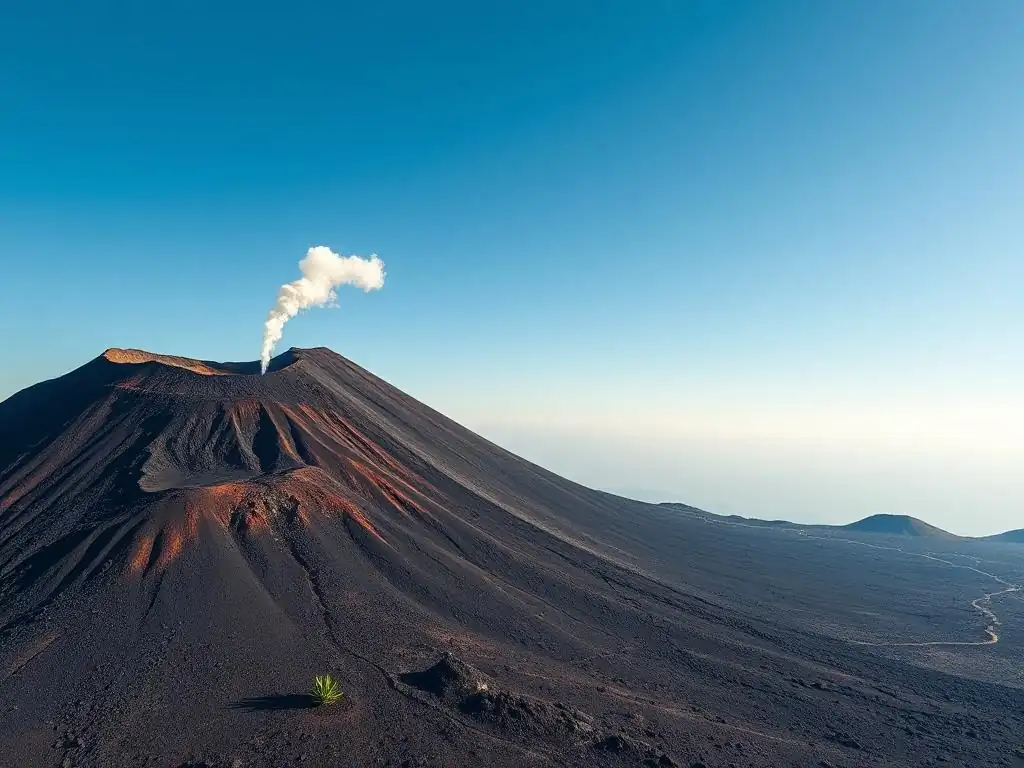
While often considered less hazardous than stratovolcanoes, cinder cone volcanoes still pose a range of volcanic hazards that need careful assessment, particularly in areas of human habitation. The primary hazards directly associated with cinder cones are related to their Strombolian eruptions and the accumulation of pyroclastic material. Tephra fall, consisting of volcanic ash, lapilli, and bombs, can disrupt infrastructure, damage buildings, and pose respiratory health risks. While ashfall from cinder cones is typically less extensive than from larger explosive eruptions, it can still cause significant local disruption.
Lava flows are another significant hazard associated with cinder cones. Basaltic lava flows, though relatively slow-moving, can inundate and destroy everything in their path, including settlements, agricultural land, and infrastructure. The extent of lava flow hazards depends on the volume of lava erupted and the topography surrounding the cinder cone.
Furthermore, slope instability and landslides can occur on cinder cones, especially after heavy rainfall or seismic activity, due to the unconsolidated nature of the pyroclastic material. Assessing these hazards, through geological mapping, eruption history analysis, and monitoring, is crucial for mitigating risks in areas potentially affected by cinder cone volcanism.
Cinder Cones as Resources: Mining and Geothermal Potential
Beyond their potential hazards, cinder cone volcanoes can also represent valuable resources. The pyroclastic material that forms cinder cones, particularly volcanic cinders and scoria, is widely used in construction and landscaping. Cinders are lightweight, porous, and have good drainage properties, making them ideal for use in road construction, as aggregate in concrete, and as landscaping mulch. In many regions, cinder quarries operate on cinder cones, providing a readily available source of construction material.
In some volcanic areas, cinder cones can also be associated with geothermal resources. The heat from underlying magma bodies that fueled cinder cone eruptions can persist beneath the surface, creating geothermal systems. These systems can be tapped for geothermal energy production, providing a sustainable and renewable energy source. Areas with young cinder cone fields are often targets for geothermal exploration. Therefore, cinder cones are not just geological hazards; they can also be sources of valuable materials and energy, highlighting the complex and multifaceted relationship between humans and volcanic landscapes.
Cinder Cones and Ecosystems: Adapting to Volcanic Landscapes
Volcanic landscapes shaped by cinder cones, while seemingly barren initially, are dynamic environments that support unique and resilient ecosystems. The volcanic soils derived from cinder cone tephra, although often nutrient-poor initially, weather over time to release essential minerals that enrich the soil. These soils, combined with the varied topography created by cinder cones and lava flows, provide diverse habitats for plant and animal life. Pioneer plant species are often the first to colonize cinder cone slopes, gradually establishing vegetation cover and initiating ecological succession.
Specialized plant communities have adapted to the harsh conditions of volcanic landscapes, including drought-tolerant species and those that can thrive in nutrient-poor soils. Animals, in turn, colonize these vegetated areas, creating complex food webs. Cinder cones can also create microclimates, with variations in slope aspect and elevation influencing temperature and moisture regimes, further enhancing habitat diversity. The study of ecosystems associated with cinder cones provides insights into ecological resilience, adaptation, and the long-term interplay between volcanic processes and biological communities.
Cinder Cone Research: Ongoing Studies and Future Directions
Monitoring Cinder Cone Activity: Techniques and Technologies
Monitoring cinder cone volcanoes, even though they are typically monogenetic and considered relatively low-threat, is still important for understanding volcanic processes and detecting any potential reactivation or changes in activity. Traditional monitoring techniques, such as seismic monitoring using seismometers, are employed to detect volcanic earthquakes that might indicate magma movement beneath the surface. Ground deformation monitoring, using GPS and InSAR (Interferometric Synthetic Aperture Radar), can detect subtle changes in ground surface elevation that might precede or accompany volcanic activity.
Gas monitoring, using instruments to measure volcanic gas emissions, provides insights into magma degassing and potential changes in magma composition. Thermal monitoring, using thermal infrared cameras and satellite imagery, can detect changes in surface temperature that might indicate increased volcanic activity. Advances in sensor technology and data analysis are continuously improving our ability to monitor even small-scale volcanic activity at cinder cones. Integrating these monitoring techniques provides a comprehensive approach to assess the state of cinder cone volcanoes and detect any signs of unrest or potential future eruptions.
Understanding Cinder Cone Evolution: Predictive Models
Developing predictive models for cinder cone evolution is a key area of ongoing research in volcanology. These models aim to simulate the processes of cinder cone formation, growth, and potential hazards, allowing for better risk assessment and hazard mitigation. Numerical models are used to simulate Strombolian eruptions, tephra dispersal, and cone building, taking into account factors such as magma eruption rate, gas content, and wind conditions. These models can help to forecast the potential size and shape of a cinder cone given specific eruption parameters.
Statistical models are also employed to analyze the spatial and temporal distribution of cinder cones in volcanic fields, providing insights into the underlying magmatic processes and potential eruption recurrence rates. Integrating geological data, such as tephra layer analysis and dating, with numerical and statistical models improves the accuracy and reliability of these predictive tools. Future research directions include refining these models to better incorporate complex factors such as magma ascent dynamics, conduit processes, and interactions with surrounding topography, ultimately enhancing our ability to anticipate and prepare for volcanic activity in cinder cone fields.
The Future of Cinder Cone Research: Unanswered Questions
Despite significant advances in understanding cinder cone volcanoes, many unanswered questions remain, driving ongoing and future research. One key area is improving our understanding of the magma plumbing systems beneath cinder cones. While often assumed to be simple, single-vent systems, recent studies suggest that some cinder cones may be associated with more complex magma storage and transport pathways. Further research using geophysical techniques and geochemical analysis is needed to better characterize these subsurface structures.
Another area of active research is the role of external factors, such as water interaction and pre-existing topography, on cinder cone eruption styles and morphology. Understanding how these factors influence eruption explosivity, tephra dispersal, and cone shape is crucial for refining hazard assessments.
Furthermore, the long-term evolution of cinder cone landscapes, including erosion processes, ecological succession, and the interplay between volcanic and non-volcanic processes, is a topic of ongoing investigation. Future research will likely focus on integrating diverse datasets, employing advanced modeling techniques, and conducting interdisciplinary studies to address these remaining questions and further enhance our understanding of cinder cone volcanoes.
Exploring Cinder Cones: A Guide for Volcano Enthusiasts
Safety Tips for Visiting Cinder Cone Volcanoes
Exploring cinder cone volcanoes can be an exciting and educational experience, but it's essential to prioritize safety. Always check for current volcanic activity alerts and heed any warnings or closures issued by park authorities or volcanological observatories. Cinder cones can be steep and composed of loose material, so wear sturdy hiking boots with good ankle support and be prepared for uneven terrain. Be mindful of loose rocks and avoid climbing on unstable slopes, especially near crater rims.
Protect yourself from the sun and elements by wearing sunscreen, a hat, and sunglasses, and bring plenty of water to stay hydrated, especially in arid volcanic environments. Be aware of potential hazards such as volcanic gases, although these are typically not a major concern at dormant cinder cones, it's still wise to be informed about potential gas emissions in active volcanic areas.
Inform someone of your hiking plans and expected return time, and carry a map, compass or GPS, and a first-aid kit. By following these safety tips, you can enjoy exploring the fascinating landscapes of cinder cone volcanoes responsibly and safely.
Recommended Cinder Cone Destinations: Where to See Them
For volcano enthusiasts eager to witness cinder cones firsthand, numerous destinations worldwide offer accessible and stunning examples. Sunset Crater Volcano National Monument in Arizona, USA, provides well-maintained trails leading to the summit of Sunset Crater and through surrounding lava flows, offering excellent views and interpretive exhibits. Crater Lake National Park in Oregon, USA, showcases Wizard Island, a classic cinder cone rising from the caldera lake, accessible by boat tours. Capulin Volcano National Monument in New Mexico, USA, features a paved road to the rim of Capulin Volcano, allowing for easy access to panoramic views of the surrounding volcanic field.
Parícutin volcano in Mexico, although still active, can be viewed from a distance, and tours are available to the partially buried church of San Juan Parangaricutiro. Auckland Volcanic Field in New Zealand, located within a major city, boasts numerous well-preserved cinder cones, many of which are accessible as parks and reserves. These are just a few examples; cinder cones are found in volcanic regions across the globe, from Iceland to Hawaii, offering diverse opportunities for exploration and appreciation. Researching local volcanic fields and national parks is a great starting point for planning a cinder cone exploration adventure.
The Allure of Cinder Cones: Why They Captivate Us
Cinder cone volcanoes, despite their relatively small size compared to other volcanic giants, possess a unique allure that captivates scientists and enthusiasts alike. Their classic conical shape, often perfectly symmetrical, is visually striking and easily recognizable as a volcanic landform. Their relatively simple formation process, driven by Strombolian eruptions, provides a clear and understandable example of volcanic activity, making them excellent educational tools for understanding volcanism. The rapid formation of some cinder cones, like Parícutin, offers a dramatic demonstration of Earth's dynamic processes in action.
Furthermore, cinder cones are often found in volcanic fields, clusters of numerous cones that create otherworldly and fascinating landscapes. The stark beauty of cinder cones, contrasting with surrounding vegetation or geological features, attracts photographers and nature lovers. Their accessibility in many locations allows for up-close exploration, offering a tangible connection to volcanic forces. Whether it's the scientific intrigue of their formation, the visual appeal of their shape, or the accessibility for exploration, cinder cones continue to fascinate us and inspire awe for the power and beauty of volcanic processes shaping our planet.
Frequently Asked Questions
What exactly is a cinder cone volcano?
A cinder cone volcano is a steep conical hill of loose pyroclastic fragments, such as cinders, volcanic ash, and scoria. These fragments accumulate around a single vent during explosive eruptions.
Are cinder cone volcanoes dangerous?
Cinder cone eruptions are typically short-lived and localized. While they can eject hot material and produce lava flows, they are generally less dangerous than composite or shield volcanoes due to their size and eruption style.
Where can I typically find cinder cone volcanoes?
Cinder cones often form on the flanks of larger volcanoes like shield volcanoes and stratovolcanoes. They can also appear in volcanic fields, where numerous small volcanoes erupt over time.
How are cinder cone volcanoes formed?
Cinder cones are formed by gas-rich magma being ejected into the air during an eruption. As the magma cools, it solidifies into cinders and other pyroclastic material that falls back to Earth around the vent, building up the cone shape.
What is the typical size of a cinder cone volcano?
Cinder cone volcanoes are generally relatively small, usually no more than a few hundred meters in height. Their steep slopes are a defining characteristic.
Okay, here's a final reflection tailored for your article "Cinder Cones: More Than Just Small Volcanoes?" aiming to rank for "Understanding Cinder Cone Volcanoes," following the structure you provided:
Final Reflection: Appreciating Earth's Fiery Sculptors
The journey through the formation, impact, and future study of cinder cone volcanoes reveals that they are far more than just diminutive volcanic features. Their prevalence and accessibility make them invaluable natural laboratories for understanding broader volcanic processes and planetary evolution. This understanding is crucial today, as we grapple with the increasing need to predict and mitigate volcanic hazards in a world increasingly impacted by climate change and human encroachment on volcanic regions.
The enduring fascination with cinder cones stems not only from their scientific significance but also from their profound influence on the landscapes they shape and the ecosystems they support. Witnessing the stark beauty of a cinder cone, a testament to the raw power of the Earth, evokes a sense of awe and humility. The mountains are calling and I must go,
John Muir famously wrote, and perhaps it is the primal allure of these volcanic formations that draws us to understand their secrets.
As we conclude this exploration of cinder cone volcanoes, I invite you to look beyond the textbook definitions and scientific data. Consider the stories etched into their slopes, the resilience of life that finds a foothold in their harsh environments, and the lessons they hold for understanding our planet's dynamic nature. Let the knowledge gained here inspire you to appreciate the power and beauty of our Earth, and to advocate for responsible stewardship of these remarkable geological formations.
I'm ready. Please provide the article content so I can write a compelling call to action. Understanding the key takeaways and themes will help me create a relevant and effective CTA.