
Magma Mixing in Transit: Conduit Interactions and Eruption Style

Welcome to Volcano Explorers!
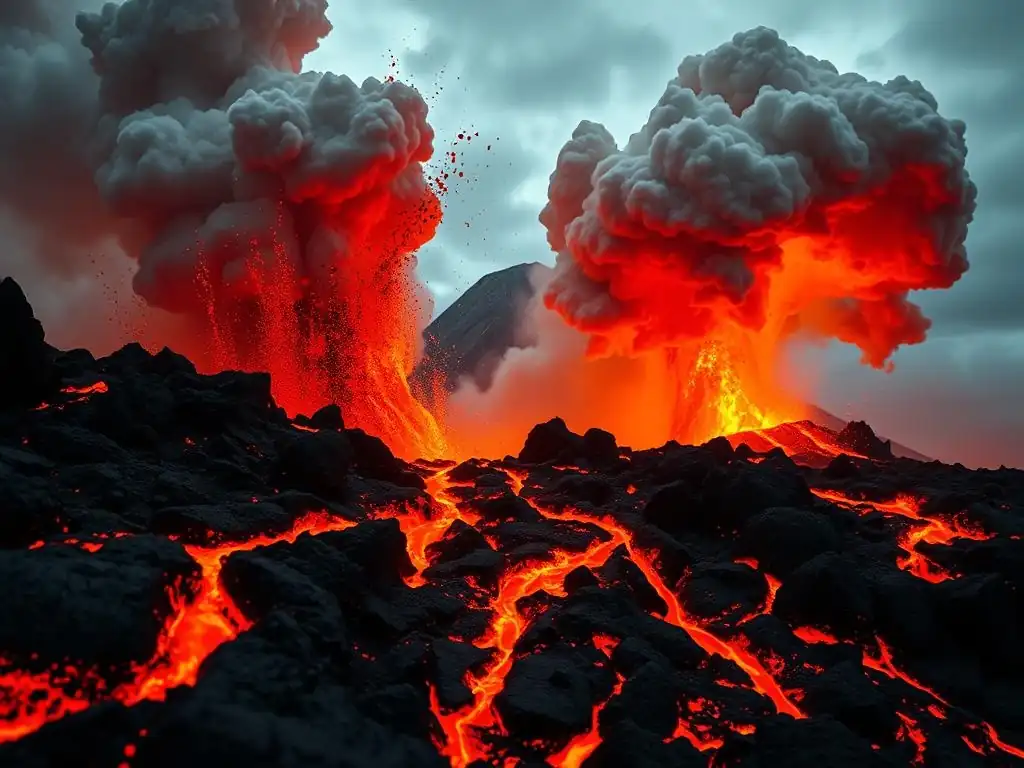
Ever wondered what really ignites a volcano's fury? Beneath the surface, a volatile dance unfolds. Dive into the heart of it all as we explore the fascinating world of magma mixing eruption styles. Uncover the secrets of conduit interactions and how they shape the very nature of volcanic explosions. Are you ready to witness the power within?
- Introduction to Magma Mixing and Volcanic Eruptions
- What is Magma Mixing? A Deep Dive
- Processes Driving Magma Mixing During Ascent
- Conduit Architecture and its Influence on Magma Mixing
- Magma Mixing and its Impact on Eruption Styles: A Correlation
- Investigating Magma Mixing: Tools and Techniques
- The Implications of Magma Mixing for Volcanic Hazard Assessment
- Conclusion: Magma Mixing, Conduit Dynamics, and Volcanic Activity
- Frequently Asked Questions
- Final Reflection: Unearthing the Secrets of Eruptive Power
- Unearth Your Inner Volcanologist!
Introduction to Magma Mixing and Volcanic Eruptions
Understanding Magma Dynamics: A Key to Predicting Eruption Styles
Volcanic eruptions, some of Earth's most dramatic and powerful natural phenomena, are driven by complex processes occurring deep beneath the surface. Understanding the dynamics of magma, the molten rock that fuels these eruptions, is crucial for predicting eruption styles and mitigating volcanic hazards. Magma is not a uniform substance; it’s a complex mixture of molten rock, dissolved gases, and crystals. The behavior of this mixture during its ascent through volcanic conduits significantly influences whether an eruption will be explosive or effusive, and understanding these dynamics is at the forefront of volcanological research.
One of the key processes that profoundly affects magma dynamics and eruption styles is magma mixing. This phenomenon occurs when magmas of different compositions, temperatures, and volatile contents interact within the volcanic plumbing system. The consequences of magma mixing can be dramatic, leading to significant changes in magma properties such as viscosity, density, and gas content, all of which directly impact the style and intensity of volcanic eruptions. By studying magma mixing processes, volcanologists aim to unlock the secrets of eruption triggers and improve our ability to forecast volcanic events.
The Role of Conduit Interactions in Magma Mixing Processes
Volcanic conduits, the pathways through which magma ascends from the depths to the Earth's surface, play a critical role in facilitating magma mixing. These conduits are not simple pipes; they are complex networks of fractures and pathways within the Earth's crust. Interactions within these conduits, such as the mingling of different magma batches or the assimilation of surrounding rocks, are fundamental to the mixing process. The geometry and architecture of the conduit system, including its shape, size, and branching, directly influence how magmas interact and mix during their ascent.
The dynamics within volcanic conduits, including magma flow rates and pressure changes, also contribute significantly to magma mixing. As magmas ascend through the conduit, they experience changes in pressure and temperature, which can trigger degassing and crystallization. These processes, coupled with the physical interactions between different magma types, create a dynamic environment where mixing can occur through various mechanisms. Understanding the interplay between conduit architecture and magma dynamics is essential for deciphering the complexities of magma mixing and its influence on eruption styles.
What is Magma Mixing? A Deep Dive
Defining Magma Mixing: Compositional and Thermal Disequilibrium
Magma mixing is a process where two or more distinct magma bodies, characterized by different chemical compositions, temperatures, or volatile contents, come into contact and interact. This interaction leads to a state of disequilibrium, where the combined magma system is no longer in a stable, homogenous state. The driving force behind magma mixing is the tendency for systems to move towards equilibrium, but in the context of magma systems, this process can be complex and dynamic, often leading to significant changes in the overall magma properties.
Compositional disequilibrium is a key aspect of magma mixing. Different magmas may have originated from different source regions within the Earth's mantle or crust, resulting in variations in their major and trace element concentrations. For example, one magma might be basaltic, characterized by relatively low silica content and high iron and magnesium, while another might be rhyolitic, with high silica and lower iron and magnesium.
When these magmas mix, the resulting magma will have an intermediate composition, reflecting the proportions of the end-member magmas involved. Thermal disequilibrium also plays a crucial role. Magmas at different temperatures will exchange heat upon mixing, potentially triggering or inhibiting crystallization and affecting the overall viscosity of the mixture.
The Significance of Magma Mixing in Volcanic Conduit Systems
Magma mixing is not just a geological curiosity; it's a process with profound implications for volcanic activity. Its significance within volcanic conduit systems lies in its ability to alter magma properties in ways that directly influence eruption styles. By changing the composition, temperature, and volatile content of magma, mixing can trigger or suppress eruptions, modify eruption intensity, and even change the type of eruption from effusive lava flows to explosive pyroclastic events.
For instance, mixing a volatile-rich magma with a hotter, less viscous magma can lead to rapid degassing and an increase in pressure within the conduit. This pressure buildup can exceed the strength of the surrounding rocks, resulting in an explosive eruption. Conversely, mixing can also homogenize magmas, reducing compositional contrasts and potentially leading to less explosive or more predictable effusive eruptions. Understanding the conditions under which magma mixing occurs and its effects on magma properties is therefore crucial for improving volcanic hazard assessments and forecasting eruption scenarios.
Processes Driving Magma Mixing During Ascent
Density Differences and Convective Mixing in Magmatic Conduits
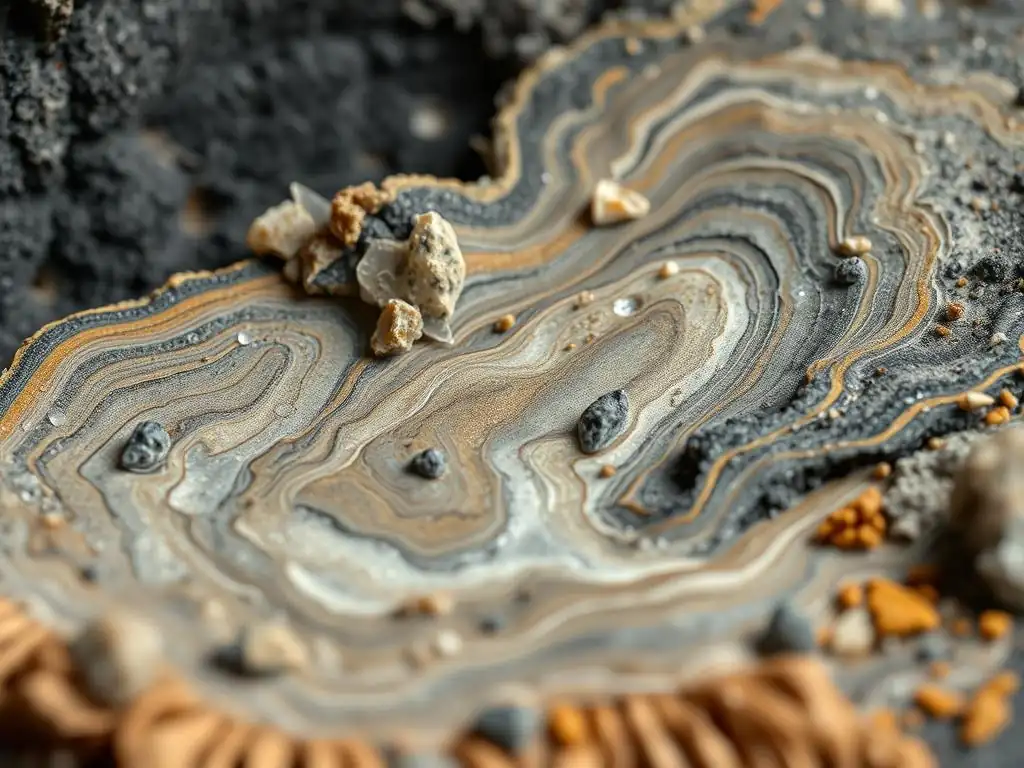
Density differences between magma bodies are a primary driver of convective mixing within magmatic conduits. Magmas of different compositions often have varying densities; for example, more evolved, silica-rich magmas are typically less dense than more primitive, mafic magmas. When magmas of differing densities are juxtaposed within a conduit, the denser magma will tend to sink, while the less dense magma will rise. This density contrast initiates convective currents, leading to the physical intermingling of the two magma types.
The efficiency of convective mixing is influenced by several factors, including the magnitude of the density difference, the viscosity of the magmas, and the geometry of the conduit. Larger density contrasts and lower viscosities promote more vigorous convection and faster mixing rates. The shape and size of the conduit also play a role; wider conduits may allow for more extensive convective cells to develop, enhancing mixing. This process is akin to stirring cream into coffee – the density difference and the stirring action (analogous to magma flow) facilitate mixing.
Shear-Induced Mixing: The Impact of Magma Flow on Eruption Dynamics
Shear-induced mixing occurs due to the differential flow velocities within a magmatic conduit. As magma ascends through the conduit, the magma closer to the conduit walls experiences greater frictional resistance and flows slower than the magma in the center of the conduit. This velocity gradient, or shear, can cause the stretching and folding of magma interfaces, increasing the surface area of contact between different magma types and promoting mixing.
The effectiveness of shear-induced mixing is dependent on the viscosity of the magmas and the flow rate. Higher flow rates and lower viscosities generally lead to more efficient shear mixing. In volcanic conduits, particularly during periods of increased magma supply or changes in conduit geometry, shear forces can become significant, contributing to rapid mixing. This type of mixing is particularly important in conduits where magma flow is turbulent or where there are constrictions or bends that enhance shear stresses.
Thermal Diffusion and Chemical Exchange During Magma Ascent
Thermal diffusion and chemical exchange are fundamental processes that operate at the interface between different magmas during mixing. When magmas of different temperatures come into contact, heat will flow from the hotter magma to the colder magma through thermal diffusion. This process aims to equilibrate the temperature difference between the two magmas. Similarly, chemical exchange occurs as elements and compounds diffuse across the interface, driven by concentration gradients.
The rates of thermal diffusion and chemical exchange are influenced by factors such as temperature, pressure, and the chemical composition of the magmas. Higher temperatures generally accelerate both processes. Chemical exchange can lead to the homogenization of compositions over time, although the rates of diffusion are typically slow compared to convective and shear-induced mixing, especially for viscous magmas. However, over longer periods, or in areas of stagnant magma, diffusion can play a significant role in modifying magma compositions at the mixing interface.
Conduit Architecture and its Influence on Magma Mixing
Conduit Geometry: Constrictions, Bends, and Mixing Efficiency
The geometry of a volcanic conduit, including features like constrictions and bends, significantly impacts the efficiency of magma mixing. Constrictions, or narrowings in the conduit, can accelerate magma flow, increasing shear rates and promoting shear-induced mixing. They can also create zones of turbulence where different magma batches are forced to interact more intensely. Bends in the conduit can also induce turbulence and create zones of stagnation where magmas can reside longer, allowing more time for mixing processes to occur.
Imagine magma flowing through a pipe with a narrowing section; the velocity increases at the constriction, leading to more vigorous mixing. Similarly, bends can cause changes in flow direction and create eddies that enhance the interaction of different magma layers. Complex conduit geometries, with multiple constrictions and bends, are likely to be more efficient at promoting magma mixing than simple, straight conduits. The shape and roughness of the conduit walls also contribute to the overall mixing efficiency by affecting flow dynamics and turbulence.
The Impact of Multiple Conduits on Magma Interactions
Volcanic plumbing systems are often more complex than a single, vertical conduit. They can consist of multiple interconnected conduits, branches, and magma reservoirs. The presence of multiple conduits can significantly enhance magma mixing by providing more opportunities for magmas from different sources to interact. For example, two separate conduits might transport magmas of different compositions from depth. If these conduits converge or intersect at some point in the upper crust, the magmas can mingle and mix.
The interaction between multiple conduits can lead to a more complex mixing history, with magmas potentially undergoing multiple mixing events at different stages of their ascent. This complexity can result in a wider range of magma compositions and eruption styles. Furthermore, the dynamics of magma flow within a multi-conduit system can be more variable and less predictable than in a single conduit system, making eruption forecasting more challenging.
Conduit Wall Interactions: Assimilation and Contamination Processes
The walls of a volcanic conduit are not inert boundaries; they can actively interact with ascending magma through processes like assimilation and contamination. Assimilation involves the incorporation of surrounding crustal rocks into the magma. If the conduit walls are composed of rocks with different compositions than the magma, assimilation can alter the magma's chemistry, effectively acting as a form of mixing. For example, a basaltic magma ascending through silica-rich crustal rocks might assimilate some of the crustal material, increasing its silica content and changing its overall composition.
Contamination refers to the mixing of magma with fluids or melts derived from the conduit walls or surrounding rocks. This can involve the incorporation of hydrothermal fluids, partial melts of crustal rocks, or even previously solidified volcanic material. Both assimilation and contamination processes can modify magma compositions and contribute to the overall complexity of magma mixing within volcanic conduits. These interactions are particularly important in crustal conduits, where magma resides for longer periods and has more opportunity to interact with the surrounding rocks.
Magma Mixing and its Impact on Eruption Styles: A Correlation
Explosive Eruptions: The Role of Mixed Magma Volatiles
Magma mixing is strongly correlated with explosive volcanic eruptions, and the role of volatiles in mixed magmas is particularly significant. When magmas with contrasting volatile contents mix, the resulting magma can become oversaturated with volatiles, leading to rapid degassing and an increase in internal pressure. For example, mixing a volatile-poor magma with a volatile-rich magma can trigger explosive fragmentation if the combined volatile content exceeds the solubility limit at the prevailing pressure.
The type and concentration of volatiles also play a crucial role. Water is the most common volatile in magmas, and its presence significantly reduces magma viscosity and promotes explosive fragmentation upon rapid decompression. Other volatiles, such as carbon dioxide and sulfur dioxide, also contribute to eruption explosivity. Magma mixing can enhance the volatile budget of a magma system, increasing the potential for explosive eruptions. The sudden release of these volatiles, driven by mixing-induced disequilibrium, is a key mechanism behind many violent volcanic explosions.
Effusive Eruptions: The Influence of Magma Composition and Viscosity
While magma mixing is often associated with explosive eruptions, it can also influence effusive eruption styles. The primary control on whether an eruption is effusive (lava flows) or explosive is magma viscosity, which is strongly influenced by magma composition and temperature. Magma mixing can alter both of these factors, leading to changes in viscosity that can favor effusive eruptions. For instance, mixing a highly viscous, silica-rich magma with a less viscous, mafic magma can result in a magma with intermediate viscosity.
If the mixing process results in a magma with sufficiently low viscosity, it may favor effusive eruptions. Lower viscosity allows for easier degassing and magma flow, reducing the likelihood of pressure buildup and explosive fragmentation. Effusive eruptions are characterized by the relatively slow and steady outpouring of lava, often forming lava flows and lava domes. Magma mixing, by modifying magma composition and viscosity, can play a role in transitioning between explosive and effusive eruption styles, or in maintaining effusive activity.
Case Studies: Mount St. Helens, Pinatubo, and Kilauea Illustrating Magma Mixing and Eruption Style
Several famous volcanic eruptions provide compelling case studies of magma mixing and its influence on eruption styles. The 1980 eruption of Mount St. Helens is a classic example of a highly explosive eruption triggered by magma mixing. Studies revealed that the eruption was preceded by the intrusion of a hotter, mafic magma into a cooler, more viscous dacitic magma reservoir. This mixing event led to volatile oversaturation and rapid pressure buildup, culminating in the catastrophic lateral blast and Plinian eruption.
The 1991 eruption of Mount Pinatubo, one of the largest volcanic eruptions of the 20th century, also involved magma mixing. Geochemical evidence indicates the mixing of at least two distinct magma types shortly before the eruption. This mixing event is believed to have enhanced the volatile content and triggered the powerful explosive eruption that ejected massive volumes of ash and gas into the atmosphere.
In contrast, Kilauea volcano in Hawaii is known for its predominantly effusive eruptions. While magma mixing also occurs at Kilauea, it often results in magmas with lower viscosities and lower volatile contents compared to the Mount St. Helens or Pinatubo examples. The frequent mixing of basaltic magmas at Kilauea contributes to the sustained effusive activity characterized by lava flows and lava lakes. These case studies highlight the diverse ways in which magma mixing can influence eruption styles, ranging from highly explosive to dominantly effusive.
Investigating Magma Mixing: Tools and Techniques
Geochemical Tracers: Identifying Mixed Magma Sources
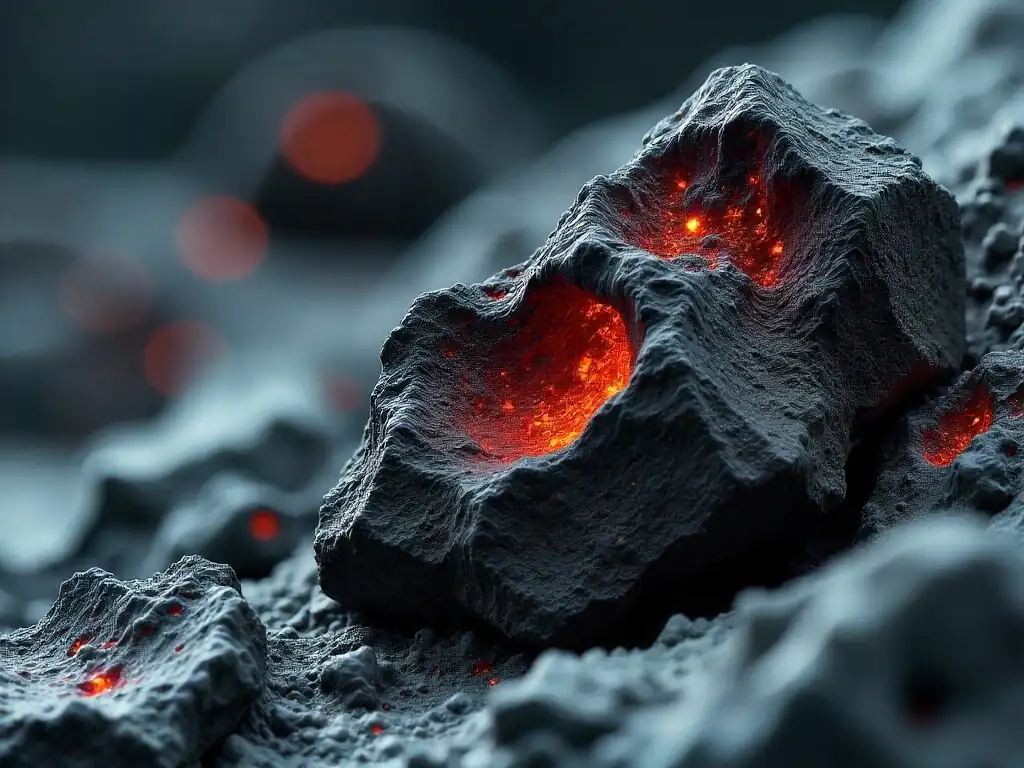
Geochemical tracers are powerful tools for identifying and characterizing magma mixing processes. These tracers are specific elements or isotopic ratios that are distinctive to different magma sources. By analyzing the geochemical composition of erupted volcanic rocks, volcanologists can identify signatures of multiple magma sources and determine if mixing has occurred. For example, trace elements like strontium, neodymium, and lead isotopes are often used as tracers because they vary systematically between different mantle and crustal reservoirs.
If a volcanic rock exhibits geochemical characteristics that are intermediate between two or more distinct magma source compositions, it is strong evidence for magma mixing. Furthermore, variations in trace element and isotopic ratios within a single eruption sequence can provide insights into the timing and extent of mixing processes. Geochemical analysis, therefore, provides crucial evidence for deciphering the history of magma mixing in volcanic systems.
Petrological Analysis: Examining Textural Evidence of Mixing
Petrological analysis, the study of rocks and minerals, offers textural evidence for magma mixing. Microscopic examination of volcanic rocks can reveal distinctive textures that are indicative of mixing. Disequilibrium textures, such as partially resorbed crystals, reaction rims around crystals, and compositional zoning within crystals, are common features in mixed magmas. These textures suggest that crystals formed in one magma environment were then introduced into a different magma environment, indicating a mixing event.
For example, the presence of large, embayed crystals of one mineral phase surrounded by a fine-grained matrix of different mineral phases can be a telltale sign of mixing. Similarly, the presence of mineral phases that are not in equilibrium together, based on phase diagrams and experimental petrology, can also point to magma mixing. Petrological analysis complements geochemical data by providing visual and textural evidence for mixing processes.
Modeling Magma Dynamics: Simulating Mixing Processes in Conduits
Computational modeling plays an increasingly important role in understanding magma mixing dynamics within volcanic conduits. Numerical models can simulate the physical processes involved in mixing, such as convective mixing, shear-induced mixing, and thermal diffusion. These models can incorporate factors like magma viscosities, densities, flow rates, and conduit geometry to investigate how these parameters influence mixing efficiency and timescales.
By simulating magma ascent and mixing in conduits, researchers can test different scenarios and explore the conditions under which mixing is most likely to occur and how it affects magma properties. Models can also be used to investigate the impact of conduit architecture on mixing, such as the effects of constrictions, bends, and multiple conduits. These modeling efforts, combined with geochemical and petrological data, provide a comprehensive approach to understanding magma mixing and its role in volcanic eruptions.
The Implications of Magma Mixing for Volcanic Hazard Assessment
Understanding Pre-Eruptive Signals: Identifying Magma Mixing Events
Magma mixing events can generate pre-eruptive signals that can be detected by volcano monitoring systems. Changes in gas emissions, ground deformation, and seismicity can be associated with magma mixing processes. For instance, the intrusion of a new magma batch into a resident magma reservoir, a common mixing scenario, can cause increased gas release, inflation of the volcano, and changes in the frequency and type of earthquakes.
Detecting these pre-eruptive signals, and recognizing them as potentially indicative of magma mixing, is crucial for improving volcanic hazard assessments. Changes in the ratios of different volcanic gases, such as sulfur dioxide and carbon dioxide, might signal magma mixing. Similarly, specific patterns of ground deformation or seismic activity could be linked to magma intrusion and mixing processes. By carefully monitoring these parameters and interpreting them in the context of magma mixing, volcanologists can gain valuable insights into the state of a volcano and its potential for eruption.
Improving Eruption Forecasting: Incorporating Magma Mixing Models
Incorporating magma mixing models into eruption forecasting strategies can significantly improve the accuracy and reliability of predictions. Traditional eruption forecasting often relies on monitoring parameters and statistical analyses of past eruption patterns. However, by explicitly considering magma mixing processes, forecasting models can become more physically realistic and predictive. Models that simulate magma mixing can be used to assess the likelihood of explosive eruptions based on the mixing of magmas with different volatile contents and viscosities.
For example, if monitoring data suggests that magma mixing is occurring beneath a volcano, models can be used to estimate the potential for pressure buildup and explosive fragmentation. These models can also help forecast the style and intensity of an eruption, providing crucial information for hazard assessments and mitigation planning. Integrating magma mixing models with real-time monitoring data is a key step towards more robust and accurate eruption forecasting.
Mitigation Strategies: Evacuation Planning and Infrastructure Protection Based on Eruption Style Predictions
Understanding the role of magma mixing in determining eruption styles is essential for developing effective mitigation strategies. Eruption style predictions, informed by magma mixing studies, are crucial for evacuation planning and infrastructure protection in volcanically active areas. Explosive eruptions, often associated with magma mixing, pose different hazards than effusive eruptions. Explosive eruptions can produce pyroclastic flows, ashfall, and lahars, requiring different evacuation strategies and infrastructure protection measures compared to effusive eruptions, which primarily generate lava flows.
If magma mixing is identified as a potential trigger for explosive eruptions at a particular volcano, evacuation plans should be tailored to account for the rapid onset and widespread impact of explosive events. Infrastructure in high-risk zones may need to be designed to withstand ashfall or pyroclastic flows. Conversely, for volcanoes where magma mixing typically leads to effusive eruptions, mitigation efforts might focus on managing lava flow paths and protecting critical infrastructure from lava inundation. By understanding the link between magma mixing and eruption style, communities and authorities can develop more targeted and effective volcanic hazard mitigation strategies.
Conclusion: Magma Mixing, Conduit Dynamics, and Volcanic Activity
The Future of Magma Mixing Research: High-Resolution Geochemical Analysis and Advanced Modeling Techniques
The future of magma mixing research lies in advancing our analytical capabilities and modeling techniques. High-resolution geochemical analysis, using techniques like electron microprobe and laser ablation inductively coupled plasma mass spectrometry (LA-ICP-MS), allows for detailed investigation of compositional variations within individual crystals and volcanic rocks. These analyses can provide unprecedented insights into the timescales and processes of magma mixing at the micro-scale.
Advanced modeling techniques, including multi-phase flow models and thermodynamic simulations, are also crucial for future progress. These models can incorporate more complex physical and chemical processes, such as volatile transport, crystallization kinetics, and magma rheology, to simulate magma mixing dynamics with greater accuracy. Combining high-resolution geochemical data with advanced modeling will lead to a more comprehensive understanding of magma mixing and its role in volcanic activity.
Implications for Understanding Volcanic Processes Globally
Understanding magma mixing is not just relevant to individual volcanoes; it has broader implications for understanding volcanic processes globally. Magma mixing is a ubiquitous process in volcanic systems worldwide, occurring in diverse tectonic settings and across different volcano types. By studying magma mixing in various volcanic contexts, we can gain fundamental insights into the controls on eruption styles, magma genesis, and the evolution of volcanic systems.
A better understanding of magma mixing will improve our ability to assess volcanic hazards globally and to forecast eruptions more accurately. This knowledge is crucial for mitigating the risks posed by volcanoes to populations and infrastructure around the world. Furthermore, understanding magma mixing contributes to our broader understanding of Earth's dynamic processes and the interplay between the planet's interior and its surface.
Frequently Asked Questions
How does magma mixing affect eruption styles?
Magma mixing can significantly alter eruption styles by changing the magma's viscosity and gas content. A less viscous magma mixed with a more viscous magma can lead to a more explosive eruption. Increased gas content from mixing also increases explosivity.
What is magma mixing, and where does it occur?
Magma mixing is the process where two or more magmas with different compositions interact and blend. This commonly occurs within the magma conduit system, as magma ascends towards the surface.
Why is understanding magma mixing important for predicting eruptions?
Understanding magma mixing allows volcanologists to better forecast eruption intensity and style. Recognizing the signs of magma mixing, like changes in gas emissions, can provide early warning of a potentially hazardous eruption.
What are some geological indicators of magma mixing in volcanic rocks?
Geological indicators include disequilibrium textures in crystals (like zoning), the presence of multiple crystal populations, and hybrid rock compositions indicating a blend of different magma sources.
What role do conduit interactions play in magma mixing?
Conduit interactions, such as the intrusion of one magma into another within the conduit, are crucial for facilitating magma mixing. The geometry and thermal properties of the conduit system influence the efficiency and extent of mixing.
Final Reflection: Unearthing the Secrets of Eruptive Power
The journey through the complexities of magma mixing, as explored in this article, reveals a profound truth: the seemingly chaotic nature of volcanic eruptions is governed by intricate interactions occurring deep beneath the surface. Understanding these conduit interactions and their influence on eruption style is not merely an academic exercise; it holds the key to better predicting and mitigating the devastating impacts of volcanic activity on communities worldwide.
The subtle dance of magma mixing, often unseen and unfelt until the moment of eruption, profoundly shapes our world. This research underscores the vital importance of interdisciplinary collaboration in volcanology, bridging the gap between theoretical models and real-world observations. The Earth is a dynamic system, and understanding its processes requires a holistic approach that integrates diverse perspectives.
This quote encapsulates the spirit of this research, highlighting the need to continue unraveling the mysteries hidden within the Earth's fiery depths.
Now, as you reflect on the insights shared, consider the implications of this knowledge. How can a deeper understanding of magma mixing eruption styles inform your own perspective on the power and fragility of our planet? Let this exploration inspire you to appreciate the interconnectedness of Earth's systems and to advocate for continued research that safeguards communities living in the shadow of these magnificent, yet potentially destructive, forces of nature.
Unearth Your Inner Volcanologist!
Thanks for exploring the fascinating world of magma mixing! We hope you've gained a deeper understanding of the complex processes that shape volcanic eruptions. Now, let's keep the exploration going.
Here are a few ways to continue your journey:
- Discover past eruptions near you! Use online resources like geological surveys and databases to research historical volcanic activity in your area and learn about the different types of magma involved.
- Share this article with fellow volcano enthusiasts. Start a conversation about how magma mixing influences eruption styles on your favorite social media platform.
- Contribute to citizen science! Participate in crowdsourced projects that monitor volcanic activity and collect data to help researchers better understand these dynamic systems.
What volcanic secrets does your local landscape hold? Share your discoveries in the comments below!