
Beyond the Crater: Exploring the Hidden Depths of Volcanic Plumbing

Welcome to Volcano Explorers!
Prepare to journey beyond the surface and into the fiery heart of our planet. Ever wondered how a volcano really works? This isn't just about lava and ash; it's about a complex and fascinating network hidden beneath our feet. Dive in now as we unravel the mysteries of the volcanic plumbing system, revealing the intricate pathways that fuel these magnificent, and sometimes terrifying, giants. What secrets lie deep within? Let's find out!
- Unveiling Earth's Fiery Veins: Exploring Volcanic Plumbing Systems
- Anatomy of a Volcano's Inner Workings: Unveiling the System Components
- Factors Influencing the Complexity of Volcanic Plumbing
- Investigating the Subsurface: Techniques for Studying Volcanic Plumbing
- Case Studies: Examples of Complex Volcanic Plumbing Systems
- Understanding Volcanic Plumbing for Hazard Assessment
- The Future of Volcanic Plumbing Research
- Conclusion: Appreciating the Intricacies of Volcanic Plumbing
-
Frequently Asked Questions
- What exactly is a volcanic plumbing system?
- How does the volcanic plumbing system influence volcanic eruptions?
- What are some key components of a volcanic plumbing system?
- How do volcanologists study volcanic plumbing systems?
- Why is understanding volcanic plumbing systems important for hazard assessment?
- Final Reflection: Unearthing Earth's Fiery Secrets
- Unearth Your Inner Volcanologist!
Unveiling Earth's Fiery Veins: Exploring Volcanic Plumbing Systems
What is a Volcanic Plumbing System and Why Does it Matter?
Imagine the Earth's crust as a vast and complex network of pipes and reservoirs, much like the plumbing system in your home, but on a monumental scale and filled with molten rock instead of water. This is, in essence, the volcanic plumbing system.
It encompasses all the pathways and storage regions beneath a volcano that facilitate the movement of magma from its source deep within the Earth to the surface during an eruption. Understanding this intricate system is crucial because it dictates almost every aspect of volcanic activity, from the type and intensity of eruptions to the shape and lifespan of the volcano itself.
The volcanic plumbing system is not a static entity; it's a dynamic and ever-evolving network. It can range from relatively simple, direct conduits in some volcanoes to highly complex, branched systems in others. The architecture of this plumbing system, including the size, shape, and connectivity of its components, is influenced by a multitude of factors such as the tectonic setting, the composition of the magma, and the stresses within the Earth's crust. Delving into the intricacies of the volcanic plumbing system explained allows us to unravel the mysteries of volcanic behavior and better prepare for potential hazards.
The Importance of Understanding Volcanic Conduits for Predicting Eruptions
Predicting volcanic eruptions is one of the most challenging endeavors in geophysics, and a thorough understanding of volcanic conduits is paramount to improving our forecasting capabilities. The plumbing system acts as the control panel for a volcano, governing the storage, transport, and eventual eruption of magma. By studying the characteristics of these conduits, we can gain valuable insights into the processes leading up to an eruption, allowing for more accurate predictions of when, where, and how violently a volcano might erupt.
For instance, the geometry and connectivity of conduits within the volcanic plumbing system influence the rate at which magma can ascend to the surface. A system with narrow, constricted conduits might lead to pressure build-up, potentially resulting in explosive eruptions. Conversely, a system with wider, more open conduits might allow for a more effusive, lava-flow dominated eruption.
Furthermore, monitoring changes within the plumbing system, such as magma accumulation in chambers or shifts in conduit pathways, can provide crucial early warning signs of impending volcanic activity. Therefore, research focused on understanding the volcanic plumbing system explained is not just an academic pursuit; it is essential for mitigating volcanic risks and protecting communities living near active volcanoes.
Anatomy of a Volcano's Inner Workings: Unveiling the System Components
The Magma Chamber: The Heart of the Volcanic System
The magma chamber serves as the central reservoir within the volcanic plumbing system, acting as a temporary storage space for molten rock deep beneath the Earth's surface. Consider it the heart of the volcanic system, where magma accumulates, differentiates, and prepares for its journey to the surface. These chambers are not necessarily vast, cavernous spaces, but rather regions within the crust where magma, being less dense than the surrounding solid rock, can pool and reside for extended periods.
The characteristics of a magma chamber – its size, depth, shape, and the properties of the magma it contains – are fundamental in determining the behavior of a volcano. Magma chambers can be located anywhere from a few kilometers to tens of kilometers beneath the surface, and their size can vary significantly, from cubic kilometers to hundreds or even thousands of cubic kilometers in volume.
The longevity of magma storage within a chamber allows for complex magmatic processes to occur, such as fractional crystallization, where different minerals solidify and separate from the melt, altering the magma's composition and influencing the style of future eruptions.
Magma Chamber Formation and Evolution
Magma chambers typically form in the Earth's crust where tectonic forces and density differences allow for the accumulation of magma. These regions are often characterized by zones of weakness or pre-existing geological structures that facilitate magma ascent and pooling. The formation process is often gradual, with magma migrating from deeper sources and accumulating over time. As magma accumulates, the surrounding rocks are subjected to heat and pressure, leading to thermal and mechanical changes that can further influence the chamber's evolution.
The evolution of a magma chamber is a complex interplay of processes. As magma resides in the chamber, it undergoes differentiation, changing its chemical composition. New batches of magma from deeper sources can intrude into the chamber, mixing with the resident magma and altering its properties. The chamber's shape and size can also change over time due to magma pressure, tectonic stresses, and the surrounding rock's response to heat and pressure. Understanding magma chamber formation and evolution is crucial for deciphering the long-term behavior of volcanoes and assessing their potential for future eruptions.
The Role of Pressure and Temperature in Magma Storage
Pressure and temperature are the two dominant physical parameters that govern the state and behavior of magma within a chamber. Deep within the Earth, high pressures prevent magma from completely degassing and solidifying, allowing it to exist in a molten or partially molten state. The pressure exerted by the overlying rocks confines the magma, while the temperature, maintained by heat from the Earth's interior and potentially by ongoing magma influx, keeps it above its solidification point.
Changes in pressure and temperature within the magma chamber can trigger significant volcanic events. An increase in magma pressure, perhaps due to an influx of new magma or a decrease in the chamber's volume, can overcome the strength of the surrounding rocks and initiate magma ascent towards the surface.
Conversely, a decrease in temperature, or a drop in pressure due to magma withdrawal, can lead to magma crystallization and potentially reduce the likelihood of an eruption in the short term. The interplay of pressure and temperature within the magma chamber is therefore a critical factor in controlling the timing and style of volcanic eruptions.
Conduits: The Pathways for Magma Ascent
Conduits are the channels or pathways within the volcanic plumbing system through which magma travels from the magma chamber towards the Earth's surface. These pathways are essential for transporting magma, and their geometry and characteristics significantly influence the dynamics of magma ascent and eruption. Conduits are not always simple, straight pipes; they can be complex networks of fractures, cracks, and interconnected pathways within the surrounding rock.
The nature of volcanic conduits can vary greatly depending on the type of volcano, the tectonic setting, and the properties of the magma and surrounding rocks. In some cases, conduits might be relatively narrow and restricted, leading to focused magma ascent and potentially explosive eruptions. In other cases, conduits might be broader and more open, allowing for more effusive eruptions. Understanding the architecture and properties of volcanic conduits is crucial for deciphering how magma is transported and erupted at the surface.
Dikes and Sills: Horizontal and Vertical Magma Transport
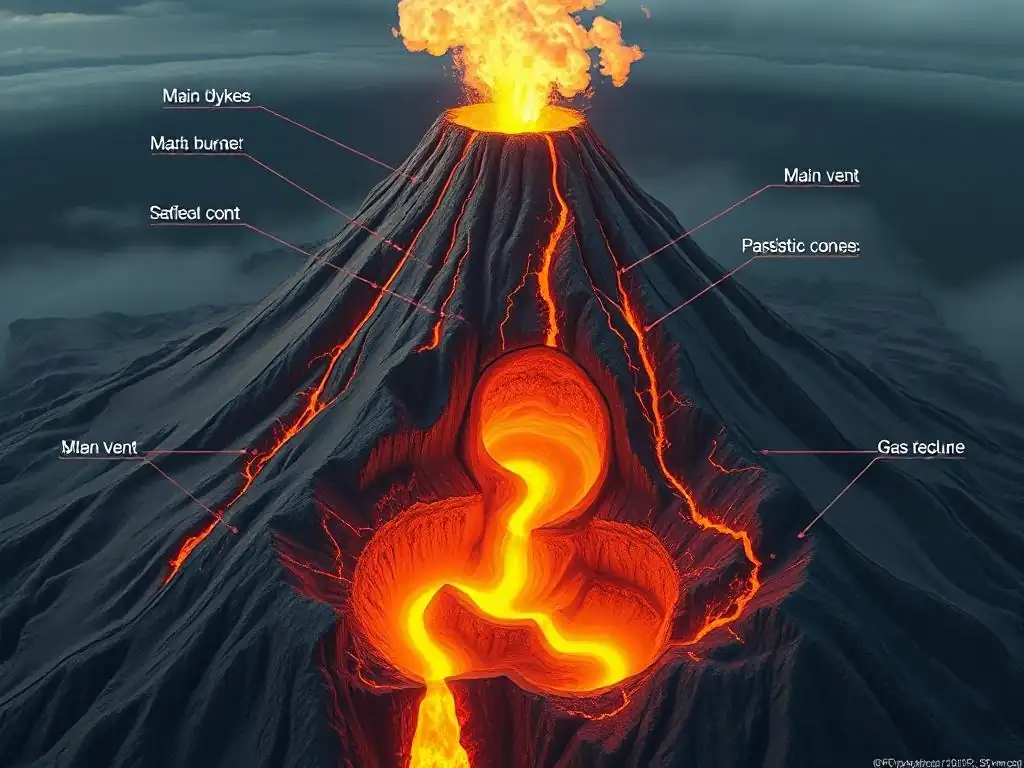
Dikes and sills are fundamental types of conduits that represent different orientations of magma transport within the Earth's crust. Dikes are vertical or near-vertical sheet-like intrusions of magma that cut across existing rock layers. They act as pathways for magma to ascend from depth towards the surface, often propagating along zones of weakness or pre-existing fractures in the crust.
Sills, on the other hand, are horizontal or near-horizontal sheet-like intrusions of magma that are emplaced between existing rock layers. Sills can act as temporary storage zones or as pathways for lateral magma transport, distributing magma away from the main conduit axis.
Dikes are particularly important in volcanic systems as they represent the primary mechanism for magma to rise through the crust. Their formation and propagation are influenced by the stress field within the Earth's crust and the properties of the magma and surrounding rocks. Sills, while generally not directly leading to surface eruptions, can play a crucial role in inflating volcanic edifices and influencing the stress distribution within the volcanic system, potentially affecting the pathways of subsequent dike intrusions and eruptions. The interplay between dikes and sills contributes significantly to the overall architecture and dynamics of volcanic plumbing systems.
Volcanic Pipes: Direct Routes to the Surface
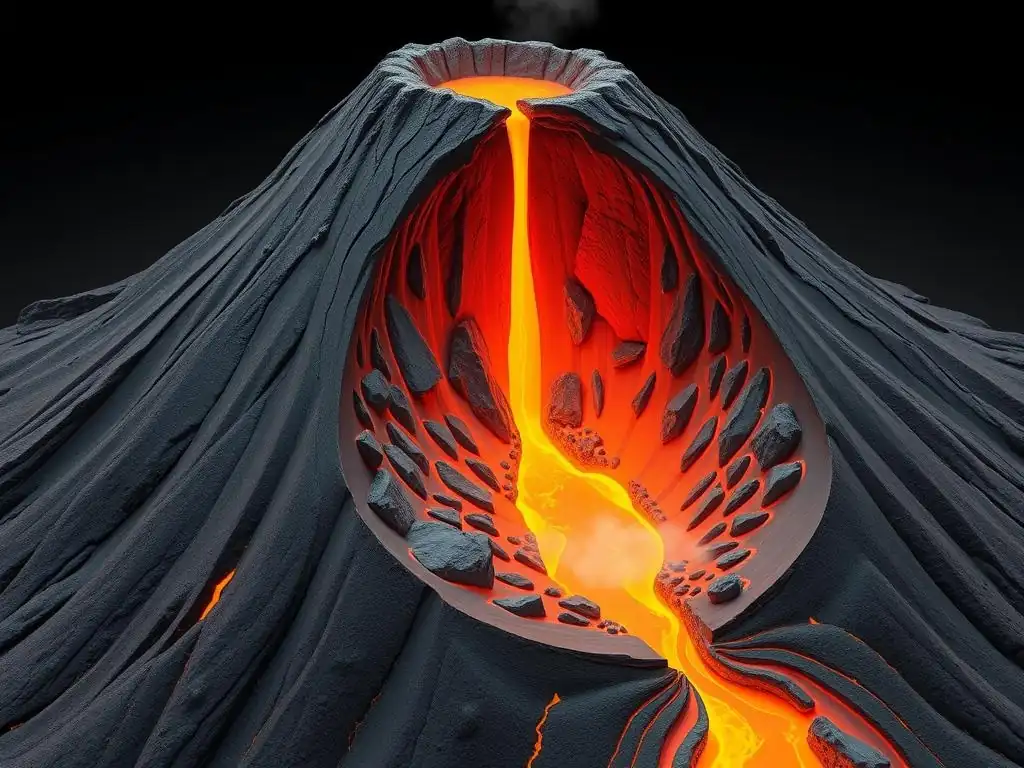
Volcanic pipes are more or less vertical conduits that provide a direct and focused pathway for magma to ascend from depth and erupt at the surface. They are often associated with central vent volcanoes, where eruptions are concentrated at a single point or a small cluster of vents. Volcanic pipes can form through a variety of processes, including repeated magma ascent along the same pathway, erosion of surrounding rock by hot magma, or the forceful excavation of a pathway during explosive eruptions.
Volcanic pipes represent the most direct route for magma to reach the surface, and their characteristics can significantly influence the style of eruption. A wide, open volcanic pipe might facilitate effusive eruptions, allowing magma to flow relatively freely onto the surface. Conversely, a narrow or constricted volcanic pipe might lead to pressure build-up and explosive eruptions, as the constricted pathway restricts magma ascent and promotes gas accumulation. The geometry and internal structure of volcanic pipes are key factors in understanding and predicting the eruptive behavior of central vent volcanoes.
Vents and Fissures: Points of Eruption
Vents and fissures are the locations at the Earth's surface where magma erupts, marking the final points of exit from the volcanic plumbing system. Vents are typically localized openings, often forming craters or cones around them, while fissures are elongated cracks or fractures in the ground from which magma erupts. The nature of vents and fissures, and how they are connected to the underlying plumbing system, plays a crucial role in determining the style and distribution of volcanic eruptions.
The location and type of vents and fissures are influenced by the underlying plumbing system, the stress field in the Earth's crust, and the properties of the erupting magma. Volcanoes can erupt from a single central vent, from multiple vents clustered together, or from extensive fissure systems that can stretch for kilometers. The distribution of vents and fissures at the surface provides valuable clues about the architecture and dynamics of the deeper volcanic plumbing system.
Central Vents vs. Fissure Eruptions
Central vent eruptions occur from a localized vent, often at the summit of a volcano, and are typically associated with conical volcanic edifices like stratovolcanoes and cinder cones. Magma is channeled through a central volcanic pipe and erupts from a single, focused point. These eruptions can range from effusive lava flows to explosive eruptions that eject ash, gas, and volcanic bombs.
Fissure eruptions, in contrast, occur from elongated cracks or fissures in the ground and are often associated with more fluid basaltic magmas. These eruptions can produce extensive lava flows that cover large areas and form shield volcanoes or flood basalt provinces.
The difference between central vent and fissure eruptions reflects variations in the underlying plumbing system and the properties of the magma. Central vent volcanoes often have more complex and restricted plumbing systems, leading to pressure build-up and a wider range of eruption styles. Fissure eruptions, on the other hand, are typically associated with more direct and open plumbing systems that facilitate the eruption of large volumes of fluid magma. The type of eruption, whether central vent or fissure, is a key characteristic of a volcano and its eruptive behavior.
The Influence of Plumbing on Eruption Style
The architecture and dynamics of the volcanic plumbing system exert a profound influence on the style of volcanic eruptions. The complexity of the plumbing system, the geometry of conduits, the presence of magma chambers, and the rate of magma ascent all contribute to determining whether an eruption will be effusive (lava flows), explosive (ash and pyroclastic flows), or a combination of both. For example, a highly branched and constricted plumbing system might promote pressure build-up and lead to explosive eruptions, while a simpler, more open system might favor effusive eruptions.
Furthermore, the plumbing system can control the volatile content and degassing behavior of magma as it ascends. Constrictions in conduits can impede degassing, leading to overpressure and potentially triggering explosive eruptions. Conversely, open conduits might allow for more gradual degassing, resulting in less explosive eruptions. Understanding the intricate relationship between the volcanic plumbing system and eruption style is crucial for assessing volcanic hazards and predicting the potential impacts of future eruptions.
Factors Influencing the Complexity of Volcanic Plumbing
Tectonic Setting and its Impact on Magma Generation
The tectonic setting in which a volcano is located is a primary factor controlling the generation and characteristics of magma, and consequently, the complexity of its plumbing system. Different tectonic settings, such as subduction zones, mid-ocean ridges, and hotspots, produce magmas with distinct compositions, volatile contents, and volumes, which in turn influence the architecture of the plumbing system. For instance, subduction zones, where one tectonic plate slides beneath another, are characterized by the generation of water-rich magmas that are more viscous and gas-rich, often leading to complex plumbing systems and explosive stratovolcanoes.
Mid-ocean ridges, where tectonic plates diverge and new crust is formed, are associated with the generation of basaltic magmas that are relatively fluid and gas-poor. These settings typically produce simpler plumbing systems and effusive eruptions from shield volcanoes or fissure systems.
Hotspots, plumes of hot mantle material rising from deep within the Earth, can occur in both oceanic and continental settings and generate a range of magma compositions depending on the interaction with the overlying lithosphere. The tectonic setting provides the fundamental framework within which volcanic plumbing systems develop and operate, dictating the type and amount of magma available and the stresses acting on the crust.
Magma Composition and Viscosity: Controlling Eruption Dynamics
Magma composition, particularly its silica (SiO2) content and volatile content, is a key factor controlling magma viscosity and, consequently, the dynamics of magma flow within the plumbing system and the style of eruption. Magmas with high silica content (rhyolitic and andesitic magmas) are more viscous than those with low silica content (basaltic magmas). Higher viscosity magmas resist flow more readily, leading to slower ascent rates, pressure build-up within the plumbing system, and a greater tendency for explosive eruptions.
The viscosity of magma influences how it interacts with the plumbing system. Highly viscous magmas are more likely to solidify within conduits, potentially creating blockages and leading to explosive eruptions when pressure overcomes the blockage. Less viscous magmas, such as basaltic magmas, can flow more easily through conduits, allowing for more effusive eruptions and the formation of lava flows.
The volatile content of magma, primarily water, also plays a crucial role in eruption dynamics. Water dissolved in magma reduces its viscosity and, more importantly, contributes to explosive eruptions when it exsolves as gas bubbles during magma ascent. Magma composition and viscosity are therefore fundamental controls on the behavior of volcanic plumbing systems and the style of eruptions they produce.
The Role of Water Content in Magmatic Processes
Water content is a critical component in magmatic processes, significantly influencing magma generation, ascent, storage, and eruption. Water, primarily derived from subducted oceanic crust in subduction zones, lowers the melting point of mantle rocks, promoting magma generation at shallower depths. This water-rich magma is typically more volatile-rich and viscous, contributing to the development of complex plumbing systems and explosive eruption styles characteristic of subduction zone volcanoes.
The presence of water in magma affects its physical properties and its behavior within the plumbing system. Water dissolved in magma reduces its viscosity, although this effect is less pronounced for high-silica magmas. More importantly, water exsolves as gas bubbles as magma rises and pressure decreases, driving explosive eruptions.
The amount of water dissolved in magma and the rate at which it exsolves are crucial factors controlling the explosivity of volcanic eruptions. Furthermore, water can react with surrounding rocks, altering their properties and influencing the pathways of magma flow. The role of water content in magmatic processes is multifaceted and fundamental to understanding the dynamics of volcanic plumbing systems and eruption behavior.
Investigating the Subsurface: Techniques for Studying Volcanic Plumbing
Geophysical Methods: Seismic Imaging and Gravity Surveys
Geophysical methods are essential tools for remotely investigating the subsurface structure of volcanoes and gaining insights into the architecture and dynamics of volcanic plumbing systems. Seismic imaging and gravity surveys are two prominent geophysical techniques used to probe the internal structure of volcanoes and map out magma chambers, conduits, and other components of the plumbing system. These methods provide valuable information without the need for direct drilling or excavation, allowing for the study of volcanoes in a non-invasive manner.
Geophysical surveys are typically conducted from the surface, using instruments that measure variations in physical properties such as seismic wave velocity or gravity. The data collected are then processed and interpreted to create images or models of the subsurface, revealing the distribution of different rock types, densities, and other physical characteristics that can be related to the volcanic plumbing system. These techniques are crucial for understanding the hidden depths of volcanoes and deciphering the processes occurring beneath the surface.
Seismic Tomography: Mapping Magma Chambers
Seismic tomography is a powerful geophysical technique that uses seismic waves to create three-dimensional images of the Earth's interior, including the subsurface structure of volcanoes. Similar to a medical CT scan, seismic tomography uses the travel times of seismic waves generated by earthquakes or controlled sources to map variations in seismic wave velocity within the Earth. Magma chambers, being regions of molten or partially molten rock, typically exhibit lower seismic wave velocities compared to the surrounding solid rocks.
By analyzing the patterns of seismic wave velocity variations, seismologists can identify and map the location, size, and shape of magma chambers beneath volcanoes. Seismic tomography has been instrumental in revealing the presence of magma chambers beneath numerous volcanoes worldwide, providing crucial information about the storage and distribution of magma within volcanic plumbing systems. The technique allows for the visualization of these hidden reservoirs and helps to understand their role in volcanic processes.
Ground Deformation Monitoring: Tracking Magma Movement
Ground deformation monitoring is another essential geophysical technique used to track changes in the shape of the Earth's surface, providing insights into magma movement and pressure changes within volcanic plumbing systems. As magma accumulates or moves beneath the surface, it can cause the ground to deform, either inflating or deflating the volcano. Precise measurements of ground deformation, using techniques such as GPS (Global Positioning System) and InSAR (Interferometric Synthetic Aperture Radar), can detect these subtle changes and provide valuable information about magma dynamics.
Ground deformation data can be used to infer the location, depth, and volume changes of magma reservoirs within the plumbing system. Inflation of the ground often indicates magma accumulation in a chamber, while deflation may suggest magma withdrawal or eruption. By monitoring ground deformation patterns over time, volcanologists can track magma movement, assess the state of volcanic unrest, and improve eruption forecasts. Ground deformation monitoring is a critical component of volcano monitoring programs worldwide.
Geochemical Analysis: Unraveling Magmatic Histories
Geochemical analysis of volcanic rocks and gases provides complementary information to geophysical methods, allowing scientists to unravel the magmatic histories and processes that occur within volcanic plumbing systems. By studying the chemical composition of erupted materials, including major and trace elements, isotopes, and volatiles, geochemists can gain insights into the source of magma, the processes it has undergone during its ascent and storage, and the conditions that led to eruption.
Geochemical data can reveal the composition of the mantle source from which magma originated, the degree of melting that produced the magma, and the extent of magma differentiation within the plumbing system. Isotopic analysis, in particular, can be used to trace magma sources and mixing processes. Analysis of volcanic gases provides information about the volatile content of magma and the degassing processes occurring during magma ascent. Geochemical studies are crucial for understanding the complex evolution of magmas within volcanic plumbing systems and for interpreting the signals detected by geophysical monitoring.
Isotope Geochemistry: Tracing Magma Sources
Isotope geochemistry is a powerful tool for tracing magma sources and understanding the mixing and mingling processes within volcanic plumbing systems. Isotopes are atoms of the same element with different numbers of neutrons. The ratios of different isotopes in volcanic rocks can be used to fingerprint the source regions of magmas in the Earth's mantle or crust, as different source regions have distinct isotopic compositions.
By analyzing the isotopic ratios of elements such as strontium, neodymium, lead, and oxygen in volcanic rocks, geochemists can identify the contributions from different mantle components or crustal contaminants to the erupted magma. Isotope geochemistry can also be used to track magma mixing processes, where magmas from different sources interact and blend within the plumbing system. This information is crucial for understanding the origin and evolution of magmas and the complexity of volcanic plumbing systems.
Melt Inclusions: A Window into Magma Composition
Melt inclusions are tiny pockets of magma trapped within crystals that form in magma chambers. These microscopic droplets of melt provide a unique window into the composition of magma at different stages of its evolution, preserving snapshots of magma chemistry before eruption. Melt inclusions are essentially fossilized magma, offering invaluable information about the volatile content, major and trace element composition, and isotopic signatures of magma at depth.
Analyzing melt inclusions allows geochemists to directly measure the pre-eruptive volatile content of magma, which is crucial for understanding eruption explosivity. Melt inclusions can also reveal the composition of parental magmas before they undergo differentiation processes in the plumbing system. By studying melt inclusions from different eruptions of the same volcano, scientists can reconstruct the evolution of magma composition over time and gain insights into the processes occurring within the volcanic plumbing system.
Case Studies: Examples of Complex Volcanic Plumbing Systems
Mount St. Helens: A Stratovolcano's Complex Plumbing System
Mount St. Helens, a stratovolcano in Washington State, USA, is renowned for its catastrophic eruption in 1980, which dramatically reshaped the surrounding landscape. The eruption was a stark reminder of the power of volcanoes and the complexity of their internal plumbing systems. Studies of Mount St. Helens have revealed a complex plumbing system characterized by multiple magma chambers, intricate conduit networks, and a history of diverse eruptive styles. Understanding the volcanic plumbing system explained at Mount St. Helens is crucial for assessing future hazards and mitigating risks.
The plumbing system of Mount St. Helens is not a simple, single conduit system. Instead, it is believed to involve a deeper magma storage region in the crust, feeding a shallower, more dynamic magma chamber beneath the volcano itself. This multi-level system allows for complex magmatic processes, such as magma mixing and differentiation, to occur, influencing the style and intensity of eruptions. The 1980 eruption, for example, involved the interaction of different magma types within the plumbing system, contributing to its explosive character.
Details of the Mount St. Helens Plumbing System
Seismic studies and geochemical analyses have provided insights into the details of the Mount St. Helens plumbing system. Seismic tomography has imaged a low-velocity zone beneath the volcano, interpreted as a shallow magma chamber located a few kilometers beneath the summit.
Geochemical analyses of erupted rocks have revealed a complex history of magma mixing and differentiation, indicating that different magma batches have interacted within the plumbing system. The plumbing system is thought to be characterized by a network of interconnected conduits that facilitate magma transport between the deeper storage region and the shallow magma chamber, and ultimately to the surface.
The 1980 eruption was triggered by a large landslide that destabilized the volcano's edifice, causing decompression of the shallow magma chamber and initiating a massive lateral blast followed by a vertical eruption column. The eruption demonstrated the dynamic nature of the Mount St. Helens plumbing system and its susceptibility to external triggers. Post-eruption studies have continued to refine our understanding of the plumbing system, including ongoing monitoring of ground deformation, gas emissions, and seismic activity to track magma recharge and assess future eruption potential.
Insights Gained from Studying This System
The study of Mount St. Helens' volcanic plumbing system has yielded significant insights into the processes that govern stratovolcanoes and their eruptive behavior. The recognition of a multi-level magma storage system and the importance of magma mixing in driving eruptions are key findings. The 1980 eruption highlighted the role of external factors, such as landslides, in triggering eruptions and the potential for rapid and dramatic changes in volcanic activity. The ongoing monitoring and research at Mount St. Helens continue to provide valuable data for improving our understanding of volcanic plumbing systems and eruption forecasting.
The lessons learned from Mount St. Helens have been applied to other stratovolcanoes worldwide, contributing to a broader understanding of volcanic hazards and risk mitigation. The emphasis on multi-disciplinary approaches, integrating geophysical, geochemical, and geological data, has become a standard practice in volcano research. Mount St. Helens serves as a prime example of a complex volcanic system where detailed investigations of the plumbing system are essential for understanding and predicting volcanic activity.
Kilauea: A Shield Volcano's Dynamic Conduit Architecture
Kilauea, a shield volcano on the Big Island of Hawaii, is one of the most active volcanoes in the world, characterized by frequent effusive eruptions and a dynamic plumbing system. Unlike stratovolcanoes, shield volcanoes like Kilauea typically have simpler plumbing systems dominated by dikes and lava tubes that facilitate the efficient transport of fluid basaltic magma to the surface. However, recent eruptions at Kilauea, particularly the 2018 eruption, have revealed a more complex and dynamic conduit architecture than previously thought. Understanding the volcanic plumbing system explained at Kilauea is crucial for forecasting eruption locations and lava flow paths.
The plumbing system of Kilauea is fed by a deep mantle plume, a source of hot, buoyant material rising from deep within the Earth's mantle. Magma generated from this plume ascends through the lithosphere and accumulates in a shallow magma reservoir beneath the summit caldera.
From this reservoir, magma is transported laterally through a network of dikes and conduits, feeding eruptions at the summit caldera and along rift zones that extend away from the summit. The plumbing system is constantly evolving, with magma pathways opening and closing, and magma reservoirs inflating and deflating in response to eruptive activity and magma supply.
Details of the Kilauea Plumbing System
Geophysical studies, including seismic monitoring and ground deformation measurements, have provided detailed insights into the Kilauea plumbing system. Seismic data reveals a shallow magma reservoir beneath the summit caldera, as well as dike intrusions propagating away from the summit along the rift zones.
Ground deformation data shows patterns of inflation and deflation associated with magma accumulation and withdrawal from the summit reservoir and dike systems. The 2018 eruption, which involved a dramatic caldera collapse at the summit and a large-volume lava flow eruption from the lower East Rift Zone, highlighted the interconnectedness of the plumbing system and the potential for rapid changes in eruption style and location.
The 2018 eruption was triggered by a complex sequence of events, including magma withdrawal from the summit reservoir, dike propagation along the East Rift Zone, and subsequent eruption in the lower rift zone. The eruption demonstrated the dynamic nature of the Kilauea plumbing system and the potential for magma to migrate over long distances through interconnected conduit networks. Post-eruption studies have focused on understanding the processes that led to the caldera collapse and the mechanisms of magma transport during the eruption.
Insights Gained from Studying This System
The study of Kilauea's volcanic plumbing system has significantly advanced our understanding of shield volcano dynamics and the behavior of basaltic magmas. The recognition of a complex and interconnected conduit architecture, capable of transporting large volumes of magma over considerable distances, is a key finding. The 2018 eruption highlighted the potential for rapid and dramatic shifts in eruption location and style, even at a volcano previously considered to have relatively predictable effusive eruptions. Ongoing monitoring and research at Kilauea continue to provide valuable data for improving eruption forecasting and lava flow hazard assessment at shield volcanoes worldwide.
The lessons learned from Kilauea emphasize the importance of considering the entire volcanic plumbing system, from the deep mantle source to the surface eruption sites, when assessing volcanic hazards. The dynamic nature of conduit networks and the potential for magma migration over long distances need to be taken into account in hazard models. Kilauea serves as a compelling example of a shield volcano with a complex and evolving plumbing system, where continuous monitoring and research are essential for mitigating volcanic risks.
Understanding Volcanic Plumbing for Hazard Assessment
Predicting Eruption Style and Intensity Based on Plumbing Characteristics
The characteristics of a volcanic plumbing system are intimately linked to the style and intensity of eruptions. Understanding the architecture, geometry, and dynamics of the plumbing system is crucial for predicting whether an eruption will be effusive or explosive, and for estimating its potential magnitude and impact. Features such as the presence and size of magma chambers, the connectivity and width of conduits, and the volatile content of magma all play a role in determining eruption style and intensity.
For example, volcanoes with large, shallow magma chambers and constricted conduits are more likely to produce explosive eruptions. The constricted conduits can impede magma ascent, leading to pressure build-up and the accumulation of volatiles, which can trigger violent explosions. Conversely, volcanoes with more open and direct plumbing systems, and magmas with lower volatile contents, tend to produce effusive eruptions characterized by lava flows. By characterizing the volcanic plumbing system explained using geophysical and geochemical techniques, scientists can improve their ability to assess eruption hazards and forecast potential eruption styles and intensities.
Monitoring Changes in Volcanic Plumbing to Detect Precursors
Monitoring changes within the volcanic plumbing system is a key strategy for detecting precursors to volcanic eruptions. Changes in magma pressure, magma movement, gas emissions, and ground deformation can all be indicative of increasing volcanic unrest and the potential for an impending eruption. Volcano monitoring networks, utilizing a range of geophysical and geochemical instruments, are designed to detect these subtle changes and provide early warning of volcanic activity.
For instance, increases in seismic activity, particularly the occurrence of volcanic tremor and volcano-tectonic earthquakes, can signal magma movement within the plumbing system. Changes in ground deformation patterns, such as inflation of the volcano, can indicate magma accumulation in a magma chamber. Increases in gas emissions, particularly the release of sulfur dioxide (SO2), can reflect magma degassing and ascent.
By continuously monitoring these parameters and analyzing trends and anomalies, volcanologists can detect precursors to eruptions and provide timely warnings to at-risk communities. Understanding the normal background activity of a volcano and recognizing deviations from this baseline are essential for effective eruption forecasting.
Developing Effective Evacuation Strategies Based on Volcanic Plumbing Models
Developing effective evacuation strategies for communities living near volcanoes requires a thorough understanding of potential eruption scenarios, which are directly linked to the characteristics of the volcanic plumbing system. Models of volcanic plumbing systems, incorporating geophysical, geochemical, and geological data, can be used to simulate magma flow pathways, eruption locations, and potential hazard zones. These models can inform the design of evacuation plans and the delineation of risk zones.
For example, if a volcanic plumbing model indicates that eruptions are likely to occur along a specific rift zone, evacuation plans can be tailored to prioritize the areas downslope of that rift zone. If the model suggests a high potential for explosive eruptions, evacuation plans should account for the hazards associated with ashfall, pyroclastic flows, and lahars.
By incorporating insights from volcanic plumbing models into hazard assessments and evacuation planning, emergency management agencies can develop more effective strategies to mitigate volcanic risks and protect vulnerable populations. Effective communication of volcanic hazards and evacuation procedures to the public is also crucial for ensuring successful evacuations when necessary.
The Future of Volcanic Plumbing Research
Advanced Modeling Techniques for Simulating Magma Flow
The future of volcanic plumbing research relies heavily on the development and application of advanced modeling techniques to simulate magma flow and volcanic processes. Numerical models that incorporate the complex physics of magma flow, heat transfer, and volatile exsolution are becoming increasingly sophisticated. These models can simulate magma ascent through conduits, magma chamber dynamics, and eruption processes, providing valuable insights into the behavior of volcanic plumbing systems.
Advanced modeling techniques are also incorporating more realistic representations of the Earth's crust and the properties of magma and surrounding rocks. Three-dimensional models that account for the complex geometry of volcanic plumbing systems and the heterogeneity of crustal structures are being developed. Furthermore, models are being integrated with real-time monitoring data, allowing for data assimilation and improved forecasting capabilities. The continued advancement of numerical modeling techniques is crucial for enhancing our understanding of volcanic plumbing systems and improving eruption predictions.
Integration of Multiple Datasets for Comprehensive Understanding
A comprehensive understanding of volcanic plumbing systems requires the integration of multiple datasets from various disciplines, including geophysics, geochemistry, geology, and remote sensing. Combining geophysical data, such as seismic tomography and ground deformation measurements, with geochemical analyses of erupted rocks and gases, and geological mapping of volcanic structures, provides a more holistic view of the plumbing system. Integrating data from different sources allows for cross-validation and a more robust interpretation of volcanic processes.
The increasing availability of large datasets from volcano monitoring networks and satellite observations is driving the development of integrated data analysis techniques. Machine learning and artificial intelligence algorithms are being applied to analyze complex datasets and identify patterns and relationships that might not be apparent through traditional methods. Data integration and advanced analytical techniques are essential for extracting maximum information from diverse datasets and achieving a more complete and nuanced understanding of volcanic plumbing systems.
The Importance of Collaborative Research and Data Sharing
Collaborative research and data sharing are paramount for advancing the field of volcanic plumbing research and improving volcanic hazard assessment globally. Volcanoes are complex systems that require expertise from multiple disciplines and collaborative efforts across research institutions and monitoring agencies worldwide. Sharing data, research findings, and best practices is essential for accelerating progress and ensuring that knowledge and resources are effectively utilized.
International collaborations, such as those facilitated by organizations like the International Association of Volcanology and Chemistry of the Earth's Interior (IAVCEI), are crucial for fostering communication and cooperation among volcanologists globally. Open data initiatives and data repositories are promoting data sharing and accessibility, enabling researchers worldwide to benefit from the wealth of data collected at volcanoes around the globe. Collaborative research and data sharing are essential for tackling the complex challenges of understanding and predicting volcanic activity and for mitigating volcanic risks worldwide.
Conclusion: Appreciating the Intricacies of Volcanic Plumbing
The Dynamic and Ever-Changing Nature of Volcanic Systems
Volcanic systems, and their underlying plumbing networks, are dynamic and ever-changing entities. They are not static structures but rather constantly evolving systems influenced by magma supply, tectonic forces, and eruptive activity. The architecture of volcanic plumbing systems can change over time, with conduits opening and closing, magma chambers inflating and deflating, and magma pathways shifting in response to ongoing volcanic processes. This dynamic nature makes understanding and predicting volcanic activity a continuous challenge.
The plumbing system is not a fixed set of pipes and reservoirs; it is a fluid and adaptable network that responds to changes in magmatic and tectonic conditions. Eruptions themselves can significantly alter the plumbing system, creating new pathways, modifying existing conduits, and changing the stress field within the volcano. Recognizing the dynamic and ever-changing nature of volcanic plumbing systems is crucial for developing realistic models of volcanic behavior and for improving long-term hazard assessments.
The Ongoing Quest to Understand and Predict Volcanic Activity
The quest to fully understand and accurately predict volcanic activity is an ongoing scientific endeavor. While significant progress has been made in recent decades in understanding volcanic plumbing systems and eruption processes, many challenges remain. Volcanoes are complex natural systems, and their behavior is influenced by a multitude of interacting factors, making precise predictions a difficult task.
Continued research, technological advancements in monitoring and modeling techniques, and collaborative efforts are essential for further advancing our understanding of volcanic plumbing systems and improving eruption forecasting capabilities. The ultimate goal is to enhance volcanic hazard assessment, mitigate risks to communities living near volcanoes, and ensure the safety and resilience of populations in volcanically active regions. The journey to fully understand the intricacies of volcanic plumbing system explained is a continuous process of discovery and innovation, driven by the need to live safely alongside these powerful forces of nature.
Frequently Asked Questions
What exactly is a volcanic plumbing system?
A volcanic plumbing system is the network of pathways beneath a volcano that allows magma to rise from the Earth's mantle or crust to the surface. It includes magma chambers, conduits, and dikes.
How does the volcanic plumbing system influence volcanic eruptions?
The structure and characteristics of the plumbing system greatly influence the style and intensity of eruptions. Factors like magma viscosity and gas content, controlled within the system, determine whether an eruption is effusive or explosive.
What are some key components of a volcanic plumbing system?
Key components include magma chambers (reservoirs of molten rock), conduits (channels for magma ascent), and dikes and sills (magma intrusions that can create pathways). These elements dictate magma storage and flow.
How do volcanologists study volcanic plumbing systems?
Volcanologists use various techniques, including seismic monitoring, ground deformation measurements, gas emission analysis, and geochemical studies of erupted rocks. These methods help to infer the structure and processes within the system.
Why is understanding volcanic plumbing systems important for hazard assessment?
A better understanding of volcanic plumbing systems allows for more accurate eruption forecasting and hazard mapping. This knowledge helps communities prepare for and mitigate the risks associated with volcanic activity.
Final Reflection: Unearthing Earth's Fiery Secrets
The intricate network of magma pathways beneath volcanoes, the volcanic plumbing system, is far more than just a geological curiosity. Understanding these hidden depths is now crucial for predicting eruptions and mitigating the devastating impact they can have on communities around the world. The insights gained from studying these systems are not just academic; they are essential for safeguarding lives and infrastructure in volcanically active regions.
This exploration into volcanic plumbing systems has profoundly shaped my understanding of our planet's dynamic processes. The sheer complexity and interconnectedness of these subterranean networks remind us of the powerful forces constantly shaping our world. The Earth is a living organism and its breath is fire.
This quote, though perhaps romanticized, captures the essence of the raw, untamed energy that lies beneath our feet, constantly seeking release.
As we conclude this journey beyond the crater, I urge you to reflect on the profound implications of understanding volcanic plumbing systems. Consider the dedication of the scientists who tirelessly work to unravel these mysteries, often in the face of immense challenges. Let their passion inspire you to seek a deeper understanding of the natural world around you, and to appreciate the delicate balance that sustains life on this planet.
Unearth Your Inner Volcanologist!
Thanks for exploring the fascinating world of volcanic plumbing! We hope you've enjoyed this journey beneath the surface and gained a new appreciation for the powerful forces shaping our planet. Ready to take the next step?
Here are a few ways to continue your exploration:
- Embark on a virtual field trip! Explore our interactive 3D model of a volcanic plumbing system on volcanoexplorers.org and trace the magma's path from the Earth's mantle to the eruption site.
- Share your newfound knowledge of volcanic processes with your network. Help spread the word about the science behind these earth-shaping forces.
- Suggest potential locations for mapping volcanic plumbing systems and share your ideas on our community forum. Help us better understand our planet's natural processes.
What's one surprising thing you learned about volcanic plumbing, and how will this knowledge change your perspective on volcanoes?