
The Art of Steam: How Water Sculpts Maar Volcanoes

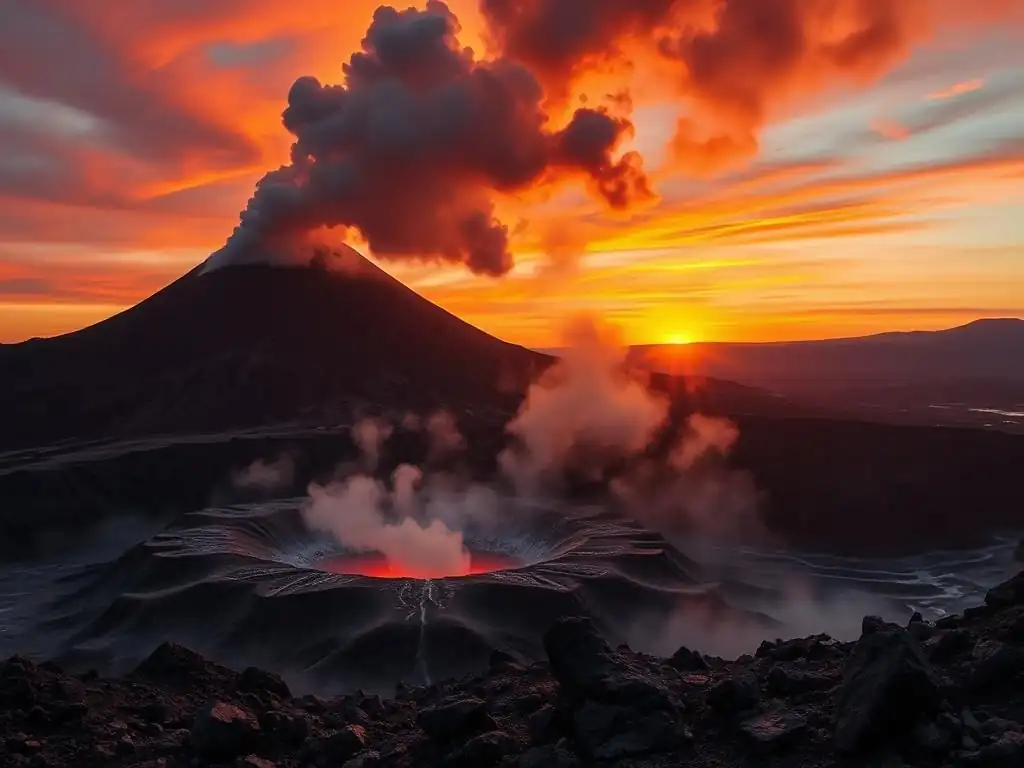
Welcome to Volcano Explorers, where we uncover the Earth's fiery secrets! Ever wondered how a seemingly harmless body of water can birth a colossal volcanic crater? Prepare to unravel the fascinating processes behind Steam and maar volcano formation. Dive in and discover how water, when combined with molten rock, sculpts some of the most unique and intriguing landscapes on our planet. The story is just beginning...
- Unveiling Maar Volcanoes: Broad Low-Relief Craters
- The Role of Steam in Maar Volcano Formation: An Introduction
- Phreatomagmatic Eruptions: The Driving Force Behind Maar Formation
- The Steam Explosion Process: A Step-by-Step Breakdown
- Maar Volcano Morphology: Characteristics Shaped by Steam
- Locations of Maar Volcanoes: Examples Around the World
- The Science Behind Steam and Maar Volcano Genesis: Research and Studies
- Hazards Associated with Maar Volcanoes: Understanding the Risks
- Maar Volcanoes: A Testament to the Power of Steam and Water
-
Frequently Asked Questions
- How does a maar volcano typically form, as described on VolcanoExplorers.org?
- What role does steam play in the creation of a maar volcano, according to the article?
- Does VolcanoExplorers.org offer any safety information for those living near maar volcanoes?
- What are some key differences between a maar volcano and other types of volcanoes, as discussed on the website?
- Where can I find more information on past eruptions that have resulted in the formation of maar volcanoes, according to VolcanoExplorers.org?
- Final Reflection: The Enduring Power of Water's Embrace
- Unleash Your Inner Volcanologist!
Unveiling Maar Volcanoes: Broad Low-Relief Craters
Maar volcanoes, often overlooked in favor of their towering stratovolcano and expansive shield volcano cousins, present a unique and fascinating facet of volcanic activity. Unlike the classic conical shapes that come to mind when we picture volcanoes, maars are characterized by their broad, low-relief craters. These distinctive volcanic landforms are not built up from successive lava flows and ashfalls, but rather are excavated into the surrounding landscape through powerful explosions. Their subtle appearance often belies the dramatic forces that sculpted them, making them intriguing subjects for volcanologists and geomorphologists alike.
These craters, sometimes filled with water to form scenic lakes, offer a window into a specific type of volcanic eruption – one where water plays a starring role. The relatively gentle slopes and wide basins of maar volcanoes might suggest a less violent origin, but in reality, they are born from some of the most explosive volcanic events on Earth, driven by the incredible power of steam. Understanding maars means understanding the dynamic interaction between magma and water, and how this interaction manifests in the dramatic reshaping of the Earth's surface.
The Role of Steam in Maar Volcano Formation: An Introduction
The formation of maar volcanoes is intimately linked to the presence and behavior of water, specifically its transformation into steam. While many volcanic eruptions involve some degree of water, either from surface sources or within the magma itself, maar volcanoes are unique in that their genesis is fundamentally dependent on the explosive force generated by the rapid vaporization of water upon contact with hot magma. This process, known as phreatomagmatic eruption, is the defining characteristic that sets maar volcanoes apart from other volcanic forms.
Steam, in this context, is not merely a byproduct of volcanic activity; it is the primary sculptor. The immense pressure build-up from superheated water flashing into steam is what drives the powerful explosions that excavate the characteristic broad craters of maar volcanoes. Without the explosive force of steam, these low-profile craters would not exist. Therefore, to truly understand maar volcanoes, we must delve into the science of steam generation in volcanic environments and its profound impact on landscape formation.
What are Maar Volcanoes and How Do They Differ?
Maar volcanoes are a type of volcanic crater that forms when magma erupts through shallow groundwater. The defining characteristic of a maar is its broad, flat floor, often below the surrounding ground level, and its low-relief rim composed of loose fragments of rock and volcanic material, known as a tuff ring. These craters can range in size from a few hundred meters to several kilometers in diameter, and their depths can vary from tens to hundreds of meters. Crucially, unlike composite or shield volcanoes, maars lack a prominent volcanic cone built from lava flows.
The difference lies in the eruption style and the materials ejected. Typical cone-building volcanoes, like stratovolcanoes such as Mount Fuji or Mount Rainier, are constructed over time by successive eruptions of lava and ash, resulting in steep slopes. Shield volcanoes, like those in Hawaii, are formed by fluid basaltic lava flows that spread out over vast areas, creating gently sloping, broad structures.
In contrast, maar volcanoes are formed in a single, or a series of closely spaced, explosive events. The eruptions that create maars are not dominated by lava flows but by the forceful ejection of fragmented material – a mixture of pulverized country rock and volcanic debris – driven by steam explosions. This explosive, steam-driven process excavates a crater rather than building a cone, resulting in the distinctive morphology of maar volcanoes.
The Significance of Water Interaction in Volcanic Eruptions
Water's interaction with magma fundamentally alters the nature of volcanic eruptions, shifting them from effusive or magmatic to intensely explosive. In purely magmatic eruptions, like those forming shield volcanoes, the eruption is driven by the pressure of dissolved gases within the magma itself. However, when magma encounters external water, such as groundwater or surface water, the eruption dynamics change dramatically due to the rapid phase transition of water to steam.
Water, when heated to temperatures significantly above its boiling point, especially under pressure within the Earth's crust, can become superheated. Upon contact with magma, which can be at temperatures of 700°C to 1300°C (1300°F to 2400°F), this superheated water instantly and explosively vaporizes. The volume expansion as water turns to steam is enormous – approximately 1,700 times at atmospheric pressure.
This rapid expansion generates a powerful explosion, fragmenting both the surrounding rocks and the magma itself into fine particles. This steam-driven explosive force is the key ingredient in the formation of maar volcanoes, making water interaction not just significant, but absolutely essential to their creation.
Phreatomagmatic Eruptions: The Driving Force Behind Maar Formation
Phreatomagmatic eruptions are the specific type of volcanic explosion responsible for sculpting maar volcanoes. The term "phreatomagmatic" is derived from the Greek words "phreas," meaning groundwater, and "magma," referring to molten rock beneath the Earth's surface. This term accurately reflects the fundamental process: eruptions resulting from the interaction between magma and external water sources. These eruptions are characterized by their highly explosive nature, driven by the rapid generation of steam when magma comes into contact with water.
Unlike purely magmatic eruptions which are primarily driven by the expansion of gases dissolved within the magma, phreatomagmatic eruptions gain their explosive power from the external water source. The interaction is often violent and instantaneous, leading to the fragmentation of both the magma and the surrounding country rock. This fragmented material, along with the expanding steam, is ejected at high velocities, excavating a crater in the process. Therefore, understanding phreatomagmatic eruptions is crucial to understanding the genesis of maar volcanoes, as they are inextricably linked.
Understanding Phreatomagmatic Explosions: Steam-Driven Power
Phreatomagmatic explosions are essentially steam explosions amplified by the presence of magma. The fundamental mechanism is the rapid transfer of heat from the much hotter magma to the cooler water. When magma, ascending from depth, encounters a body of groundwater, the temperature difference is immense. This intense thermal contrast leads to extremely rapid heat transfer, causing the water to flash into steam in milliseconds.
The sudden and massive increase in volume as water becomes steam generates a shockwave that propagates outwards, fracturing and ejecting the surrounding rocks and magma. This explosion is not just a simple expansion; it's a highly energetic event that can excavate significant volumes of material.
The efficiency of this steam-driven explosive power in fragmenting rock and magma is remarkably high, contributing to the characteristic fine-grained ejecta found in tuff rings surrounding maars. The power of a phreatomagmatic explosion is directly related to the amount of water involved and the efficiency of the heat transfer from magma to water, making steam the primary driver of these volcanic events.
Magma-Water Interaction: The Key to Creating Maar Volcanoes
The specific way in which magma and water interact dictates the explosivity and characteristics of phreatomagmatic eruptions, and consequently, the formation of maar volcanoes. The interaction is not simply a mixing of two fluids; it's a complex process governed by factors such as the mixing ratio of magma to water, the depth of interaction, and the pressure conditions. Efficient heat transfer from magma to water is crucial for maximizing steam production and explosivity.
Several models describe the magma-water interaction process. One common scenario involves magma intruding into water-saturated sediments or an aquifer. The water surrounding the magma is rapidly heated, forming a steam film around the magma body.
As more water comes into contact and vaporizes, the steam film expands, eventually leading to a critical point where the pressure overcomes the confining strength of the surrounding rocks, resulting in an explosion. The efficiency of this process depends on the fragmentation of the magma, which increases the surface area for heat transfer. Fine fragmentation of magma, often induced by the initial stages of water interaction, further enhances steam production and the overall explosive power, making magma-water interaction the central key to the creation of maar volcanoes.
The Steam Explosion Process: A Step-by-Step Breakdown
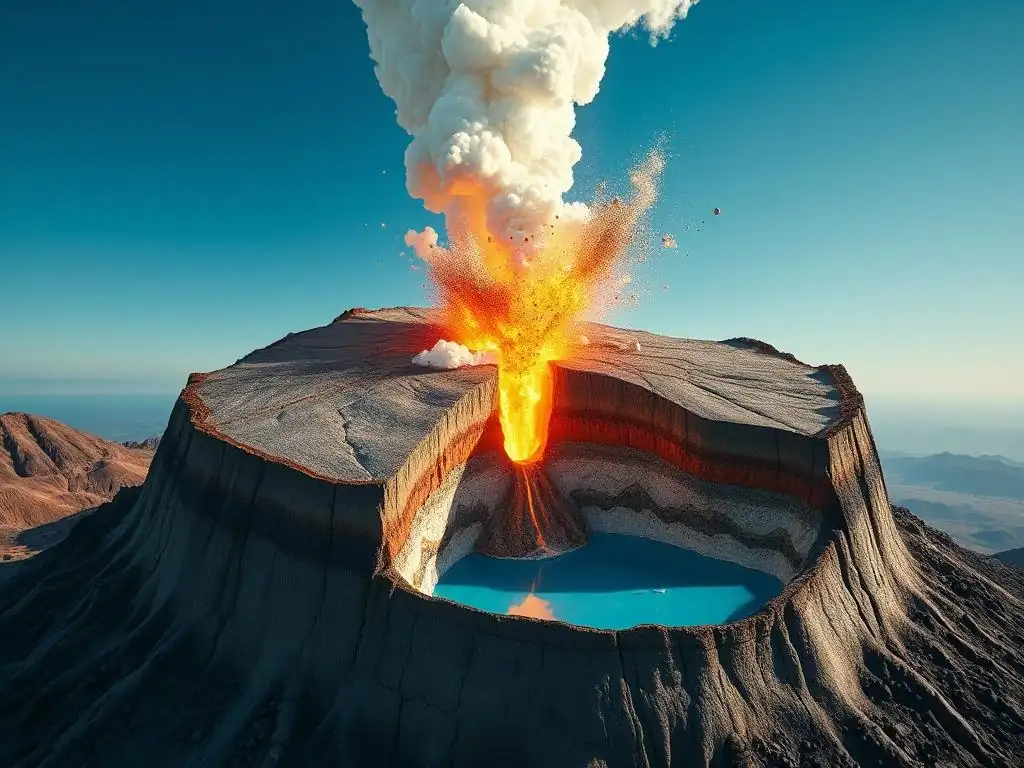
The formation of a maar volcano through steam explosions is a multi-stage process, starting with the source of water and culminating in the excavation of the crater. Understanding this step-by-step breakdown illuminates the intricate interplay between geological factors and physical processes that lead to these unique volcanic landforms.
Subsurface Water Sources: Where Does the Water Come From?
The water that fuels phreatomagmatic eruptions and sculpts maar volcanoes primarily originates from subsurface sources, most commonly groundwater. Aquifers, permeable geological formations that hold and transmit groundwater, are often the main reservoirs of water involved in maar formation. Shallow water tables, particularly in areas with unconsolidated sediments or volcanic terrains, also provide readily available water for interaction with ascending magma.
In some cases, surface water bodies like lakes or rivers can also contribute to phreatomagmatic activity, especially if magma erupts beneath or adjacent to them. However, groundwater is generally considered the more prevalent and consistent water source for maar-forming eruptions. The depth and volume of the groundwater reservoir, as well as its proximity to the rising magma conduit, play significant roles in determining the scale and style of the phreatomagmatic eruption, and therefore, the characteristics of the resulting maar volcano.
Magma Ascent and Interaction with Groundwater
The process begins with the ascent of magma from the Earth's mantle towards the surface. This magma, typically basaltic in composition for maar-forming eruptions, rises due to its lower density compared to the surrounding solid rocks. As the magma ascends, it may encounter layers of water-saturated rock or an aquifer. The depth at which this interaction occurs is crucial and depends on factors such as the depth of the groundwater table and the pathway of magma ascent.
When the hot magma encounters groundwater, the temperature difference is extreme. The magma's heat rapidly transfers to the surrounding water, initiating the process of steam generation. The interaction zone becomes a site of intense thermal exchange, setting the stage for the explosive vaporization of water and the subsequent phreatomagmatic eruption. The efficiency of this interaction, and the resulting explosivity, are highly dependent on the nature of this initial contact between magma and groundwater.
The Rapid Vaporization and Explosive Expansion of Water
The heart of the maar-forming process is the rapid vaporization of water upon contact with magma. When superheated water, confined under pressure, comes into contact with magma at temperatures exceeding 700°C, it undergoes an almost instantaneous phase change to steam. This phase change is accompanied by an enormous increase in volume. For instance, one liter of water, when instantly vaporized to steam at atmospheric pressure, expands to approximately 1,700 liters.
This explosive volumetric expansion generates intense pressure waves that radiate outwards. The confined environment beneath the surface amplifies this pressure, leading to a powerful explosion. This explosion is not a slow, gradual process; it is a rapid, almost instantaneous event. The speed and force of this steam-driven expansion are what make phreatomagmatic eruptions so explosive and effective at excavating large craters.
Crater Formation: The Result of Steam Explosions
The repeated steam explosions, resulting from successive pulses of magma-water interaction, are responsible for excavating the maar crater. Each explosion blasts out fragments of the surrounding country rock and newly formed volcanic debris (tephra). This material is ejected outwards and upwards, contributing to the formation of the tuff ring that typically encircles the maar crater.
The process is not a single, massive explosion, but rather a series of explosions occurring over a relatively short period. These successive explosions progressively enlarge and deepen the crater. The ejected material, ranging in size from fine ash to larger blocks, accumulates around the crater rim, forming the characteristic low-relief tuff ring. The resulting crater is typically broad and bowl-shaped, reflecting the outward and upward direction of the explosive forces driven by steam. The depth and diameter of the maar crater are ultimately determined by the total energy released during these steam explosions and the volume of material excavated.
Maar Volcano Morphology: Characteristics Shaped by Steam
The distinctive morphology of maar volcanoes directly reflects the steam-driven explosive processes that create them. The characteristic broad, low-relief craters, tuff rings, and often, subsequent crater lakes, are all telltale signs of a phreatomagmatic origin, sculpted by the power of steam.
Broad, Low-Relief Craters: Identifying Maar Volcanoes
The most defining feature of maar volcanoes is their broad, low-relief crater. "Broad" refers to the relatively large diameter of the crater compared to its depth, often resulting in a wide, shallow basin. "Low-relief" describes the gentle slopes of the crater walls and the low height of the surrounding rim, contrasting sharply with the steep cones of stratovolcanoes or the broad domes of shield volcanoes. These craters often appear as depressions in the landscape, sometimes subtly so, making them less visually imposing than other types of volcanoes.
The broad and shallow nature of maar craters is a direct consequence of the steam explosion mechanism. The explosions tend to excavate material outwards as well as upwards, creating a wide, expanding crater rather than a deep, narrow vent. The low-relief rim is formed from the ejected material, which is deposited relatively close to the crater edge due to the explosive, but not highly vertically directed, nature of the eruptions. Identifying these broad, low-relief craters is often the first step in recognizing a maar volcano in the landscape.
Tuff Rings and Ejecta Blankets: Evidence of Steam-Fueled Eruptions
Surrounding many maar craters are tuff rings, low-lying rings of volcanic debris. Tuff rings are composed of tuff, a type of rock made from consolidated volcanic ash and fragments. This material is the ejecta from the phreatomagmatic explosions, consisting of a mixture of fragmented country rock and juvenile volcanic material. The presence of a tuff ring is strong evidence of a steam-fueled eruption, as it represents the accumulation of material ejected during the explosive excavation of the crater.
The composition of the tuff ring provides further clues about the eruption process. It typically contains a high proportion of fragmented country rock, reflecting the excavation of the surrounding geological formations. The volcanic component, while present, is often finer-grained and may be altered by hydrothermal activity related to the steam generation.
Beyond the tuff ring, a thinner ejecta blanket, composed of similar material, may extend further from the crater, gradually thinning with distance. The distribution and characteristics of the tuff ring and ejecta blanket provide valuable information about the explosivity, directionality, and scale of the phreatomagmatic eruption that formed the maar.
Crater Lakes: The Aftermath of a Phreatomagmatic Event
Many maar craters, particularly those in humid climates or areas with high groundwater tables, eventually become occupied by crater lakes. After the phreatomagmatic eruptions cease, the excavated crater basin becomes a natural depression that can collect water from rainfall, groundwater seepage, or surface runoff. These maar lakes can be remarkably scenic, often forming circular or oval-shaped bodies of water nestled within the surrounding landscape.
The presence of a crater lake is a common feature of mature maar volcanoes. The lake's water chemistry can also be influenced by ongoing geothermal activity and the leaching of minerals from the volcanic deposits. In some cases, these lakes can host unique ecosystems adapted to the volcanic environment. However, it's important to remember that even seemingly tranquil maar lakes can still pose volcanic hazards, particularly related to gas emissions or potential future eruptions.
Locations of Maar Volcanoes: Examples Around the World
Maar volcanoes are found in diverse geological settings around the world, often in areas with basaltic volcanism and readily available groundwater. Examining specific examples helps to illustrate the variety of maar volcanoes and the different contexts in which they form.
Zuni Salt Lake, New Mexico: A Classic Example of a Dry Maar
Zuni Salt Lake in New Mexico is a well-studied and classic example of a dry maar. Located in a volcanic field in the southwestern United States, it is a broad, shallow crater approximately 1.9 kilometers (1.2 miles) in diameter and 120 meters (400 feet) deep. Notably, Zuni Salt Lake does not currently contain a lake, hence the term "dry maar." The crater floor is covered in salt flats, indicating past lake conditions and subsequent evaporation.
Geological studies of Zuni Salt Lake have revealed its phreatomagmatic origin. The tuff ring surrounding the crater provides evidence of explosive eruptions driven by steam. The area's geology, characterized by basaltic volcanism and sedimentary rocks containing groundwater, provided the ideal conditions for maar formation. Zuni Salt Lake serves as a prime example of a maar volcano in an arid environment, showcasing the typical morphology and geological context of these steam-sculpted landforms.
Lake Nyos, Cameroon: Carbon Dioxide and Limnic Eruptions
Lake Nyos in Cameroon is another maar lake, but one tragically famous for a different reason: a limnic eruption in 1986. While Lake Nyos is indeed a maar lake, formed by phreatomagmatic eruptions, it is also characterized by the accumulation of volcanic carbon dioxide (CO2) in its deep waters. This CO2 originates from degassing magma beneath the lake and dissolves in the cold, dense bottom layers of the lake.
In 1986, a catastrophic limnic eruption occurred at Lake Nyos, releasing a massive cloud of CO2 that suffocated thousands of people and animals in the surrounding area. This event highlighted a unique hazard associated with some maar lakes – the potential for sudden gas releases. While the maar formation of Lake Nyos is typical, its subsequent evolution to become a site of CO2 accumulation and limnic eruption risk makes it a distinct and sobering example of the diverse hazards associated with volcanic regions, even those characterized by low-profile maar volcanoes.
Ukinrek Maars, Alaska Peninsula: A Remote Volcanic Field
The Ukinrek Maars, located on the remote Alaska Peninsula, represent a more recently formed and dynamically active maar volcanic field. These maars erupted in 1977, providing volcanologists with a rare opportunity to study maar formation processes in near real-time. The Ukinrek Maars consist of two adjacent maar craters, formed by phreatomagmatic eruptions that occurred through water-saturated sediments.
The 1977 eruptions at Ukinrek Maars were relatively small but highly explosive, typical of phreatomagmatic activity. Studies of the eruption deposits and the morphology of the newly formed maars have provided valuable insights into the mechanisms of maar formation and the role of steam explosions. The remote location of Ukinrek Maars underscores that these volcanic features can occur in geographically isolated areas, and their recent formation serves as a reminder that maar-forming processes are ongoing geological phenomena.
The Science Behind Steam and Maar Volcano Genesis: Research and Studies
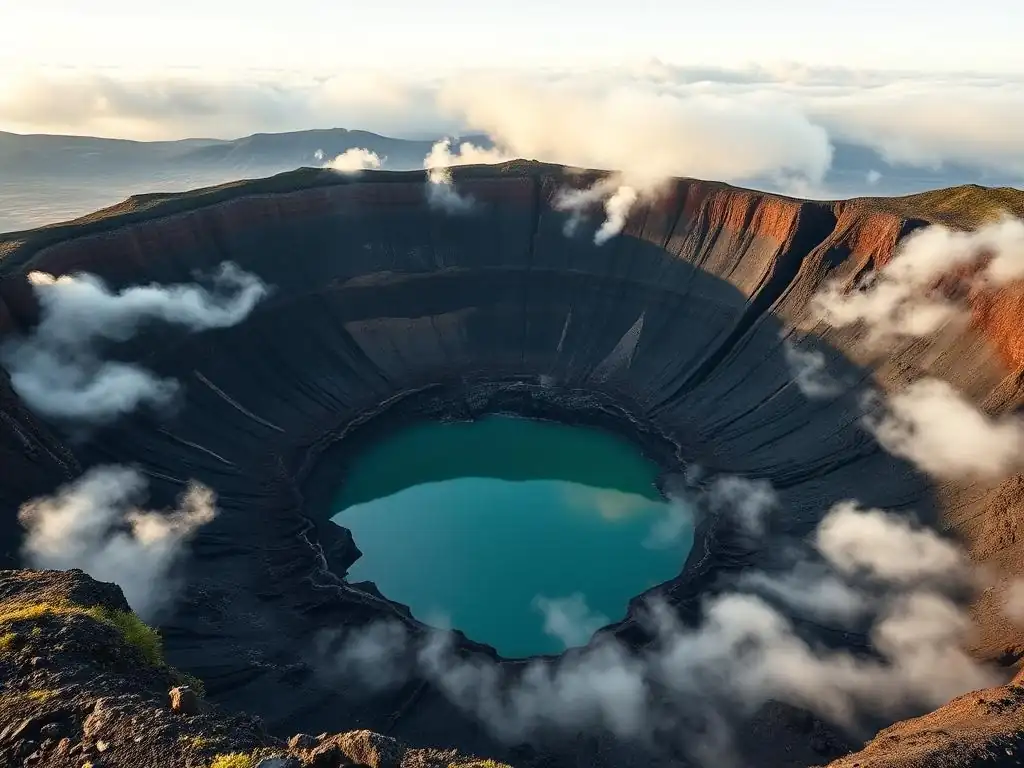
Understanding the genesis of maar volcanoes and the role of steam explosions is a significant area of volcanological research. Scientists employ various methods, from field studies to laboratory experiments and numerical modeling, to unravel the complexities of phreatomagmatic activity and maar formation.
Volcanological Studies on Phreatomagmatic Activity
Volcanological studies of phreatomagmatic activity encompass a wide range of approaches. Field studies involve detailed mapping and analysis of maar volcanoes and their eruption deposits, such as tuff rings and ejecta blankets. These studies aim to reconstruct the eruption history, identify the source materials, and understand the spatial distribution of ejecta. Geochemical analyses of volcanic materials help to determine the magma composition and the degree of magma-water interaction.
Experimental volcanology plays a crucial role in simulating phreatomagmatic eruptions in controlled laboratory settings. These experiments allow researchers to investigate the effects of various parameters, such as magma temperature, water content, and mixing ratios, on the explosivity and fragmentation efficiency of magma-water interactions. Numerical modeling complements field and experimental studies by simulating the complex physical processes involved in steam generation, explosion dynamics, and crater formation. These combined approaches contribute to a more comprehensive understanding of the science behind steam-driven maar volcano genesis.
Geothermal Activity and its Relation to Maar Formation
Geothermal activity is often closely associated with maar volcanoes. The same heat source that drives magma ascent and phreatomagmatic eruptions can also power geothermal systems. Maar craters and surrounding areas may exhibit hot springs, fumaroles (steam vents), and other manifestations of geothermal activity. The presence of groundwater, which is essential for maar formation, also plays a crucial role in geothermal systems, acting as a heat transfer medium.
In some cases, geothermal systems can pre-condition the ground, making it more susceptible to phreatomagmatic eruptions. The heated groundwater can enhance steam production when magma intrudes, potentially increasing the explosivity of eruptions. Conversely, maar volcanoes themselves can become sites of geothermal resource potential after eruptions cease, with the crater acting as a reservoir for heated groundwater. The interplay between geothermal activity and maar formation highlights the interconnectedness of different volcanic and hydrothermal processes.
Lorenz, V. (1986). On the growth of maars and diatremes and its relevance to the formation of tuff rings.
A seminal paper in the field of maar volcano research is "On the growth of maars and diatremes and its relevance to the formation of tuff rings" by Volker Lorenz, published in 1986. This paper significantly advanced the understanding of maar formation by proposing a model for the development of maars and diatremes (another type of volcanic vent) and their relationship to tuff ring formation. Lorenz's model emphasizes the role of repetitive, pulsating phreatomagmatic explosions in excavating maar craters.
The paper highlights that tuff rings are not simply deposited around a pre-existing crater, but rather are formed concurrently with the crater excavation through successive explosive events. Lorenz's work provided a framework for interpreting the stratigraphy of tuff rings and understanding the dynamic processes involved in maar volcano growth. This publication remains a highly influential contribution to the scientific literature on maar volcanoes and phreatomagmatic volcanism, underscoring the importance of steam explosions in shaping these distinctive volcanic landforms.
Hazards Associated with Maar Volcanoes: Understanding the Risks
While maar volcanoes are often characterized by their low-profile appearance and less dramatic eruptions compared to stratovolcanoes, they are not without hazards. Understanding the potential risks associated with maar volcanoes is crucial, especially in areas where they are located near populated regions.
Potential for Future Phreatomagmatic Eruptions
Maar volcanoes, although often formed in single or short-lived eruption sequences, are not necessarily extinct after one eruption. Volcanic fields containing maars can be sites of recurrent volcanic activity. Future phreatomagmatic eruptions can occur within or adjacent to existing maar craters, posing hazards to nearby areas. The potential for future eruptions depends on the underlying magmatic system and the availability of groundwater.
Even if a maar volcano has been dormant for centuries or millennia, it's essential to recognize that volcanic activity can resume. Monitoring volcanic areas for signs of unrest, such as changes in seismicity, ground deformation, or gas emissions, is important for assessing the potential for future phreatomagmatic eruptions from maar volcanic fields. Understanding the geological history of a maar volcanic field is crucial for evaluating the long-term volcanic hazard.
Geothermal Activity and its Associated Dangers
As mentioned earlier, geothermal activity is often associated with maar volcanoes. While geothermal resources can be beneficial, they also present certain hazards. Hot springs and steam vents can pose burn risks. Hydrothermal explosions, caused by the sudden vaporization of superheated water within the geothermal system, can occur without magmatic eruptions and eject hot water and steam explosively.
Furthermore, geothermal areas can be prone to ground instability and subsidence due to hydrothermal alteration of rocks. Gas emissions, particularly hydrogen sulfide (H2S) and carbon dioxide (CO2), can also be hazardous in geothermal areas associated with maar volcanoes. Therefore, understanding and monitoring geothermal activity in and around maar volcanic fields is important for hazard assessment and mitigation.
Gas Emissions and Potential for Limnic Eruptions
The Lake Nyos disaster highlighted the potential hazard of gas emissions, specifically carbon dioxide (CO2), from maar lakes. While limnic eruptions are relatively rare, they represent a significant and potentially deadly hazard. Maar lakes that accumulate volcanic gases, particularly CO2, in their deep waters are susceptible to limnic eruptions, where a sudden release of a large gas cloud can displace oxygen and suffocate people and animals.
Monitoring gas concentrations in maar lakes, particularly CO2 and methane (CH4), is crucial for assessing the risk of limnic eruptions. Early warning systems and mitigation measures, such as degassing pipes to slowly release accumulated gases, can be implemented to reduce the hazard associated with potentially dangerous maar lakes like Lake Nyos and Lake Monoun in Cameroon.
Maar Volcanoes: A Testament to the Power of Steam and Water
Maar volcanoes stand as compelling geological monuments to the powerful interaction between magma and water, specifically the explosive force of steam. These broad, low-relief craters, sculpted by phreatomagmatic eruptions, are not just intriguing landforms; they are windows into fundamental volcanic processes and the dynamic interplay between Earth's internal heat and surface water.
The Unique Geological Significance of Maar Volcanoes
Maar volcanoes hold unique geological significance for several reasons. They provide direct evidence of phreatomagmatic volcanism, a crucial type of volcanic eruption driven by external water. Studying maars helps volcanologists understand the mechanisms of magma-water interaction, steam explosion dynamics, and the fragmentation processes involved in these eruptions. The tuff rings surrounding maars preserve valuable records of eruption history and the composition of both volcanic and country rock materials.
Furthermore, maar volcanoes often occur in volcanic fields, providing insights into the spatial and temporal distribution of volcanism in a region. Their association with geothermal activity highlights the interconnectedness of volcanic and hydrothermal processes. Maar volcanoes, therefore, are not just isolated geological features but integral components of larger volcanic systems, offering valuable information about Earth's dynamic processes.
Exploring the Beauty and Danger of Steam-Sculpted Landscapes
Maar volcanoes, with their broad craters often filled with serene lakes and surrounded by gently sloping tuff rings, can possess a subtle yet captivating beauty. The landscapes they create are often characterized by a blend of volcanic landforms and lush vegetation, particularly around crater lakes. Exploring these steam-sculpted landscapes offers a unique opportunity to witness the interplay between volcanic forces and natural beauty.
However, it's crucial to remember that this beauty is intertwined with inherent volcanic danger. Maar volcanoes are a testament to powerful explosive forces, and although they may appear dormant, the potential for future eruptions, geothermal hazards, or gas emissions remains. Appreciating maar volcanoes involves acknowledging both their aesthetic appeal and the underlying geological processes that make them both fascinating and potentially hazardous features of our planet.
Frequently Asked Questions
How does a maar volcano typically form, as described on VolcanoExplorers.org?
A maar volcano forms through phreatomagmatic eruptions, where magma interacts explosively with groundwater or surface water. This interaction creates violent steam explosions that excavate a wide, shallow crater with low rims.
What role does steam play in the creation of a maar volcano, according to the article?
Steam is crucial because it's the driving force behind the explosive eruptions. When magma heats water rapidly, the resulting steam expands violently, fragmenting the surrounding rock and ejecting it into the air.
Does VolcanoExplorers.org offer any safety information for those living near maar volcanoes?
While the main focus of the article is formation, VolcanoExplorers.org generally provides safety guides and evacuation tips for people residing near active volcanoes, including information relevant to potential steam explosions.
What are some key differences between a maar volcano and other types of volcanoes, as discussed on the website?
Unlike stratovolcanoes, maars are typically low-profile craters formed by single, short-lived explosive events. They lack the conical shape and extensive lava flows associated with other volcanic types.
Where can I find more information on past eruptions that have resulted in the formation of maar volcanoes, according to VolcanoExplorers.org?
VolcanoExplorers.org features sections dedicated to famous eruptions throughout history, which often include examples of past maar-forming events and their impacts on the surrounding environment.
Final Reflection: The Enduring Power of Water's Embrace
The intricate dance between water and molten rock, as explored in this article, isn't just a geological curiosity; it's a powerful reminder of the Earth's dynamic forces constantly reshaping our world. The explosive creation of maar volcanoes, sculpted by steam, underscores the raw, untamed energy hidden beneath our feet, a force that continues to influence landscapes and ecosystems across the globe.
The sheer scale of these formations, born from the seemingly gentle element of water, is a humbling testament to nature's artistry. It reminds us that even the most familiar substances can unleash extraordinary power under the right conditions. Water is the driving force of all nature.
- Leonardo da Vinci, a sentiment that resonates deeply when considering the dramatic impact of steam in shaping these volcanic landscapes.
As we conclude this exploration of steam and maar volcano formation, consider the profound implications of this natural process. How can we, as stewards of this planet, better understand and respect the forces that shape it? Let us carry forward a deeper appreciation for the delicate balance between water, earth, and fire, and strive to learn from the Earth's ancient lessons, ensuring a more sustainable future for generations to come.
Unleash Your Inner Volcanologist!
Thank you for exploring the fascinating world of maar volcanoes and the powerful role of steam in their creation! Now that you've learned about these captivating landscapes, it's time to take the next step.
Here's how you can further your understanding and appreciation of these incredible geological formations:
- Plan a Trip! Research maar volcanoes near you or in your next travel destination. Experiencing these wonders firsthand will deepen your knowledge and ignite your curiosity.
- Share this article with your friends and family on social media.
- Explore more fascinating articles about volcanoes in the Volcano Explorers archive.
Ready to witness the raw power of a maar volcano? Which one is now at the top of your travel list?