
The Next Big Eruption: Are Observatories Prepared for a MegaVolcano Event?

Welcome to Volcano Explorers!
Prepare to be captivated. The Earth breathes fire, and nowhere is that more evident than in the realm of volcanoes. But what if the unthinkable happened? What if the next eruption wasn't just big, but catastrophic? Dive into our latest article, " The Next Big Eruption: Are Observatories Prepared for a MegaVolcano Event?" and uncover the critical questions surrounding mega volcano eruption preparedness. The answers might surprise you... and they might just be vital. Explore, learn, and understand the forces shaping our planet, and discover whether we're truly ready for the next awakening.
- Introduction: Understanding the Threat of Mega Volcano Eruptions
- Volcano Observatories: The Front Line of Mega Eruption Monitoring
- Assessing Current Mega Volcano Eruption Preparedness Levels
- Case Studies: Mega Volcano Monitoring Successes and Failures
- Improving Mega Volcano Eruption Preparedness: Key Strategies
- Addressing the Communication Gap: Public Awareness and Education
- The Future of Mega Volcano Eruption Preparedness: Research and Innovation
- Conclusion: Ensuring Global Resilience in the Face of Mega Volcanoes
-
Frequently Asked Questions
- What is a mega volcano eruption, and how does it differ from a typical volcanic eruption?
- How well-equipped are volcano observatories to predict and monitor mega volcano eruptions?
- What are the key strategies for preparing for a mega volcano eruption, particularly for communities living nearby?
- What are the potential global impacts of a mega volcano eruption, beyond the immediate vicinity of the volcano?
- How can individuals contribute to volcano preparedness efforts, even if they don't live near an active volcano?
- Final Reflection: Embracing Uncertainty in the Face of Volcanic Giants
- Fuel Your Curiosity: Prepare for the Future of Volcanic Monitoring!
Introduction: Understanding the Threat of Mega Volcano Eruptions
Defining Mega Volcanoes and Their Potential Impact
Mega volcanoes represent the most cataclysmic form of volcanism on Earth, dwarfing even the largest eruptions of stratovolcanoes. Unlike typical cone-shaped volcanoes, mega volcanoes are often characterized by vast calderas, depressions formed after extraordinarily voluminous eruptions empty the magma chamber beneath. The Volcanic Explosivity Index (VEI) is used to measure the magnitude of volcanic eruptions, with mega volcano eruptions typically registering a VEI of 8 – the highest level on the scale.
To put this into perspective, the 1980 eruption of Mount St. Helens was a VEI 5, and the 1815 Tambora eruption, a VEI 7, caused the "Year Without a Summer." A VEI 8 eruption, however, releases energy orders of magnitude greater, potentially ejecting thousands of cubic kilometers of material into the atmosphere and impacting global climate for years, even decades.
The potential impact of a mega volcano eruption is far-reaching and devastating. Beyond the immediate zones of pyroclastic flows and ashfall, a mega eruption can trigger global cooling due to the injection of massive amounts of sulfur dioxide into the stratosphere, which forms sulfate aerosols that reflect sunlight. This can lead to widespread crop failures and famine.
Furthermore, the sheer volume of ash can disrupt air travel globally, cripple infrastructure, and contaminate water supplies. The societal and economic consequences are almost unimaginable, potentially leading to widespread displacement, resource scarcity, and geopolitical instability. Understanding the scale of this threat is the first crucial step in bolstering mega volcano eruption preparedness.
Why Mega Volcano Eruptions Demand Global Preparedness
Mega volcano eruptions, while infrequent on human timescales, are a geologically inevitable phenomenon with the capacity to inflict global catastrophe. Their potential impacts transcend national borders, making mega volcano eruption preparedness a global imperative, not just a localized concern. The interconnected nature of our modern world amplifies the consequences of such an event. Global supply chains, international travel, and worldwide communication networks are all vulnerable to disruption from a large-scale eruption. For instance, a major ash cloud could ground air traffic across continents, impacting trade, tourism, and essential services, highlighting the global reach of a mega volcano event.
Moreover, the long lead times potentially associated with some mega volcano systems offer a window of opportunity for proactive preparedness. While predicting the exact timing of an eruption remains a challenge, advanced monitoring techniques can detect subtle changes in volcanic activity, providing crucial early warning signals. Investing in global mega volcano eruption preparedness is not merely about mitigating immediate disaster; it’s about building long-term resilience and safeguarding the future. This necessitates international cooperation in research, monitoring, and emergency response planning to ensure that all nations are better equipped to face this shared planetary risk.
Volcano Observatories: The Front Line of Mega Eruption Monitoring
The Crucial Role of Volcano Observatories in Early Warning Systems
Volcano observatories serve as the sentinel eyes and ears on volcanic activity, playing a pivotal role in providing early warnings for all types of eruptions, including those from mega volcanoes. These institutions, staffed by volcanologists, seismologists, geochemists, and other specialists, continuously monitor volcanoes using a suite of sophisticated instruments. Seismic networks detect ground movements and volcanic tremors that often precede eruptions.
Gas monitoring systems measure the composition and flux of volcanic gases, changes in which can indicate magma ascent. Ground deformation studies, using GPS and satellite-based InSAR (Interferometric Synthetic Aperture Radar), track swelling or sinking of the volcano's surface, another key indicator of magma movement. Data from these diverse sources are integrated and analyzed to assess the current state of a volcano and to detect any signs of unrest that might signal an impending eruption.
For mega volcanoes, with their vast and complex systems, the role of observatories becomes even more critical. The early stages of unrest at a mega volcano might be subtle and prolonged, requiring meticulous monitoring over extended periods to discern meaningful trends from background noise. Observatories provide the continuous, systematic surveillance needed to identify these subtle precursors and to issue timely alerts.
For example, the Yellowstone Volcano Observatory (YVO), a consortium of institutions including the USGS, monitors the Yellowstone caldera in the United States with an extensive network of seismometers, GPS stations, and gas sensors. This continuous monitoring is crucial for understanding Yellowstone's behavior and providing warnings should signs of significant unrest develop, demonstrating the vital function of volcano observatories in mega volcano eruption preparedness.
Challenges in Monitoring Mega Volcanoes: Scale and Complexity
Monitoring mega volcanoes presents unique challenges due to their immense scale, complex magmatic systems, and often protracted periods of repose between eruptions. The sheer size of a mega volcano caldera, which can span dozens of kilometers, necessitates extensive monitoring networks that are more costly and logistically demanding to maintain than those for smaller, cone-shaped volcanoes. For example, the Toba caldera in Indonesia, responsible for a VEI 8 eruption approximately 74,000 years ago, covers an area of about 100 by 30 kilometers. Effectively monitoring such a vast area requires a dense network of sensors and significant logistical support.
Furthermore, the magmatic systems underlying mega volcanoes are incredibly complex, often involving multiple magma chambers and intricate pathways for magma ascent. Understanding the dynamics of these systems requires advanced geophysical techniques and sophisticated modeling. Mega volcanoes also tend to have very long repose periods, sometimes tens of thousands or even hundreds of thousands of years, between major eruptions.
This long quiescence can lead to complacency and reduced funding for monitoring efforts, making it difficult to maintain consistent vigilance over geological timescales. The challenge lies in sustaining long-term monitoring and research efforts to ensure mega volcano eruption preparedness, even when decades or centuries may pass without significant activity.
Assessing Current Mega Volcano Eruption Preparedness Levels
Evaluating Global Volcano Monitoring Networks: Strengths and Weaknesses
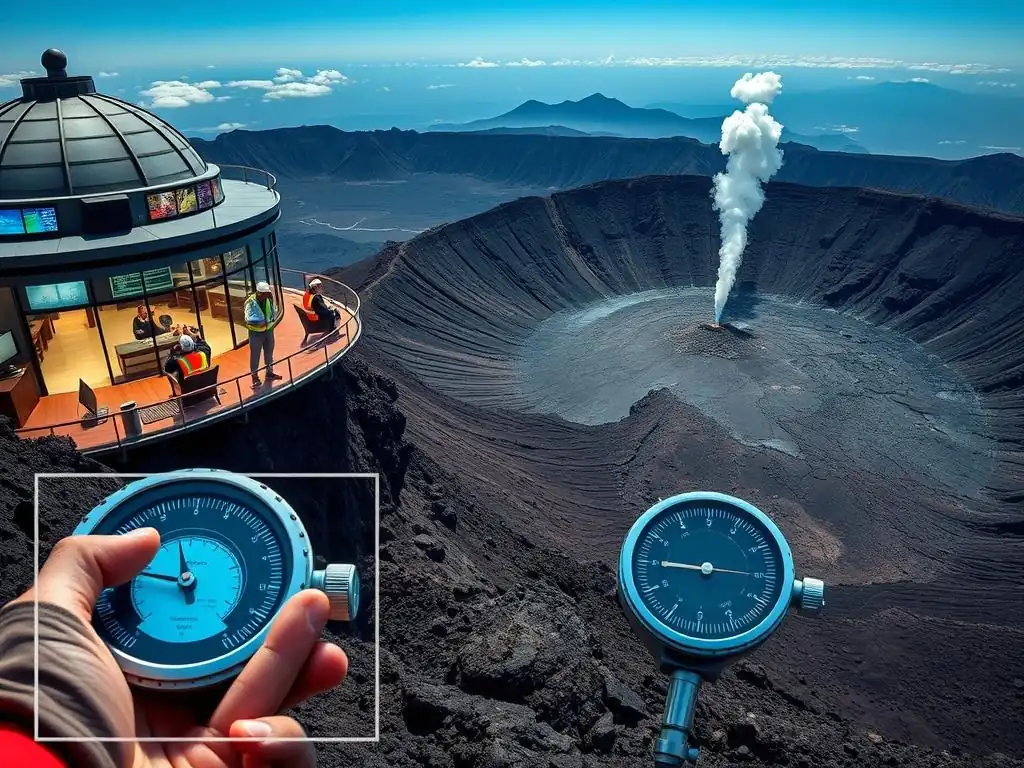
Global volcano monitoring networks have significantly improved in recent decades, particularly with advancements in technology and international collaboration. The establishment of volcano observatories in many volcanic regions worldwide has been a major strength, providing localized expertise and continuous monitoring capabilities. Regions with active volcanoes like the United States (USGS Volcano Hazards Program), Italy (INGV), and Japan (JMA) boast well-developed monitoring networks utilizing seismic, geodetic, and gas-sensing instruments. These networks are effective at detecting and tracking volcanic unrest at numerous volcanoes, contributing to improved eruption forecasting and hazard assessments.
However, weaknesses remain, particularly concerning mega volcano eruption preparedness. Many mega volcano systems are located in developing countries or remote regions with limited resources for establishing and maintaining comprehensive monitoring networks. For instance, while Yellowstone and Campi Flegrei are relatively well-monitored, other potential mega volcano sites may lack adequate surveillance.
Furthermore, the global distribution of monitoring capabilities is uneven, with some regions having far more advanced infrastructure and expertise than others. This disparity highlights a weakness in global mega volcano eruption preparedness, as a mega eruption could occur in a less monitored region, potentially reducing the lead time for warning and response. Improving the consistency and global coverage of volcano monitoring networks is crucial for enhancing overall mega volcano eruption preparedness.
Examining Resource Allocation for Mega Volcano Research and Monitoring
Resource allocation for volcano research and monitoring, particularly concerning mega volcanoes, often faces challenges due to the perceived low frequency of mega eruptions and competing societal priorities. Funding for volcano observatories and research institutions is typically derived from government agencies, which must balance diverse demands across various sectors.
While funding for monitoring active volcanoes that pose immediate risks to populated areas is generally prioritized, research into long-term hazards like mega volcano eruptions can sometimes be under-resourced. For example, the annual budget for the USGS Volcano Hazards Program, while substantial, must cover monitoring and research for all active volcanoes in the United States, not just mega volcanoes like Yellowstone.
The long timescales associated with mega volcano eruptions can also influence resource allocation decisions. Political and funding cycles often operate on shorter timeframes than the geological timescales of mega volcano activity. Maintaining sustained funding for decades or centuries of monitoring and research, even during periods of volcanic quiescence, can be difficult to justify to policymakers and the public.
This can lead to cyclical funding patterns, with increased resources allocated during periods of volcanic unrest, followed by reductions during quiet periods. Ensuring consistent and adequate resource allocation for mega volcano research and monitoring is essential for long-term mega volcano eruption preparedness and requires effective communication of the potential global risks to decision-makers and the public.
Case Studies: Mega Volcano Monitoring Successes and Failures
Yellowstone: A Case Study in Long-Term Monitoring Efforts
Yellowstone, a prime example of a large caldera system and a potential mega volcano, serves as a significant case study in long-term monitoring efforts. The Yellowstone Volcano Observatory (YVO), established in 2001, represents a collaborative effort by the U.S. Geological Survey (USGS), Yellowstone National Park, and several universities to continuously monitor and study Yellowstone's volcanic and hydrothermal activity.
YVO operates an extensive network of over 50 seismometers, more than 25 GPS stations, and numerous stream and gas monitoring sites throughout the Yellowstone region. This robust network provides near real-time data on ground deformation, seismic activity, and gas emissions, allowing scientists to track even subtle changes in the system.
The long-term monitoring of Yellowstone has yielded significant insights into the caldera's behavior. For example, GPS data has revealed periods of uplift and subsidence of the caldera floor, indicating magma movement beneath the surface. Seismic data has provided detailed information about the crustal structure and the frequency of earthquake swarms.
Gas monitoring has tracked variations in helium and carbon dioxide emissions from hydrothermal areas. While Yellowstone has not experienced a mega eruption in tens of thousands of years, the continuous monitoring by YVO is crucial for detecting any precursory signs of increased unrest and for providing timely warnings should activity escalate. Yellowstone's comprehensive monitoring program exemplifies a success in mega volcano eruption preparedness through sustained, long-term scientific observation.
Campi Flegrei: Monitoring a Densely Populated Caldera
Campi Flegrei, located near Naples, Italy, presents a different but equally critical case study in mega volcano monitoring, particularly due to its location in a densely populated area. This active caldera, part of the Neapolitan volcanic district, has experienced periods of intense unrest in recent decades, including episodes of uplift known as bradyseism.
The Istituto Nazionale di Geofisica e Vulcanologia (INGV) Osservatorio Vesuviano (Vesuvius Observatory) is responsible for monitoring Campi Flegrei, employing a dense network of seismic, geodetic, and geochemical instruments. Given the proximity to millions of people, the monitoring at Campi Flegrei is of paramount importance for public safety and mega volcano eruption preparedness in a highly vulnerable region.
The monitoring efforts at Campi Flegrei have faced significant challenges due to the complex and dynamic nature of the caldera. Bradyseismic events, characterized by periods of rapid ground uplift and increased seismicity, require intense scrutiny to differentiate between minor fluctuations and potential precursors to a larger eruption. INGV utilizes advanced data analysis techniques and sophisticated models to interpret the monitoring data and assess the evolving hazard.
The 1980s crisis at Campi Flegrei, which saw significant ground uplift and earthquake activity, led to large-scale evacuations, highlighting the societal impact of volcanic unrest in densely populated areas. Continuous and enhanced monitoring, coupled with effective communication and emergency planning, are crucial for mitigating risks at Campi Flegrei and similar mega volcano systems situated near large populations, demonstrating the critical need for robust mega volcano eruption preparedness in such contexts.
Improving Mega Volcano Eruption Preparedness: Key Strategies
Enhancing Global Collaboration in Volcano Monitoring
Enhancing global collaboration is paramount for improving mega volcano eruption preparedness. Volcanic eruptions, especially those from mega volcanoes, are a global hazard that necessitates international cooperation in research, monitoring, and response planning. Sharing data, expertise, and resources across national boundaries can significantly strengthen global monitoring capabilities. Organizations like the World Organization of Volcano Observatories (WOVO) facilitate communication and collaboration among volcano observatories worldwide, promoting best practices and data sharing. International scientific collaborations, such as joint research projects and workshops, can advance our understanding of mega volcano processes and improve monitoring techniques.
Furthermore, developing standardized protocols for data acquisition, analysis, and communication is crucial for effective global collaboration. Sharing real-time monitoring data across observatories can provide a more comprehensive picture of global volcanic activity and potentially detect subtle precursors to large eruptions that might be missed by individual observatories working in isolation.
International collaborations can also facilitate capacity building in regions with limited resources for volcano monitoring, ensuring that all areas at risk from mega volcano eruptions benefit from global scientific and technical advancements. Strengthening global networks and fostering open data sharing are essential steps in enhancing mega volcano eruption preparedness on a planetary scale.
Investing in Advanced Monitoring Technologies: Satellite Monitoring, Seismic Networks, and Gas Detection
Investing in advanced monitoring technologies is critical for enhancing mega volcano eruption preparedness. Satellite-based monitoring techniques, such as InSAR and thermal infrared imaging, offer a powerful tool for observing ground deformation and thermal changes over vast areas, particularly useful for monitoring large caldera systems like mega volcanoes. InSAR can detect millimeter-scale changes in ground elevation, providing valuable insights into magma movement and caldera inflation or deflation. Thermal monitoring can identify changes in heat flux, which may indicate increased volcanic activity. These satellite-based methods complement ground-based monitoring networks and can provide crucial data for remote or inaccessible mega volcano regions.
Improving ground-based seismic networks with denser arrays of high-sensitivity seismometers is also essential. Advanced seismic techniques, such as seismic tomography and waveform inversion, can provide detailed images of the subsurface structure beneath mega volcanoes, helping to characterize magma chambers and pathways. Enhancements in gas detection technologies, including remote sensing and in-situ sensors, can improve our ability to monitor changes in volcanic gas emissions, which are often early indicators of volcanic unrest. Investing in research and development of these advanced monitoring technologies, and ensuring their widespread deployment, is crucial for enhancing mega volcano eruption preparedness and improving early warning capabilities.
Developing Robust Eruption Response Plans: Evacuation Strategies and Resource Allocation
Developing robust eruption response plans is a vital component of mega volcano eruption preparedness. While predicting the precise timing of a mega eruption remains challenging, having well-defined response plans in place is essential for mitigating the potential impacts. Evacuation strategies need to be tailored to the specific hazards posed by a mega eruption, including pyroclastic flows, ashfall, and potential lahars. For densely populated areas near potential mega volcanoes, developing and practicing large-scale evacuation plans is crucial. This requires clear communication channels, designated evacuation routes, and pre-identified safe zones.
Resource allocation for emergency response is another critical aspect of preparedness. Mega eruptions can generate massive volumes of ash that can disrupt infrastructure, contaminate water supplies, and impact agriculture over vast areas. Stockpiling essential resources, such as food, water, medical supplies, and ash removal equipment, in strategic locations is necessary.
Furthermore, establishing international protocols for disaster relief and humanitarian aid in the event of a mega eruption is crucial, given the potentially global scale of the disaster. Developing and regularly updating comprehensive eruption response plans, including evacuation strategies and resource allocation frameworks, are essential steps in enhancing mega volcano eruption preparedness and minimizing the devastating consequences of such an event.
Addressing the Communication Gap: Public Awareness and Education
Communicating the Risks of Mega Volcano Eruptions to the Public
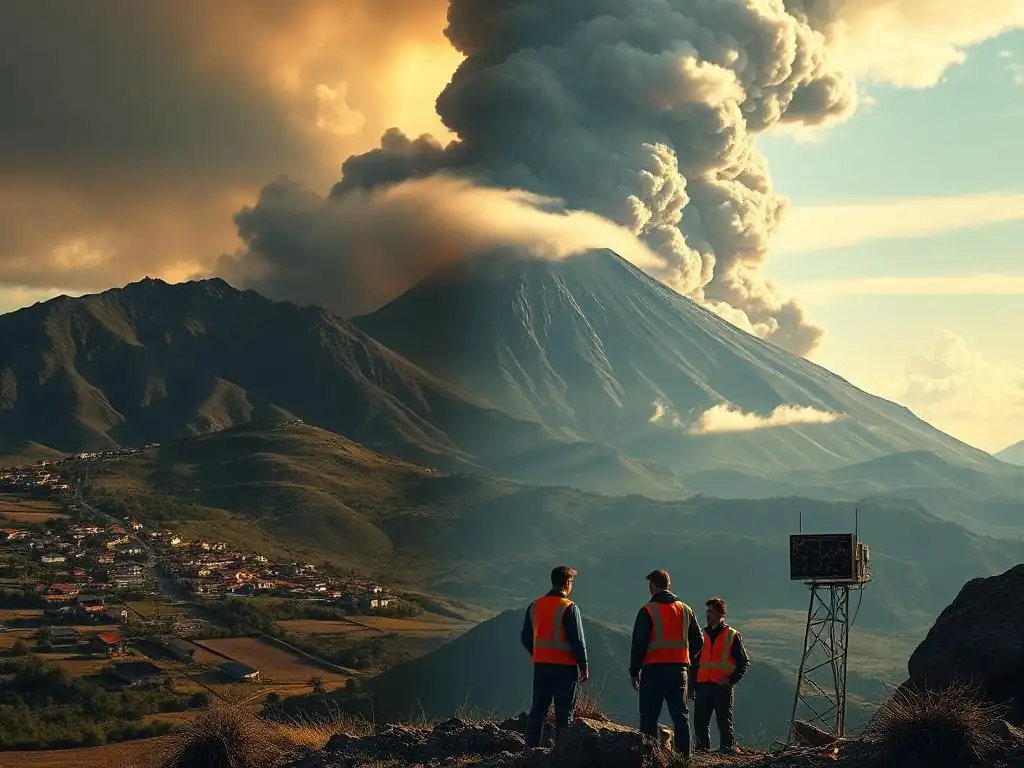
Communicating the risks of mega volcano eruptions effectively to the public is a critical challenge in mega volcano eruption preparedness. The infrequent nature of mega eruptions can lead to a lack of public awareness and a perception that they are a remote or negligible threat. However, the potential consequences are so catastrophic that it is essential to educate the public about these risks and the importance of preparedness.
Effective communication requires translating complex scientific information into clear, understandable language that resonates with the general public. Utilizing various communication channels, including websites, social media, public talks, and educational programs, is crucial for reaching diverse audiences.
Visual aids, such as maps illustrating potential ashfall zones and videos depicting the scale of mega eruptions, can be particularly effective in conveying the potential impacts. Highlighting historical examples of large eruptions and their consequences can also help to contextualize the risks. Addressing potential public misconceptions and anxieties about mega volcanoes is important for building trust and encouraging proactive preparedness. Transparent and consistent communication from scientists and authorities is key to fostering public understanding and support for mega volcano eruption preparedness initiatives.
Building Trust and Collaboration Between Scientists and Communities
Building trust and fostering collaboration between scientists and communities is essential for effective mega volcano eruption preparedness. Local communities living near potential mega volcanoes are often the first responders in the event of volcanic unrest or eruption. Establishing strong relationships between volcano observatories and these communities is crucial for ensuring that monitoring data and hazard assessments are effectively communicated and understood. Community engagement programs, such as public forums, workshops, and citizen science initiatives, can facilitate dialogue and build trust.
Involving local communities in the development of eruption response plans is also vital. Local knowledge and perspectives can enhance the effectiveness of evacuation strategies and resource allocation plans. Building trust requires open communication, transparency in data sharing, and responsiveness to community concerns. Collaborative partnerships between scientists and communities can empower local populations to become active participants in mega volcano eruption preparedness, leading to more resilient and prepared societies.
The Future of Mega Volcano Eruption Preparedness: Research and Innovation
Exploring New Technologies for Early Eruption Detection
The future of mega volcano eruption preparedness hinges on continued research and innovation, particularly in developing new technologies for early eruption detection. One promising area is the development of advanced sensor technologies that can detect subtle precursory signals of volcanic unrest with greater sensitivity and accuracy. This includes improvements in seismic sensors, gas sensors, and geodetic instruments. Miniaturization and cost reduction of sensors are also important for deploying denser monitoring networks over vast caldera systems. Exploring novel monitoring techniques, such as using fiber optic cables to detect ground deformation and seismic activity, could offer new avenues for enhanced monitoring.
Another area of innovation is in data analysis and machine learning. Developing algorithms that can automatically analyze large volumes of monitoring data from diverse sources and identify subtle patterns indicative of impending eruptions is crucial for improving early warning capabilities. Machine learning techniques can potentially detect precursors that might be missed by traditional analysis methods. Investing in research and development of these new technologies for early eruption detection is essential for enhancing mega volcano eruption preparedness and maximizing the lead time for warning and response.
Modeling Mega Volcano Eruption Scenarios for Improved Planning
Modeling mega volcano eruption scenarios is a crucial aspect of improving preparedness and mitigation strategies. Developing sophisticated numerical models that simulate different eruption scenarios, including variations in eruption magnitude, style, and ash dispersal patterns, is essential for hazard assessment and response planning. These models can help to delineate areas at risk from pyroclastic flows, ashfall, and other volcanic hazards, providing valuable information for evacuation planning and infrastructure protection. Improving the accuracy and realism of these models requires incorporating more detailed data on mega volcano systems and refining the physical processes represented in the models.
Furthermore, integrating eruption scenario modeling with societal impact assessments is crucial for understanding the broader consequences of mega eruptions. Modeling the potential impacts on global climate, air travel, agriculture, and infrastructure can inform resource allocation and international response planning. Developing interactive visualization tools that allow stakeholders to explore different eruption scenarios and their potential impacts can enhance communication and facilitate informed decision-making. Continued advancements in mega volcano eruption scenario modeling are vital for improving mega volcano eruption preparedness and minimizing the potential for global catastrophe.
Conclusion: Ensuring Global Resilience in the Face of Mega Volcanoes
The Urgent Need for Proactive Mega Volcano Eruption Preparedness
The threat of mega volcano eruptions, though infrequent, poses a significant global risk that demands proactive mega volcano eruption preparedness. The potential for catastrophic global impacts, including climate disruption, widespread ashfall, and societal upheaval, underscores the urgency of addressing this hazard.
While predicting the precise timing of a mega eruption remains a challenge, the long lead times potentially associated with some mega volcano systems offer a window of opportunity for enhancing monitoring, research, and response planning. Ignoring this threat is not an option; proactive mega volcano eruption preparedness is essential for ensuring global resilience in the face of these powerful natural events.
Investing in volcano observatories, advancing monitoring technologies, and developing robust eruption response plans are crucial steps in mitigating the risks. Enhancing global collaboration, fostering public awareness, and promoting research and innovation are also vital components of a comprehensive mega volcano eruption preparedness strategy. The time to act is now, before the next mega eruption occurs, to ensure that humanity is better equipped to face this inevitable geological phenomenon.
Call to Action: Supporting Volcano Observatories and Research Initiatives
Supporting volcano observatories and research initiatives is a crucial call to action for enhancing mega volcano eruption preparedness. Volcano observatories are the front line of defense against volcanic hazards, providing continuous monitoring and early warnings. Increased and sustained funding for these institutions is essential for maintaining and expanding monitoring networks, particularly at potential mega volcano sites around the world. Supporting research initiatives focused on mega volcano processes, eruption forecasting, and hazard assessment is also vital for advancing our understanding and improving preparedness strategies.
Governments, international organizations, and the private sector all have a role to play in supporting mega volcano eruption preparedness. Increased public awareness and advocacy can help to prioritize funding and resources for volcano research and monitoring. Encouraging collaboration between scientists, policymakers, and communities is essential for translating scientific knowledge into effective preparedness actions. By collectively supporting volcano observatories and research initiatives, we can significantly enhance global mega volcano eruption preparedness and work towards a more resilient future.
Frequently Asked Questions
What is a mega volcano eruption, and how does it differ from a typical volcanic eruption?
A mega volcano eruption, also known as a supereruption, is an extremely large volcanic eruption that ejects an immense volume of magma and ash. These eruptions are far more powerful and widespread than typical eruptions, potentially causing global climate impacts.
How well-equipped are volcano observatories to predict and monitor mega volcano eruptions?
While significant advancements have been made, predicting mega volcano eruptions remains a major challenge. Observatories rely on monitoring systems to detect changes, but the complex nature of magma systems makes precise predictions difficult.
What are the key strategies for preparing for a mega volcano eruption, particularly for communities living nearby?
Preparation includes developing evacuation plans, establishing early warning systems, and educating the public about potential hazards. Stockpiling essential supplies and understanding designated evacuation routes are also crucial.
What are the potential global impacts of a mega volcano eruption, beyond the immediate vicinity of the volcano?
A mega eruption can cause significant global cooling due to the release of massive amounts of ash and sulfur dioxide into the atmosphere. This can lead to widespread crop failures and disruptions to global weather patterns.
How can individuals contribute to volcano preparedness efforts, even if they don't live near an active volcano?
Supporting research efforts, advocating for increased funding for volcano monitoring, and staying informed about volcanic hazards globally are important contributions. Disseminating accurate information can also help raise awareness and promote preparedness.
Final Reflection: Embracing Uncertainty in the Face of Volcanic Giants
The preceding analysis underscores a critical truth: mega volcano eruption preparedness is not merely a scientific endeavor, but a profound societal imperative. While our understanding of these geological behemoths has advanced significantly, the sheer scale of potential devastation demands a constant reassessment of our monitoring capabilities, emergency response protocols, and public awareness campaigns. The threat, though statistically infrequent, is existentially significant, requiring proactive measures rather than reactive responses.
The potential impact of a mega volcano eruption extends far beyond immediate geographical boundaries, rippling through global economies, ecosystems, and social structures. The ongoing research and development in volcanology, particularly in areas like early warning systems and eruption forecasting, are not just academic pursuits; they are vital investments in our collective future. The only way to prepare for the unexpected is to study the unexpected.
This quote, often attributed to various sources, perfectly encapsulates the spirit of vigilance and continuous learning that must guide our approach to mega volcano preparedness.
Let us not be lulled into complacency by the rarity of these events. Instead, let us use the knowledge gained from this exploration to advocate for increased funding for volcanic research, to support the development of robust emergency plans, and to foster a culture of preparedness within our communities. Consider how you can contribute to this effort, whether through supporting scientific initiatives, educating yourself and others, or simply advocating for responsible environmental stewardship. The future is uncertain, but with knowledge, vigilance, and a commitment to action, we can mitigate the risks and build a more resilient world.
Fuel Your Curiosity: Prepare for the Future of Volcanic Monitoring!
Thank you for exploring the critical question of our preparedness for mega-volcano eruptions. We hope this article has provided valuable insights into the challenges and advancements in volcanic monitoring. Now, let's turn that knowledge into action!
Here are some ways you can continue learning about this fascinating topic:
- Advocate for increased funding of volcano observatories in your area. Your voice can make a real difference in ensuring we have the resources necessary for preparedness.
- Explore the interactive maps and real-time data feeds provided by the USGS Volcano Hazards Program and contribute to monitoring efforts.
- Share this article with friends and family to raise awareness about the importance of volcano preparedness and the vital work being done to understand these powerful forces of nature.
What steps can you take today to support improved volcano monitoring and preparedness in your community?