
Saving Lives Across Continents: The Humanitarian Impact of International Volcano Monitoring

Welcome to Volcano Explorers!
Prepare to be captivated by the Earth's fiery heart. Did you know that international collaboration is drastically improving our ability to predict and mitigate volcanic disasters? This week, we delve into the crucial topic of international volcano monitoring benefits and explore how global cooperation is saving lives across continents. Uncover the surprising ways scientists are working together to understand these powerful forces of nature and protect vulnerable populations. Are you ready to discover the incredible impact of shared knowledge in the face of volcanic threat? Read on to find out more...
- The Vital Role of International Volcano Monitoring
- International Volcano Monitoring Benefits: Protecting Communities at Risk
- How International Volcano Monitoring Works: A Collaborative Approach
- Case Studies: Success Stories of International Volcano Monitoring
- The Humanitarian Impact of International Volcano Monitoring: Beyond Scientific Data
- Challenges and Future Directions in International Volcano Monitoring
- The Future of Volcano Disaster Risk Reduction: The Importance of Continued International Collaboration
-
Frequently Asked Questions
- What are the primary benefits of international volcano monitoring?
- How does international collaboration enhance volcano monitoring efforts?
- What role does real-time data sharing play in mitigating the risks of volcanic eruptions?
- How does volcano monitoring contribute to disaster preparedness in vulnerable communities?
- What are some examples of successful international volcano monitoring leading to saved lives?
- Final Reflection: The Enduring Power of Vigilance
- Unearth Your Inner Volcanologist: Make a Real Impact!
The Vital Role of International Volcano Monitoring
Understanding the Global Threat of Volcanic Eruptions
Volcanic eruptions are a potent reminder of Earth’s dynamic nature, posing significant threats to populations and infrastructure across the globe. Approximately 1,500 potentially active volcanoes are scattered worldwide, with a significant portion located near densely populated areas. Regions like the Pacific Ring of Fire, encompassing countries from Japan and the Philippines to the Americas, are particularly vulnerable. Beyond the immediate devastation of lava flows and pyroclastic surges, volcanic eruptions unleash a cascade of hazards.
Ashfall can disrupt air travel for thousands of kilometers, as witnessed during the 2010 Eyjafjallajökull eruption, and collapse buildings. Volcanic gases, such as sulfur dioxide, can cause respiratory problems and contribute to acid rain. Furthermore, lahars – volcanic mudflows – can travel at high speeds down river valleys, destroying everything in their path. The global distribution of these hazards necessitates a worldwide approach to understanding and mitigating volcanic risk.
The impact of volcanic eruptions transcends geographical boundaries. A major eruption can trigger global climate shifts through the injection of aerosols into the stratosphere, potentially affecting agriculture and weather patterns worldwide. The economic consequences can also be far-reaching.
The eruption of Mount Tambora in Indonesia in 1815, one of the largest in recorded history, led to the "Year Without a Summer," causing widespread crop failures and famine in Europe and North America. Even smaller eruptions can have significant regional economic impacts, disrupting tourism, trade, and agriculture. Therefore, comprehending the multifaceted threats posed by volcanoes is not merely a local or national concern, but a global imperative that underpins the necessity for international volcano monitoring efforts.
Why International Collaboration is Essential for Volcano Monitoring
Effective volcano monitoring is a complex and resource-intensive undertaking, demanding specialized equipment, expertise, and constant vigilance. No single nation, even those with advanced scientific capabilities, can effectively monitor all volcanic threats within its borders and beyond, especially considering the transboundary nature of volcanic hazards like ash clouds. International collaboration becomes indispensable for several crucial reasons.
Firstly, it allows for the pooling of resources. Sophisticated monitoring instruments, such as seismometers, GPS stations, gas sensors, and satellite-based remote sensing systems, are costly to deploy and maintain. Sharing these resources and infrastructure across nations reduces the financial burden on individual countries and ensures broader monitoring coverage.
Secondly, international collaboration fosters the exchange of expertise and knowledge. Volcanology is a specialized field, and different research institutions and geological surveys around the world have developed unique expertise in monitoring and interpreting volcanic activity. By working together, scientists from various nations can share best practices, innovative techniques, and lessons learned from past eruptions. This cross-pollination of ideas accelerates scientific progress and enhances the overall effectiveness of volcano monitoring.
Moreover, volcanic eruptions are natural laboratories. Studying eruptions in diverse geological settings globally provides a broader understanding of volcanic processes, allowing for the development of more robust and universally applicable monitoring and prediction models. This collective learning directly benefits all nations exposed to volcanic hazards, highlighting the profound international volcano monitoring benefits derived from cooperative efforts.
International Volcano Monitoring Benefits: Protecting Communities at Risk
Reduced Risk of Volcanic Disasters Through Global Cooperation
The most significant benefit of international volcano monitoring lies in the tangible reduction of risk to communities living near active volcanoes. By combining data, expertise, and resources, international collaborations enhance the accuracy and timeliness of volcanic eruption forecasts. This improved predictive capability allows for more effective early warning systems, giving vulnerable populations crucial time to evacuate and take protective measures.
Consider the example of the Volcanic Ash Advisory Centers (VAACs), a network established by the International Civil Aviation Organization (ICAO). These centers, located around the world, rely on data from multiple countries, including satellite observations and ground-based monitoring, to track volcanic ash clouds and issue warnings to airlines. This international cooperation has demonstrably reduced the risk of aircraft encountering dangerous ash plumes, saving lives and preventing potentially catastrophic aviation incidents.
Furthermore, international collaborations facilitate the development and implementation of standardized monitoring protocols and best practices globally. This standardization ensures that data collected in different regions are comparable and compatible, enhancing the overall reliability of global volcanic hazard assessments. Workshops and training programs organized by international organizations, like UNESCO and the International Association of Volcanology and Chemistry of the Earth's Interior (IAVCEI), help to build capacity in developing countries, equipping local scientists and monitoring agencies with the skills and knowledge necessary to effectively manage volcanic risks.
This capacity building is critical in regions where resources and expertise may be limited, ensuring that vulnerable communities everywhere benefit from the advancements in volcano monitoring driven by international cooperation. The collective effort in international volcano monitoring benefits vulnerable populations worldwide through enhanced safety and resilience.
Real-time Data Sharing for Improved Early Warning Systems
The cornerstone of effective volcano monitoring and timely warnings is the rapid and seamless sharing of real-time data. International collaboration is paramount in establishing and maintaining these crucial data exchange networks. Organizations like the Global Volcano Model (GVM) facilitate the sharing of volcano monitoring data, models, and expertise among scientists and agencies worldwide.
This open data sharing approach allows for a more comprehensive and integrated understanding of volcanic activity. When a volcano shows signs of unrest, scientists from different countries can access and analyze data from various sources – seismic networks, deformation measurements, gas emissions, and satellite imagery – to develop a more robust and accurate assessment of the potential threat.
The speed and efficiency of data sharing directly translate into improved early warning systems. In the past, delays in data exchange could hinder timely warnings and reduce the effectiveness of evacuation efforts. However, with modern communication technologies and established international protocols, real-time data sharing is becoming increasingly seamless.
For instance, seismic data from a network in one country can be instantly transmitted and analyzed by scientists in another country, providing valuable insights into volcanic activity that might otherwise be missed. This rapid information flow is especially critical for transboundary volcanic hazards, such as ash clouds, which can quickly impact multiple countries. The enhanced early warning systems, a direct result of real-time data sharing through international collaboration, are a key example of international volcano monitoring benefits, saving lives and minimizing disruption.
How International Volcano Monitoring Works: A Collaborative Approach
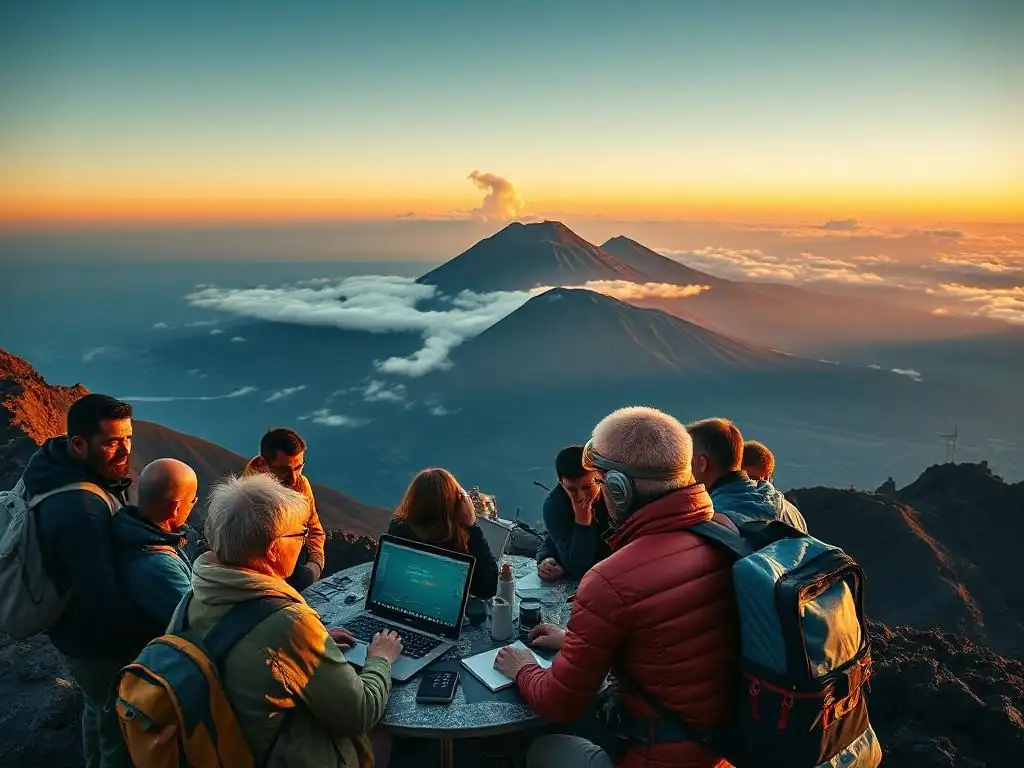
International volcano monitoring thrives on the principle of shared expertise and resources. Volcanological knowledge and technological capabilities are not evenly distributed across the globe. Developed nations with established volcano observatories often possess advanced monitoring equipment and highly trained scientists. International collaborations facilitate the transfer of this expertise and technology to developing countries that may be more vulnerable to volcanic hazards but lack the resources to establish comprehensive monitoring systems independently. This transfer can take various forms, including joint research projects, training workshops, equipment donations, and technical assistance programs.
For example, collaborative projects often involve scientists from different countries working together in the field to monitor a specific volcano. These projects provide invaluable opportunities for knowledge exchange and hands-on training. Furthermore, international organizations and governmental agencies often facilitate the donation or loan of monitoring equipment to countries in need.
Seismometers, GPS stations, and gas sensors, which are essential for volcano monitoring, can be expensive to procure and maintain. Resource sharing initiatives help to bridge this gap, ensuring that even resource-constrained nations can benefit from basic volcano monitoring capabilities. This collaborative approach to resource and expertise sharing is fundamental to the success of international volcano monitoring benefits and its global reach.
Standardizing Data Collection and Analysis Across Borders
To ensure the effectiveness of international volcano monitoring, standardization of data collection and analysis methods is crucial. Without standardized protocols, data collected by different monitoring agencies using different instruments and techniques may be difficult to compare and integrate, hindering the development of a cohesive global picture of volcanic activity. International organizations, such as the World Organization of Volcano Observatories (WOVO), play a key role in promoting standardization. WOVO facilitates the development and dissemination of best practices and guidelines for volcano monitoring, data processing, and hazard assessment.
Standardization efforts encompass various aspects of volcano monitoring, including the types of instruments used, the data formats employed, and the methods for data analysis and interpretation. For example, standardized seismic data formats allow for the seamless exchange and analysis of seismic data from different networks worldwide. Similarly, standardized methods for measuring volcanic gas emissions ensure that data collected in different regions are comparable and reliable.
By adopting common standards, international volcano monitoring initiatives enhance the quality, consistency, and interoperability of volcanic data globally. This standardization is essential for maximizing the international volcano monitoring benefits and ensuring that data from diverse sources can be effectively combined to improve volcanic hazard assessments worldwide.
Developing Enhanced Volcano Monitoring Techniques Through Global Research
International collaboration is a powerful engine for driving innovation and developing enhanced volcano monitoring techniques. Volcanology is a continuously evolving field, and researchers around the world are constantly working to improve our understanding of volcanic processes and develop new methods for monitoring and predicting eruptions. International research collaborations facilitate the pooling of diverse expertise, perspectives, and research infrastructure, accelerating scientific progress. Joint research projects often involve scientists from multiple countries working together to investigate specific volcanic phenomena, develop new monitoring technologies, or refine existing eruption forecasting models.
For instance, international collaborations have been instrumental in advancing the use of satellite-based remote sensing for volcano monitoring. Scientists from different space agencies and research institutions have worked together to develop and validate techniques for detecting volcanic unrest using satellite imagery, such as thermal infrared monitoring and deformation measurements.
Similarly, international research efforts are focused on improving our understanding of the complex processes leading to volcanic eruptions, using advanced numerical models and laboratory experiments. These collaborative research endeavors not only enhance our scientific knowledge but also lead to the development of more effective and reliable volcano monitoring techniques, further amplifying the international volcano monitoring benefits for global communities.
Case Studies: Success Stories of International Volcano Monitoring
Mount Pinatubo, Philippines - Averting Catastrophe Through Joint Research
The 1991 eruption of Mount Pinatubo in the Philippines stands as a remarkable success story in volcano monitoring and disaster mitigation, largely due to effective international collaboration. Prior to the eruption, the Philippine Institute of Volcanology and Seismology (PHIVOLCS) worked closely with the US Geological Survey (USGS) in a joint project to study and monitor volcanoes in the Philippines, including Mount Pinatubo. This collaboration was crucial in the lead-up to the eruption. Scientists from both agencies deployed advanced monitoring equipment, including seismic networks and deformation instruments, around Pinatubo and conducted intensive geological investigations.
The joint monitoring efforts detected clear signs of increasing volcanic unrest months before the climactic eruption. Seismic activity escalated, ground deformation was observed, and gas emissions increased, all indicating a build-up of magma beneath the volcano. Based on this data, PHIVOLCS and USGS scientists issued timely warnings and collaborated with local authorities to evacuate tens of thousands of people from the areas at risk.
The successful evacuation is credited with saving thousands of lives. While the eruption was devastating, the death toll was significantly lower than it could have been without the early warnings. The Pinatubo case vividly demonstrates the life-saving international volcano monitoring benefits achievable through sustained collaboration and shared expertise.
Eyjafjallajökull, Iceland - Collaborative Response to Transnational Ash Cloud
The 2010 eruption of Eyjafjallajökull volcano in Iceland highlighted the importance of international collaboration in managing transboundary volcanic hazards, specifically volcanic ash clouds. The eruption, though relatively small in volcanic explosivity index (VEI), produced a fine ash cloud that drifted across Europe, causing unprecedented disruption to air travel.
The response to the Eyjafjallajökull crisis was a testament to international cooperation in volcano monitoring and air traffic management. The Icelandic Meteorological Office (IMO), responsible for volcano monitoring in Iceland, worked closely with Volcanic Ash Advisory Centers (VAACs) in Europe and North America to track the ash cloud and provide timely information to aviation authorities.
Data from ground-based monitoring networks in Iceland, satellite observations from multiple countries, and meteorological models were integrated to predict the ash cloud's trajectory and concentration. VAACs, relying on this international data flow, issued advisories to airlines, guiding flight path adjustments and airspace closures. This collaborative response, involving scientists, meteorologists, and aviation experts from numerous nations, minimized the risk to air travel and allowed for a gradual resumption of flights as the ash cloud dispersed. The Eyjafjallajökull case underscores the critical role of international volcano monitoring benefits in mitigating the impacts of transboundary volcanic hazards and ensuring global safety.
Analyzing the Impact of International Cooperation in Specific Volcanic Regions
Beyond individual case studies, analyzing the broader impact of international cooperation in specific volcanic regions provides further evidence of its benefits. Regions like Central America and the Caribbean, characterized by a high density of active volcanoes and significant populations at risk, have benefited significantly from international volcano monitoring initiatives. Collaborative projects involving regional volcano observatories, international organizations, and developed nations have strengthened monitoring capabilities, improved hazard assessments, and enhanced early warning systems in these regions.
For example, the Volcano Disaster Assistance Program (VDAP), a joint initiative of the USGS and USAID's Office of Foreign Disaster Assistance, has worked extensively in Latin America and the Caribbean, providing technical assistance, training, and equipment to local volcano monitoring agencies. These collaborations have led to the establishment of more robust monitoring networks, improved data analysis capabilities, and enhanced communication protocols, resulting in more effective volcanic hazard management and reduced risk to vulnerable communities.
By focusing on regional collaborations, the international volcano monitoring benefits are amplified, creating a more resilient and safer environment for populations living in volcanically active areas.
The Humanitarian Impact of International Volcano Monitoring: Beyond Scientific Data
Saving Lives Through Effective Evacuation Strategies
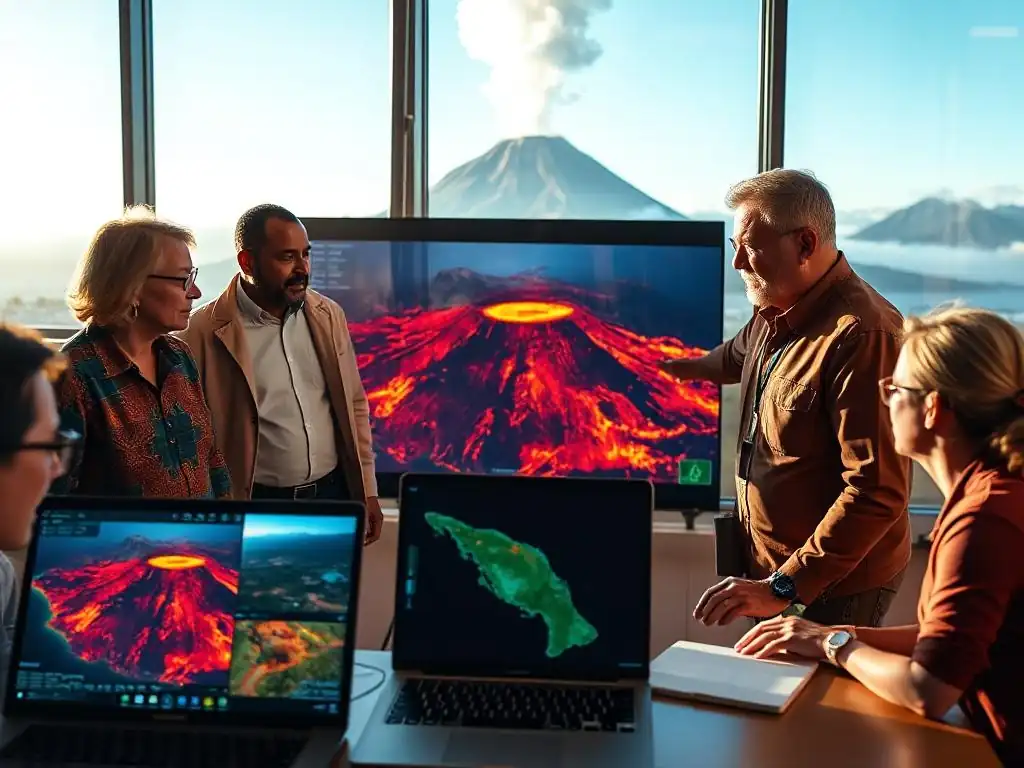
The ultimate humanitarian impact of international volcano monitoring is measured in lives saved and communities protected. While scientific data on volcanic activity is crucial, its real value lies in its application to effective evacuation strategies. International collaborations directly contribute to saving lives by enhancing the accuracy and timeliness of eruption forecasts, which in turn enables authorities to implement timely and targeted evacuations. The Mount Pinatubo case, discussed earlier, is a prime example of how accurate forecasts, based on international monitoring efforts, facilitated a large-scale evacuation that averted a major catastrophe.
Effective evacuation strategies are not solely dependent on scientific data; they also require robust communication systems, well-defined evacuation routes, and community preparedness. International collaborations often extend beyond scientific monitoring to include support for developing comprehensive disaster management plans. Sharing best practices in evacuation planning, community outreach, and emergency response is a crucial aspect of international cooperation.
Workshops and training programs, often supported by international agencies, help to build local capacity in disaster preparedness and response, ensuring that scientific warnings translate into effective actions on the ground. The direct link between international volcano monitoring benefits and life-saving evacuations highlights its profound humanitarian significance.
Supporting Sustainable Development in Volcanic Regions
The humanitarian impact of international volcano monitoring extends beyond immediate disaster response to encompass long-term sustainable development in volcanic regions. Volcanic areas, while posing hazards, often possess fertile soils, geothermal energy resources, and tourism potential. Effective volcano monitoring and hazard management are essential for enabling sustainable development in these regions, allowing communities to harness the benefits of living near volcanoes while mitigating the risks. International collaborations contribute to sustainable development by providing the scientific basis for informed land-use planning, infrastructure development, and resource management in volcanic areas.
For instance, detailed volcanic hazard maps, developed through international research and data sharing, are crucial tools for guiding urban planning and ensuring that new development is located in areas of lower risk. Similarly, volcanic gas monitoring can provide valuable information for geothermal energy exploration and development, contributing to clean energy sources.
Furthermore, volcano tourism can be a significant economic driver for volcanic regions, but it requires careful hazard assessment and risk management, which are enhanced by international monitoring efforts. By supporting informed decision-making and sustainable resource utilization, international volcano monitoring benefits contribute to the long-term well-being and prosperity of communities in volcanic regions.
Building Resilience in Communities Vulnerable to Volcanic Hazards
Beyond saving lives and supporting sustainable development, international volcano monitoring plays a critical role in building resilience in communities vulnerable to volcanic hazards. Resilience refers to the ability of communities to withstand, adapt to, and recover from shocks and stresses, including volcanic eruptions. International collaborations contribute to building resilience by strengthening local monitoring capacities, enhancing community preparedness, and fostering a culture of risk awareness. Capacity building programs, supported by international agencies, empower local scientists and communities to take ownership of volcano risk management.
Community-based volcano monitoring initiatives, often facilitated through international partnerships, engage local populations in data collection and hazard awareness activities. These initiatives not only enhance monitoring coverage but also foster a sense of ownership and responsibility within communities. Education and outreach programs, developed and implemented through international collaborations, raise public awareness of volcanic hazards and promote preparedness measures at the household and community levels. By empowering local communities, fostering risk awareness, and strengthening preparedness capacities, international volcano monitoring benefits contribute to building long-term resilience and reducing vulnerability to volcanic disasters.
Challenges and Future Directions in International Volcano Monitoring
Addressing Gaps in Global Volcano Monitoring Coverage
Despite significant progress in international volcano monitoring, gaps in global coverage remain a persistent challenge. Many volcanoes, particularly in remote or developing regions, are still poorly monitored or not monitored at all. These monitoring gaps pose a significant risk, as eruptions from unmonitored volcanoes can occur without warning, potentially impacting vulnerable populations and even having global consequences, such as aviation disruptions from unpredicted ash clouds. Addressing these gaps requires sustained international efforts to expand monitoring coverage and enhance monitoring capabilities in under-resourced regions.
Prioritizing the monitoring of historically active and potentially high-impact volcanoes in underserved areas is crucial. This requires targeted investments in monitoring infrastructure, capacity building, and technology transfer. International collaborations can play a key role in mobilizing resources and expertise to address these gaps. Satellite-based remote sensing technologies offer a promising avenue for improving monitoring coverage in remote areas, but ground-based monitoring remains essential for detailed volcano surveillance. Filling the gaps in global volcano monitoring coverage is a critical future direction for maximizing the international volcano monitoring benefits and ensuring global volcanic risk reduction.
Enhancing Communication and Coordination Among International Teams
Effective communication and coordination are paramount for successful international volcano monitoring, particularly during volcanic crises. Volcanic eruptions are dynamic events that require rapid information sharing and coordinated responses across multiple agencies and nations. Enhancing communication and coordination mechanisms among international monitoring teams, emergency response agencies, and affected communities is essential for optimizing the effectiveness of international collaborations. Establishing clear communication protocols, standardized data formats, and interoperable communication systems is crucial for ensuring seamless information flow during volcanic crises.
Regular exercises and simulations involving international teams can help to improve coordination and identify potential communication bottlenecks. Utilizing modern communication technologies, such as online platforms and mobile applications, can facilitate rapid information dissemination and real-time collaboration. Strengthening communication channels between scientists, emergency managers, and the public is also critical for ensuring that scientific warnings are effectively translated into timely and appropriate actions. Enhancing communication and coordination is a key area for future development in international volcano monitoring benefits, leading to more effective and coordinated responses to volcanic crises.
Investing in Long-Term Volcano Monitoring Infrastructure
Sustained investment in long-term volcano monitoring infrastructure is essential for ensuring the continued effectiveness of international volcano monitoring efforts. Volcano monitoring is not a one-time project but a continuous endeavor that requires ongoing maintenance, upgrades, and expansion of monitoring networks. However, funding for volcano monitoring is often vulnerable to fluctuations in political priorities and economic cycles, particularly in developing countries. Advocating for sustained and predictable funding for volcano monitoring infrastructure at both national and international levels is crucial for ensuring long-term volcanic risk reduction.
International organizations and donor agencies can play a vital role in mobilizing resources and promoting long-term investment in volcano monitoring. Highlighting the cost-effectiveness of volcano monitoring in preventing major disasters and protecting economic assets can strengthen the case for sustained funding. Exploring innovative funding mechanisms, such as public-private partnerships and insurance schemes, can also help to ensure the long-term financial sustainability of volcano monitoring initiatives. Investing in long-term volcano monitoring infrastructure is a fundamental requirement for realizing the full potential of international volcano monitoring benefits and safeguarding communities from volcanic hazards for generations to come.
The Future of Volcano Disaster Risk Reduction: The Importance of Continued International Collaboration
Empowering Local Communities Through Education and Training
The future of volcano disaster risk reduction hinges on empowering local communities to become active participants in risk management. While international volcano monitoring provides essential scientific data and technical expertise, effective risk reduction ultimately depends on the preparedness and resilience of communities living near volcanoes. Empowering local communities through education and training is crucial for building a culture of risk awareness and promoting community-based disaster preparedness. International collaborations can play a key role in supporting community empowerment initiatives.
Developing culturally appropriate educational materials and delivering training programs in local languages are essential for effective community outreach. Engaging local leaders, community organizations, and schools in risk education and preparedness activities can foster a sense of ownership and responsibility within communities. Community-based volcano monitoring initiatives, where local residents are trained to collect basic monitoring data and report volcanic activity, can further enhance community involvement and risk awareness. Empowering local communities is a cornerstone of future volcano disaster risk reduction strategies, amplifying the international volcano monitoring benefits at the grassroots level.
Leveraging Technology for Enhanced Volcano Monitoring and Prediction
The future of volcano monitoring and prediction will be increasingly shaped by technological advancements. Leveraging cutting-edge technologies, such as artificial intelligence, machine learning, and advanced sensor networks, offers tremendous potential for enhancing volcano monitoring capabilities and improving eruption forecasting accuracy. International collaborations are essential for fostering technological innovation and ensuring that these advancements are accessible and beneficial to all nations at risk from volcanic hazards. Joint research projects focusing on developing and validating new monitoring technologies, data analysis techniques, and eruption forecasting models are crucial for driving progress in this area.
Investing in the development and deployment of low-cost, robust, and easily deployable monitoring instruments is particularly important for expanding monitoring coverage in under-resourced regions. Utilizing big data analytics and cloud computing platforms can enhance the processing and interpretation of vast amounts of volcano monitoring data. Exploring the potential of drone-based monitoring, robotic sensors, and advanced satellite technologies can further revolutionize volcano observation capabilities. Leveraging technology is a key future direction for maximizing the international volcano monitoring benefits and achieving more accurate and timely volcanic eruption predictions.
A Call to Action: Supporting International Volcano Monitoring Initiatives
The continued success of volcano disaster risk reduction and the realization of the full potential of international volcano monitoring benefits depend on sustained global commitment and support. This requires a collective call to action, urging governments, international organizations, research institutions, and individuals to actively support international volcano monitoring initiatives. Governments should prioritize funding for volcano monitoring agencies and international collaborations, recognizing the cost-effectiveness of prevention and preparedness compared to disaster response and recovery. International organizations should continue to facilitate data sharing, capacity building, and technology transfer, ensuring that all nations benefit from advancements in volcano monitoring.
Research institutions should continue to pursue innovative research and development, pushing the boundaries of volcano science and monitoring technologies. Individuals can contribute by supporting organizations involved in volcano monitoring and disaster relief, raising awareness about volcanic risks, and promoting preparedness in their communities. A global call to action, fostering a shared responsibility for volcano risk reduction, is essential for ensuring a safer and more resilient future for communities living in the shadow of volcanoes worldwide.
Frequently Asked Questions
What are the primary benefits of international volcano monitoring?
International volcano monitoring allows for early detection of potential eruptions, leading to timely evacuations and reduced casualties. It also facilitates the sharing of data and expertise, improving the accuracy of predictions.
How does international collaboration enhance volcano monitoring efforts?
Collaboration enables access to a wider range of resources and perspectives, including advanced technologies and specialized knowledge. This shared effort leads to a more comprehensive understanding of volcanic activity.
What role does real-time data sharing play in mitigating the risks of volcanic eruptions?
Real-time data allows for immediate assessment of changes in volcanic behavior, enabling rapid response and proactive measures. This is crucial for protecting communities near active volcanoes.
How does volcano monitoring contribute to disaster preparedness in vulnerable communities?
Monitoring provides the necessary information for developing effective evacuation plans and emergency response strategies. It empowers communities to be better prepared for potential volcanic crises.
What are some examples of successful international volcano monitoring leading to saved lives?
There have been numerous instances where international warnings based on monitoring data have prompted evacuations, preventing mass casualties. The timely response saves lives.
Final Reflection: The Enduring Power of Vigilance
The preceding discussion has highlighted the critical role of international volcano monitoring in mitigating volcanic disasters and saving lives across continents. The stark reality is that volcanic eruptions, often unpredictable and devastating, pose a significant threat to vulnerable communities worldwide. The benefits of collaborative monitoring efforts, from early warning systems to informed evacuation strategies, are not merely theoretical; they are tangible, measurable in lives saved and livelihoods protected.
This global effort to understand and predict volcanic activity has profoundly shaped our approach to disaster preparedness and risk management. The realization that volcanic hazards transcend national borders underscores the urgent need for continued investment and collaboration in this field. It reminds us that our shared humanity demands a proactive response to natural threats, regardless of geographical location. The only way to do great work is to love what you do.
- Steve Jobs (While not directly about volcanoes, this quote speaks to the dedication and passion required for effective international collaboration in any field, including volcano monitoring).
As we conclude, let us not forget the enduring power of vigilance and the transformative impact of international cooperation. Consider how you, in your own sphere of influence, can contribute to a more resilient and prepared world. Whether through supporting scientific research, advocating for increased funding for monitoring programs, or simply spreading awareness about the importance of preparedness, your actions can make a difference. Let us all commit to ensuring that the benefits of international volcano monitoring continue to safeguard lives and build a safer future for generations to come.
Unearth Your Inner Volcanologist: Make a Real Impact!
Thank you for taking the time to explore the vital role of international volcano monitoring and its incredible humanitarian impact. You've learned how dedicated scientists are working tirelessly to save lives around the globe. Now, it's your turn to be a part of the solution!
Here's how you can get involved and contribute to this critical effort:
- Sign up for Volcano Explorers' volunteer program! Contribute directly to data analysis and resource mobilization, supporting volcano monitoring efforts worldwide. This is the single biggest impact you can make.
- Share this article with your network to raise awareness about the importance of volcano monitoring and humanitarian aid. Let's amplify the message!
- Explore our interactive map on volcanoexplorers.org and learn about the specific volcanoes and communities at risk. Deepen your understanding and become a vocal advocate for increased support.
What immediate action will you take to support global volcano monitoring and help protect vulnerable communities? We want to hear your ideas in the comments below!