
Human Footprints in Ash: Traces of History in Volcanic Barren Lands

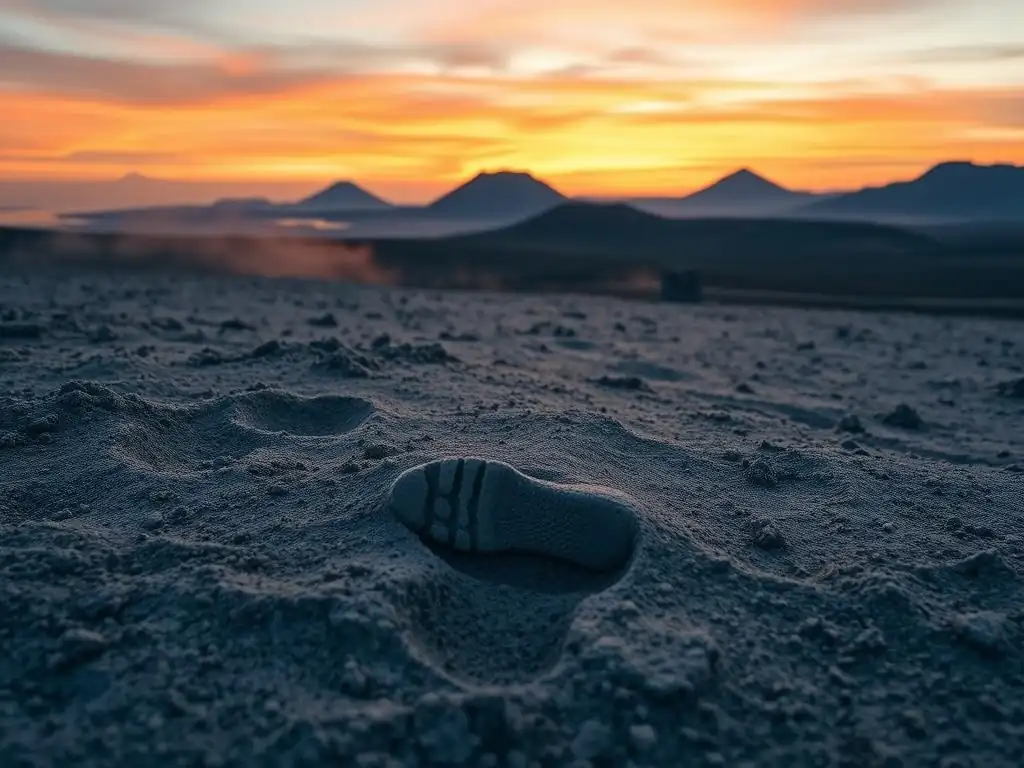
Welcome to Volcano Explorers, where the Earth whispers its fieriest secrets! Ever wondered how a seemingly destructive force like volcanic ash could hold the key to unlocking the past? Dive into our exploration of the historical significance of volcanic ash and uncover the fascinating stories etched within these barren landscapes. What secrets will we unearth together? Prepare to be amazed...
- Unearthing History: Volcanic Ash as a Time Capsule
- Preserved in Pyroclastics: Footprints as Historical Records
- Notable Discoveries: Footprint Sites in Volcanic Regions
- The Historical Significance of Volcanic Ash: A Closer Look
- Volcanic Eruptions and Human Migration: Tracing Movements Through Ash Layers
- Challenges and Future Research in Volcanic Footprint Archaeology
- Conclusion: The Enduring Story Told by Footprints in Volcanic Ash
-
Frequently Asked Questions
- What is volcanic ash, and why is it significant to historical records?
- How does volcanic ash help us understand past human civilizations?
- What are some examples of archaeological sites preserved by volcanic ash?
- How do volcanologists and archaeologists work together to study ash layers?
- What are the potential dangers of living near volcanoes with a history of explosive eruptions?
- Final Reflection: Echoes in the Dust
- Unearth the Secrets: Become a Volcano Historian!
Unearthing History: Volcanic Ash as a Time Capsule
Exploring Volcanic Landscapes: More Than Just Barren Landscapes
Volcanic landscapes are often perceived as desolate and barren, the aftermath of destructive natural forces. Images of grey, ash-covered plains and stark, rocky terrain might first come to mind. However, beneath this seemingly lifeless surface lies a rich tapestry of history, waiting to be unearthed. Volcanic ash, far from being merely a symbol of destruction, acts as a remarkable time capsule, preserving moments in time with exceptional fidelity. These landscapes are not just geological curiosities; they are archives of our planet's past, holding clues about ancient environments, ecosystems, and even the footsteps of our ancestors.
Beyond the immediate devastation caused by eruptions, volcanic areas become dynamic environments where life gradually returns, and geological processes continue to shape the terrain. The layers of ash and pyroclastic flows, while initially destructive, become sedimentary strata that encapsulate organic material, artifacts, and, most importantly, footprints. Therefore, viewing volcanic landscapes solely as barren is to overlook their profound historical significance. They are, in fact, open-air museums where the Earth's history and human history are intertwined, offering unique insights into the past that are rarely found elsewhere.
The Enduring Legacy of Volcanic Eruptions on Human History
Volcanic eruptions are not merely geological events; they are powerful forces that have profoundly shaped human history. Throughout millennia, eruptions have influenced the trajectory of civilizations, impacting settlement patterns, agricultural practices, and even cultural beliefs. The immediate consequences of eruptions – from pyroclastic flows and ashfall to lahars and tsunamis – are well-documented, causing widespread devastation and loss of life. However, the enduring legacy of these events extends far beyond the immediate aftermath.
Volcanic ash, for instance, while initially disruptive, enriches the soil over time, creating fertile lands that have supported agriculture for centuries. Regions like the slopes of Mount Vesuvius in Italy and areas around volcanoes in Indonesia are prime examples of how volcanic soils have sustained dense populations despite the inherent risks.
Furthermore, volcanic eruptions have served as both agents of destruction and catalysts for change, sometimes forcing migrations, inspiring innovation in building techniques and resource management, and even playing a role in the development of myths and legends that have shaped cultural identities. The historical significance of volcanic eruptions is thus multifaceted, demonstrating a complex interplay between natural forces and human adaptation.
Preserved in Pyroclastics: Footprints as Historical Records
Footprints in Volcanic Ash: A Unique Archaeological Resource
Footprints fossilized in volcanic ash represent an extraordinary and unique archaeological resource. Unlike other forms of fossilized traces, footprints offer a direct and immediate connection to the past, capturing a fleeting moment in time – the actual step taken by a living being. In volcanic landscapes, the rapid deposition of ash and pyroclastic flows, often during or immediately after an eruption, can create ideal conditions for the preservation of these ephemeral traces. This rapid burial is crucial as it protects the footprints from erosion and disturbance, allowing them to harden and become part of the geological record.
The value of footprints in volcanic ash lies in their ability to provide detailed information about the individuals who made them. Scientists can glean insights into the size, weight, gait, and even social behavior of past populations, both human and animal, from these preserved impressions.
Moreover, the geological context of volcanic ash layers allows for precise dating using radiometric methods, providing a robust chronological framework for understanding the footprints and the environment in which they were made. This combination of direct evidence and precise dating makes footprints in volcanic ash exceptionally valuable for reconstructing past ecosystems and understanding human evolution and behavior.
The Science of Preservation: How Volcanic Ash Encapsulates Footprints
The remarkable preservation of footprints in volcanic ash is a result of specific geological and chemical processes. When an eruption occurs, fine-grained volcanic ash, often composed of glass shards and mineral particles, blankets the landscape. If this ash is damp, either from rainfall or the eruption itself, it behaves somewhat like wet cement. When an animal or human walks across this damp ash layer, their footprints create impressions that are quickly filled and sealed by subsequent ashfall or the hardening of the initial layer.
The key to long-term preservation lies in the chemical composition of volcanic ash. Volcanic ash often contains volcanic glass, which, over time, can undergo a process called diagenesis. This process involves the alteration of the ash through chemical reactions and compaction, leading to the cementation of the ash layer.
Minerals within the ash, such as silica, can precipitate and bind the ash particles together, effectively solidifying the footprints within a durable matrix. This natural cementation process, combined with the rapid burial provided by volcanic eruptions, creates exceptional conditions for the long-term preservation of these fragile traces, turning ephemeral footprints into enduring records of the past.
Notable Discoveries: Footprint Sites in Volcanic Regions
Laetoli Footprints: A Glimpse into Early Hominid Life
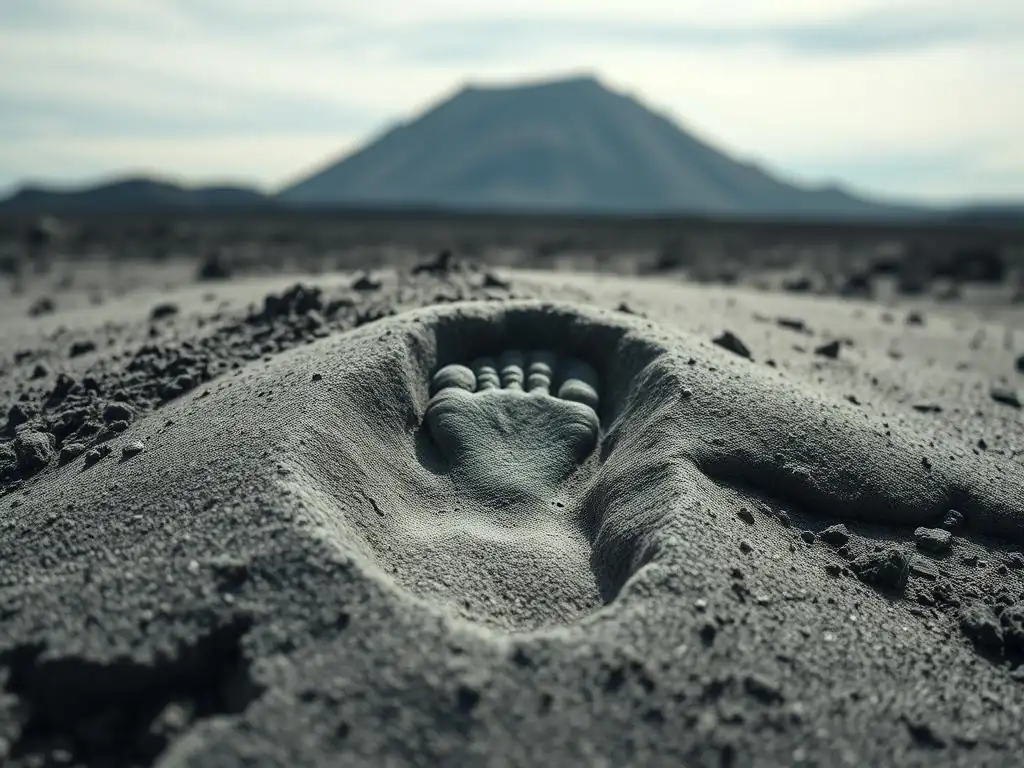
The Laetoli footprints, discovered in Tanzania, are arguably the most famous and significant examples of footprints preserved in volcanic ash. Dating back approximately 3.6 million years, these footprints offer an unparalleled glimpse into the lives of early hominids, Australopithecus afarensis. The footprints were remarkably preserved in a layer of volcanic ash deposited after an eruption of the Sadiman volcano. This ash layer, locally known as the Laetoli Footprint Tuff, captured a sequence of hominid footprints, along with those of various animals, including elephants, rhinoceroses, and birds.
The Laetoli footprints are significant for several reasons. Firstly, they provide definitive evidence of bipedalism in early hominids. The clear, striding gait preserved in the ash demonstrates that Australopithecus afarensis walked upright in a manner remarkably similar to modern humans. Secondly, the trackways suggest that at least three individuals walked across the ash layer, offering insights into potential group behavior. The Laetoli footprints are not just fossilized footprints; they are a tangible connection to our distant ancestors, allowing us to walk in their footsteps, metaphorically, and to gain a deeper understanding of human evolution in volcanic landscapes.
Roccamonfina Footprints: Evidence of Early Human Ascent in Italy
While the Laetoli footprints reveal early hominid bipedalism, the Roccamonfina footprints in Italy offer a different perspective on human-volcanic interaction, showcasing early human presence in a volcanic environment. Discovered in the Roccamonfina volcano region, these footprints are estimated to be between 350,000 and 325,000 years old, dating back to the Middle Pleistocene period. They are preserved in pyroclastic flow deposits, specifically ignimbrites, which solidified after a volcanic eruption.
The Roccamonfina footprints are significant because they are among the oldest evidence of human presence in Europe and, crucially, they are found in a volcanic context. The footprints are attributed to Homo heidelbergensis, a hominin species that predates Neanderthals and Homo sapiens in Europe.
Analysis of the footprints suggests that they were made by individuals walking uphill on a steep volcanic slope, possibly engaged in hunting or foraging activities. The Roccamonfina site demonstrates that early humans were not only present in volcanic regions but also actively navigated and utilized these challenging landscapes, leaving their footprints as a testament to their adaptability and resilience in the face of volcanic activity.
The Historical Significance of Volcanic Ash: A Closer Look
Radiometric Dating Techniques: Unlocking the Past
The historical significance of volcanic ash is intrinsically linked to the ability to accurately date these layers, and radiometric dating techniques are paramount in this endeavor. Volcanic ash contains minerals that incorporate radioactive isotopes, such as potassium-40 and argon-40. These isotopes decay at a known and constant rate, allowing scientists to measure the ratio of parent isotopes (e.g., potassium-40) to daughter isotopes (e.g., argon-40) and calculate the time elapsed since the volcanic eruption. This method, known as potassium-argon dating (K-Ar) and its more refined version, argon-argon dating ( 40 Ar/ 39 Ar), is widely used to date volcanic ash layers.
The precision of radiometric dating techniques provides a chronological framework for understanding events preserved within or associated with volcanic ash. For footprint sites, dating the ash layer containing the footprints directly provides a reliable age for the hominin or animal activity.
Furthermore, by dating multiple volcanic ash layers in a stratigraphic sequence, scientists can establish a detailed timeline of geological and biological events in a region. This chronological control is fundamental to understanding the historical significance of volcanic ash, allowing us to place past events in their correct temporal context and to reconstruct evolutionary and environmental changes with greater accuracy.
Reconstructing Past Environments: What Footprints in Ash Tell Us
Footprints preserved in volcanic ash are not just records of individuals walking; they are also invaluable archives of past environments. The characteristics of the ash layer itself, including its composition, grain size, and associated sediments, provide clues about the volcanic eruption and the immediate post-eruption environment. For example, the presence of fossilized plant remains or pollen within the ash layer can indicate the type of vegetation that existed before or shortly after the eruption. Similarly, the presence of animal footprints alongside hominin footprints offers insights into the fauna that inhabited the region.
Beyond the immediate environment, the analysis of footprint trackways can reveal information about the paleo-landscape. The direction and spacing of footprints can suggest the terrain, whether it was flat, sloped, or uneven. In some cases, footprints can even indicate the presence of water sources or pathways. By integrating footprint data with other geological and paleontological evidence from the volcanic ash layers, scientists can reconstruct detailed snapshots of past environments, including climate, vegetation, and animal communities, providing a richer understanding of the ecological context in which these footprints were made and the historical landscapes that existed in volcanic regions.
Volcanic Eruptions and Human Migration: Tracing Movements Through Ash Layers
Volcanic Events as Catalysts for Migration and Adaptation
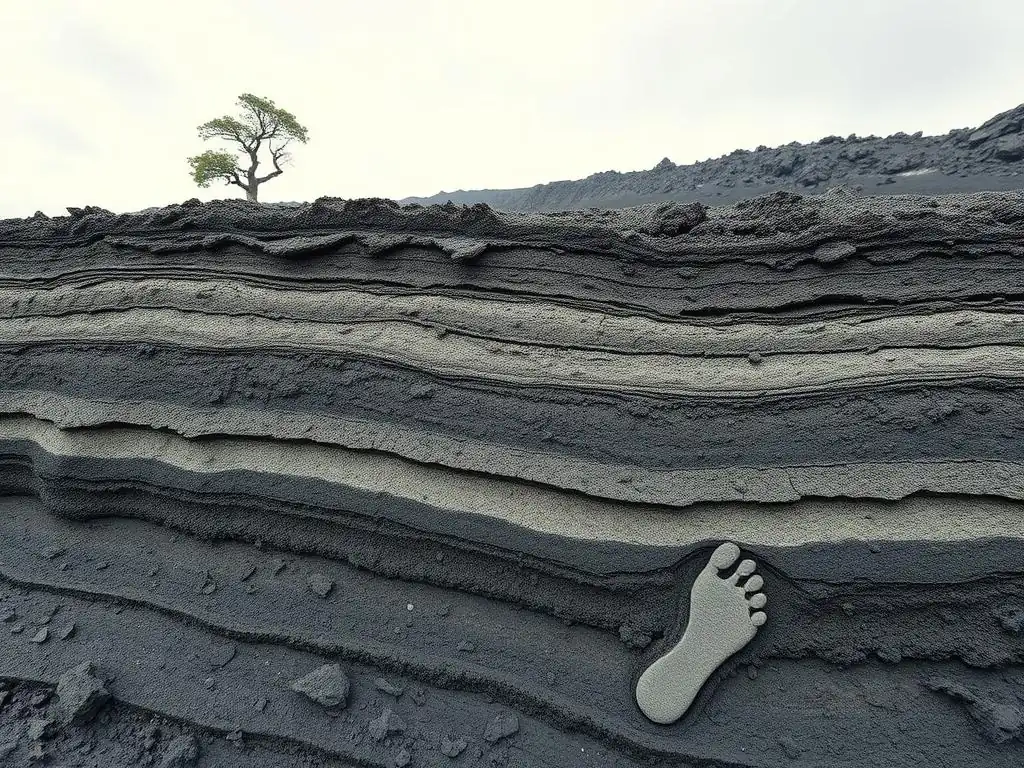
Volcanic eruptions, with their capacity for widespread environmental disruption, have undoubtedly acted as catalysts for human migration and adaptation throughout history. Large-scale eruptions can render regions uninhabitable due to ashfall, pyroclastic flows, and the long-term effects on water resources and agriculture. Such events could have forced human populations to migrate to safer areas, leading to the dispersal of people and the potential for cultural exchange and adaptation to new environments. The historical record and archaeological evidence suggest that volcanic eruptions have played a significant role in shaping human settlement patterns and demographic shifts.
Conversely, volcanic landscapes, despite their inherent risks, can also attract human settlement due to the fertile volcanic soils and the availability of geothermal resources. This duality highlights the complex relationship between humans and volcanoes. While eruptions can trigger migrations, the long-term benefits of volcanic environments can also incentivize resettlement and adaptation. Studying footprint sites in volcanic ash layers can provide valuable insights into how past populations responded to volcanic events, whether through migration, adaptation, or a combination of both, contributing to our understanding of human resilience and adaptability in dynamic environments.
Footprints in volcanic ash offer a unique window into the social behavior of past populations. By analyzing footprint trackways, scientists can infer group size, composition, and even the activities of individuals within a group. For instance, multiple parallel trackways might suggest group movement, while variations in footprint size and depth could indicate the presence of individuals of different ages or sexes. In some cases, the direction and spacing of footprints can even reveal whether individuals were walking together or moving independently.
The Laetoli footprints, with their multiple, partially overlapping trackways, have been interpreted as evidence of a small group moving together, possibly a family unit. Similarly, at other footprint sites, the analysis of trackway patterns has provided insights into hunting strategies, foraging behaviors, and even ritualistic activities. While interpreting social behavior from footprints requires careful analysis and consideration of other contextual evidence, the potential to glean such information from these preserved traces underscores their immense value in understanding not just the physical characteristics of past populations but also their social dynamics and interactions within their environment.
Challenges and Future Research in Volcanic Footprint Archaeology
The Delicate Nature of Footprints: Preservation and Conservation Efforts
Footprints in volcanic ash, while remarkably preserved, are inherently delicate and vulnerable to various forms of degradation. Exposure to the elements, particularly rainfall and freeze-thaw cycles, can erode the ash layer and damage or obliterate the footprints. Vandalism and unintentional damage from human activity also pose significant threats. Therefore, preservation and conservation efforts are crucial for protecting these valuable historical resources for future generations.
Conservation strategies often involve careful excavation, documentation, and in situ preservation, where the footprints are left in their original location but protected from environmental damage. Protective shelters, drainage systems, and controlled access are common measures employed at footprint sites. In some cases, replication and removal of footprints to museums for safekeeping may be necessary, especially in areas facing imminent threats. Effective preservation requires a multidisciplinary approach, involving archaeologists, geologists, conservators, and local communities, to ensure the long-term survival of these fragile traces of the past.
Future Directions: New Technologies and Research Avenues in Volcanic Archaeology
The field of volcanic footprint archaeology is continually evolving, with new technologies and research avenues expanding our ability to study and interpret these remarkable traces. Advanced imaging techniques, such as 3D scanning and photogrammetry, allow for detailed documentation and analysis of footprints, creating high-resolution digital models that can be studied remotely and preserved indefinitely. These technologies also facilitate the detection of subtle footprint features that might be missed by traditional methods.
Furthermore, advancements in dating techniques, such as cosmogenic nuclide dating, offer the potential to refine the chronological framework for footprint sites and volcanic events. Research into the taphonomy of footprints – the processes of footprint formation and preservation – is also crucial for understanding the biases and limitations of the footprint record. Future research will likely focus on integrating these new technologies and approaches to address fundamental questions about human evolution, behavior, and adaptation in volcanic landscapes, further unlocking the historical significance of volcanic ash and the stories it holds.
Conclusion: The Enduring Story Told by Footprints in Volcanic Ash
Appreciating the Historical Narrative Encoded in Volcanic Landscapes
Volcanic landscapes, often perceived as barren and desolate, are in fact rich repositories of historical information. Footprints preserved in volcanic ash are a particularly compelling form of evidence, offering a direct connection to the past and providing unique insights into the lives of humans and animals that once inhabited these dynamic environments. These footprints are not merely geological curiosities; they are historical narratives encoded in the very fabric of the landscape, telling stories of early hominid bipedalism, human adaptation to volcanic environments, and the social behaviors of past populations.
Appreciating the historical narrative encoded in volcanic landscapes requires a shift in perspective, moving beyond the perception of volcanoes as solely destructive forces to recognizing their role as preservers of history. Volcanic ash, the very material that can cause devastation, also acts as a time capsule, encapsulating moments in time and preserving them for millennia. By understanding and interpreting the traces left behind in volcanic ash, we can gain a deeper appreciation for the long and complex history of our planet and the enduring story of life on Earth.
Protecting and Preserving These Valuable Historical Resources
The footprints preserved in volcanic ash are irreplaceable and finite resources. Each footprint represents a unique moment in time, and once destroyed, that historical information is lost forever. Therefore, protecting and preserving these valuable historical resources is a critical responsibility. This responsibility extends not only to scientists and archaeologists but also to policymakers, local communities, and the general public.
Effective preservation requires a concerted effort involving scientific research, conservation management, and public education. Raising awareness about the historical significance of volcanic footprint sites and the threats they face is essential for fostering a sense of stewardship and encouraging responsible behavior. By working together to protect these fragile traces of the past, we can ensure that future generations have the opportunity to learn from and appreciate the enduring story told by footprints in volcanic ash, a story that connects us to the deep history of our planet and our place within it.
Frequently Asked Questions
What is volcanic ash, and why is it significant to historical records?
Volcanic ash is comprised of fine particles of shattered rock and glass ejected during volcanic eruptions. Its significance lies in its ability to preserve footprints and other traces of past life, creating a snapshot in time.
How does volcanic ash help us understand past human civilizations?
Ash layers can bury and preserve entire landscapes, including human settlements and artifacts. By studying these buried remains, we can learn about past cultures, their daily lives, and their interactions with volcanic environments.
What are some examples of archaeological sites preserved by volcanic ash?
Pompeii and Herculaneum, buried by the eruption of Mount Vesuvius, are prime examples. These sites offer incredibly detailed insights into Roman life in the 1st century AD, thanks to the preserving effects of volcanic ash.
How do volcanologists and archaeologists work together to study ash layers?
Volcanologists provide expertise on ash layer composition, eruption dynamics, and dating techniques. Archaeologists then use this information to excavate and interpret the human history preserved within these volcanic deposits.
What are the potential dangers of living near volcanoes with a history of explosive eruptions?
Living near active volcanoes poses risks from ashfall, pyroclastic flows, and lahars (mudflows). Understanding these hazards and following evacuation plans are crucial for ensuring safety in volcanic regions.
Final Reflection: Echoes in the Dust
The journey through volcanic ash, as we've explored, is not merely a geological survey, but a profound encounter with history itself. The historical significance of volcanic ash lies not just in its destructive power, but in its remarkable ability to preserve and reveal the stories of civilizations past, frozen in time and waiting to be rediscovered. This silent witness to both devastation and resilience speaks volumes about the human spirit's enduring capacity to rebuild and remember.
The enduring impact of volcanic events, and the ash they leave behind, continues to shape our understanding of the past and inform our present. It's humbling to consider how these seemingly barren landscapes hold the keys to unlocking forgotten chapters of human experience, reminding us of our interconnectedness with the natural world and the cyclical nature of history. History is a relentless master. It has no present, only the past rushing into the future. To try to hold fast is to be swept aside.
- John F. Kennedy. This quote encapsulates the urgency of understanding the lessons etched within the ash, lest we repeat the mistakes of those who came before.
As we conclude this exploration of volcanic ash and its historical significance, I invite you to reflect on the power of these landscapes to connect us to the past. Consider how even in the face of immense natural forces, the human story persists, leaving its indelible mark on the earth. Let us strive to learn from these echoes in the dust, to build a future that honors the lessons of history and respects the delicate balance of our planet.
Unearth the Secrets: Become a Volcano Historian!
Thanks for joining us on this journey through volcanic landscapes and the stories etched in ash! We hope you've gained a deeper appreciation for how human history intertwines with these powerful forces of nature. Now, it's your turn to become part of the story!
Here's how you can connect with the past and contribute to our understanding:
- Become a Citizen Scientist: Visit a documented volcanic site near you and document any signs of human activity or impact. Submit your findings, including photos and notes, to Volcano Explorers to help build our collective knowledge!
- Delve deeper: Explore our archive of historical volcanic eruptions and compare them with current volcanic activity, noting changes in human interaction and adaptation strategies.
- Share your insights: Discuss this article with friends or in online forums. What's one thing you learned about the resilience of human societies living near volcanoes?
What overlooked detail will you discover next in your journey into volcanic history? Let us know in the comments!