
Nature's Ultimate Weapon? Comparing Pyroclastic Flows to Other Volcanic Hazards

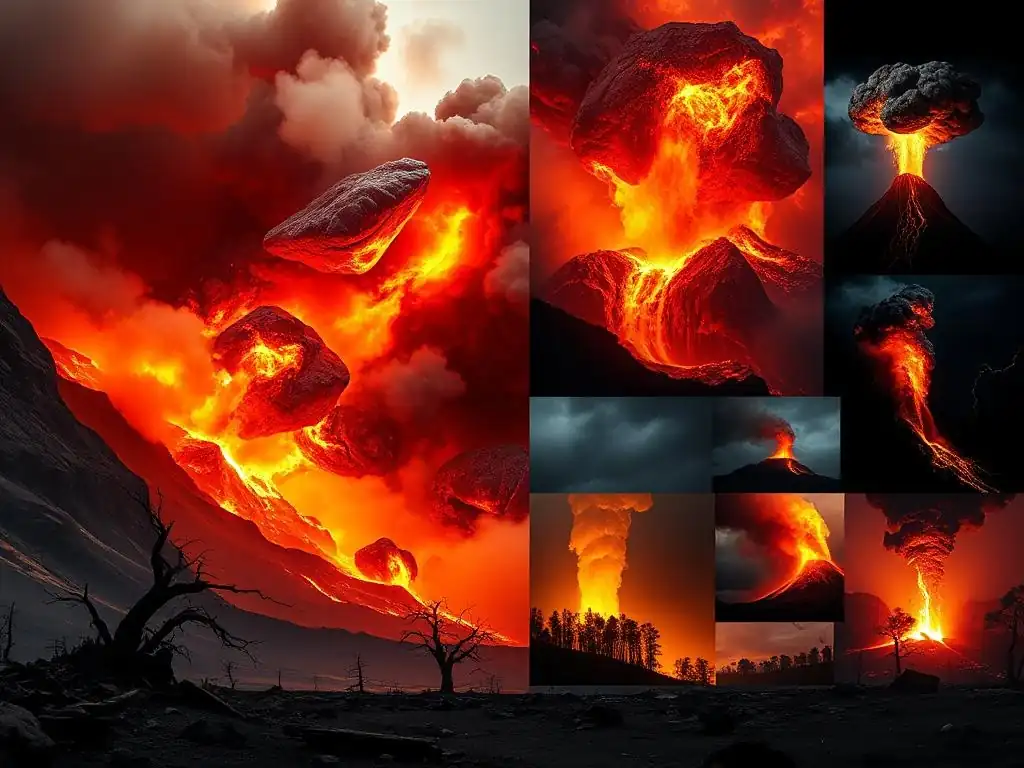
Welcome to Volcano Explorers, where the Earth breathes fire! Prepare to be captivated by the raw power and stunning beauty of volcanoes. Ever wondered which volcanic hazard truly reigns supreme? Dive into our latest article, "Nature's Ultimate Weapon? Comparing Pyroclastic Flows to Other Volcanic Hazards," and uncover the truth about pyroclastic flow dangers comparison. Are these scorching avalanches the most lethal threat? Or do other volcanic forces pose a greater risk? The answer might surprise you... Explore further and unlock the secrets of these geological giants!
- Volcanic Hazards: Comparing Pyroclastic Flows to Other Threats
- Understanding Pyroclastic Flow Dangers
-
Pyroclastic Flows vs. Other Volcanic Hazards: A Detailed Comparison
- Pyroclastic Flows: Speed, Distance, and Devastation
- Lava Flows: Viscosity, Temperature, and Flow Rate
- Ashfall: Particle Size, Distribution, and Impacts on Infrastructure and Health
- Lahars: Composition, Triggering Events, and Flow Dynamics
- Volcanic Gases: Composition, Concentration, and Physiological Effects
- Pyroclastic Flow Dangers: Key Differences in Impacts
- Understanding Volcanic Hazard Mitigation: Reducing Risks
- Case Studies: Examining the Impact of Pyroclastic Flows
- Conclusion: Understanding and Respecting Volcanic Hazards
-
Frequently Asked Questions
- What exactly is a pyroclastic flow, and why is it considered so dangerous?
- How does the danger level of pyroclastic flows compare to other volcanic hazards like lava flows?
- What are the primary factors that influence the distance a pyroclastic flow can travel?
- Are there any warning signs that indicate a pyroclastic flow is imminent?
- What should you do if you are near a volcano and suspect a pyroclastic flow is occurring?
- Final Reflection: Embracing the Power and Peril of Volcanic Forces
- Unleash Your Inner Volcanologist!
Volcanic Hazards: Comparing Pyroclastic Flows to Other Threats
Understanding Pyroclastic Flow Dangers
What are Pyroclastic Flows? Speed, Temperature, and Composition
Pyroclastic flows are among the most devastating phenomena associated with explosive volcanic eruptions. They are ground-hugging avalanches of hot gas and volcanic debris, including ash, pumice, and rock fragments, traveling at incredibly high speeds. These flows are not merely a single entity but rather a complex mixture where the solid particles are suspended in the hot, expanding gases. Imagine a fluidized mixture, similar to a very hot and dense avalanche of gas and rock, moving under the influence of gravity down the flanks of a volcano.
The speed of pyroclastic flows can be staggering, often exceeding 80 kilometers per hour (50 mph) and in some cases reaching speeds of over 700 kilometers per hour (450 mph), making them faster than most vehicles and even some aircraft at low altitudes. Temperatures within these flows are equally extreme, typically ranging from 200°C to 700°C (392°F to 1292°F), but they can reach up to 1000°C (1832°F) in certain types of eruptions.
The composition varies depending on the type of volcanic eruption and the source magma, but they generally consist of volcanic ash, pumice, volcanic blocks and bombs, and hot gases such as steam, carbon dioxide, sulfur dioxide, and hydrogen sulfide. The sheer velocity and intense heat make pyroclastic flows an exceptionally dangerous volcanic hazard, capable of causing complete destruction in their path.
Overview of Volcanic Hazards: Types and Characteristics
Volcanoes present a range of hazards, each with unique characteristics and levels of threat. Beyond pyroclastic flows, these hazards include lava flows, ashfall, lahars (volcanic mudflows), and volcanic gases. Understanding the differences between these hazards is crucial for effective risk assessment and mitigation strategies in volcanic regions. Each hazard poses distinct challenges to infrastructure, the environment, and human populations.
Lava flows are streams of molten rock that erupt effusively from a volcano. While visually dramatic, lava flows typically move relatively slowly, giving people time to evacuate, although they can destroy everything in their path. Ashfall consists of fine particles of volcanic rock and glass erupted into the atmosphere, which can travel vast distances and disrupt air travel, agriculture, and infrastructure.
Lahars are rapid flows of water and volcanic debris, similar to mudflows, triggered by volcanic eruptions melting snow and ice or heavy rainfall on volcanic ash deposits. Volcanic gases, released both during eruptions and in periods of quiescence, can be toxic and pose respiratory hazards, as well as contribute to acid rain and climate change. Each of these hazards requires specific preparedness measures, and their potential impacts vary significantly based on the type of volcano, eruption style, and local topography.
Pyroclastic Flows vs. Other Volcanic Hazards: A Detailed Comparison
Pyroclastic Flows: Speed, Distance, and Devastation
Pyroclastic flows are characterized by their exceptional speed, devastating reach, and complete destructive power. As mentioned earlier, their velocities can be astonishing, allowing them to rapidly engulf large areas surrounding a volcano. The distance a pyroclastic flow can travel depends on several factors, including the eruption magnitude, the slope of the volcano, and the volume of material erupted. Major pyroclastic flows can travel tens of kilometers from their source, reaching distances of up to 30 kilometers (19 miles) or even further in extreme cases.
The devastation caused by pyroclastic flows is virtually total within their path. The combination of extreme heat, high velocity, and the abrasive nature of the ash and rock debris results in the incineration and obliteration of everything in their way. Buildings are flattened, forests are scorched and uprooted, and landscapes are dramatically reshaped.
The area affected is left buried under a thick layer of hot ash and debris. The 1902 eruption of Mount Pelée on Martinique is a stark example, where a pyroclastic flow completely destroyed the city of Saint-Pierre, killing an estimated 30,000 people in minutes. This event dramatically highlighted the unparalleled destructive potential of pyroclastic flows.
Lava Flows: Viscosity, Temperature, and Flow Rate
Lava flows, in contrast to pyroclastic flows, are streams of molten rock flowing across the landscape. Their behavior is largely governed by the viscosity of the lava, which is its resistance to flow. Viscosity is influenced by the lava's chemical composition, temperature, and gas content. Basaltic lavas, common in shield volcanoes like those in Hawaii, have low viscosity and tend to flow relatively easily and quickly, forming broad, thin flows. Andesitic and rhyolitic lavas, more typical of stratovolcanoes, are more viscous and move much slower, creating thicker, shorter flows.
Temperatures of lava flows typically range from about 700°C to 1200°C (1292°F to 2192°F). While these temperatures are incredibly high, the flow rate of lava is generally slow compared to pyroclastic flows. Basaltic lava flows can advance at speeds ranging from a few kilometers per hour on steep slopes to just meters per hour or even centimeters per hour on flatter terrain.
More viscous lavas may move even slower. Although lava flows are less immediately life-threatening than pyroclastic flows due to their slower pace, they are still incredibly destructive, burning and burying everything in their path and capable of causing significant property damage and altering landscapes permanently.
Comparing Lava Flow and Pyroclastic Flow: Speed, Temperature, and Impact
When directly comparing lava flows and pyroclastic flows, the differences in speed and impact are stark. Pyroclastic flows are significantly faster, often by orders of magnitude, reaching speeds hundreds of times greater than typical lava flows. While lava flows are extremely hot, pyroclastic flows can reach similar or even higher temperatures and carry a far greater destructive force due to their velocity and the impact of the solid debris they carry.
In terms of impact, both hazards are destructive, but the nature of destruction differs. Lava flows primarily destroy by burning and crushing due to their weight and heat, slowly engulfing areas. Pyroclastic flows, on the other hand, are more violently destructive, causing immediate and widespread devastation through a combination of incineration, impact force from the debris, and suffocation from the hot gases and ash.
The area impacted by a pyroclastic flow during a single event is often far larger than that affected by a lava flow of similar eruption volume due to the flow's greater mobility and reach. Furthermore, the sudden onset and extreme speed of pyroclastic flows make them far more dangerous in terms of immediate fatalities, offering little to no time for evacuation for those in their direct path, unlike the slower advance of lava flows.
Ashfall: Particle Size, Distribution, and Impacts on Infrastructure and Health
Ashfall, a common product of explosive volcanic eruptions, consists of fine particles of pulverized rock, minerals, and volcanic glass ejected into the atmosphere. The size of ash particles can range from dust-like to sand-sized, and its distribution is largely controlled by wind patterns. During large eruptions, ash can be carried hundreds or even thousands of kilometers downwind, affecting vast areas far beyond the immediate vicinity of the volcano.
The impacts of ashfall are widespread and varied. Heavy ashfall can cause the collapse of roofs, especially flat roofs, due to its weight, particularly when wet. Infrastructure is severely disrupted, including transportation networks (airports, roads, railways), power lines, and communication systems.
Agriculture suffers from ash coating crops, contaminating water supplies, and damaging livestock. Human health is also affected, primarily through respiratory problems caused by inhaling fine ash particles, eye irritation, and skin irritation. While ashfall is generally less immediately lethal than pyroclastic flows or lahars, its widespread disruptive potential and long-lasting effects on infrastructure, agriculture, and health make it a significant volcanic hazard.
Ashfall vs. Pyroclastic Flows: Impact Area, Timing, and Primary Hazards
Comparing ashfall to pyroclastic flows reveals significant differences in impact area, timing, and primary hazards. Ashfall typically affects a much larger geographic area than pyroclastic flows, potentially impacting regions hundreds or thousands of kilometers downwind from the volcano. Pyroclastic flows, in contrast, are more localized, primarily affecting areas within tens of kilometers of the volcano, following valleys and topographic depressions.
In terms of timing, ashfall can last for hours, days, or even weeks depending on the duration of the eruption and wind conditions, representing a prolonged hazard. Pyroclastic flows are much more rapid events, typically lasting minutes to hours for a single flow event, representing an immediate and intense hazard. The primary hazard from ashfall is indirect – disruption of infrastructure, agriculture, and long-term health effects.
The primary hazard from pyroclastic flows is direct and immediate – death and destruction from heat, impact, and suffocation. While ashfall can cause significant economic and societal disruption, pyroclastic flows are far more lethal and destructive in the areas they directly affect, representing a much more immediate and catastrophic threat to life and property.
Lahars: Composition, Triggering Events, and Flow Dynamics
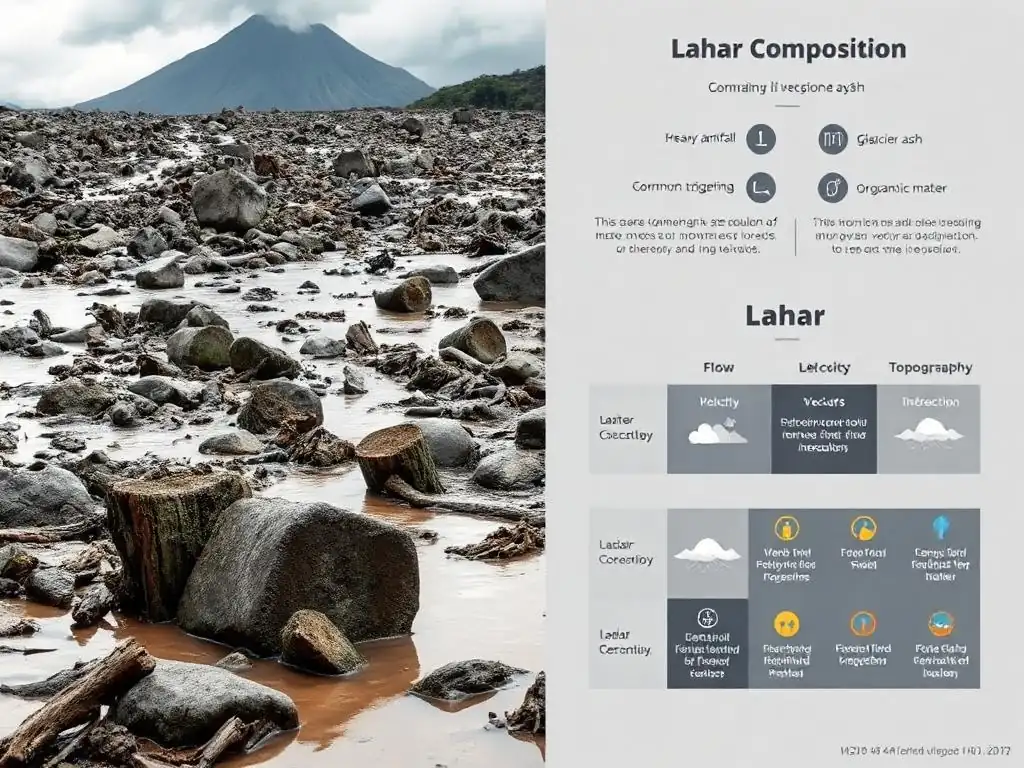
Lahars are volcanic mudflows or debris flows, composed of a mixture of water, volcanic ash, pumice, rock fragments, and other debris. They are triggered by various events associated with volcanic activity, including heavy rainfall during or after an eruption, rapid melting of snow and ice by volcanic heat, or the breakout of crater lakes. Lahars are essentially dense, rapidly flowing slurries that travel down river valleys and drainage channels originating from a volcano.
The composition of lahars can vary greatly, ranging from muddy floods to debris flows resembling fast-moving concrete. Their flow dynamics are influenced by gravity, topography, and the volume of water and debris involved. Lahars can travel at speeds ranging from tens to over fifty kilometers per hour, and they can travel considerable distances from their source, often tens of kilometers and in some cases exceeding 100 kilometers (62 miles) along river systems. They are capable of carrying massive boulders and debris, and their destructive power comes from their density, velocity, and the sheer volume of material they transport.
Lahars vs. Pyroclastic Flows: Composition, Speed, and Path Dependency
Comparing lahars to pyroclastic flows highlights differences in composition, speed, and path dependency. Lahars are essentially water-saturated flows of volcanic debris, while pyroclastic flows are hot, gas-rich flows of volcanic particles. While both are gravity-driven flows descending volcanic slopes, their speeds and paths differ. Pyroclastic flows can achieve significantly higher speeds than lahars in many cases, especially for the most energetic events. However, lahars can still be very fast and destructive, particularly in confined valleys.
Path dependency is a key difference. Pyroclastic flows tend to be more influenced by the initial eruption direction and momentum, potentially overriding minor topographic barriers. Lahars, being water-rich, are strongly channeled by existing river valleys and drainage systems.
This means areas at risk from lahars are often more predictable, following established river courses, although the extent of inundation can vary. Both hazards are extremely dangerous, but pyroclastic flows are generally considered more immediately lethal due to their speed and intense heat. Lahars, while potentially slower, can still be extremely destructive over a wider area along river valleys, and their risk can persist for years after an eruption due to remobilization of volcanic debris.
Volcanic Gases: Composition, Concentration, and Physiological Effects
Volcanic gases are released from magma both during eruptions and in periods of volcanic quiescence. The primary gases emitted are water vapor (H₂O), carbon dioxide (CO₂), sulfur dioxide (SO₂), hydrogen sulfide (H₂S), hydrogen chloride (HCl), and hydrogen fluoride (HF). The composition and concentration of these gases can vary depending on the type of volcano and the stage of volcanic activity. While water vapor is usually the most abundant, other gases, even in smaller concentrations, can pose significant hazards.
The physiological effects of volcanic gases range from respiratory irritation to asphyxiation and chemical burns. Sulfur dioxide and hydrogen sulfide are toxic gases that can cause respiratory problems, eye and throat irritation, and even death at high concentrations. Carbon dioxide is odorless and heavier than air, and it can accumulate in low-lying areas, displacing oxygen and causing asphyxiation. Hydrogen fluoride is highly corrosive and can cause severe burns upon contact. Volcanic gases can also react with atmospheric moisture to form acid rain, which can damage vegetation, infrastructure, and water quality.
Comparing Gas Hazards to Pyroclastic Flows: Scale, Immediacy, and Lethality
Comparing volcanic gas hazards to pyroclastic flows reveals differences in scale, immediacy, and lethality. Volcanic gas hazards can affect areas ranging from the immediate vicinity of a vent to regions downwind, depending on wind conditions and gas concentrations. Pyroclastic flows are more spatially confined to the flanks of the volcano and valleys.
In terms of immediacy, pyroclastic flows are extremely sudden and rapid onset events, offering little to no warning. Volcanic gas releases can also be sudden, particularly during explosive eruptions, but gas emissions can also occur gradually and persistently over time, creating chronic exposure risks. In terms of lethality, pyroclastic flows are generally considered more immediately lethal due to their combination of heat, speed, and impact force. High concentrations of certain volcanic gases, such as carbon dioxide in low-lying areas or hydrogen sulfide in volcanic plumes, can also be rapidly lethal, causing asphyxiation or poisoning. However, the overall scale of fatalities from a single pyroclastic flow event can be much higher than from a gas release event, as pyroclastic flows can engulf entire settlements in minutes. Chronic exposure to lower concentrations of volcanic gases, while less immediately lethal, can still have significant long-term health impacts on populations living near active volcanoes.
Pyroclastic Flow Dangers: Key Differences in Impacts
Immediate Impacts: Destruction, Incineration, and Suffocation
The immediate impacts of pyroclastic flows are catastrophic and multifaceted. The sheer force of the flow can destroy virtually any structure in its path, from buildings and infrastructure to forests and vegetation. Incineration is a primary immediate impact, as temperatures within pyroclastic flows are high enough to ignite flammable materials instantly and cause severe burns to any living organism. Wood, plastics, and even metals can melt or ignite.
Suffocation is another critical immediate danger. The hot, ash-laden gases within pyroclastic flows displace oxygen, making breathing impossible. The ash particles themselves can also clog airways, leading to rapid asphyxiation. Furthermore, the impact pressure of the flow can cause traumatic injuries. The combination of these immediate impacts – destruction, incineration, and suffocation – renders pyroclastic flows incredibly lethal, with survival in the direct path of a significant flow being extremely unlikely. The rapid onset and overwhelming intensity of these impacts contribute to the high fatality rates associated with pyroclastic flow events.
Beyond the immediate devastation, pyroclastic flows have significant long-term consequences. Environmentally, they can cause widespread deforestation, soil sterilization, and long-term changes to ecosystems. The thick deposits of ash and debris can alter drainage patterns, bury fertile land, and contaminate water sources for years to come. The release of volcanic gases associated with pyroclastic flows can contribute to acid rain and air pollution, further impacting the environment.
Economically, the disruption can be immense. Infrastructure damage requires massive rebuilding efforts. Agriculture in affected areas can be rendered unproductive for extended periods due to ash cover and soil contamination. Tourism, a vital source of income in many volcanic regions, can be severely impacted.
Socially, communities can be displaced, leading to long-term migration and social disruption. The psychological trauma experienced by survivors and the disruption to livelihoods can have lasting impacts on affected populations. The 1991 eruption of Mount Pinatubo in the Philippines, while mitigated in terms of immediate fatalities, caused long-term economic and social disruption due to lahars and ashfall, highlighting the protracted consequences of major volcanic eruptions involving pyroclastic flows.
Casualty Rates: Factors Contributing to Pyroclastic Flow Fatalities
Pyroclastic flows are responsible for a significant proportion of volcano-related fatalities throughout history. Their high casualty rates are due to several key factors. Firstly, their speed offers virtually no time for escape. The rapid onset and high velocity mean that people in the path of a flow are often caught completely unaware and unable to outrun it. Secondly, their extreme heat and destructive power ensure that even if someone were to find shelter, it might not be sufficient to withstand the flow's intensity.
Population density in areas at risk is a critical factor. Volcanoes often attract populations due to fertile volcanic soils and tourism opportunities. However, this proximity to volcanic hazards increases the potential for large-scale fatalities when pyroclastic flows occur.
The lack of effective early warning systems and evacuation plans in some regions also contributes to higher casualty rates. The 1902 Mount Pelée eruption, with its extremely high death toll, serves as a grim reminder of the devastating potential when a pyroclastic flow strikes a densely populated area with limited warning and preparedness. Conversely, improved monitoring and evacuation procedures, as seen in the 1991 Pinatubo eruption, can significantly reduce fatalities, even in the face of large pyroclastic flow events.
Understanding Volcanic Hazard Mitigation: Reducing Risks
Real-time Monitoring and Early Warning Systems for Pyroclastic Flows
Mitigating the risks associated with pyroclastic flows relies heavily on real-time monitoring and effective early warning systems. Modern volcanology employs a range of instruments to monitor volcanic activity, including seismometers to detect earthquakes associated with magma movement, gas sensors to measure changes in volcanic gas emissions, GPS and tiltmeters to detect ground deformation, and thermal cameras to monitor surface temperature changes. Data from these instruments are continuously transmitted to volcano observatories for analysis.
Changes in these monitoring parameters can indicate increasing volcanic unrest and the potential for an eruption that could generate pyroclastic flows. When monitoring data suggest an elevated risk, volcano observatories issue alerts and warnings to relevant authorities and the public. Early warning systems are crucial for providing sufficient time for evacuation from areas at risk of pyroclastic flows. The effectiveness of these systems depends on the quality of monitoring networks, the speed of data analysis and interpretation, and the efficiency of communication channels to disseminate warnings to at-risk populations.
Evacuation Planning, Routes, and Communication Strategies
Effective evacuation planning is paramount for reducing casualties from pyroclastic flows. This involves identifying areas at risk based on volcanic hazard assessments and developing detailed evacuation plans for these zones. Evacuation routes need to be carefully planned to lead people away from potential flow paths and to safe assembly areas located outside of hazard zones. These routes must be clearly marked and maintained, and regular drills and exercises should be conducted to familiarize the population with evacuation procedures.
Communication strategies are vital for ensuring timely and effective evacuations. This includes establishing clear communication protocols between volcano observatories, emergency management agencies, and the public. Multiple communication channels should be utilized, including sirens, radio broadcasts, television alerts, mobile phone notifications, and community-based alert networks. Public education campaigns are essential to raise awareness about volcanic hazards, evacuation procedures, and the meaning of different alert levels. Effective communication must be rapid, clear, and consistent to ensure that people understand the threat and take appropriate action.
Community Education and Preparedness Near Active Volcanoes
Community education and preparedness are fundamental components of volcanic hazard mitigation. People living near active volcanoes need to understand the different types of volcanic hazards, including pyroclastic flows, and the risks they pose. Educational programs should be implemented in schools and communities to teach about volcanic processes, warning signs of eruptions, evacuation procedures, and emergency preparedness measures.
Preparedness measures at the community and household level are crucial. This includes developing family emergency plans, assembling emergency kits with essential supplies, and knowing designated evacuation routes and assembly areas. Community-based preparedness initiatives, such as volunteer emergency response teams and local hazard awareness groups, can significantly enhance resilience to volcanic hazards. Regular drills and simulations, involving the community in emergency response exercises, help to build preparedness and ensure that people are ready to act effectively when a volcanic threat arises. Empowering communities with knowledge and preparedness skills is essential for reducing vulnerability and minimizing the impacts of volcanic hazards.
Case Studies: Examining the Impact of Pyroclastic Flows
Mount Pelée, Martinique (1902): A Devastating Pyroclastic Flow Event
The 1902 eruption of Mount Pelée on the Caribbean island of Martinique stands as a chilling example of the devastating power of pyroclastic flows. On May 8, 1902, a large pyroclastic flow swept down the volcano's flank and completely destroyed the city of Saint-Pierre, then known as "the Paris of the Caribbean." The city was the cultural and commercial center of Martinique, with a population of approximately 30,000 people.
The pyroclastic flow, triggered by dome collapse at the summit of Mount Pelée, was incredibly fast and hot. It reached Saint-Pierre in minutes, leaving virtually no time for escape. The flow incinerated the city, collapsing buildings, setting fires, and killing almost the entire population.
Only a handful of people, mostly on the outskirts of the city or in well-protected locations, survived. The Mount Pelée disaster highlighted the extreme lethality of pyroclastic flows and the vulnerability of densely populated areas located near active volcanoes, even those considered to be relatively quiescent. This event profoundly influenced volcanology and spurred advancements in hazard assessment and monitoring.
Mount St. Helens, USA (1980): Pyroclastic Flows and Lateral Blasts
The 1980 eruption of Mount St. Helens in Washington State, USA, showcased a different type of pyroclastic flow event, coupled with a powerful lateral blast. Triggered by a magnitude 5.1 earthquake, a massive landslide on the volcano's north flank removed the pressure from the underlying magma, resulting in a powerful lateral explosion and a subsequent vertical eruption column. The lateral blast, a horizontal explosion of hot gas and rock, traveled at supersonic speeds, devastating an area of approximately 600 square kilometers (230 square miles) to the north of the volcano.
Pyroclastic flows were also generated during the eruption, originating from the collapsing eruption column and dome growth phases that followed the initial blast. These pyroclastic flows, while less extensive than the lateral blast in terms of area, contributed significantly to the overall devastation, particularly closer to the volcano.
The eruption of Mount St. Helens, while causing significant environmental damage, resulted in a relatively low death toll of 57 people, primarily due to the area being sparsely populated and warnings issued prior to the major eruption. This event provided valuable insights into the dynamics of lateral blasts and pyroclastic flows associated with stratovolcanoes and highlighted the importance of volcano monitoring and hazard zonation.
Pinatubo, Philippines (1991): Mitigation Efforts and Lahar Management
The 1991 eruption of Mount Pinatubo in the Philippines is considered one of the largest volcanic eruptions of the 20th century. It produced massive pyroclastic flows, ashfall that circled the globe, and triggered extensive lahars that continued for years after the eruption. Despite the scale of the eruption, the death toll was relatively low, estimated at around 800 people, largely due to successful mitigation efforts.
Scientists from the Philippine Institute of Volcanology and Seismology (PHIVOLCS) and the U.S. Geological Survey (USGS) closely monitored Mount Pinatubo in the weeks leading up to the major eruption, detecting increasing volcanic unrest and issuing timely warnings. This allowed for the evacuation of tens of thousands of people from areas at risk of pyroclastic flows and ashfall, significantly reducing potential fatalities.
Following the eruption, lahars became a major ongoing hazard, as heavy rainfall remobilized the vast amounts of volcanic ash and debris deposited on the volcano's slopes. Extensive lahar monitoring and mitigation strategies, including the construction of dams and dikes, were implemented to protect downstream communities, demonstrating the long-term challenges of managing volcanic hazards even after the immediate eruptive phase has subsided.
Conclusion: Understanding and Respecting Volcanic Hazards
The Spectrum of Volcanic Hazards and Their Interconnectedness
Volcanic hazards are diverse and interconnected, forming a spectrum of threats ranging from relatively slow-moving lava flows to incredibly rapid and destructive pyroclastic flows. Understanding this spectrum and the characteristics of each hazard is crucial for effective risk management in volcanic regions. While pyroclastic flows represent one of the most immediately lethal volcanic hazards, other hazards like ashfall, lahars, and volcanic gases also pose significant risks to life, property, and the environment.
These hazards are not always independent events; they are often linked and can occur in combination during volcanic eruptions. For example, an explosive eruption may generate pyroclastic flows, ashfall, and trigger lahars simultaneously. The interconnectedness of these hazards underscores the need for a holistic approach to volcanic hazard assessment and mitigation, considering the full range of potential threats and their interactions. Effective mitigation strategies require a comprehensive understanding of volcanic processes and the interplay between different types of volcanic hazards.
The Importance of Volcanic Monitoring, Research, and Public Education
The ongoing threat posed by volcanic hazards necessitates continued volcanic monitoring, scientific research, and public education. Robust monitoring networks, utilizing advanced instrumentation and data analysis techniques, are essential for detecting volcanic unrest and providing timely warnings of potential eruptions. Sustained research into volcanic processes, including the dynamics of pyroclastic flows, lahar generation, and volcanic gas emissions, is critical for improving hazard assessments and developing more effective mitigation strategies.
Public education plays a vital role in building community resilience to volcanic hazards. Raising awareness about volcanic risks, promoting preparedness measures, and fostering a culture of safety in volcanic regions are essential for reducing vulnerability and minimizing the impacts of future eruptions. By investing in monitoring, research, and education, we can enhance our ability to understand, anticipate, and respond to volcanic hazards, ultimately saving lives and protecting communities living in the shadow of these powerful natural forces.
Frequently Asked Questions
What exactly is a pyroclastic flow, and why is it considered so dangerous?
A pyroclastic flow is a fast-moving current of hot gas and volcanic matter. It's extremely dangerous because of its high temperature (up to 1,000°C) and speed (up to several hundred kilometers per hour), making escape nearly impossible.
How does the danger level of pyroclastic flows compare to other volcanic hazards like lava flows?
While lava flows are destructive, they are generally slower moving than pyroclastic flows. Pyroclastic flows are significantly more dangerous due to their speed, heat, and suffocating nature.
What are the primary factors that influence the distance a pyroclastic flow can travel?
The distance a pyroclastic flow travels depends on the volume of the eruption, the slope of the terrain, and the density of the flow itself. Larger eruptions on steeper slopes create flows that can travel much further.
Are there any warning signs that indicate a pyroclastic flow is imminent?
Warning signs often include increased volcanic activity, such as ash plumes, gas emissions, and ground deformation. Scientists monitor these signs to issue alerts and evacuations before a potential flow.
What should you do if you are near a volcano and suspect a pyroclastic flow is occurring?
The best course of action is to evacuate immediately to higher ground and away from valleys or depressions. Seek shelter in a sturdy building if evacuation is not possible, but understand that even structures offer limited protection.
Final Reflection: Embracing the Power and Peril of Volcanic Forces
Understanding the multifaceted dangers of pyroclastic flows, and comparing them to other volcanic hazards, is more crucial than ever in our increasingly interconnected world. As populations encroach upon volcanic regions, the potential for catastrophic loss of life and infrastructure amplifies. This exploration has highlighted the unique and devastating nature of pyroclastic flows, emphasizing their speed, heat, and sheer destructive force, setting them apart from other, albeit still dangerous, volcanic phenomena.
The enduring power of volcanoes, and especially the terrifying spectacle of pyroclastic flows, continues to shape not only the physical landscape but also our collective consciousness. Witnessing the raw energy unleashed by these events underscores humanity's vulnerability and the imperative to respect and understand the natural world. The volcano is a vital organ of the Earth; it is a safety valve that releases the pressure that builds up inside.
- Katia Krafft. This quote reminds us that while destructive, volcanoes are also integral to the planet's dynamic equilibrium, a balance we must strive to comprehend.
Now, consider this: armed with a deeper understanding of pyroclastic flow dangers, how can you contribute to a safer future? Whether it's supporting scientific research, advocating for improved disaster preparedness in vulnerable communities, or simply educating yourself and others, your actions can make a difference. Let us all strive to be informed, responsible stewards of our planet, mitigating the risks and respecting the awesome power of nature's ultimate weapon.
Unleash Your Inner Volcanologist!
Thanks for exploring the raw power of pyroclastic flows with us! Now that you've learned about these devastating forces, let's put that knowledge to good use and become better prepared for volcanic events.
Here are a few ways to continue your journey:
- Share what you've learned! Educate friends and family about the dangers and wonders of pyroclastic flows. Spreading awareness is crucial for safety.
- Explore our interactive map of historical pyroclastic flow events. See where these events have occurred and understand the risks associated with living near active volcanoes.
- Support organizations dedicated to volcano monitoring and disaster relief. Your contribution, no matter the size, helps protect vulnerable communities.
What other volcanic hazards intrigue you, and why? Share your thoughts in the comments below!