
Inferno on Earth: Witnessing the Terrifying Speed of Pyroclastic Flows

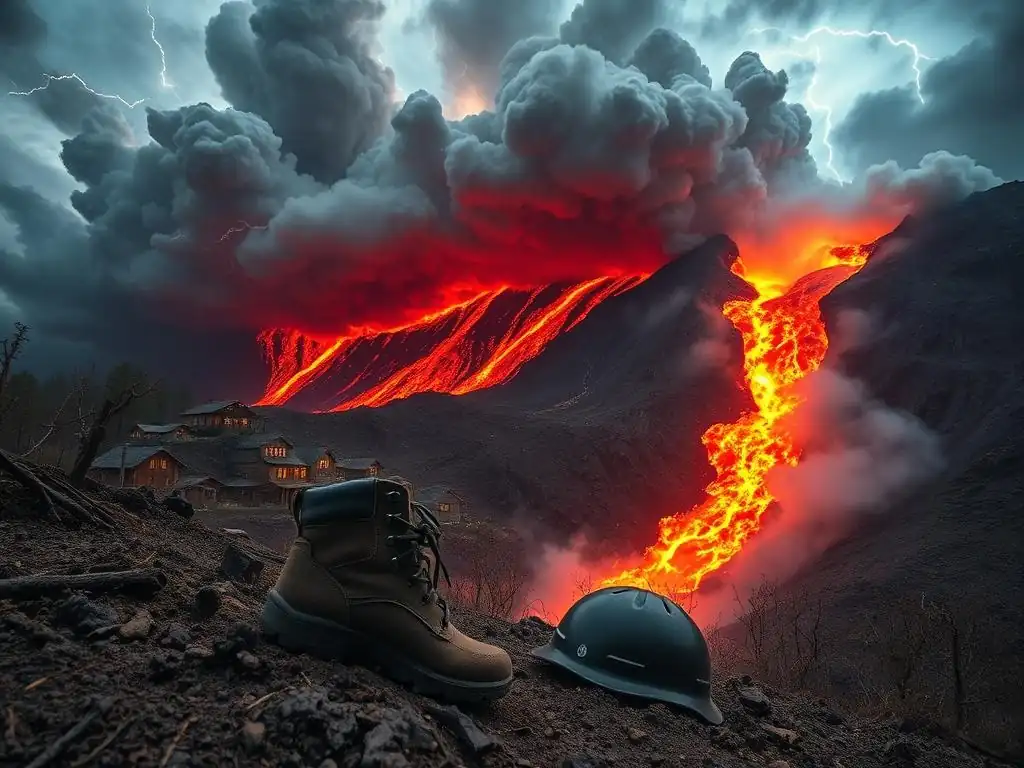
Welcome to Volcano Explorers, where the Earth's fiery heart is unveiled! Imagine a river of superheated gas and volcanic debris, surging down a mountainside faster than you can comprehend. Our journey into the heart of these geological titans begins with a crucial question: How do you survive the unthinkable? Read on to discover vital pyroclastic flow safety tips and unlock the secrets to navigating one of nature's most terrifying forces. Are you ready to face the inferno?
- Mount Vesuvius: Understanding the Threat of Pyroclastic Flows
- Understanding Pyroclastic Flows: A Volcanic Science Perspective
- The Devastating Speed and Power of Pyroclastic Flows
- Pyroclastic Flow Safety Tips: Protecting Yourself from Volcanic Hazards
- Pyroclastic Flow Hazards and Risk Mitigation
- Surviving a Pyroclastic Flow: Practical Advice and Strategies
- The Future of Pyroclastic Flow Research and Safety
-
Frequently Asked Questions
- What exactly is a pyroclastic flow, and why is it so dangerous?
- What are some key warning signs that a pyroclastic flow might occur?
- If I live near a volcano, what are the most crucial pyroclastic flow safety tips I should follow?
- What kind of structures offer the best protection from a pyroclastic flow, if any?
- Where can I find reliable and up-to-date information about volcanic activity in my area?
- Final Reflection: Embracing Vigilance in the Face of Fire
- Dare to Delve Deeper: Uncover the Secrets of Volcanic Fury!
Mount Vesuvius: Understanding the Threat of Pyroclastic Flows
Understanding Pyroclastic Flows: A Volcanic Science Perspective
What are Pyroclastic Flows and Surges? Defining the Threat
Pyroclastic flows and surges are among the most lethal and destructive phenomena associated with explosive volcanic eruptions. Often described as ground-hugging avalanches of hot gas and volcanic debris, these flows are not simply lava. They are a complex mixture of searing hot ash, pumice, rock fragments, and volcanic gases, capable of moving at incredible speeds.
The term "pyroclastic" itself comes from the Greek words "pyro" (fire) and "klastos" (broken), aptly describing the fiery, fragmented nature of these flows. Understanding what constitutes a pyroclastic flow and surge is crucial for appreciating the immense danger they pose and for developing effective safety strategies in volcanically active regions.
These flows are generated by various volcanic events, such as the collapse of eruption columns, lava dome collapses, or lateral blasts from a volcano. They are gravity-driven, meaning they descend slopes and valleys, often following pre-existing topography. The temperature within a pyroclastic flow can reach hundreds of degrees Celsius, sometimes exceeding 800°C (1472°F), hot enough to ignite combustible materials on contact and cause severe burns. The density and high temperature, combined with their speed, make pyroclastic flows an unparalleled volcanic hazard, capable of obliterating everything in their path.
The Science Behind Pyroclastic Flows: Formation and Composition
The formation of pyroclastic flows is a dynamic process dependent on the style and intensity of a volcanic eruption. One common mechanism is the collapse of an eruption column. During explosive eruptions, volcanoes eject plumes of ash, gas, and rock high into the atmosphere. If this column becomes too dense or loses momentum, it can collapse under gravity, sending a surge of hot material cascading down the volcano's flanks.
Another formation mechanism is the collapse of unstable lava domes. As viscous lava accumulates to form a dome, it can become structurally weak, leading to partial or complete collapses that generate pyroclastic flows. Lateral blasts, powerful sideways explosions from a volcano’s flank, are also capable of initiating pyroclastic flows, as seen dramatically during the 1980 eruption of Mount St. Helens.
The composition of pyroclastic flows is highly variable, depending on the type of eruption and the source volcano. They generally consist of two main components: a gas phase and a solid phase. The gas phase is primarily composed of superheated volcanic gases, including steam, carbon dioxide, sulfur dioxide, and other volcanic volatiles.
The solid phase is a mixture of volcanic fragments of varying sizes, ranging from fine ash (less than 2 mm in diameter) to large blocks and bombs (larger than 64 mm in diameter). The proportions of gas and solids, as well as the size distribution of the solid particles, significantly influence the flow's behavior, speed, and destructive potential. The presence of fine ash in particular contributes to the density and mobility of the flow, allowing it to behave almost like a fluid.
Pyroclastic Flow vs. Pyroclastic Surge: Key Differences Explained
While both pyroclastic flows and surges are hazardous volcanic phenomena associated with explosive eruptions, they differ in key characteristics, primarily density and concentration of particles. Pyroclastic flows are denser, ground-hugging currents, characterized by a high concentration of rock fragments and ash. They behave more like avalanches of solid material mixed with hot gas, typically confined to valleys and lower topographic areas due to their density. Their destructive power stems from both their immense heat and the physical impact of the dense material they carry.
Pyroclastic surges, on the other hand, are more dilute and turbulent mixtures of hot gas and fine ash. They are less dense than pyroclastic flows and can behave more like a blast wave, capable of flowing over ridges and higher terrain. Surges are often described as the "ash cloud" portion of a pyroclastic event.
Although less dense, pyroclastic surges can still be incredibly dangerous due to their high temperatures, velocity, and the inhalation hazard posed by the fine ash and toxic gases. The distinction is crucial for hazard assessment and pyroclastic flow safety tips, as surges can affect areas not directly in the path of denser flows, requiring broader evacuation zones and safety considerations.
The Devastating Speed and Power of Pyroclastic Flows
Witnessing the Velocity: How Fast Can Pyroclastic Flows Travel?
The velocity of pyroclastic flows is one of their most terrifying aspects, making them exceptionally dangerous and difficult to escape. These flows can reach speeds ranging from 80 kilometers per hour (50 mph) to over 700 kilometers per hour (450 mph), depending on several factors, including the volume of the flow, the slope of the terrain, and the gas content.
Imagine a superheated avalanche of rock and ash moving faster than a Formula 1 race car – this is the kind of speed associated with the most powerful pyroclastic flows. Lower density pyroclastic surges can even exceed these speeds, sometimes approaching supersonic velocities.
The rapid acceleration of pyroclastic flows is due to a combination of gravity and the expansion of hot gases within the flow. As the mixture descends slopes, gravity pulls it downwards, while the expanding gases act like a lubricant, reducing friction and allowing the flow to move with incredible speed.
The topography also plays a significant role; confined valleys can channel and accelerate flows, while flatter areas may cause them to spread out and decelerate slightly. The sheer velocity of these flows leaves virtually no time for escape, highlighting the critical importance of early warnings and effective pyroclastic flow safety tips, including immediate evacuation when alerts are issued.
The Destructive Force: Understanding the Impact of Pyroclastic Flows
The destructive force of pyroclastic flows is multifaceted and devastating, stemming from a combination of extreme heat, high velocity, and the sheer mass of material involved. The intense heat, often exceeding 400°C (752°F) and potentially reaching over 800°C (1472°F), is capable of instantly incinerating organic matter, including forests and buildings. For example, in the 1902 eruption of Mount Pelée, pyroclastic flows carbonized wood and melted glass within seconds in the city of Saint-Pierre. This thermal energy alone is enough to cause widespread destruction and ignite fires far beyond the immediate flow path.
Beyond the thermal impact, the high velocity and density of pyroclastic flows exert immense physical force. The momentum of the rapidly moving mixture of rock fragments, ash, and gas can flatten forests, demolish buildings, and transport massive objects for considerable distances. The impact pressure from a large pyroclastic flow can exceed several tons per square meter, effectively sandblasting and structurally weakening even reinforced concrete structures.
Furthermore, the fine ash component of pyroclastic flows can infiltrate and damage machinery, infrastructure, and even lungs if inhaled. The combination of heat, impact, and asphyxiation makes pyroclastic flows an extraordinarily lethal and destructive natural hazard.
Case Studies: Mount Pelée and the Destruction of Saint-Pierre (1902)
The 1902 eruption of Mount Pelée on the Caribbean island of Martinique serves as a stark and tragic example of the devastating power of pyroclastic flows. Saint-Pierre, then known as the "Paris of the Caribbean," was a bustling port city located at the foot of Mount Pelée. In the weeks leading up to the major eruption, minor volcanic activity, including ashfall and steam explosions, caused unease but was largely dismissed by local authorities. On May 8, 1902, a catastrophic pyroclastic flow, triggered by a lava dome collapse, swept down the valley directly into Saint-Pierre.
Traveling at an estimated speed of over 100 km/h (62 mph) and with temperatures exceeding 700°C (1300°F), the pyroclastic flow engulfed the city in minutes. The destruction was absolute; buildings were flattened, ships in the harbor were capsized and burned, and nearly the entire population of approximately 30,000 people perished. Only two people are widely credited with surviving the direct impact: Louis-Auguste Cyparis, a prisoner in a poorly ventilated jail cell, and Léon Compère-Léandre, who lived on the edge of the city.
The Saint-Pierre disaster remains one of the deadliest volcanic events of the 20th century and underscores the critical need for understanding pyroclastic flow safety tips and heeding volcanic warnings. It highlighted the speed, heat, and unstoppable force of these flows, forever changing how volcanic hazards are perceived and managed.
Pyroclastic Flow Safety Tips: Protecting Yourself from Volcanic Hazards
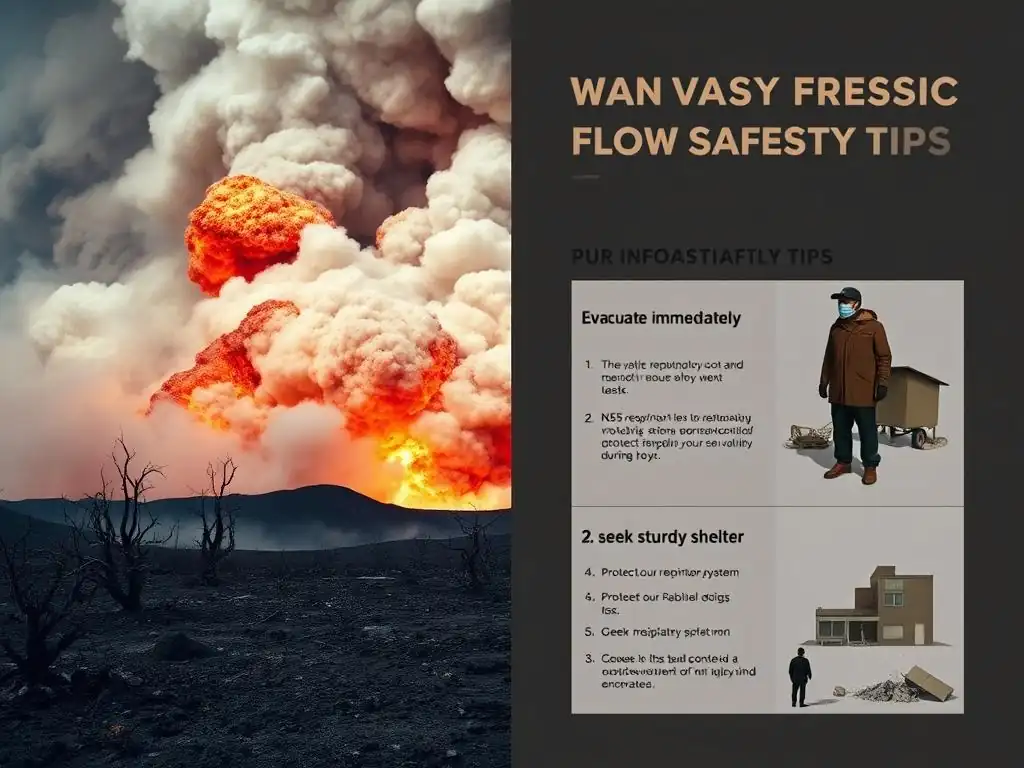
Essential Pyroclastic Flow Safety Measures: Before, During, and After an Eruption
Pyroclastic flow safety tips are crucial for communities living near active volcanoes. Preparedness should begin before an eruption. This involves understanding the local volcanic hazards, including potential pyroclastic flow paths. Participate in community volcanic hazard education programs and familiarize yourself with evacuation routes and designated safe zones. Prepare a volcanic emergency kit that includes essential supplies like food, water, first-aid, a radio, dust masks, and protective clothing. Develop a family emergency plan that outlines communication strategies and meeting points in case of evacuation.
During a pyroclastic flow event, immediate action is paramount. If an evacuation order is issued, evacuate immediately to designated safe zones outside of potential flow paths. If caught outdoors and unable to evacuate, seek immediate shelter in a substantial building, preferably made of reinforced concrete.
If no such shelter is available, move as far away laterally from the flow path as possible and seek low-lying areas or depressions for temporary protection, though this is a last resort and offers limited safety. Protect yourself from ash inhalation by wearing a dust mask or covering your mouth and nose with a damp cloth.
After a pyroclastic flow, remain in designated safe zones until authorities declare it is safe to return. Pyroclastic flows can be followed by secondary hazards such as lahars (volcanic mudflows), ashfall, and continued volcanic activity. Be aware of potential structural damage to buildings and infrastructure. When returning home, wear protective clothing and a dust mask, and be cautious of ashfall and potential respiratory hazards. Follow official instructions and guidance from emergency responders and volcanic monitoring agencies.
Understanding Volcanic Alert Levels: Recognizing the Risks
Volcanic alert level systems are crucial tools for communicating the likelihood and potential severity of volcanic eruptions, including the risk of pyroclastic flows. These systems vary slightly around the world, but generally operate on a color-coded or numbered scale, with each level indicating a different stage of volcanic unrest and associated hazards. Understanding these alert levels is a fundamental aspect of pyroclastic flow safety tips and community preparedness. Typically, the lowest alert level indicates normal background volcanic activity, while the highest level signifies an imminent or ongoing major eruption.
For example, the United States Geological Survey (USGS) uses a color-coded system: Green (normal), Yellow (advisory - elevated unrest), Orange (watch - escalating unrest, eruption possible), and Red (warning - eruption imminent or in progress). Each level is associated with specific recommendations for public safety.
When alert levels are raised to Orange or Red, it indicates a heightened risk of explosive eruptions and pyroclastic flows, triggering evacuation protocols in vulnerable areas. Staying informed about the current alert level for nearby volcanoes, through official sources like volcano observatories and emergency management agencies, is vital for making informed decisions and taking appropriate safety precautions.
Evacuation Procedures: A Guide to Safety During Pyroclastic Flow Events
Effective evacuation procedures are paramount for minimizing casualties from pyroclastic flows. When a volcanic alert level indicates a heightened risk of pyroclastic flows (typically Orange or Red), authorities will initiate evacuation orders for communities within designated hazard zones. These zones are determined based on volcanic hazard assessments that model potential pyroclastic flow paths and reach. Evacuation plans should be pre-established and well-communicated to residents, outlining evacuation routes, assembly points, and shelter locations. Pyroclastic flow safety tips heavily emphasize prompt and orderly evacuation when instructed.
During an evacuation, follow official instructions from emergency responders and local authorities. Evacuate promptly and calmly, using designated evacuation routes and avoiding shortcuts that may lead into hazardous areas. Bring your pre-assembled volcanic emergency kit. Assist neighbors who may need help, especially the elderly or disabled.
Do not return to evacuated areas until authorities have declared it safe. Ignoring evacuation orders can have fatal consequences, as pyroclastic flows can arrive with little to no warning and overwhelm unprepared individuals. Regular drills and community education programs are essential to ensure efficient and effective evacuations, saving lives in the face of this extreme volcanic hazard.
Pyroclastic Flow Hazards and Risk Mitigation
Identifying High-Risk Zones: Where are Pyroclastic Flows Most Likely?
Identifying high-risk zones for pyroclastic flows is a crucial aspect of volcanic hazard assessment and mitigation. These zones are typically located in valleys, drainage channels, and lower slopes radiating from a volcano's summit or vent. Pyroclastic flows are gravity-driven and tend to follow topographic lows, making valleys and riverbeds natural pathways. Areas within a certain distance from the volcano, particularly in down-slope directions, are also considered high-risk. The specific extent of these zones depends on the volcano's eruptive history, topography, and potential eruption scenarios.
Volcanologists use various methods to delineate pyroclastic flow hazard zones, including geological mapping of past pyroclastic flow deposits, topographic analysis, and computer simulations. Geological mapping helps to identify areas that have been affected by pyroclastic flows in previous eruptions, providing valuable insights into potential flow paths. Topographic analysis helps to understand how flows might be channeled by the landscape.
Computer models simulate pyroclastic flow behavior under different eruption scenarios, considering factors like eruption column height, flow volume, and gas content. This information is then used to create volcanic hazard maps that clearly delineate high-risk zones, informing land-use planning, infrastructure development, and pyroclastic flow safety tips for communities at risk.
Monitoring Volcanic Activity: Early Warning Systems for Pyroclastic Flows
Effective volcanic monitoring is essential for providing early warnings of potential pyroclastic flow events. Modern volcano monitoring networks employ a range of sophisticated instruments to detect changes in volcanic activity that may precede explosive eruptions. These instruments include seismometers to detect volcanic earthquakes and tremors, GPS and tiltmeters to measure ground deformation, gas sensors to monitor changes in volcanic gas emissions, and thermal cameras to detect temperature anomalies. Data from these instruments are continuously transmitted to volcano observatories for real-time analysis.
Changes in these monitoring parameters, such as increased seismicity, ground swelling, changes in gas composition or flux, and increased heat output, can indicate that a volcano is becoming more restless and that an eruption may be imminent. Volcano observatories use this data to assess the level of volcanic unrest and issue timely warnings to emergency management agencies and the public.
Early warning systems can provide crucial lead time, potentially minutes to hours before a pyroclastic flow event, allowing for evacuations and implementation of pyroclastic flow safety tips, significantly reducing the risk of casualties. The effectiveness of these systems relies on continuous monitoring, rapid data analysis, and efficient communication to at-risk communities.
Community Preparedness: Developing Evacuation Plans for Vesuvius
For communities living near Mount Vesuvius, like those in the densely populated Bay of Naples, comprehensive community preparedness is paramount due to the volcano's history of explosive eruptions and proximity to large populations. Developing detailed evacuation plans is a critical component of this preparedness. These plans need to be tailored to the specific hazards posed by Vesuvius, particularly pyroclastic flows and surges, and consider the unique challenges of evacuating a large urban population. Evacuation planning involves multiple stakeholders, including scientists, emergency managers, local authorities, and community representatives.
Evacuation plans for Vesuvius must clearly define evacuation zones based on volcanic hazard assessments, establish multiple evacuation routes to avoid bottlenecks, designate safe assembly points outside of hazard zones, and provide transportation assistance for those who need it. Regular evacuation drills and community education programs are essential to familiarize residents with evacuation procedures, routes, and pyroclastic flow safety tips.
Communication strategies, including public alert systems and dissemination of information in multiple languages, are also crucial. Given the potential for rapid onset pyroclastic flows, preparedness efforts must emphasize speed, efficiency, and community-wide participation to ensure the safety of the millions living in the shadow of Vesuvius.
Surviving a Pyroclastic Flow: Practical Advice and Strategies
Seeking Shelter: Understanding Vulnerability of Buildings During a Pyroclastic Flow
Seeking appropriate shelter is a critical element of pyroclastic flow safety tips if evacuation is not possible. However, it's vital to understand that most conventional buildings offer limited protection against the full force of a pyroclastic flow. Traditional wooden or lightly constructed buildings are highly vulnerable to incineration and collapse due to the intense heat and impact pressure.
Even brick or concrete buildings can be severely damaged or destroyed, especially by larger, denser pyroclastic flows. The crucial factors for building vulnerability are construction material, structural integrity, and the presence of openings that can allow hot gases and ash to enter.
Reinforced concrete structures, particularly those designed to withstand earthquakes and other extreme loads, offer the best chance of survival. Multi-story buildings may provide slightly better protection, especially in upper floors, as pyroclastic flows are ground-hugging phenomena. However, even in robust buildings, it is essential to seal openings such as windows and doors as effectively as possible to prevent the entry of hot gases and ash.
Basements can be extremely dangerous due to potential asphyxiation from heavier-than-air volcanic gases. Ultimately, the most effective shelter is evacuation to pre-identified safe zones, as no building can guarantee complete protection against a major pyroclastic flow. Sheltering in place should only be considered as a last resort when evacuation is impossible.
Immediate Actions After a Pyroclastic Flow: Assessing Safety and Providing Aid
Following a pyroclastic flow, immediate actions are crucial for personal safety and community recovery. The immediate aftermath can be chaotic and hazardous. Initially, remain sheltered until authorities declare it safe to emerge. The area may still be unstable, with potential for further volcanic activity, ashfall, and secondary hazards like lahars.
When it is deemed safe to exit shelter, proceed with extreme caution. Be aware of potential structural damage to buildings, weakened infrastructure, and debris-strewn areas. Wear protective clothing, including long sleeves, pants, sturdy shoes, and a dust mask or respirator to avoid inhaling volcanic ash. This is a critical pyroclastic flow safety tip post-event.
Assess your immediate surroundings for injuries and assist those in need, if it is safe to do so. Provide first aid if you are trained and able. Check for gas leaks, fires, and electrical hazards. If your home or building is damaged, do not enter until it has been inspected and declared safe by qualified professionals.
Listen to official radio broadcasts or emergency channels for information and instructions from authorities. Conserve resources like food and water, as supply lines may be disrupted. Be prepared for aftershocks and potential further volcanic activity. Community solidarity and coordinated response are vital for effective recovery in the aftermath of a pyroclastic flow event.
Long-Term Recovery: Rebuilding Communities After a Volcanic Eruption
Long-term recovery after a pyroclastic flow event is a complex and protracted process that requires sustained effort and resources. Rebuilding communities devastated by volcanic eruptions involves not only physical reconstruction but also social, economic, and psychological recovery. The scale of destruction can be immense, requiring significant financial investment and international aid. Initial recovery efforts focus on providing emergency relief, including shelter, food, water, medical care, and sanitation for displaced populations. Clearing volcanic ash and debris, restoring essential infrastructure (water, power, transportation, communication), and re-establishing basic services are also immediate priorities.
Longer-term recovery involves rebuilding homes, businesses, schools, and community facilities. This process must incorporate volcanic hazard mitigation measures to reduce future risks, such as land-use planning restrictions in high-hazard zones, improved building codes, and enhanced early warning systems. Economic recovery is crucial, often requiring diversification of livelihoods and support for affected industries like tourism and agriculture.
Psychological recovery is equally important, addressing the trauma and long-term mental health needs of survivors. Community engagement, participatory planning, and culturally sensitive approaches are essential for ensuring sustainable and resilient recovery. Education and ongoing reinforcement of pyroclastic flow safety tips remain vital parts of community resilience in volcanically active regions.
The Future of Pyroclastic Flow Research and Safety
Advances in Volcanic Monitoring Technology
The future of pyroclastic flow safety is inextricably linked to advancements in volcanic monitoring technology. Scientists are continually developing and refining tools and techniques to improve the detection, prediction, and early warning of volcanic eruptions and associated hazards. Next-generation seismic networks are becoming more sensitive and spatially dense, allowing for the detection of subtle precursory signals, including changes in magma movement and stress buildup within volcanoes. Satellite-based monitoring is expanding, with improved capabilities for measuring ground deformation, thermal anomalies, and volcanic gas emissions over large areas, even in remote locations.
Innovative technologies like drone-based monitoring are being increasingly utilized for closer-range volcano observation, enabling detailed mapping of volcanic features, gas plume sampling, and rapid assessment of volcanic activity changes. Improved geochemical sensors are being developed for real-time analysis of volcanic gases, providing crucial information about magma degassing and eruption potential.
Data integration and analysis techniques are also advancing, with machine learning and artificial intelligence being applied to process vast datasets from multiple monitoring streams, aiming to identify patterns and improve eruption forecasting. These technological advancements are directly contributing to enhancing pyroclastic flow safety tips and early warning capabilities, ultimately saving lives and reducing the impact of volcanic disasters.
Improving Pyroclastic Flow Prediction Models
Improving pyroclastic flow prediction models is a critical area of ongoing research in volcanology. These models are essential tools for hazard assessment, evacuation planning, and risk mitigation. Current models simulate pyroclastic flow dynamics, taking into account factors like eruption source parameters, topography, and flow rheology (flow properties). However, pyroclastic flows are complex phenomena, and predicting their exact path, velocity, and runout distance remains challenging due to uncertainties in eruption parameters and the inherent variability of volcanic processes.
Future research is focused on developing more sophisticated and computationally efficient models that can better capture the complex physics of pyroclastic flows, including multiphase flow behavior, particle segregation, and thermal dynamics. Integrating real-time monitoring data into prediction models is a key goal, allowing for adaptive forecasting and improved short-term warnings. Validation of models against past pyroclastic flow events and field observations is crucial for enhancing their accuracy and reliability. By improving pyroclastic flow prediction models, scientists can provide more precise hazard assessments, refine evacuation zones, and ultimately strengthen pyroclastic flow safety tips and preparedness strategies for communities at risk.
Educating Communities: Raising Awareness About Volcanic Hazards
Educating communities about volcanic hazards, particularly pyroclastic flows, is a cornerstone of effective risk reduction and pyroclastic flow safety tips implementation. Public awareness campaigns play a vital role in fostering a culture of preparedness and empowering individuals to take appropriate actions to protect themselves and their families. Educational initiatives should be tailored to the specific needs and cultural contexts of at-risk communities, using clear, accessible language and culturally relevant communication channels. These programs should cover fundamental aspects of volcanic hazards, including what pyroclastic flows are, their destructive potential, warning signs of volcanic unrest, evacuation procedures, and essential safety measures.
Community education can take various forms, including public meetings, workshops, school programs, distribution of informational materials (brochures, posters, videos), and use of local media (radio, television, social media). Engaging community leaders, local authorities, and educators is crucial for effective outreach and sustained awareness. Participatory approaches, where community members are actively involved in hazard mapping, evacuation planning, and emergency drills, can enhance ownership and effectiveness of preparedness efforts. Continuous and reinforced education is essential, ensuring that communities living with volcanic risks are informed, prepared, and resilient in the face of these powerful natural hazards.
Frequently Asked Questions
What exactly is a pyroclastic flow, and why is it so dangerous?
A pyroclastic flow is a high-density current of hot gas and volcanic matter that moves rapidly down the slopes of a volcano. It's dangerous because of its extreme heat (up to 1,000°C) and speed (often exceeding 80 km/h), making it virtually impossible to outrun.
What are some key warning signs that a pyroclastic flow might occur?
Key warning signs include increased volcanic activity, such as explosive eruptions, ash plumes, and ground deformation. Also, pay attention to official alerts from volcanologists and local authorities.
If I live near a volcano, what are the most crucial pyroclastic flow safety tips I should follow?
The most crucial tips are to follow evacuation orders immediately, know your evacuation routes, and have an emergency kit prepared with essential supplies.
What kind of structures offer the best protection from a pyroclastic flow, if any?
Generally, there are very few structures that can offer complete protection from a large pyroclastic flow. Underground bunkers designed to withstand extreme conditions are sometimes used, but evacuation remains the safest option.
Where can I find reliable and up-to-date information about volcanic activity in my area?
Reliable sources include official government agencies like geological surveys, volcanological observatories, and emergency management organizations. VolcanoExplorers.org also provides updates, but defer to local authorities first.
Final Reflection: Embracing Vigilance in the Face of Fire
The preceding exploration of pyroclastic flows, from their terrifying formation to the urgent need for safety measures, underscores a vital truth: nature's power demands our unwavering respect and preparedness. While the science behind these volcanic phenomena may seem distant, the potential for their devastating impact remains a stark reality for communities living near active volcanoes, making awareness and proactive planning not just advisable, but essential for survival.
The lessons learned from studying these "infernos on Earth" extend beyond geographical boundaries, reminding us of the fragility of life and the importance of understanding the forces that shape our planet. This understanding is not merely academic; it's a lifeline, a shield against potential disaster. Knowing is not enough; we must apply. Willing is not enough; we must do.
- Johann Wolfgang von Goethe. This quote resonates deeply when considering the practical application of pyroclastic flow safety tips.
Now, armed with this knowledge, I urge you to consider your own preparedness. Whether you live near a volcano or simply seek to understand the world around you, take the time to learn about potential natural hazards in your area. Share this information with your loved ones, and actively participate in community safety initiatives. By embracing vigilance and fostering a culture of preparedness, we can mitigate the risks and safeguard ourselves and future generations from the devastating power of pyroclastic flows.
Okay, here's a CTA for the end of a web article titled "Inferno on Earth: Witnessing the Terrifying Speed of Pyroclastic Flows" for the website "Volcano Explorers" (volcanoexplorers.org):
Dare to Delve Deeper: Uncover the Secrets of Volcanic Fury!
Thank you for joining us on this fiery journey to understand the incredible power and danger of pyroclastic flows. We hope you've gained a newfound appreciation for the dynamic forces shaping our planet. Now, it's time to turn knowledge into action.
Here's how you can continue exploring the fascinating world of volcanoes:
- Boldly share this article with your friends and family to spread awareness about these natural phenomena. Understanding is the first step to preparedness.
- Discover lesser-known volcanic hotspots around the globe using our interactive map on the Volcano Explorers website. You might be surprised at what's in your own backyard!
- Contribute your own stories or photos from your volcanic adventures to our community forum and inspire others with your experiences.
What other volcanic phenomena fascinate you the most, and what burning questions do you still have about the forces that shape our planet? Share your thoughts in the comments below!